A Beautiful Journey To Episode 100 With Nick McGowan
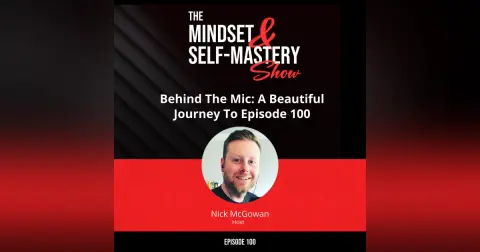


“If there’s pain that’s in there, you can get help. You can get through it. You can actually live that life that you secretly dream about. And if you’re in the middle of it right now, just keep going. There’s a lot more that can be done, and there’s hope within all of this.”
In this episode, we hit a major milestone in the 100th episode of the show. Wow, has it been a hell of a ride so far?! To celebrate how far we’ve come, Nick shares some clips and reflects on topics such as the importance of finding happiness and contentment in one’s processes, adapting to change, and embracing challenges. Select guests discuss the power of knowing one’s story, being present in the moment, overcoming trauma, mastering communication, and healing from various forms of abuse. Overall, it’s a reflective and insightful exploration of personal development, resilience, and all the core tenets of what it takes to shift your mindset and live on a path of ever-evolving self-mastery.
What to listen for:
- Going back to the beginning: my first guest and my first mistake
- The pride of making it to 100 episodes when so many podcasters quit
- Dive into our program for starting your own podcast
- Finding happiness and contentment in your processes
“When you think about the process that you put in place for whatever you’re doing, whatever you’re working on, whatever your passion project is, or even the project that you’re working on at work or in your own business, the process in which you do it can change and adapt. But you’ve got to find happiness or contentment within that. Now I say ‘you’ve got to do that’ because I truly believe that there’s pleasure within that, there’s purpose within that as well. That also opens up additional doors.”
- Our goal on this show is to get deeper into mindset and self-mastery
- The power of knowing your story with Jose Rosado
- You’re actively growing, even when you have down times
- Learning to let life flow instead of having to always be the driver
- Getting through challenging seasons with Brian Goldsack
“It’s that awareness to be able to be in that moment that I think some people just get stuck in. ‘Well, I don’t like how this thing worked out, and I really want to be upset about it.’ Like, look, you can be upset about it. You can talk to people. You can think through this stuff. But you’ve got to be able to get through it. And you’ve got to actually call out what’s going on and be mindful of it.”
- Finding the meaning inside of suffering so you can grow
- Nothing’s wrong with you when you’re blocked; it’s just trauma
- Love and support vs. the “disciplinary daddy” with Cliff Washington
- How conflict often touches on our deeper core wounds
- Becoming a master communicator with Eric Hemati
“If you want to be a master communicator, you have to take responsibility on yourself to enter other people’s worlds. And you can’t view it as a burden or a chore. ‘Man, why am I always the one that has to modify the way that I am?’ but that’s a totally normal way to think. That’s your ego yelling. And yeah, sometimes it does suck, right? But it’s also a massive opportunity and an awesome exploit for those of us that are adventurers and explorers and all that stuff.”
- Looking more closely at the way we interpret things
- Permission to dominate (not others, but yourself) with Liz Lopez
- Taking those first steps toward what you want
- Everybody’s had a shitty childhood with Mike Bassett
“The childhood trauma that we’ve gone through, even if it wasn’t as bad as somebody else’s or as violent or as crazy or anything like that, it could still be a trauma. But what are you gonna do about it? And that’s not to bypass what you’ve gone through or say that what you’d gone through isn’t still deeply affecting you, but that’s kind of the point here. If it’s deeply affecting you, what are you going to do about it? And what have you done about it? What can you process through to be able to get through that situation and understand that it’s behind you?”
- Healing from sexual abuse with Sonny Von Cleveland
- Filling internal wounds with external things with David “Kitch” Kitchen
About Nick McGowan
I’m Nick McGowan, entrepreneur, podcaster, and mental health advocate, and I’ve been on a 20+ year journey of personal development, learning to master my mindset, emotions, and the art of living with purpose.
As a Mindset and Self-Mastery Mentor, I work with ambitious men and women who want to live their most authentic and joyous life, by helping them master their mindset, emotional awareness, and authentic communication. My mission is to empower people to lead lives that feel aligned, grounded, and truly their own.
Throughout my career, I’ve built teams, streamlined systems, and improved client experiences across SaaS, media, marketing, and personal development spaces. Whether I’m leading cross-functional projects, optimizing SEO, Podcasting, designing strategies, or guiding clients through transformation, I bring a hands-on, solution-focused approach to everything I do.
I’m also the host of The Mindset and Self-Mastery Show, where my guests and I unpack the stories that shape us, challenge us, and ultimately guide us back to who we are at our core. On this show, we uncover the secret gems others have discovered through trial, error, and breakthroughs so you can fast-track your growth, and master your mindset on your pursuit toward self-mastery.
With years of podcasting and two decades of marketing experience, I’ve mastered the storytelling, interview flow, strategy, and technical production that elevate a podcast from “just content” to something truly impactful. Whether you’re a leader looking to amplify your message, or a seasoned speaker and podcast host looking to sharpen your edge or even a beginner who is wondering how to share their message, I mentor thought leaders through every step of having the conversation they’re here to have on this planet.
So, what message are you here to share?!
Resources:
Interested in starting your own podcast or need help with one you already have? Send Nick an email or schedule a time to discuss your podcast today!
nick@themindsetandselfmasteryshow.com
Thank you for listening!
Please subscribe on iTunes and give us a 5-Star review! https://podcasts.apple.com/us/podcast/the-mindset-and-self-mastery-show/id1604262089
Watch Clips and highlights: www.youtube.com/channel/UCk1tCM7KTe3hrq_-UAa6GHA
Guest Inquiries right here: podcasts@themindsetandselfmasteryshow.com
Your Friends at “The Mindset & Self-Mastery Show”
Nick McGowan 00:08
Hello and welcome to the Mindset and Self Mastery Show. I’m your host, Nick McGowan, and today on the show, this is the 100th episode of the podcast. Full transparency, I had no idea how I was gonna get past episode number one. In fact, the first episode had some problems with it. I was glad that I had my cousin Tom on. I always loved talking with him, and especially with the story of he and I talking about setting up a podcast and then finally setting up a podcast and him being the first guest.
Nick McGowan 00:38
but the microphone wasn’t on. It was a little bit of a faux pas. And to go from episode number one all the way to episode 100, it seems insane that it’s actually gotten here. I didn’t know if it was gonna be just a few episodes. I didn’t know if it was gonna be one season. Talked to a lot of people before I started the podcast and they were like, if you can get past one, you’ve made it. Others told me if you get past 10,
Nick McGowan 01:05
You should be screaming and happy and jumping up for joy. And if you can get past 20 or 50, et cetera. And I’ve met people that are in the thousands of episodes. And I think as I sit here with a hundred episodes under my belt, what is it gonna look like at a thousand? What is it gonna look like at even 200? Now we’ve got great guests that are on the show and we’ve had great guests that have been on the show and great topics to get into.
Nick McGowan 01:35
that are already scheduled for the next few episodes. I think I’ve got maybe 120 that would basically be finished based on everything that’s already scheduled and planned out. But what’s that gonna look like at 200? What’s that gonna look like at 500, et cetera? And if you’ve thought about setting up a podcast, I’m probably sure you’re asking, what does that look like to just do one? How do I do this? Throughout the course of the first year of the podcast, I learned a lot, like a whole lot.
Nick McGowan 02:04
of how to do it, how to talk with people, how to lead an interview, how to put everything together, how to find guests, you know, you name it. I went through a lot of that, and especially over the past hundred episodes, which is part of the reason why I set up a course to be able to show people and walk people through how to set up their own podcast. That course will set you up from the very beginning of, hey, I have an idea of a podcast about X, to your first three episodes being finished, how to produce them, how to get guests,
Nick McGowan 02:33
connect with guests, all the things. They’re all encompassing in that program. But that’s just the first few episodes. The things that I thought that I knew when I first started because the things that I knew from being in an agency, being a business owner, working on video and audio editing and my musicianship and just all of that, I thought I’ll be all right. I’ll figure this stuff out. Truth be told, the first 15, 20 episodes, I spent a lot, a lot.
Nick McGowan 03:02
a lot of time, a lot of time. And some of it was kind of wasted time. But as I’ve learned over the course of the 100 episodes so far, there’s not really a waste of time if there’s intention behind it. And if there’s a reason why I’m doing it. In fact, it’s part of the process. Now I’m a huge 76ers fan as you all know, whenever I think of the process, I think of Joel Embiid, but I think of the process it’s taken. Even Joel, it took him years, but he got that MVP. Now hopefully this year,
Nick McGowan 03:31
We’ll bring the title home as well, but we’ll see what happens with that. But when you think about the process that you put in place for whatever you’re doing, whatever you’re working on, whatever your passion project is, or even the project that you’re working on at work or in your own business, the process in which you do it can change, can adapt, but you’ve got to find happiness within that or contentment within that. Now I say you’ve got to do that because I truly believe that there’s
Nick McGowan 04:00
pleasure within that there’s purpose within that as well. That also opens up additional doors. If you don’t wanna do that and you wanna bitch complain about it through it then have at it, but I’m sure this isn’t the podcast that you listen to to get the inspiration for that. The first handful of episodes that I went through, I remember I was kind of bashing my head to the wall. I was excited and really ready to like get into it. But I remember there were some frustration points and it took.
Nick McGowan 04:29
the first 15, 20 episodes for me to have those initial conversations with people, to hear from different people around the topic of mindset and around the topic of self discovery and self mastery and self exploration and passion and purpose and trauma and all of those things. Now, within those first few episodes, I had no idea where I was going to get to by episode 100 and here I sit episode 100.
Nick McGowan 04:59
and I can look back now and I can see how things have changed over the course of the first 20, 50, 75, 100 episodes, etc. I expect that that’s going to continue to grow. It’s going to continue to change. It’s the process in which this happens. And the reason why I started the podcast was to be able to have great conversation with people, learn from other people, but also to be able to share other people’s stories. You never have any idea.
Nick McGowan 05:27
what anybody’s either gone through or going through, unless you’re able to ask, and unless they’re able to talk with you about it. And unless you both can get to a point where you can have a candid and open conversation about some of the really difficult and tough shit that we all go through throughout life, it can be super easy to just live on the surface. Just like when you ask somebody, hey, how are you? Oh, great, you know, living the dream. I fucking hate that. Can’t stand that because most everybody is not living their dream.
Nick McGowan 05:56
And the people that are living their dream, I don’t think they really say that. I think they will talk about what’s going on and what’s their purpose and what their passion is and what they’re doing and what they’re going through. But going through these first hundred episodes and the process in which I went through everything, I wanted to make sure that I could have these incredible conversations with people that share not only their stories, but the wisdom.
Nick McGowan 06:26
and tangible pieces of advice that people could take. I’ve heard different podcasts, I’ve been to different lectures and just you name it, different people talking about things. And you can tell when people are bullshitting. You can smell it almost. You can just tell when somebody’s just living on the surface. And that’s one of the goals that we have for the show is to be able to get people deeper into those things.
Nick McGowan 06:50
In fact, for those of you that have been a guest on the show, you’ve heard what I talk about before we even hit record. And one of the things I say is, if you get really corporate with me, I’m going to pull your ass down. We got to get into the nitty gritty. We got to talk about the tough shit. Like tell me about the time when all you wanted to do was kill your family because you hated everything that was going on, but you didn’t. And I know that might sound really, really dark, but what the fuck? We all have those really dark thoughts at times. I’ve had suicidal thoughts.
Nick McGowan 07:20
I’ve almost gone through with it. And that’s the tough shit. And those are the tough actual life moments where we get to do something different. That’s a pivotal moment in life where you can either go that path or you go a different path. And it’s up to you to make those decisions. So I wanted to be able to have this podcast be a source of inspiration, even motivation, but really just a deep well of wisdom of people that have gone through some really difficult shit.
Nick McGowan 07:49
and they’ve been able to get through it. Because if you can align with them and you can align with how they’ve done it, hopefully you can glean something from that. So I thought with this 100th episode, why not go back through some of the great conversations that we’ve had? Now, it’s been a little tough to be able to pick out the ones that I wanted to have in this episode.
Nick McGowan 08:11
There’s 100 episodes. I mean, 99, because this is the 100th, right? But there are so many different great clips and great conversations that were had within this that it was difficult to be able to peel out the ones that could fit and still keep this around an hour, hour and 15. Because realistically, if I took out all of the incredible pieces of wisdom that the guests have shared and that I’ve shared throughout these firsts,
Nick McGowan 08:40
100 episodes. God, this episode would probably be about a week long. There’d be an immense amount in there. So maybe this is something that’ll happen every so often. There might be a review coming up. I’m planning on doing topic-based episodes that will have some reviews in there and stepping back into previous episodes. And for those of you that read the show notes and get the emails, you see that we’ll put in for additional.
Nick McGowan 09:08
advice and wisdom on this topic, check out these other episodes. So that’s a way that we kind of do that now. But this episode, I wanted to go through some of these great conversations and great clips and things of that have really impacted me and that I’ve also heard from listeners that have impacted them. So this should be a fun one. Um, not that all episodes aren’t fun. I know we get into a lot of shit and have great conversations and laugh about a lot of stuff, but this will be a cool one.
Nick McGowan 09:37
I think to be able to kind of bounce around a bit and be able to hear from different people and not only have those clips, but I’m gonna talk about some of the stuff that I’ve learned from that as well. So let’s do this thing.
Nick McGowan 09:53
But we gotta know our story. You know, you’ve brought up a couple times life is hard. And just the thought of that is almost depressing. Of yeah, life can be hard. But it’s about the stories that we tell ourselves and the way that we sink into those stories. If we think that life is hard and therefore life sucks, then guess what you’re gonna get? A bunch of shit, cause life’s just gonna suck at that point.
Nick McGowan 10:22
So if in our heads we understand that yes, things are tough and that’s what it is, then it’s a matter of figuring out what your story is to move forward. So I know I’ve been in spaces before where I’ve been stuck there where life is tough and perpetually seems to be tough. So in those cases, how do you work with your clients to be able to change that story? I think a lot of that, like,
Nick McGowan 10:49
some of the things that we starting off like from baseline what we’ll do is like if if i’m trying to work with someone who is trying to note patterns in things right like you said they they don’t really kind of realize that what’s happening is a cyclical pattern that kind of thing is i’ll have them work on um like a feelings journal
Nick McGowan 11:12
You know where every day they’ll just not even you don’t have to write like whole like paragraph of what you went through that day You can just say today. I am x right and Give it a week work on it for a week work on it for two weeks and if after two weeks You sit there and you go. Wow. I realized like 10 out of the last 14 days I’ve been angry Wow
Like that’s pretty powerful. And then you just, again, starting from the beginning, why do you think that is? Why do you think that anger is such a huge part of your life? And again, you can sit there and say, because I’m out of work, or I’m underemployed, or I have two kids and I’m a single parent. Yes, life, again, like we said, it can be debilitating if you sit there and think about it and have an existential crisis. But the reality is,
You’re alive, you’re breathing, you have two beautiful children, like you’re all healthy. Like those are the things that should be your major takeaways. The other stuff, pain, pain, in every form of it is temporary. Whether it’s a second, a week, a year, a decade, it doesn’t matter, it’s temporary.
And that’s all I had to keep telling myself was that when I’m at my lowest of lows and I don’t want to get out of bed and I don’t want to do anything else and I don’t want to work on me or work on my career. I just thought to myself, this will pass. What I’m feeling, what I’m going through, I don’t know if it’s going to take a year or two or more, but
If I’m fortunate, that time will still pass no matter what. So kind of asking again yourself, do you want to just be a passenger in the things that happen to you and life just kind of just kicks you around and you just deal with it? Or do you want to understand certain things about yourself and work on it and work towards bettering yourself?
I’m having a blast just starting off going through this first clip, because what a sort of blast from the past in a sense, being able to go back to that was one of the early clips with my friend Jose. And he talks to a lot of people every single day, every single week, working with a lot of people to be able to figure out what their story is. And as soon as I was watching this clip, just maybe a few seconds into him talking, I thought the stories.
the stories we tell ourselves, the things that we tell ourselves that we don’t want other people to know about. And that sometimes we even talk about how it’s not real. It’s not really there. Like imposter syndrome. A lot of people experience imposter syndrome, or like they’re not good enough, but they don’t talk about it. Now not to say you have to just be in the middle of the meat aisle at the grocery store and be like,
I really feel like I don’t know what the fuck is going on, but these people think I do. You will look crazy if you do that. But if you do that, have somebody videotape it and send it to me, because that would be hysterical. But think about the stories that you tell yourself. Think about the stories that you’ve told yourself since you were a little kid. Like how to be safe, how to be loved, how to be welcomed by people, and how to excel, and like what your winning strategy is in that.
sense. So I really liked that Jose was getting into the practices in which you can do like emotional journaling. And being able to figure out where the depth of the cause of it really is. And that will take some time. I know for me, personally, there’s times in life where I’m like, I don’t, I don’t want to do the thing. I just want to know the damn thing.
I wanna get it, I wanna absorb it, I wanna go, yes, that’s great, I got it, cool, let’s go. But that’s against the process. And the process in which we go through things can look different if the story is different, if we’re telling ourselves that this is the same as it was before and not different, because you’re different as you grow. And especially listening to this podcast, reading the books that you read, having the conversations that you have,
You are actively growing, even when you have those down times. But keep in mind, that story that you tell yourself is incredibly important.
And I really loved that he brought up the fact that.
by asking the question, do you want to be a passenger or do you want to be the driver in a sense of your own life? It can really hit us. I know it hit me. Even during that conversation, I can think back to that. Like, I know that. I know that I wanna be the driver. I also know that there’s deeper energy that is actually leading me and driving me. But for the most part, I know that I wanna be that driver.
I don’t want to just sit in the passenger seat and let it go. So though sometimes we need to flow, and I know specifically for me, I need to flow more in life with that. So it’s understanding the context of being a passenger, being the driver. In this sense with what Jose’s talking about, it’s being the driver and not the passenger in which you’re controlling how you handle these things and how you handle day-to-day situations and the strategies you can put into place.
For those of you who’ve listened to that episode, that was an early one, so I appreciate you being around since then.
Did you find anything from that episode or even that clip that kind of stirred something in you? Like being able to journal again or talking about something with your therapist that maybe you’ve been holding back a little bit or something that maybe you are strictly just sitting in the passenger seat about. Something to think about.
I never thought that there wasn’t supposed to be suffering, if that makes sense. So I think I was always under the impression that there’s just going to be a certain element of life where terrible, terrible, terrible things could happen at any time. I didn’t expect that. I mean, that wasn’t the only thing that happened in 2020 to me. My sister passed away from lung cancer.
was going to help me open the judo school died of COVID. His anniversary is coming up in about three days of his death. There’s a lot of wacky, my grandmother died. So all of these crazy things happen to me. And, um, but the whole time I felt the pain. I allowed myself to feel the pain, but I don’t think I ever expected for life to not have pain. So I think for me, the reason I’m able to
kind of cope and not go kooky is, um, I kind of like, I don’t know. I thought any, this could happen at any time. So when you’re kind of like thinking to yourself, Hey, there is going to be a few scoops of suffering in this life. You feel okay about not okay about it, but you can cope better with it when it happens. Yeah. That makes me think of, um, the people that just say, well, this isn’t fair. Life isn’t fair.
I wasn’t supposed to be dealt this hand or what have you. And that almost looks like you’re just looking backward instead of going, well, all right, here’s what we got in front of us. How do we move along? And I think that’s, man, that’s a major point of the mindset, you know, to be able to figure out, like, here’s where I’m at, what’s going on. Do you remember the movie Memento? No. I think it was in mid 2000s. This guy basically had like a goldfish mind where he would just remember for a couple seconds at a time.
He had to be hyper aware because that’s all he was. He was living in the moment. He was present. And I remember there was one time where he was running and he came too and he was like, oh shit. So I think I’m running after that guy. And he was like, oh no fuck, he’s running after me. Then he turns around because he realized, but in that moment it took him a couple seconds to be like, where am I? What’s going on? And then moving along. But it’s that awareness to be able to be in that moment that I think some people just get stuck in, well.
I don’t like how this thing worked out. And I really want to be upset about it. Like, look, you can be upset about it. You can talk to people. You can think through this stuff. But you’ve got to be able to get through it. And you’ve got to actually call out what’s going on and be mindful of it. Man, I didn’t know that you’ve gone through as much stuff that you’ve gone through. That’s an immense amount. And for you to be as positive as you are, I think is a testament to what you’ve put in place.
with the process that you kind of have that you’ve gone through. We’ve scratched the surface a little bit of the processing that you’ve done because you’ve kind of given me the ends, like the bookends in a sense. This is what happened, these things happened. But in those moments where you were just not in a good head space, how did you get yourself back? Wow, great question. How did I get myself back? Well, I…
I got very into my faith. I started reading a lot about God, about spirituality, which always has helped me. Even prior to this prior to all the 2020 stuff that was happening. And what I tried to do is just really think. You know.
I have a lot of blessings too. There is a lot of things that I had to be joyful for in my life. And I didn’t want the sorrow and the circumstances that affected me in 2020 to have a negative impact on the happy parts of my life. I wanted to be able to accept the bad parts.
feel the pain from the bad parts, but I also wanted to be in a good enough space to feel good about the good parts. But what I did was I started to get into my faith and not just my faith. I started just reading about religion in general. I was reading this one book called the Tanya, where I was listening to a lecture on it, which is in Orthodox Judaism. I’m Christian, but I’ll study anything, anything. And that helped me out a lot. I was listening to lectures on that. And then
I started to get very creative. I started to try to express myself more and get into some of the goals that I had in life, which is what ultimately ended up leading to me starting a podcast with my co-host Chris Sykes. So the summer of 2021 was kind of like when things simmered down and I was like, look, you only live once.
Wow. This one was a heavy one. And this was early. I think it was episode 13. This was heavy. Yeah, I guess it’s the best way to put it. I remember thinking that the conversation that Brian and I were going to have was going to be a great conversation. I’d already done some research and listened to some of the stuff that he had already done because his podcast had been out for a while, but I had no idea what was going to get to that. And neither did Brian.
I believe he says later in the episode, or at least when we’re no longer recording, he was like, I didn’t expect to get into that. I’m glad that we did, needed to get into that, but he didn’t expect to get into that much. It’s crazy to think that the whole COVID pandemic and everything that happened was a few years ago now. And it’s crazy to just say it was a few years ago. Can you remember how real that was?
in the time? And can you remember the pain that you went through if you had lost somebody? Or the pain that you felt for somebody else when they lost somebody due to COVID? Or just being locked down? There were a high amount of suicides of people that just couldn’t get through that dark time. And here we are, Brian and I, talking about the end of 2021.
and having lost different people and being able to look at the suffering within that. As soon as he said the word suffering, what came to my mind was the man’s search for meaning. The book about being in a concentration camp and using your mind and your emotions and your intuition to be able to work through that, accept where you’re at, move through it and understand that there’s meaning in suffering.
And for that meaning that’s in the suffering, it doesn’t mean that somebody needed to die for you to get a point, but that person died and you have the opportunity to be able to get a point. And you have the opportunity to be able to see the meaning within that suffering. It was wild that not only Brian had lost people, but had also been thrust into a new business because of somebody that he had lost. And that suffering
also had a split to it where there was joy, an immense amount of joy that was within that. And I really appreciated that Brian talked about going through the bad times, accepting them, not bypassing through it, and even living in the moment of that and really feeling it and feel into the pain.
and understand that, where you’re at, and accept where you’re at. That acceptance doesn’t mean that you just let it be and say, this thing’s going to destroy me for the rest of my life, but you can accept it for what it is. And then being able to also accept the joyous things in life. There’s a lot going on in this world. There’s war, there’s famine, there’s…
Corruption, there’s an immense amount of really difficult negative things that we all either deal with or we see being dealt with and feel for those people that are dealing with those things, or systemic issues that we’ve dealt with for a long, long, long time. There’s meaning within the suffering. And if that’s tough and hard to really be able to understand that, I get it. I absolutely get it. It was a tough pill for me to be able to swallow as well.
I mentioned Man’s Search for Meaning. I read that a few years ago, and almost immediately after reading it, I got a divorce. I could feel into what I was going through. And not to say that my marriage at the time was a complete suffering, but there were things that were in there that I was suffering from my own stuff, from the things that had happened before. So take that advice of using the meaning that’s within the suffering, to then also look at the
joy and the incredible things that you have happening for you and that you get to be a part of. And that’s really where your mindset can come into play to be able to understand how to differentiate and how to accept those things for what they are and how to then be able to really sink into them. And if there are things that are stopping you from getting there, it’s traumas. There’s nothing wrong. You’re not broken. There are just traumas and things for you to be able to work through. And I would I would ask that you
seek some advice or some help to be able to go through that because we all really need to understand that there’s meaning in the suffering and that suffering isn’t just to break us. Oftentimes we grow the most when we suffer and we go through the really difficult things and that’s where our character shows up. I’m sure you can look back to different points in your life or family members lives or friends or whatever. Being able to understand that there’s that meaning in suffering
At the same time, there’s also the meaning and the depth of the joy that you can have within the incredible moments that you have. And really what I took from all of that conversation with Brian was to really choose to be in the present. You can choose anger or you can choose joy and why not choose joy? But you’ve got to be in the present moment to be there, to be able to be self-aware enough to get that and to be able to have that opportunity to make that choice.
If you haven’t listened to that episode, please go back and listen to it. That was a great one. Again, I’m having fun with this, being able to listen through these clips. I hope you are as well. So let’s get on to the next clip.
Yes, I err on the side of, you know, love and support. Um, so I always try to lead with that, but, um, I also know that I have, um, the disciplinary daddy in me that will come out if, if prodded and pushed in that sort of way. So that’s the last resort, but it’s there if, if needed.
I was cracking up as I was listening to that again. Having Cliff on the podcast was awesome. Cliff was actually one of the guys that I’d reached out to before I started the podcast because he’s had a podcast for a few years now. I remember reaching out to him and I was like, how to what did you fuck up? What did you do wrong? How do you? How do you do this whole podcast thing? Like, what do you suggest I do, etc. He was one of the first people that I reached out to talk about things. So it was great to have him on the podcast.
memory serves, it took us a little while to be able to get there. So by the time we got there, there was also a lot of catching up to do because I’ve I’ve become friendly with with Cliff. I’ve really enjoyed to see what he’s been doing in his career and his life. And it was great to have him on. And early on, I remember when he had said some of the ways that he had he had learned about his podcast. It was interesting for me to be part of that episode and think from.
he’s a podcast host and trying to think from his perspective as well. But once he got to the disciplinary daddy, I almost lost it because it was one, it was such a real moment where he was like, yeah, I can love and support, but I can still be stern. And that disciplinary daddy comes out, which what an interesting and funny way to be able to put that, but also a true way, you know? Like, I don’t know what your dad was like.
I don’t know what anybody’s dad was really like behind closed doors outside of the one that I have. And even there, I mean, I’m sure there are different things that are behind closed doors with that man. But I can think back to the disciplinary daddy, that energy, that energy that you respect, but that energy that is stern and that you feel guidance from. And what really stood out to me with Cliff was, no matter…
If your dad was like that at all, it’s just a fun and like playful way to be able to make it funny so that you remember it. But it’s also for yourself. It’s not just for people you’re leading or managing. And you’ve got to be able to use that the right way, especially with people you’re leading or you’re managing, whether it’s your company or you lead a team or you volunteer and you’re working somewhere, or people within your family even. You…
You can’t pull out the disciplinary daddy constantly. It needs to be at specific times. I don’t know why that’s so funny to me. If you don’t think it’s funny, then whatever. If you do, then I’m glad that you’re laughing with me here because what the fuck, disciplinary daddy. But being able to have that sternness and that love and support, let’s say specifically for yourself, is a beautiful recipe of really being able to keep yourself accountable.
but also show yourself the love that is necessary for your growth. There are different times where I think about situations with my father, just thinking along the lines of disciplinary daddy, where I could tell that he was frustrated with something. I didn’t know if it was frustration with me or with life or the project or whatever, and he would kind of bark at me about something.
If it ever got really crazy, he would apologize, but it wouldn’t be like a throwing shit and like trying to hurt me sort of crazy, but it would be like, look, I can tell him a little irritated, I’m sorry, here’s, you know, whatever, and give me a little bit of information as a kid, enough to almost like satiate. But I remember thinking in those moments, like, is he upset and irritated with something I’ve done and thinking it was my fault?
And then that shaped the way that I looked at different situations throughout the course of my life. I still work through that. And I’m not ashamed to be able to say that because that was a deep core situation that got really close to my deep core wound of not being lovable and being abandoned. And there were also times where my father was great at being able to talk with me and help me understand.
what was going on and look at something from a logical perspective and still have empathy within it. The way he would put it is taking us for ice cream. He would always take us for ice cream to be able to talk about something or take somebody out for something that was good because you put them in a good spot, in a good situation, not to ambush them, but to be able to talk about something that’s kind of tough. And I think about the love and support, but the sternness and the accountability that was there.
And for us to be able to internalize that, that was the thing that stood out to me about this whole clip. The episode was great. Cliff and I get to do a lot of really awesome stuff. But this one clip really signified the love, support, and the sternness and accountability that you need to have within yourself and what we all need to have within ourselves to be able to continue to move along.
And just like with the last clip that you’d listened to from Brian, being able to accept where you’re at and what’s going on, doesn’t mean that you have to enjoy it, like it, love it, or hate it or anything like that, but to be able to accept that, and then to show yourself the love and the support, still being stern with yourself. I really think there’s a lot to that for us to be able to take away from this. And I hope that that’s something that you either
do right now to show yourself love and grace, but also hold yourself accountable, or that you’ve stepped outside of yourself to be able to get somebody to help with that. So, let’s keep the train rolling. Next clip.
If you want to be a master communicator, you have to take the responsibility on yourself to enter other people’s worlds. And you can’t view it as, for you, if that experience, if you experience that as like a burden or a chore, man, why am I always the one that have to like, you know, modify the way that I, but that’s a totally normal way to think. That’s your ego yelling, you know, like, yeah, sometimes it does suck, right? But it’s also a massive opportunity. And it’s an awesome exploit for those of us that are adventures and explorers and all that stuff.
That is our Star Trek, is to explore other people’s worlds. So if you can help yourself to experience it that way, the experience of life is so much, I really believe is like an interpretation. It’s not like what’s actually going on, it’s how I interpret what’s going on.
This was an awesome episode with Eric. We got into a lot, a lot specifically about sales. So, Eric leads, I believe hundreds of insurance sales people throughout at least the continental US and has a lot of different situations that happen. A lot of sales situations, but he’s got to be able to manage not only himself, the situation, the people, but how people interact and how they.
work with their clients or prospects, et cetera. And having been in sales for a long, long time, having led, managed people, I get that that can be really tough sometimes because sometimes ego will step in. Training and traumas and experiences that make you want to do different things or say different things in different situations or knowing what to say, but still reacting and being emotional in situations.
can be a lot. It can also be fun. So I really appreciated that Erica talked about the adventure, even to go to the level of talking about it’s what we can explore. It’s like our Star Trek in a sense, to be able to explore different people’s worlds. And one of the things I’ve talked about on this podcast for at least the past hundred episodes is how you never really know what somebody’s going through or what their life looked like before they got to the point where they’re at right now, or what shaped them.
until you actually get into conversation with them or you can learn more about them. But they’ve got to be able to open up to be able to talk about that or share things that are going on. But you don’t really ever know what’s behind somebody’s eyes. And that’s one of the beautiful things about being able to explore throughout conversations, let’s say specifically in sales, because then you get to explore, how can I best help with the resources that I have? What can I do for you?
What can I do to be able to help and guide or lead you in the right direction that’s going to be a benefit to you? And I really appreciated that Erica talked about not only being able to explore and being okay with that exploration and really enjoying it as almost like an adventure, but also the interpretation. One of the things that I’d gotten into over the, I’d say the past maybe 15, 20 episodes is something that I’ve been
learning about more and looking at more closely is the way that we interpret things. Like the interpretations that shape the stories, which shape the decisions and actions that we make. And how Eric had pointed out that life is basically a big old interpretation. And I think there’s more for us to get into with that. And it wasn’t the space within that time to be able to talk through, because where he was coming from was you get to respond.
to life the way that you see it coming to you and what you wanna do with it from there. Just like being in a conversation with somebody and exploring their world and you get to interpret from there. But let’s talk a little bit about deeper interpretation and the thing that I’m working on that I’m finding interesting is how we can interpret things that can instantly trigger us in a situation. And here’s a good visual for you. This actually happened two days ago.
driving home, there’s one part of the road that splits and the highway has an entrance where people can get on but they kind of have to like go this little extra turn where you’re kind of driving straight along with traffic for a second before you actually get on the next road. And there was a car that seemed to be going about seven miles an hour in front of me. And I tried to get over to the right lane
and some truck getting off the highway onto the road, didn’t see me, didn’t seem to look, and got right in front of me as I was getting over. I knew that I had enough space to be able to do it, but he basically just like gunned it and popped in. And there was a split second where I had an interpretation of this guy just did this to me. And that’s not really the case. It’s not even the fact that
He would do this as a personal attack because that’s not real. But it doesn’t also work out for me to interpret anything about the situation other than the guy did that thing. So for those of you that want to be a master communicator, if you’re in sales or if you’re a public speaker or even just communicating with your kids or people that are in your life, you’ve got to be able to understand what they’re feeling, what they’re thinking.
and empathize with that. So no scripts, none of that’s actually gonna help you. The thing that will help you is to really explore their world and interpret in a positive way. I’m gonna be able to ask questions. So I guess the takeaway from all of this and something that I’m really getting deeper into is not only interpreting, I can use that interpretation to then ask myself deeper questions. Like that guy in the truck, did he do that?
specifically at me, that was one of the questions. And no, he did that in front of me, but it wasn’t an attack on Nick McGowan. That’s not what this guy was thinking. I’m pretty positive of that. So being able to interpret different situations and being able to ask questions, it’s not only important, but I think like what Eric was saying, being able to look at a situation like exploring somebody’s world, understanding a bit more about them.
That’s how we can then interpret things within ourselves. And we can get to the root problem or the root cause and be able to figure out what is it that we wanna do with this from here. So I really appreciated that he brought up the interpretation, but I thought it was important to be able to talk about that, coupled with being a master communicator, because it’s not just an external communication, it’s an internal communication. All right, so let’s get on to the next clip.
But a lot of the barriers are inside, right? That I do a whole series called permission to dominate. And it has nothing to do with dominating other people. It’s dominating the barriers inside. The things like being so afraid to fail that you don’t even give yourself a chance to succeed. The fact that so many people don’t give themselves the permission to feel confident, right? They don’t give themselves the permission to be abundant.
When she had said permission to dominate, I remember thinking like, wow, that is incredibly strong. Like permission to dominate. And I’m glad that she followed that up immediately with, it’s not to dominate others, it’s to dominate yourself. In the last clip, we’d spoken with a guy who leads hundreds of salespeople and has been in sales for a long time. Having been in sales for a long time, there are people that I remember.
working with or working for even that were like, you gotta dominate, you’ve gotta take control, you’ve gotta do this and do that to be able to be in control and you’ve gotta know the outcome and all these things instead of allowing somebody else to be a fucking human being and being able to work with that person and partner with that person to be able to help them. Now, I really love what Liz was talking about with being able to dominate and.
giving yourself the permission to go out and basically fucking kick ass. Now think about that. Have you ever given yourself permission to go out and dominate? Maybe if you’re in sports, it’s easy to think back to a time where you’re like, all right, I’m gonna go out there, I’m gonna own this. I got a first terrible half, I gotta go out there and I’m gonna kick ass. I’m gonna take over, I’m gonna do this, I’m gonna do that. And you have this confidence and this air.
within you that you are excited to be able to get in and you just have this power that’s flowing through you. What about life?
What about in your relationships? What about the relationship with yourself? Do you give yourself the permission to be able to dominate and to be able to do every single thing that you can without being in that grind and hustle mode and trying to squeeze everything together and allowing yourself to actually flow through life? It can be a weird situation at times to be able to understand that you can give yourself the permission to dominate.
you can also do it gracefully. And you can do it in the way that feels right for you to do it by holding yourself accountable, by understanding what it is that you wanna be able to go after, and then just being able to take those steps. So something that Liz was talking about, and I think it was a little later on in the episode that we had, was being able to take that step, that first step even, and that next step to be able to do something. She does mention in this clip about not only giving yourself the permission to dominate,
but then giving yourself the permission to move along with it and going forward with that. So when you think about the things that you wanna be able to do, not the bullshit goals that you have that you just don’t wanna do that are for work or things that don’t really rile you and like fire you up, but think about the things that really fire you up and that you wanna be able to do and give yourself permission to dominate. I challenge you in that. Should I challenge myself within that?
in everything that I see that I do. I know that I give everything that I can. I’m also self-aware enough that if I’m not, if I’m going myself out on it, like why are you slacking right now? I’m like, shut up you. But if you can go through that phase of understanding that you can give yourself the permission to dominate, and the reason why I say phase is that it’s calling up and just making sure that you have it and that you’re asking yourself and giving yourself the permission, that’ll just become part of what you do. It’s a great reminder.
to be able to do that and give yourself the permission to be able to dominate and give yourself the permission to kick ass and really fucking enjoy life. I mean, I don’t mean to sound cheesy, but think about how you wanna dominate and then do it.
I want to be very clear about this. This is not something where you go around and say, listen, I had a shitty childhood. Here’s a news flash. Most people had a shitty childhood. Okay, mine was nothing near as bad as people that I know. It was nothing near as bad. But it’s just what happened to you. It’s not the question of does it happen to you. The question is, how are you going to deal with it?
Really, how are you going to deal with it? And I think, I think you can take it and make yourself a better version of yourself. And also make sure that people in your life world don’t end up being subjected to the shit you were subjected to.
So I almost fucking slow clapped when Mike said that. I don’t remember if I actually laughed during the episode or if I was just kinda taking it back or if I just laughed in my head, but I do remember thinking like, man, that fucking deserves a slow clap. That’s right. Everybody’s had some sort of shitty childhood. There are times where I have conversations with people and their traumas that they have tie.
back to somewhere into their childhood and they were just like dumbfounded by it. And it’s something that I’ve come to learn that I truly believe that most every fucking thing that we go through that is some sort of trauma or trauma related or some negative reaction to something pretty much just stems back to when we were a kid. And it’s not to say that something majorly happened that was terrible. It could have been something that just rubbed us the wrong way or made us look at something differently.
But for Mike to say, like, everybody’s had, most everybody’s had a shitty childhood, like, yeah, well fucking put. But it’s not about the shitty childhood. It’s not about the situation. It’s not about what you went through and how it’s better than anybody else or worse than anybody else or anything like that. It’s, like Mike said, what are you gonna do about it? What are you gonna do with it? There’s a little bit of a pattern here, isn’t there? Where it’s about accepting and then being able to do something with it.
but you gotta be able to accept it. And you really gotta be able to see it first before you can even accept it. So just like Mike had said, everybody’s had some sort of shitty childhood or something. Again, the childhood trauma that we’ve gone through, even if it wasn’t as bad as somebody else’s or as violent or as crazy or anything like that, it could still be a trauma. But what are you gonna do about it? And that’s not to bypass what you’ve gone through or.
say that what you’d gone through isn’t still deeply affecting you, but that’s kind of the point here. If it’s deeply affecting you, what are you going to do about it? And what have you done about it? What can you do differently? What can you process through to be able to get through that situation and understand that it’s behind you? So I love that Mike
It was endearing to me for those of you who know me and those of you that listened to the past 100 episodes, you understand that I’m pretty fucking blunt and direct and it’s not just externally, it’s internally as well. In fact, there are moments where over the course of my life, I’ve beat myself up about things because I’m more direct and more honest and more abusive at times. But that is something that we get to be able to work on.
Yes, things had happened. Yes, that may not have been something you wanted or a shitty situation. But yes, you get to do something with it. So like Mike had said, what are you gonna do about it? And what are you gonna do from this point on about that? So I hope you’re enjoying this so far. I’ve got a few more clips to be able to go through. This has been a lot of really great information and a great reminder to me of-
the awesome guests that we’ve had on the show, the deep topics that we’ve gotten into, some of the funny things, but also some of the really, really straight to the bone topics that we get into. And being able to call that out, but then also being able to go deeper with it and figure out what does that mean for me? And what does that mean for you? How do you do something with it? And if you had a shitty childhood like most everybody else, how can you still…
turn it into something where you get to choose joy.
At age five, I started getting molested by my uncle. And from the age of five until I was 10, I was molested by four dudes, one of my mom’s boyfriends and a couple friends of the family. And it became commonplace for me, right? Like, I felt like almost like this is just normal life, how this is supposed to happen. A five-year-old can’t really process that kind of shit that’s going on in his mind when this sick bastard’s doing stuff to you, right? So it’s, and so that caused me to have a serious distrust in, in
men especially and then authority figures. So when I was seven years old I got charged and convicted of my first felony. I broke into a church and stole some shit and because it’s small town politics and my mom was like this big anti-government protester, the local authorities hated her and they took it out on us. And I was charged and convicted of felony in 1988, seven years old and I fell in love with the attention from the police.
when they arrested me because these are men that didn’t want to touch my dick. They just, they were like, you know, be a good kid, discipline, discipline. Do you want to, you know, be a good kid, blah, blah, blah. And I was like, well, damn, that’s a dad figure. And so I didn’t have a father and I really liked that attention. Uh, and so I continued to break the law because that’s the only way that these guys would come around, right? Like I didn’t know how to get a cop to come around. So if I go and break something or if I break into something or if I steal something, the cops come.
like, oh, hey, there they are. And so I fell in love with the attention from the judge. And I’m an entertainer by nature, right? Like I’m a very outgoing social type person and I love to interact with people, I love to entertain, I love to sing, love to make people laugh. But when you’re being abused like that, you become reclusive, right? So there’s this dichotomy that’s going on inside of my little five, six, seven year old mind where I want to be extroverted.
but I’m being abused and so I’m being introverted. And at the same time, I’m very compassionate and empathetic even towards the predators that are abusing me. I don’t want them to get in trouble. I don’t want them to get hurt. I don’t want the other family members to get hurt. So I’m just like, what the fuck do I do? I don’t know what to do.
There were some really difficult conversations and tough things to hear, let alone the, I could imagine the tough things that people have gone through out of some of the guests that I’ve spoken to over the past two years and a hundred episodes of this podcast. But Sonny’s was one of the ones that really hit me hard. I don’t know if you’ve gone through sexual abuse or molestation. For those of us that have, we understand that it can be a lifelong.
battle. It can be something that really just fucks with you for the rest of your life and makes you look at things through a different colored lens in basically all situations. And I really appreciated that Sonny’s in that spot where he’s able to talk so candidly and openly about it, but also to be able to see the deeper side to it and really what it meant to him going through.
situations that were changing him, where he was being abused and not understanding what was really going on, because as a five or seven year old, you really don’t know what’s going on and you’re still learning. And in fact, that’s the prime time in your life where you’re actually developing. And for him to be able to understand that it was changing the way that he was from an extrovert to an introvert and being able to look where he’s at now.
his 40s to be able to look back the situation and say, that led me into breaking the law, which led me to look for a father figure of somebody that is just not trying to touch them in a sexual way. Let’s just pause for a second and think about what that kid must have gone through to think the best way for me to be able to get any sort of positive attention.
is by breaking the law and being in a spot that most everybody else doesn’t wanna be in. No one wants to get in trouble with the law. Think about when you got pulled over by a cop for going a few miles per hour over the speed limit or even 15 or 20 or whatever, and your heart drops. It just sinks to the floor, and maybe you get a little shaky or you think, I don’t know what’s gonna happen. In his situation, it sounds like he wanted those things to happen, maybe not consciously.
you know, while breaking the law and wanting that to happen. But to have that deep inside of you because of the abuse you had gone through. He’s done a lot of incredible things in his life, and I was really excited to be able to meet with him and privileged to have him on the show. He’s still doing some incredible stuff, and he’s just a ball of energy. I mean, if you haven’t listened to that episode, go back and listen to it. It’s absolutely incredible. But let’s take away from that clip about. Being able to look for.
the right situation that can even come from a trauma. And how interesting it really is that we as souls are seeking health. It’s not about just wanting to wither and die. I mean, we’re here to survive and thrive and grow. And we can do that in the face of trauma or post-trauma, but being able to process through it. Some of the stuff that Asani had talked about,
throughout that episode was how he had actually gone through and processed a lot of that. And what had happened to him when he was in prison, what happened after that, the way that he operates and lives now and the path of self-mastery that he’s on and how it stemmed back to that. I think there’s real encouragement in that to be able to understand that no matter what has happened to you, you can still change the outcome. There may be
things that are stopping you. It may be you, it may be systemic, things that are stopping you or holding you back. And it’s not about just mind-setting your way through it, but it’s about being able to process through that stuff that happened and be able to understand that you then control what that story and the narrative is. Again, I was taken aback by what he had talked about and I’m akin to some of those things as well. So it hit me hard.
And thinking back through and watching that clip, it really stood out to me that being able to see that time for what it was and what had happened and how he had looked for positive figure, there’s real encouragement within all of us that we can find those things that can help us, but it takes us being able to actually take those steps to be able to do it. So I encourage you to reach out to myself for just…
My company, if we can help in any sort of way, we’ll reach out to a friend or family member or counselor or therapist or a coach to be able to work through those things. If you’ve gone through molestation or sexual abuse or physical and verbal abuse as a child, you need to talk through it. And you need to process through it. If you’re already talking through it, there are deeper ways to process things that you can actually go through to semantically and subconsciously be able to break those things apart, better understand them and work through them.
But please, if you have that in your past, there are ways to be able to work through it. Don’t let that stop you any longer. And if you’re doing that work, great on you. I encourage you to continue with that. And also go back and listen to that episode of Sonny’s. There was a lot that was in there and a lot of great ways that he’s been able to put the really tough and difficult and suffering moments into a healthy way of living at this point.
And I remember I was with my girlfriend and we were driving back from Georgia. We went down to Georgia where I used to live. She got the rest of her stuff out of our old house and we were moving back to Pennsylvania. And so we’re driving up.
And I just started having panic attacks. I didn’t know what they were at the time. I had no idea what it was. I thought I was dying. But I started having panic attacks and like to the point where like I pulled over like every couple of miles I was getting out of the car and like literally like dropping to the ground. Like I didn’t know what was going on with me. And you know, somebody that their whole life was predicated on strength, that was really, it shocked me to my core and it shook me and I didn’t know what to do. And so I got back to PA and they continued
continue to have panic attacks. I would get to the gym, I freak out, I go to the bathroom and throw up and like it was just wild and I’m like man what is going on with me? And so eventually I gave in and I was like I gotta go find out what this is. So I started going to doctors, going to specialists, all this stuff. I’m doing EKGs, they’re doing sleep studies on me, they’re doing all this stuff trying to figure out what it is and…
Every time somebody would say it was in my head, I would get so mad. And I’m like, no, it’s not like it’s it’s not that, you know, I don’t have mental health issues and I would never not mean, you know, and next thing I knew, man, I slipped into this depression and.
About six months, dude, I mean, my girlfriend would get up for work in the morning. I’d get up with her. And then when she would leave, she thought I was going to work. I would go back to bed till like one o’clock in the afternoon. And I just didn’t want to leave my house and I didn’t want to leave my bed. And you know, so eventually it got to the point where I was like, all right, I have to try therapy. Like I don’t know what else to do. Like I’m broken right now and this isn’t working and I’m about to lose everything. And so I started going to therapy and I’ve been working on myself, you know, in that regard for three years.
prior to all of that man and this is what I tell people like
even prior to all of that, I had done so much work otherwise. I’ve read, I was meditating, I was doing all these other things. And so it’s like, you know, you have to at some point face the demon that you don’t want to face, right? And that’s what it was. I had to sit down and I was trying to outrun something that I couldn’t outrun. And I was trying to fill internal wounds with external things and that doesn’t work. And, you know, and that’s what it was. And the pandemic forced me to slow down.
and I think it did with a lot of people, right? And when you can’t outrun your thoughts anymore, it’s just you and them.
that’s when everything comes bubbling up, right? So, you know, those are some of the things that I went through. I mean, it took me, you know, six months to get back on my feet, get back to who I was. And, you know, I still struggle with anxiety at times. I still struggle with some of that stuff. There’s still days where it’s like, you know, depression comes roaring back, but, you know, I’ve chosen to look at it as a gift, right? And it’s not why me, it’s why not me, right? I’m built for this stuff. I’m built for adversity.
with other people, I can help people through theirs. And so, you know, everybody goes through their war, man. Like I said, pain is not a pissing contest.
Here we are, we’ve arrived at the last clip for this episode, the 100th episode of the Mindset in Self-Mastery Show. Before I go any further with this, I wanna thank you. Thank you for being a part of this journey with me. Thank you for listening to these episodes. Thank you for listening to this one and for doing the work on yourself. I really hope that this podcast is something that gives you encouragement, inspiration, but also tangible things that you can do, different strategies that can help and ways that you can really
better the situations that you’re in. Some of it just kind of boiling down to the acceptance of it as we’ve gone through in some of these different clips. Some of it really boils down to you being able to communicate with yourself or have that self-awareness or to understand that suffering has meaning and being able to still be stern or loving or simultaneously both of those. So thank you again for listening to this podcast.
for being along on this journey with me, and for listening to this episode. The reason why I chose this clip as the last clip in this episode is because I feel like this is probably one of the most relatable things that we can all join in on. Most everybody, and I don’t think there’s anybody I’ve ever met, when they’re being real and being honest with me, that hasn’t ever gone through never having depression or anxiety. We’ve all experienced it in some way.
And this was one of those things that I’m really glad that Kitsch got into. And sadly, he had some dark, dark, dark times and had months of those dark times. But here he was being able to talk about it and not to say that you need to take that and go through dark times and then be able to talk about it. But it is to say that no matter what you’ve gone through, you can still talk about it. You can help other people. You can help yourself.
Even if you’re not fully healed through that, you can still do the work to be able to heal through that. And for Kitsch to be able to talk about the depression and the anxiety and how we even fought. No, I don’t have mental problems. I really thought that was a great thing to point out because even for those of us that do work and we read and we have conversations and we think about things, we journal or we meditate and all of that.
we may just be doing surface level work. And if you’re not actually processing through the traumatic experiences and the things that have really shaped you, and for the most part, you could just be living at the surface of it. You can do some real good and some deep work there, but like Kitsch had gone through and had worked on and kind of fought against even was…
doing that deeper work until he needed to, until his body told him, you have to. I could relate to him at one point, I think it was 2018 or 19, I had pretty much an entire body rash from like the back of my knees, all the way up to my cheek. And it was just hives for the entire body. And I took it as a way that my body was telling me, you need to just shut up, you need to sit down, you need to chill, you need to relax, you need to stop stressing. I’d seen
various dermatologists. I remember the last visit I had, two of them, that were in the room with me when I said, I think it’s a mental thing. They laughed and told me, no, no, absolutely not. It’s gotta be something you ate or something you put on your skin or whatever. But I knew that it was a mental thing. And I knew that it was the body being able to shut me down. Just like it had done with him, the anxiety attacks, the panic attacks, things that had happened to him, and how he’d even fought.
Nah, that’s not me. I do this different work. So I wanted to use this last clip as a piece of encouragement for, even if you’re doing the work, just continue to do it. And I’ve learned that the more work that you do and the more that you have an understanding about yourself, the more that you really work out the muscles to be able to do the deeper work. And even if you’re at the surface now, just continue to do that work. You don’t have to do it alone. There are resources that are out there that can help.
I can help, our company can help, there are therapists, there are counselors, there are coaches, there are different people that can help. It’s a matter of being able to start or just continue on with it. And like Kitch had said, pain isn’t a pissing contest. Now it’s one of my favorite lines of that episode. In fact, I’m gonna say, I think that was one of my favorite lines of the first hundred episodes, that pain is not a pissing contest, but hiding your pain is also not a pissing contest.
So if there’s pain that’s in there, you can get help. You can get through it. You can actually live that life that you secretly dream about. And if you’re in the middle of it right now, just keep going, just keep going. There’s a lot more that can be done and that there’s hope within all of this. So again, I appreciate you being along for this ride throughout the first 100 episodes. And here’s to the next 100,000, 10,000 episodes.
If you have thoughts or topics or guest suggestions or compliments or hatred, I prefer if you have hatred, you hold it to yourself, deal with it. But if you have anything, please feel free to send me an email, send a message. I’d love to hear from you. And again, thank you for being with me on this journey.