A Story About Bipolar, Yoga And Chaos With Jodi Testerman
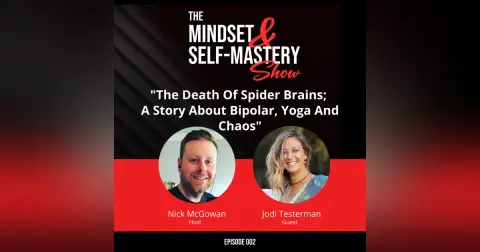


“Yoga taught me awareness. Because you can’t make a change until you’re aware of the behavior.”
In this episode, Nick speaks with Jodi Testerman to discuss how she manages her bipolar disorder through Yoga, mindfulness, and medication. They unpacked her journey to diagnosis and the path she’s been on since, which is helping other women like her to live rich and happy lives.
About Jodi Testerman
Jodi is a registered yoga teacher (RYT-200) who also happens to live each day with bipolar disorder. Over the past five years, she’s broken through the bipolar stigma and went from being someone who was struggling with life to someone who has helped hundreds of women cultivate a personal yoga and mindfulness practice from the comfort of their own homes. Her BIPOLAR CONTROLLED program helps those living with bipolar disorder transform the way they perceive the world around them and manage their ups and downs with grace and dignity. Jodi studied at the Yoga & Ayurveda Center with Stephanie Mitchell to obtain her RYT-200 certification. Her recent work is in demonstrating the scientific side of the bipolar mind and marrying ancient yoga concepts to change the chemical makeup of the brain.
Resources:
Interested in starting your own podcast or need help with one you already have? Send Nick an email or schedule a time to discuss your podcast today! nick@themindsetandselfmasteryshow.com
Thank you for listening!
Please subscribe on iTunes and give us a 5-Star review! https://podcasts.apple.com/us/podcast/the-mindset-and-self-mastery-show/id1604262089
Watch Clips and highlights: https://www.youtube.com/channel/UCk1tCM7KTe3hrq_-UAa6GHA
Guest Inquiries right here: podcasts@themindsetandselfmasteryshow.com
Your Friends at “The Mindset & Self-Mastery Show”
Nick McGowan
Hello and welcome to The Mindset and Self-mastery Show. I’m your host, Mark McGowan. And on this show, my guests and I unpack the stories that shape us and the lives we lead on our path to self-mastery. Today on the show, we have Jodi Testerman. Jodi is a yoga teacher who lives with bipolar and helps women with bipolar disorder manage a life with dignity and grace through yoga, mindfulness and science.
Nick McGowan
So let’s not wait any longer. Let the games begin. Hello, Jodi. Thank you so much for being here. I’m excited that you’re on the show with me today. Appreciate you. Looks like you’ve got a nice, warm cup of coffee. I hear that you’ve moved recently, so we’re going to get into that a little bit. But thank you for being with us, Jodi.
Jodi Testerman
Yeah, absolutely. Thank you for having me.
Nick McGowan
It’s great to have you on here, everybody, to give you a little bit of background on Jodi. Jodi and I have actually used to work together. We were kind of partners in crime in a sense, sort of to build out a division of a company we were working for and had a lot of fun. And I was able to watch Jodi as she worked through her personal growth and as she went through everything she was going through.
Nick McGowan
To give you a little bit of deeper background, Jodi is a registered yoga teacher who also happens to live each day with bipolar disorder. So, again, I’ve been able to witness some of that that coming to the truth and her opening up about her life and the things that she’s gone through. And Jodi, to kind of start this off, can you tell us one thing about you that you do for a living and something that most people just don’t know about you?
Jodi Testerman
Yeah, absolutely. I’ve never really been a person that does just one thing for a living. So right now, I I’m doing some work for Ford Agency up in Detroit. I’m also running my own marketing and sales consulting firm. And I’m also a registered yoga teacher, as you said. And I work with private students who also have bipolar disorder.
Jodi Testerman
Something that people don’t know about me. I actually used to close the TV show back in my twenties was a motorcycle TV show, so I was on TV for about three years.
Nick McGowan
Wow. So where was where was that episode or what was the show at, rather?
Jodi Testerman
It was hosted on the CBC affiliate in Indianapolis at SO.
Nick McGowan
So I want to get into that a little bit. How did you get onto TV?
Jodi Testerman
So this just kind of fell in my lap, honestly. At the time I was selling advertising airtime for the network and I sold a lot of airtime in this show and the co-host left and I saw the opportunity and I applied for it.
Nick McGowan
That’s beautiful. Now, you said that was in Indy, Indianapolis right now. And you’re in Michigan.
Jodi Testerman
I am in Detroit now, yes.
Nick McGowan
Wow. So some context here. Audience Jodi and I work together in Tampa, Tampa, Florida. So that’s currently where I live outside of Tampa Clearwater area. And before we started recording on the episode, we were kind of joking, she’s got nice hot coffee, I’ve got cold brew because it’s 80 degrees here and I think it’s 80 below there. So, Jodi, what is the temperature and why are you in Detroit?
Jodi Testerman
So what is the temperature by my Detroit? So it’s it’s about 30 degrees here. We got like four inches of snow in a matter of an hour last night, which I haven’t seen in about six years because I was in Tampa. So that was fun. I got to drive and snow. But what brought me to Detroit is I’m actually going through a divorce at the moment and I had an opportunity to come up here and actually do some contract work for one of the ad agencies that I studied in college.
Jodi Testerman
It was 19 year old Judy’s dream job, so I took contract and I made the move. It all happened within about three weeks and it’s been chaos, but really good. I also have a really good support system up here, tons of friends. Yeah, I’m absolutely loving Detroit. I didn’t expect that, but it’s phenomenal. Great city.
Nick McGowan
Well, it’s interesting that you point out that everything’s a little chaotic because for the years and I think I’ve known you five or six years or something like that at this point, the years that I’ve known you, you’ve never not been like not chaotic. Things have always been a little chaotic. So it feels to me like you’ve enjoyed some of that.
Nick McGowan
But at the same time, you know, the point of this podcast is to be able to break out the stories and unpack the stories that we’ve gone through in life that make us who we are right now. And I know you and I have had different conversations on business trips over the phone face to face for a couple of drinks in hand, talking about things, getting into the real stuff about life.
Nick McGowan
And I know some of the chaos was sort of a defense mechanism in some ways to be able to get away from other things. And I’m absolutely proud of you for the work that you’ve done to be able to step out in multiple ways. So I’m a little unsure of exactly how to go about starting this with you because there’s a lot of different avenues that we can kind of get down.
Nick McGowan
But Jody, let’s let’s start from the beginning. Break down for us a little bit. What makes you you today? Where did you come from?
Jodi Testerman
Yeah. So I grew up in rural Indiana. I don’t recommend it. They’re not not great for me. But, you know, I have I have one brother. You know, I did that. I had a a relatively normal childhood with you know, I was in athletics and school activities and, you know, a relatively stable family, at least until I was in my pre-teen years, at which point, you know, my brother was in and out of jail constantly.
Jodi Testerman
I mean, I remember being, you know, ten, 11 years old and spending my weekends at jail visiting my brother. But, you know, I played softball, played volleyball, basketball. I ran track for a while, swam for a couple of years. I’ve always been the type, as you alluded to earlier, that keeps myself incredibly busy. And I do think that that’s a defense mechanism, which is something that I’ve recognized throughout the treatment that I’ve been through the past few years since my diagnosis.
Jodi Testerman
Is that staying busy is a way to calm the mind, right? And so I’ve had that realization. Now, you know, when you look back on it, hindsight’s always 20, 20. But yeah, stay busy. You know, I, I’ve rarely ever worked just one job. I need lots of variety and lots of different interactions with people to kind of fuel what’s important to me.
Nick McGowan
So how did you get to the point where you you had felt like something was a little different on multiple levels? I know you haven’t lived the you know, find a high school sweetheart, get married, pop out two and a half kids half is always weird. But you know, I have a white picket fence, 3.0. So. Yeah, that’s it.
Nick McGowan
Is that a little, little kid at that point? Little person or whatever it would be? I don’t know. So I know that path wasn’t really the path that you went down, but that it was a little difficult for you to be able to step out and into your truth. So can you share what those truths are and kind of what led you to those?
Jodi Testerman
For sure. So I will back up and say that I did marry my high school sweetheart, 21 years old, and that lasted for 14 months before I decided that he was incorrect for me, he was also bipolar and refused to take his medication. So this was preemie figuring, you know, some of the same things out for myself. But I will say that for a very long time I knew something was wrong.
Jodi Testerman
I didn’t know what it was. I’d been in and out of therapy, fired, you know, multiple therapists for just not feeling like they really understood me. Right. I never went to see a psychiatrist because I thought the stigma of needing to take a pill every day for the rest of my life. Right. So when I got to the point where, you know, I was idolizing self harm, which was about four years ago, was when and, you know, I decided something’s really wrong and and we need to go seek help.
Jodi Testerman
Right. And it it took my psychiatrist at that moment about 5 minutes to diagnose me. You know, I, I talked about my struggles at work, my struggles with relationships. Right. And so the pattern that I’ve always seen is that I, I will work circles around people. I will get frustrated at people for their speed. You’ve seen this, right?
Jodi Testerman
Get frustrated. I caused problems and then I had deep regret. Right. And so as a result of that, what you’ll see from me is that since I graduated college in 2006, I think I’ve had like 14 or 15 jobs. You know, like I I’d have a meltdown at work and then I would be like, Oh my God, I can’t go back and do this again.
Jodi Testerman
I have to go find a new job. Right? So that pattern has repeated itself and lots of other bipolar patterns, right? Like I, I rarely can hold together a relationship even still, right? Even even with the medication and the treatments and everything that I’ve done, social relationships are difficult. I often I find that I misinterpret situations and misinterpret the way, you know, the way comments are made.
Jodi Testerman
I tend to take a lot of things very, very personally and I will retaliate. Right. And so a big part of my healing and treatment has been through the lens of yoga. Right? Because the big thing that yoga has taught me is awareness, right? Because you can’t you can’t make a change until you’re aware of the behavior. Right?
Jodi Testerman
If you don’t know what’s happening until it’s too late, there’s absolutely nothing you can do about it right. So I’ve spent I got my 200 hour teacher training certification with no real intention of teaching. Right? Like I was just fascinated by the philosophy, looking at how it can impact the mind. And after I got into into it, I was like, oh, my goodness, I want I want to teach other people what I’ve learned and how it’s helped me.
Jodi Testerman
And since then, I’ve actually gotten into the scientific side of the bipolar mind, and I’ve started really marrying, you know, studies that talk about gray matter and the prefrontal cortex of the bipolar brain with studies on mindfulness and meditation and how those two really work together. So I teach that to my private students now about how how these behaviors can impact your brain over time, because it’s it’s really fascinating lately.
Nick McGowan
That is fascinating. It’s interesting when you think about how the physical, mental and the spiritual can all tie together. For the most part, I think a lot of people and maybe you agree, I think a lot of people kind of separate those three. It’s almost like their own personal holy trinity in a sense. You your body is a temple.
Nick McGowan
You’ve got to take care of it. I know that I put it in my system at times and there are things that probably, you know, I shouldn’t. But at the same time, I also understand there’s a balance in life, you know. So how do you how do you find balance throughout your day knowing that you’re on a path toward greatness and you’re working to do great things?
Nick McGowan
You’re still also a work in progress. So how do you balance yourself from going, you know, kind of down a deep, dark path and feeling bad or just moving in a negative way? How do you balance life?
Jodi Testerman
It took me a while to find the right cocktail, for lack of a better word. When I started working with my psychiatrist, you know, they suggested a mindfulness practice and journaling, you know, lots of things reading, yoga, exercise, you know, there’s there’s a million different things that you can do. And I will admit that when I first started all of this, it felt overwhelming, right?
Jodi Testerman
Like, how in the hell am I actually going to fit all of these things that I need to do to be okay into every day? Right. And so it took me a while to get there, but routine is something that’s really important for people with bipolar disorder. So we will you know, we make plans with friends. Friends canceled, we lose our goddamn mind, right?
Jodi Testerman
Like, oh, my God, what happened? Is it my fault? Know, why does everyone hate me? And you can spiral that way, right? So I honestly had a lot of conversations with my friends early on, too, right? I’m like, I need you to communicate with me. We need to talk about plans. I need to understand plans are changing. And so I’ve been very open with those that are close to me and just saying, I need you to understand the impact of your actions on me.
Jodi Testerman
Right? So that was one big thing that that helped a lot. The second thing that I did is I went through, you know, the last 20 years of my life and I made some apologies. I reached out to people, I had conversations. I, I explained what was going on and I explained, you know, what was happening in my mind in those scenarios where I had hurt people.
Jodi Testerman
And that was honestly one of the most healing things that I could have done right is address the things that I was still carrying guilt over 20 years later. But aside from that, you know, my my day to day, my morning starts the same every day I get up, I receive, I make a pot of coffee and I get on my yoga mat, you know, and depending on how much time I have, I have my cup of coffee on the mat.
Jodi Testerman
I do a 5 to 10 minute meditation in, and then I do a just little gentle, you know, light, morning flow, wake up the body, sync the breath to the movement. Right. That’s it’s very meditative. It teaches awareness, right? So it’s one of the first things that I teach my students is mindful movement, because mindful movement ultimately translates to awareness off your yoga mat.
Jodi Testerman
So my morning routine copy of my meditation, a little bit of yoga, and then I read my goal is ten pages a day. I don’t say that. I sit down and read a whole book every day, but I’m very into science education and making sure that I’m kind of staying up with with what’s going on. So, you know, all of those things used to be overwhelming.
Jodi Testerman
I was like, oh, my goodness, I do these four things every morning, but now I do it all in 45 minutes or less. You know, it’s it’s not a big chunk of the day. I make sure that I’m up and that I start my day right. And that that routine is really important to me. I then start my workday, usually about, I don’t know, 730, I make sure I eat.
Jodi Testerman
That’s another thing that we forget to do by or people just don’t remember to eat. And so when I when I first started getting myself into this cadence and into this routine, I was setting alarms, right? Like, go eat a snack, put something in your body, right? Because blood sugar is another thing that can send you into mania, right?
Jodi Testerman
And so if your blood sugar spikes and then drops, it can kind of send you off the deep end. I make sure I exercise every day, you know this, but I’m big into CrossFit. I actually spent a couple of years competing, but exercise is endorphins, right? And endorphins are good for your brain. So I make sure that I get, you know, at least 30 minutes of, I will say, vigorous exercise in every day.
Jodi Testerman
Right. Which is theoretically another form of meditation. Right. It is. Your mind is doing one thing at a time. Which is which is how we think about meditation. Right. You’re not you’re not doing anything else. You’re focusing on one thing and then I make sure I sleep, which is something, you know, when I first got diagnosed was one of my number one symptoms.
Jodi Testerman
And you know, this, I, I would go weeks on end with one or 2 hours of sleep a night and still run circles.
Nick McGowan
And then be upset around weren’t able to, you know, pick up the speed with that crack.
Jodi Testerman
Were you there the day I threw the laptop at a coworker? Yeah, that was one of my finest. Well, that was beautiful.
Nick McGowan
It was like playing jazz, you know?
Jodi Testerman
So, you know, I get that.
Nick McGowan
You’re welcome.
Jodi Testerman
Right? So then I. I don’t think journaling as much is a priority as I used to. You know, when I was first diagnosed, some of the reflective properties of journaling were really important for me, right? How I use journaling now is different than how I used it when I was first diagnosed. I actually write a lot of poetry now and so it’s it’s a really good release for me to get my thoughts out in a way that rhyme or make sense that is, you know, somewhat artistic.
Jodi Testerman
And so I do that now. I’m actually considering publishing some of them, which I’m excited about. But, you know, so recap coffee meditation way.
Nick McGowan
You said brushing your teeth first. So feet on floor or out of bed teeth. Coffee Matt that we’re we’re at.
Jodi Testerman
Yeah, exactly. And then book right. And then work and I will often step away from my desk now that, now that we live in this remote world and I’m not going to an office every day, I’ll often get back on my mat at lunch time. Right? Just like kind of recenter for the day when I and my day, I go to the gym.
Jodi Testerman
I used to be a morning workout person, as you know. But now that I live in the Great White North where it’s absolutely freezing, getting myself outside at 530 in the morning is just not just not happening. So I become an evening workout person, which was an adjustment I did. It increases your endorphins and serotonin later in the day, which made it harder for me to sleep initially.
Jodi Testerman
But I’ve adjusted to that routine now and I try to replicate it right. Like every day.
Nick McGowan
It sounds a couple of the major things here are habits and adjustments or something that I really like to get into. And I know that you you understand this because we’ve had many conversations is I’m not afraid to call bullshit or get into something deep. And I think there are there are different people, clients of mine, maybe clients of yours and people that we know about either friends or family or what have you, that they really struggle with that gray area of going, I want to do something, but then doing the act of doing it and getting into the habit of that, where basically what you just said was you have about an hour, 15,
Nick McGowan
maybe an hour and a half of stuff that you need to do every day. You also mentioned that the beginning of that you had thought this is going to be crazy. This is going to take me so long. I don’t have any time to do any of this stuff. And that’s a real thing that everybody thinks about.
Jodi Testerman
Yeah.
Nick McGowan
I don’t care if you have zero kids, if you got 40 kids, if you run a ginormous company or you don’t do a damn thing at all, everybody has that same B.S. excuse of I just don’t have time to do it. You got to be aware of it. So it makes me think of how do people get into that spot where they’re able to actually set a habit and hold themselves accountable?
Nick McGowan
And that’s the sort of stuff I want to get into with you right now. You know, you took some time to be able to kind of work through that. You had some people that you talk to friends, psychiatrists, etc.. But what tips can you give the audience to be able to actually help set up that that habit and have grace set themselves for the times that they don’t do it?
Jodi Testerman
Yeah, I think that’s a really good question and I honestly think that everyone’s different, right? So some people are in a place where they can bite off more than others and be okay with it. You know, science tells us that it takes 21 days to form a new habit, right? So when I when I’m working with people, I suggest one thing at a time, right?
Jodi Testerman
Like for the next 21 days, let’s make sure we exercise every day or for the next 21 days. Let’s make sure we meditate every day, 5 minutes a day, not asking for a ton. Right. Do it at the same time. Make it a habit. Force yourself to do it. And there has to be there has to be some will there.
Jodi Testerman
You have to want to do it right. And if you don’t want to do it, you won’t. If you don’t want to make the change, you won’t. Right. So there has to be this level of commitment to yourself, right? You have to want to change. You have to want to get better. But I generally recommend that people are kind of almost like water falling these things into their life.
Jodi Testerman
Right. So we’re going to start with one thing and then in two weeks we’re going to add another five or 10 minutes of something, right? And I say five or 10 minutes initially because there’s so many things you can be doing, right? Like those are just the things that I do. Like some people like painting and gardening and you know, whatever it is for you, if you start out small, you’re going to know what works for you quicker, right?
Jodi Testerman
You don’t need to dove in and be like, I’m going to build a rooftop garden and this is the only thing I’m going to do. And then, like you know, you go spend $2,000 on your garden and then in two weeks you’re like, I hate this. All right, so so you rolled in slowly. You’re able to kind of tell what works for you, what calms your mind.
Jodi Testerman
Ultimately, that’s what it’s about, right? Is is what is the activity for you that calms your mind for me, I need multiple not everyone does.
Nick McGowan
There are different things that touch different spots in your body in a sense. So meditating does a certain thing, journaling does a certain thing, exercising does a certain thing. I know there are some people that literally get up out of bed and just instantly start working out.
Jodi Testerman
Yeah. Thank you, Sydney.
Nick McGowan
Yeah, I know you get up and you just run out to CrossFit and you’d be doing your thing. I think a Tony Robbins where I think he actually gets up and runs out to like icy water in the morning and it sits and he jumps in the water. That’s a thing that’ll wake you up. All get getting into that habit is super important, you know, and I have different conversations with people at times where they give me excuses about the habit to be able to set up the habit.
Nick McGowan
And I think you nailed it. You got to want it. You don’t want it. Not going to do it. So let’s actually make it kind of a little detour and talk about that, talk about the the will and the mind management to be able to kind of get yourself through those days, that conversation with very close friends that they’ve told me that when they have rough days, they just say, look, today’s just not the day and they move along.
Nick McGowan
And that’s the thing for them that they’re able to shut it down. Others are they’re a little bit more intuitive with how they go about the day, but how do you kind of move throughout your day? And again, this goes back to balance.
Jodi Testerman
I’m going to jump a little bit from that because I think one of the things that’s important to recognize, at least with the bipolar mind, is that medication kind of bookends your highs and lows, right? So they’re going to make your highs less high. They’re going to make your lows less lows, less lows last low. But there’s this whole kind of world in the middle that you have to navigate.
Jodi Testerman
Right. So you’re you’re still going to have these moments of up and working circles around people and you’re going to have these moments of low and depressed. Right. The thing that I tell people a lot and you heard me say this is leaning right. If you feel depressed and you need to spend a day in bed, do that.
Jodi Testerman
But don’t let it turn into two weeks. Right. Give yourself a time frame. Right. So it’s almost like making contracts and agreements with yourself to say, you know, I know I’m going to go through this and when this happens, I’m going to allow myself to sleep for 12 hours and then I’m going to set an alarm and then I’m going to be five, four, three, two, one feet on the floor and go jump in the damn icy water.
Jodi Testerman
Right. And there’s that level of awareness accountability agreements with your self. Right? It’s it’s holding yourself accountable to your own healing. Right. And I think that that is one of the hardest things in working with the bipolar segment. Right, is that there’s there’s so much up and down and there’s there’s honestly a lot of excuse making, if I’m honest.
Jodi Testerman
Right? Like, I live with it. I get it. I understand it. And I made excuses for a very long time. I didn’t see a doctor for 16 years. Right. So I get it. But I see it everyday now. And the women that I work with, I’m just I don’t have time for this or I can’t get out of bed or I’m mad and I cut all my hair off.
Jodi Testerman
You know, it just there there’s endless and endless excuses and, you know, one of the things that I, I recommend and I work with my students on day one, what if goals what do you want to do? Let’s write them down and let’s put them in front of you. And you’re going to wake up to that every day.
Jodi Testerman
You’re going to see that every day. And that’s one way to hold yourself accountable to it, to what you want. Right? It’s real easy to say you want it today and then tomorrow wake up and be like, Oh, my priorities have changed. Right? And it’s like, well, have they have they or are you popping out on yourself? I don’t remember what your question was.
Jodi Testerman
I don’t feel like I couldn’t eat it.
Nick McGowan
Yeah, in certain ways. I think when when we look at how people need to hold themselves accountable, we as people can can let ourselves down easily. How I do it, I’m sure you do it. Everybody does it. You know, there are things that you go, I’m going to do this thing and then you don’t, and that’s okay. You’re like, Well, I wasn’t, you know, I didn’t really need to or what have you.
Nick McGowan
But if someone’s life and death, most of the responsible adults in the world are going to do something about it, they’ll typically wait until they need to, you know, I think back to grade school, high school people that go to college that, you know, they do whatever they’re going to do the night before. They need to submit that paper or whatever it’s going to be.
Nick McGowan
That’s the that’s the tough point that a lot of people really struggle with is going from that. I think that I have a problem. I don’t want to do something about it because I’m afraid of what a potential answer is. So how did you get through that and get yourself to the point and really the audience to have some of those little tips and tricks of going to see if they’re okay?
Nick McGowan
You know, it’s not it’s not a bad thing. But how did you get yourself to the point of saying, I need to go do this?
Jodi Testerman
I think the first thing for me was accepting my diagnosis. Right. So it’s it’s honestly one thing that a lot of people find because it’s another label. Right? And our society is so, so, so label happy. Right. And, and when you get that diagnosis, I mean, I can tell you that my mind immediately jumped back to the movie Sybil.
Jodi Testerman
Right. And I’m like, Oh my God, I don’t want to be like that. Right? Like that Sally Field movie was absolutely terrifying. And in the way that her brain works and for me, accepting my diagnosis took lots of writing, right? I had I had to force the thoughts out of my brain of like, well, let’s recount your last 20 years, Jodie.
Jodi Testerman
What’s the dumb shit that you’ve done? Right. And it took me about three days. It honestly wasn’t very long. Right. It takes some people a lot longer to accept the diagnosis. To me, about three days of writing, almost writing constantly. Right. Like I took a few days off work and I just was sitting on my mat and I was writing and I came to the realization I wound up laughing.
Jodi Testerman
Right? Like I wound up in this place of, oh, shit, that’s right. That makes some sense, you know? And and I think that you have to accept it and then you have to want to change, right. Like I, I’m an incredibly driven person. I want to be successful. I use my mania to my benefit, but not everyone’s like that, right?
Jodi Testerman
So it took that level of acceptance for me to be able to move into, okay, how do I manage that?
Nick McGowan
You mentioned that it took 16 years for you to go see a doctor, and that’s why I’m kind of breaking that down a little bit to help anybody that’s out there that’s listening to this podcast to save that time. You went through the 16 years of the ups and the downs and the different battles, how what sort of things it sounds like mind dumping is something that would be helpful, but what sort of things would you suggest to that person that’s kind of on that cusp of I don’t know if there’s something that I should get checked out or not.
Jodi Testerman
So, you know, I mean, there’s some pretty, pretty common symptoms of bipolar and then there are actually a few levels of bipolar. Right. So there’s bipolar one which often comes with with schizophrenia. And it’s it’s more full blown mania. Right. And those those manic attacks can last for weeks on end. There’s then bipolar two, which is characterized by having bigger bouts of depression.
Jodi Testerman
Right. So I am on the bipolar two spectrum and it just it’s a wild fucking ride, man. Like I you know, the things you want to look for are not sleeping, mind racing, being able to accomplish more tasks than anyone. There’s hypersexuality. There’s inability to maintain long term relationships. There’s an ability to keep a job. I read a statistic recently that said, like, people miss like 45 days of work a year or something like that do due to bipolar disorder.
Jodi Testerman
Right. And so I then dove into that. I’m like, what’s the financial impact of that? Right? Like oftentimes people. So it can kind of go both ways, at least from the research that I’ve done. Right. And I’m not going to I’m not going to pretend to be an expert here on this. But, you know, there’s there’s the people that are highly driven that want to be successful and they use their bipolar to their favor.
Jodi Testerman
There’s then there’s other group of people that use are bipolar as an excuse. Right. They they want the disability check. They they want to not go to work or they truly believe that they can’t write. And I think that that’s where that mindset differs for me, right? Is I’m saying, okay, I have this thing, I’m not this thing.
Jodi Testerman
I’m not going to let this define me. I’m going to figure out how to make it work. But I think that that comes from an internal drive. And we talked a little bit about childhood. I was a very, very competitive athlete. I played Division one softball. And that experience really taught me about time management and the ability to multitask and the ability to work hard and to play hard and to want to be successful.
Jodi Testerman
I think like 1% of the population makes it to be a division one athlete, right? Like that doesn’t come without some level of so awareness and dedication and willing to commit to something. Right. So I’m not saying that everyone is born and bred that way, but I do think that some of those things can be learned.
Nick McGowan
The athlete in you probably helped a lot more than you understand because of that team mentality. Everything that you went through, kind of going through that, playing travel ball and stuff as you grew up. And that’s kind of also a testament, I’m sure, to your parents, too, because it’s not like you hopped on the bus and just went along and didn’t do anything.
Nick McGowan
I’m sure they supported in some certain ways. And being able to break down your 20 years of experience and your past and going through all of that, that’s crucial. You know, we all go through trials and tribulations and things of that sort, but are there any major episodes or things that happened throughout life that you can really tie back to and go?
Nick McGowan
This was a moment in time that changed me.
Jodi Testerman
Moment in time that changed me too. Yeah. So there was a night and this was shortly after my diagnosis and so when they when you first get started on bipolar medication, they titrate you up to your dose. Right. And and there’s often this period of not knowing which specific medication is going to work for you. Right? So it’s this like cocktail of crazy, right?
Jodi Testerman
And it’s just like, oh, my God, I feel awful. I don’t know what’s going on. And there was an evening where I was just at a friend’s house having dinner, and we got in this somehow heated debate about type two diabetes, which is not important to anyone. Right. But to back up to the last question, that’s one of the things that I used to do, is I would hold on to something small if it didn’t if I didn’t agree with it, and I would make this just mountain out of it.
Jodi Testerman
Right. Like this is a big deal and I need to win this argument or whatever. Right? Which fit like. So anyway, that happened that night and I got just like pulse racing, crazy heart sweat, and I stormed out of my friend’s house and I threw myself into the street and a friend came and pulled me out of the street as traffic was coming.
Jodi Testerman
Right. And so that was one of those moments where it was just like, poof, that was scary. Right? And and I really had no awareness of it. And in the time that it was happening and I’m very, very thankful for that friend to this day. Like, I don’t know, you know, when you when you go through, they call them mixed episodes, right?
Jodi Testerman
It’s where you are manic but depressed at the same time. And honestly, those are some of the most terrifying experience that I’ve had, because as you were not aware of what you’re doing. Right. And I think the one thing that that’s taught me is that emotions are fleeting, right? They they come and go. They are not permanent. And it takes a level of awareness to not make permanent decisions based on temporary circumstances.
Nick McGowan
Beautiful. And that’s a quote right there? I don’t mean to interject. Yeah, that’s a beauty.
Jodi Testerman
No, no, I think that’s it. You know, but I mean, I was going through other other things in my life at the time and I would get upset and I would storm out of the house. I wouldn’t take my phone, I wouldn’t even wear shoes sometimes. And I would just be wandering around. Right. And, you know, then you you kind of you snap out of it, right?
Jodi Testerman
Like, it’s almost like being like blackout drunk is kind of like the best way that I can describe it is like you’re functioning and you’re doing things in your mobile, but you have no idea what you’re doing, right? And I’m just like, Oh my good God, I’m not like, I’m on my way to being the crazy lady wandering around in her nightgown in the streets in the middle of the night.
Jodi Testerman
And that’s not the person that I want to be.
Nick McGowan
It’s not the goal in life.
Jodi Testerman
It was not my goal right now, my goal at all. And the good thing is that it can be managed. Right. And so, you know, I know a lot of people are medication adverse and I’m not one of those people. I understand why people are metaverse. You go through a period when you first start taking medication almost feeling numb.
Jodi Testerman
I can tell you that that goes away because it dulls your emotion. Right. And they feel this high. They feel less low. And that’s something that’s uncomfortable because you’re not used to it. Right. And so I would say it took me probably six months to kind of titrate up to the whole dose of medication that I needed to get the right medication.
Jodi Testerman
I mean, I think they gave me seven different sleeping pills before they found the one that works. And in all reality, the one that works for me is like basically like an over-the-counter Benadryl. And it’s weird, right? Like, why why doesn’t the Ambien work? But but this one does, right? So everyone’s brain chemistry different? I don’t know. I’m glad I would do.
Jodi Testerman
Doctor, I’m a big proponent of medication, but I do understand that it doesn’t stop with medication.
Nick McGowan
And would you say that’s what has led you to eyeing the physical and the scientific together?
Jodi Testerman
I got really interested. So there’s a couple of things to unpack there. So one of the things that I wanted to understand and this is, you know, part of, you know, my marketing plan for the students that I’m working with was that I wanted to understand the financial impact, both direct and indirect right of of living with unmanaged bipolar disorder.
Jodi Testerman
Like, what does this look like? Right? Like, what are what are your lost wages? How much are you spending on, you know, being for a manic episode and then the costs are exorbitant, right. You know, the suicide rates are incredibly high among bipolar people. Like there’s a ton of costs associated with it. So I kind of started my research there saying, okay, like what’s going on out there?
Jodi Testerman
And then I quickly kind of pivoted to wanting to understand the unique brain. Right. And it’s difficult. There’s not a lot of studies out there a lot of people are either misdiagnosed with anxiety, misdiagnosed with depression. A.D.D. is a is a big player in it, too, which I also but because of that, it’s very hard to study the impact of meditation and mindfulness on one specific brain type.
Jodi Testerman
Right. So I just like digging. Digging, digging. What’s in there, what’s in there, what’s in there? And I finally landed on tons of studies about so gray matter in the prefrontal cortex of the brain. And I want to go to science, the idea, but it’s basically responsible for your emotional regulation and control. Right. And so the bipolar brain has less gray matter than the normal brain.
Jodi Testerman
Right? So then I said, okay, well, what’s the impact of meditation on the gray matter in the brain? Right? Oh, it restores it. That’s cool. How long does it take to restore it? Right. The truth is, it’s different in every one, but that’s the path I really went down as wanting to not. So I will say that I’m absolutely happy to be a good person.
Jodi Testerman
You know that I didn’t wear patchouli and tons of patterns and look crazy all the time, but the science piece of it was really important to me, you know, especially as I’m starting to work with mental health facilities on coaching and some of these things, understanding the scientific aspect of it was really important to me and I fell in love with it.
Jodi Testerman
I’m like, This is cool stuff.
Nick McGowan
Oh my gosh. Yeah. I mean, even just to think about meditation or anything at all that can regrow gray matter, I think a lot of people don’t understand that your body, your spirit and change everything. It’s a matter of you putting it in order to be able to do it. I think of almost like a video game. That’s like I’ve said this to you before, it’s like a Zelda games.
Nick McGowan
Like sometimes you try to race through a level and figure out like, I haven’t missed that damn key. You got to go back and get the key and come back and then you’re able to go through and move along. Still going to go through those steps and those things to be able to get there. So I appreciate you unpacking everything you’ve unpacked.
Nick McGowan
I appreciate you sharing what you’ve gone through now. It sounds like habits, routine and discipline are major things that you go through. Your journaling, your meditating and your yoga and our main, main things that you focus on each and every day. But is there anything else or anything that you want get a little deeper with for the audience to help them?
Jodi Testerman
I don’t recommend meditating in a depressive state. It it can not be great for your psyche and it can kind of throw you into into further depression, right. If you start analyzing your thoughts when you’re already depressed, it’s not very right. So when when people are depressive, it’s the exercise, right? Let’s let’s boost endorphins. Let’s get the serotonin rolling in the brain and then let’s step into our meditation.
Jodi Testerman
Right. So it’s all about, you know, if I have one piece of advice for anyone dealing with this, it’s about finding what works you, right, committing to yourself and finding what works for you. There’s a million things that you can do, but no two people are the same, right? And so figuring out that prescription for you description plan works there, but I’m not actually talking about medication.
Jodi Testerman
You’re right. Like I’m talking about your day to day habits in your day to day life. You know, I think I think everyone should be exercising no matter what. Right. Like that is rule number one, 30 minutes of exercise a day, hours better if you have time for an hour. Right. But aside from that, you know, the mental work paint a picture color in a book, you know, journal like find what works for you.
Jodi Testerman
So that’s generally what I tell people.
Nick McGowan
Yeah, I know something we both agree on that we preach in a sense to all of our clients is awareness. You’ve got to be aware first. If you are not aware how to act, can you do anything about something you’re totally unaware of? So how you suggest people go about becoming aware?
Jodi Testerman
Such a good question and I forgot to even say this earlier. So one of the things that everyone should do is track the needs, right? So simple. It doesn’t have to be ridiculous understanding your cycle and how often you flip. Real important, right? Like I can tell you right now that I’m going to be on a ten day up cycle and a four day down cycle, but it took me six months of tracking and it was as simple as I had a calendar and every day I would put an up arrow, a down arrow or just a dash neutral.
Jodi Testerman
Right. And that really helped me understand what my brain was doing. And it was a very cyclical. Right? Very. And most people I have found are very cyclical in that way. Right. So that’s one really great way to be aware of what’s happening chemically in your brain. The second thing that I really preach is mindful movement. So when you start to marry your movement to your breath, right?
Jodi Testerman
And I’m even talking simple things like inhale, raise your arms, exhale, lower your arm. Like it doesn’t have to be complicated. Right? But what you’re doing there is you’re training your brain to do one thing and to be aware of what your body is doing. Right. And so over time you become more aware of other things, right? Like I’ll notice my foot starts going like this, but I need to take a break.
Jodi Testerman
Right. You’ve seen my foot do it. You’ve seen me sit in your office and be like, I need to be upside down right now. And then I’m doing handstands in your office, right? So those two things were really clutch for me. So, you know, tracking your mood up or down and then really marrying your mind and body, right of we’re all working together here.
Jodi Testerman
We’re going to do the same thing.
Nick McGowan
And that’s good stuff. The the awareness and the discipline to become aware. It really starts at the habits and your habits can change every single day. It’s up to you to be able to actually sit down and do something. So I think one of the major takeaways is to spend five, maybe 10 minutes a day doing something. So as we record this episode, we just a couple days away from New Year’s Eve, and I know a lot of people will put together resolutions.
Nick McGowan
I also know a lot of people that think it’s actual dog shit to put resolutions together, different people in different camps, and that’s totally fine. I don’t think it’s really a matter of a resolution or not. It’s a matter of a habit change and being disciplined to my challenge to the audience and everybody that’s listening is to be able to pick something that you feel with your gut that could actually be a benefit to you.
Nick McGowan
Is it meditating? Does it come to you? A couple of times somebody said something to you a couple of times, or is it journaling that really stands out to you? If one of those things stands out, please spend a couple of minutes to be able to do it. Jodi, would you have something to add to that?
Jodi Testerman
No, I was going to comment on the New Year’s resolution thing. I I’m not a big fan of only setting goals for yourself one time of year. Right. So when I think about my goals and this is something that I didn’t really touch on, but every morning I set three intentions for my day. Right? What do I want to accomplish for myself or what do I want to accomplish for work?
Jodi Testerman
And what’s my forward thinking thoughts? Right. And I write those down every morning as and this is what I’m doing today. This is what’s important for me, what’s important for my job. And this is what’s important for Jodi tomorrow. So as a about intention and I do a daily write, I will say that I reset goals, mood boards, vision quarterly, right.
Jodi Testerman
Like I’m going through, I have these little core chords that I use and I, I go all sorts of like, you know, sixth grade poster project on the cut and stuff out of magazines and, and putting it visually right, like right above me. This is, these are my goals. This is what I’m chasing. And then at the end of the quarter, I kind of go to those things.
Jodi Testerman
I rip off the board what I’ve accomplished. I leave the things that I haven’t. I add to it. But I think that those visual reminders of where you want to be are so important, at least were for me.
Nick McGowan
You think that’s a major benefit to your success with managing your bipolar?
Jodi Testerman
Yeah, I do. I do, because it’s real easy. So we are absolutely known for starting 5 million things and finishing nothing. A lot of bipolar people also have A.D.D., which we’ve seen for me. So it’s real easy to get distracted. Right. And so it fuels that level of stay on track for me, right? Like you don’t need to take your business in 5 million directions.
Jodi Testerman
You need to focus on this one, at least for this quarter. Right. And then let’s evaluate let’s see where we are and then let’s see if we need to pivot before we do. 9 million, you know, spider brains.
Nick McGowan
Beware of the spider brains people. I think with that, we might wrap it up. Spider brains might be the the episode name here, Jodi. Again, I love that your time. Appreciate you being on. It’s always great to see you. I’m glad that you’re doing well. And thank you so much for sharing your story. Please tell us where where we can find you, where people connect with you, and how we can stay in touch.
Jodi Testerman
Yeah, so I. I have a website out there called Yoga for Living with bipolar dot com. It has more info on my story. It has videos, it has free yoga videos for anybody that wants to give yoga a shot. I also do private coaching, so there’s there’s lots of info out there on me on my story. I really unpack all of it on my website, trials, tribulations, everything that I’ve done, you know, in a, in a way that is since, like you said earlier, if I can connect with one person and change their life, that’s that’s why I’m here.
Jodi Testerman
Like, it’s truly been a life changing game for me to study philosophy from the yoga perspective as it relates to the bipolar brain. So I publish that stuff a lot. Keep it up to date. Yeah, that’s where I go. Yeah.
Nick McGowan
It’s awesome. Thank you so much, Jodi. We appreciate you being on.
Jodi Testerman
So thank you.
Nick McGowan
Another great conversation on today’s episode of The Mindset and Self-mastery show. I think the moral of the story from our conversation is that you couldn’t control your story, but you’ve got to want it and you got to start incrementally. But that’s just my $0.02. How about you? What did you think? I’d love to hear your thoughts on the episode today.
Nick McGowan
And if you enjoyed the episode, please jump over to iTunes and subscribe rate and leave a five review. It’s very much appreciated and if you really enjoyed the show today, go ahead and share it with your friends. We covered a pretty tough subject and got some great tips that really work for all of us. You can find links to connect with Jodi in the show notes and here other episodes on The Mindset and Self-mastery Show Showcase.
Nick McGowan
Again, it’s the Mindset and Self-mastery showcase. Thank you again, Jodi, for being on the show and for being honest, raw and real with us. And thank you to you. Yes, you for hanging out with us today. Thank you. This episode of The Mindset and Self-mastery Show was brought to you by Spider Brains, the leading cause of arachnophobia paranoia.
Nick McGowan
This episode was actually brought to you by figuring out the correct settings for all tech involved in the recording and the foresight to see this through. Thanks, past me. You done good, kid. And with that, thank you. And remember your mindset matters. And so do you.