Behavioral Health and Mental Health Breakthroughs With Jose Rosado
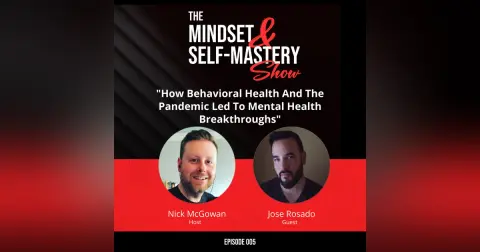


“I’ve had lots of ups and downs along that way that I thought would have broken me. I just kept telling myself, acknowledge it, sit in it.”
In this episode, Nick speaks with Jose Rosado. Jose is a behavioral health clinician and adjunct professor in Maryland who has battled ADHD, Depression, and a false diagnosis of bipolar, all of which led him to become a loving husband, father, friend, and recovery peer.
About Jose Rosado
Jose is a Maryland transplant by way of Philadelphia, who after 10+ years working as a professional portrait photographer and marketing professional, switched careers once he realized a passion for mental health and recovery. Formerly an Executive Director of a wellness & recovery center, Jose is now an SOR Peer Programs Administrator within the Maryland Behavioral Health Administration (BHA), overseeing all State Opioid Response (SOR) related Peer Workforce Programs throughout Maryland.
In regards to higher education, professionally, Jose serves as Adjunct Faculty at Towson University in the Psychology Department, teaching Abnormal Psychology. Previously, Jose has served as Participating Faculty at the University of Baltimore teaching Entrepreneurship & Digital Marketing. Personally, Jose received his Bachelors & MBA from Iona College in New York (’06 & ’08) and received his Master’s in Clinical Mental Health Counseling from Northwestern University (’21).
Jose works with adults, young-adults, couples, as well as families both clinically and within the community, specifically with his Peer Recovery Specialist work over the last five years. Jose has experience in facilitating clinical services in both community services/nonprofit settings as well as private practice, along with working with families of incarcerated individuals and those reentering their community after incarceration.
Another personal endeavor near to him, Creatives Against Depression, is an initiative helping raise awareness for mental health among people in the creative arts and starting a larger conversation to let people struggling know they are not alone.
website: www.joserosadophoto.com
Jose Rosado, LGPC, MBA, RPS
Jose Rosado Photography
Website | Instagram | Facebook
The Angry Millennial Show
Resources:
Interested in starting your own podcast or need help with one you already have? Send Nick an email or schedule a time to discuss your podcast today!
nick@themindsetandselfmasteryshow.com
Thank you for listening!
Please subscribe on iTunes and give us a 5-Star review! https://podcasts.apple.com/us/podcast/the-mindset-and-self-mastery-show/id1604262089
Watch Clips and highlights: www.youtube.com/channel/UCk1tCM7KTe3hrq_-UAa6GHA
Guest Inquiries right here: podcasts@themindsetandselfmasteryshow.com
Your Friends at “The Mindset & Self-Mastery Show”
00:00:08:00 – 00:00:31:05
Nick McGowan
Hello and welcome to The Mindset and Self-mastery Show. I’m your host, Nick McGowan. And on this show, my guests and I unpack the stories that shape us and the lives we lead on our path to self-mastery. Today on the show, we have Josie Risotto. Josie is a behavioral health clinician and an adjunct professor in Maryland who’s battled ADHD, depression and even a false diagnosis of bipolar.
00:00:31:14 – 00:01:00:21
Nick McGowan
All of which have led him to becoming a loved husband, father, friend and recovery. Here to listen close as we unpack the stories that have shaped him and how he leads himself, his peers and clients all toward a healthy lifestyle. So let’s not wait any longer. Let the games begin. Josie, welcome to the show. Man, I’m excited you’re here.
00:01:00:22 – 00:01:01:22
Nick McGowan
Thank you for being with us.
00:01:02:15 – 00:01:12:18
Jose Rosado
Oh, thanks for having me. I’m excited. You know me. This is something we’ve been talking about for a while in various iterations, so I’m happy to be here. Thank you. Yeah.
00:01:13:04 – 00:01:27:00
Nick McGowan
You know, it’s funny because most times that we talk, we’re basically having, like, a podcast episode anyway because we get into, like, 14,000 different things run amuck. Typically, your wife will be like, get off the damn phone if you like, but I’ll talk to my friends.
00:01:27:15 – 00:01:49:19
Jose Rosado
Yeah, yeah, yeah, yeah. That definitely happens. And. And I. I am very talkative, so, like, I recognize that. But what I think is interesting, too, is just like, I don’t talk to friends a lot, you know? So when I do, I’m like, I’m getting real deep and it’s never like a ten minute conversation, you know? So I don’t feel bad.
00:01:49:19 – 00:01:51:07
Jose Rosado
I make I make no qualms.
00:01:52:08 – 00:02:15:11
Nick McGowan
Isn’t it interesting as we get older, our circles get a bit smaller, and the conversations we have, we expect a higher quality of conversation. So as we go through stuff I know we do that how we were introduced. So to give a little bit of context of where Josie came from. Josie and I met a couple of years ago through a mutual buddy of ours, Josh, you probably listened and Josh and we appreciate you talking.
00:02:16:04 – 00:02:37:19
Nick McGowan
We had such an awesome night hanging out, having some drinks and dinner and talking about all the things that we could get into. And then we lost touch for a couple of years. And I just kind of remembered you as the Mexican food guy. Josh’s friend, who we went, had Mexican food. And I would think of the case of Fondo from the place that we went.
00:02:37:19 – 00:02:40:11
Nick McGowan
And I just always thought of you and deliciousness, so.
00:02:40:23 – 00:02:45:11
Jose Rosado
Yeah. Oh, that’s fine. That’s totally fine. El Camino Real in Philly.
00:02:45:18 – 00:02:46:05
Nick McGowan
That’s it.
00:02:46:18 – 00:03:04:06
Jose Rosado
Isn’t what it used to be. But when I was living there, it was a great spot that no segundos down the street is really good, but I really did. I remember the margaritas were really good at El Camino and then the what was it? The the fake buffalo, the Satan wings were really good. Oh.
00:03:04:13 – 00:03:12:06
Nick McGowan
Man. Yeah, I just ate before this recording, but I could go for some of that right now. Then again, I’m about 2700 miles away.
00:03:12:21 – 00:03:24:05
Jose Rosado
Yeah. And I had just had a massive croutons and cheese before we started, because whatever good guys should do when they hop on a podcast, it’s crunch in their hosts ear. But yeah, and I can still I can still go for some seasonings for sure.
00:03:25:03 – 00:03:36:11
Nick McGowan
And then well, let’s ah, let’s get started with all this. Man, I appreciate you being here. Can you tell us one thing that you do for a living and one thing that most people don’t know about? You?
00:03:36:17 – 00:04:17:05
Jose Rosado
I guess I would start with the latest thing in my career and I am a my official title is Administrative Officer three at the Behavioral Health Administration for the State. So basically I am a grants administrator for the State of Maryland for all the state opioid response peer programing. So a lot of like peer workforce stuff. So helping peers like myself and others, you know, get access to trainings, get access to funds to cover their certification cost to get certified.
00:04:17:12 – 00:04:46:14
Jose Rosado
And then also we have one of the grants is is in relation or in partnership with the Department of Labor from Maryland that helps with getting job trainings and skills for peers as well. So they get access to a good paying jobs that are not subsidized. And so one thing people also don’t know about me, if you look at my size, I mean, anybody who do know me know this, but people don’t.
00:04:46:14 – 00:04:58:18
Jose Rosado
I was you wouldn’t tell, but I was born at five and a half months and I was at £1 and eight ounces when I was born. Wow. Yeah. I think I unofficially held like a Guinness record for a while.
00:04:59:01 – 00:05:01:00
Nick McGowan
Unofficially, like in your family?
00:05:01:21 – 00:05:07:14
Jose Rosado
No, no. Literally, like I looked at up like, I think like in the nineties, octuplets or something came around and they beat me.
00:05:08:01 – 00:05:09:11
Nick McGowan
But I with.
00:05:09:23 – 00:05:30:18
Jose Rosado
Yeah. You know, size of coke cans but yeah, I fit in a shoebox so there’s that. It was funny. I had a buddy of mine, he was like a beanpole and he was the fat, like to this day, the fattest baby I’ve ever seen, period. Like, you see pictures of him, and he looked like a michelin baby. Like, I kid you, not every like two inches was a crease.
00:05:31:06 – 00:05:51:17
Jose Rosado
And his poor mother, he was almost £11. And his poor mother is like this four foot ten Dominican woman. And then he was really skinny growing up. So it wasn’t so he joined the Marines. Like years later, he kind of filled out a little bit, but like we used to joke and be like, Hey, who who do you think was the one who was a pound and a half and who do you think was £11?
00:05:51:17 – 00:06:11:11
Jose Rosado
And of course, I always got, you know, the £11 baby, but that’s kind of how it works out, like little babies and the being sick people, adults and then really fat babies end up being pretty trim kind of, you know, I don’t know if it’s like maybe they’re they’re, you know, kind of driving gets going sooner. What do you call their metabolism?
00:06:11:11 – 00:06:12:15
Jose Rosado
I mean, I don’t know any thinking.
00:06:12:15 – 00:06:16:14
Nick McGowan
Like you’re the mental drive. Like, maybe like I’m going to fucking get on with this.
00:06:16:19 – 00:06:22:06
Jose Rosado
Let’s do it. Or just. Yeah, just burning food and then me, I’m just like, I’m so excited to be here.
00:06:22:11 – 00:06:34:19
Nick McGowan
Well, so let’s take a little bit of a step back. Sure. You’re you said I want to start with what I’m doing now and most recently. So yeah. Give us a little bit about your background and what led you to do what you’re doing today.
00:06:36:05 – 00:06:59:03
Jose Rosado
So I so I now as I mentioned earlier, my peer so I’ve now when I was in my thirties, realize I have ADHD and I’ve had it most of my life and for a long time I’ve lived with depression and anxiety and the ADHD part was the part they would confuse like clinicians and stuff because I would get improper diagnoses.
00:06:59:03 – 00:07:18:01
Jose Rosado
So one point I had like a bipolar diagnosis and when I didn’t really agree with it, but it was what I got. So I was like, okay, I guess I’ll just live with it and figure out what to do. And then when I met the psychiatrist I have now, about six years ago, he said to me, you know, Hey, I don’t I’m like, okay, right now, I don’t think you’re bipolar.
00:07:18:02 – 00:07:35:13
Jose Rosado
You know, I don’t know what it is, but I don’t think you’re bipolar. So, okay. I said, Well, I’ll be honest. Like, I really wasn’t crazy about the diagnosis either, but at least like it was something. So if I’m not bipolar, what am I? And he was the first doctor in my life that ever said, I don’t know, I’m going to figure it out.
00:07:35:14 – 00:08:07:14
Jose Rosado
I just met you, but we’re going to manage the symptoms. And then I don’t really worry about labels and diagnoses just yet. I respected it. I’m still with him to this day. And it was probably like two years later I completely forgot. And I was like a crazy question about that diagnosis. And he said he jokingly was like, Well, I’m not ready, but if you want to force me, he’s like, I would say it’s severe depression, anxiety and ADHD, which, if you look at the way it manifests many times, can mimic bipolar disorder.
00:08:08:03 – 00:08:30:20
Jose Rosado
And I was like, Oh, okay. So one of the things I always notice about myself is I always need to have like a bunch of things to do, and it’s not so much like avoidance. Like, I don’t want to deal with being alone and all that kind of stuff. It was more of just like my brain feels like a browser with a thousand tabs open all the time.
00:08:31:08 – 00:08:50:05
Jose Rosado
And when I’m able to juggle multiple things, I’m able to like hyperfocus. And it just, it just keeps me at this, like, high burning kind of level and kind of like that metabolism, right? Very little fat people, babies. Sorry. If you don’t cut that out at the beginning, obviously that’ll make no sense now. But so I’ve always had multiple jobs.
00:08:50:06 – 00:09:14:00
Jose Rosado
So right now I have three jobs. My main job I mentioned earlier was at the BMJ and that’s my my job. I mean, 95 and then I’m an adjunct faculty, so I’m a professor at Towson University with the psychology department. Right now. I teach abnormal psychology. And then my third job is I’m a clinician, so I’m a therapist, licensed therapist.
00:09:14:00 – 00:09:34:21
Jose Rosado
So and that’s a that’s one of the newer ones. So in Maryland, we’re called well, there’s two levels. So you have a licensed graduate professional counselor, which is what I am, and then you have a licensed clinical professional counselor, so an LG P.C. and then LC, LCP. So then I see clients as well for a clinic in Baltimore City.
00:09:35:18 – 00:09:39:04
Nick McGowan
So which out of that do you feel fulfills you the most?
00:09:40:14 – 00:10:02:08
Jose Rosado
Honestly, you know what it is. I love them all and it sounds so funny. And I used to think like which one’s the one? That just kind of drags a little bit. But honestly, like, I’m so blessed and I’m like ridiculously grateful because I’ve been I’ve had crappy bosses in the past, so like, I know what it’s like to just feel unfulfilled and be frustrated at the job.
00:10:02:18 – 00:10:26:15
Jose Rosado
So my boss now, it’s actually a really crazy story. My direct supervisor now at work is a peer mentor of mine that I met six years ago when I lost my job. I was working for a company in New York City as a digital project manager. I got laid off and what followed was two year period where I was just basically looking for work all the time.
00:10:27:00 – 00:10:49:07
Jose Rosado
And in that time I decided I wanted to change careers and I didn’t know what it would look like. You know, when I had the I started a podcast at one point, the 100 episodes called The Angry Millennial Show, and that definitely pushed me towards like, I want to be a therapist. And then I had to stop the show after a hundred episodes and go, Well, now what does that look like?
00:10:49:09 – 00:11:07:17
Jose Rosado
You know, like, what do I do? My first training in Baltimore City was to become a peer recovery specialist, and I was the only person that like 30 people in not training who didn’t have a job. And on the break, the one of the facilitators asked me to come up and was like, Hey, actually looking for work? I was like, Yeah.
00:11:08:08 – 00:11:23:06
Jose Rosado
He said, All right, well, I’ll have your information here. If I hear anything, I’ll let you know. I said, okay, cool. Like it sounded genuine. I was happy. I go to walk away and his I’m so sorry. Can you come back? And I’m like, What’s up? And he goes, I’m sure you’ve heard that shit a lot the last two years.
00:11:24:00 – 00:11:40:09
Jose Rosado
And I was like, Yeah, but again, you seem genuine. Like, It’s cool, I appreciate it. He said, No, no, no, let me, let me try and help. He didn’t really do one better. So he takes out his phone calls. Someone at the local health department in my county and says, Hey, I got this guy here, Jose Risotto. You should check him out.
00:11:40:09 – 00:12:04:11
Jose Rosado
I’m going to give him your information. He’s just send you his resume. You know, you should you should meet with him and try and help him get the rest of his training done so he can he can become a certified recovery specialist. And he hung up. And that was in that moment. And since the most kindness anyone has ever shown me with regards like looking for work and being a professional.
00:12:04:11 – 00:12:24:19
Jose Rosado
And we kept in touch over the years. I saw him a bunch of trainings and then a couple of years ago I thought it was already my full circle moment when I became the executive director of a once in recovery center here in Maryland. And he was my point of contact at the VHA for our reporting because he was part of our grant that we got to operate.
00:12:25:09 – 00:12:55:12
Jose Rosado
And I thought to myself, How cool is this? Like, you met me when I was unemployed, I was frustrated and I was looking to find work and now I’m an executive director of a, you know, the Wall Street Recovery Center. And I thought it was awesome. And it really was. It really was. And then fast forward, you know, two years from there, he reaches out to me and says, hey, I have a opening on my team that I think you’ve been a great fit for and I love you to fly.
00:12:56:06 – 00:13:16:02
Jose Rosado
And I’ve been working there ever since April of 21 and absolutely loving it. And the cool thing is, again, I say the long story short to why this is all really cool is that he knows me for so long and knows how I am and how I operate, that he gives me and all of us really our team, but like a ton of autonomy.
00:13:16:16 – 00:13:41:09
Jose Rosado
And he says, look, you can do whatever you want to do. I don’t care what you do during the day, as long as you get your job done and you get your hours in, I don’t give a shit. So he allows me to see clients during the day so I don’t have to work 15 hour days anymore. You know, he allows me to teach, you know, and on today’s week I go out on the campus and teach and then I come home and I work extra hours again.
00:13:41:20 – 00:14:04:17
Jose Rosado
And it’s like, I love the fact that I get that flexibility and that, you know, I’m able to just like like I always do, I’m able to balance all these different things, spin all these plates and feel totally fulfilled because I love my pure work. But it’s very macro. But I’m glad to be in the pure world that got me to start.
00:14:05:01 – 00:14:26:18
Jose Rosado
And then I can go to people and say, Hey, I know what you’re going through. I’ve been there, let me help you. And then I always knew I still wanted to do the direct client work still. So that’s why I became a clinician and then the teaching is just, I love teaching. Like if we ever have the opportunity to do it, it’s just so much fun.
00:14:26:22 – 00:14:51:20
Jose Rosado
Like it’s purely all, you know, just, just really fulfilling and and it’s fun because it keeps you young and grounded. People call you on their shit all the time, as they should, because they’re college kids. And I always knew when I was in school, when I was, that my first time in grad school and undergrad, like I loved all my adjuncts because they were still working in the field and you knew they cared.
00:14:52:06 – 00:15:11:07
Jose Rosado
So a lot of times they came in after working all day and they came in and still want to teach and they were usually teaching things that they were super into, which previously I used to teach entrepreneurship at the University of Baltimore, and I’m still super into that. You know, as we’ve had those conversations and I still I still consult and do other things within that space.
00:15:11:17 – 00:15:17:13
Jose Rosado
But for me, it was fun to start getting more in the clinical land, which was the career change I made the last couple of years.
00:15:17:21 – 00:15:26:06
Nick McGowan
What an interesting story to think. How you went through basically a two year drought of trying to find a new job, air quotes.
00:15:26:06 – 00:15:26:12
Jose Rosado
Yeah.
00:15:26:18 – 00:15:53:08
Nick McGowan
Or some sort of direction and being able to get to that point where, you know, some people may have quit, some people that went through the craziness of 2020 and lost their job may have people that they know that also lost their lives because they quit. They gave up. They couldn’t see that through to the fact that you got through that for two years and then you got to somebody that had a huge heart and actually wanted to care and do the right thing.
00:15:53:17 – 00:16:11:22
Nick McGowan
Look where it’s set you up now. It’s easy for us to get into the context of what you do every day and how you love all of that. But it’s also easy for us to bypass the path that it took you to get there. So can you kind of break that down a bit, what that looks like from your perspective now for people that are going through that sort of situation?
00:16:12:14 – 00:16:33:18
Jose Rosado
So four years before that, for, you know, ten plus years before that, I was working as a professional photographer. So I worked as a portrait photographer. And, you know, if you tell anyone, like if you look Jose Reyes out of a photocopy, it’s all the lifestyle and and and, you know, fashion work that I did that I loved and I genuinely love doing.
00:16:34:06 – 00:16:53:00
Jose Rosado
But let’s be real. I also did automotive racing, real estate, you know, I did whatever paid the bills, you know what I mean? Corporate headshots paid really well. I did that a lot. So I did that for, you know, ten years. And then when around the time I met my wife, I wanted something more stability and a steady paycheck.
00:16:53:11 – 00:17:15:13
Jose Rosado
So I started working for another company. And while don’t get me wrong, I’m still working my way back up to what I used to get paid because that was New York City money and that was, you know, obviously a great a great paycheck. But I was just not in it, you know what I mean? And I was at that time trying to do my hand entrepreneurial side hustles and things I could do.
00:17:15:20 – 00:17:38:16
Jose Rosado
But I was so scared of telling them that that like it, it just burned me out on both ends of the candle where I was, like keeping this secret and then trying to do two things at once and, like, you know, using half my ass for both of them. Neither one of them really worked out. So when I got laid off, it was because the company was going public and I was a contractor and it was like, you know, last one.
00:17:38:16 – 00:17:57:18
Jose Rosado
And first month I was there was four years, but I don’t care what anyone says. I know that the reality is if I was an all star, they would have figured out a way to keep me like the performance part of it. Let’s be real. That’s part of the equation. It’s a major. So I knew like I wasn’t in it, my heart wasn’t in it.
00:17:58:05 – 00:18:02:04
Jose Rosado
And that’s okay too, right? Like I always tell people, you don’t have to do what you love.
00:18:02:08 – 00:18:03:07
Nick McGowan
You got to be honest with yourself.
00:18:03:07 – 00:18:34:06
Jose Rosado
Very apparent, right? Yeah. Yeah. Like, if you know. But at the same time, if you’re miserable, change something, you know? And I didn’t know how to do it. I was trying to do two things at once. And then life was like, you know, and gave me that. What happened now, the timing was also really difficult, if I’m honest, because I just moved to Maryland from Philadelphia to go from like fun weekend, kind of like guy that’s dating my kids mom to full time stepdad.
00:18:34:17 – 00:18:58:11
Jose Rosado
So now it was like we were a year into living in Maryland. We had full custody of the kids, and then I lost my job. So it it was an interesting time because I was always very pragmatic and I had two degrees and I had no problem going to Planet Fitness like I’ve done in the past. And I was living in Philly and working for $8 an hour.
00:18:58:13 – 00:19:23:08
Jose Rosado
I don’t care. I’ll do what I have to do. But the thing was, I was at this point in my career where now I couldn’t even do that because I was older and had too much experience and they were like, This is like too much of a gap. So I couldn’t find anything. I mean I’m and was really great was around that time I was trying everything I could to like mailing out tons of applications, filling out things every day.
00:19:23:23 – 00:19:46:22
Jose Rosado
And it got to about eight months in and I had nothing. And I was getting like this real kind of breaking point. And I went to my parents, my wife, and I said, Look, I’m pretty much running out of money, but what I want is this Give me one month. Give me one month to just do my own thing and then we’ll reassess.
00:19:47:14 – 00:20:08:15
Jose Rosado
So they agreed. And in that time I started going, You know what? I’m going to go back to making things for myself and feeling some sort of ownership of what I was doing and feeling like I was making progress. So I started writing and I always loved writing, but I never like blogging in this sense of like photography because, you know, a lot of times it was very dry.
00:20:09:00 – 00:20:33:15
Jose Rosado
It was like, here’s a set up, here’s my shot, here’s what it looked like with the lights before and after. And I hated it. I was like, This is dumb. So I just started writing long form content about what I was feeling and it really actually started resonating with people. And that became after that, out of that came Creatives against Depression dot com.
00:20:34:13 – 00:20:55:18
Jose Rosado
So I was thinking to myself, okay, I’m writing. And within two weeks of writing I got hired by a company to write content for the website, like a photo company. And I thought to myself in two weeks of just doing my own thing, I made more progress in the last eight months of going on interviews, at the interviews and all these sorts of things.
00:20:56:10 – 00:21:24:16
Jose Rosado
So I said, All right, let me keep going with something else. I mean, I’m wanting to do. And a podcast came to my mind, so I said, All right, I’ve got one month, I’m going to have to make it work. So I started the podcast and literally within the end of the first month I went to a photo or it was a phase one kind of event that our buddy was talking at.
00:21:25:04 – 00:21:57:17
Jose Rosado
So phase one is like a big medium format camera manufacturer and he was, you know, sponsored at the time, I think it still is. And he was going to speak. So I was just going to support a friend and network and whatever. So we’re talking to people there at the event and phase one who I known over the years and I told them about the podcast and they said, Oh, you’re going to be at a you know, at a blank and out of them, but at oh, man, that’s an above me.
00:21:58:06 – 00:22:23:00
Jose Rosado
The is the photo plus so literally the largest of the year. So it’s the it’s the one at the end of the year in New York. So one of the larger slash largest photo expos in the world. So photo plus in New York at the Javits Center, I hate crowds like I have a huge, like borderline phobia of crowds.
00:22:23:18 – 00:22:43:04
Jose Rosado
So they tell me, oh, you’re going to a photo place. Right. And I’m thinking to myself, you couldn’t catch me dead at the Javits Center. What? And I said, You know what? This is the way out. This is what I need, is I need to be my anchor. I said it’s next month, right? I had no idea. They’re like, Yeah, it’s like a month.
00:22:43:14 – 00:23:04:14
Jose Rosado
I was like, Of course I’ll be there. So I told myself, I have a month now to finish recording episodes, get the website up and launch the podcast so that we can go to this expo and then try and see if we can get people to be on our show. And we did. And it was, I’ll send you some photos.
00:23:04:14 – 00:23:21:11
Jose Rosado
I mean, it was just like, long story short, some of the most surreal stuff that ever happened that you couldn’t even make up. You know, like the photographers that I known over the years who were like the rolling Stones of the photo world were on the show that, you know, people were supportive. People want to be part of it.
00:23:21:11 – 00:23:47:00
Jose Rosado
We went to all these after parties. I legit I looked at my Apple Watch at the time we went up to New York, slept on couches, walked everywhere. I walked 23 miles in two and a half days. Most of that was obviously walking around the actual expo but in the city. But like, yeah, so at that time I said, All right, can you guys give me till the end of the year?
00:23:47:10 – 00:24:07:06
Jose Rosado
Then I went back to my wife and my, you know, my parents and I said, Can you guys give me to the end of the year? And they saw what we were doing. They saw how I was suddenly like motivated and I wasn’t deeply depressed anymore and frustrated. And fast forward a year, we did 100 episodes and at the end it was three days a week of the show.
00:24:08:01 – 00:24:37:14
Jose Rosado
And after 100 episodes and then also doing stuff for Crazy and depression, for me it was a good like stopping point, you know, pausing point and and then at that point I said, I want to be a therapist, but I didn’t know what that would look like. And that was literally when we paused was like September of 2000, I’d say 15 might have been 16.
00:24:37:17 – 00:25:11:07
Jose Rosado
Now it was 16, 2016. And that October I met my boss at training. I think everyone’s got something that they’re good at. And if you just give yourself a time and the space to just see what’s possible, I think that it’s totally something that can happen, you know? I mean, like I tell people how awesome podcasts were. I used to go around for a while for that and I was trying to consult, began to get people to start their business, to have a podcast.
00:25:11:20 – 00:25:52:09
Jose Rosado
And when you look at like the data behind it and the metrics and now years later is exploded. Even then it was on the rise by even a data back in 2016 was like all about just it’s a it’s a great medium for any business or if you just someone who just really into Legos or, you know, football or motorbikes or whatever car thing you can have, you know, your own little kind of piece of the internet where you can talk about stuff that you passionate about and eventually hopefully figure out how to monetize it and that kind of thing or so that was my big thing, was just really trying to say, invest in
00:25:52:09 – 00:26:17:19
Jose Rosado
yourself, you know, believe in yourself. Because that was the toughest thing for me at that point was I knew I was smart. I knew I’m a hard worker and I have, you know, I had like good education, all these things, but I couldn’t get a chance. And it was so frustrating, not having the opportunity being given to me that I thought at that point, you know, with my experience, I kind of earned, you know, and I said I used to run six figure campaigns for blue chip companies.
00:26:17:20 – 00:26:29:06
Jose Rosado
Now I can’t even get a job. I like them all. And it was frustrating and I just went back to just doing stuff for yourself, whatever that may look like. And here I am. You know.
00:26:29:14 – 00:26:52:07
Nick McGowan
There’s a lot to unpack with that. The fact that you were frustrated makes total friggin sense. I mean, I’d be frustrated as hell as well. A lot of people get to that point where they get frustrated and they fix. On the mindset of being fucking frustrated and just being upset with being upset, and then they continue to spiral and go down that path.
00:26:52:15 – 00:27:10:19
Nick McGowan
It sounds like you went there with through the Depression with the fact that you’re able to talk to your wife and your family and say, this is what I’m thinking, give me a little bit of time is an incredibly smart move. How did you get to that point where you were like, Here’s what I’m going to do next and I need you to hold me accountable because that’s what that really is.
00:27:11:18 – 00:27:26:17
Jose Rosado
Yeah, it you know, let’s be real. I mean, I’m very fortunate. I was in a very fortunate position where, you know, my parents were able to help float us for a little while, you know, and that sort of thing. And my wife was already supportive because she she was pulling in most of the income at that time, you know, if on all of it where.
00:27:26:17 – 00:27:53:00
Jose Rosado
So, you know, at the time I was doing whatever I could, you know, I was I started teaching at a local community college and and the writing was getting me some money. And then the podcast started making some money. So it was like, you know, I was able to cobble together like, you know, something, you know, I mean, like more than I made my first year in nonprofit, actually, but it was more just like asking for their permission and realizing that I wasn’t doing this.
00:27:53:00 – 00:28:09:22
Jose Rosado
Just like, you know, I we used to joke with my wife. She she’s when I first when I first told her about it, she thought of like this emo llama, you know, women that me and a female llama with like the banks as well, working with Arma and like that’s what she thought and that’s fine. That’s totally fine.
00:28:10:12 – 00:28:33:19
Jose Rosado
But I said to her, I said, But I’ve really given this a lot of thought. I’m still doing what I can and make money and bring in money. I just I just want to see if I can take this time, this moment, right now that I may never have again, this opportunity that when I’m out, quote unquote, out of work, to to just try and believe in myself and see if I can do it.
00:28:34:09 – 00:29:03:17
Jose Rosado
And, you know, my wife eventually became one of the producers for the show, and they’re also co-hosting it with me towards like the middle or towards the end, which was amazingly fun. And we still talk about it all the time, and those were awesome episodes to do together. And and I think my parents too, where they knew too that I was always that entrepreneurial type at self-starter, you know, and they were like, well, you, you’ve done all the things that you’re quote unquote supposed to do, you know, I want to go to college originally.
00:29:04:03 – 00:29:23:08
Jose Rosado
You know, I went to college because that’s what you’re supposed to do. And then I went I did well. And they’re had been really well in school. And then it was like, what I do next? And like, well, you know, it’s not a great job market. It’s 26 in New York City, you know, and like I was like, okay, well, I went I went for advertising, which on that time wasn’t hiring because of all the YouTube stuff and all the stuff I was going on.
00:29:23:22 – 00:29:47:11
Jose Rosado
And then I went back to school and I graduated in oh eight with an MBA in 2008 in New York. Right around the turn of the the crisis of, you know, the recession. So it was like period. Like now it’s like now you’re really screwed. And you got I’m overeducated. I didn’t have enough work experience and it just was I was screwed from the jump.
00:29:48:10 – 00:30:07:14
Jose Rosado
So it was always very much I was thrusted into this entrepreneurial kind of do what you can. And that’s where photography came in for years. And I was very fortunate when I that I had that. So when I look back now, I really think that a lot of the things that were tied into were just helping people. You know, I could have done any kind of photography.
00:30:07:14 – 00:30:27:05
Jose Rosado
I want to do portrait photography, you know, like I wanted to work with people when I was in high school, I was a camp counselor and like, you know, over the summers and stuff. And I was a big brother, a big sister mentor. And I was in college like, like it was always this like common thread. And I mean, to me, like you said, it was communication.
00:30:27:10 – 00:30:45:07
Jose Rosado
So that was a big thing, was communicating with my family and my loved ones. This is what I need from you. You know, I think that’s a huge thing. Whereas before I would shut people out, you know, with my depression, I would just shut everyone out and they would just worry about me and I would just be irritable and mad, and that’s all I ever was.
00:30:46:04 – 00:31:11:11
Jose Rosado
But what I took out of that was it wasn’t my first bout with depression. It wasn’t my first time getting laid off, but it was my first time with like a ton more responsibility in my life. And what I realized was that life is going to just kick you when you’re down sometimes, you know, and it’s the reality is life is hard, period.
00:31:11:11 – 00:31:34:17
Jose Rosado
So if life is difficult, can you work towards some goal or something you want to do that? It’s going to be difficult, but at the very least, every day when you’re working on it, you can tell yourself, I still do this. You can tell yourself every day I’m one day closer to my big goal. So it’s worth it.
00:31:34:17 – 00:31:53:11
Jose Rosado
It’s worth the stress and the frustration and the headaches and the lack of sleep and all that, all the things you go through. Because even if I didn’t have that big, big goal, life is still stressful in general. So it’s like I could just feel like I’m stagnant and just surviving or I could go, you know, I have this big goal.
00:31:53:11 – 00:32:11:18
Jose Rosado
I’m going to do whatever I can to do it and I’m going to make sure I take my first step this day. And every day I’m doing one thing, even with a little thing, to get me closer to that bigger goal. And it just made time like, I can’t believe it’s been six years when I when I say it out loud, like that blows my mind.
00:32:11:18 – 00:32:29:08
Jose Rosado
And it’s now been six years. But what’s crazy is like now I can look back, you know, you can never connect the dots looking forward. I don’t connect the dots looking backward. Right. And I can look back and say, like, it’s so serendipitous. Like all these things that I did and went through that made me get towards this goal.
00:32:30:00 – 00:32:55:13
Jose Rosado
And I’ve had lots of ups and downs along that way that I thought would a broke me. And I just kept telling myself, okay, like acknowledge it, sit in it. Now, you know, like asking yourself and I’m going to get up, what’s the thing going to do next? What’s the thing? You know? And I just looked at it very pragmatically, very like, you know, like in terms like therapy, like I almost like CBT.
00:32:55:13 – 00:33:04:18
Jose Rosado
I remove the emotion out of it. You know, I acknowledged it, I sat in it, but then I was like, All right, what step do I have to do next to keep moving forward? And that’s what kept me going.
00:33:05:08 – 00:33:27:06
Nick McGowan
Yeah, it boils down to perspective, you know, the perspective of being in that spot and saying, okay, I have this and you always have to opportunities in front of you no matter what. You can either be really positive or really negative, and you got to be balance between them, but you’ve got to pick one or the other, just like your brain can only handle focusing on one thing or the other.
00:33:27:06 – 00:33:58:01
Nick McGowan
Try it. You can only be happy or you can only be sad. You can’t be them both at the same time. And I’m not talking about some weird middle ground where you just me that’s called depression and you actually need to talk to somebody about that. But what I’m talking about is that dichotomy there. And for your perspective, to be able to be smart enough and aware enough for yourself to say, I need to just do the next thing and the next thing and the next thing.
00:33:58:07 – 00:34:10:14
Nick McGowan
I think some people have a hard time with that. So for the people you work with, the clients that you work with, even other peers, how do you help them manage their emotions and their mindset when they’re in those spaces?
00:34:11:08 – 00:34:55:23
Jose Rosado
That’s a good question. Again, I think a lot of it, like you mentioned, is life is hard. Life is going to happen to you and to you sometimes and it’s not going to really kind of follow any kind of pattern is to me chaotic. And I think again, for me a lot of times we do work with a goal setting, you know, because if you’re if you’re just it’s very easy to get lost, especially if you deal with depression or anxiety or any other kind of diagnosis, or even if you don’t just in general, it’s easy to feel really untethered, you know, and feel like you’re kind of just floating.
00:34:57:04 – 00:35:17:13
Jose Rosado
And so any way that you can ground yourself, I think that’s a big thing. A lot of times working with clients is like work on breathing techniques or like little grounding techniques, things to put them in the present moment, you know, and out of their head, but like more in the present moment of the space that they’re in.
00:35:18:06 – 00:35:51:02
Jose Rosado
And then from there, once they can kind of get themselves to a place where, okay, I’m grounded, I’m, I’m at a baseline, okay? Now let’s let’s have those rational conversations of of like, you know, what? What can you do? You know, like what are some things like problem solving and, and like, you know, really trying to start action steps and smart goals and all those of things that that can help because, you know, when you’re struggling, you have to realize an emotion.
00:35:51:02 – 00:36:18:18
Jose Rosado
Every emotion, every single emotion that you feel is completely valid. It’s completely valid, period. That being said, they can also be irrational. So it’s like, you know, like you said, when people are feeling these kind of emotions, sure. Acknowledge them, sit with them, you know, like like like acknowledge the fact that I’m angry right now and just sit with that for a second and then ask yourself, why am I angry?
00:36:19:07 – 00:36:40:21
Jose Rosado
You know, like like understanding me? What is this underlying thing? And and a lot of times like anger, especially we talk a lot about like I teachers parenting class in jail. And one of the things that the I would teach like incarcerated originals were to talk about like secondary emotions. And we would talk about like how like anger is a secondary emotion and reality is not really an emotion.
00:36:41:05 – 00:37:02:21
Jose Rosado
It’s just like you’re angry because of something, you know. So like there’s something usually what is it, you know? And, and trying to understand your your understand your feelings and your emotions. And one of the things that we used to do in the beginning that I thought was kind of hokey but ended up being really, really beneficial was we would give them who start every day.
00:37:03:00 – 00:37:19:22
Jose Rosado
We would do we would do a guided meditation and grounds of grounding meditation technique, and we would start the class with that. Then we would have check ins and we would use they would have a piece of paper with a bunch of cartoon faces on it, with the emotion written on it and say, How are we feeling today?
00:37:20:10 – 00:37:39:07
Jose Rosado
And they would, you know, kind of point and you know, again, when I saw that, I’m thinking myself, you expect me to walk into a jail and give the cartoon sheet of paper over to people and say, let’s talk about our emotions. I’m like, I don’t know about this because it was like years ago when I first started in nonprofit and I wasn’t a clinician or anything.
00:37:39:15 – 00:38:09:01
Jose Rosado
And I thought, well, this kid is going to either go really well, really bad. And what’s interesting is it was the grounding techniques like the meditation and the emotion work where some of the favorite work that everyone had. And what was really fascinating was one of the guys who was older, usually in the fifties, you know, was speaking out one day and said he really enjoyed that part because for most of his life and all of his life, he really only knew two emotions.
00:38:09:10 – 00:38:36:10
Jose Rosado
I mean, are angry or I’m not angry and that’s it. And that’s all he knew. And when he looked at this sheet of paper, it blew his mind as to all the things that you could feel and all that and putting words to your emotions in the way you feel. And we had tons of success with that program in in the local detention center here in Hartford County, in Maryland.
00:38:37:03 – 00:38:58:22
Jose Rosado
And like across the board, we had correctional officers that bought into it that would tell people about it because there were lower incident rates with with incarcerated individuals. We had individuals who were, you know, not getting into fights and were able to de-escalate certain situations because of all the things they were learning in the class. So it was like people sort of interacting with each other better.
00:38:58:22 – 00:39:20:14
Jose Rosado
People start interacting with staff and correctional CEOs better, you know, and interacting with like their probation and parole officers after were better. So it was like it was tons of really great things. And I’ll be honest, I really missed that work and I really enjoyed it was when COVID hit. Obviously they, you know, shut down all kinds of stuff and hadn’t really kind of kicking them back off just yet.
00:39:21:02 – 00:39:45:07
Jose Rosado
But yeah, I think a lot of times it’s it’s again, emotions are very real. You know, they they can cause like physiological changes in your body, right? So if anyone says anxiety is not real, but it can make you feel like you’re having a heart attack and that that feels pretty real. And that to me, it’s just understanding your emotions, sitting with your emotions.
00:39:45:20 – 00:39:52:22
Jose Rosado
And then what again, acknowledging what can you do when that comes up. So having a game plan for the next time.
00:39:53:06 – 00:40:17:14
Nick McGowan
Yeah, it sounds like there’s a lot of thinking when it comes to that. And I know based on conversations I have with people, conversations on the different episodes, that there’s a lot of little minuscule pieces that go into all of this. And for somebody that’s listening, that’s going through some craziness and just feels like they’re in a tough spot and they will have more things that they want to think about or I don’t want to have to do these certain things.
00:40:18:03 – 00:40:36:15
Nick McGowan
It’s a matter of taking the moment when you’re okay to be able to work through that, to prep yourself when you’re in those moments. Because when you’re in the moment, it’s game time and you got to be on. You can’t allow your emotions to just run you or anything of that sort. So with the people that you work with, Josie, how do you help them through that?
00:40:36:15 – 00:40:38:21
Nick McGowan
Can you walk us through what that process looks like? A bit.
00:40:40:15 – 00:41:07:01
Jose Rosado
Yeah. I think like like you mentioned, it’s, you know, a lot of it is putting that game plan in place, you know, and it’s recognizing what are some triggers or things that activate me that, you know. So understanding kind of what are some things that are going to get you riled up. I think one of the big things, too, is understanding your body.
00:41:07:09 – 00:41:25:01
Jose Rosado
So physiologically, what does it look like when you feel like this is coming on? So like for me, I remember like I have high blood pressure. So like for a long time when I used to get like upset with my kids about like chores or whatever, I would notice I’d feel like getting hot, like in the back of my neck and my ears would feel kind of red.
00:41:25:01 – 00:41:50:03
Jose Rosado
And I could start feeling my my heart beat in my neck. And I’m like, all right, I think got to take a time out, take a break, walk away. And and again, it’s I think one of the biggest things that you mentioned is, is that when I work with clients, the biggest thing is always safety. So the first thing we we talk about is how can we make sure you’re safe?
00:41:50:13 – 00:42:13:22
Jose Rosado
So a lot of that is, like you said, it’s it’s, you know, grounding techniques, breathing techniques, how to bring them back to a baseline and then it’s game planning. So one of the things that is huge in the recovery world and I, I, I’m bringing more of that into like my clinical work is what they call rat plants.
00:42:14:09 – 00:42:42:18
Jose Rosado
So it’s called a Wellness Recovery Action Plan. So like a wrap? I guess so. So one of the things is that you have to make sure you start filling out your rat plan, which is like if you ever hear like advanced directives within like a hospital setting or something that now they’re starting to ask people when they come in the air do you have an advanced directive or a rat plan because it is something you work on when you’re well that can you can give to someone.
00:42:42:18 – 00:43:05:12
Jose Rosado
So let’s just say you’re you’re incapacitated whether you’re you’re nonverbal or whatever, you can give that to someone and they can open it and understand your name. What are things that help? Who are people to contact? You can even go so far as to put your doctors in there and their numbers, the medications you’re on there, you can look up just look up rat plans online.
00:43:05:12 – 00:43:28:07
Jose Rosado
There’s tons of templates that are very thorough. But one of the best things is is is how to help, what not to do. So I think a big thing a lot of times that we we take for granted as humans is that when we see someone who’s who’s let’s just say in a crisis, the first thing we do is I put like a kind hand on their shoulder or something, right?
00:43:28:07 – 00:43:48:17
Jose Rosado
And like, say it’s going to be okay. But the reality is that you could that could activate someone and make things worse, you know what I mean? But unless you knew that it’s a very simple common mistake to make, but you don’t know what kind of trauma or things that that person had experienced. So like what you think is I take an authoritative kind of voice and saying, Hey, get up, come on.
00:43:48:17 – 00:44:07:21
Jose Rosado
Like picking the person up and and trying to talk to them, that could again, that could backfire and escalate. So it’s a lot of times it’s again, treatment, planning and thinking about what I look like. So one of the things that also is in the right plan is called what are the things you have to do every day to make sure you’re well?
00:44:08:11 – 00:44:31:18
Jose Rosado
And then what are the things you to do like once a month to make sure you’re well. So for some people, they think every day is like, oh, I work out, I got to eat. Right, right. Okay, that’s great. But let’s go even smaller and be more realistic. Like on mine, it says, Get out of bed, get dressed, brush my teeth, you know, like go to work.
00:44:31:22 – 00:44:53:16
Jose Rosado
Like those are the things I have to do every day because I know that when I’m not doing well and I realize maybe I’m not doing those sort of things, that that’s a warning flag for people, you know, like, have I been sleeping in more? Have I been late to work? Have I been showing up disheveled? You know, those are kind of things you can kind of pick out as red flags.
00:44:53:16 – 00:45:13:22
Jose Rosado
And then what are the things that I do every month? Okay. Every month, yeah. Maybe. Maybe go work out. Go for a bike ride. Go for a walk with my wife and our dog. Spend time with my kids. You know, like those are the things that, again, the same thing, you know, go on a date night with my wife, you know, like those are things that I know I got to do, go to the movies.
00:45:13:22 – 00:45:29:05
Jose Rosado
I love going to the movies. So like, those are things that I would put in there that would help me. And whenever I feel like I’m out of funk and I consult and look at it, if I sat there and go, Wow, those things like I’ve had to do every month, I don’t remember the last time I did them.
00:45:30:01 – 00:46:01:18
Jose Rosado
That might be a good a good indicator. Like, let me go back to it. You know, let me let me try and go back into self care and, and do the things that I want to do for myself and no one else to help keep me managed. And that’s really kind of the big thing, like you said, is managing your mindset and your emotions, is realizing that while many things may just happen to you that are out of your control, is realizing that you still have a fair amount of control in your life when it comes to, well, what do you do when that happens?
00:46:01:18 – 00:46:40:06
Jose Rosado
How do you react or do you not react right? Like and and then starting that whole process of deconstructing what are things that activate or trigger you? What are things that are pain points in your life? What are things that you want to just do better and improve on? And I think that’s a big thing. Like I tell people all the time, my therapy isn’t just for when your life is has gone to shit and like suddenly you’re enduring a crisis like therapy can very much be proactive and maintenance work to where you just I think everyone has something they could work on, you know, or ways they could just be happier or do better,
00:46:41:21 – 00:47:16:14
Jose Rosado
feel better, you know. And and so that’s a big thing is, is really just understanding where everyone what everyone what their what their kind of thing looks like. And the biggest thing that came out of recovery work that I had is a direct link to clinical work, is meeting people where they’re at, you know, is realizing that for some people, therapy might look like us checking in every week to make sure that person bathed that day and they got dressed and they got out of the house and went for a walk.
00:47:17:00 – 00:47:48:05
Jose Rosado
And if that’s what it has to look like for eight months for, then that person to get their job, their first job in years. And suddenly we go from seeing each other twice a week or once a week to once a month, and they’re doing awesome. Then that’s what it has to be. And then you have other people who are higher functioning end of things who maybe again, it might be something as simple as generalized anxiety or something like that, or just stress about money or or, you know, like relationship issues.
00:47:49:03 – 00:48:11:03
Jose Rosado
That’s fine, you know, just meeting people where they’re at and realizing that everyone’s different and everyone’s individual cases are very individualistic. And, and then just realizing that when I meet with someone, the first thing I ask is, what do you want to get out of therapy? You know what? What is your point of reaching out to me and coming here today so that we can again?
00:48:11:03 – 00:48:19:19
Jose Rosado
I was always game plan and then start with the big thing and work our way backwards and say how do we how are we going to get there?
00:48:19:19 – 00:48:42:13
Nick McGowan
You’d mentioned about being in the funk, and I think a lot of people are in that spot where they know what it’s like when they’re in a funk, but it’s post funk because they’re like, Oh shit, I felt terrible. And then they look back at and go, Fuck, I felt terrible for weeks, months, a year or whatever it was.
00:48:43:04 – 00:49:15:11
Nick McGowan
So I have these little check ins with myself where I know that my natural state is happy, even joyous, energetic and excited. That’s my natural state. So if I’m slightly off of that, I’m not going to see it right off the bat. But if I’m different and I wake up in the morning and feel different and I don’t have that joy and I don’t have that movement, I’ve actually conditioned myself to go, Oh, that MacGowan watch deal, what is this?
00:49:15:20 – 00:49:34:04
Nick McGowan
And then pull the emotions in. Go right, get your asses in here. What’s your deal on nostalgia? Well, what’s your common problem? Well, you know, blah, blah, blah. And then being able to deal with that, that takes a lot of awareness and work. I don’t say this to be braggy or boastful, but I put in the work to be able to get to that point where I go, Wait, hold up.
00:49:34:14 – 00:49:43:22
Nick McGowan
So how do you work with people to get to that point where they can say, Hold up, I don’t feel right?
00:49:43:22 – 00:50:22:10
Jose Rosado
So like you said that to me and I apologize is to forward to you can cut this out if you want but I know you’re a peer as well. So I think a lot of times those who are in long term recovery are a lot of times the biggest thing that that the commonality is incredible self-awareness because you put in the time, because it was a matter of life and death to understand yourself, to understand what your again, your normal baseline is, and to recognize when you’re out of it.
00:50:22:10 – 00:50:46:13
Jose Rosado
And if you’re fortunate enough to have people in your life who can keep you accountable, have those conversations with them, you know, who understand you, who say like, hey, if you see me kind of like pushing you out or just like pushing away, please, like, fight through me, pushing you away and make sure that I’m doing what I have to do to make sure I’m well.
00:50:47:08 – 00:51:13:06
Jose Rosado
And for me, that was talking to my parents, my wife, my kids, you know, people, my friends, people in my life even now, like my bosses to say, hey, like I communicate, okay? Like the reason I came off of my medication because of blood pressure issues. So that was really scary for me because while I’ve gone years without medication, I have been on medication in this whole six year period we’ve been talking about.
00:51:13:17 – 00:51:34:20
Jose Rosado
So for me to come off of it, I thought to myself, Well, I haven’t. I have a year where I’ve been off of it, I’ve been okay, but I feel like this is maybe different, you know, and I, I openly again, I know everyone’s cases are different, but I openly told, you know, my boss, hey, you know, I’m a peer and luckily I work in the space of all peers, right?
00:51:35:03 – 00:51:57:20
Jose Rosado
And I said, I’m coming off medication and coming off my ADHD medication. Like all these things. And I might be different. I might seem off, I might be off my game. Please, if you see that a now you know, why be tell me. So I can adjust and course correct instead of just, oh, he’s going through something right now.
00:51:57:20 – 00:52:16:21
Jose Rosado
Well, no, no, no. Like, you know, keep me accountable. You know what I mean? Like, I want to make sure I’m not in a place because like I said, all these years ago, when I got let go from that job in New York City, I was deeply depressed. And I wasn’t telling anyone because I moved to an area where I had no family, no friends.
00:52:17:04 – 00:52:33:10
Jose Rosado
I didn’t know anyone. I worked from home. So I didn’t like I didn’t have like that normal kind of like nucleus to make you work friends and introduce to other people. Like I had nothing. Like our kids didn’t have many friends, so it was like that’s eventually how I made some friends around here was through our friends for kids playing sports and stuff.
00:52:34:00 – 00:53:04:12
Jose Rosado
But beyond that, like it was just I was just a little internal and that was the issue was I wasn’t, I wasn’t telling anyone. And so I think like you had said that it’s, you know, the biggest thing I tell people is understanding yourself, understanding your own issues. And once you have an understanding, pulling in people who are in your network, and some people look at it like, well, I don’t have any family or I don’t have many friends.
00:53:04:23 – 00:53:36:14
Jose Rosado
And it’s like, right, but you might have like a doctor, you see, that’s a person in your support network, you know, like they, they, they want you to be well too. So it’s, you know, just communicating with everyone in your life to make sure they help you be accountable. And like you said, you do the work to understand yourself, to then know that a lot of times what we realize is for probably 90% of people out there, we just go through life on autopilot like we’re white knuckling it.
00:53:37:04 – 00:54:12:07
Jose Rosado
You and and that’s just we just figure we’re just getting by because life is hard. But then you realize that there’s so much more to life. And a lot of times, unfortunately, it has to be something drastic, all life altering for you to get to that mindspace. Right. Whether it’s an overdose or a car accident or a near-death experience or even just like something with your children or your parents or it’s just got to be something and and the hope is that for a lot of people, you know, because like I said, I work with people who are incarcerated.
00:54:12:07 – 00:54:25:15
Jose Rosado
I work with people who, you know, have lots of life trauma and all these sorts of things. And and to say to them, like, you know, we can we can be more proactive about it. And it’s just it’s just a matter of putting in the work.
00:54:26:07 – 00:54:47:08
Nick McGowan
And I think some people are hesitant to put in the work because they think of the pain it took to get to where they’re at and they’re trying to get out of that pain. So typically people will look at EAP work without understanding that it’s deep work, but just think like, I got to do that stuff and I got to get into my emotions.
00:54:47:08 – 00:55:12:23
Nick McGowan
I’ve heard that at different times where it’s just such a surface thing to say and live that where you go, I don’t want to do those things because I don’t think those things work because some of that I think comes from the way that we’ve been raised or people that we’ve seen over the course of time. Something that’s popped into my mind every so often is about seeing the parents of friends or friends of friends in high school or grade school.
00:55:13:15 – 00:55:39:15
Nick McGowan
And there were certain parents that were just shitty people and they hated themselves ahead of their lives. They hated all that stuff. And I remember some of those kids being like, Well, this is the way life is fucking blows. Here it is. And I was like, Well, I see why you would think that. And it’s all about our perspective and being mindful of what our actual perspective is, but it can get really dark.
00:55:39:15 – 00:55:52:12
Nick McGowan
So there are people that have gone through dark things and that it’s difficult to get into that perspective. So how do you suggest to the people that are going through that now to start to have that conversation?
00:55:53:16 – 00:56:30:00
Jose Rosado
I think like like I mentioned earlier, the idea that life is hard, period, like just surviving and waking up every day is difficult. It takes effort. And if you know that and you accept that as like, okay, life is just hard, then like you mentioned, like, yeah, it’s work to learn about yourself, to unpack previous experiences in your life and traumas and things you’ve had going on.
00:56:30:14 – 00:56:56:05
Jose Rosado
It is uncomfortable, it is painful. But again, if you can sit there and say, I’m going to do the uncomfortable thing, I’m going to sit with the emotions, I’m going to do the painful work because your end goal, your bigger goal, is that you want to grow as an individual and be a happier, more well-rounded person then that’s worth it.
00:56:57:05 – 00:57:22:04
Nick McGowan
But we got to know our story. Know you’ve brought up a couple of times. Life is hard and just the thought of that is almost depressing of, yeah, well, life can be hard, but it’s about the stories that we tell ourselves and the way that we sink into those stories. If we think that life is hard and therefore life sucks, then guess what?
00:57:22:04 – 00:57:44:21
Nick McGowan
You’re going to get a bunch of shit because life is going to suck at that point. So if in our heads we understand that, yes, things are tough and that’s what it is, then it’s a matter of figuring out where your story is to move forward. So I know I’ve been in spaces before where I’ve been stuck there, where life is tough and perpetually seems to be tough.
00:57:45:14 – 00:57:50:08
Nick McGowan
So in those cases, how do you work with your clients to be able to change that story?
00:57:51:03 – 00:58:20:21
Jose Rosado
I think a lot of that like some of the things that we starting off from baseline will do is like if I’m trying to work with someone who is trying to note patterns and things, right, like you said, they don’t really kind of realize that what’s happening is a cyclical pattern. That kind of thing is I’ll have them work on like a feelings journal, you know, where every day they’ll just not even, you know, have to write like a whole paragraph of what you went through that day.
00:58:21:07 – 00:58:49:18
Jose Rosado
You can just say, today I am X, right? And give it a week, work on it for a week, work on it for two weeks. And after two weeks you sit there and you go, Wow, I realized like ten out of the last 14 days, I’ve been angry. Wow. Like, that’s pretty powerful. And then you just again, starting from the beginning, why do you think that is?
00:58:50:13 – 00:59:10:23
Jose Rosado
Why do you think that anger is such a huge part of your life? You know, and again, if you sit there and say, because I’m out of work or underemployed or I have two kids and single parent, like, yes, life again, like we said, it can be debilitating if you sit there and think about it, have an existential crisis.
00:59:10:23 – 00:59:55:08
Jose Rosado
But the reality is you’re alive, you’re breathing. You have two beautiful children, like you’re all healthy, like those are the things that should be your major takeaways. The other stuff, pain. Pain in every form of it is temporary. Whether it’s a second, a week, a year, a decade, it doesn’t matter. It’s temporary. And that’s all I have to keep telling myself, what is it when I’m at my lowest of lows and I don’t want to get out of bed and I don’t want to do anything else and I don’t want to work on me or work on my career.
00:59:55:22 – 01:00:27:21
Jose Rosado
I just thought to myself, This will pass, what I’m feeling, what I’m going through. I don’t know if it’s going to take a year or two or more, but if I’m fortunate that time will still pass no matter what. So kind of asking again yourself, do you want to just be a passenger and the things that happen to you in the end, life just kind of just kicks you around and you just deal with it.
01:00:28:10 – 01:01:11:18
Jose Rosado
Or do you to understand certain things about yourself and work on it and work towards bettering yourself and and again, starting off with just recognizing the patterns, recognizing the emotions, understanding. Because I guess we COVID like I can’t believe we’re about to we’re in year three stop. I know it’s like and I’m I’m fortunate like me and my family, like my my immediate family, we’ve none of us have gotten it up until now, which with Amy Karen is apparently a unbelievable right and and, you know, we’ve had jobs the whole time.
01:01:11:19 – 01:01:32:18
Jose Rosado
Our kids have transitioned and become homeschooled. Our son’s about to graduate in May as a junior because of being homeschooled. You know, our kids grades because they were very anxious. Children have gone up, you know, ever since switching and so I said all to say, we are very fortunate, right? Because for a lot of people, it was a lot worse.
01:01:33:07 – 01:01:58:14
Jose Rosado
But the reality is this whole like fog of two plus years, it’s easy to lose sight of everything. And I understand. That’s why I think nowadays, especially like I’ve been working a lot with people about logging their emotions and journaling and stuff because it’s easy when you’re home all day and not leave the house for days at a time to lose track of time.
01:01:58:14 – 01:01:59:00
Jose Rosado
Sure.
01:01:59:00 – 01:02:00:05
Nick McGowan
Where every day’s a Wednesday.
01:02:01:06 – 01:02:28:16
Jose Rosado
Yeah, exactly. You know, so, so I think again, it goes, it goes down to like you had mentioned, what works for me wouldn’t work for you or may not work for you, may not work for someone else. So a lot of times it’s meeting people where they’re at, helping them address what do they want to get out of working with a therapist and then what’s going on in their life and that kind of thing.
01:02:29:04 – 01:02:52:16
Jose Rosado
And I think one of the biggest things that’s really important that I work with people on is realizing that, you know, therapy in itself, it is literally a self-care. But I think a lot of times I see parents and all kinds of stuff. The idea of like prioritizing yourself is like icky, you know, like it’s like a dirty word.
01:02:53:13 – 01:03:12:15
Jose Rosado
And I always think about like when I did the podcast, Chase Jarvis, one of the guys that I that I admired for years in the photography world. And then I actually saw I saw him for the first time in two years at Photo Plus, and he was he was on the show and he a great two part episode.
01:03:14:01 – 01:03:37:22
Jose Rosado
And one of things he talked about, he looked at his phone and he said, I’ve been on a plane every 2.2 days in the last like two years because he was flying back and forth between Seattle and San Francisco, where two studios were. And he said one of the things that always stuck out to me was that safety briefing where they tell you to put on your mask before you put on someone else’s air, you help somebody else.
01:03:38:12 – 01:04:07:06
Jose Rosado
And that to me was huge because I remember even when I was younger, I used to always go to Puerto Rico. Every summer I think to myself, I said, Don’t put on your kids and then you put on yours, right? Like, isn’t that what you’re supposed to do? And then you realize that if you don’t take care of yourself and you put other people before you it with all the great rationalization that you can do and the fact that you’re a parent, and that’s why you feel like you’re supposed to do and you would die for your child, which is very true.
01:04:07:06 – 01:04:37:16
Jose Rosado
Everyone here, we would die for your child. But the point is, if you really want to help other people, you have to make sure that you help yourself first. Otherwise you’re useless to everyone else in your life if you have a break or if you, God forbid, have a heart attack or illness pass or whatever, or if you’ve just checked out in life because you aren’t addressing the things that are going on inside you because you think that it’s not a priority.
01:04:38:21 – 01:05:08:06
Nick McGowan
Priorities kind of shifted throughout 2020 and 21, and I think a lot of people were exposed of some of the bitterness that they had and they’re still dealing with it. They’re certain people that I know are continuing to fight the fights that started to show themselves in the beginning stages of the pandemic, and they’re still unsure exactly how to make those choices or moves.
01:05:08:23 – 01:05:27:15
Nick McGowan
So there are people that are kind of in just a state of fear that are stuck in jobs, stuck in relationships, stuck in just that fixed mindset where it’s on us to be able to move out of that. And we’ve covered a lot of stuff today. I would say there’s a lot that we can continue to get into.
01:05:27:22 – 01:05:44:21
Nick McGowan
And man, I just want to say thank you for being on the show with us and unpacking all of this. Are there any major pieces of advice you’d like to give for anybody that’s going through any tough times right now? And really trying to manage their mindset and their emotions?
01:05:46:14 – 01:06:10:13
Jose Rosado
I think the biggest thing is empowerment. Like, again, realizing while many, many, many things that happened in your life are out of your control, like I always, like I’m never I was never like a AA person. But, you know, I love that, you know, the creed, right, of, you know, understanding the things that you can change, things you can’t letting go of a source.
01:06:10:21 – 01:06:34:21
Jose Rosado
Because to me, it’s very true. There’s certain things that when you get frustrated and you feel like you’re stuck in, there is a low point that you just have to let go, that they’re just out of your control. But while I can be, like you mentioned earlier, while that can be very like you can have you can literally just throw yourself into a depressive tizzy and be like, oh my God, this is the world.
01:06:34:21 – 01:07:07:12
Jose Rosado
Just happen to me. But the reality is, for all the things you do let go, you still have a ton of control over your own path, over how you react to certain things, how you let certain things get to you. And that’s a big piece of, of eventually working with clients we work up to. Is this this notion that, you know, you have a ton of say and power in your everyday life that you may not realize.
01:07:08:06 – 01:07:26:20
Jose Rosado
And some people say, well, I know I don’t really have much say no. The reality is you do. Yeah, you have a job and you keep your job. Sure. But you made the choice to go into work that day, you know. Now, granted, do you need money? Do you need to pay rent? Need to pay your mortgage? Of course.
01:07:27:02 – 01:07:53:11
Jose Rosado
But you chose to go to work that day. Okay, Kajal, you’re have like you want to do something else? Okay, let’s start there. There’s assessments you can take to figure out what field you might excel in. You know, like if you ever heard of the, the Myers-Briggs type inventory, the MBT, I make everybody take that at some point because I’m like, it’s so informative.
01:07:53:11 – 01:08:20:01
Jose Rosado
I’m an evangelist, by the way. It’s so informative. Yeah. Where you can literally look up. Now you have a little tag, right? So a little label, if you will, and you can say, okay, I’m and I am after. Okay, so I’m going to look up inr j on Google and find all these sorts of things. And what was funny was when I looked up my code, I found out that of like seven careers that they tell you you be good at already done five of them.
01:08:21:13 – 01:08:46:09
Jose Rosado
And I never knew that. I thought it was hysterical. I was like, wow, that’s really kind of wild. And if I had known that when I was 16, maybe there were things a little bit different, you know, who knows? Maybe. But right. But to me, it was what was really great when I got out of it was I share with everyone now like a PDF where it breaks down like all these different things about what you are in.
01:08:46:09 – 01:09:06:03
Jose Rosado
Myers-Briggs Right. And There’s sections and there’s one section is what really like motivates you? Boom. Here’s like five bullet points that are just they just cut straight to your core like like a horoscope, you know what I mean? And then here’s here’s some things that stress you stressors. And I look at that and I’m like, Yeah, that’s why I quit that job.
01:09:06:03 – 01:09:33:00
Jose Rosado
That’s why I left that, you know, I’m I get that drove me into drinking. Okay got it. It was my stressors and then and then it has a whole section of like, you know what? What could it look like career wise? You know? And I think that’s hugely powerful for people because while you don’t have to love what you do, you don’t have to be working your passion every day and be realistic.
01:09:33:05 – 01:09:52:05
Jose Rosado
You can have a job just to have a job. But the biggest is finding balance in your life. So if you have just a job as a job, that’s great. But maybe you go home and play guitar at night and you make music and that’s how you feel balanced and how you find balance in your life. That’s awesome.
01:09:52:17 – 01:10:20:08
Jose Rosado
Maybe you’re someone who does very like like for me, right? Like does are very people very pouring out a lot every day with clients. With people like when I used to when I was the executive director, everything work. We were street homeless. So like every day I was reminded of and kind of given that perspective back of how good I have it, even though I could complain every day about certain things, I still had a car, I still had a house and a family, you know.
01:10:20:13 – 01:10:41:20
Jose Rosado
So it was very much like taxing, but also gave me a heavy dose of life perspective every day to where I really didn’t sweat the small stuff anymore. And and I think the again, that’s the big thing is just finding balance for you and what that looks like. You know, for me, it’s the Legos. It’s going to the movies.
01:10:41:20 – 01:11:06:13
Jose Rosado
It’s reading books. You know, it’s spending time my wife and my kids, it’s cycling. And then, of course, I genuinely love what I do. So I’m fortunate again. I’m not saying everyone should strive for that or that has to necessarily. But if you do though, it’s pretty sweet. And if at the very least you can figure out what something I’m just good at, right?
01:11:06:13 – 01:11:35:11
Jose Rosado
Like if you can use these tools and these things to help figure out something that even if it might not be your passion, but you’re good at it and you can get paid well to do something that you’re just naturally good at, then why not? You know, because I think a lot of times as people and as individuals, we we are as human beings, I should say, we’re really good at just dealing with getting shit at on all day, every day.
01:11:36:00 – 01:12:13:19
Jose Rosado
You know, I always think of that, like the little meme with the dog and the fire. This is fine, right? It’s surrounded by fire. This is fine. Right? Like that’s how I think a lot of people live. Their life is fine. It’s like, is it, though, you know? And sometimes you can have that person in life, whether it’s a therapist or a pastor or, you know, a friend or a family member who can help keep you a little bit honest and keep you accountable and kind of hopefully help you call you out in your shit sometimes too, when you need it in a loving way to say like, hey, like, you know, where are you
01:12:13:19 – 01:12:39:07
Jose Rosado
at? You know? And just, can I do better? Can I be happier or can I be happy? You know, if you’re in really dark place. And again, I think the piece of advice I can always give is, is you have a lot more power than you realize over your life, over your your mindset, over your, you know, even even your station in life.
01:12:39:19 – 01:13:00:20
Jose Rosado
You know, I always love hearing those rags to riches stories and and all those sorts of things. Like one of my favorite reads, Pursuit of Happiness. I so cried like a baby when I watched that movie, you know, because to me it was like, if you put in the work, things will pan out. It may not be where you expect.
01:13:00:20 – 01:13:34:23
Jose Rosado
All right? It may not be the way you thought it would, but things will work out. You know, like I have a lot of tattoos and my wife has a lot of tattoos, but she has this one on her on her forearm. Very simple. It just says this, too, shall pass daughter. And she’s lived her life and had tons of things happen to her and at her and and it’s crazy how I can look at that more than she does and just think to myself, this too shall pass.
01:13:35:09 – 01:13:57:10
Jose Rosado
Like, you know, like it’s totally true. Nothing is forever. And I think that once you realize that on every every aspect of the scale, happiness is not forever. Pain is not forever that you realize you’re a lot more resilient than you think. But you also have to be very grateful for what you do have because you can lose it at any moment.
01:13:57:22 – 01:14:05:09
Jose Rosado
So realizing that, you know, being present and grateful for what you do have is is also a very important step, too.
01:14:05:18 – 01:14:21:00
Nick McGowan
It’s a hell of a way to end this episode. There’s a lot that’s within that. I think, of our listeners might have to go back and listen to that over and over. Even some of the stuff that we talked about a little earlier, it’s a lot of really great steps of ways to be able to work within yourself.
01:14:21:00 – 01:14:42:07
Nick McGowan
I think moral of the story is probably to be aware and to be mindful of those little tickers for you that either take you one direction or a different direction, but you got to find out what your status is. And Josie, again, man, I really appreciate that you’re on here and being honest and open and vulnerable about all this stuff.
01:14:43:06 – 01:14:47:04
Nick McGowan
Can you share your details? Where can people connect with you and find some information on you?
01:14:48:10 – 01:15:20:16
Jose Rosado
Yeah, this is one thing that I think is humorous about aging was ordinarily I’d be like, Yeah, find me on this piece of the Internet and on this social media platform and you’ll see everything was interesting is nowadays. I got to be honest, I don’t go on social media much anymore, you know, so I’ll shout out some handles that you can look at and go, Wow, this guy is and posted in four months, but at least are a way to get in touch.
01:15:21:12 – 01:15:51:16
Jose Rosado
So I go on Instagram it’s Josie Risotto photo online it’s Josie risotto photocopy my I still have my photo website up thank you millennial show is still up. You have the angry millennial showcase. You can check the show out. They’re creatives against oppression. Com that’s still something I’m still you know, still nursing so if anyone has any ever wants to help write a blog post or share their story, please, you know, reach out.
01:15:51:16 – 01:16:19:16
Jose Rosado
I love to, you know, have you have you write something on the website and share your story on there? You know, I write for counseling ecom. You know, I would say nowadays I love the connect URLs. The kids say and and tell people, hey, come on, come on, come take a class a thousand or more, you know, you know, come, come check out some certain things.
01:16:19:16 – 01:16:44:09
Jose Rosado
Like there’s a couple of things in the works right now. Like I’m looking to get my my, my graduate thesis, my capstone project published, so hopefully I’ll be happening at some point this year. I just applied for the Mental Health Association of America there their annual conference I apply to present at their annual conference in June. So hopefully maybe that goes through.
01:16:44:09 – 01:17:12:20
Jose Rosado
But beyond that, I’m just really nowadays taking breaks from kind of digital interactions and really just making sure that I’m a lot more present for my kids and my wife and my family and for myself. And I still love this stuff, though, I got to admit, you know, it’s still fun to converse and have good discussion and conversations around topics and maybe this year at some point might revisit, you know, the podcasting thing.
01:17:12:20 – 01:17:33:05
Jose Rosado
But for at least for now, it’s it’s always fun to guest and to, you know, to have these kind of conversations because they’re I think they’re very important ones to have. And if we’re going to do anything to, you know, lessen stigma and those sorts of things and normalize these kind of conversations, this is one of the best ways to do.
01:17:33:05 – 01:17:38:05
Nick McGowan
It’s a beautiful way to put it. Man. Thank you again for being with us. I wish you the best. We’ll talk soon.
01:17:38:18 – 01:17:42:06
Jose Rosado
Thanks. Bye.
01:17:46:15 – 01:18:12:03
Nick McGowan
Another great conversation on today’s episode of The Mindset and Self-mastery show. Like I said a little earlier, I think the moral of the story is awareness, but it’s also taking risks while leaning on others for love, support and accountability. You continue throughout life, but what did you think? I’d love to hear your thoughts on the conversation today and if you enjoyed the episode, please jump over to iTunes and subscribe rate and leave five star review.
01:18:12:13 – 01:18:31:19
Nick McGowan
You see those help others benefit from these episodes just like you and I are. And if you really enjoyed the show today, go ahead and share it with your friends and you can check out the show notes for more info, contact info for Jose and check out the other episodes on the mindset and the self-mastery show. E-Comm as well as our YouTube channel.
01:18:32:03 – 01:18:58:15
Nick McGowan
Just look up the Mindset and Self-mastery Show and thank you again, Jose, for being on the show, for being honest, raw and real with us. But thank you to you for joining the party. I hope you’ve enjoyed yourself and feel encouraged from the conversation today. And with that, remember, your mindset matters and so you.