Destination: Four Georgians Who Shaped America


 Spotify
 Deezer

Destination:
Four Georgians Who Shaped America
Hello, hello, hello, and welcome aboard Travel with Anita and Friends. Now, Georgia has always produced more than its share of remarkable people, men and women whose ideas, courage, and craftsmanship reach far beyond our state lines and help shape the story of our entire country. We’re going to meet four of them: an industrialist who built a town from the ground up, a woman who started a movement that still shapes girls’ lives today, and a master bridge builder who connected two states with his own hands, and a woman who broke barriers as a teacher, a nurse, and author decades ahead of her time.
Now, I’m talking about some really pretty fantastic people, some that you may know very well and others that may be new to you. Henry Ford, of course, we know him from Ford Motor Company. Juliette Gordon Low of the Girl Scouts. Horace King, who built a bridge, and Susie King Taylor, the educator who worked through the Civil War to educate people in reading and writing. Now, four Georgians, four extraordinary stories that we’ll share today. So I’m ready to really get into it now, and I’d like to start with the man that I like to say is the man who built a hill. I’m talking about Henry Ford’s Georgia legacy along the Coastal Bryan Heritage Trail. Some of us may have actually driven through Richmond Hill. It’s just a little south of Savannah in a town that is so charming you’d swear it was designed that way on purpose. And, well, it kinda was. We’re talking about Richmond Hill, Georgia, that is a place that is right off of Highway 17 or Interstate 95.
And you may not realize that you just passed through a town that is one of the most famous men in America, in American history, he- that he basically built with his own two hands. Now, Henry Ford, and that is of course the Henry Ford, the Model T Henry Ford of the Ford Company. Well, that assembly line, the man who put America on wheels, and for over 20 years, this stretch of Georgia coast was where he came to slow down. So let’s back up a little because to understand why Henry Ford ended up here, you have to understand who he really was before he even set foot in Georgia. Now, back in 1914, Ford did something that shocked the entire country. He doubled his factory workers’ pay practically overnight to $5 a day. [laughs] That doesn’t seem like much now, but at that time, that was really big money, and newspapers all over the world ran the story.
Nobody had ever seen an industrialist share that kind of money with the people actually building his products. Well, now, let’s be honest, though, because it wasn’t quite as simple as it sounds. It came with strings attached. Ford had inspectors checking up on workers and home lives, expecting them to save money, stay sober, keep things tidy. [laughs] Wow, that’s quite an involvement there, and people didn’t love that part. You can understand why. But at the heart of it, Ford believed something a lot of wealthy men of his era didn’t, that if you take care of the people around you, everybody does better. The company does better. The community does better. The individual people do better. So keep that in mind because that same instinct, that’s, that’s exactly what he brought with him to Georgia. And by the early 1920s, Henry and his wife, Clara, were spending their winters down in Fort Myers, Florida. But Florida was growing. It was growing fast, and the Fords started feeling really a little crowded. So what did Henry do? Well, what Henry always did. He asked someone he trusted.
His good friend, the naturalist John Burroughs, told him about a quiet stretch of the Georgia coast, a little place called Way Station. And Henry and Clara came to take a look, and from what history books tell us, it was Clara who really fell the hardest for that particular area. She loved the Spanish moss hanging off of those big live oak trees and the birds everywhere you looked, and that slow, easy, kind of low country charm that you get in that area. Of course, Henry saw something a little different. He saw opportunity, and before they even left Savannah, he told his secretary he… to start negotiating right away. And that was it.
By March of 1925, Henry Ford owned his first 100 acres in Way Station. Over the next several years, Ford just kept buying. Old rice plantations, overgrown farmlands, even the abandoned grounds of historic Fort McAllister. And by the time he was done, Henry Ford owned somewhere around 85,000 acres. Yep, you heard me right, 85,000. Now, that’s 120 square miles. That’s a lot of land, and for those of you who are keeping track at home, that’s actually larger than some countries. That’s pretty big. Henry Ford didn’t buy all of that land just to sit on it and enjoy the view. Way Station at that time was one of the poorest communities on the whole Georgia coast, and Ford, true to that same instinct that gave us the $5-a-day pay, decided he was going to change that. So he started a working farm, timber operations, a sawmill, and that sawmill alone put hundreds of local people to work who really had had really not that much opportunity in the past. But he ran into a problem.
Folks couldn’t get to the jobs that he was creating. The roads were just not built for it, so Ford solved that, too. He had his own sawmill start producing materials for tenant housing, designed so that the homes could go up quickly and also efficiently as, as well. Now, all told, they built over 200 houses, and Ford didn’t, he didn’t price poor families out, either. Some of the most struggling families in that area paid him just a dollar a month in rent. A dollar a month. And to keep going, a community center, a kindergarten, a medical clinic, a real medical care for people who rarely had had access to it before, churches, a bakery, a post office, and my favorite part, an honest-to-goodness industrial arts and trade school with science labs and auditorium, giving kids, um, an education that frankly a lot of the wealthier towns didn’t even have back then. He was really putting things on the map. And this wasn’t Henry’s writing checks from Detroit and calling it a day. By all accounts, he was out there walking the streets, talking to his neighbors, checking in on the schools and the sawmills himself. And Clara too. She was the one who brought in music programs and supported local artists, adding a little beauty and culture to go along with all of the Ford practicality.
So by 1936, the Fords decided to build themselves a proper home right on the banks of the Ogeechee River on the old site of the historic Richmond Plantation. And when I say a home, I mean a home. About 70,000 square feet, Greek Revival style, built out of that beautiful Savannah gray brick, sitting on 55 acres of manicured lawns and gardens, and they called it Richmond Hill. So you see? That’s why I said it’s a man who built a hill. Now here’s a sweet little twist, though, a little twist to the story. In 1941, the federal government needed land in the middle of Bryan County to build an Army training base, and what we now know as Fort Stewart. And that meant several small communities in the county had to be relocated, and a lot of those displaced families ended up resettling right here in the town that Henry Ford had spent 15 years building up. And later that same year, the town made its official way station’s name become Richmond Hill in honor of Henry and Clara Ford. Now, Henry Ford passed away in 1947, and a few years later in 1951, the Richmond family’s holdings were sold to the Union Camp Paper Company, and by the summer of 1952, Ford’s operations here officially came to a close. But the city remained the same name, Richmond Hill, as we know it today.
That grand Richmond Hill mansion was added to the National Registry of Historic Places back in 1978, and these days it’s part of a private community called the Ford Field and River Club. So it’s not open to just walk right in, but the Richmond Hill Historical Society does offer special tours throughout the year, so keep an eye out for those, ’cause you’ll definitely wanna go and check out that amazing Georgia history and American history. Now, I’ll stop here, but when I come back, I have another extraordinary Georgian here on Travel with Anita and Friends.
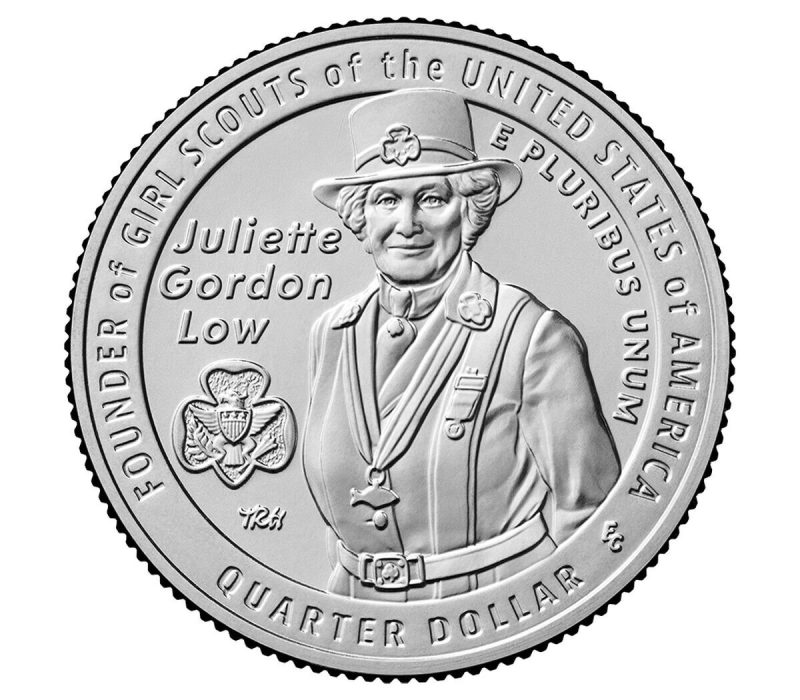 Now our next Georgian up here today on Travel with Anita and Friends, where we’re highlighting extraordinary Georgians who’ve made a difference in not only Georgia history, but American history. Well, this woman, she built something you can’t always see: confidence, independence, and purpose in generations of young girls who came after her. Juliette Gordon Low. She was deaf in one ear, restless in the drawing rooms of Savannah society, and absolutely determined to give girls a place to lead and not just follow. She started a movement in her own backyard that reached the entire world. Her name, again, Juliette Gordon Low.
Do you know that name? Well, you may not know her name, but you certainly know the Girl Scouts, the Girl Scouts of America. And I’m sure if you’re like me, you’ve bought some of those Girl Scout cookies, or you may know some young girls who’ve gone through the Girl Scout program. Here’s her story that I wanna share with you. Here’s Juliette Gordon Low. To understand Juliette Gordon Low, well, we need to step back to the early 1900s, because in those days, opportunities for women and girls w- were very limited. Women could not vote. Social expectations were very strict. Girls were often taught to be quiet, be polite, and be prepared for the traditional roles of life, and you know those traditional roles generally meant things that you did in your home. But Juliette Gordon Low believed girls deserved something, something very different, something more.
She believed that they should be curious, they should be adventurous, independent, and most of all, they should be confident. And she believed they should learn skills that would help them make a difference in the world. Well, in 1911, while traveling in England, Juliette met a man named Robert Baden-Powell. He had founded the Boy Scouts, a movement designed to teach boys outdoor skills, leadership, and service, and this idea sparked something in Juliette immediately. She saw how powerful this type of program could be, but she believed the girls deserved the same opportunities as well So she returned home to Savannah with a very, very bold plan. And on March 12th, 1912, Juliette Gordon Low gathered 18 girls in Savannah, and those girls, they became the very first troop of what would become the Girl Scouts of the United States of America.
Now let’s think about that for a minute, though, because at this time, the organization was first called Girl Guides, modeled after a similar group in Britain, but the name soon changed to Girl Scouts. Those first meetings, though, focused on things that were unusual for girls at the time, things like hiking, camping, first aid, leadership, community service, and perhaps most importantly, learning the skills or learning how to become very confident. And Juliette Gordon Low, well, she encouraged these girls to believe that they could do anything, because what started with just 18 girls in Savannah, well, it quickly began to grow. Girls across the country were drawn to this idea of adventure and service. They learned to build campfires, to navigate outdoors, to work together in teams, and to serve their communities. Now keep in mind this part about communities, ’cause that will come up again and again. Now these were skills that prepared girls not just for childhood, but for their lives. The movement quickly spread. In the 1920s, Girl Scout troops began appearing beyond the United States. There were troops formed in places like China, Syria, Mexico, and one of the earliest Native American girl troops formed on the Onondaga Nation Reservation in New York in 1921. And Mexican American girls formed a troop in Houston in 1922. So by 1925, a troop was even registered in Shanghai, showing just how quickly the movement had grown and how it had taken on a life of its own, a very good life of its own.
But now what Juliette Gordon Low started in Savannah had really become international by any stretch of the imagination. And when the Great Depression struck in the 1930s, Girl Scout troops stepped forward to help. The Girl Scout troops, they collected food, clothing, supplies for all of the families in need. They also worked to welcome immigrants into their communities, because they learned all about the importance of community service. And the Girl Scouts even printed information about their organization in several languages, including Yiddish, Italian, Polish. Now this became very helpful for the new immigrant families, because not only did this just help them understand what was being said, understand what they needed so that they could be successful now in America, and also to help them join the movement. Now inclusiveness actually became one of the organization’s core values.
And during World War II, the Girl Scouts once again stepped forward to serve. Troops across the country participated in national war efforts. The Girl Scout troops collected scrap metal, cooking fats, clothing, and they also planted victory gardens to help support food supplies. Wow. Now some of the Girl Scout troops even operated bicycle courier services, delivering important messages and supplies. Wow, just so fascinating. And the Girl Scouts, they also organized defense institutes where women learned emergency skills and ways to help children remain calm during the air raids. Even Japanese American girls held in wartime internment camps in Utah and California, they formed Girl Scout troops, demonstrating really the power of community even during difficult times for the country as well as for themselves. Now this spirit of service continued after the war. It didn’t just stop there. During the Korean War, Girl Scouts assembled Kits for Korea. Now these packages were filled with supplies for Korean citizens and Korean civilians. The organization also continued pushing for equality and inclusion.
By the early 1950s, progress toward racial integration was already happening within the Girl Scouts, even in the segregated South. And in the 1960s, Girl Scouts became increasingly active in conversations about equality and social change. The organization held Speak Out conferences across the country where girls could discuss issues of race and justice. A national program called Action 70 encouraged girls to work toward overcoming prejudice and building stronger relationships among communities. Girl Scouts were also invited guests of NASA to witness the launch activities surrounding the Apollo 12 moon mission. So you can see here, the message was very clear. Girls can dream big, and they can reach for the stars. Wow. The legacy of Juliette Gordon Low, well, it’s a really powerful one. Although she passed away in 1927, her legacy continued to grow. And today, when you think of the Girl Scouts and the organization, well, it includes millions of girls worldwide. And they continue learning those very same values that Juliette believed in and that she set as the foundation of the Girl Scouts: leadership, courage, friendship, self-reliance, and community service. And it all began with a simple gathering of 18 girls in Savannah. So the next time you find yourself in Savannah, walk through its historic streets and imagine that small gathering in 1912 with just 18 girls and one determined woman. And while you’re doing that while you’re in Savannah, make sure and go by and visit the Juliette Gordon Low home. You can visit her birthplace. It is located at 10 East Oglethorpe Avenue in the heart of the historic district of Savannah, Georgia. And it is Savannah’s first registered national historic landmark. Knowing this history should make those Girl Scout cookies taste even better.
I’ll stop here. I’ll be back in a minute here on Travel with Anita and Friends.
 When you think of things that are left behind after we have made this journey here on Earth, you don’t always think of bridges being left behind. But here is the story of a man that that’s exactly what he left behind: bridges. Here’s the story of Horace King, the master bridge builder. Welcome back to Travel with Anita and Friends. Now, today I want to take you on a stretch of the Chattahoochee River, that long, winding waterway that splits Georgia and through Alabama as well. And if you’ve ever driven across it without giving it a second thought, well, I understand because [laughs] I drive across it quite often and don’t really think about that I’m driving over it, because most of us just do that.
But there was a time, not that long ago really, when getting a wagon, a family, or an entire town’s commerce across that river wasn’t something that you just took for granted. It took an engineer. It took vision. It took a whole lot more than just taking it for granted. And in this part of the South, for most of the 19th century, it took one particular man. His name, Horace King. Now, let’s back up a little bit and let’s talk a little bit more about Horace King before he was that bridge builder, because Horace King was born enslaved on September 8th, 1807, in Chesterfield District, South Carolina. He carried African, European, and Catawba ancestry.
So he was quite mixed there with some of his ancestry, but he did have that desire to do something more. He had a heritage as layered and complex as the structures that he would go on to build. And in the 1820s, a contractor named John Godwin purchased Horace and brought him to Columbus, Georgia, to that area. He had land and a contract to build the very first public bridge connecting Georgia and Alabama across the Chattahoochee. And it didn’t take that long for Godwin to realize something remarkable. This wasn’t just a laborer. This was a person with a great mind. Horace mastered a design called the Town Lattice Trestle, a system of wooden planks crossed and interlocked like a woven basket pinned together with wooden pegs. But it was that way. It was very simple with the woven pattern and those wooden pegs that were pinning it together, but the math behind it isn’t simple at all. It let a bridge carry enormous weight while still being light, elegant, and really almost graceful looking. We’ve seen those covered bridges, and we’re intrigued by those.
And by the time Horace reached adulthood, he wasn’t just building bridges. He was managing entire crews of workers, solving structural problems that stumped men who’d gone to school for exactly that purpose. Now, just imagine that. Well, Godwin did. He took notice. And to his credit, he gave Horace something unusual for the time: real independence. He let Horace travel and oversee projects largely on his own. And through the early 1840s, Horace served as superintendent and architect on major bridges in Alabama and Columbus, m- and even Mississippi, without Godwin standing over him, over his shoulder at all. And in 1846, with Godwin’s backing, the Alabama legislature approved Horace’s freedom. He walked out of slavery not as a man starting from nothing, but as one of the most respected builders in the entire region, already known, already trusted, already changing the landscape of two states.
Now, I want you to pause here and be honest with yourself about something, because the full story does matter. Even after Horace gained his freedom, his relationship with Godwin stayed complicated. When he died, when Godwin died in 1859, Horace actually built a monument over his grave describing the love and the gratitude he felt for a man… History remembers as being his former enslaver. Oh, it can be very complex. Now, historians, they’ve wrestled with that for years. Some have pointed to it as proof that Harris’ story softens how he understands slavery, but I would gently push back on that a little bit, because what’s really going on, I think, is far more human, more human nature, and far more complicated. A man building a life and a reputation inside a system designed to deny him both? Okay. But his genius was real, and the fact that someone recognized it, not only recognized it, valued it, and put forth for him to be freed because of it. Now, the system that held him was still real, too, so both of these things are true all at once. But once free, Harris’s career did go on. It grew, and over the next four decades, he designed and built bridges, mills, warehouses, and public buildings across Georgia, Alabama, and Mississippi. His work even touched portions of the Alabama State Capitol, including some of those graceful spiral staircases that visitors will stop and admire and get those selfies on. [laughs]
Yep, those. And he built massive lattice truss bridges over nearly every major river between Oconee in Georgia and onto Mississippi as well, and across the Chattahoochee itself at almost every port between Carroll County and Fort Gaines. In the mid-1850s, he built a bridge over the Chattahoochee between Newnan and Carrollton, this time accepting stock in the company as payment instead of a straightforward fee, a sign of just how much trust and standing he had earned as a free businessman. And his wife, Frances, and their five children, well, they eventually made a home right there at the bridge site, farming the land until the Union cavalry burned the span during the Civil War in 1864.
Now, the war years, well, they were complicated for Harris, as they were for so many, so not just only Harris. Columbus, well, it boomed economically supplying the Confederacy, and Harris, like other contractors in the area, he found himself pulled into that work, supplying, supplying timber, erecting buildings for the Confederate Navy, and the Alabama governor even pressed him into service against his will to place defense obstructions in the Alabama River. And yet, Harris later claimed Unionist sympathies, saying that the federal government owed him for property that the Union troops had taken. It’s a reminder that Black southerners navigating that war rarely had a luxury of simple, clean alliances. After the war and during Reconstruction, Harris even served two terms in the Alabama House of Representatives as a Republican. Though most accounts, he found politics far less interesting than his true calling. He was too busy still rebuilding wooden bridges, railroad bridges, mills, warehouses, and public buildings across a region still recovering from the war. Well, in 1872, Harris and his family settled in LaGrange, Georgia, where he continued designing and building until his death on May 28th in 1885. Newspapers in Atlanta, LaGrange, and Columbus all ran his obituary, praising his skills and marking him as someone who was very widely respected.
Now, here’s the part of the story that I really want you to sit with, because Harris’ legacy didn’t end with him. It kept building, quite literally, through his children. Harris and Frances had five children, Washington, Marshall, John Thomas, Ann Elizabeth, and George. After Harris passed, his sons carried the family trade forward under the name King Brothers Bridge Company, continuing to build bridges and structures across LaGrange, Atlanta, and East Alabama. So what’s left for us to see today? Well, honestly, less than you hope. Harris King built somewhere around 100 bridges in his lifetime. War, floods, and simple modern progress have claimed almost all of them, but not quite all, because if you make your way to Meriwether County, you can still drive across, or better yet, park and walk through the Red Oak Creek Covered Bridge, the only bridge still standing and still in use that is directly connected to Harris King himself. Standing inside it, looking up at that interlocking lattice of wooden planks, you’re looking at the very same engineering genius that once connected two states and helped bring a man to freedom. Head over to my website, travelwithanita.com, where you’ll find some photos of the Mulberry Street Cemetery project that was built in honor of Harris King. You’ll also find photos of my visit to the cemetery, as well as how you can visit LaGrange, Georgia. I’ll stop here, but I’ll be back in a minute here on Travel with Anita and Friends. Sometimes there’s a legacy that gets buried deep in the books, so much so that all of the greatness you don’t know about at all.
 Welcome back to Travel with Anita and Friends, but here on today’s show, we are highlighting four Georgians that have done extraordinary things with their lives and made not only Georgia history, but American history. We’ve talked about Juliette Gordon Low with the American Girl Scouts. We’ve also talked about Henry Ford, who actually built a city, Richmond Hill, Georgia, and Horace King, who was a bridge builder, not only in Georgia, but across several states. Next up is Susie King Taylor. Her life was extraordinary, and her legacy still lives on. Here to help me tell the story is Hermina Glass Hill, the executive director of the Susie King Taylor Institute. Like myself, I was not familiar with, with Sus- with Susie King Taylor, so I’m thinking that there are probably some listeners who may not know her story as well, and why her life is so important to share.
She is Georgia’s Harriet Tubman.
Her life, having been enslaved, having been a freedom seeker
… having been, um, educated during the antebellum period, um, and then she goes on to become one of the first Black nurses, and m- and even more importantly, she, her life has this divine, um, providence that’s at work because not only does she self-liberate and flee and winds up in a contraband camp in this, on St. Simon’s Island, she becomes embedded in the very first army regiment in the history of our nation, which is the first South Carolina volunteers-
… which eventually becomes the 33rd United States Colored Troops. Now, they are the very first, during the American Civil War, they are the very first Black, colored, African-descended regiment. When the 1st, uh, when the 54th Massachusetts come down and, uh, they’re involved in, you know, Fort Wagner, they are the first Black regiment from the North.
Yes. But Hollywood has told the t- the, the, the TV version of it that they are the first Black regiment.
But actually, it was these formerly enslaved men, women, who fled from their plantations, who-
Right
… it just makes sense that they are the first to create-
… um, to become involved in what was called Hunter’s regiment. Hunter was a, a Northern abolitionist turned soldier. Uh, and, and, and she becomes embedded in that, bringing with her all sorts of cultural aspects, religion, songs, uh, food ways, of what we know today as Geechee culture.
She was, she was a part of that because her en- her entire life, we know it again today as the Gullah Geechee Cultural Heritage Corridor, but she lived within that geographic space.
And so her life is just a, uh, just a fascinating saga, if you will. Um, every aspect of, of her life is, is actually very, very important and, and history-making.
It, I mean, it, it definitely is history-making, and it’s just so, it’s actually s- very inspiring even today.
You know, to hear of someone who against all odds was able to do all the things she was able to do. And, uh, I understand as well, she, didn’t she teach some of the soldiers to read and write?
Yes, she did, and-
See, that’s phenomenal right there, that she knew how to read and write.
And then she could teach it.
Right. Absolutely. So when she escapes and the Union Navy and Army are protecting the South Atlantic coast, which is called the South Atlantic Blockading Squadron, she is rescued by one of those huge ships. And they, uh, the, the people, the freedom seekers who are picked up on these barrier islands, they are taken to St. Simon’s Island, where there is a Navy/Army base, but also there is a contraband camp in which, um, this term developed from, um, General Benjamin Butler, um, who, uh, who stated that, you know, the Emancipation Proclamation had not been issued yet. So they have escaped, but their legal status is not as free. Uh, but they are not slaves, ’cause they have left the plantation. So he termed, coined this contraband. Uh, they were contraband of war-
… until the Emancipation Proclamation. But on St. Simon’s Island-
That’s good… there is a contraband camp. These are people who have been following the Union Army. Um, they have set up camp where the Union Army is. And so in this dynamic period, um, schools are being established because the United States government has a responsibility to these people who are now following them.
And so she, a 13, 14-year-old girl, who has had six, seven years of secret education in Savannah, she’s asked, any, everybody is asked, “Is there anybody among us who can teach?” And of course, Susie King Taylor, who has had this incredible life getting an education when it was against the law to get an education, here she is a 14-year-old girl, 14-year-old girl, who’s had geography and literature and mathematics because she’s- That’s amazing.
Yes, it’s amazing. She’s teaching these people who have never touched a pencil before.
Who have never had a slate or chalk or, you know, been able to, um, uh, access the written … heard, and she begins teaching them. So that’s her first, um, uh, point of historical significance. She becomes one of the… She actually becomes Georgia’s first federally funded teacher during the war, because the, the War Department is furnishing all of the supplies that she needs to t- teach these, uh, um, freedom seekers who were in the contraband camp on St. Simons Island. So it’s just incredible. Susie King Taylor and her grandmother were enslaved here in Liberty County.
Um, on the east end of the county, uh, on a small place called Isle of Wight. It’s a small island within the, um, eastern mainland of, uh, Liberty County. Um, heavily populated because there are numerous plantations, and she and her grandmother, um, they, along with her parents and her siblings, as well as other, uh, people in their quarters or living community, were enslaved, but they were just that. They were a community, and she actually was from a relatively intact family. She had her parents, her immediate family. She had her grandmother, which is very typical in our Black community, that our grandmother-
… was a part of our household.
Um, and, and they were extremely close. So Liberty County on the Isle of Wight, which is here in Midway, um, is where, um, she was from. And recently, um, the Liberty County Board of Commissioners, the Liberty County government, has, um, invested, uh, a significant amount of, um, funds into a park and renamed the park Susie King Taylor Freedom Park-
… on the island in which she was born. And so, uh, we are just really excited about, um, this park that is named for freedom, named for someone who was born in, uh, uh, born enslaved on that island, lived on that island, and then when the war actually takes place, her big mama, her grandmama Dolly, sends her right back to Liberty County on the Isle of Wight, um, to wait out the war. Uh, but, uh, she doesn’t wait out the war. She takes the risks, and it is from this place on the Isle of Wight that she actually escapes. And so with this new park, the Susie King Taylor Freedom Park, as it relates to America 250, we are celebrating freedom in a completely, from a completely different perspective, um, from, you know, the, the, the second American revolution, uh, revolutionary war, which was the Civil War, where-
Right… life, liberty, and the pursuit of happiness is something that is achievable and does happen- … because we know that the Emancipation Proclamation is issued, and then eventually, um, the end of slavery in 1865. And so she is the, um, the epitome, a perfect example of, um, this iconic figure, um, who seizes liberty at her own terms. She takes the risk, and we’re just so happy that Liberty County has named this park in her honor-
Absolutely
… um, uh, and in honor of freedom.
Mm-hmm. And there, there’s a place now where people can go and actually stand-
Mm-hmm
… and, and, and read about her and know about her, uh, today. So it is definitely spreading her, her story, uh, wide and far.
Yes.
Head over to my website, travelwithanita.com, where you can hear the full interview that I had with Hermina. We talked about a lot of things, more than I could fit in one segment. Also, head over to the website susiekingtaylorinstitute.org where you can learn more about visiting the museum. Uh, thanks for joining me today. I’ll be back in two weeks with another great destination and story here on Travel with Anita and Friends. Bye bye.


Version 1.0.0
