May 25, 2026
When Myth Became History
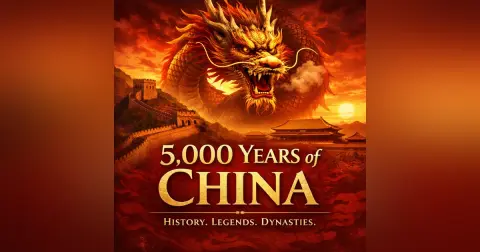


This episode explores the critical transition in early Chinese civilization from oral myth and legendary memory to recorded history. For centuries, stories such as Pangu, the Yellow Emperor, and Yu the Great shaped how people understood creation, leadership, and order. These narratives were more than legends—they provided meaning, identity, and cultural continuity. However, as society became more complex, spoken memory alone was no longer enough to preserve authority and knowledge. The episode focuses on the emergence of writing during the Shang period, especially through oracle bones. These inscriptions represent some of the earliest surviving Chinese records, capturing real questions asked by rulers about war, weather, harvests, and ancestral spirits. Unlike myths passed down over generations, oracle bones provide direct evidence of how ancient rulers thought and governed. This marks a major turning point: myth and history begin to coexist. Legendary figures remain culturally important, but now political systems, rulers, and events start leaving permanent records behind. The episode also emphasizes that history is never entirely separate from belief. Even historically supported Shang rulers governed through ritual, ancestor worship, and spiritual interpretation. In ancient China, authority depended not only on force or administration, but also on maintaining meaning and continuity with the past. Ultimately, the episode presents this era as the birth of historical consciousness in China—the moment when civilization began preserving memory in lasting form, allowing the story of China to move from legend into documented history.