Dr. Jimmy White, Co-Founder of Phenomune: How Our Sense of Taste May Hold the Key to Understanding Our Immune System



 Apple Podcasts
What if something as simple as your ability to taste bitterness could tell you important information about how your body fights respiratory infections?
That’s the fascinating science behind Phenomune, a Louisiana-based biotechnology company co-founded by two ear, nose and throat physicians, Dr. Jimmy White of Lafayette and Dr. Henry Barham of Baton Rouge.
Dr. White joins Discover Lafayette to share how a friendship between two Louisiana physicians, combined with scientific curiosity during the COVID-19 pandemic, led to research exploring the relationship between bitter taste receptors and our body’s natural defenses against respiratory illnesses.
With an $8 million investment from the State of Louisiana, Phenomune is working to make its at-home taste-testing kits available free of charge to as many as 250,000 Louisiana residents.

The test takes approximately two minutes, requires no blood work or laboratory specimens, and provides immediate results through a smartphone app. The company believes its technology can help people better understand aspects of their innate immune response and make more informed decisions about their health.
While the science is still evolving, Dr. White is enthusiastic about its potential to help people become more proactive about their well-being.
From Lafayette to the Mayo Clinic — and Back Home
Dr. Jimmy White’s story begins in Lafayette, where he attended Our Lady of Fatima and St. Thomas More High School before enrolling at UL-Lafayette. A member of the Ragin’ Cajuns baseball team for two years, he earned his undergraduate degree at UL before attending LSU School of Medicine in New Orleans.
Following medical school, he completed a five-year residency in otolaryngology (ear, nose and throat medicine), at the prestigious Mayo Clinic in Rochester, Minnesota.
He and his wife, Libby, had just married when they moved to Rochester, where they welcomed four children during his five years of residency, including a set of twins.
Dr. White remembers the demanding years of training fondly, despite the notoriously cold Minnesota winters.
“I think the training is second to none. I met some great, great people. I had some experiences I’ll never be able to replace.”
But Lafayette was always home. “That’s the coolest thing to me is to be able to take what we experienced up there from a medical standpoint and training standpoint, and be able to bring that home.”
Today, Dr. White practices with Louisiana ENT Specialists at 1039 Camellia Blvd. in Lafayette, along with Dr. David Foreman. He has been with the practice for nearly 11 years.
His clinical career has included bringing advanced ENT procedures to Acadiana, including cochlear implantation and robotic surgery for throat cancers.
Dr. White also reflects on the business side of medicine, something physicians receive relatively little training in during medical school. Running a private practice means managing employees, maintaining efficiency, and creating a culture in which every staff member treats patients with the same care and attention the physician would provide personally.
A Friendship That Led to an Unexpected Scientific Discovery
Dr. White’s friendship with Dr. Henry Barham began more than a decade ago through mutual friends.
Originally from Oak Ridge in north Louisiana, Dr. Barham played football at LSU before attending medical school at LSU Health Sciences Center in Shreveport. He completed his ENT residency in Colorado and pursued advanced fellowship training in rhinology, the study and treatment of diseases affecting the nose and sinuses, in Australia.

The two physicians connected through their similar backgrounds, their experiences training away from Louisiana, and their shared desire to bring innovative medical care back home.
Both were raising young families and establishing medical practices: Dr. White in Lafayette and Dr. Barham in Baton Rouge.
They frequently discussed their practices, medical innovations, and the challenges of caring for patients.
Then COVID-19 arrived. As ENT specialists, both physicians were particularly concerned about their exposure to the virus. Their work required examining patients’ noses and throats and caring for hospitalized patients who sometimes needed tracheostomies.
During the early days of the pandemic, the two friends spoke almost daily, comparing protective equipment and discussing what they were observing in their patients.
They began asking a question that puzzled physicians around the world: Why did some otherwise healthy people become desperately ill from COVID-19 while others with significant risk factors experienced relatively mild symptoms?
Dr. White recalls observing situations in which a husband and wife contracted the same virus, yet one experienced only mild symptoms while the other was sick for weeks.
Similarly, some patients with underlying medical conditions recovered easily, while younger, seemingly healthy individuals became seriously ill.
Dr. Barham had previously conducted research into a family of bitter taste receptors known as T2Rs, which are found not only on the tongue but throughout the body, including the nasal passages.
He wondered whether differences in the activity of these receptors might help explain the dramatically different responses to respiratory infections. That question ultimately launched a research effort involving thousands of patients.
“The background to this company was that it did not start as an idea to make a company at all,” Dr. White explains. Rather, it began with Dr. Barham’s scientific curiosity and a desire to understand why people responded so differently to the same virus.
Understanding Our Innate Immune System
Most of us think about immunity in terms of antibodies, vaccinations, and our body’s ability to recognize and fight specific diseases.
But Dr. White explains that our immune system has another essential component: innate immunity, our body’s immediate, built-in defense against pathogens.
This first line of defense is especially important in the nose and upper respiratory tract, where we continually encounter bacteria, viruses, allergens, and other particles.
Certain bitter taste receptors in the nasal lining help activate protective responses when stimulated.
Dr. White explains that these responses include:
- Increasing the movement of tiny hairlike structures called cilia, which help transport mucus and trapped particles out of the respiratory passages.
- Stimulating mucus production to help trap and remove pathogens.
- Encouraging the production of nitric oxide, which plays a role in respiratory defense.
- Activating antimicrobial peptides, naturally occurring substances that help the body defend itself against microbes.
These processes occur before the body’s antibody-based immune response becomes involved.
“There’s so much that we inhale and encounter on a day to day basis that it’s fascinating how we are all uniquely and wonderfully made to be able to fight all the stuff off that we’re not even aware we’re doing.”
Dr. White explains that some individuals have greater expression or activity of certain bitter taste receptors than others.
Research by Dr. Barham and colleagues has examined whether these differences correlate with susceptibility to respiratory illness and the severity of symptoms.
Dr. White describes their research published in JAMA involving approximately 2,000 patients, reporting that 85% of those who progressed to severe disease were in the lower taste-receptor-expression group.
He also discusses subsequent studies exploring whether interventions tailored to taste receptor status might improve outcomes.
These findings are promising areas of investigation, although additional independent research is needed to determine how reliably taste receptor testing predicts illness and how it should be used in clinical care.
How Does the Phenomune Test Work?
One of the most intriguing aspects of Phenomune is the simplicity of its testing process.
The kit is a small box, roughly the size of a deck of cards, containing four numbered taste strips.
After downloading the Phenomune app and scanning a QR code to activate the kit, users place each strip on their tongue for approximately five to seven seconds. They then record what they taste, whether that is bitterness, sweetness, saltiness, paper, an unpleasant sensation, or nothing at all.
The app also asks users to rate the intensity of certain tastes. After completing all four strips, users receive their results immediately. No blood draw, saliva sample, or laboratory shipment is required.
“There’s no wrong answer,” Dr. White explains. Some people taste virtually nothing on the strips, while others experience intense bitterness.
The test is designed to evaluate responses to particular compounds associated with bitter taste receptors, rather than simply determining whether someone enjoys bitter foods.

Dr. White points out that disliking black coffee or Brussels sprouts does not necessarily mean someone has stronger immune defenses. Taste preferences are influenced by experience, memory, and personal associations.
The test is intended to measure something more specific: responses to compounds that activate certain receptors involved in the body’s innate immune pathways.
What Can You Do With Your Results?
Dr. White believes the Phenomune app may ultimately be as valuable as the test itself. Once users receive their results, the app offers educational information and practical suggestions for supporting overall health.
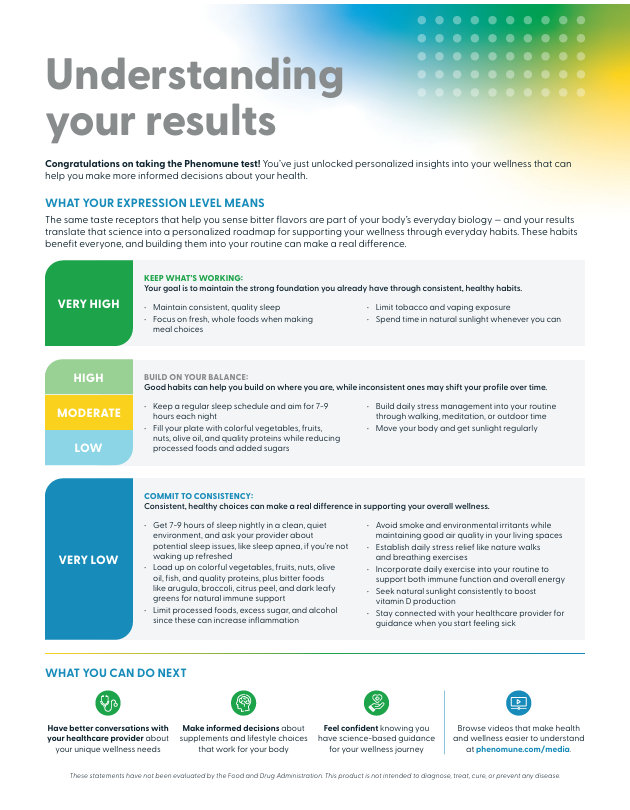
He describes approximately 17 interventions included in the app at the time of the interview, addressing topics such as hydration, diet, sleep, stress, inflammation, and foods containing compounds that stimulate bitter taste receptors.
The goal is to give people useful information they can incorporate into their daily lives.
Dr. White emphasizes that the company wants people to understand their bodies and take a more proactive approach to maintaining good health.
He also explains that taste receptor expression may be influenced by certain lifestyle and environmental factors, suggesting opportunities for further research into whether changes in expression can meaningfully improve respiratory health.
Louisiana’s Investment in Preventive Health
A major development for Phenomune has been the State of Louisiana’s $8 million investment in making the company’s testing kits available to residents.
The initiative aims to distribute up to 250,000 free kits, with support from the Louisiana Department of Health and partnerships involving healthcare providers across the state.
Dr. White explains that the company is working with private medical practices, federally qualified health centers, nursing homes, and other healthcare organizations.
Clinical outreach specialists help participating providers incorporate the test into their existing office procedures.
In his own practice, Dr. White says patients can complete the test while waiting in an examination room, allowing him to review the results during their appointment. He describes the concept as something resembling a fifth vital sign, although taste receptor testing is not an established clinical vital sign.
The company’s longer-term vision includes using de-identified, aggregated information to better understand geographic and demographic patterns in test results.
Dr. White says the company and state partners can view information in the form of a heat map showing broad patterns of taste receptor expression.
He stresses that protecting individual privacy is central to the company’s approach. “Everybody’s data individually on this is private. And that means that’s of utmost importance to us as a company.”
The hope is that aggregated information may eventually help guide public health education and resource allocation, although its usefulness for predicting community health risks remains to be established.
Dr. White sees this Louisiana initiative as an opportunity for the state to become a leader in preventive healthcare innovation.
A Nasal Spray and Other Potential Applications
Phenomune’s research is not limited to taste testing. Dr. White shares that the company has been developing a nasal spray containing ingredients intended to stimulate bitter taste receptors in the nasal passages.
He explains that certain botanical compounds can activate these receptors and that the company has been examining whether doing so could strengthen aspects of the body’s innate immune response.
At the time of the interview, he anticipated commercial availability within the following month or two. The product’s proposed ability to prevent or reduce respiratory infections remains investigational and should not be considered established medical treatment.

Dr. White is also fascinated by the broader possibilities of bitter taste receptor science. He explains that related receptors are found throughout the body, including the digestive tract and brain, where they participate in different biological processes.
Scientists are studying possible relationships between these receptors and inflammation, metabolic signaling, and other functions.
“We’re on the tip of the iceberg of what this taste receptor science does throughout the body.”
Practical Advice About Nasal Rinses and Respiratory Health
Our conversation also turns to a familiar home remedy: saline nasal rinses.
Dr. White explains that mucus serves an important purpose by trapping allergens, bacteria, viruses, and other particles before they can travel farther into the respiratory system. Tiny cilia continually move mucus through the nasal passages as part of the body’s normal protective process.
Saline sprays and nasal irrigation can help maintain moisture and mechanically clear mucus and trapped particles.
Dr. White particularly favors saline irrigation when respiratory symptoms first appear.He also discusses saltwater gargles as a simple way to soothe and care for the throat.
For anyone using a neti pot or squeeze-bottle nasal rinse, an important safety precaution is to use only distilled, sterile, or previously boiled and cooled water, rather than untreated tap water.
Although the conversation touches on peroxide and other antiseptic products, these should not be routinely used in the nose, ears, or throat without appropriate medical guidance.
Dr. White’s broader message is that understanding the body’s natural protective mechanisms can help us make more informed decisions about everyday health practices.
Importantly, taste receptor testing is not a substitute for recommended vaccinations, medical evaluation, or established preventive measures.
Family, Faith, and Giving Back to Acadiana
Beyond his medical practice and biotechnology work, Dr. White is deeply committed to his family, faith, and Lafayette community.
He and his wife, Libby, are raising four children: Evelyn, Liam, and identical twins Emery and Ellington. Their busy family schedule includes school activities, cheerleading, dance, and involvement at Our Lady of Fatima and Saint Thomas More.
Dr. White enjoys supporting his children’s schools and participating in community and faith-based activities, including men’s retreats, praise and worship gatherings, and HopeFest, the charitable music festival associated with Saint Thomas More.
He acknowledges that he has a tendency to say yes to too many commitments, but explains that he is drawn to opportunities that give his life meaning. “I try to keep it rightly ordered, you know, God first in my family and then others next.”
For Dr. White, Phenomune represents more than another professional responsibility. It is an opportunity to combine scientific discovery, medical innovation, and service to others.
He believes that the company’s development has unfolded in ways neither he nor Dr. Barham could have anticipated or orchestrated.
And he is grateful that their families have supported the journey.
From Immune Science to Wine Tasting
In a lighter moment, Dr. White shares another unexpected application of taste receptor research: understanding why people prefer different wines.
The same general approach to taste testing inspired a separate product line called Vino Taster, designed to explore individual taste preferences and help users identify wines they might enjoy.
Dr. White explains that taste strips can be formulated to evaluate responses to compounds associated with tannins, residual sugars, and other characteristics that influence how we experience wine.
The concept could eventually extend to bourbon, coffee, tea, and other beverages.
For someone who enjoys tasting bourbon and wine himself, Dr. White finds this a particularly fun intersection of science and personal interests.
It’s another example of how research that began with a serious medical question can lead to unexpected discoveries.
A Louisiana Story of Innovation and Service
What makes Dr. Jimmy White’s story especially compelling is that Phenomune did not begin as a conventional business venture. It began with two friends asking questions, sharing observations from their medical practices, and trying to understand why the same virus could affect people so differently.
Their work reflects the importance of curiosity, collaboration, and a willingness to pursue new ideas.
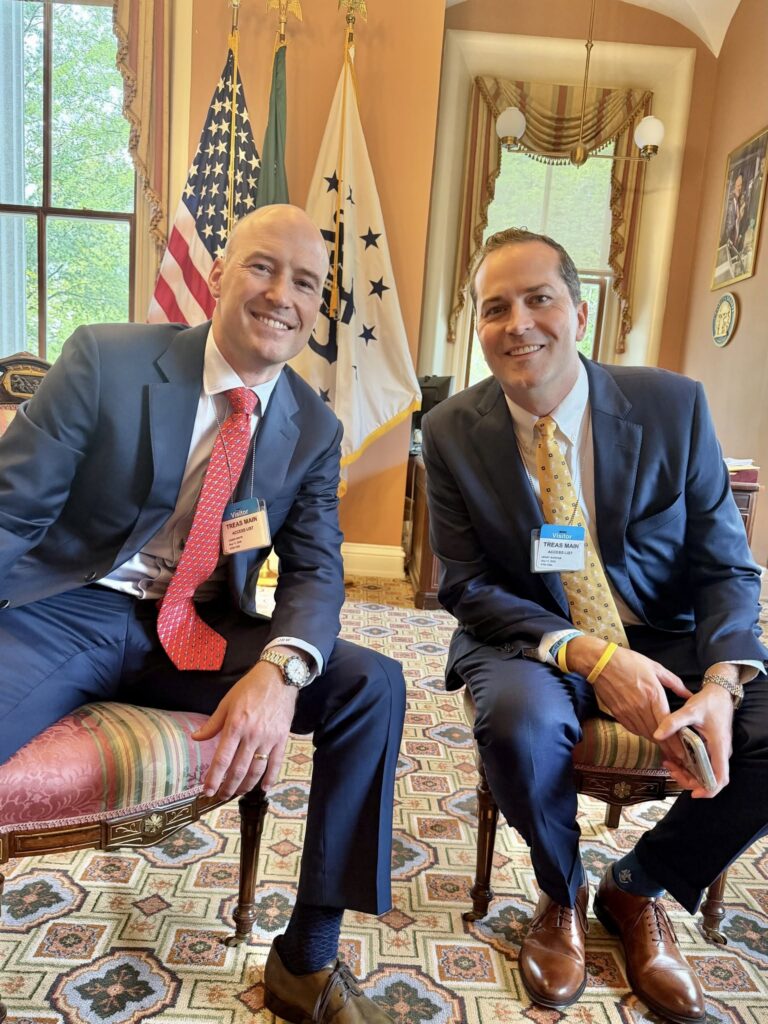
For Dr. White, the most meaningful part of the journey is the possibility of reaching far more people than he could ever see individually in his Lafayette medical practice.
He hopes that Louisiana’s investment in this emerging technology will encourage people to become more informed about their health and inspire further scientific investigation.
As he reflects on the state’s participation, he says: “We want to lead in something we usually are not at the top and the health metrics. And I think that this is a place that we really can lead.”
We thank Dr. Jimmy White for joining Discover Lafayette and sharing his remarkable journey from Lafayette to the Mayo Clinic and back home, and for helping us better understand the fascinating relationship between our sense of taste and the immune system.
Learn more: Visit Phenomune to explore the company’s research, educational resources, and information about its taste-testing kits. To request a free kit, visit https://phenomune.com/test#request-a-kit.
Medical note: The interview discusses emerging research and potential applications of bitter taste receptor testing. Information presented is educational and should not replace individualized medical advice.