Stacy Mistric: Hospice of Acadiana — Compassionate Care, Dignity, and the Gift of Being There



 Apple Podcasts
Stacy Mistric, Chief Executive Officer of Hospice of Acadiana, joins Discover Lafayette for a heartfelt conversation about compassionate end-of-life care, the importance of supporting families through grief, and the extraordinary volunteers who make this nonprofit organization such a treasured part of our community.
For more than four decades, Hospice of Acadiana has helped families navigate one of life’s most difficult transitions. Founded in 1983, the organization has served more than 32,000 patients, touching countless additional lives through the care and support provided to their families.

As the region’s only nonprofit hospice provider, Hospice of Acadiana offers much more than medical care. Its mission encompasses the physical, emotional, and spiritual needs of patients and their loved ones, providing comfort, dignity, and companionship at a time when these gifts matter most.
Stacy, who is approaching her third anniversary as CEO, brings more than 30 years of healthcare experience and 25 years in senior leadership to the organization. But she describes her arrival at Hospice of Acadiana as something more personal than a career move.
“I prayed for meaningful work and God answered.” That simple statement captures the spirit of our conversation.
From Port Barre to a Career of Service
Stacy grew up in Port Barre in St. Landry Parish, one of five children in a family deeply rooted in Acadiana. Her grandmother was the beloved Enola Prudhomme, whose restaurants and catering business became part of so many local celebrations and family memories.
Enola first operated a restaurant in Washington, Louisiana, before opening a location along I-49 in Carencro during the 1980s. Stacy and other family members helped with the restaurant and catering operations, learning firsthand the importance of taking care of people.
We discovered a personal connection during our conversation: Enola Prudhomme catered Jan Swift’s wedding in 1989! Stacy even suggested she may have helped prepare or serve the food that day.
Stacy sees a direct connection between her family’s hospitality business and her eventual calling in healthcare. “There’s such a direct correlation in service, whether it’s the service industry or servicing people or taking care of people, just having that nurturing nature.”
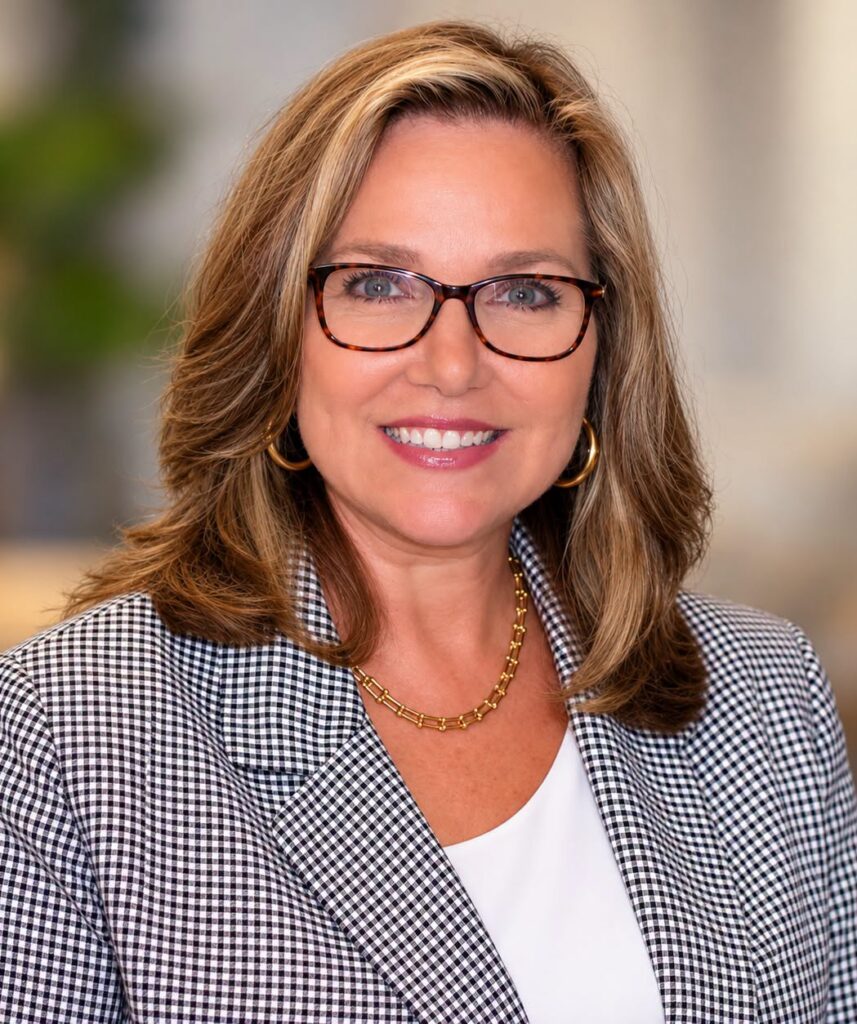
Stacy began her healthcare career as a medical assistant, working directly with patients and learning the business side of medical practices.
She also trained as an emergency medical technician at T. H. Harris in St. Landry Parish, although the traumatic situations she encountered helped her realize that her strengths were better suited to healthcare administration and leadership.
She eventually earned a master’s degree in healthcare administration from LSU Shreveport.
Before joining Hospice of Acadiana, Stacy spent approximately 12 years with Ochsner Lafayette General, where she served as Executive Director of Ambulatory Services, overseeing 14 clinics and 23 service lines, including primary care, surgical specialties, and oncology.
Her work at University Hospital and Clinics was especially meaningful because of the opportunity to serve underserved populations.
Today, she brings those decades of experience to an organization whose mission is close to her heart.
The History of Hospice of Acadiana: Plenty More to Be Done
Hospice of Acadiana traces its beginnings to 1983, when Father Louis Richard and other community leaders helped establish hospice care in our region.
Father Richard had studied in London in 1978 alongside Dame Cicely Saunders, widely recognized as a pioneer of the modern hospice movement.
Stacy shared a story about Saunders that beautifully illustrates the philosophy behind hospice care.
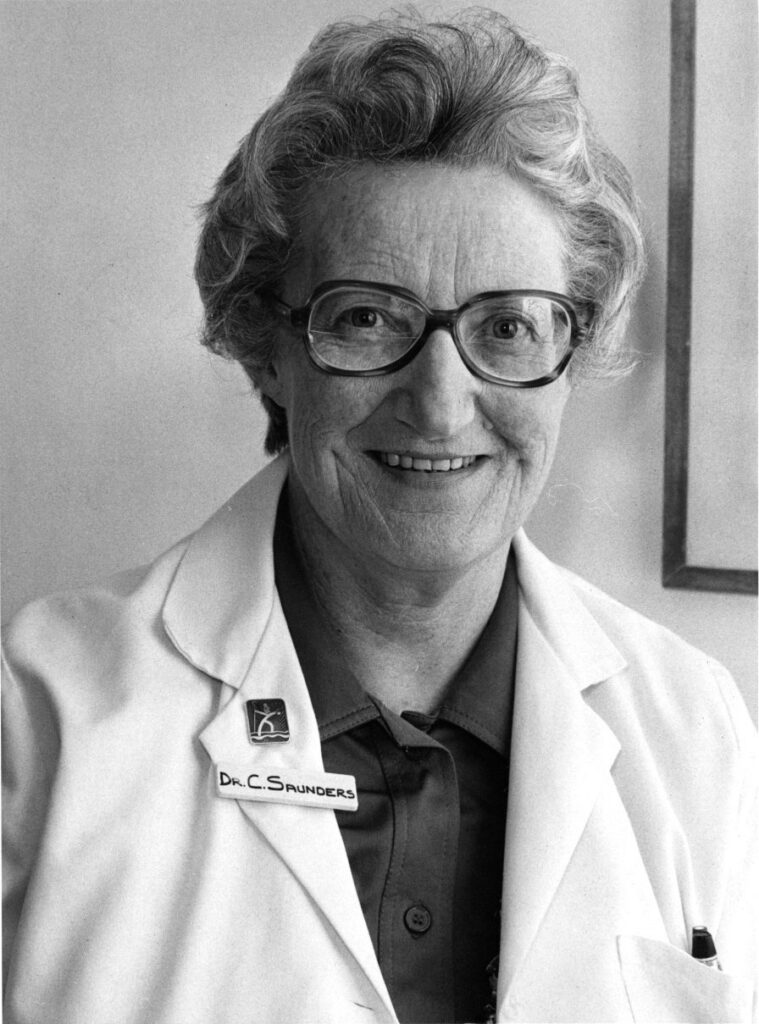
During her early nursing career, Dame Cicely Saunders encountered medical charts for terminally ill patients marked “NMBTD,” meaning “Nothing More to Be Done.” Saunders rejected that philosophy, replacing it with “PMTBD — Plenty More to Be Done.”
Saunders founded the first modern hospice, St. Christopher’s in Southwest London in 1967, and more than anybody else, was responsible for establishing the discipline and the culture of palliative care. She introduced effective pain management and insisted that dying people needed dignity, compassion, and respect, as well as rigorous scientific methodology in the testing of treatments.
That distinction remains at the heart of hospice care today. Although a terminal illness may no longer respond to curative treatment, there is still so much that can be done to relieve suffering, provide comfort, preserve dignity, and help patients and families experience meaningful time together.
As Stacy explains, hospice is not simply about treating a medical condition. It is about caring for the whole person, spiritually, emotionally, and medically.
Understanding Hospice Care: Why Earlier Is Better
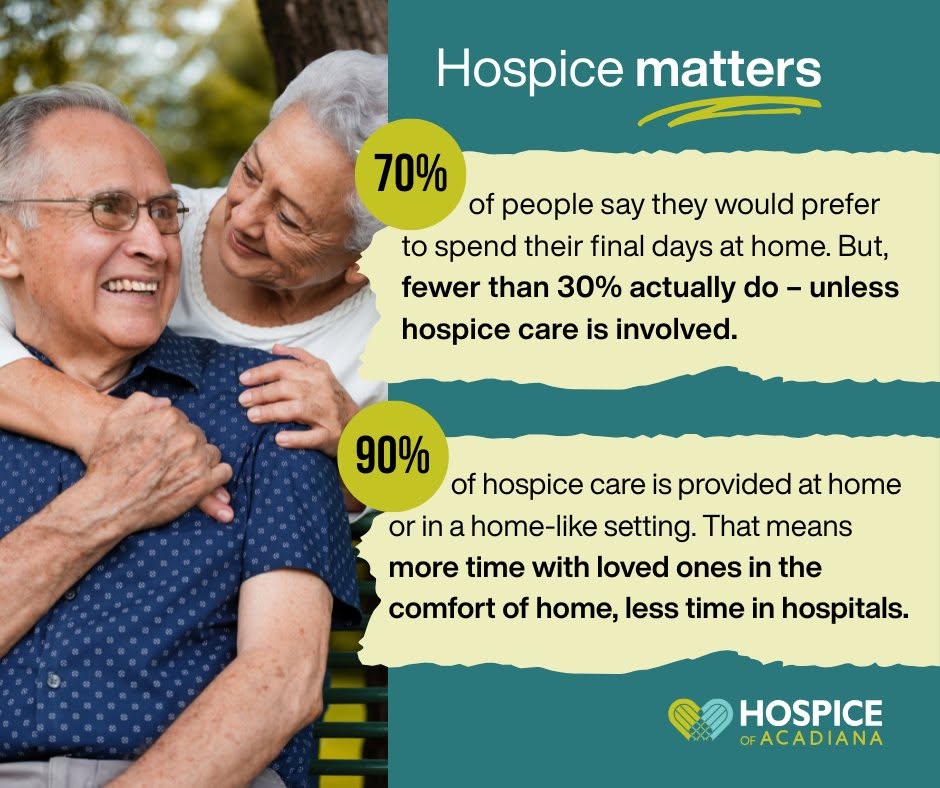
One of Stacy’s most important messages is that families often wait far too long before seeking hospice care. A common misconception is that hospice is appropriate only during the final days or weeks of life.
In reality, hospice care is generally available when a physician determines that a patient has a terminal illness with a life expectancy of six months or less if the illness follows its expected course, and the patient elects comfort-focused rather than curative care.
Stacy hopes more families will understand that hospice is a benefit they can access earlier.
Hospice of Acadiana’s interdisciplinary team includes physicians, registered nurses, licensed practical nurses, social workers, chaplains, home health aides, and other professionals.
Services can include:
- Medical care focused on comfort and symptom management.
- Hospital beds, oxygen, and other necessary medical equipment and supplies.
- Home health aides who can assist with bathing and daily personal care.
- Emotional and spiritual support for patients and their families.
- Education and guidance for family caregivers.
- Bereavement counseling and support following a loved one’s death.
Home health aides may visit as often as six days per week, depending on a patient’s needs.
Patients can receive hospice services in their own homes, nursing homes, assisted living facilities, and other appropriate settings.
Stacy emphasizes that hospice is distinctive because its focus extends beyond the patient to include the entire family and caregivers.
A statement displayed in the Hospice of Acadiana offices expresses the organization’s approach: “We can’t affect the outcome, but we can absolutely affect the journey.”
The Difference Between Hospice and Palliative Care
Stacy also explains an important distinction between hospice and palliative care. While hospice is designed for patients with terminal illnesses who are choosing comfort-focused care, palliative care can benefit people living with serious illnesses at any stage.
Palliative care does not require a prognosis of six months or less, and patients can continue receiving aggressive or curative medical treatment. The palliative team works alongside a patient’s existing physicians and specialists, helping coordinate care, manage symptoms, and navigate complicated treatment decisions.
Stacy describes palliative care as an additional layer of support for patients and families. Both approaches are centered on improving quality of life.
Calcutta House: A Peaceful Place to Call Home
One of Hospice of Acadiana’s most remarkable resources is Calcutta House, its 12-bed inpatient facility located on the organization’s Lafayette campus, accessible from St. Christopher Street off Johnston Street. Designed in the style of an Acadian home, Calcutta House provides an intimate, welcoming environment for patients who need specialized inpatient hospice care.

Even the red front door has special meaning. Stacy explains that historically, a red door symbolized a welcoming place of rest and respite for travelers.
Inside, patients and families find a chapel, comfortable gathering spaces, and a warming kitchen where families can share meals.
Stacy recalls a particularly touching Christmas gathering when a patient was able to join children, grandchildren, and other relatives around the Christmas tree. When the family apologized for making too much noise, the nurse reassured them that the laughter was welcome.
That is exactly the atmosphere Hospice of Acadiana hopes to create: a place where families can be together, share memories, laugh, pray, and simply enjoy one another’s presence.
Calcutta House also provides inpatient care for patients experiencing acute symptoms that cannot be adequately managed at home, offering an alternative to hospitalization when appropriate.
No One Dies Alone: The Power of Human Presence
One of the most moving parts of our conversation concerned Hospice of Acadiana’s volunteer program, No One Dies Alone.
Stacy explained that Hospice of Acadiana has a dedicated volunteer program designed to ensure that patients without someone available to be at their bedside do not have to face their final moments alone.
When the medical team determines that death is imminent, volunteers coordinate to remain with the patient. They may hold a hand, read aloud, sing, pray, or simply sit quietly.
Stacy describes this ministry as one of the most extraordinary expressions of compassion within the organization.
With approximately 400 enrolled volunteers across its various programs, Hospice of Acadiana depends on people willing to give their time and talents to others. No One Dies Alone demonstrates that sometimes the greatest gift we can offer another person is simply our presence.
The Acadiana Center for Loss and Transition: Grief Support for Everyone
Another important resource is the Acadiana Center for Loss and Transition (ACLT), which provides grief counseling and support to the community.
What surprised me most was learning that these services are available regardless of whether a person’s loved one received care through Hospice of Acadiana.
The center offers individual counseling, group counseling, and opportunities for social connection with others experiencing loss.
Programs such as Healing Through the Holidays are especially meaningful for those facing birthdays, anniversaries, and holidays without someone they love.
Stacy explains that grief is deeply personal. Some people need individual counseling, while others find comfort in groups where they can connect with people who understand what they are experiencing.
The organization commonly provides bereavement support for 13 months following a patient’s death, but Stacy says some families continue receiving assistance much longer when needed.
Because the center’s community grief services are not reimbursed through traditional insurance arrangements, Hospice of Acadiana relies on philanthropic support to make them available regardless of ability to pay.
This is one of the many ways its nonprofit mission directly benefits Acadiana residents.
Volunteers Who Sew, Crochet, Cook, and Bring Flowers
Hospice of Acadiana’s volunteer programs reflect the remarkable creativity and generosity of our community. Stacy enthusiastically shared several ways people contribute.
The Sewing Sisters meet weekly to transform donated new or gently used sheets and linens into patient gowns, pillowcases, walker bags, and other useful items. They also create fidget blankets for patients with Alzheimer’s disease or dementia, incorporating buttons, zippers, ribbons, and different textures that patients can touch and manipulate. Even people who don’t sew can participate by cutting fabric, ironing seams, or helping prepare materials.


The Crochet Crew also gathers weekly, creating handmade lap blankets that are given to all patients admitted to Hospice of Acadiana’s care.
Food With Love, a program previously featured on Discover Lafayette with volunteer Kent Zeringue, provides meals and nourishment for families.
Other volunteers participate in Mona’s Munchies, preparing cookies and other treats.
And then there are the flowers. Local businesses, including Albertsons, donate flowers that volunteers arrange into smaller bouquets for hospice patients. Families sometimes donate floral arrangements following funeral services, allowing volunteers to repurpose them into beautiful bouquets.
Stacy recalled a nurse who makes a special effort to bring fresh flowers to his patients. He explained that some have never received flowers before or had fresh flowers in their homes.
Something as simple as a bouquet can bring unexpected joy and beauty into someone’s day.
Volunteers can also donate vases, linens, and other needed supplies.
Honoring Our Veterans
Hospice of Acadiana has earned the highest, five-star level of recognition through the We Honor Veterans program, the highest level of recognition for honoring those who served.

Stacy explained that this designation allows the organization to serve as an ambassador, helping other hospice providers develop meaningful programs for veterans. Volunteer veterans participate in special recognition ceremonies honoring patients for their military service.
The Crochet Crew creates blankets and shawls, while the Sewing Sisters prepare personalized pillowcases identifying the patient’s branch of military service.
During these ceremonies, veterans and their families receive recognition, certificates, and handmade gifts. Stacy described moments when patients who had been largely unresponsive unexpectedly returned a salute during the ceremony. These deeply personal expressions of gratitude recognize the dignity, service, and life experiences of the veterans in Hospice of Acadiana’s care.
A Nonprofit Mission Supported by Acadiana
Hospice of Acadiana serves a nine-parish region and has been part of our community since 1983. In 1985, it became one of Louisiana’s early hospice organizations authorized to bill Medicare and Medicaid for covered services.
Today, hospice services may be covered through Medicare, Medicaid, or private insurance. But Stacy explains that many of the organization’s programs go beyond what insurance reimburses.
As a nonprofit, Hospice of Acadiana can use community donations to provide additional services based on the needs of patients and families. Stacy emphasizes that no patient is denied hospice care because of an inability to pay.
The Hospice of Acadiana Foundation raises funds to support the organization’s mission, including its community grief programs, volunteer initiatives, and services that are not otherwise reimbursed.
For Stacy, this ability to focus on the needs of patients rather than financial reimbursement is central to the organization’s identity. She describes the privilege of doing hospice work for a nonprofit as being able to “truly put people over profits.”
A Life Grounded in Faith, Family, and Community
Outside her demanding role at Hospice of Acadiana, Stacy treasures time with her husband, their two children, and three grandsons. She and her husband live in Carencro, where their Maltipoo, Mr. Bentley, apparently rules the household!
Stacy is also active in Our Savior’s Church and credits her faith, family, and close friendships with keeping her grounded. Her strong belief in service runs throughout her personal and professional life.
When asked what she most hopes to accomplish at Hospice of Acadiana, Stacy returned to the importance of educating families about the benefits of hospice care. She wants to dispel the fear that surrounds hospice and encourage people to seek help sooner rather than waiting until the final days of life. As she explains: “We focus on the quality of life, not not just the quantity of life.”
The earlier Hospice of Acadiana can begin caring for a patient and family, the more opportunities its team has to make a meaningful difference.

Our conversation took place during November 2026, National Hospice and Palliative Care Month, an especially appropriate time to recognize the professionals and volunteers who devote themselves to this sacred work.

Stacy’s message is one of compassion, dignity, and hope. Even when a cure is no longer possible, there is still so much that can be done to care for one another.
Learn More, Volunteer, or Support Hospice of Acadiana
Hospice of Acadiana
Website: www.hospiceacadiana.com
Phone: (337) 232-1234
To learn about volunteering, contact Courtney Breaux, Volunteer Coordinator, through the main office.
To make a financial contribution or discuss donations of goods and supplies, call the same number and ask for the Hospice of Acadiana Foundation.
Individuals seeking grief counseling through the Acadiana Center for Loss and Transition can also contact Hospice of Acadiana for information about available services.
We thank Stacy Mistric for joining us on Discover Lafayette and for sharing the extraordinary work of the Hospice of Acadiana team, its volunteers, and the many community members who make its mission possible.
Their work reminds us that caring for one another is one of the greatest gifts we can give.