Diesel Crisis Can America Reopen Refineries Before Energy Security Collapses

 Spotify
 Deezer
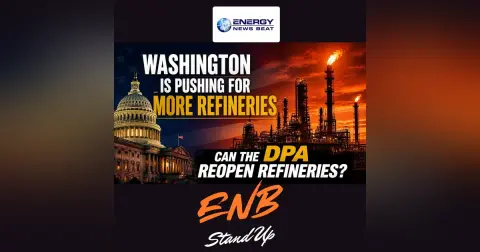
In this week's Energy News Beat podcast, host Stu Turley tackles the critical energy challenges facing America, from skyrocketing diesel prices and refinery closures to the political policies driving energy costs higher. With diesel at $6.32 per gallon and heating oil up 77% year over year, the administration is exploring ways to reopen shuttered refineries under the Defense Production Act. However, the real story lies in how state-level policies—particularly California's net-zero mandates and Virginia's renewable energy push—are exacerbating the crisis rather than solving it.
Turley examines refining margins, Middle East geopolitical tensions, and corporate earnings, making a compelling case that America's energy security depends on dominance in domestic production, not foreign reliance or ideologically driven policies that undermine the oil and gas industry.
1. U.S. Refinery Crisis & Diesel ShortageThe host emphasizes that diesel prices have surged to $6.32/gallon (up from $3.63 a year ago), driven by refineries running at maximum capacity (98%). With heating oil up 77% and diesel stocks at their lowest levels since 1982, the administration is exploring reopening closed refineries using the Defense Production Act (DPA). Key projects include the U.S. Holdings refinery in Tyler, Texas (74,000 barrels/day) and the Valero refinery in California.
2. California's Energy Policy ImpactThe host heavily criticizes California's net-zero policies under Governor Newsom, arguing they've destroyed the oil and gas industry and created a "national security risk." California residents pay $1.85 more per gallon on regular gas and $2.18 more on diesel. The Valero refinery closure exemplifies this problem, with the state preferring to import fuel rather than support domestic production.
3. Virginia's Rising Energy CostsGovernor Glenn Youngkin's administration is addressing skyrocketing electricity bills (up $50/month in three years), but the host warns that new policies promoting solar, wind, and storage—without proper grid reliability measures—will continue driving costs up. The state's participation in regional greenhouse gas initiatives is criticized as creating "slush funds" rather than reducing emissions.
4. Defense Production Act & Pipeline ExpansionSecretary Chris Wright is using $42 million in DPA funding to advance the Constitution Pipeline, aiming to lower energy costs for New York and New England by increasing natural gas supply.
5. Middle East Oil & GeopoliticsSaudi Aramco evacuated headquarters due to attacks, but Middle East oil production remains stable. Iranian sanctions are effectively starving Iran's economy, with tankers sitting idle.
6. Canadian Oil & Political LeadershipAlberta's oil industry is critical to North American energy security, with 20% of U.S. oil imports coming from Canada. The host criticizes Canadian leadership for misaligning with U.S. interests.
7. Refining Margins & Stock PerformanceValero earned $6.8 billion with a $72 diesel margin crack spread, while Halliburton and other energy companies report strong earnings despite softer U.S. activity.
8. Bloom Energy AnalysisThe host questions Bloom Energy's "green" marketing claims, noting their fuel cells run on natural gas and emit similar levels to the grid average—not significantly cleaner than conventional power plants.
9. Energy Dominance & National SecurityThe overarching theme: energy security depends on domestic production, not reliance on foreign suppliers. The host argues that California and other blue states' policies pose a national security risk comparable to a "zombie apocalypse" if fuel supply chains fail.
Main Stories for Today.
1.Washington Is Pushing Refiners for More Diesel. Relief at the Pump Will Take Time
2.Could the DPA Reopen Benicia? The Legal Path Exists. Will Valero and California Play Along?
3.Spanberger Wants a Six-Year Rate Freeze. Her Merger Terms Push Clean Energy, Too
5.Saudi Aramco Evacuates HQ, How Is the Oil and LNG Shipping Going?
6.As Alberta Votes to Not Leave Canada, They Need to Understand Their Plight
7.Halliburton Beats Q3 Forecasts as Overseas Work Offsets a Softer U.S. Oil Patch
8.Citgo’s Profit Outlook Jumps $2 Billion While Diesel Drivers Pay $6.32
9.Valero Earns $6.8 Billion on a $72 Diesel Margin as Drivers Pay $6.31
We would also like to give our sponsors a shout-out.
Check out the World’s Greatest Podcast Show Notes at EnergyNewsBeat.co or EnergyNewsBeat.com, and the Energy News Beat Substack at:
At The Intersection of Energy and Finance - By Sandstone Group
A shout-out to Steve Reese and the Reese Energy Consulting group for sponsoring the Podcast https://reeseenergyconsulting.com/.
Data2 if you have any business systems, can you trust A? Well, they have the patent on validation. . https://data2.zoholandingpage.com/energy
And we have WellDatabase rolling, and we use their tools for the Energy News Beat weekly Rig Reports: https://welldatabase.com/
Also entering Sponsor Rey Trevino, Pecos Operating https://pecos.energy/