Chanel Cleeton – Gilded Age Celebrity


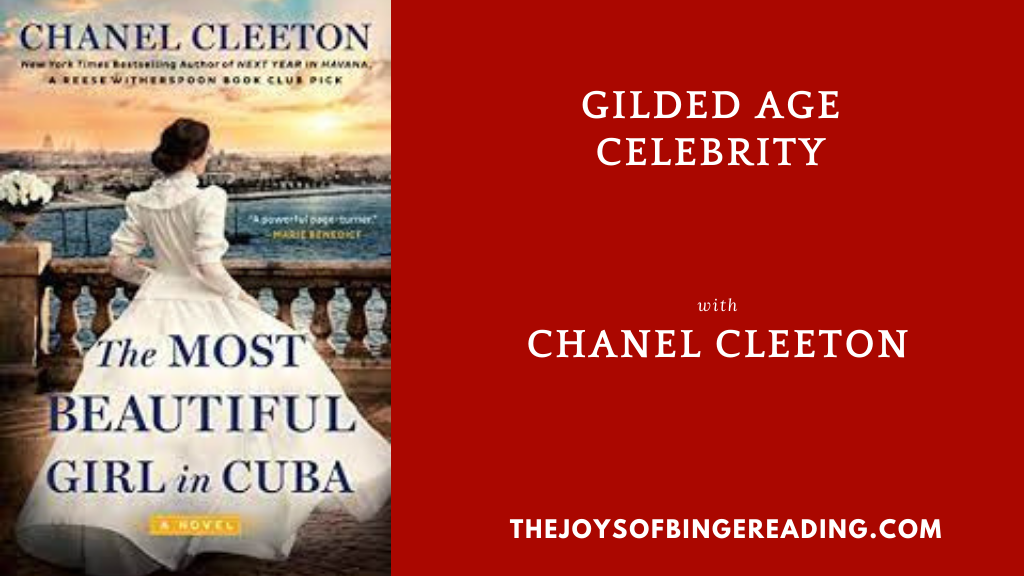
Chanel Cleeton’s latest Cuban historical, The Most Beautiful Girl in Cuba, covers the remarkable real-life story of Evangelina, a young Cuban noble woman who became an “overnight celebrity” in a bitter New York circulation war that birthed the world of newspaper tabloid journalism we see today.
Hi there, I’m your host Jenny Wheeler, and today Chanel talks about the birth of yellow journalism and the role the Cuban War of Independence in the 1890s played in its creation. It’s a colorful story, poignant, with lots of human emotion and larger than life characters, like William Randolph Hearst and his bitter rival Joseph Pulitzer.
Six things you’ll learn from this Joys of Binge Reading episode:
- The special pleasure in writing her family’s story
- Evangelina’s remarkable influence
- How intense Press Baron rivalry helped spark a war
- The role of female stunt journalists in sensationalizing news
- The wonderful camaraderie of the Reese Witterspoon club
- More Perez family stories to come
Where to find Chanel Cleeton:
Instagram: https://www.instagram.com/chanelcleeton/
Facebook: https://www.facebook.com/AuthorChanelCleeton/
Goodreads: https://www.goodreads.com/author/show/7383025.Chanel_Cleeton
Bookbub: https://www.bookbub.com/profile/chanel-cleeton
Amazon: https://www.amazon.com/Chanel-Cleeton/e/B00G1BWPD2
What follows is a “near as” transcript of our conversation, not word for word but pretty close to it, with links to important mentions.
But now, here’s Chanel.
Introducing author Chanel Cleeton

Jenny Wheeler: Welcome back, Chanel. It’s great to talk with you again.
Chanel Cleeton: Thank you so much for having me again. I’m thrilled to be here.
Jenny Wheeler: For those who weren’t with us then, you were on the show in 2019 with your first Cuban historical, Next Year in Havana, which had the distinction of being a Reese Witherspoon Book Club Choice. Now you’ve got your third Cuban historical out, The Most Beautiful Girl in Cuba.
These books are wonderful. You’re digging back into your own heritage with these stories., aren’t you? Tell us a little bit about your family links with Cuba.
Chanel Cleeton: I’m Cuban American. My family came over from Cuba in 1967 after the revolution in 1959. They came to the United States as refugees, and I grew up on their memories of Cuba and their love for their homeland, and so it’s been fascinating for me to be able to explore that part of my heritage and learn new things about Cuban history as I go back in time and imagine what my ancestors’ lives might have been like.
Jenny Wheeler: This book draws more heavily on true events than the earlier ones did, and it reveals some harrowing information about the way the Cuban population suffered in the War of Independence in the late 19th century. Did knowing that it was your family’s shared experience give this period a special interest and poignancy for you?
Chanel Cleeton: It really did. It was one of those things where I asked my grandfather about it and if he had heard anything, because it’s something my great-grandparents would have lived through. Unfortunately, I don’t know what my family’s experiences were like during that time period, but it definitely made me interested to imagine what it would have been like for them in such heightened and also important times in Cuban history.
The real Evangelina Cisneros
It was interesting to be able to go back to that and look at what my fictional characters went through and imagine what my ancestors would have as well.
Jenny Wheeler: We’ve mentioned that it’s based on true events and it’s built around the story of a real-life woman who attracted American interest. She was well born, she attracted the ire of the Spanish authorities and was thrown into a confined situation for reasons that are really very feeble, because they suspected her father of something.

Tell us about Evangelina Cisneros, who was dubbed “the most beautiful woman in Cuba” by the American newspapers.
Chanel Cleeton: She was a fascinating character. I knew I wanted to write about this time period and this moment in Cuban history, and when I started researching the book, her name came up and as an aside I looked her up to see about her life. When I found out about the facts of her life, it was such an interesting story that I couldn’t help but want to write about it.
She was a young woman whose father was arrested by the Spanish for trying to join the revolutionaries during the fight for Cuban independence from Spain.
She actually joined him an exile on the Isle of Pines, and while they were there, the Spanish Colonel who was in charge of the Isle of Pines at the time, tried to force himself upon her. She rejected his advances and subsequently was imprisoned in a prison in Havana know as Recojidas, which was a notorious woman’s jail in Havana.
Her name a rallying cry for war
While she was there her story came to the attention of the American media, specifically William Randolph Hearst who was the publisher of the New York Journal at the time. He used her plight as a rallying cry to try to get the United States involved in the war that was going on in Cuba for independence from Spain.
He was the one who gave her the title of “the most beautiful girl in Cuba”, and splashed her story all over his papers. She became an international celebrity for a very short period in her life as petitions were raised trying to get her out of prison.
Then there was an attempted jailbreak. I don’t want to spoil too much about the book, but she was one of those figures who had a larger-than-life life. She was very ordinary and didn’t expect this kind of notoriety. She was just a girl going about her life. She was very patriotic.
She loved her family. And then because of the set of circumstances, she got put on this path where she was thrust into the public eye in a way that she later remarked on, not understanding why such a fuss was made about her life.
I think she was a little bit uncomfortable with the pressures of all that, but certainly she tried to use the platform as much as she could to bring awareness to the cause of Cuban independence. That was very dear to her heart.
A ‘Yellow Journalism’ war
Jenny Wheeler: You’ve mentioned William Randolph Hearst. The other thread in the book is a very strong circulation war that was going on in New York between Hearst and Pulitzer at the time. She became kind of fodder for the development of yellow journalism, what we’d call tabloid journalism today. They went to extreme lengths to try and own the news, didn’t they, and Cuba became a pawn in that.
Chanel Cleeton: Yes, absolutely. They both definitely looked at the situation in Cuba as an opportunity to increase circulation. Hearst said he preferred power to profit. He was really trying to court influence and shape the direction of New York society and, more largely, global society with the stories he was covering and how he hoped that would influence US foreign policy.
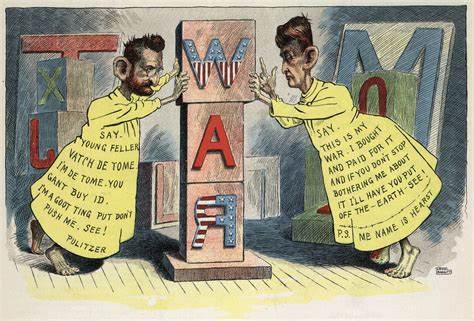
As you mentioned, they were engaged in this battle. Pulitzer at the time was nearing what he envisioned to be retirement and then Hearst swept in on the scene and was a threat to the newspaper empire Pulitzer had built.
They became engaged in this very big rivalry and anecdotally, they said at the end of the Spanish American War, had the war not ended when it did, they both likely would have bankrupted themselves and the papers because they were spending so much money to try to cover the conflict and trying to do everything they could to get those circulation numbers up.
Many views on Cuban War
Jenny Wheeler: The other key characters in the story are creations of your imagination, I understand, but they’re all just as interesting in the roles that they play as Evangelina. You’ve got Grace, the young woman who is determined to become a journalist who’s working for Hearst.
You’ve got Marina, the high-born Cuban who’s caught up in the war and whose path crosses with Evangelina’s, and Rafael who’s a self-made Cuban American millionaire who has got a bit of an identity crisis about where he should fit into this conflict. Each has a keenly perceptive assessment of the war and the motives for entering it, don’t they?
Chanel Cleeton: Yes. It was definitely important to me to look at all the factors that went into the conflict and all the influences that you had. At the time there was a very large Cuban exile community in the United States – they had left Cuba largely because of the previous war – and they were there trying to get support for the independence movement.
Rafael was an opportunity for me to let readers see into that world because it was hugely influential, particularly in New York and Tampa. There were also women’s clubs of Cubans in the United States who were raising money for the cause of independence and trying to bring awareness. I wanted readers to see that aspect of this story.
Nellie Bly, a trend setting journalist
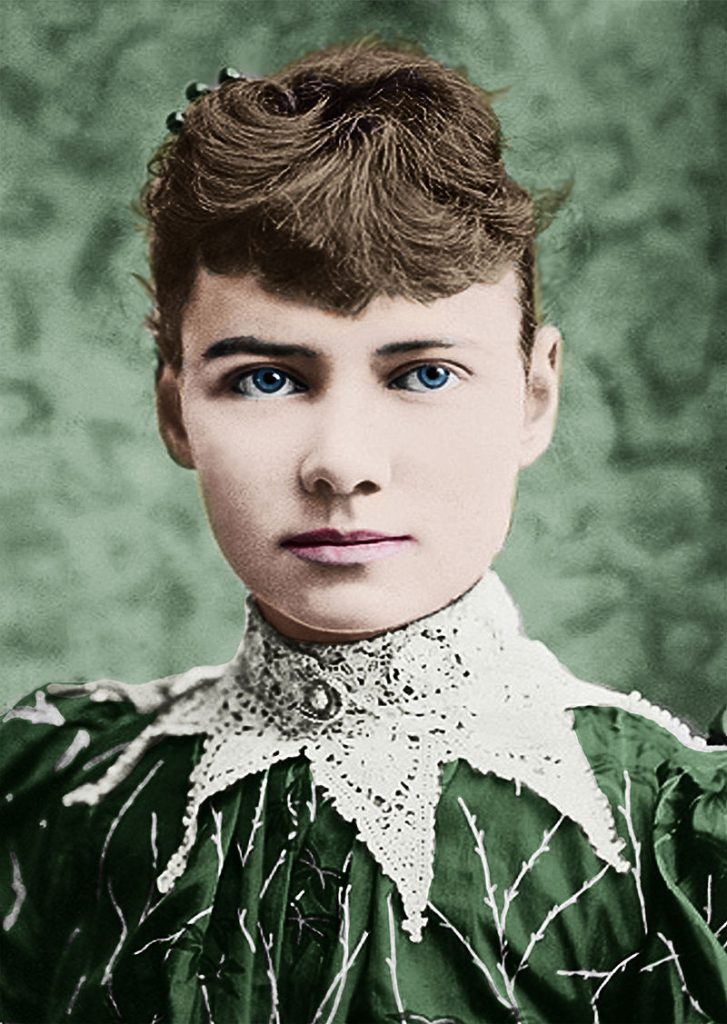
Grace’s storyline was inspired by the real-life figure of Nellie Bly, who is an American journalist who set about trying to make her mark on New York journalism. Grace looks up to her and not someone that Grace uses as a professional role model.
And then Marina’s story came to me out of the women that were in Cuba who were in the reconcentration camps. The Spanish sent many Cuban civilians to these reconcentration camps. They were sent from the countryside to the city centers, and it was a very difficult time in Cuba. It was really sobering hearing their stories and the toll the war took on Cuba.
Through Marina’s story and her work as a courier trying to help the revolutionaries, and her husband’s role, off fighting with the revolutionaries, I wanted to bring that struggling Cuba to the reader. It was also something that for me personally was very sobering and certainly very powerful, especially being Cuban American, to understand that perspective of the conflict.
Overwhelmed by Empires
Jenny Wheeler: Yes. The story obviously has very emotional aspects, the suffering of the people on a human level, but you have brought in the political aspect as well.
It seems as if it’s been Cuba’s misfortune, in a way, to attract interest from a succession of imperial powers – first Spain, then America, and then in our century, Russia as well. Do you think they are starting to find their own feet today?
Chanel Cleeton: I think that, as you said, the continuum of influence that colonialism has had on Cuba is a huge part of the book and something that has obviously come up quite a bit in the books that I’ve been writing and the research I’ve done on Cuban history.
It was fascinating for me from that perspective, growing up in a Cuban American household. So much of my family’s lives was influenced by the revolution in 1959 and so much of what they spoke about and their desire to go home was influenced by that event.
Going through the historical record and looking at all the different eras in Cuban history and how Cuba’s growth has been influenced by foreign powers and the struggles they faced under Spain, and then how things turned out after the war – I don’t want to spoil too much about the book for people who don’t know this part of human history, but it was very heartbreaking and definitely gave me a greater appreciation of all the factors that have gone into Cuba’s position and the way events have turned out.
Freedom cry echoed today
It was very interesting for me. The cry of a free Cuba that you hear in the book is also one that you hear in exile circles now. That hearkens back as well, the familiarity of that hope for a truly free Cuba.
Jenny Wheeler: Yes. And it does come through that the result of the war and of those years, the so-called fruit of the conqueror – they did manage to get rid of Spain, but it’s fair to say that the people of Cuba didn’t really see the fruits of a successful outcome, did they?
Chanel Cleeton: Definitely once the United States enters the war, the tenor of the conflict changes, and obviously this is a turning point in American foreign policy. You see that heartbreaking situation where they’ve been through hundreds of years under colonial rulers – Spain, and then independence is obviously not what they envisioned. That’s something the characters feel very much in their lives, and you see that play out in the book.
It was heartbreaking to go through the story and then to see how things ended up, not quite the way people had hoped at the time. That was a concern that was going on. There was definitely discussion on whether or not American intervention in the fight for independence was actually a good thing.
The sinking of the USS Maine
Within Cuban groups, you definitely had divided opinions on that. Some people wanted the United States to come into the war to help out. Others thought that it was a dangerous situation if they did. They were concerned that the US would become entrenched in Cuba. You see those kinds of conversations playing out in the novel, among the different characters.
Jenny Wheeler: The catalyst that finally did turn the Americans to war was the sinking of an American battleship in Havana Harbor. It had been sent down there with a little bit of a monitoring role, I suppose, the USS Maine. There is still controversy today over what caused the sinking of that ship.

That was one area where the American newspapers, Hearst in particular, seized on it and blamed the Spanish for it, but there’s still a lot of controversy over what really caused the Maine to sink, isn’t there?
Chanel Cleeton: I think it is largely accepted that it was an accidental cause. What I try to do when I’m writing historical fiction is make sure my characters only have the
information they would have had at the time. I try very hard not to look at anything that is external to that time period, because I think that often shaped so much of the characters’ reactions. And you’re so right. Hearst did use that. All the papers did. But I think Hearst definitely saw that as an opportunity to bring the US into the war. And then obviously, after years of this push to get the US in, that’s the catalyst that has them decide to move to war.
Keeping history real to the time
I wanted readers to see that aspect of it and to go through what the characters go through, which is trying to understand why this happened and if the Spanish are to blame or not. We talk a little bit about the naval inquiry that goes on and that sort of thing. I want my readers to feel like they’re on the ground with the characters, with the information they had at that moment in history.
Jenny Wheeler: Sure. You’ve mentioned Nellie Bly, the real-life journalist that Grace took as being inspiration. I must admit, I looked up a little bit about Nellie because I hadn’t heard of her before, and it struck me that both your character Grace and Nelly were put under extra pressure as women who were trying to break into a masculine world, a male world.
They weren’t very readily received by the editors of those papers as women journalists, but they were put under extra pressure perhaps to do things that were extreme to prove their worth to their editors.
I’m thinking about Nellie’s investigation of the insane asylums and actually going to stay in one herself under cover for some time. Did you feel as if that was part of the way they pushed the tabloid journalism in those years?
An era of stunt girl reporters
Chanel Cleeton: I think there were different layers to it, definitely. At the time the book is set and at the time Grace, my fictional character, is coming into the journalism scene in New York, Nellie Bly is held in quite high esteem.
She’s proven herself through various stories, including the work she did at Blackwell’s asylum, whereas Grace is entering at a much earlier point in her career and does feel a need to prove herself more.
It’s an era of stunt girl reporters. Like you said, it’s women doing outrageous stories. They were frequently writing under a pseudonym so that they wouldn’t be exposed for future stories, and lots of going undercover. The more attention grabbing the better for getting the attention of the readers and improving circulation.
Nellie Bly – I think you see a little bit of stunt journalism with her, but you also see someone who was very passionate about investigative journalism. I think a lot of times she wanted to go into these certain situations, because it was an opportunity for her to get the story that she felt needed to be told and that maybe people weren’t hearing.
But definitely, overall, in New York journalism there was a culture of these stunt girl reporters as they were called, and that need to top each other in order to gain prominence within the career field.
Joining an exclusive club
Jenny Wheeler: We’ve mentioned the first historical fiction novel that you did on Cuba, Next Year in Havana, which did get chosen as a Reese Witherspoon book.
I noticed in this book, The Most Beautiful Girl in Cuba, that in the acknowledgements you do thank the Reese Witherspoon book club and the support and camaraderie and collegiality you enjoy as an author. I wonder could you share a little bit with us? How does it feel to be a Reese Witherspoon author? What do you get from it?

Chanel Cleeton: It’s been an amazing opportunity. Reese and the community are so supportive. Everyone at the book club has been wonderful, not just with Next Year in Havana but with all of my subsequent books as well. They hosted the cover reveal for The Most Beautiful Girl in Cuba, which was so kind of them, and you really do feel like you’re part of this very passionate community that loves books.
I love reading their picks and talking to their other authors. The joy they have for reading and for books comes through. It’s been an amazing opportunity. I’m so grateful for the opportunity to connect with other readers and, as a reader myself, to find new books that I’ve really loved.
Jenny Wheeler: Is it a given that that will be made into a movie, or is that still up in the air? Is Next Year in Havana set for the big screen or the small screen?
The slow path to TV adaptation
Chanel Cleeton: Independent of Reese’s book club – the TV adaptation for Next Year in Havana is a separate entity, but there are some things happening with that.
I can’t unfortunately talk too much about it, and obviously the road from book to being a movie or on TV is definitely a long one and unpredictable, so I don’t know what will happen. But I’m definitely excited about the possibility and hopefully, fingers crossed, we’ll see something soon.
Jenny Wheeler: Turning to your wider career, a little bit away from the specific books, you have now got four under your belt. We haven’t mentioned the fourth one, set around Key West, but has your writing process changed much between book one and book four? Do you approach it differently now than you did at the beginning?
Chanel Cleeton: Each book is different in terms of what that particular book demands. With Next Year in Havana and When We Left Cuba, because they were such personal connections to me with my family history and how much I grew up on the stories of the revolution, I wrote and researched at the same time. I would look into something I wanted to know more about, and I would stop the research and then go back to writing.
The Last Train to Key West
With The Last Train To Key West and The Most Beautiful Girl in Cuba, I tried to front-load my research more. I learned that while I was working on The Last Train to Key West, because there I was going a little bit further back in history, they were events that I was a little less familiar with.
I think it’s helpful to have that strong research background before you start writing and often as well, the research informs the story for me in terms of the plot, the characterization.
Particularly with The Most Beautiful Girl in Cuba, when I was researching is when I learned about Evangelina Cisneros and decided she was going to be a character in the novel and that helped shape the direction of the book. That’s probably been the biggest change.
I still write all my books in Scribner and I still love the revision process in each book. I like the opportunity to go through as many revision passes as possible. That’s where I feel like I can make the book shine, so those things have stayed the same.
Jenny Wheeler: Are you a plotter? Do you do a big strong outline, or do you let the story develop organically as you go?
Writing an exercise in discovery
Chanel Cleeton: I’m not a plotter. I’m what we call a pantser. I let the story develop as I’m writing. Often, I will start with a kernel of an idea or I’ll have an idea of who my characters are, but as I’m researching and as I’m writing,
I find that the story is constantly surprising me and my characters are constantly surprising me, and so it’s leading me in unexpected directions.
That’s one of the things I love most about writing – that opportunity to go down a new path and to be surprised by your work. It’s always fun to start the day off thinking I’m going to go in one direction and then finding something that takes me in a different one that really suits the book well.
Jenny Wheeler: Without giving away any spoilers, can you tell us any surprises that you got writing this last book, The Most Beautiful Girl in Cuba? Were there things you thought were going to happen that didn’t, or things that did happen that you didn’t think were going to?
Chanel Cleeton: I would say, honestly, pretty much all of it was surprising. This is such a fascinating era in history, and I don’t think I appreciated that until I started researching the book and until I started writing it. You have these very larger than life figures doing outrageous things, and then you have the powerful story of what was going on in Cuba – that was really moving for me.
Being dubbed “most beautiful”
And then Evangelina, her storyline – I couldn’t have fictionalized something like that. It was definitely one of those rare cases where real life was a little more unexpected than anything I could have fictionalized, so the whole book was an incredible journey. I feel like I learned so much writing about it, and also really enjoyed the research and what I learned.
Jenny Wheeler: That’s great. Has your launch process for this book been much affected by the pandemic we’re still enduring, and how much have you been impacted generally by the things that have been going on around you?
Chanel Cleeton: This has definitely been a move to virtual events. The Last Train to Key West came out last June, so I had released another book while the pandemic was going on.
That was my first move to lots of virtual events. We had in-person tours planned and then had to change it all for virtual. This time, having had that point of reference and been through a virtual at least once, it was helpful to know what to expect.
Connecting virtually in pandemic
On the one hand, it’s great that you have an opportunity to connect with readers who might not be able to go to events in certain locations, so it’s nice that we’re able to connect virtually and have these conversations. Obviously, it’s nice as well having the in-person visits, but I think everyone has done a great job of pivoting to these virtual events and has been so supportive, and it’s wonderful to see that enthusiasm for book events.
Jenny Wheeler: Fantastic. As you know, this is The Joys of Binge Reading, so turning to Chanel as reader – I know you have been madly writing since I talked to you last, but hopefully you’ve had some time to also do some reading. Have you got any recommendations for our listeners of books you have read in the last 18 months that you feel are worth them investigating?
Chanel Cleeton: I’ve read some amazing ARCS (Advance Reader Copies) for historical fiction that is coming out this year. I would really recommend Natasha Lester’s The Riviera House. That one’s phenomenal. I think it’s coming out at the end of August. It’s a World War II historical fiction set in France during the Nazi occupation, and it deals with art theft. That was a beautiful read. I love her books and that one was amazing.
What Chanel has been reading
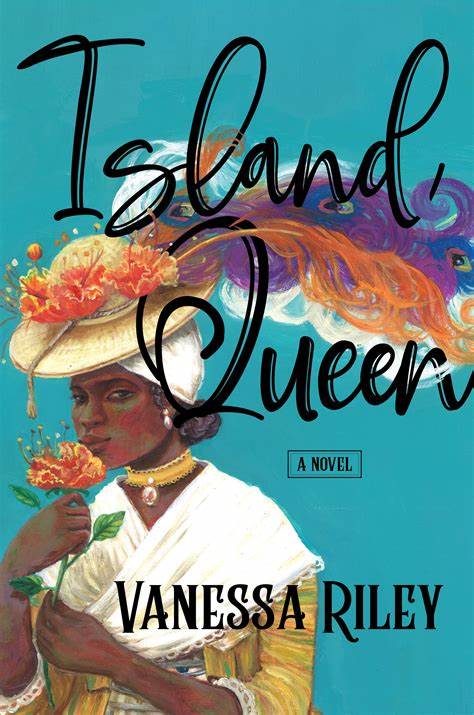
I also enjoyed Island Queen by Vanessa Riley. That’s a fascinating read about Dorothy Kirwan Thomas, this amazing woman who lived in the Caribbean. She was born into enslavement and became one of the most influential and powerful women in the Caribbean in her time. That was a beautiful read. I think that one’s out in July.
I also loved The Personal Librarian by Marie Benedict and Victoria Christopher Murray. That comes out in July as well. It’s the story of Belle da Costa Greene, who was JP Morgan’s personal librarian. She has an incredible story as well.

So lots of great historical fiction. I think readers are going to have a good reading year this year.
Jenny Wheeler: Fantastic. They all sound great. We have had Natasha on the show actually, with The Paris Secret.
We are coming to the end of our time together, so circling around and looking over the last few years and your overall career, now sitting where you are, is there anything you would change if you were doing it all again?
A fortunate career path
Chanel Cleeton: I don’t think so. I’ve been really fortunate in my career and I think my career has taken me on an unexpected path. I have been able to write in many different genres, which I’ve enjoyed, and as a reader, that’s been fun for me as well. So I’m very grateful and I’m excited to see what direction things go in the future.
Jenny Wheeler: What is next for Chanel, the writer? What have you got coming up in the next 12 months?
Chanel Cleeton: My next release will be out next year, next summer probably. I can’t say too much about it yet, but it’s set in the 1960s and the 1930s and it features three heroines. One of them is Isabelle Perez, she’s one of the Perez sisters from the first two books, and her story picks up where When We Left Cuba left off.
Her story interweaves with two other women who are ancestors of Marina Perez, who’s one of the heroines in The Most Beautiful Girl in Cuba, so we meet her branch of the family. It is set in South Florida, Spain, New York and Cuba. It was a really interesting book for me to work on, and I’m excited to be able to share more about it soon.
Revisting the Perez family
Jenny Wheeler: That’s going to be great fun. So it’s not exactly a series, but it is lovely to have these linked characters. I wanted to know what happened next for Marina, so that will be fun to have a chance to find out.
Chanel Cleeton: I love getting to revisit them. But also, if readers haven’t read the previous books, you can jump in at any time and you won’t be missing anything. That’s nice as well.
Jenny Wheeler: That’s absolutely right. You mentioned doing the digital launch. Where can readers find you online and do you enjoy interacting with them?
Chanel Cleeton: I love talking to readers. I have a website www.chanelcleeton.com where you can find book club kits and information about my books. I’m also on Instagram @chanelcleeton and Facebook at AuthorChanelCleeton. I love chatting about books and talking about what I’m reading and always happy to have that time with readers. I think it’s really cool that we can share this love of books together.
Links to books in show notes
Jenny Wheeler: That’s lovely, and in the show notes for this episode we will have links to all of those, as well as the rest of Chanel’s books, so you can always find those online.
Thanks so much for being with us today, Chanel. It’s been good talking and wonderful to once again catch up on what you’re doing.
Chanel Cleeton: Thank you so much for having me. This was wonderful. I really appreciate it.
If you enjoyed Chanel Cleeton’s Cuban historical drama you may also enjoy Love, Lies and Rebellion in Barbados, Lauren Willig’s A Summer Country, epic family saga simmering with secrets, set in 19th century Barbados.

Thanks To Our Technical Support:
The Joys of Binge Reading podcast is put together with wonderful technical help from Dan Cotton at DC Audio Services. Dan is an experienced sound and video engineer who’s ready and available to help you with your next project… Seek him out at dcaudioservices@gmail.com or Phone + 64 – 21979539. He’s fast, takes pride in getting it right, and lovely to work with.
Our voice overs are done by Abe Raffills, and Abe’s another gem. He got 20 years of experience on both sides of the camera/microphone as a cameraman/director and also voice artist and television presenter. Abe’s vocal delivery is both light hearted and warm and he is super easy to work with no matter the job. You’ll find him at abe@pointandshoot.co.nz