Craig Johnson – Beloved Walt Longmire


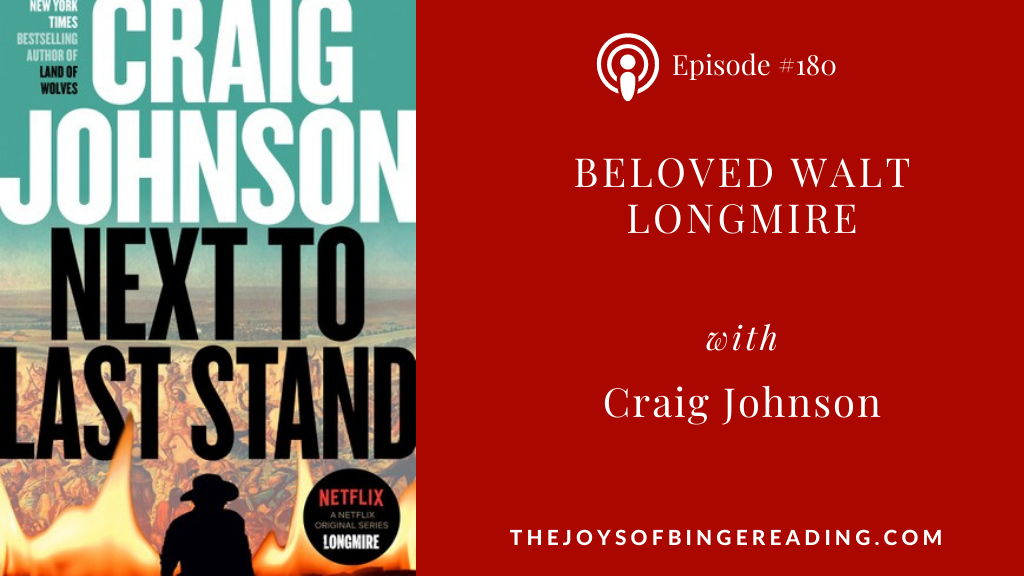
Craig Johnson is a Wyoming rancher and a best-selling international author who writes westerns for people who may not normally read westerns – the fabulously popular Walt Longmire mystery series that has also been turned into a top rating six season Netflix show of the same name. The books and the show closely reflect the community and the landscape Craig calls home.
Hi there, I’m your host Jenny Wheeler, and in today’s Binge Reading episode Craig talks about the work of creating a country sheriff who is a thoroughly decent man, the magic draw of the annual Longmire Days in nearby Buffalo, and how he is re-reading Ernest Hemingway at the moment, for a very special purpose.
Before we get to Craig, just a reminder. You can support the show on Patreon for as little as a cup of coffee a month, and get exclusive bonus content, including five quickfire getting-to-know-you questions with your favorite authors, including Craig. Check it out at www.patreon.com/thejoysofbingereading and join us today.
Six things you’ll learn from this Joys of Binge Reading episode:
- How Craig scored big with his first book
- The importance of local community
- Longmire on TV still in Top 20 four years after show ended
- The most famous painting in America
- Here’s hoping Longmire Days will be back
- Why he’s re-reading Ernest Hemingway
Where to find Craig Johnson:
Website: https://www.craigallenjohnson.com/
Instagram: https://www.instagram.com/ucrosspop25/
Facebook: https://www.facebook.com/OfficialCraigJohnson/
Twitter: https://twitter.com/ucrosspop25
Goodreads: https://www.goodreads.com/author/show/63607.Craig_JohnsonAmazon:
What follows is a “near as” transcript of our conversation, not word for word but pretty close to it, with links to important mentions.
But now, here’s Craig.
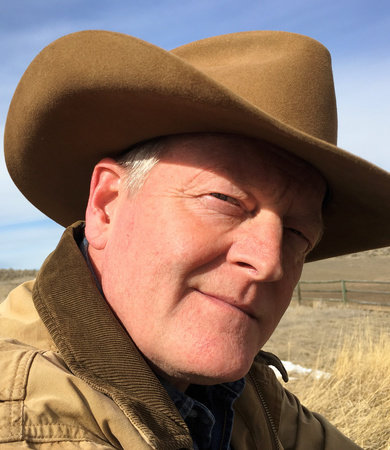
Jenny Wheeler: Hello there Craig, and welcome to the show. It’s so good to have you with us.
Craig Johnson: It’s wonderful to be here, and thank you for getting up so early and making this so convenient for me to be in the middle of the afternoon.
Jenny Wheeler: You have got fifteen books and a six season Netflix series. This fellow Longmire has developed a life of its own, hasn’t he? We are talking about the most recent book today, Next to Last Stand, but Walt Longmire’s life is very much your life, isn’t it?
I would like our listeners to get an idea of where you are and how you are living, because it does parallel Walt’s life very closely. You have written a series about a Wyoming sheriff, and you are a Wyoming rancher. Give us a picture of where you are and how your day unfolds.
Craig Johnson: There are some similarities like that, but there are also some differences. Walt is a full-time sheriff, that’s a full-time job. It is an elected law enforcement job. Sheriffs are county law enforcers who have to go out like politicians and get votes, and so Walt not only is a police officer, he’s also a politician.
The reason I chose that particular line of work was that it made him immediately answerable to the community. That is what a lot of the books are about.
Introducing author Craig Johnson
They are about the community. It is a very thin veneer of civilization here in Wyoming. At the ranch where I live, that I built myself, the nearest town to us has a population of 25. There aren’t very many people, so whenever Judy, my wife, and I go out on tour there are only 23 people in Ucross. It would be a great time to come in and rob the place.
We are in Johnson County, which is not named for me, I want to be clear about that. It’s an isolated lifestyle, I suppose, but I find that to be very conducive to the writing process. Whenever I’m around a bunch of other authors and they are talking about writing at Starbucks or at the coffee shops, or meeting with other writers and getting together and having dinner and doing those types of things – I don’t have that particular luxury. I go up into my loft here at the ranch, after I get all of the ranching chores done, and then start in with Walt. I guess I need that kind of solitude to focus on what I want to focus on.
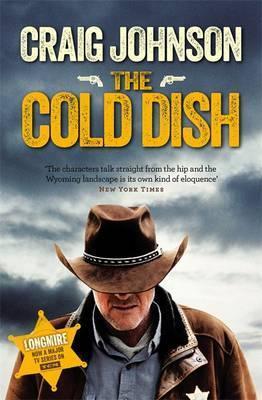
Other major differences that Walt and I have are that Walt has had a lot of tragedies in his life, the biggest one being the death of his wife. That has had a long-term effect on him. I have had a wonderfully charmed existence. My very first book that I wrote, The Cold Dish, the very first Walt Longmire book, was picked up by Viking Penguin, the big publisher back in New York. They took it and ran with it.
We got on the New York Times bestsellers list. Warner Brothers came knocking and said, we would like to make a TV show out of the series of books, which I highly questioned, because making a TV show out of the sheriff of the least populated county in the least populated state in America, I wasn’t so sure that would work. Evidently it did.
Walt’s success on Netflix – still in the Top 20 shows
We are still on Netflix streaming, and we’re one of the top 20 original content television shows, even four years after they ceased production of Longmire, so I don’t have a lot to complain about. My life is pretty charmed. Walt has had a more difficult row to hoe, and I think that makes our lives a little bit different.
Jenny Wheeler: Were you born in Wyoming?
Craig Johnson: No, I was born in the eastern portion of the United States, but I had family in the west and my eyes were always pointed west. I wanted to be here. I wanted to build my own ranch, which I did. I had one of those fathers who considered you to be slave labor until you were 21 and escaped, and so against my will I learned a lot about electricity and plumbing and general construction, masonry and all those types of things.
The ranch that you’re seeing only a very small portion of here, I actually built myself. That was probably good too because that had an effect on me. When I was a young man and thinking about what I wanted to do with my life and where I wanted to be and where I wanted to go, I traveled a lot.
Maybe it’s a massive rationalization for an ill spent youth, but I think it was my attempt to try and garner as many experiences as I could to bring to the writing.
The importance of life experience in story telling
I think some of the most boring writers I’ve ever read are the ones who go to these marvelous writing schools, but really don’t have any kind of life experience to draw from. For me, I was out there trying to get as much life experience as I could pack into about a 10-year period.
The problem became that it got to be habit forming. Every year or so I would just root up, take everything that I had, load it into my pickup truck, and move to another portion of the United States, get another job, and live another life for another year. Finally, when I settled down with my wife Judy, and I built the ranch, that settled me. It also anchored me to the point where I thought, maybe now is the time to sit down and try and write that first book. That first book was The Cold Dish, the first Walt Longmire novel.
Jenny Wheeler: Did you always know you were going to be a writer someday?
Craig Johnson: I don’t know. I always laugh at that question, because wanting to be a writer is like wanting to be an astronaut. The odds against you are so great, you should just shut up and not tell anybody. Keep it to yourself, don’t tell anybody. That’s what I did. Every once in a while somebody would say, what are you doing on that computer for four or five hours in the evenings? I’d be, I’m writing a book and they’d be like, oh, okay. Look at what the chances are. The odds are against you are so great. It’s really a lonesome pursuit to try and do it, and so I decided to keep it all to myself and be quiet about it.
Writing was a life long ambition
Yes, I always wanted to be a writer, but I didn’t know if it would work out or not. The first thing is always trying to find something and somebody to write about. At the point in time when I was thinking about doing the Walt books, it seemed that everything was very noir here in the US as far as mystery novels and thriller novels and everything were concerned. Everything was very urban, very big city. It seemed like every novel took place in either Los Angeles or New York or Chicago or Miami or places like that.
I looked at the map of the United States and it seemed like there was an awful lot out there, these blank, open spaces. I thought, just because it’s not happening in an alley behind the Waldorf Astoria doesn’t mean it’s not a true crime, taking a life, a murder mystery. I thought that would be a different direction to go in, and for me, that was important.
Then Walt himself, being a little bit different from the usual protagonist, who is the divorced alcoholic detective, who’s got a case load of 27 murders he’s working on and has difficulty working with his fellow workers. I thought, maybe Walt can be something different. I think one of the compelling qualities of the series and of the books themselves is Walt’s character. One of the major differences is that Walt is not perfect in any way, shape or form, but he does have a decent quality to him. He is a good guy. He’s not going to be making meth in a bathtub, he’s not going to be burying evidence behind his house. He’s an honest and decent individual.
Walt works hard to maintain his belief in humanity. . .
I think that resonates with a lot of people, because an awful lot of the people involved in law enforcement are very hard-working, decent people who are working against terrible odds and terrible situations and terrible environs to try and deal with people who at one point are at their absolute best, but then also a lot of times are at their absolute worst.
You have to work hard to hold on to your belief in humanity. I think Walt has done that. I think he has a very strong belief in humanity and the people around him in the community, and how important community is. That reflects itself in his being a sheriff.
Jenny Wheeler: Yes. I’m interested in you saying about crime being very urban when you started, because there can sometimes be a bit of an anti feeling about westerns, like they’ve had their day. There is a bit of a resurgence in modern westerns, even in recent times. I think you perhaps led that wave – things like the show Yellowstone on Netflix now, and a number of others are coming through as being very popular, and yet amongst publishers you will sometimes find this prejudice against Westerns.
Craig Johnson: It’s funny because they’ve practically got westerns going before they weren’t. Everybody is saying westerns are dead, and so the call for westerns to be dead for such a very, very long time is almost ludicrous. It’s just another genre form, and whenever you’ve got a universality to a genre, it’s very hard to kill. There is a lot of morality, there’s a very stark landscape which lends itself to that morality as far as westerns are concerned.
One important key – be your own original
The big thing is that you have to find a new twist. You have to find a new way of doing things. I’ve spoken at the Western Writers of America conferences before, and I am always telling an awful lot of the folks that are out in the audience, hey, it’s really hard to make a living copying Louis L’Amour and Zane Grey, because Louis L’Amour and Zane Grey were really good at writing Louis L’Amour and Zane Grey. The idea is to maybe try and do something a little bit different.
With my books being contemporary westerns, obviously Walt has a problem with technology. He doesn’t carry a cell phone, he’s driving a twenty-five-year-old vehicle, he’s kind of broken in, but not broken down, is the way I like to look at it.
But technology doesn’t lend itself very easily to a lot of these Western landscapes. I am always laughing about it because people will ask me, why doesn’t Walt carry a cell phone? I look at them and say, you have never been to Wyoming, have you? I would imagine it’s a lot like New Zealand or a lot of other places where there are large areas where, if you don’t have service, that little phone in your hand is not much good. It’s great for taking photographs – selfies of you and pronghorn antelope – but other than that, it is useless.
Nature takes a hand, and that Western landscape embodies itself very strongly as a character and creates an environment that makes for something different, where you don’t have computer access and cell phone activity and the internet. All these things can enhance life and make things a little bit easier, or make things a little bit more difficult.
The famous painting at the center of the story
He says, as he’s doing this wonderful interview with this lovely woman from New Zealand. It is one of those things where it can be a blessing or a curse. You have to find a way to utilize it as best you can.
Jenny Wheeler: Getting back to Next to Last Stand, it focuses on a very famous painting that was taken up by the beer company Budweiser, and I gather is seen in bars – well, years ago, maybe not quite so much today.
Craig Johnson: Oh no, I can name you five bars within an hour from my ranch that have it up on their walls.
Jenny Wheeler: Amazing. It relates to the defeat of General Custer. I think everybody in the world at least knows the phrase Custer’s Last Stand, but they probably don’t know much about what went on there. This book is focused around that painting and its history and what happened to it. The battle was in Montana in 1876. Tell us about the painting.
Craig Johnson: To put it in perspective, the battlefield is only about an hour and a half away, right across the border up in Montana, where my ranch is. I am right there on the Wyoming Montana border at the base of the Big Horn Mountains. The Little Big Horn is only about an hour and a half north. It is a major piece of American history that is right here in my backyard. Durant and Absaroka County are fictitious, but it’s Johnson County and Buffalo, and whenever you’re writing about something like that, something similar, there is always that 600-pound gorilla in the room.
Little Big Horn the ‘600 pound gorilla in the room’
Whenever you’ve got that piece of history right there, you are going to write about it at some point in time. One of the things I like to do is to bring across a lot of social history, a lot of historical relevance, and bring it back into perspective for what we have nowadays.
There it was, the Little Big Horn, right up the road from me, my 600-pound gorilla in the room. I thought, if you’re going to write about it, you are going to have to find a different angle to attack – forgive the term – that particular battle. So much has been written and done about the Little Big Horn – it is touched upon in the book – so many books, so many movies – a lot of bad movies – television shows. I thought, I don’t want to jump in here and do what everybody’s done before. I’m going to have to try and do something a little bit different.
As a writer, you always have that point of entrée. Where exactly are you going to attack this idea? I remember seeing that painting – as I said, there are five of them within an hour of where my ranch is, over in Gillette, in Sheridan, down in Buffalo, all around – it’s hanging there on the wall. I thought to myself, I wonder what the history of that particular painting is.
When I started doing the research, I discovered that there had been essays written about it, and the history of that painting was almost as dramatic as the battle itself. It had gone on tour all over the country, there was a lot of controversy about the painting. Just because we were talking about this painting and because it is very historic, does not mean that it was a really good painting.
The most famous work Cassilly Adams ever painted
Cassilly Adams was not a great painter, he was a good painter. This particular painting was massive, 16 feet by 8 feet. He painted it there in St. Louis and it had gone on tour all over the country. I discovered, and this was something I didn’t know, that before there were 24 hour news cycles on cable television, before there was constant news barraging you from the internet and all this, a lot of people depended on first, newspapers, but second, what they would do was paint these great big paintings of historical events, and then they would take them around in a wagon and light them and then charge everybody a quarter to go in and look at the painting and have it all described for them.
That was a way of conveying what had happened historically, and so this painting had been all over the country and came back to St. Louis and nobody really wanted it. Nobody wanted to buy it. But there was an individual who owned the saloon at the St. Louis train station, and he thought it would be a great conversation starter to have up on the wall in the bar there at the train station and you would get people to drink at the bar, maybe miss their trains and drink more.
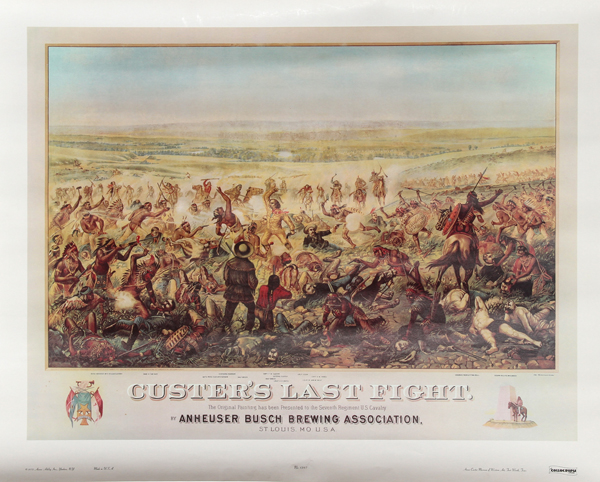
They put this huge painting up on the wall and it stayed up there for something like 20 years, for goodness sake. Then, as happens with a lot of these types of institutions, it went bankrupt, and one of its biggest creditors was a small brewery in St. Louis called Anheuser Busch or Budweiser. Augie Busch, the owner of Budweiser Beer, came down there and said, you owe me thousands of dollars for all the beer.
A painting to settle a debt – and the rest in history
They said, we’re bankrupt. We don’t have anything to pay you with. He looks up on the wall and, never one to miss an opportunity, Augie Busch says, I’ll take the painting off the wall. They peeled the painting off the wall, he rolls it up under his arm and he goes back to the brewery. He rolls it out on a great big table in front of his merchandising and marketing guys and says, we’re going to make posters of this painting. We’re going to send them out to every restaurant and bar and saloon that carries Budweiser beer as a gift, and by the time we’re through with this particular cavalcade, we’re going to be selling a lot more beer.
Budweiser is one of the largest brewers in the world now, so obviously the trick worked. They did it for something like another 20 or 30 years. Then in the 30’s, what happened was, in a fit of a philanthropic magnitude, Augie Bush decided, we’re going to donate the painting. We’ve got our 40 and found ethic. (can’t get this.) We’re going to donate it to the 7th Cavalry.
They gave the painting to the 7th Cavalry, which at that point in time was based in Fort Bliss, Texas, and they put it up on their commissary wall where it stayed until 1946 when the commissary burned to the ground and the painting was destroyed.
Or was it? The whole point being that Walt Longmire, through the Veterans Home right there above Durant, discovers a portion of a painting and starts doing the research and discovers that this painting might still exist.
Would be worth $25 million today – if still in existence
I remember asking the folks over at the Buffalo Bill Museum, what would this painting be worth? Mary Robinson, who is in charge of the library over there, said, 24-25. I said, 24-25 thousand? She said, no, 24-25 million. She said that painting has had such a large-scale effect worldwide, and there have been so many copies of it and everybody knows it. It may be the most viewed painting in American history.
She said, more like $25 million, and I thought, there is my MacGuffin. There is something that will send Walt Longmire on his very first art heist.
Jenny Wheeler: That is a great story. What is controversial about the way the artist portrays the outcome of the battle in that painting?
Craig Johnson: Everything’s wrong. Everything about the painting is incorrect in many ways. Look at the geography of the painting. It looks as though the battle is taking place on the wrong side of the river. The Indian camps are all in the wrong place.
Cassilly Adams’ son said that he had troopers come in with their equipment and he had used them as models, to formulate exactly how they were dressed, and they actually look right. The Indians on the other hand look like they came from Rorke’s Drift, but by way of the Seminole Reservation in Florida.
They have got head dresses that are all wrong, the shields they are carrying look like giant tortoise shields from Africa. Once you finally get all the way down to Custer himself, his hair was not long in that battle, he had cut it off the night before. The scarf he is wearing is all wrong.
Editor Note: MacGuffin: A term from Alfred Hitchcock to describe a fictional device. In every story about espionage, mystery, or suspense, there is an object or objective that motivates the characters. This plot device is called a MacGuffin. Whether it is the secret plans in a spy thriller or the jewels in a heist movie, the MacGuffin is a red herring that compels readers or audiences to dive into a story.
Incorporating the Cheyenne view with Henry Standing Bear
He is carrying a saber, which the 7th Cavalry as an expeditionary force did not carry at that point in time.
There were a lot of inaccuracies as far as the painting is concerned, but that’s artistic license. When Cassilly Adams was attempting to formulate this painting, he took a lot of liberties, but it makes for a very dramatic painting which is interesting too, because it’s very gruesome. There are actual scalpings going on, and knifings and shootings and terrible things like that. I guess by the time it got into the 40’s they painted some of those out, they blocked some of them out in the painting so that they wouldn’t show up and the painting wouldn’t be quite so gruesome, so that when you’re sitting there cutting into your steak, you weren’t looking up and seeing somebody having half their head cut off.
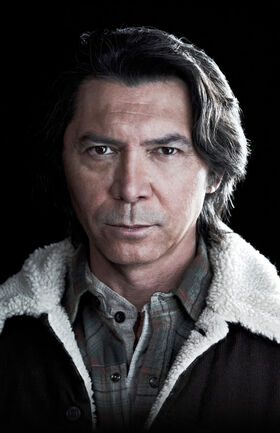
Jenny Wheeler: In the Longmire series generally, I love Henry Standing Bear, and I love the way the native American viewpoint is portrayed in lots of ways. Obviously he’s got a big number of native Americans amongst his constituents. The reservation is quite close. Did you start out with the intention of portraying that part of Wyoming life or has it grown as the years have gone by?
Craig Johnson: No, that was an intention from the get-go. The Northern Cheyenne and the Crow reservation is to the north of where I live, and they are such an amazing people that it wasn’t possible for me to leave them out. It would be criminal, excuse the term, for me not to have them be a part of the world I live in, and so I had to include them in the world Walt lives in.
Craig Johnson – ‘It’s inevitable writers draw on their personal experience’
I am guilty as much as any other author. There is that wonderful quote by Wallace Stegner where he says that the greatest piece of fiction ever written is the disclaimer at the beginning of every book that says nobody in this book is based on anybody alive or dead. What a crock that is, because everybody does that. That’s what you do. You take people, and you put them in your books.
That’s difficult when you live in a state that only has 500,000 people in it, because once I stick somebody from Wyoming in my books, everybody knows who I’m talking about. It is even worse up on the Northern Cheyenne reservation that only has 20,000 enrolled members, because if I stick one of my friends from up there in the books, everybody in the whole reservation knows who it is that I’m putting in.
That was a bit of a liberty in the first book, The Cold Dish, but fortunately the books and the television show got a really marvelous response from the members of both the Northern Cheyenne and the Crow reservations. I think a lot of that has to do with the fact that, number one, I had to include them in my books, or it wouldn’t be an accurate portrayal of where I live. The other part is that they are not just set dressing in my books, they are people in my books. To disregard them and their humanity in any way would be a horrible thing for me to do, and so I have to include them, and I have to include them in every facet of their humanity. It’s important as far as that’s concerned, and that has been from the get-go, all the way, 15 books ago.
Daughter of the Morning Star – on the presses now
The one I’ve got coming out in the Fall, on the 21st is called Daughter of the Morning Star, which is about a basketball player on the girls Northern Cheyenne team who starts receiving death threats. She has got a sister who went missing almost a year ago, which conveys one of the horrible issues we are facing in Indian country – the abduction and murder of Indian women.
That is very close to home, and I think that has to be included in the books. You need to deal with social issues. I don’t want to ever have Walt chasing Al Qaeda over in Crook County. I want him dealing with the things that Wyoming and Montana sheriffs have to deal with.
Jenny Wheeler: There is a strong sense of spirituality in the books as well, and Walt tunes into that. I noticed in one of them, Land of Wolves, he’s led by his spirit guide, Virgil White Buffalo. Is that something you also have a sensitivity to yourself?
Craig Johnson: I think I do. I don’t think you can live in this part of the world, under the influence of the Northern Cheyenne and the Crow, and not be affected by the way they see the world. My good friend, Marcus Red Thunder, who is the model for Henry in the books, is a very spiritual individual, and I am consistently amazed at the way he sees the world and what he sees in it.
Far greater things than we dream of – Craig Johnson
It is important for me to include that in the books, and that’s just the local aspect of it too. Historically, you can go all the way back to Shakespeare, in Hamlet – there are far greater things, Horatio, than are dreamt of in your philosophy. I’m firmly of the belief that when you go to write a novel, it needs to be written on a number of different levels. To completely ignore and neglect that spirituality and that mysticism that is such a part of where I live, would leave a void for the reader. They would know there was something that was being left out and I can’t do that.
Jenny Wheeler: You relate to your readers in a very down to earth way. I did enroll in your newsletter, so I’ve got the most recent one, and I was really tickled because you gave us quite an explanation about this work you are doing in your barn, which turned out to be practically a work of art in itself. I thought to myself, I bet your readers love that about you, that you relate to them in a very real way. Would you think that’s one of your strengths?
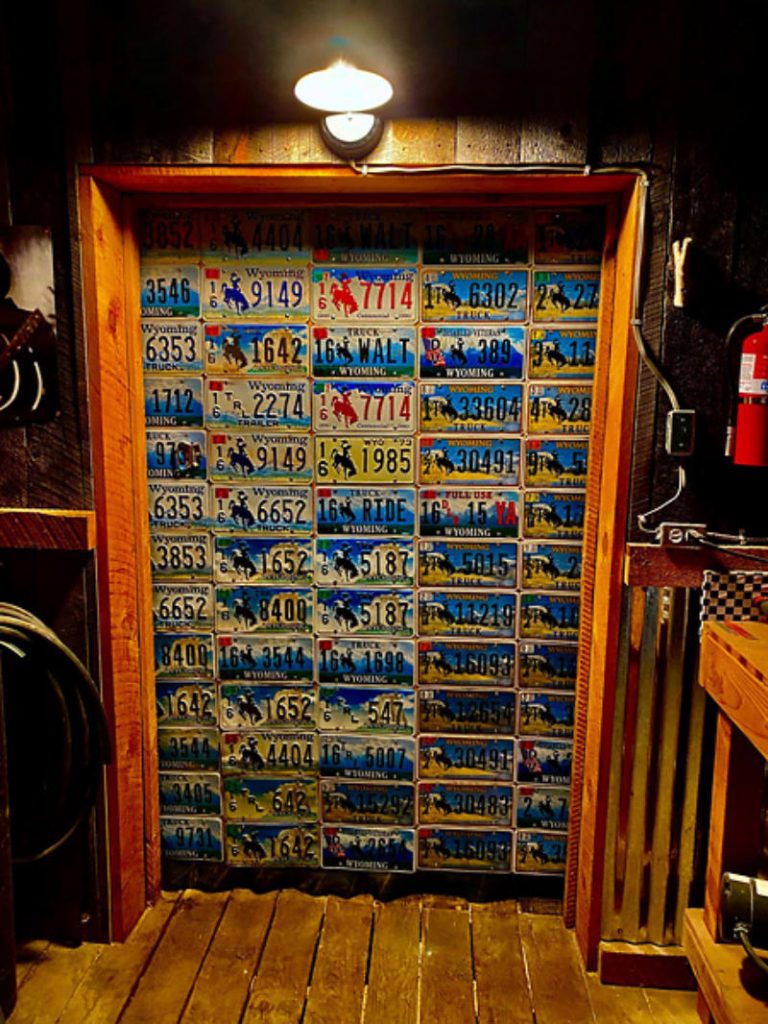
Craig Johnson: I don’t know if it’s a strength or a weakness, but I don’t know any other way to do it. For me, it’s a two-way street. It’s nice because whenever somebody is going to go out and buy your book, year after year after year, that is a $30 contract you have with that person, and you have certain responsibilities that go along with that in the sense that it has got to be a good book.
Where to find Craig Johnson online – and reader engagement
It’s got to be a good story, it’s got to have character development, it’s got to have social impact, it’s got to have humor, it’s got to have history. It’s got to have all those things they’ve grown to love about your books. That raises the bar a little bit, it makes it a bit of a challenge.
I’m really accessible. I don’t know any other way to do it. On my website, you can go to craigallenjohnson.com and you can hit the contact button. That’s my email, here at the ranch. I always laugh about it, because I’ll get emails from people who say, whoever is responsible for answering Mr. Johnson’s emails, and I’m always sitting here at the ranch, looking at the computer and going, well, that would be me. There have been times when they’ve quizzed me to see if it actually is me, because they don’t believe it.
As an author, you are taking a chance because there might be people out there who don’t like your books or don’t like your characters. But I’ve found that’s a very small percentage. The vast majority, I’d say a good 97-8% of the emails I get or the interaction I have with people on Facebook or Instagram or all the other social media, is extraordinarily positive.
I like answering those questions. I think you can go overboard, so I’m always careful. Whenever I get up in the morning, I answer all the emails and I’ll go on Facebook or Instagram or whatever, and I’ll put something up. If there are some specific questions people are asking me, I’ll try and answer those questions.
How Longmire Days got started
Then I go out and do my ranching work, and then come in and go up and start working on the books. I think hanging around on social media can be a detriment, because it steals away the time that you should be working on your novel. I’m always accessible, and I’m always trying to be on there, but I think you have to keep it to a limit as far as that’s concerned.
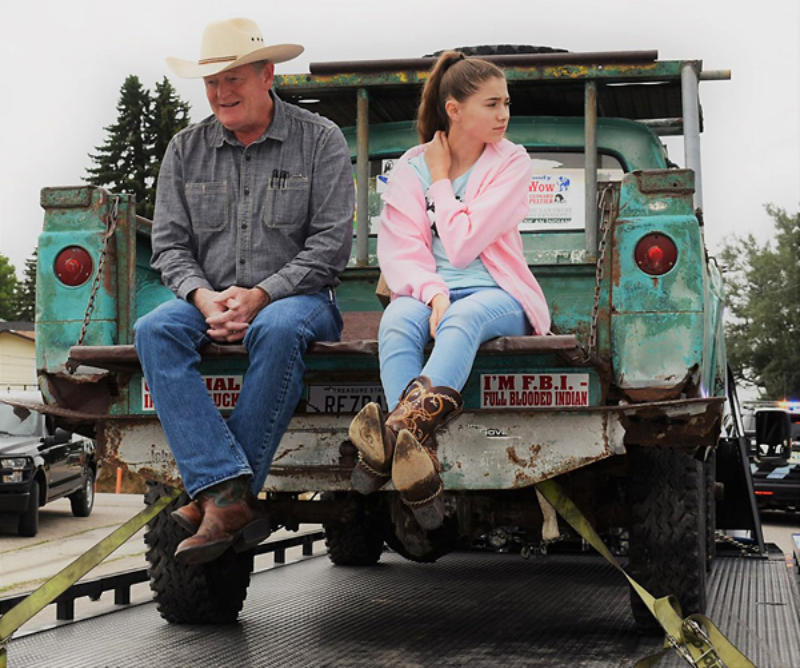
Jenny Wheeler: You open your ranch to Longmire Days. I started following you last year, and I saw with interest how the year went by, and you were still hoping and still hoping you were going to have your Longmire Days, but in the end you had to face reality and canceled last year, didn’t you? But you are very much hoping to have the Longmire Days this year. Tell us about it.
Craig Johnson: The little town of Buffalo came to me, and they said, we would like to try and do a Longmire Day. We did it, and all it was, was me sitting in front of the Busy Bee Café, signing books under an umbrella. It was strange though, because a couple of hundred people showed up, so that’s really wonderful.
The Office of Tourism for the State of Wyoming were there filming, and they said, do you think you could get some of the actors from the television show to show up? I said, I don’t know, I can ask and see. How many were you thinking? And they said, all of them. I was like, well, I can try, but I can’t make any guarantees. As a matter of fact, the majority of them did show up the next year.
An overwhelming response to Longmire Days – Craig Johnson
We were kind of surprised by the response. We had over 15,000 people show up in a little town of 5,000 people, and so we were overwhelmed at the town of Buffalo. The restaurants ran out of food, the grocery stores ran out of food, the ATM machines, the banks ran out of money, all the cell phones overloaded the one little tower we had in Buffalo so that it went down, and everybody is wandering around with their cell phones trying to get service. I am looking at them and going, why doesn’t Walt Longmire have a cell phone? Are you getting a clear idea?
It was a wonderful success, and we’ve been doing it now for about 10 years. Last year was a bit tough with COVID, and we finally had to do it virtually, but we had a wonderful response. It was amazing to see the response that people had. It was fantastic. We have got great hopes that we are going to be able to do it again live this year.
The difficulty we’re running into is that a lot of the actors are doing a lot of their work in foreign countries. Robert, (Taylor) living in Australia, has a quarantine that he has to go through every time he goes somewhere and flies somewhere to do a movie. Bailey Chase was up in Vancouver. A lot of the actors have been in a lot of different places and the difficulty is that they have to go into quarantine when they come back.
Pandemic restrictions ‘a nuisance’ for Longmire Days planning
Sometimes those quarantines are two and four weeks long. That is a big chunk out of their time, so it’s going to be tough to do Longmire Days this year. We’ve got great hopes and we’ve sold an awful lot of tickets. A lot of people are prepared to come to Buffalo, and we hope that will pan out.
Jenny Wheeler: We are starting to run out of time, so I would like to talk to you about your own reading. Turning to Craig as reader, because this is The Joys of Binge Reading, and I like it to be the sort of show that introduces authors that people might not have heard of, but will love, and find a book they won’t want to put down. Tell us about who you like to read, and who you’d like to recommend to listeners.
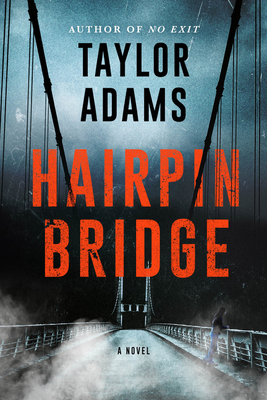
Craig Johnson: There is always a number of readings that I’m doing. I’ve gotten to a certain point in my career where I’m doing a lot of blurbs, which is kind of interesting. But one I just finished is a book by Taylor Adams called Hairpin Bridge, which is out now. It is a marvelous thriller that takes place in Western Montana.
S.A. Cosby, a good friend of mine out of Virginia, has got a book coming out called Razorblade Tears. My good friend Anne Hillerman just had a book come out. I know she has been on your show. She does such a marvelous job of taking the characters in the world that were her father Tony’s, and making it her own and striking out on her own path, which is wonderful.
Jenny Wheeler: She was remarkable.
Craig Johnson’s favorite books – what he’s reading right now
Craig Johnson: To try and step into those shoes and take off, do something on your own – I think she’s done a miraculous job.
Then of course there are always writers I’m going to go back to. Believe it or not, I got tagged to do the keynote speech for the International Hemingway Association meeting next year, and so I am reading a lot of Hemingway that I hadn’t read in a number of years. It is always fun to go back to writers you might have read at an earlier period in your life.
I am always reminded of that great quote from Mark Twain, where he talked about his father. When he remembered his father, when he was a teenager, he couldn’t believe how stupid the old man was. Once he got into his thirties, he couldn’t believe how smart he had become. It’s always interesting to see what kind of an effect these authors have on you as you become something different. I have changed from authors that I read – when I was reading Hemingway in my twenties, to a man in my sixties – it is a little bit different how I approach his work.
I just pulled out another one, George McDonald Fraser’s The McAuslan trilogy. He is a wonderful Scottish writer who is probably more famous for the Flashman series, which is a marvelous English history of this scoundrel, the most caddish protagonist you could ever possibly hope for. But these books are more about his time in North Africa and Burma in the British military, and they are some of the funniest short stories I’ve ever read in my entire life.
I love funny authors – authors who have a sense of humor. I try to put as much humor in my books as I possibly can, simply because I think it makes the characters more real.
Sense of humor to be treasured in an author – Craig Johnson
Whenever I’m talking to young authors who are asking me, how do you make characters endearing to readers, I say give them a sense of humor. Inevitably the next thing out of their mouth is, what if I’m not funny? Then I have to look at them and say, well, you’re in a lot of trouble then, to be honest.
There is a lot of literature out there that doesn’t have any humor in it, but I think that whenever you’re writing crime fiction and dealing with police officers and law enforcement – one of the things I hear over and over again from a lot of law enforcement folks is that it’s the humor they really enjoy in the books. That is going to be more important than a bulletproof vest. If you can keep your sense of humor at the end of the day, you’ve got a chance of making it through.
Jenny Wheeler: With the Hemingway speech, at this stage do you think you are going to take the tack of how differently you view him today from when you were 20?
Craig Johnson: No, I think I’m probably going to talk about isolation. There is an isolation aspect to Hemingway’s work – an isolation with the world, an isolation with other people, an isolation within yourself. The Hemingway Association meet was kind enough not to do their meeting this year in Havana, although I would have enjoyed going to Havana, I have to admit. They are doing it here in Wyoming, and it’s easy to talk about isolation in Wyoming.
Craig Johnson – Hemingway Conference to be a 2022 highlight
My wife has a wonderful quote about Wyoming in that Wyoming is a great place to get away from everything, except you’re always going to be waiting for yourself there. Hopefully, we are going to be having a reading. Robert Taylor is going to be reading the short story, Wine of Wyoming, and a lot of what it has to say is that isolation, and how we as human beings deal with that. I think that was a lot, for better or worse, that Hemingway had to say.
Jenny Wheeler: When is it going to happen?
Craig Johnson: I think it’s about the third week in July 2022. Then we’ll see what happens. I’m lobbying to try and get Longmire Days around that same period, so that Robert does not have to fly back and forth across the Pacific Ocean every time.
Then there’s a possibility I may be speaking to a 5,000-person group of FBI agents down in Denver. We’ll see what happens. It’s going to be a busy two-week period is all I can say.
Jenny Wheeler: Fantastic. Quickly wrapping up, what is next for Craig the writer? We have got a good idea already of some of the activities that are going to be taking part in, but what does your next 12 months look like apart from what you’ve mentioned?
Craig Johnson: It seems things have opened up a little bit, and I’m getting an awful lot of invitations from bookstores, libraries, literary festivals. The French invited me back over for another European tour, and if I ever turn one of those down, I’m going to be a divorced man in Ucross, Wyoming, because my wife really enjoys those trips to Paris. I’ve probably got that coming up.
France trips never to be overlooked – Craig Johnson
We’ll see a tour of sorts, for Daughter of the Morning Star in September, and then I will probably be in Europe in October. The rest of the year is filling up pretty quickly, with a lot of other in-person opportunities, as long as we can keep this COVID thing at bay. I do advise everybody to go out and get your inoculations. I got mine months ago and takes it a little bit of the wear and tear off the worry. It is always good to be able to take a small sacrifice for your fellow human beings across the globe. It seems to be an important thing to do.
Jenny Wheeler: You have made it very clear that you’re accessible to your readers. We’ll make sure that all the links for those connections are in the show notes for this episode. We have gone over time, but you are irresistible to talk to. Thank you so much, Craig.
Craig Johnson: You’re very kind. I should explain that I told her at the very beginning of the interview that I had to run into town to get chainsaw blades so I could keep cutting firewood tomorrow morning. She was kind enough to keep us on track here, so thank you very much. I appreciate it.
Jenny Wheeler: This is what I mean about the authentic male.
Craig Johnson: They think I’m out there with an ax, but the chain saw, when you need about 14 or 16 cords, the chainsaw is a little bit faster.
Jenny Wheeler: Thanks a lot, Craig. It was wonderful.
Craig Johnson: Thank you, dear.
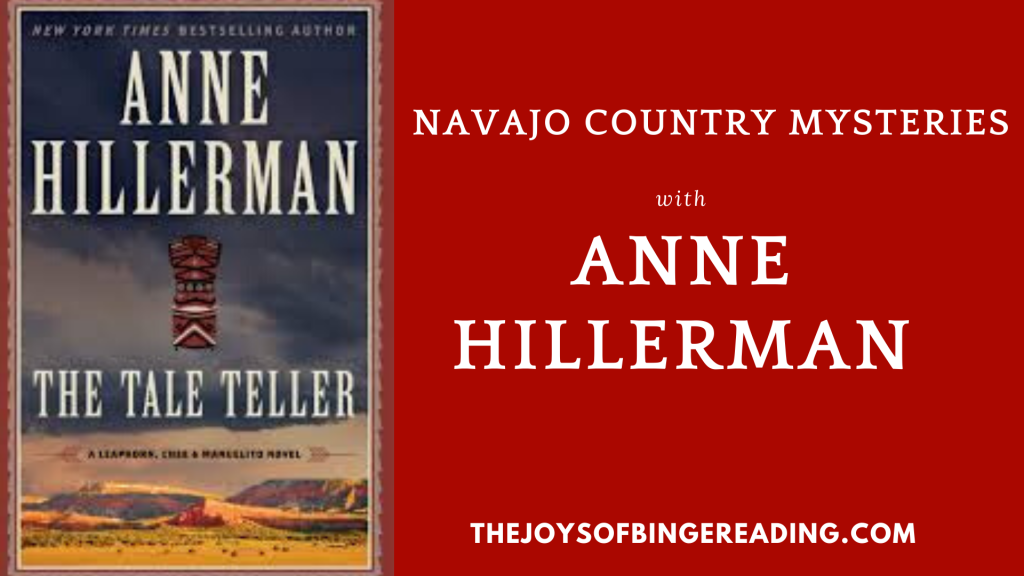
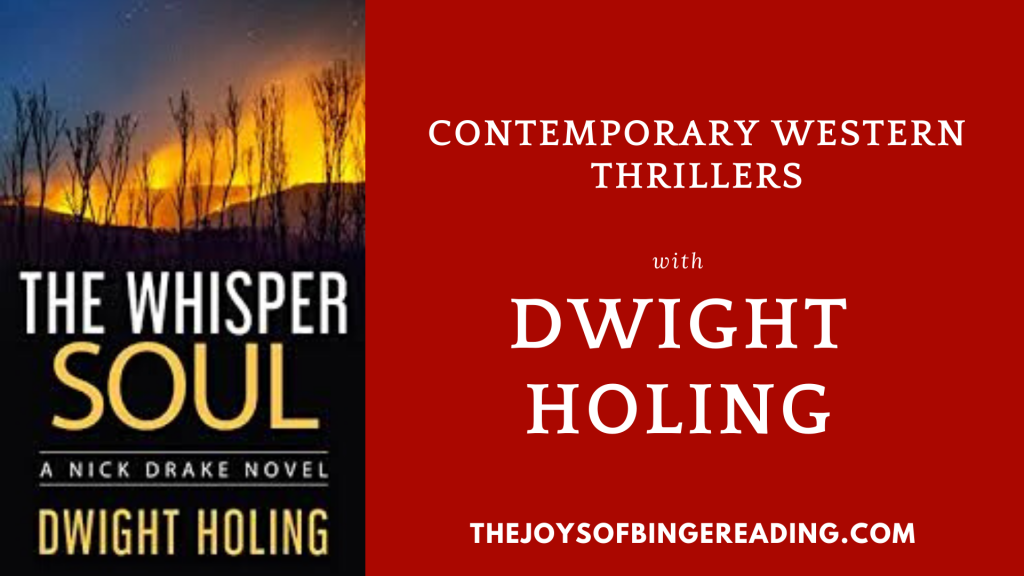
If you enjoyed Craig’s Longmire series you might also enjoy Anne Hillerman’s Navajo Country Mysteries and Dwight Holing’s Contemporary Western Mysteries
Thanks To Our Technical Support:
The Joys of Binge Reading podcast is put together with wonderful technical help from Dan Cotton at DC Audio Services. Dan is an experienced sound and video engineer who’s ready and available to help you with your next project… Seek him out at dcaudioservices@gmail.com or Phone + 64 – 21979539. He’s fast, takes pride in getting it right, and lovely to work with.
Our voice overs are done by Abe Raffills, and Abe’s another gem. He got 20 years of experience on both sides of the camera/microphone as a cameraman/director and also voice artist and television presenter. Abe’s vocal delivery is both light hearted and warm and he is super easy to work with no matter the job. You’ll find him at abe@pointandshoot.co.nz