Fiona Barton – Hot Thrillers


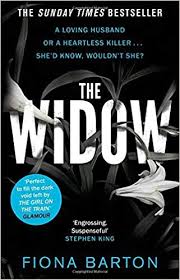
Fiona Barton’s first crime thriller The Widow was a best seller on both sides of the Atlantic Ocean and she hasn’t dropped her pace in the few years since. Her third novel – The Suspect –newly released in the US – continues to show her a crime thriller breakout star – with a tale of two teens who go to Thailand for Gap year partying and find themselves in all sorts of trouble.
Hi
there, I’m your host Jenny Wheeler, and Fiona describes what it was like living
in the rural reaches of Myanmar while publishing houses bid at a hot auction
for book rights, and how her remarkable career in journalism has feed into her
fiction.
And we’ve got three paperback copies of The Suspect to giveaway to three lucky readers. Enter theThriller Giveaway draw at the Joys of Binge Reading website or on our Binge Reading Facebook page.

Six
things you’ll learn from this Joys of Binge Reading episode:
- How 30 years in journalism helped her fiction
- The pain of a ‘lost child’ a personal theme
- Becoming an international best-seller on debut
- On creating a controversial protagonist
- Working with exiled journalists
- What’s next in Book four
Where to find Fiona Barton:
Website: https://fionabartonauthor.com/
Facebook: @fionabartonauthor
Twitter and Instagram: @figbarton
What
follows is a “near as” transcript of our conversation, not word for
word but pretty close to it, with links to important mentions.
Jenny Wheeler: But now here’s Fiona. Hello, there Fiona, and welcome to the show. It’s great to have you with us.
Fiona Barton: Hi. Thanks so much for inviting me.

Jenny Wheeler: Fiona, you’ve had a remarkable career in journalism, and we will
refer to that a little bit later on, but what was it that made you want to make
that switch from nonfiction to fiction? I know some people say that
journalists, what they write is fiction, but we both know that that’s not true.
Was there a catalyst for that change?
Finding time to write fiction
Fiona Barton: Well, I suppose the catalyst was suddenly having the time to do it.
I’ve written professionally for 30 odd years as a journalist, and so I’d
written every day. So, but as a journalist, you’re so busy, it’s a full on job.
I had a family. I’ve got two children.
I commuted, so there was no space in my
life for anything more. It was cracking at the seams as it was. So, it was when
I stopped being a reporter, in, Oh gosh, 2008. I stepped away from journalism
from being a reporter, I carried on in journalism, but I was training
journalists then, and we moved to Sri Lanka as volunteers, and I suddenly had
time.
I could lift my head – I don’t want to say
from the daily grind, because I loved my job, but from that full on immersion
in my job and my family and all of that. And so suddenly there were hours of
the day that were not accounted for. It was wonderful.
A debut best-seller
I could walk to work, so I wasn’t commuting
and I’d had an idea buzzing around in my head for a while. A voice, really, the
voice of Jean in The Widow. And, I just sat down and one evening I thought,
well, why don’t I give it a go? I’m not doing anything else. And so, I did.
And that was the moment, the Eureka moment,
I suppose, when I thought, “I think I can do this and I’m really enjoying
it.” So yes, it was only when I stopped being a reporter, that I could
write fiction. Despite what people say.
Jenny Wheeler: Yes. Now you’ve published three crime thrillers in the last four
years, and the first of those that you’ve referred to, The Widow was very hotly
sought after the publishing houses when it went for auction. It was published
in 36 countries.
In Burma with a hit on your hands
It made the UK Sunday Times best seller
list and the New York Times best seller lists, so both sides of the Atlantic
Ocean. That’s a remarkable achievement for a first novel. Did you feel as if you’d
died and gone to heaven?
Fiona Barton: Yeah, it was, it was so bizarre because, well, for all the reasons
that you’ve just given. it was a debut
novel. When you’re writing your first novel, no one knows about it, you’re
writing in your own little bubble and you’ve no idea what people will think. It
can be shocking that there’s that reaction
to it, wonderfully shocking. And also I was in a different time zone when all
this was happening. I was working in
Myanmar, former Burma, for six months.
Sold around the world
And so. I would go to sleep, in Yangon and
wake up in the morning and there’d be all these emails saying, we’ve sold it to
Germany. We’ve sold it to all these different countries. I said at the time it
was like standing on the pavement watching this carnival go by, it was really odd,
but wonderful.
Jenny Wheeler: Yes. Wonderful. Yes. It must have been remarkable to be in, and I
can’t imagine what it must have been like to be in Myanmar and have had all
that happening at home. It’s as you say, remarkable.
Fiona Barton: Absolutely. Yes. Because I wasn’t talking to anybody in the right
time zone and nobody knew in Yangon what was going on. When my agent sold it to
the UK publisher, I toasted myself in my little hotel room with some warm, very
sweet white wine.
A quiet hotel room toast
Jenny Wheeler: You mentioned the voice that you’d already heard, and I’ve seen a
comment you made, and that was, “there’ll be no more of this
nonsense.” And I wondered whether that was your imagined character Jean
Taylor, who made that comment, or whether it was a real person that you’d heard
at one of the criminal trials you’d covered.
Fiona Barton: It was Jean. It was an imagined comment, but I knew exactly what she
meant. When I heard that in my head, I know it always sounds a bit spooky when
you start saying, well I could hear these voices in my head, but Jean’s voice
was very clear to me, and it was that phrase “no more of his
nonsense,” trying to dismiss what
she knew or might have known or should have known, with this phrase about
“nonsense.”
Turning a blind eye
It’s something and nothing. When I was
working as a journalist and I was covering and reading about cases where the
wives of the accused would make excuses for them. and I was fascinated by that.
I mean, how could you stand by? But it’s much more complex than that, because
you’re talking about your life as well. And if you admit that you’ve been
living a lie, everything you thought you knew wasn’t true, you’re destroying
everything for yourself as well.
Obviously that comes into play with women
who suddenly find themselves married to a man accused of a terrible crime. I know a lot of the public think “Ooh,
they must’ve known”, but who knows? The human brain is a very powerful
tool, and we do deny things that are inconvenient for us on an everyday basis.
So I
love to explore that mindset and how you square things with yourself when
everything is going mad around you.
The remarkable Primrose Shipman
Jenny Wheeler: I think one of those trials that you did cover was the rather
notorious one of the doctor accused of killing his patients is that right?
Fiona Barton: That’s right. Dr Shipman. Yes. I was a news editor at that stage, so I wasn’t in court, but I was managing the story, if you like. The wife of Dr Shipman was, is, a fascinating character. Primrose. She was not only his wife, she was his receptionist, and so people would go in. and not come out again. and the killing went on for so long, but she absolutely stood by him and was a presence in court.
She would share sweets with people in court, and she was a very cozy, motherly figure. And yet she was married to this man who had killed more than a hundred people. So, Yes, I mean, she was, and she’s never spoken.

The ‘impossible’ dream interview
She gave evidence at a tribunal, which looked how it could have happened, why warning signs were not read, et cetera, after the trial. But, most of it was, “I have no recollection.” That would be my dream interview, to interview Primrose Shipman and find out the truth. I’m not sure that’s ever gonna happen though.
Jenny Wheeler: It is a rather hard under those circumstances, not to wonder why she
didn’t even ask questions. I guess our own willful ignorance can be very strong
at times.
Fiona Barton: It can. And also, the way
that some women worship their husbands, and can see no wrong. I find that more
often with mothers and sons. When you’ve given birth to a child, it’s hard, to get
past that sometimes when they’re accused. But when you’ve chosen the person
who’s standing in the dock, when you’ve chosen to spend the rest of your life
with them, that’s a very powerful motive to turn a blind eye.
A controversial protagonist
Jenny Wheeler: Now the books are standalone novels, they’re really not written or
presented as a series, but they all feature journalist, Kate Waters as a key character.
And I think you’ve said that at the beginning, you didn’t quite have that in
mind, but she pushed yourself forward. and as we’ve alluded to, journalists
aren’t exactly the flavor of the month with the public.
So I thought that was quite a gutsy
decision to make her a key protagonist. How has she been received?
Fiona Barton: Well, first of all, she wasn’t going to be a key protagonist. I needed
somebody for Jean, the widow, to tell her story too. And a journalist is ideal
for that, but she didn’t have her own voice at the beginning. Gradually, she
door-stepped me and she got in there and she had her own chapters. I was very nervous about how she would be
received, because at the time I was writing that we were at an even lower ebb,
if that’s possible. I’m in the UK, so
we’d just had all the phone hacking scandal and, and all of that.
Journalists are ‘normal people’ too
A journalist had gone to prison and it was
horrible, so I was nervous, and I remember my first public event. I thought, well,
I’m really gonna get in the neck here about what weasels and criminals journalists
are. But actually, it was such an interesting reaction.
People asked a lot of questions about being
a journalist. They were so interested in having that insight into what it’s
like to be an on the road reporter. and I don’t think I pulled any punches. I
mean, when I wrote about it, I wanted it to be as clear eyed as possible. My
former colleagues have said that they found it a very authentic depiction of a
news room and of working in a pack and a press pack and everything.
So, people were fascinated by it, I think, because the stereotyping of journalist, as being so black and white, they’re all villains. I think it struck people that actually the norm, that they’re human beings.

I know it seems ridiculous to be even saying that, but we were cartoon characters, I think before, so no, people were interested and they asked lots of questions and it was that made me put Kate at the center of The Child, the second book. I had no intention of keeping her as a character.
‘Door-stepping’ her way in
When I started The Widow, she was a bit
player, really. But I felt all the public events I’d done, I’d had a really,
honest and frank discussion with the audience, with the readers about the role
of journalists and the importance of journalists and the importance of seeing
journalists as human beings in a rounded
way rather than, ‘Oh, they’re all crooks, or they’re all liars.’ And people
genuinely were interested to hear more about that.
Jenny Wheeler: That feeds in very nicely because in your most recent book, The Suspect, which I believe goes on sale in the U S this month two young woman go on holiday. to Thailand in that “end of school before we go to uni” way that young people do, and they end up in all sorts of fairly predictable trouble.
But the back story is very much about how those sorts of situations are handled now in the world. By both the young people’s own social media and the way they communicate through that, but also how journalists are faced with doing their work now in this era of the web and social media.
How social media hides truth
It feels very contemporary and up to date
that story and the way that it’s handled. Perhaps that was also part of your
purpose as well as all the rest of the action and characterization.
Fiona Barton: Well, I was very interested in looking at how in this very nominally open society where everything is known by social media, our whole lives are played out on social media, and yet we hide. I think we hide even more. We have these avatars online where we’re leading our best lives.
Where we are clever, we’re funny, we’re pretty we’re thin, all of those things. We put on our social media and take photographs of ourselves. And yet it doesn’t tell any of the truth, that’s not the truth at all. We’re pretending. We’re hiding who we really are, and pretending to be other people. And I love that idea. I love hidden lives.
Naive face ‘terrible possibilities’
As a journalist that’s catnip to me. The girls and the way that they portrayed what
was happening in Thailand, so their parents, all they knew was that they were
having a brilliant time, living the dream, all the rest of it.
But the reader knew that they weren’t, that
all kinds of things were going wrong in that hostel in Mama’s Guest House. The
reason for writing The Suspect, I think was, I wanted to turn the tables on
Kate, my journalist, because I wanted to know what it would be like if you were
the journalist in the middle of the story, that the story became that you were
the story.
I
started with that. I wanted to try to be away from home so that she’d be
isolated. And, so I came up with this storyline about two 18-year-old girls,
going off to Thailand on their gap year, and running into terrible trouble.
Rude awakening
And obviously the parallel story is Kate
finding herself as the story she’s out there covering it, but she finds the
journalist pack turning on her and her family.
It started as one thing and the second, the other themes in it seem to
work into it really well and that hidden life, real life. What are we telling
people? What really is happening? That’ s pretty much it.
Jenny Wheeler: You seem very drawn to stories about missing children. All three of
the books have a child of a various ages. I mean, I’m talking of child and in a
very elastic way because these two 18 year olds and another young man, all
going missing.
Fiona Barton: They never stop being children. I tell you.
Jenny Wheeler: That’s right. They never do stop being children for the parents do
they? So is there a particular resonance for you about this idea of a missing
child? Because all three books have that coda in them.
The pathos of missing children
Fiona Barton: Yeah. Well, The Widow was about a marriage with secrets. That was my
idea, but I needed a crime that would be unforgivable, that the wife would not
be able to find a reason why she could forgive. And unfortunately, attacks or
rapes or whatever. You sometimes find that wives say, “Oh, but of course, she
tempted him into it. It was the woman’s
fault, et cetera.
In the case of a missing child, there is no
excuse and that was what I wanted. I wanted Jean to be faced with a crime that
she could not forgive. So that’s how the missing child came into the first one.
And resonance with readers was so great, it affects all of us, I think as human
beings, people say, Oh, well, mothers.
A child’s pain hard to ignore
But for men and women, the ultimate
vulnerability of our society is the child. And the nurturing of children and
the protecting of children, it says something to us, it resonates really hard.
And so, with The Child. it starts with a discovery of the skeleton of a newborn
baby and it has various themes within it about children and mothers and
daughters and whatever. So, it resonated with me and I felt passionate about
it, so I carried on. And although I did make my girls 18, they’re still kids,
on their own for the first time, also on an adventure..
My own experience was with my son who went off to Vietnam aged 18, for a year. It was at a time when social media was completely undeveloped and he was terrible at staying in touch.
Feeling a mother’s dread
Months would go by and we wouldn’t hear anything. I’d lie in bed thinking, okay, he’s in a ditch somewhere. Something terrible has happened, but then he’d ring, “Oh, hello. No, I’m fine. Yeah. Yeah. “So, I plugged into that, into the fear that I used to feel about him.
He doesn’t thank me for telling people this. He’s now in his thirties, and he’s a forensic psychiatrist. But I felt it. I felt what the mothers in The Suspect feel – that terrible stomach grinding fear that your child is somewhere and you can’t do anything about it.
Jenny Wheeler: I guess your own experience in Southeast Asia would have given you a
very good grasp of how fairly naive Westerners could land in the so-called
“party” environment like some of those Thai beaches and not really
have any full understanding of what the underlying dangers might be.

Perils of foreign partying
Fiona Barton: But how can they, I mean, it is so alien. It’s wonderful. It’s freedom. It’s cheap and beautiful. It’s intoxicating on all levels. I have been to Thailand, we were in Sri Lanka, we went traveling in Southeast Asia, and I went to Bangkok for three or four days, to research this book. And, It was horrifying. My God, I wanted to say to these kids, sitting around in Khao San Road, (the famous back-packers party road) “go home, don’t stay,” as they sit, as they guzzled, their Red Bull and vodka buckets.
(Editor’s note: Red Bull and vodka ‘buckets’ were a popular back packer drink – see this note from Google authority Tripadvisor:
“It’s literally a bucket (like the ones kids take to the beach) filled with ice, M150 (a Thai version of Red Bull which is heavy on the ephedrine), a can of soda, a 300 ml bottle of liquor and 3 or 4 straws. Total cost: 200 baht/$US6”)
Limits of ‘suffering for art’
You
could see people eyeing them up, and it really worried me. But obviously it
gave me tons of material for the book. I
found the hostel, I stood in the room that the girls slept in, and it was
exactly as it was. I was going to stay the night. It was only three Euros, but
I stood in the room and thought, “Okay, enough. You can go so far for your
art, but I’m not sleeping in here.”
Jenny Wheeler: The Widow has been optioned for TV by the production company that
made the Emmy nominated miniseries, Wolf Hall. I know that sometimes these
things can take a very long time to ever come to fruition, so is it likely we
are going to see anything of that or any of your other books on screen anytime
soon?
Coming to your screens.. sometime
Fiona Barton: Oh gosh, I wish I could tell you. Actually, it’s been optioned
again. All three have been optioned, by another production company. We got so
far down the road with the first one, and then it didn’t go. And so another
production company has got the option and we’re waiting to see. It’s not my
world at all. It takes a long time when
it is being made and I don’t know. I hope so. I really hope so. I’d love it.
But, yeah, we’ve just got to cross our fingers.
Jenny Wheeler: Yes. Yes. You’ve referred to how you gave up your Fleet Street
career in 2008. We must mention that you
won a Reporter of the Year Award at the National Press Awards before you did
take that sidestep and then you just dropped it all to go and volunteer in Sri
Lanka. Firstly, what was the story or a series of stories that you won the
award for? And secondly, why did you throw it all in, so to speak.
A national press award
Fiona Barton: Well. gosh, that’s a lot of questions, but the no, it’s fine. Reporter of the Year, I won that in 1999, I believe. Don’t hold me to that. And it was when I was chief reporter at the Mail on Sunday, a national Sunday paper in the UK. And, you had to submit three stories. And, one of them was a Royal story about – Oh my goodness. Now you’re asking. It was about people listening into the Royals. That’s what it was. And the other one, the other main one, was an investigation that I did into the books of Dave Pelzer, the guy who wrote A Child Called It, which misled about his terrible childhood.
And I wanted to talk to the other people,
who are exposed in the book if you’re like – his brothers. And so I did a big
investigation where I went over to the States and I found them all and talked
to them all, like his brothers and his grandmother. And, it was a very
interesting story. Let me say that. And I did throw it all in?
Volunteering overseas
Well, so after that happened, I went to
being news editor at the Daily Telegraph and had a brilliant time there. Loved
it. And then I came back to the Daily Mail where I was a feature writer. I
wanted to get back to writing and my
husband and I had talked, before about doing VSO – Voluntary Service Overseas.
And we thought we’d probably do it when we
retired, but we got to our 50s and thought, why are we waiting? We’re healthy.
Our parents are young enough not to need help, our children are old enough not
to need us. This could be the opportunity that we won’t get later. So we
decided to do it.
Mid life crisis or great adventure?
Half of our friends thought we were completely bonkers. and the other half thought it was a great idea – or maybe it was midlife crisis. I don’t know. We’d both worked very hard for a long time. And we thought we’d like a change. So we did.
I mean, it couldn’t be more of a change, really. We were living in London, and we had a very nice life there and both enjoyed our jobs. But we went off to Sri Lanka and lived on 140 pounds a month in a family house. We had the bottom floor of a family house in Colombo. And I was working with journalists, training them and my husband was working with adults with learning disabilities and we had a very challenging. but so rewarding time.
It was a brilliant thing. We haven’t
regretted it at all.
Journalists in exile – the other side
Jenny Wheeler: And since then you have continued to work with exiled and threatened
journalists, haven’t you, all over the world. Tell us a little bit about that
work.
Fiona Barton: Well, it began in Sri Lanka. I met a Swedish university who were
funding training for journalists, particularly in Colombo and Jaffna.
They asked me if I would like to be one of
their project managers. So I took work in Sri Lanka. I went to Zimbabwe for
them twice. I did South Africa, went to Myanmar, and I worked from home, which
at the time was France, with a network of exiled and threatened journalists
from goodness all over, Ethiopia, Eritrea, Iran, some of the, central Asian
countries. Belarus.
And the Asian countries, of course. Tibet and the Burmese, the Voice of Burma. Basically, we were helping them to be as
professional as they could because they were working in isolation, so they
couldn’t tap into the normal training programs or even a cohort of colleagues.
Hidden faces, inspiring people
They weren’t in a newsroom, so we were
helping them with training. We were taking them to meet other exiled
journalists so they could share experiences. They were brilliant. They were the
most inspiring people. They’d been chased out of their countries. They’d been
threatened. Friends of theirs had been murdered or tortured, and yet they still
wanted to be journalists. So, yeah, it was inspiring.
Jenny Wheeler: We are starting to run out of time, so turning to Fiona as reader.
The series is called The Joys of Binge Reading because I like to usually focus
on series books or books that can be read as a series. What do you like to
binge read and could you give us some recommendations for books our listeners
might be keen to follow up on?
What Kate likes to read
Fiona Barton: Well, I am a passionate reader. I can’t imagine a day when I don’t read, and I read very widely, and what I would recommend, in a series, in that format would be Kate Atkinson, who is phenomenal. Her detective books, her Jackson Brodie books. Oh gosh, I should have written all the titles down, but there’s a series of them.

My favorite is called When Will There Be Good News but you’ll see there are three or four of them. The characters are fantastic and her writing is wonderful. She’s just published a new one called Big Sky. I don’t know whether it’s out in New Zealand yet, but, One Good Turn I think is the first one.
So have a look. They’re wonderful. At the moment I’m reading Hilary Mantel’s latest. Oh my God, I can taste every word. She is wonderful. So her three, Wolf Hall, Bring Up The Bodies and The Mirror And The Light. You need very strong arms. This latest one is 900 pages, but they are absolutely worth it.
Thriller on the Booker shortlist
And Belinda Bauer. I’m sure she’s got a following in New Zealand. She’s a great detective writer. Actually thrillers, not detectives, but her book called Snap, that was on the Booker shortlist. I think the first thriller to ever have been put on a Booker shortlist, and if you read it, you’ll know why. It’s great.
And she’s written a second book that I’ve just read called Exit. I’m looking around up at my bedside table. Have I got that right? Yes. Exit. As a pair, they’re terrific. I would recommend those.

Jenny Wheeler: Oh, they sound great. I must admit, I’m not familiar with Belinda,
so I’ll definitely look her up. Circling around and looking back over where
we’ve come from at this stage of your career as a fiction author, if you were
doing it all again, what would you change, if anything?
What Fiona would do differently
Fiona Barton: Oh goodness. nothing. I don’t think. I know I started late as a
fiction writer, but If I hadn’t had my 30 years as a journalist, I wouldn’t
have had these stories in my head.
I wouldn’t want to be a child prodigy of 23
trying to conjure up worlds that I’ve never experienced. So, yeah, I don’t
think I would change anything actually, because I loved being a reporter. I was
very proud to have been a journalist. Despite the reputation, because I know
that 90 99% 98%, whatever it is, of journalists have integrity and are so
important.
I’ve seen journalism all over the world, so
I know that it isn’t just this celebrity obsessed corner. It is something that
matters, that holds power to account. No, I wouldn’t change anything. I’m glad I
did it like I did it.
What’s coming next?
Jenny Wheeler: Fantastic. So the next 12 months, looking ahead, what’s next for
Fiona, the fictional author? Have you got some new projects in the works?
Fiona Barton: Yep. I’m writing book four at the moment. No Kate. I’m doing
something different.
Jenny Wheeler: No Kate? Wow.
Fiona Barton: yeah. I know it’s a bit nerve wracking and it hasn’t been easy, but
I’m really enjoying it. I’ve got a new, female character that I’m liking very
much writing, so I’m hard at it.
Jenny Wheeler: Fantastic. Now do you like to interact with your readers and where
can they find you online?
Fiona Barton: Yes, I love to interact with my readers. It’s a great part of, of
being a writer actually, when you meet people who have taken your book and I’ve
made it live in their heads.
Where to find Fiona online
It’s wonderful. So yes, please do. I’m on
Facebook. I’m on Twitter. I’m on Instagram, but I’m a bit of a klutz about Instagram.
I haven’t quite got to grips with it yet. I’m a bit old school. but certainly
Facebook and Twitter, please do. I interact with my readers all the time.
Jenny Wheeler: And what feedback do they mainly give you?
Fiona Barton: Well, they ask about the characters, what I’m writing. I’ve done those
live Facebook chats when people have asked questions. But most of it is
feedback about how much they’ve enjoyed reading the book and why they’ve
enjoyed it, and occasionally why they’ve hated it. There’s always those. Yeah. Yeah.
Jenny Wheeler: Oh look, that’s great Fiona.
Thank you very much. We have gone over our 30 minutes quite
substantially, but it’s been fantastic having a good talk and it’s very, very
interesting to hear about these stories. Thank you so much for your time today.
Fiona Barton: Thank you very much for talking to me.
Don’t forget Giveaway draw
Jenny Wheeler: A reminder. Three paperback copies of The Suspect are up for grabs. Enter the Thriller Draw at thejoysofbingereading Giveaway.
If you enjoyed Fiona you might enjoy . . Ian Hamilton’s international Ava Lee crime series or Anna Willett’s nightmare thrillers.


Thanks To Our Technical Support:
The Joys of Binge Reading podcast is put together with wonderful technical
help from Dan Cotton at DC Audio Services. Dan is an experienced sound and
video engineer who’s ready and available to help you with your next project…
Seek him out at dcaudioservices@gmail.com or
Phone + 64 – 21979539. He’s fast, takes pride in getting it right, and lovely
to work with.
Our voice overs are done by Abe Raffills, and Abe’s another gem. He got 20 years of experience on both sides of the camera/microphone as a cameraman/director and also voice artist and television presenter. Abe’s vocal delivery is both light hearted and warm and he is super easy to work with no matter the job. You’ll find him at abe@pointandshoot.co.nz