Jan Moran – Heartwarming Womens Fiction


Jan Moran is a USA Today best-selling author with a slew of 20th century standalone historicals as well as several women’s contemporary fiction series to her credit.
Hi there, I’m your host Jenny Wheeler, and in today’s Binge Reading episode Jan talks about how she moved from being a successful beauty care entrepreneur to full-time novelist and why she loves to write strong, independent characters who are striving to build lives that make a difference.
Support Binge Reading on Patreon for as little as a cup of coffee a month and receive regular exclusive bonus content on featured authors and the making of the podcast.
Bonuses include regular weekly Getting To Know You Five Quickfire Questions with authors, giving a fund candid snapshot of their likes and dislikes, as well as an exclusive monthly Behind the Scenes newsletter giving previews of upcoming books. You can join and get this bonus content and having the satisfaction of knowing you are helping pay some of the hosting and production costs for the show. The time I give to the show in sourcing guests and researching their books is still free. Become a Patreon supporter today by going to https://www.patreon.com/thejoysofbingereading/
Six things you’ll learn from this Joys of Binge Reading episode:
- Why writing mysteries is like composing songs
- How ‘writing what you know’ worked for her
- Her passion for all things French
- Why parity for women mystery authors is important
- The writers she admires most
- What she’d do differently second time around
Where to find Jan Moran:
Website: www.JanMoran.com
Facebook: @janmoranbooks and Private Facebook Group to join: https://www.facebook.com/groups/584252208399841
Twitter: @janmoran
Instagram: https://www.instagram.com/janmoranbooks/
Pinterest: https://www.pinterest.nz/janmoran1/
Goodreads: https://www.goodreads.com/author/show/9056.Jan_Moran
Bookbub: https://www.bookbub.com/authors/jan-moran
What follows is a “near as” transcript of our conversation, not word for word but pretty close to it, with links to important mentions.
But now, here’s Jan.
Jenny Wheeler: Hi there, Jan. It’s so good to have you with us. Welcome to the show.
Introducing author Jan Moran
Jan Moran: Hello, Jenny. Lovely to be here with you. Thank you.
Jenny Wheeler: Let’s get the geography set. I’m in Auckland, New Zealand. I think you’re in California. Where in California?
Jan Moran: Yes, I’m in Southern California, Los Angeles and San Diego and over to Palm Springs. That’s my area.
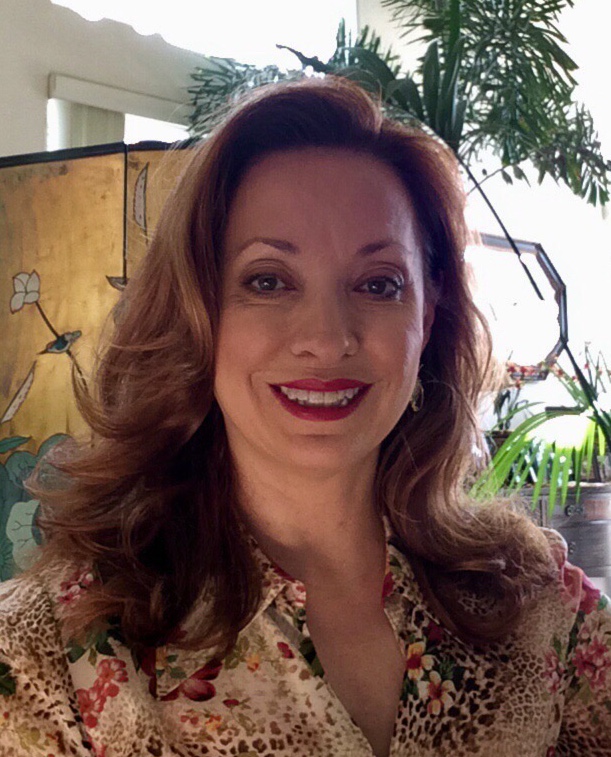
Jenny Wheeler: You are a USA Today bestselling author with multiple series, as well as stand out historical fiction and nonfiction to your credit. You are what other people would look at and say is the complete author package, but they always love to know, how did you get started on that road?
Jan Moran: I think it began as a child. I was always an avid reader and I began to write as a young girl too. Fast forward a few years, I studied at the University of California in Los Angeles, their writers’ program, and went for my MBA as well. Shortly after that I began my pursuit of this career, although I did a few other things in the interim as well.
World War II heartwarmer
Some authors might start young, but I am glad that my books came out a little bit later because I was able to bring in such a wealth of experience that I’ve had. That’s given me stories I can mine for many, many years.
Jenny Wheeler: You have done the standalone historicals as well as the series, and the latest historical that you’re publishing at the moment is The Chocolatier. It is a dual timeline story set between post-war US and Italy with a marvelously twisted emotional plot. It really does keep you on the edge of your seat.
A newly widowed war bride discovers that the man she married almost immediately after the war, when everything’s over – she suddenly discovers she knows very little about him when he dies suddenly. I don’t want to give away any plot points, but it’s a great platform to launch a story from.
Jan Moran: Thank you. It was such a delightful novel to write and of course research as well, as you can imagine. That particular one I wrote for my editor in Germany, Goldmann. People ask, do you write in German? No, I don’t, but it’s translated. My historicals are translated into quite a few languages.
A ‘sensory trio’ of books
The Chocolatier was one I’ve been dying to write for a long, long time. I saw that as the third in what I call my sensory collection, from The Perfumer, Scent of Triumph, to The Winemakers, to The Chocolatier.
All of these are based on gifts of nature – wine, chocolate, perfume, these all emanate from our earth and I love writing about agriculture and the luxury goods we think of these as, that we bring forward.
This particular one starts under the Ghirardelli sign in San Francisco, the brilliant sign which was there during the fifties when this begins. Then from there to the beautiful shores of Amalfi, a lovely area of Italy.

Then of course I take readers on a mountain trek in Peru. I loved researching it and I had the opportunity to meet and learn from a Venezuelan chocolatier who is living in San Diego – co-founder of Chuao which is fabulous artisan chocolate that’s gone very wide here in the States.
Peruvian chocolate research
Then French Valrhona – Valrhona invited me in to meet with a trio of Peruvian cacao farmers, so I was able to do some marvelous firsthand research. And several others. It was a wonderful experience.
There is a family secret at the heart of that, as there is with so many of my books. I love that bit of mystery, history, family secrets. I love to write about sagas, particularly the immigrant story, about what a character might have left behind in the old country.
Back then, before we had Facebook following us around the world, it was easier to go to another country and re-create yourself. Well, whatever you left behind, does that have a bearing on the future? As you’ll see in many of my books, the answer is yes, it does indeed.
Jenny Wheeler: That’s great. I was going to comment on the family secret. I think we all love family secrets, we find them irresistible, and practically every family has them to a greater or lesser degree.
A number of your books are set in the fifties and sixties and you say you particularly love that era. What is the attraction for you of that time period?
Fatal attraction of 50s and 60s
Jan Moran: I think my mother and my grandmother. I remember their stories of those periods of time. My mother was married in the forties. My father was a pilot based in Newfoundland and used to ferry planes from North America to England via Greenland.
I have a fascination with that period, the fifties, a flashback to the twenties and the forties. Simpler time in many ways, but also, because of the lack of communication, it was often easy to lose track of people. I think that’s often a very good plot twist as well.

It was a time when women were on the emergence. There was a seismic cultural shift going on. While the men were away at war, the women were working, they were holding the fort. Then afterwards, either through circumstance or choice, many of them continued in the workforce and laid the groundwork for where we are today.
I write about women who were very determined, creative, who are resilient and they’re forging their own path. That’s a common thread you’ll find throughout all my books.
The grace of Audrey Hepburn
Jenny Wheeler: You’ve got a new historical coming out next month which sounds fantastic. It’s called Hepburn’s Necklace and it’s based around the set of the classic 1953 Hepburn movie, Roman Holiday. That’s a classic film. How did you research that and what attracted you to it as a story idea?
Jan Moran: It was one of my favorite movies and has been for many years. I grew up in Texas and then went to school in Boston and moved to Los Angeles. My husband at the time, my then husband – his family was from Los Angeles and had been very immersed in the film industry.
They counted a lot of people as friends – the Marx brothers, Frank Sinatra. I don’t like name-dropping, but they were their neighbors and friends and club members. They were hard working entertainers at that time, and so I got to know and hear a lot of the stories.
I knew William Wyler, the director of the film, and there were a lot of stories about Audrey Hepburn who was one of the most charming, kind souls. She had been through so much during the war. And she was a ballet dancer.
I was also brought up dancing. My mother was in the Houston Ballet, studied under the great Kotchetovsky from the Ballet Russe who also trained Gene Kelly. So there are all these connecting threads.
Beginning on Roman Holiday set
Audrey used to have these clandestine ballet performances, where she would raise money for the Resistance. People couldn’t clap and they were very silent, and I thought about the kind of person, the kind of young girl who would do that.
She was barely a teenager at the time. Then as she went on through life, her humanitarian work – I’ve always thought of her as such a ray of sunshine, so to write about her was such a joy.
But the story isn’t about her. It’s about another young actress, Ruby Raines, who is from Texas and my first Texas heroine, so she was very close to my heart. The story begins on the set of Roman Holiday on a scorching summer in 1952 in Rome.
That was the first American film filmed entirely in Italy, and so it was quite the happening in Rome, as you can imagine. Then in the present day, I bring it back to an older Ruby and her great niece and I take them from Los Angeles, Palm Springs to Lake Como – Lago de Como – which is one of my most favorite places on earth. Beautiful, beautiful area.

Although that story was conceived prior to the pandemic, a great deal of the writing took place at that time. I call them my pandemic books, some of these, and I wanted to make them extra heartwarming. That’s the kind of book it is, and I can’t wait to share it with people.
Enjoying the Seabreeze Inn
Jenny Wheeler: You have generously agreed to let one of your Christmas books, Seabreeze Christmas, from the Seabreeze Inn series, be included in our Twelve Days of Christmas giveaway, and we are absolutely delighted about that. Have you written Christmas stories before?
Jan Moran: No, this is my first one. There I was, by the pool in Los Angeles, sipping my hot chocolate and listening to Christmas music, and then I’d have a break and take a dip in the pool. It was such fun. It reminded me of the old story about White Christmas. That was the song which was written by the pool in La Quinta, California or Arizona, depending on which story, maybe both?
I loved it and I’ve had so much positive response from readers on it, and I’m already planning one for next year as well. I think Christmas stories touch our hearts, our memories, how we wish life could be all the time. There are so many cherished memories that people have associated with the holidays.
Looking for uplifting stories
Jenny Wheeler: It is especially so this year, isn’t it? People have a feeling of wanting to somehow grab back some of that warm, secure feeling we used to have before the pandemic struck.
Jan Moran: Yes, and we will have again, I’m sure.
Jenny Wheeler: Yes. Tell us about your Seabreeze series. What was the genesis for that?
Jan Moran: I was walking on the beach in Southern California, one beach I like in particular, Moonlight Beach, which is very much a family beach in North San Diego County, Encinitas. I walked on the beach and I was trying to plot and dream of stories, as I often do. And I thought, why don’t I set one here, right in my own backyard?

In this one, I also aged up my heroines. In my historicals, my heroines are often in their mid to late twenties, early thirties, but I always have very strong secondary characters. In The Winemaker, for example, the mother is just as much a heroine as the daughter who the story revolves around.
But in this one I wanted to age her up. She’s 45, newly widowed. She’s every woman. She has a bit of a muffin top around the middle, she doesn’t really care as long as she’s healthy and strong. She accepts her aging. She has two daughters, one in college – a bit spoiled – and another one just out of college.
‘Sandwich generation’ vibe
These are things that so many of my friends have dealt with, I’ve dealt with. We are the sandwich generation, between our grown children and our parents. In the story, she becomes very worried about her mother, but her mother is a very vibrant 70 something, and her parents.
In this one I bring in the whole family. She has a sister, a very artsy sister. She’s a horticulturalist, Ivy is an art teacher. It’s really about these women re-creating their lives in mid-life.
Those choices – sometimes they’re ones we make; other times they’re forced upon us. I wanted to follow two women who are re-creating their lives and the backdrop is this historic house. I
t was designed by the first licensed female architect in California, Julia Morgan, who also did a lot of important work up and down the coast of California. The house is just as much a character in these stories because the former owner was an art collector from Europe.
Integrating local history
What sets these beach stories apart from others, I think, and that readers have gravitated towards, is that there is a lot of history and mystery in it too. They’re not mysteries, but there are some discoveries let’s say, and that’s what I really enjoyed, bringing my historical background into these stories as well.
Jenny Wheeler: Does that house actually exist?
Jan Moran: No, it doesn’t. Nor does Summer Beach. Unfortunately, I’ve had people googling and saying, I really want to visit Summer Beach. Where is it? It was a mashup between La Jolla and Laguna Beach. But there are a lot of older homes built along the California Coast that I drew inspiration from.
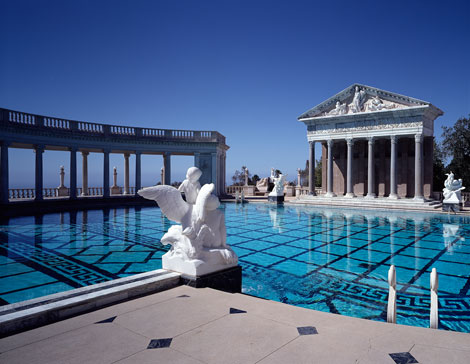
Jenny Wheeler: I haven’t finished the first book but it’s a very intriguing beginning. I always love these beginnings where somebody’s husband dies and then they discover they’ve done a whole lot of things they had no idea about. She inherits that house from a husband’s estate without even realizing he bought it, doesn’t she?
Jan Moran: Yes, he drained their retirement account. Unfortunately, this is a story that has happened before.
Jenny Wheeler: That’s right. Every woman’s nightmare probably. I don’t know how it turns out because I have not finished it yet, but it’s got a great beginning.
Jan Moran: Well, Ivy is very resourceful and very resilient, and nothing holds her down.
Jenny Wheeler: Just like the heroines of your other series, the Love, California series, which I became quite addicted to. I’ve confessed to you that I listen to them through the night on audio on more than one occasion.
They are more contemporary with younger women and more racy in terms of the lives that they lead. It’s a contemporary setting – a group of entrepreneurial women who are all looking for both business success and love in parallel steps in industries like perfume and skin care and fashion.
And now comes Coral Cottage . . .
There are plenty of chances for some fascinating settings and set ups. Have you been asked for any more of these? I think they’re quite addictive books.
Jan Moran: Yes, I have. As with Seabreeze, the Summer Beach series started off as a trilogy and then readers wanted more. I was thrilled at the acceptance and to be able to go back into that world and write again. It grew from three to five.

Now the Coral Cottage is also set in Summer Beach and I have merged the characters. One of the women in Coral Cottage is Ivy Bay’s best friend from Seabreeze Inn, so there’s still some interaction.
Very much like Debbie Macomber does in her world. I really enjoyed that. The Love, California series stands at six books right now, and I may add another special to that.
Again, if I hear from readers that they’re enjoying it, then it’s something I’ll go back to. I really enjoyed writing that series as well. That series follows very much my own experiences – moving to Los Angeles as a young woman, full of ambition and looking for a new life.
Remembering California girls
Many of my friends in Los Angeles are in the creative fields, as I was myself. I have a background in the beauty industry, and I created a couple of touch screen technologies that I eventually sold to Sephora.
That took me around the world. I started the company, along with a team of software developers created this – it’s called the fragrance IQ and skin IQ. I ended up selling that to Sephora, but before I sold the company, I had it in Sephora stores in Europe and the US, in the duty-free stores, in Hong Kong and the Middle East and all over.
That was my life for a while. It was a lot of fun, a lot of hard work. These glamorous industries look like so much fun on the outside, but on the inside, it’s a lot of work.
As I was flying transatlantic, transpacific flights, I can only watch so many movies and I had a hard time sleeping on the plane at that time, so I would pull out my notebook and start writing. That’s where many of these stories grew from.
Love California – Living the dream
One thing about the Love, California series too is that those are standalone books, unlike the Seabreeze, the Summer Beach series, which is a longer running series.

These are standalone books starting with Flawless, and in each one of those I take the readers on a journey. It might be Paris or Spain, Sydney, Monaco. You’ll get front row seats at New York’s Fashion Week or the formula one races in Monte Carlo.
I love that, it’s all the fun things we want to do in life. But at the heart of each one of these stories is a woman’s journey.
In each one of those stories, her dream is dashed. I don’t want to say too much, but life doesn’t always turn out the way we plan. It’s what we do after that, that I think is the interesting story.
The power of ‘Kismet’
Each one of these women goes on a journey and comes out the other end with a life. It may not be the life they wanted in the beginning, but it’s the life they embrace. It’s the life they were meant to have. I do believe in a bit of Kismet as well, and that’s at the heart of many of those stories. Great fun to write.
Jenny Wheeler: It’s interesting how often Kismet comes up in them. There’s a wonderful escapist glamor in them all too. It’s a reflection back to the eighties, the Jacqueline Susann types of stories, but reframed for the 21st century.
Jan Moran: Yes. I grew up reading a lot of Jackie Collins and Danielle Steele, you know, airplane reads.
Jenny Wheeler: Shirley Conran.
Jan Moran: Yes. It was great fun, but I think some of it really touched my heart. Barbara Taylor Bradford, A Woman of Substance, remains one of my all-time favorite books. That heroine Emma Harte is determined and will stop at nothing.
Where the publishing journey began
Jenny Wheeler: What was the book you first published? Where did you begin with your publishing journey?
Jan Moran: It came out first as Scent of Triumph although the original name was The Perfumer, and I’ve recently gone back to that. I’ll explain that in a minute, but this particular book was born – as I mentioned, I spent quite a few years in the beauty business and I wrote a book called Fabulous Fragrances years ago, back in the nineties. That book paved the way for this technology that I created for the beauty industry.
In the course of that, I was researching all these old brands that are still with us today, many of them – Chanel, Estee Lauder, Helena Rubinstein. How did they get their start? These weren’t big brands at the time, these were started by women and they were started at a time when there weren’t many women in the industry.
Parisian pioneer perfumier
I was fascinated too with the World War II period and what happened to the couture industry in Paris. At the time most of them closed their doors and we all know now that Chanel closed her atelier and moved into the Ritz. There are books about that, and she does make a cameo appearance in The Perfumer.
But I was fascinated by a particular woman, Germaine Cellier. She was a perfumer. Remember at that time, in the forties, it was a man’s world in perfumery, and it was very rare for women to be perfumers. But she was, and she created perfumes for a couturier, Robert Piguet.
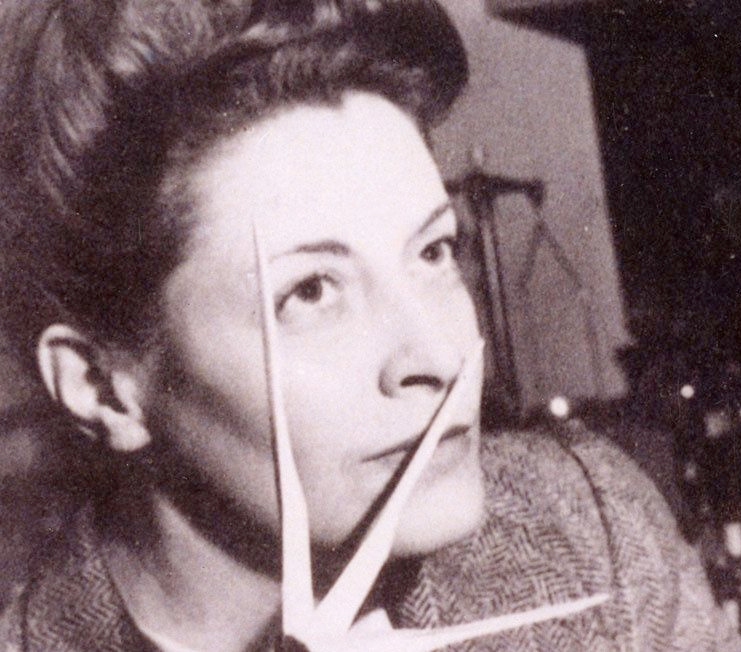
I forget the name of it, but he was the head of the professional society at that time during World War II and he stayed in business and was trying to keep jobs in Paris during the war – all the seamstresses and the lacemakers and the bead work – all of those people employed.
The Nazis were trying to move the couture industry to Berlin, which is still a fashion center, but they succeeded in keeping many of their people in Paris.
Anyway, I was fascinated by all of this. Cellier’s perfumes are still around today – Fracas from 1948, Bandit from 1944, from the height of the war. I was really inspired by this and I said my heroine has got to be a French perfumer and it’s got to be during World War II.
Stand alone historicals first
I had some personal knowledge of what people had gone through during the war, through my family, and so I thought, this is the book. Even though I had written a couple of others, I felt that was the one that would have a chance.
And it did. A senior editor at St. Martin’s Press acquired it and then it went on to be published in many languages as well. That was truly a book of my heart that was probably 15 years in the making.
After that they acquired another book, The Winemakers, set in California in the Napa Valley during the 1950s. Another very strong female protagonist, and those books were absolute joys to write.
Jenny Wheeler: So you started out in the standalone historicals and then graduated to the series a little later.
Jan Moran: Yes, I did.
Jenny Wheeler: We’d better move on to talking a little about your wider career, rather than focusing just on the books themselves. Is there one thing you feel you’ve done more than any other that you’d see as the secret of your success and your longevity as a writer?
What Jan’s done right in writing
Jan Moran: The main thing is, I never stopped. I persevered. Even as an adult, having manuscripts I would send out and pitch over and over again. Each time I did, I learned something from it. Scent of Triumph/The Perfumer was 15 years in the making, but at the beginning of that time, it was nowhere near publication, so each time I submitted it, I learned something about the craft.
I continued going to writers’ conferences, getting to know other writers. It truly is a craft. It took a long time for me to reach publication, but I wasn’t ready in my own life. We each follow a different path. So I wouldn’t change a thing.
Jenny Wheeler: You’re republishing that book, aren’t you?
Jan Moran: Yes. In the early part of this year, I noticed that it had fallen out of paperback and hardcover publication. This is a note to writers that when I went into those contracts, I had a very good agent and there was a clause put in there that the rights would revert to me if sales of the print versions fell below a certain level.
Becoming a ‘hybrid’ author
So I exercised that and I brought those back, because by then I felt very confident in the reader base I had developed and I knew there was still a market for it. People were reaching out to me all the time, asking where they could find it in print.
I said, I think I can manage that, and so I brought those back and they’ve sold more this Fall than they had for the last couple of years with St. Martin’s Press.

I love St. Martin’s – I had an excellent editor there, but we can do more now. I’m really a hybrid author. I still have a publisher in Germany, Random House Goldmann, but I keep those domestic rights and I’m able to publish those myself. Then happily, The Winemakers has been optioned for a television series now.
Jenny Wheeler: Oh, cool. That period, particularly Paris in the Second World War – there are lots of people doing stories based around that setting of the fashion industry and they are all great to read, so I think the time is probably even riper for that book now than it was when you first published it, handled right.
Resurgence in WWII fiction
Jan Moran: Very true. In fact, when I first began pitching that book, it was before the huge popularity in recent years of World War II sagas, and I remember one of the first agents I approached said, that’s a dead period in history, no one reads World War II sagas, there’s no market for it. Of course, trends change.
As a writer, it’s important to be on top of those trends but also to write the books you feel you’re meant to write. But a professional writer, yes, we do pay attention to things like that.
Jenny Wheeler: Yes. Turning to Jan as reader. This is The Joys of Binge Reading, and we like to cater for people who enjoy genre fiction and to introduce them to new authors they might not have heard of. I imagine you have in the past been a binge reader, even if you don’t have much time to binge read now, so who do you like to read? Who have you liked to read in the past, and can you recommend some favorites?
Jan as reader – the favorite list
Jan Moran: As a child, I was an avid reader but I was truly a serious reader. I remember there was a series called The Happy Holisters about an American family. I had an indulgent grandmother and I think I must have had 20 or 30 of these books.
They went on and on and I loved being in that world. So, yes, I was an early series and binge reader. Today – I’ve mentioned Barbara Taylor Bradford, I love her series. Elin Hilderbrand for women’s beach fiction. I’ve read her Winter series and the Paradise series. Those are excellent.
Other readers – I admire Allison Pataki who has written a couple of books, not exactly series, but they are in a way, The Accidental Empress and Sisi, both about Sisi. For historical Gill Paul, Lauren Willig, Kate Quinn of course. Fiona Davis writes very stylish 1950s books, a lot of them set in New York, fifties and sixties. Very interesting.
(Gill Paul and Fiona Davis can both be found on the Joys of Binge Reading:
Fiona at Big Apple Drama, and Gill most recently at Jackie & Maria – Love and Betrayal)

Other top selling friends
Then there are some other independent authors, very top selling. Pamela Kelley, Rachel Hanna, Kay Correll women’s fiction series. I really enjoy those books and I enjoy working with them too. They are friends and we have a great deal of fun together.
Jenny Wheeler: That’s fantastic. Fiona Davis has been on the show. Her books are great.
Circling around, because we are starting to run out of time together, at this stage, if you were doing it all again, is there anything you would change, and if there is, what would it be?
Jan Moran: Looking back over life, like anyone I’ve had a lot of challenges, but honestly, I don’t think I would change a thing because every challenge I’ve learned something, I’ve learned and grown, and I wouldn’t be the woman I am today had I not had those challenges.
If I could do it over wish list. . .
I could say, I wish I had published earlier in life, I wish I had as many books out as – pick someone – Danielle Steele, but we all have our own journey and as long as I am reaching readers and hearing from them. I love to hear from readers.
I get the sweetest stories from people who have said that their books have helped them during particularly difficult times. Especially this year more than ever. I have a Facebook readers group and a newsletter that goes out and I share bits and pieces of my personal life or recipes – my basil recipe, I had a fabulous crop this season, basil and tomatoes. I love to interact with readers, and I feel like this is our world, our thing that we’ve created, and I love that.
Looking ahead – the next 12 months
Jenny Wheeler: What does your next 12 months look like? Were you badly impacted by the pandemic and how are you placed for the next 12 months in terms of the projects you’ve got on?
Jan Moran: Knock on wood, my family has been healthy and those friends and extended family members who have gone through COVID have come out fine. I’m so thankful. I am sheltering in place quite a bit, I’m not getting out much, but then I was always a fan of home delivery groceries and so I have been staying at home.
I have been writing an awful lot. This has been a very productive year. Coming up is Hepburn’s Necklace, we are on the eve of that now. I’m very excited to share that.
Then I have the Coral Café coming out in the Summer Beach world, and Seabreeze Wedding – not telling who’s getting married, or if they are, but we’ll see what happens. Then I have some other plans for another historical and possibly another series but all of that’s still in development at this point. And another Christmas book for sure.
Jenny Wheeler: That’s wonderful. Do you write through a series and then go on to the next series or do you jump them around a bit?
Jan’s creative process
Jan Moran: Good question. Typically, I will write start to finish. However, with the Summer Beach series, I started at the Seabreeze Inn and then I jumped over to Coral Cottage and now I’ve jumped back. It’s all in the same world, but typically when I write, whether it’s a series or a book, I’ll go start to finish.
That’s how I write my novels. I don’t bother with editing. I’ll turn around and get that at the end, but the most important thing to me is get the story down.
I do love to research so sometimes it’s a little hard to get started – to know when to stop researching and when to start the story, but once I do, I don’t look back.
Where can readers find Jan online?
Jenny Wheeler: You mentioned that you love to have interaction with your readers, and we will put all those links to the places where readers can find you in the show notes for this episode, but to quickly recap, where can people find you if they are now desperate to see your books online?
Jan Moran: I’m at janmoran.com. I am on Facebook as Jan Moran author or Jan Moran books, and I have a Facebook group as well that you can tap on the door and I’ll let you in. I have a newsletter that goes out monthly – just once a month generally, and I invite everyone in. You’ll find me a little bit too on Twitter or Instagram. I keep up a bit there. I’ll check in.
I love to hear from people, and I invite everyone over for a cup of tea or a cocktail and we’ll watch the sunset together and share a good story.
Jenny Wheeler: I noticed on the Seabreeze book you referred to watching the sunset go down and the green flash. I thought that was wonderful because I used to live on a West Coast beach in New Zealand and we used to sit on the beach and watch for the green flash.
Jan Moran: I think that’s universal. We laugh about it and I have included that in a couple of books. You know the name comes from a friend from New Zealand. She was known for her Seabreeze cocktails, which is ruby red grapefruit, cranberry juice and vodka. She used to throw these cocktail parties at sunset and serve Seabreezes.
Seabreeze is really a cocktail . . .
We’ve been friends for decades now, and we’ve laughed about that a lot, so when I was thinking about the name for the book, it naturally came to me that this would be the Seabreeze. I have a recipe in the back of the book as well, tried and tested many times.
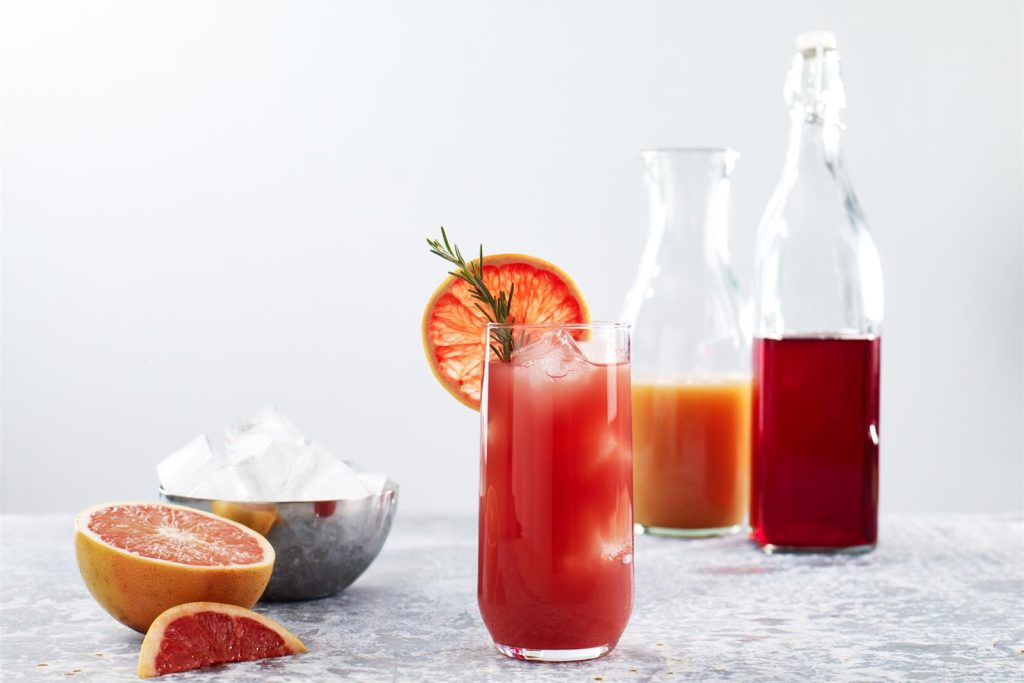
Jenny Wheeler: Sounds like something we should try for Christmas.
Jan Moran: I think so.
Jenny Wheeler: Wonderful talking Jan. Thank you so much.
Jan Moran: Thank you, Jenny. It’s been such a pleasure and I can’t wait for your next book.
Jenny Wheeler: That’s sweet of you. Yes, it’s a labor of love. It sure is.
What’s next for listening?
If you enjoyed Jan Moran’s heartwarming women’s fiction you may also enjoy Gill Paul – Jackie and Maria Love & Betrayal or Fiona Davis – Big Apple Drama

