Madeline Martin – The Power of Story


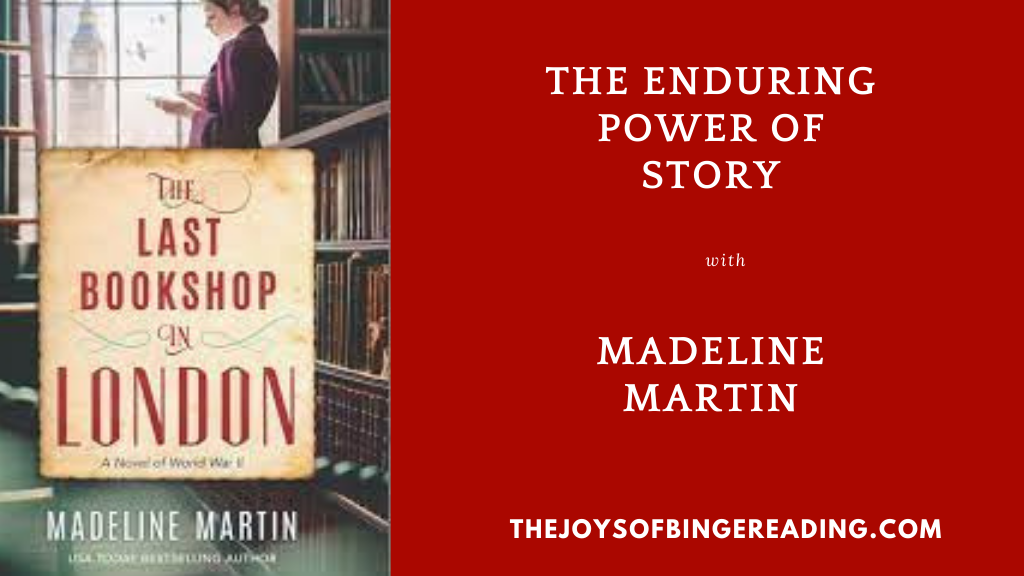
Madeline Martin is a USA Today bestselling author who writes historical fiction and historical romance, usually set anywhere between the 14th century and the Regency period.
Her romance is full of adventurous twists and turns, empowered heroines and men who are strong enough to love them. But with her latest book, The Last Bookshop in London, she’s taken a new path into World War II Europe.
Hi there, I’m your host, Jenny Wheeler and in today’s Binge Reading episode Madeline talks about the transformative power of books in hard times, what her World War II research threw up in terms of detailed gems about daily life during the Blitz, and the parallels between living in dark times – whether it be 20th century Blitz or 21st century pandemic.
Binge Reading on Patreon

But before we get to Madeline, I’ve got some exciting news to share. I’ve been doing these author interviews weekly since September 2017, and there are currently 170 fabulous binge reading interviews with top authors available online.
From next month, June 1, we’re expanding the show to give listeners who love what we do an opportunity to subscribe to Binge Reading on Patreon in return for extra monthly bonus content and a wealth of other benefits we are still planning and thinking about. Joining Patreon will allow you to find even more great books you won’t want to put down.
As well as getting to know your favorite authors better, you’ll also help us provide more features that bookaholics love. For the cost of a cup of coffee a month, you’ll get access to new features like “getting to know you” quick-fire author questions, exclusive to Patreon.
I’ve already started recording these five spontaneous questions with authors who are happy to take part, and they give fresh and funny insights into our guests.
If you want to find out more about Binge Reading on Patreon, head to The Joys of Binge Reading home page, and you’ll find lots more there.
Introducing author Madeline Martin
Six things you’ll learn from this Joys of Binge Reading episode:
- How being a ‘military brat’ encouraged her as a reader
- Madeline’s amazing capacity to turn out books
- Why World War II is a favorite time period
- Goats do wear pyjamas – yay!
- How this latest book is a new direction
- How different time periods align
Where to find Madeline Martin:
Website: https://www.madelinemartin.com/
Facebook: @MadelineMartinAuthor
Twitter: @MadelineMMartin
Instagram: @MadelineMMartin
Pinterest: @MadelineMartin9
BookBub: https://www.bookbub.com/authors/madeline-martin
What follows is a “near as” transcript of our conversation, not word for word but pretty close to it, with links to important mentions.
But now, here’s Madeline.
Jenny Wheeler: Hello there Madeline, and welcome to the show. It’s great to have you with us.
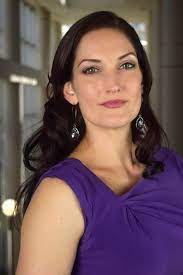
Madeline Martin: Hello, thank you so much for having me. I’m so excited to be on The Joys of Binge Reading. What a great name for a show.
New book, new direction
Jenny Wheeler: Thank you so much. This book we’re going to be particularly discussing is your first historical fiction in this type of fiction.
You have done romances but The Last Bookshop in London is very much about, not exactly binge reading, but the importance of people being able to escape into other worlds that are created by authors, and also the fate of London bookshops during the Blitz.
Those are the two keystones of the story: the fate of the bookshops, plus the joy of being able to escape into fiction. Which one of those was the first thing when you were working on this book, when you first came to it?
Madeline Martin: It was the survivability of bookshops despite the Blitz going on in London, and also how community is built around books and how books can help get us through dark times. That was the focus of it. I wanted The Last Bookshop in London to be a celebration of reading.
Jenny Wheeler: I guess you would have started this long before we got this pandemic, but it’s remarkably resonant in these times. isn’t it?
Madeline Martin: It really is. A couple of scenes in The Last Bookshop in London were inspired by my association with how Grace might have been feeling while I was living during the pandemic.
The resonance of different times
Obviously, the Blitz and the pandemic are two very different catastrophic events, but they’re still catastrophic events and at its core, humanity is still going to react in a certain way. With the pandemic going on, it gave me a very strong insight into what Grace might have been living through.
Jenny Wheeler: Also, people have been concerned about the future of bookshops because of the way people are curtailed from going out shopping. I suppose they can shop online, but it’s probably made life fragile for quite a lot of independent bookshops.

Madeline Martin: Absolutely. Once eBooks started to get as popular as they are, that’s when we started to see a fall in the brick-and-mortar bookshops. I personally go to Barnes & Noble often. Even when my fiancé and I go on date night, we always stop by Barnes & Noble and I always buy something, and my girls always buy something.
We want so much to promote that because going to bookstores has been such a huge part of our lives growing up. The independent bookstores, and even the chains like Barnes & Noble, just bookstores in general, it has a certain feel to it, doesn’t it?
Jenny Wheeler: It does. Your character, Grace, is quite delightful because she’s so young and innocent at the beginning. She’s moved to London from the country. She seems hardly aware that there is a war going on, because when she arrives, the bombs haven’t started falling. It’s the Phony War. She’s wondering, when is this war going to start?
She’s aiming to get a job in somewhere like Harrods, in the cosmetics counter, and ends up in a bookstore when she doesn’t really have any particular interest in books. So we are kind of concerned for her, because she is quite a vulnerable person right at the beginning, isn’t she?
Resilience in hard times
Madeline Martin: She definitely is. I think through that it lends itself for her, for the opportunity to find that inner strength. I think a lot of us start off with certain things, I know for myself I have in my life, where I feel equipped to handle something and then I get there and realize I’m way in over my head.
Somehow you reach down and find that strength inside of yourself and at the end you can look back and think, oh my gosh, I actually came through and I did this. I wanted to demonstrate that in Grace and hope it might resonate with some people who have been, not through similar things, but who have had internal challenges themselves, like she has.
Jenny Wheeler: And she really does do that. She starts to show that inner courage without being in the least bit preachy about it. It’s a lovely way that she evolves as a character.

She starts out hardly caring about books, totally ignorant about books, and from a reader point of view, it’s almost irritating because she thinks a book is in much the same framework as hardware or anything else – a commodity to be sold.
Then she discovers this new-found comfort in the power of storytelling as she goes along. I wondered if you could give us a bit of insight into how that process unfolded for you.
Madeline Martin: I’m going to pull from my historical romance pocket here and say that one thing women love about reading romance novels is that it gives them the thrill of getting to fall in love all over again. I wanted to take that aspect of my writing and apply it towards reading.
I wanted her to start off not being a reader. I wanted all of the readers who pick up this book to fall in love with reading all over again, through Grace’s eyes. I wanted them to go on that journey and relive that magical experience. That was the reasoning behind it.
A seasoned romance author
Jenny Wheeler: That’s gorgeous, because you did that. Yes, we had referred to your previous work – you have got nearly 40 books in the romance genre. They are mainly Scottish and English, mostly set in medieval times, but some in the 17th century or Regency.
In a situation like this, where this book is really different from those ones, some people might have considered starting with a different pen name. Did you ever consider that?
Madeline Martin: I confess I did consider it, but it is a lot of work to have a new name. You have to have two websites and two social media accounts for Facebook, Twitter, Instagram, all of that stuff. And I have to be honest, on a day-to-day basis, I can barely keep up with one of me, let alone incorporating another one of me.
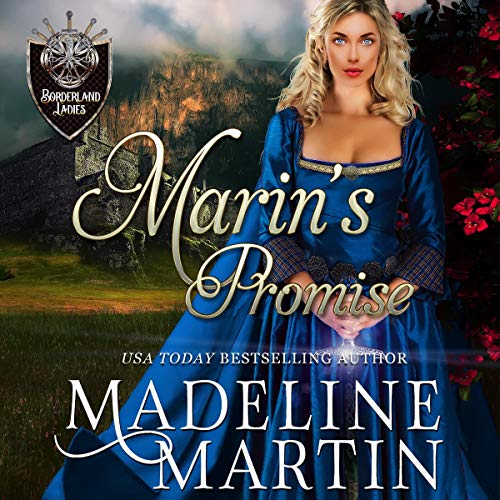
From an ease perspective, I think if I did do something very drastic, like if I ever did young adult or middle school books or something, I probably would consider a pen name, but since they’re still historical, I figured I was probably good to go.
Jenny Wheeler: What inspired you to make that transition from doing what is very much middle road romance to standalone historical fiction, women’s fiction, almost close to a literary fiction novel?
World War II a favorite period
Madeline Martin: I’ve always read historical fiction. When I was first trying to write books, I started trying to do historical fiction and I wasn’t sure how to wrap my brain around it per se. Then I read Outlander and I fell in love with Outlander, and I thought, maybe I can write a romance. So I put it together, and that was the journey I started off with – Romance Writers of America, the RWA. It was such a great path to go down.
Of course, I do also love historical romance. Historical fiction is always one of my go-to genres, so when I had this idea in mind for World War II historical fiction – which is my favorite part of historical fiction to read, my favorite time period – I had the opportunity to write this book and I jumped at it.
It was a joy to write. I am a total history nerd. I love history so much and I completely lost myself in it, and I enjoyed every single word that you see on the page.
Jenny Wheeler: That’s wonderful. The view we get of the Blitz – I have read quite a few World War II novels, I must admit I’m the fruit of a World War II romance because my mum and dad were both in London during the war, so I’ve heard quite a lot about it – but I feel as if I got a fresh eyed view in this book.
We get a really down to earth feeling of what it would have been like to be a young person in London at that time, lots of very good, tiny details that made it come alive. How did you manage the research to get those details?
Madeline Martin: I will say it was a lot of research. One very big helpful piece was: before, during and after the war there was something called Mass-Observation. Some men did it with their own personal money.
They paid these people to record their day-to-day dealings, before, during and after the war, and those were compiled into the Mass-Observation.
Real details from raw resources
Reading through a lot of people’s journal entries was very beneficial. Ironically, the weather in this book is all on point, based on when the day is, primarily because of the mass observations. It’s funny how many people start their journal entries with what the weather is like that day.
One of the things I got out of the Mass-Observation was the feel for the spirit of the people going through that. For example, when Buckingham palace was bombed, it wasn’t this horrific, oh my gosh, Buckingham Palace was bombed.
It was, the King and Queen – they are just like us. They got bombed too. It was this kindred spirit, and I wouldn’t think that if I hadn’t read it in the Mass-Observation, and so I feel it lent this realism to the people in my book, and how they reacted to certain events.
Jenny Wheeler: Yes, it really did. Of course, the weather mattered to them also, because if there was a lot of cloud, it was harder for the German bombers. And I had never heard of Paternoster Row, which was this amazing famous street where many of the bookshops and publishers were located. It had been going for several hundred years at this stage. That part of it is true, isn’t it?

Madeline Martin: Yes, it absolutely is true. It still is today. It’s incredible – when the bombing happened that night on Paternoster Row, over 5 million books were burned. One thing you have to think about – yes, it breaks your heart to even hear that, but this was also happening during a paper shortage.
Paper was being rationed at that time, so these books couldn’t just be mass produced and put back on the shelves again. This was a huge loss for the publishing industry.
Jenny Wheeler: I’m just dealing with this thing about the books. Although this is called The Last Bookshop in London, that book shop is your imagination. Did any bookshops survive at all?
Sand bagged with Mein Kampf
Madeline Martin: Oh yes, there definitely were bookshops that survived. In fact, Foyles is one I mention a couple of times. Foyles was a bookstore, I think it was four or five stories, and he did new and used books. He was seen as almost a circus wheeler and dealer.
Little things I mentioned in there were real, for example, when he had sandbags he filled with old books to protect his building – that was real – and he actually did line his roof with copies of Mein Kampf in the hope that it would keep his establishment from being bombed.
Some of this stuff you can’t make up, so finding those little gems – it was too humorous not to add into the book.
Jenny Wheeler: Yes, there were some amazing details. That’s exactly the sort of thing I’m thinking of.
You live in Florida, but you obviously are fascinated by history, particularly in England and Scotland. How did you first develop this fascination?
An ‘Army Brat’ childhood
Madeline Martin: I grew up in Germany for the most part. I’m an army brat, and so I got to travel all over Europe, and I fell in love with the old castles and everything they had to say. And the stories I grew up listening to, I love all of it so much. I think that’s how I fell in love so much with British history.
Jenny Wheeler: Would you ever consider writing something set in the American historical periods, and if so, which one?
Madeline Martin: Definitely. When I say I am a history lover, I am a hundred percent, all in, history lover. If it’s history, I will research it and I will write it, which is why I do Medieval, 17th century, Regency and World War II. When I was doing my edits on this book, I was writing a Medieval and editing a Regency, doing edits for my World War II and living in modern day, so my brain was expanding over many generations.

Jenny Wheeler: Do you expect to keep the romance going as well? Are you still committed to doing romance, or is that now considered to be something you were doing, but have moved on from?
Madeline Martin: I do still plan on keeping my romance going. I will say that I am definitely tapering back. Previously I have written about eight books a year, and that pace is pretty grueling, I’m not going to lie.
The hard thing is, I have so many stories in my head that I want to get out, but unfortunately, my wrists are not able to keep up with it as much. The nice thing about doing historical fiction is that, obviously, it takes a lot longer to write because you have to do all the research.
A remarkable publishing output
It’s much more labor, but of course a labor of love. It’s nice because it’s given me the opportunity to slow down a little bit, so I will be doing romance, but also definitely historical.
Jenny Wheeler: Eight books a year. That is just remarkable.
Madeline Martin: Or crazy, depending on how you look at it.
Jenny Wheeler: Moving along from talking about the specific books to your wider career, tell us something about your life before you became a full-time writer. Did you have experiences that have now fed into your writing in a tangible way?
Madeline Martin: I think any experience I’ve lived through threads its way into my books. It’s all made me who I am, and who I am is what makes all of my books.
As far as my independent experiences, what I did before I was writing full-time, or published or just writing in general?
Jenny Wheeler: Before you became a full-time writer.
Madeline Martin: Okay. I actually only have been full-time writing for a year. I have been writing for about 12 years, I’ve been published for a little over five years, so for the majority of it I have been full-time day job, full-time writer, full-time mom.
Type A personality at work
I would only sleep about four, four and a half hours when I was going through all of that, and now I’m up to five or five and a half hours, but I do take a nap every afternoon. It has been kind of nice, this last year, being able to write full-time and immerse myself in it, and not have to worry about one extra piece of everything. It’s been a dream come true, I have to be honest.
Jenny Wheeler: That’s remarkable. How on earth did you do eight books a year when you were also writing full-time and being a mum?
Madeline Martin: A lot of work. I am divorced, and so every other weekend my daughters go with my ex-husband and I would pretty much work about 12 hours each one of those days. I get up at four o’clock in the morning to make sure I get as much writing done as I can before the girls would go to school and before I had to go to work.
If I was running behind on a deadline, I would work through my lunch break in the car, or even a non-smoker break. I would sit there in the break room for 15 minutes, wherever you can get those words in, you know?
Jenny Wheeler: What was the job you were doing? Do you mind me asking?
Madeline Martin: No. I wrote SQL program code, so it was very much the opposite side of my brain.
Jenny Wheeler: You gave your creative side a run when you got home.
Goats in pyjamas is a thing . . .
Madeline Martin: Exactly. I used to always say, coder by day, lurid romance author by very early morning.
Jenny Wheeler: I had a look on your website when I was doing some research for this, and I was taken with this phrase you had there. You said you loved goats dressed up in pajamas.
This is something I had never heard of, and I Googled it and realized that it is a thing. It’s probably a thing you’ve become aware of because you’ve got daughters. They actually are very cute but tell us about goats dressed up in pajamas.
Madeline Martin: Goats in pajamas are one of those feel-good things. If you are having an awful day and you come home and you’re like, man, I really need something that’s adorable, that makes my heart go all warm and melty and makes me laugh, you pull up goats in pajamas on YouTube. And these goats with their little happy bounding tails are running around in these adorable little flannel pajamas that people sew them.
I don’t even know how you would begin to come up with an outfit for a goat, but they look so adorable and they’re so happy. You can’t look at something like that and feel sad, so that’s where the goats in pajamas fascination came in. They are just so happy.
Jenny Wheeler: Do you know how it actually began? How did start?
Madeline Martin: I have no idea, but I know that they sell sweaters for chickens on Etsy, so I figure that any animal out there has some sort of clothing or attire that they can wear. I’m sure it looks adorable.
The secret of Madeline’s success
Jenny Wheeler: There is a perennial question I like to ask everyone, but I think you might have already answered it for us. That is, is there one thing you’ve done in your writing career, more than any other, that’s the secret of your success?
Madeline Martin: I’m very Type A, and when I first started writing I did about five years’ worth of intensive learning. I devoured every book on writing I could, every workshop, every conference I could find, I did all of it. I sucked in all of that knowledge. Of course, I had my first books nobody will ever see, that were like, oh, this will be a cool thing to do, and then I realized I sucked.
Then I learned. Five years’ worth of knowledge under my belt, getting the basics and foundation for everything. That’s when I really started writing. It definitely took some patience, and I’m so glad I put in that time to do that.
Jenny Wheeler: You certainly sound very Type A. What was the catalyst that made you think right at the beginning, I want to write fiction?
Madeline Martin: I’m an avid reader. Reading was such a huge part of my life, especially as a military brat. I moved around from place to place, I was always the new kid, I was painfully shy when I was young, so I started to know my librarians more than I knew the kids in my class.
What Madeline likes to read
I was a book a day reader. I think that stories live inside of me and I can’t even help it. I wouldn’t have it any other way either.
Jenny Wheeler: Turning to Madeline as reader – that’s an ideal segue into that. As we’ve mentioned, this is called The Joys of Binge Reading and it does focus on the books people read for entertainment and comfort, series often, as well. Turning to your taste in reading, tell us about it widely, but particularly what would you like to binge read?

Madeline Martin: I do a lot of listening to my books now, with being busy and everything. I do a lot of audible, and I’ve recently listened to one called The Five. I wrote it down in case you asked me this question. Her name is Hallie Rubenhold and it’s about the five women Jack the Ripper killed.
It’s actually a nonfiction book, but it is written so beautifully and is so rich with detail that I think any fiction lover would absolutely love this book as well. It made me want to write one of their books, but I’m like, no, Madeline, that’s another time period, slow down. But it was very beautifully written.
Dracula up next for Book Club
I binge listen to everything. I have a couple of girlfriends and we go through and every single month pick a new classic book to listen to. Up next is Dracula and we’re all very excited. So I’m all over the place, but I love it all.
Jenny Wheeler: With The Five, did you definitely get the feeling that these women, who have always been anonymous victims to most of us, were given some sort of dignity and purpose by being brought to life in this book?
Madeline Martin: Absolutely. I’m not going to get too much into it, but of course you know the stereotype for women, especially back then, and women who didn’t possess a lot of money. I feel a lot of stereotypes were played on by the people who talk about it, but she really brings her stories to life.
She lets you see how they grew up, and it brings about a sympathy for what they lived through and everything that happened to them prior to being murdered by Jack the Ripper.
It’s so beautifully written too. It’s incredibly eloquent and it really brings that time period to life and what those women would have gone through.
If Madeline was doing it all again . . .
Jenny Wheeler: That’s great. We are starting to come to the end of our time together, so circling around, looking back down the tunnel of time, at this stage in your career, if you were doing it all over again, is there anything you would change?
Madeline Martin: I probably should say that I should stick to one time period, but I can’t help it. I love it all, so I’m not going to say that. It’s hard because I feel like my journey has made me who I am as an author, and it’s hard to look back and regret any of that.
So I’m going to go with, I’m happy with how I’ve gone, which is a really boring Miss America kind of answer.
Jenny Wheeler: Obviously, The Last Bookshop in London is published traditionally, but are all of your books trad published, or some of them indie published?
Madeline Martin: Some of them are independently published. I do write with Harlequin Historical, primarily my Regencies, and I will have a Medieval coming soon with them as well. The medievals are primarily through independent as well.
Jenny Wheeler: So you are what they call a hybrid author.
Madeline Martin: Yes, definitely.
What’s next for Madeline the writer
Jenny Wheeler: I think that’s great because you get a good sense of the whole market when you’re working like that, don’t you?
Madeline Martin: Yes, absolutely. There are definitely pros and cons to both sides, and I get to play both of those depending on what book is coming out.
Jenny Wheeler: What is next for Madeline the writer? What have you got on your desk for the next 12 months or so?
Madeline Martin: I have two Medievals I need to write – one for myself, one for Harlequin Historical. I’m starting a new Regency series that will be coming out next January. That will be independently published. And I may have another project I can’t talk about. I’m just going to leave it with that coy response right there.
Jenny Wheeler: We’re hoping it’s going to be something to do with World War II. Can you give a little hint?
Madeline Martin: The answer is maybe, probably, yes.
Jenny Wheeler: That’s great. I’d hate to think that was going to be a one-off because it’s definitely a very green sort of shoot that’s started.
Where to find Madeline online
Do you enjoy hearing from your readers, and where can they find you online?
Madeline Martin: I absolutely love hearing from readers. Thank you for asking. They can either go to my website at madelinemartin.com or they can find me on Twitter and Instagram @ Madeline M Martin, because somebody took my name, and then on Facebook, I’m Madeline Martin on there as well. You can find me in any of those places. Anytime you message me or ping me or whatever, I will respond.
Jenny Wheeler: So you do spend some time on there as well as everything else you do.
Madeline Martin: Yes, which is why I didn’t want the pen name. I really don’t know that I could manage. The thing is, I don’t want to have an assistant respond for me ever. I want to always be the person who is responding to my readers. That’s very, very important to me, and that’s also why I can only manage one of me.
Jenny Wheeler: What kind of things do readers say to you?
Madeline Martin: I get all kinds of feedback from readers. I have people asking for certain people’s stories, I have people saying ‘thank you’ for having written certain books, especially if they had a connection with one of the characters where a character may have lived through something they have lived through. They have that connection, and they reach out to let me know, which is always very special.
Madeline enjoys reader connections
I even have readers who reach out and be like, I just wanted to say ‘hi’, and I really liked this book. All kinds of things. I absolutely love hearing from my readers.
Jenny Wheeler: If they suggest they’d like to hear a story about one of your characters that you haven’t already developed or whatever, do you take that advice and follow it and write something in response to their feedback?
Madeline Martin: It depends. I’ll always respond to them, but if they want to have a book of a certain character, I may not be able to do that. I will always keep them tucked in the back of my mind.
I often do projects with other authors that require novellas and maybe we’ll do an anthology together, and that’s perfect material for doing a novella. So I always keep that in the back of my mind, like, oh, I can do a novella for this person.
More World War II stories
Jenny Wheeler: That’s really good. All this information will be in the show notes online. We will have links to all of your information and books so that people who are listening to the podcast and go to the show notes will be able to find it all right at the end of the cursor.
Thanks so much, Madeline. It’s been great talking today.
Madeline Martin: Thank you so much for having me here. It was a joy.
Jenny Wheeler: I feel a little guilty about keeping you from your keyboard.
Madeline Martin: Oh, no, you’re perfectly fine.
Jenny Wheeler: When you are so highly productive. That’s fantastic. Thank you so much.
Madeline Martin: Thank you.
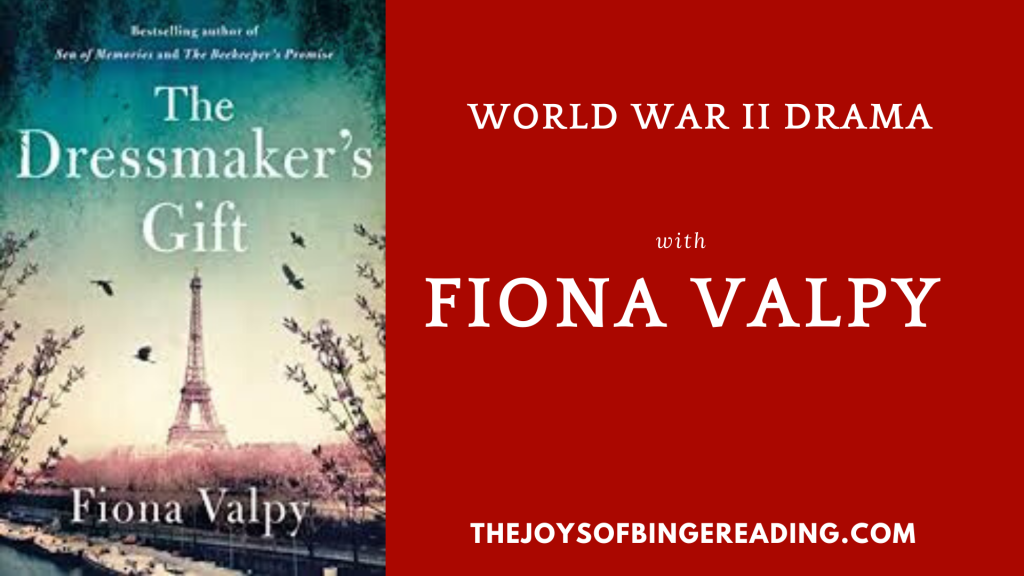
If you like Madeline’s Last Bookshop in London you might also enjoy Fiona Valpy’s dual time line stories which move from wartime Europe to the present day and back again.
Thanks To Our Technical Support:
The Joys of Binge Reading podcast is put together with wonderful technical help from Dan Cotton at DC Audio Services. Dan is an experienced sound and video engineer who’s ready and available to help you with your next project… Seek him out at dcaudioservices@gmail.com or Phone + 64 – 21979539. He’s fast, takes pride in getting it right, and lovely to work with.
Our voice overs are done by Abe Raffills, and Abe’s another gem. He got 20 years of experience on both sides of the camera/microphone as a cameraman/director and also voice artist and television presenter. Abe’s vocal delivery is both light hearted and warm and he is super easy to work with no matter the job. You’ll find him at abe@pointandshoot.co.nz