Mimi Matthews – Historic Romance


Mimi Matthews has enjoyed best-selling success in Victorian fiction and non-fiction, with romances that ask thoughtful social questions as well as entertain. And her playful animal tales in The Pug Who Bit Napoleon, a not-so-romantic interaction that took place on his wedding night, is one of dozens of amusing animal stories from the 18th and 19th centuries
Hi there, I’m your host Jenny Wheeler, and today Mimi talks about her latest book, Gentleman Jim, a rollicking romantic Regency, and tells what it was like to get her first publishing deal when she was still a relatively young teenager.
Six things you’ll learn from this Joys of Binge Reading episode:
- The startlingly young age Mimi got her first book deal
- How an accident brought her back to fiction
- Why she loves the Victorians
- The serious side to Victorian romance – marriage as a career
- What’s different about Regency plots
- Why Prince Albert’s greyhound touched her heart
Where to find Mimi Matthews:
Website: https://www.mimimatthews.com/
Facebook: @MimiMatthewsAuthor
Twitter: @MimiMatthewsEsq
BookBub: https://www.bookbub.com/profile/mimi-matthews
Goodreads:
https://www.goodreads.com/author/show/16948224.Mimi_Matthews
Pinterest: https://www.pinterest.nz/MimiMatthewsEsq/
What follows is a “near as” transcript of our conversation, not word for word but pretty close to it, with links to important mentions.
Jenny Wheeler: But now here’s Mimi. Hello there, Mimi and welcome to the show. It’s great to have you with us.
Mimi Matthews: Hi Jenny. I’m so glad to be here. Thanks for having me.
Introducing Mimi Matthews
Jenny Wheeler: Beginning at the beginning – it’s a very predictable question with this show now because it’s one I ask every one of our guests but I think people always want to know the answer – was there a Once Upon a Time moment when you decided that you just had to write fiction and if so, what was the catalyst for it?

Mimi Matthews: I would have to say, always being when I was little, really creative – like some little kids when they play with their toys or their dolls and thinking up stories and little scenes for them to act out.
My mom encouraged me to write it down, once I was able to actually be writing. This would have been at elementary school and I kept doing it. No one ever told me you can’t do that, you’re not old enough, you don’t know enough, so I felt really comfortable writing out my ideas and little bits of a dialogue.
Eventually, by the time I was 13, I had written a book. It’s not a masterpiece, but it was good enough that I was able to send it out on submission. Then when I was 18, I got an agent. I think a lot of it had to do with being young and a little bit of a dreamer and no one ever saying, you can’t write these down, you can’t make stories. So I did, and it ended up becoming books.
Jenny Wheeler: It’s quite remarkable that at such a young age you were able to do that.
Writing her own stories
Mimi Matthews: I never even realized when I was doing it, because I had always been doing it. It was nothing highbrow or technical. I didn’t have a ton of skill at plotting things out or character development or pace. I didn’t know anything about those things, but I really enjoyed doing it. I was shy and it gave me a way to express myself.
It was very immersive, so it was almost like reading a book, the way you get immersed when you’re reading, but I was able to create the stories myself. It definitely filled a need for me when I was little.
Jenny Wheeler: Now you’ve become a bestselling writer of Victorian fiction and nonfiction and you have lots of books out now. We will refer to some of the ones you’ve previously published, but the latest one out this month is a standalone Victorian romance called Gentleman Jim. At the heart of this story, there’s a hidden identity story about a stable boy who is not what he seems.
We won’t tell the listeners anything more than that because we don’t want to spoil the story for them. This hidden identity thing is a common trope in Victorian literature, but you’ve made it into a really interesting story. Is that part of the attraction for you – to have those family secrets?
Mimi Matthews: Gentleman Jim is set right at the end of the Regency. I feel the novels of that era were a little bit more adventurous.
Novels set in the Georgian era, before it became more constrained in the Victorian era, were allowed to be – I don’t want to say a little crazier, but more exciting things happen, like an adventure and hidden identities and duels and things I normally would not put in one of my other romances because they’re a little bit quieter, maybe a little more thoughtful.
How Gentleman Jim came together
Gentleman Jim was something I started really early when I came back to writing, around 2013, 2014. After the first 30,000 words I set it aside because I had another project that I did instead. I came back to it, I worked on it a lot during the pandemic, the beginning of the quarantine.
I think the feeling of being so stifled and indoors and everything so quiet inspired me to write something that was a little bit more adventurous than I would normally do because it filled a need to explore something a lot more exciting.
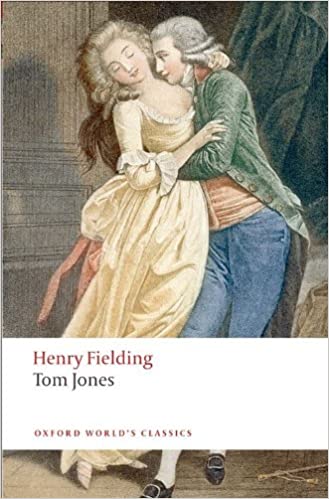
The time period allowed for it, especially I was inspired by novels that had similar themes, like the Count of Monte Cristo and The History of Tom Jones, a Foundling, which is an earlier novel but had similar ideas of hidden identities. You don’t know who someone was or their full story, and the way things come about, and justice is finally done. I really enjoyed writing it.
Jenny Wheeler: You mention that word ‘justice’ and there is a revenge element in that story too – quite a potent part in that story, more than one character is intent on some sort of revenge. It seems to me in a number of your books that the idea of getting justice, whether it’s by legal or illegal means, is quite important. Would you say that’s right?
Mimi Matthews: I think so. I love to see, if somebody has done something wrong and I mean a serious wrong, for them to get their comeuppance. Unfortunately, in real life that probably doesn’t happen as often as we would like, where bad people have to pay a price for being bad or being evil.
The attraction of the Victorians
Fiction fills a need. Especially lately I find I’m reading a lot of mysteries and things where at the end the bad person is arrested and goes to jail, because it feels like right now, seeing bad people getting justice is really satisfying.
Jenny Wheeler: We won’t expand that into what’s been happening in America right now.
Mimi Matthews: Probably not a good idea.
Jenny Wheeler: Keeping ourselves to the Victorian period, most of your work has been in the Victorians. I wondered what attraction there was for you in that particular period.
Mimi Matthews: It has. Gentleman Jim is my tenth novel and of those ten, only two of them were Regency. All the rest are Victorian. I am mainly drawn to it because it’s a period where there was a lot of change happening. Not just in the world of science and invention and women’s rights and animal welfare – people were becoming more sensitive to the plight of animals – just a greater understanding of the world.
Also the social mobility, people who were working class and maybe able to make more money and able to ascend to another class, which is very interesting to me. I feel to a degree it’s really relatable because we live in a world now where there’s a lot of change all the time, new inventions, new technologies, changing things in how we deal with the world, how we see the world, and it can be unsettling to some people.
Exploring those characters, how they adapt to change, whether they embrace it or whether they become very rigid and unwilling to change – that’s something I find interesting.
Marriage as a ‘career path’
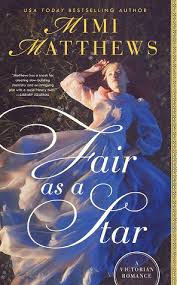
Jenny Wheeler: Also in our time of Me Too I think we’ve all become much more aware of women in that period, how they were almost powerless to deal with men around them if those men had ill intentions towards them. I’m thinking of the book before Gentleman Jim called Fair as a Star, and your heroine Beryl looks like she’s got the perfect life, betrothed to a wealthy Sir Henry, but it isn’t as wonderful as it looks.
For a lot of your women, marriage is the only “career path” they have, especially for women of class. You introduce a lot of interesting questioning, in a quiet sort of way, around that idea. Even if it’s sympathetically treated, this is about the only option they have so a lot of them are forced into seeing it as a business decision, aren’t they?

Mimi Matthews: Right. Almost as a way of securing their future. Where am I going to be able to be taken care of, safe, provided for, grow old and not have to worry about, am I going to end up on the street if I can’t be a servant or have a career.
For women of a certain class, marriage was the most acceptable thing for them to do, especially in the 1860s which is usually when I set my novels, it’s on the cusp of more things happening. A few decades later, the suffragettes and women are pushing for more equal rights, but I like to write in the era that’s right before that happens, when women are beginning to feel the sting of the inequality. This isn’t fair, this isn’t what I want, I don’t want to settle for this, I’m unhappy.
Hidden story in Fair As A Star
In Beryl’s case, I wanted to have a character dealing with what is technically clinical depression. It is a physical thing, not just a state of mind for her which is how some of the people want her to deal with it. Why can’t you just be happy?
Why can’t you be positive or get your mind off things? Women’s issues, almost on any level, were so misunderstood back then, and I thought how wonderful it would be to have a hero who actually listened to her and understood her and accepted her – the dark parts and the light parts.
That’s what I was trying to do with Fair as a Star, and I think I did it, but you never know. It depends on which reader is reading it, I guess.
Jenny Wheeler: In the Parish Orphans of Devon series – you have the series of four books of young woman who had fallen on hard times because of their family circumstances and they are all desperately seeking to secure their futures.
In one of those books the woman is threatened with being put into a mental asylum because she isn’t being co-operative in the way the men would like her to, and I gather that was quite an industry, a scandal in some of those mid Victorian years, that they used mental health as a control mechanism.
Mimi Matthews: Yes, in that period in the fifties and sixties, there were private asylums and it could be used as a mechanism to put somebody difficult away if you had enough money – somebody who was genuinely ill or somebody who just was difficult in some way or inconvenient.
The Matrimonial Advertisement
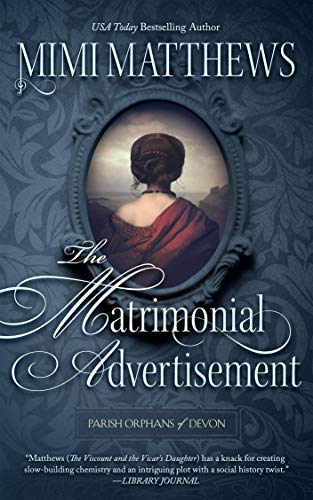
That’s explored really well in Wilkie Collins’ The Woman in White. I don’t know the exact publication date, it’s from the fifties, it was set not very much earlier than I set The Matrimonial Advertisement. The fear of knowing you were powerless in that way, that if you had a relation who could attest to you being unstable in some way.
When I was researching The Matrimonial Advertisement, one of the things I read was that it would only take two doctors attesting to it. That was enough, just two doctors. So if your relation hired two people who would write something out, it didn’t take very much because a woman a lot of times was in the power of male relations or her husband. It could be really scary, and certainly that’s a part of some Gothic novels that give it an extra creepy feeling.
Jenny Wheeler: I guess things like postnatal depression, or even what they called melancholia which was really a form of depression – you could be put in those places for that kind of thing. It didn’t have to be that you were acting all crazy or hearing voices in your head.
Mimi Matthews: Absolutely. In The Matrimonial Advertisement, the heroine Helena’s mother was put into an asylum for that very reason. She had postpartum depression that was very severe, and it wasn’t understood so she was put away and ended up dying where she had been put. So it’s become a great fear of the heroine when she’s threatened with the same thing. There is a reason she is so incredibly afraid of it happening.
Jenny Wheeler: Also, I find it quite fun, I don’t know enough about the Victorian era myself, but we have things like glass windows and the pouring of warm water and bathrooms and things. That’s all coming in in that period too, isn’t it?
A time of great change – like now
Mimi Matthews: It depended on the house and how much money people had. Many of them still didn’t have indoor plumbing. Some places, if the person was wealthy enough to afford it, could have running water in the bathroom or could have a water closet so they wouldn’t have to use chamber pots, but there were still a lot of places that were very basic – having to heat the water in cans if you wanted to take a bath, that sort of thing.
It’s an interesting dichotomy that there was so much still like that at the same time so much change was happening. It would take a while. I remember reading Agatha Christie’s autobiography and she was talking about in the early 1900s when they got their first water closet in their house.

What a momentous event it was, to finally have a bathroom. So it still took a long time from the fifties and sixties before some of the things that we enjoy became commonplace.
Jenny Wheeler: Yes. Turning to your non-fiction – you’ve got a lovely little book with a fantastic title about animals in the 18th and 19th century. It’s called The Pug Who Bit Napoleon. I gather there really was a little pug who bit Napoleon and didn’t just bite him any day of the week, but on his wedding night. Can you tell us about that book?
Mimi Matthews: That book arose because when I was first starting out, I had a book out on submission, and my agent encouraged me to start a blog. I didn’t know what I was going to blog about, but I wrote a lot about Victorian history and once a week I did a history of animals post, with stories like these that I had found researching. A lot of them are really funny, at least I thought they were funny.
The Pug That Bit Napoleon
I had been doing that for maybe a year and Pen and Sword Books in England approached me and asked if I might be interested in writing a few non-fiction books for them. They asked, do you have any ideas? The first thing I thought of was a collection of animal history stories. That ended up being The Pug. It was a collection of some new stories and some I had written a brief revision of, on my author blog when I was starting out.
Jenny Wheeler: There were quirky tales, not just of dogs but of cats and other animals as well. You’ve got chapters on Prince Albert’s favorite greyhound and a dog that the poet Byron had. Have you got a favorite amongst all those stories? There are lots of stories there.

Mimi Matthews: I like almost all of them. I felt most moved by the story of Prince Albert’s greyhound Eos because of something he says. After Eos died, he wrote about her death, and he said that she’d been his companion from the age of 14 to 25 and had therefore been a symbol of the best and fairest section of his life.
I don’t know if you’re an animal lover, but I’ve had those pets that are with you through, for me, college, Law School, various things that happen. When they die, you really feel it. They’ve been on the journey with you so long. I ended up dedicating The Pug Who Bit Napoleon to my dog, John. He had been my dog when I moved out of my parents’ house and when I bought my first place and went to college and Law School and up until I took the bar. He passed away after I took the bar exam and I felt that’s what he was – a symbol of the best and fairest section of my life. I find that incredibly moving, thinking about Eos, the greyhound.
Jenny Wheeler: You say on the back cover of that book that you have quite a menagerie at home, so it’s obvious you are an animal lover yourself.
And a huge animal lover
Mimi Matthews: A huge animal lover. I would have more animals if I had a little farm, which is my lifelong dream. I don’t think it’s probably ever going to happen. It’s hard work to have a little farm, but I would have many more animals.

Jenny Wheeler: I see you’ve got an Andalusian dressage horse. Do you still take part in dressage?
Mimi Matthews: I don’t ride because I have a neck injury. After I had my first neck surgery I was able to ride again, but then when the disc fusion in my neck broke, I couldn’t ride anymore. He’s with my trainer – an amazing dressage rider.
She has the U S D F gold medal. She had one of the assistant trainers compete him for me for a while and it got to a point where I finally thought, why am I still making him do this? I think he did like the work, but he’s getting older and he’s ready to retire. So I retired him. He retired maybe three years ago, and he’s just enjoying life now, not having to work hard, getting fed a lot of carrots and hanging around.
Jenny Wheeler: Because we are approaching the festive season, I wanted to talk to you about your Victorian Christmas novella which people might be interested in looking up called A Holiday by Gaslight. Those themes we’ve talked about in your other books – marriage as a pathway in life and big social change –both feature in that book, don’t they? You manage to get Charles Darwin, Prince Albert and the invention of gaslight into the story.
Weaving in the historic truth
Mimi Matthews: What was funny about that particular story is I had intended to have Charles Darwin in it and gas light being fitted out in a country home. I didn’t realize until I was already a chunk of the way into it that, oh, my gosh, the year that it is set in is the year Prince Albert died, the Christmas that he died. He died in December 1861 and my book is set Christmas 1861.
There was no way a family like that would have gathered and not mentioned that Prince Albert had just died, so I wove that into the story too. I love Christmas and Victorian Christmas and writing about all the things they got to do – the decorations and things. That was a lot of fun.

Jenny Wheeler: Is that the only Christmas one you’ve done?
Mimi Matthews: It is. I always mean to have more Christmas books come out and the problem is I am horrible at budgeting my time. It seems like I’m always working on other books, I have deadlines for other books and by the time Christmas comes around, other people are putting out their Christmas romances in September/ October, and I have nothing.
I aspire to become better at managing my writing time, but it’s difficult with having a neck injury. If I have a pain level one day, I may not be able to write at all, so I never can be like, okay, I’m going to write every day, this many words for this many months, and turn out this many books. It varies depending on what’s happening physically, which is unfortunate, but I feel lucky to write at all.
Life before full-time writing career
Jenny Wheeler: Turning away from the specific books and looking at your wider career, you have mentioned going to Law School and I think you have a very strong academic background. Can you tell us a bit about your life before you became a full-time writer and how did you move back into full-time writing from being involved in Law?
Mimi Matthews: I did write – not fiction – but I did write in college and Law School. Tons of papers and big research projects, and sometimes I was able to incorporate the Victorian era into it. When I was in Law School I did a really huge paper, or it seemed huge at the time, 30 or 40 pages on the British Courts of Chancery under the supervision of Geoffrey Hazard, who was a very famous law professor here.

I feel like I have been researching to write about the Victorian stuff for many, many years, even if I didn’t know I was going to put it into novels. Then after my injury, there was a period of time when I couldn’t work or do anything law related for the same reason. Initially it was too close to having the repair surgery they did on my neck, after it broke. But eventually it was too hard to predict what days would be good days and what days would be bad days.
So I fell back into writing, which was something I could do whenever, any time of day, when I felt up to it. Some days I could do more, some days I could do less. It was a natural progression. Then when my books started doing so well, which was around 2018, I could justify doing that and not have to worry about going back to anything related to the Law.
I think writing novels incorporates the things I loved most about the Law, which was the research and writing. The legal profession is a very writing-heavy profession, and this way I get to do the things I love most, while still having a career that accommodates my limitations because of my injury. It’s the best of both worlds.
The secret of writing success
Jenny Wheeler: Is there one thing you’ve done in your writing career more than any other that you’d credit as the secret of your success?
Mimi Matthews: I don’t know if it’s resulted in my success, but I always write what I want to write, the things that interest me, and I have been lucky in most cases that it interests other people too.
I don’t think you can stick with something if you don’t love doing it. Who knows if I would have stuck with it – even if books had been selling well – if I didn’t enjoy the writing process and the stories I was telling and the research I was doing. I’m not sure I would have stuck with it, because you have to love it. It’s a solitary profession, you’re alone, just you and your manuscript, and I feel like you really do have to love what you’re doing.
Jenny Wheeler: Sure. Is there any best and worst advice for new writers starting out regardless of their age, people who aren’t so experienced at writing, that you think would be good to pass on? What were your own expectations when you started out, and did you find that you met them or were you rather bemused at the beginning about how things were going?
Mimi Matthews: I was agented so I did have somebody I could ask, but my agent was not a writer. There were many times at the beginning when I lamented that I didn’t have a mentor that I could say, am I doing this right? I don’t even mean the writing part, but all the things a writer is expected to do nowadays, like social media or when a book goes on sale and how you promote it. Just basic stuff. It’s not very intuitive, you just don’t really know what to do. So I wished I had a mentor.
Surround yourself with writers
For that reason, if you can join a club, to be around other writers and learn about things like that, that would be good. As far as the writing itself, I would hesitate to give other writers advice except to say, be really hesitant to take advice from people about writing because it is a very personal thing. It’s your own voice.
There always is something to learn but if somebody tells you, you have to do this, you have to take this class, you have to have a MFA in order to write – I don’t think any of that is necessarily true.

I think for some writers starting out who are a little bit more uncertain, if somebody set up those barriers, they might decide, I don’t have that, I can’t do that so I’m not going to write at all. I don’t think they should be discouraged, because it is very personal and it’s your own voice and your own stories and I think the best way to become a better writer is just to keep writing.
Jenny Wheeler: Turning to Mimi as reader, because this is The Joys of Binge Reading and we like to try and recommend books to people that might be new discoveries for them that they’re going to feel, this is something I can’t put down. What are you reading at the moment, and who do you like to binge read?
Mimi Matthews: Right now I’ve been turning back to a lot of comfort reads. I think it’s as a result of the pandemic. Other friends I’ve talked to have been doing this too, rereading something you’ve already read, to give you comfort.
What Mimi is reading now
For that, I read a lot of Georgette Heyer’s regencies. She’s entertaining, she’s witty, her books are so much fun, she’s great to read one right after the other. The other one who is great for that is Agatha Christie. I’m a huge Agatha Christie fan, I have all her books in hardback, and I have read them all multiple times. I love Agatha Christie.
M.C. Beaton, who recently passed away – I think it was at the beginning of 2020, it might have been in 2019 – she writes detective stories. She has the Hamish Macbeth mysteries, and the Agatha Raisin mysteries. Same detectives in each book, a standalone mystery. Those are amazing. They are murder mysteries, but they’re great comfort reads – small villages or Hamish Macbeth is set in Scotland.
I wish I could say I’ve been reading more romance lately. I recently read an advance copy of a book by Harper St. George, The Heiress Gets A Duke, it was really good but it’s not going to be out for a while, not until January.

The other one I read was The Light at Wyndcliff by Sarah Ladd. She writes sweet regencies, but they’re not trite sweet, there’s meat to them. Beautiful settings like in Cornwall, with the mist, almost a Gothic feel. I really enjoyed that.
Those are what I’ve been leaning toward lately – a lot of mysteries, a lot of comfort reads and some romances.
Jenny Wheeler: I’ve heard quite a few people say exactly the same thing about comfort reading. There’s definitely a trend where people want to give themselves a bit of a release somewhere, don’t they?
Mimi Matthews: Exactly. It’s been great revisiting favorite books and when enough time has passed and you do a reread, you notice things you didn’t notice the first time, so there’s always something new about it to enjoy.
What would you change?
Jenny Wheeler: Yes. We are coming to the end of our time together so circling around, looking back down the tunnel of time, at this stage in your career, if you were doing it all over again, what would you change, if anything?
Mimi Matthews: Sometimes I do wonder – if I had kept writing after I got my first agent, from when I was young, I was 18 – if I had kept writing then, what a career I would have now? But I have a feeling, being so young, that it might have fizzled out or maybe I wasn’t ready to commit to it.
I’m not sure, but I often wish I had stuck with it when I was younger and that it hadn’t taken me so long to come back to writing fiction, because there are so many years in between when I wasn’t writing. And I think, if only I kept at it, I’d have so many books now.
But you never know. I feel like so much in writing and probably in anything, it’s just timing and sometimes things happen at the right time. I’m older now and maybe don’t have as much energy and I’m injured and all these other things, but I think the timing was right for it. I feel more invested in it. I enjoy it more and I have found people who enjoy reading it. That’s probably a non-answer.
What’s next for Mimi the writer?
Jenny Wheeler: No, I’ve heard other writers say similar things, but then they console themselves by saying, but I’ve had more life experience now, so I’ve got more experience to put into those books too.
Mimi Matthews: Definitely. I agree with that.
Jenny Wheeler: What is next for Mimi the writer? We’ve looked backwards. When we look forwards over the next 12 months, what projects have you got underway that you want to see finished, if you can?
Mimi Matthews: I signed in September a three-book deal with the Berkeley imprint at Penguin Random House for a new series. That’s really exciting, and the first book is due to them on January 1, so I’m working crazily trying to finish it.
It’s loosely connected to my Parish Orphan series. The hero of the new book, it’s called The Siren of Sussex, is the half-Indian habit maker, his name is Ahmed Malik, who was in my Parish Orphan series as a side character. He has become the hero, and I always knew he was going to be the hero.
I wouldn’t have had him making dresses if I didn’t eventually intend for him to be a fashion designing star of his own book. The heroine of the first book of the new series is a skilled equestrian who comes to London to find a husband and she meets Ahmed when he makes her habit – a dashing, fashionable, habit that catches everyone’s eye.
I feel super excited about it and also very stressed that it’s going to be good enough, but that’s going to keep me occupied. I have that book and then the next one due to them, and then the next one. Every six months. So I’ll be busy with those for a while, which is a little daunting, but I’m excited about it. I think it’s going to be a lot of fun.
Where you can find Mimi online
Jenny Wheeler: It sounds like it. Mimi, where can readers and listeners find you online? Do you like to interact with your audience?
Mimi Matthews: I do. I’m mostly on Twitter. I check Twitter most days. I don’t know if I should give my address. It’s Mimi Matthews Esq because Esq was shorter than author. I’m on Facebook, I think that’s Mimi Matthews author, my author page.
I always respond to readers. Sometimes lately it’s taken me a little bit longer to respond to some of the emails I’ve been getting because I’ve been overwhelmed with deadlines, but I respond to everybody. Unless they send me something really angry and unkind, in which case, I don’t respond at all.
Jenny Wheeler: Probably wise. We publish show notes with every one of these episodes and we put links in the show notes in case people do want to follow up to make it easy for them to find you. We’re very happy to do that.
It’s been fantastic talking and I think these new books you’re doing for Berkeley sound like they’re going to be great.
Mimi Matthews: Thanks so much for having me, Jenny. It’s been great talking with you.
Jenny Wheeler: Thank you. Bye.
Mimi Matthews: Bye.
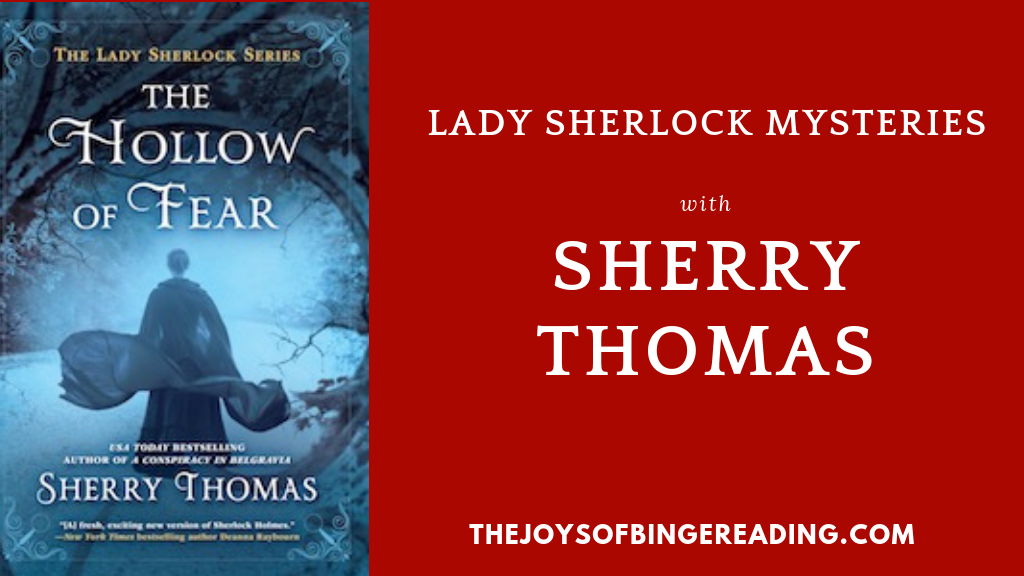
If you enjoyed Mimi and her historic take on romance you might also enjoy Sherry Thomas’s Lady Sherlock mysteries – Sherlock Holmes recast as a mysterious woman.
Thanks To Our Technical Support:
The Joys of Binge Reading podcast is put together with wonderful technical help from Dan Cotton at DC Audio Services. Dan is an experienced sound and video engineer who’s ready and available to help you with your next project… Seek him out at dcaudioservices@gmail.com or Phone + 64 – 21979539. He’s fast, takes pride in getting it right, and lovely to work with.
Our voice overs are done by Abe Raffills, and Abe’s another gem. He got 20 years of experience on both sides of the camera/microphone as a cameraman/director and also voice artist and television presenter. Abe’s vocal delivery is both light hearted and warm and he is super easy to work with no matter the job. You’ll find him at abe@pointandshoot.co.nz