Polly Phillips – Friends to Frenemies


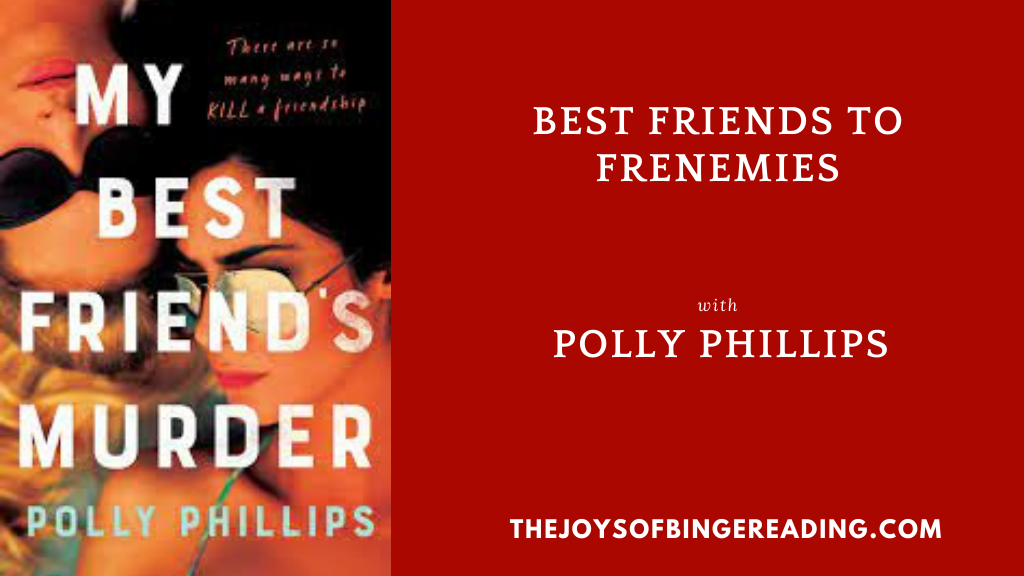
Polly Phillips’ debut thriller, My Best Friend’s Murder, deals with frenemies Bec and Izzy, who have been best friends forever. But there is a darker side to their friendship, and Bec is about to reach breaking point.
Hi there, I’m your host, Jenny Wheeler, and in Binge Reading today Polly talks about the uncomfortable reality of intimate friendships that turn toxic, and the challenges of plotting a suspenseful domestic thriller.
And we’re giving away three e-books of My Best Friend’s Murder in the All New Aussies Draw.

Six things you’ll learn from this Joys of Binge Reading episode:
- The attraction of the psychological thriller
- The school girl experience behind the book
- How experience in journalism helped her accept edits
- The answer to writer’s block is sugar . . just teasing
- The actors she’d like to see play her characters
- Her pick of the latest thriller crop
Where to find Polly Phillips:
Website: https://www.simonandschuster.com.au/books/My-Best-Friends-Murder/Polly-Phillips/9781398501300
Instagram: @perthectpolly/
Facebook: https://www.facebook.com/Polly-Phillips-112916227243037//
Twitter: @perthectpolly
Goodreads: https://www.goodreads.com/author/show/20484853.Polly_Phillips
What follows is a “near as” transcript of our conversation, not word for word but pretty close to it, with links to important mentions.
But now, here’s Polly.
Jenny Wheeler: Hello there Polly, and welcome to the show. It’s great to have you with us.
Polly Phillips: Hi. Thank you so much for having me.
Introducing author Polly Phillips
Jenny Wheeler: You have done this amazing thing as a debut novelist. You have had a stellar arrival on the publishing scene when so many hundreds of thousands of authors labor to get themselves noticed. Your first book, My Best Friend’s Murder, became one of the most anticipated novels of 2021? How did that feel?
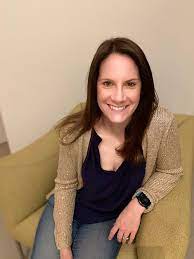
Polly Phillips: It felt amazing. It is so difficult to tell. As you say, there are hundreds of thousands of books being published all the time and you only have your own experience to go by.
You have no idea what is normal and what’s not normal and how you’re doing. It’s a very funny feeling because obviously there are so many books being published, but you almost feel like you’re the only one in terms of knowing what to expect.
On the day I was published in Australia and New Zealand as a whole, but WA specifically to me, we had our neighbors over for a couple of glasses of champagne, which was really nice. I felt particularly lucky because I am from London and all of my friends and family were still in lockdown in London.
I knew that if this situation were in London, I wouldn’t be able to go to bookshops, so I went to as many bookshops as possible, begged them all to let me sign whatever I could. I would have signed the walls. Then I went for a nice low-key supper with my husband and my daughter. It was lovely.
Living in a glass bubble
Jenny Wheeler: Then it got picked up by people. It was mentioned on CNN and Oprah – quite a few of the high profile shows. Was that right?
Polly Phillips: I’m not sure. I hope so.
Jenny Wheeler: I saw online somewhere that was what had happened.
Polly Phillips: I will have to check those out myself. As I say, you don’t really know in this glass bubble. I have tried to stop Googling my own name because it’s a bit like eavesdropping at doors – no good will come of it almost. But it is an incredible feeling, the idea that someone you don’t know – who has no connection to you, is not doing it to be nice, is not trying to do you a favor – might read these words and characters that have started in your head. It is just wonderful.
Jenny Wheeler: My Best Friend’s Murder explores a toxic friendship between two women. The underlying tension between them at the beginning is there, but slight, and it really ramps up over the course of the book. I think a lot of people may have had the uncomfortable sense of a friendship they consider to be close and intimate going awry. Is this something you have experienced yourself personally?
Polly Phillips: Sadly, it is. What’s interesting is, I have been lucky, I have met quite a few readers, and even in the early days – my book won a competition in Dubai where I was living at the time, and people came up to me afterwards and said, this is me. This has happened to me. I said, me too.
Looking back to teenage friendship
I think that is what I was trying to get across in the book, this slow burn. Of course, if our friends were horrible to us right from the offing, they wouldn’t stay our friend.
But it’s this subtle way it creeps in. I had a very intense friendship as a teenager, as I think lots of us do. We were inseparable and finished each other’s sentences and all that stuff, and sadly, it did go a bit sour.
Jenny Wheeler: It’s something about envy, I guess. Feeling that you are succeeding more than they are, or you have got a boyfriend that they envy, those little things that creep in. That is the kind of thing that happens in My Best Friend’s Murder, isn’t it?
Polly Phillips: Yes, it is. Funnily enough, quite a lot of my school friends have read it – lots of them under pain of death, of course. But a lot of them have read it independently, and they can pick out quite a lot of the events and say, that really happened, didn’t it? I recognize this bit!
Almost everyone I went to school with, embarrassingly, even people I’m not particularly close to who’ve contacted me on social media, they all say it’s so-and-so, isn’t it? Obviously, I wasn’t as good at concealing it as I wanted to be.
Jenny Wheeler: In that situation, do you either confirm or deny?
Polly Phillips: It depends how close I am to the person. Just in case she might happen to be listening – I’m sure she’s not – I think the thing about these toxic friendships, and I hope I’ve managed to bring out in the book, is that it does take two to tango.
Inspired by reali life experience
Much as the friend I’m no longer in contact with, who inspired the book, hurt me and did these little slights and chipped away at my confidence, I was probably without meaning to, doing the same to her.
That level of toxicity brings out the worst in you. Maybe that is the worst thing about it. It’s not what they’re doing to you. It’s what you’re making yourself become.
Jenny Wheeler: That is interesting because the two key characters are both slightly edgy in a way. Bec, the one who feels her best friend is betraying her, is irritatingly needy at times, and the one who wields the power is sometimes creepily controlling.
I loved the scenes where she slams post-it notes all over the place when she goes to babysit to make sure that she does everything absolutely correctly. Did you feel that there was a risk in making these two key characters a bit less than madly likable?

Polly Phillips: It wasn’t an intentional thing to start with in that first draft when you’re scribbling the story down as it comes to you, and almost telling it to yourself. What I wanted to do was make them real.
Often in literature, particularly in thrillers, you can get characters that can be a bit cardboard cutout. You have the goody and the baddy, whereas in My Best Friend’s Murder there isn’t really a goody or a baddy. Both of them, as you say, are, can be quite unlikable.
Be an author alter ego?
Initially, although she did change a lot, Bec was slightly inspired by me, so it was a bit gutting to have a friend say say “She’s so annoying, isn’t she?”
I suppose so! Maybe look at my own behavior as well!
Jenny Wheeler: You mentioned the first draft and I was really struck. There was a great surprise twist near the end and lots of twists going through the story as well. How do you approach that planning side of it? Are you an outliner or do you allow the story to unfold more organically?
Polly Phillips: I think I’m an outliner, although it’s interesting because I am writing my third book at the moment. My second book is all done and dusted. We have had the structural edit so it’s with the editor, on track to be published next year.
I’m on my first draft of book three and I always would have described myself as such an outliner. I don’t think I’ve got the confidence to let the plot take me, but I am doing it a little bit differently in book three. There is a lot more freedom of writing, and it is plotted out, but in very bold strokes. A lot is changing as I go along, which is quite a nice way of doing it and very different for me.
Jenny Wheeler: How many drafts do you end up doing?
Polly Phillips: That is a tricky question because they bleed into each other. I do some editing as I go along, but at least three or four, which is depressing when you are on the first draft.
Jenny Wheeler: But also freeing because you know that if it is terrible, you’ve still got plenty of room to make changes.
I think a journalistic background partly makes you a bit of an outliner at the beginning because you are used to working to an expectation of how things have to be structured. I think journalists are more inclined to be outliners.
Experience as journalist helped
Polly Phillips: That is a really interesting point. There are a lot of those skills that you learn as a journalist. Even though it’s a completely different type of writing to write a fiction, some of the skills do play across.
You get good at working to deadlines as a journalist, which is definitely helping me. I am lucky to be on book three before book two has even got a cover yet. Also, rejection. You get really good at rejection.
Jenny Wheeler: That raises the issue of when you have a book that has had a lot of success as a debut. You are lucky you have finished book two and have that out of the way, because some people do fall a bit at book two, don’t they? They have such high expectations of themselves.
Polly Phillips: Yes, definitely. I think they call it the difficult second child. I have been lucky along the writing journey to have met a lot of other debut authors –online because of the state of the world at the moment. Some of them are struggling with book two.
I was given some advice at the beginning, which was almost as soon as you finish book one, get started on book two because it’s so much easier to write it when you’re not under the lens of how your first book is doing. And as you say, when the book is doing well, obviously you’re feeling quite buoyant, but you are still distracted by it. I felt lucky to write book two in a lockdown bubble.
Was there an epiphany monent?
Jenny Wheeler: What first got you started writing fiction? Was there an epiphany moment when you thought, I don’t want to do nonfiction for the rest of my life? Did something act as a catalyst for that?
Polly Phillips: Good question. Yes, probably a lot of things. I made the terrible mistake of telling everyone I was going to write a book long before I put pen to paper. That would be my number one piece of advice. Don’t tell people until you have properly started, because then I had a lot of people say, how’s the book going?
I wanted to write for a long time and didn’t have the patience, I guess. I talked about it and didn’t do it. Then in 2016 my husband was made redundant, and we had to move.
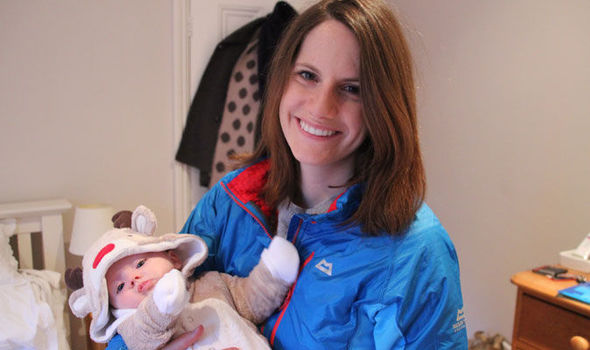
We were living in Copenhagen at the time, and we had to move back to London. He had to move to Algeria, so I had long stretches of being home alone. My daughter was very small at the time, so no company in the evenings except for her. She wasn’t a great conversationalist at that point.
I was obviously fairly home bound, and I thought if I don’t do it now, I’m never going to do it. This is my one chance. I have got to stop putting it off. I suppose that was the epiphany moment. That was the now or never.
Jenny Wheeler: Why did you choose psychological thriller as your genre? Is that what you like to read yourself?
A passion for the thriller genre
Polly Phillips: I love reading psychological thrillers. I love getting lost in a book and you can get really lost in a good psychological thriller. But when I originally started writing My Best Friend’s Murder, it was not going to be a thriller.
There was going to be no murder, so obviously it had a different title. I wanted to look at the toxicity between the friends and it had a very different ending and was a lot more speculative.
Then I was lucky enough to win this competition, and one of the prizes was to sit down with the judge who was a literary agent from London, and he said, you have got to have a murder. You have got to change the path of the book.
By that point I had been writing for a couple of years. I had actually started another book and put it aside, and I thought, what is most important here? Is it to get published? Would that be the realization of a dream? I thought that it would be, so I was happy to take that advice on board.
Now I love writing thrillers. I can’t imagine writing anything else now, because I love that they have their own structure. You have got your beginning, your middle and your end, because you want to know what happens.
Jenny Wheeler: Was it a big effort to have to rewrite that first draft to make it a thriller?
Characters almost wrote themselves
Polly Phillips: Luckily, I hadn’t got too far with it. I think I was about a third of the way in, and because of those elements of bitchy backstabbing between the two, it made sense. Once he had said it, I thought, yes, of course, how could it not be? Without sounding too cliché, they almost wrote themselves.
Jenny Wheeler: When you are in that situation, say you’re at home, you’ve got a child, what helps to fuel your creative spark? You just can’t sit there being a mum and writing at night by yourself. What fuels your creative spark and how did you give yourself space to recharge?
Polly Phillips: Sugar. Sugar is a definite fuel for me. I was lucky in that she did start going to nursery a few days a week, so I did have a few daylight hours. What really fueled it was having a story I wanted to tell.
As I said, I had started this other book, and I finished it – it is still under my bed, metaphorically. It was so much harder to write because it wasn’t authentic. Perhaps I wasn’t as invested in it, but for whatever reason, the words didn’t come. That was a slog.
It was hard to sit down at the computer and start typing, whereas My Best Friend’s Murder was a story I so wanted to tell. I wanted to look at how these friendships can affect us and how the people we love the most do have the power to hurt us the worst. That fueled it – that and biscuits.
Then my daughter probably, gave me the time off, because I think she was about two or three so when she was around, there was no writing. It was definite switch off at that point.
Jenny Wheeler: It is a co-dependent relationship, isn’t it? It is sometimes typical of adolescents, although I dare say it does happen in later life as well.
Co-dependency typical of teens
Polly Phillips: Yes, exactly. I think often these toxic friendships are formed when we are teenagers or even younger. The criteria by which we are drawn to people or that we choose our friends by is completely different.
I was laughing about this with a friend the other day. To some extend we often became friends with our childhood friends because they had the same initial of last name as we did and so we sat near them in class.
Or they were good at sport and so were we. Something that now as adults has no bearing. You would never choose your friend based on them being good at netball, or whatever.
Jenny Wheeler: When a book has this level of success at the beginning, sometimes it is lined up by TV companies. I wondered if anyone had been coming calling so far with maybe getting it on screen. It does lend itself, doesn’t it?
Polly Phillips: I think so. It would be a fantastic thing. I have definitely got my dream cast of who I would have play them, but no knocks on the door yet, so very much open to offers for anyone listening.
Jenny Wheeler: Somebody described it as The Rumour, which was a best-selling Sunday Times thriller, meets The Holiday. I have watched The Holiday more than once – the Kate Winslet Christmas movie. You can see how those could play out – particularly The Holiday. I haven’t read The Rumour, I must admit. Who are the people you would like to see in the parts?
Polly Phillips: I would absolutely love Emily Blunt. I think she would be a fantastic Izzy. I think of her in The Devil Wears Prada, when she is being very disparaging as the assistant. She’s got these icy put downs, so I would love to see her as Izzy.
Polly’s choice for movie roles. . .
Then for Bec, I quite like Emma Stone. I think she’s got that quirky lovability, but then I think I’m probably a lot fonder of Bec than your average reader.
Jenny Wheeler: Who would play Rob?
Polly Phillips: Oh, I love Rob. Someone beefy – maybe Chris Pratt if he’s around.
Jenny Wheeler: Yes, he would be good. Rob, for people who haven’t read the book, is Izzy’s husband.
Polly Phillips: No. it is very confusing because I’ve got too many R’s in there, but Rob is the brother and Rich is the husband.
Jenny Wheeler: Oh, sorry. Rich is the husband, yes. Who would you have play Rich?
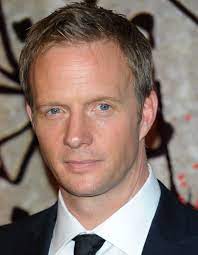
Polly Phillips: There is a British actor, he hasn’t done anything for a little while, but he had Spooks. It was a long running TV series; I don’t know if it made its way over. He is called Rupert Penry-Jones. He is very blonde, very tall, and very well-spoken and confident – everything that Rich is. Someone like that, I think.
Jenny Wheeler: Moving on now from talking about the specific book to your wider career – you did mention that you had worked in Dubai, and you were a journalist in a number of countries. How has that helped you with your work in writing fiction?
Polly Phillips: As we talked about, that learning to work to a deadline and organize yourself. It may be a type of book thing – which genre you are writing in – but some people can be a little bit precious about edits or they can take them quite personally, whereas I do see that once the words are on the page and they have gone to my editor, they belong to both of us. She could say pretty much anything to me.
Listening to editorial wisdom
My Best Friend’s Murder did go through some pretty fundamental changes at that level, and I was completely open to taking them. I learnt through being a journalist that there is a hierarchy, and the editor is an editor for a reason. They do probably know better than you.
Jenny Wheeler: That’s great. The next question I usually ask is, what is the secret of your success? Perhaps that is also the same thing – your willingness to be open to change.
Polly Phillips: Possibly. I hadn’t thought of that. Or persistence perhaps. I think that is one of the things that is quite hard to come to terms with. There are very few overnight successes. For My Best Friend’s Murder, I had written an entirely different book and it’s under the bed. I had to start again. Lots of changes.
Actually, the competition I entered in Dubai – that was the Emirates Literature Festival, which it won, that was the third year I entered. I entered the first book I had written in year one and year two and got nowhere, but I kept going.
Jenny Wheeler: That is very much an example of how an overnight success is very rarely ever that.
Turning to Polly as reader, because this is The Joys of Binge Reading, and we like to cater for readers who follow through an author and read everything they are producing. Are you a binge reader, and who do you like to read yourself?
Polly Phillips: Definitely a binge reader. I’ve definitely got that kind of addictive personality. If I like someone, I really like them. I will read everything.
Books Polly loves and recommends
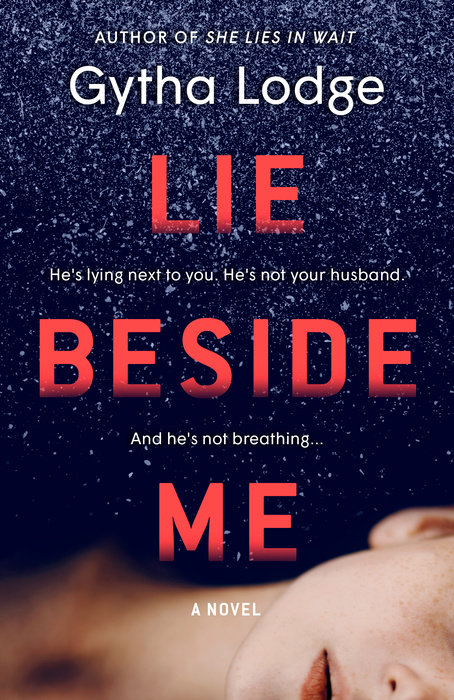
There is an author called Gytha Lodge who I absolutely love. She’s written three books so far; they are all part of a series. Police procedural, but not too much of the nitty gritty detail because sometimes my mind starts to glaze over at that point.
Her first one is called She Lies in Wait, and then she has Watching from the Dark and Lie Beside Me. I love those, champing at the bit for the next one to come out. With this binge reading thing, I think when you discover a character that you love, you desperately want there to be another book about them.
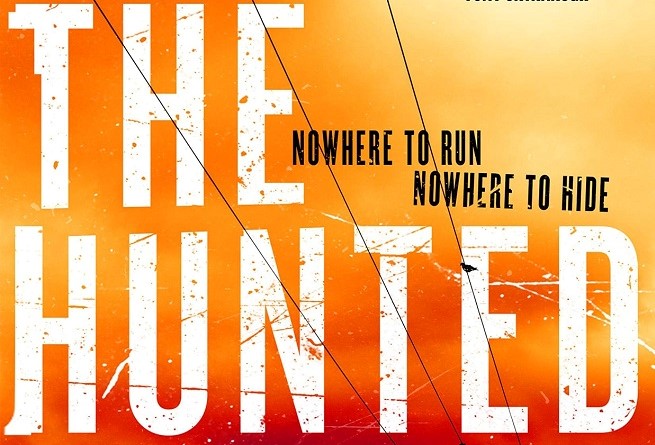
There is a book I read last year called The Hunted by Gabriel Bergmoser. It was a lot more action than I normally go for, but the main character, Maggie, was so compelling. He has got the sequel to that coming out. I think it’s called The Inheritance and I have already been contacting him on Twitter and I made my husband read The Hunted. When I love it, I really love it.
Jenny Wheeler: We are coming to the end of our time together, so circling around and looking back down the time tunnel of your writing career, at this stage, if you were doing it all over again, is there anything you would change?
Polly Phillips: That is such a good question. I don’t know. Probably not. There are loads of things I wish had happened differently. I know it is really earnest to say, but I think that probably everything does happen for a reason and takes you to the next step.
Learning from our ‘mistakes’
I could say I wish I hadn’t wasted all my time on the two years of my life that went nowhere, but even though it was completely different genre, it probably did make the second book better. I guess maybe have a bit more confidence in myself would be one thing and keep believing.
Jenny Wheeler: Can you let us know anything about the book you have already completed, book two? Is there anything you are able to say about that at all?
Polly Phillips: Yes, I can tell you lots about this because I haven’t been told I can’t. Often I read interviews or listen to interviews and people are very cagey. I’m not sure if I should be revealing, but at this point I haven’t been told I can’t so it is called The Reunion. It’s another thriller, but I think of them as slightly domestic thrillers because they’re not blood and guts and gore.
It should be out next year. It is the story of a woman in her mid to late thirties whose life, a bit like many of us, has not been as glorious and shiny as she thought it would be. She ties that all back to one key moment – an event when she was at university where everything went terribly wrong for her one night and her life was never the same afterwards.
At the beginning of the book, she is on her way to a 15-year university reunion. She hasn’t been back since, and she is finally going back and she’s determined to wreak revenge on the people she holds responsible for why her life did not turn out the way she thought it should.
Jenny Wheeler: That sounds great. Is it set in the UK?
Polly Phillips: It is set at Cambridge, so it has got that intimate college feel and there is lots of history.
What’s next for Polly the writer?
Jenny Wheeler: Great. What is next for Polly the writer for the next 12 months or so? What are you looking forward to?
Polly Phillips: Travel. Maybe not. I am about 25,000 words into the first draft of my third book, which is going to be about the dynamics in play at the school gates. Those mean mums that strut about and think they are parenting gurus and better than everybody else, and the Machiavellian tricks going on behind the scenes.
It is going to start with a tragedy, and then we will look back at who is responsible and why, that sort of thing. I’m really excited about writing that. I probably shouldn’t say this, but we are all friends. Last year my daughter was at a completely different school to the school she is at this year, so I definitely have lots of food for thought and lots of material. For some characters I might have to put a disclaimer. Some people might recognize themselves.
I have the Margaret River Writers Festival coming up this weekend and looking forward to getting out and about and meeting readers.
Jenny Wheeler: We’ve got quite a few listeners in the US, so to clarify for people – Australia and New Zealand have had a much easier time of it. In Western Australia in particular, you have had hardly any cases of COVID-19 – a few, but you have kept it very much under control, haven’t you?
‘Trapped’ by pandemic
Polly Phillips: Yes. We are in what I think of as a gilded cage. Life is very normal. We have been lucky. We have had a couple of lockdowns, but they have been very short and sharp, so we are living relatively normal lives, but we can’t leave.
Because of the state of my visa – I am on a temporary visa because I’m English – we can’t even come over to Sydney or Melbourne. Very much trapped within Western Australia, which is a safe and wonderful place to be, but I am champing at the bit to go somewhere else for a little bit at least.
Jenny Wheeler: You have had an international life up to this point, haven’t you?
Polly Phillips: Yes. I am from London and have lived in various different places.
Jenny Wheeler: It is lovely to hear you talking about meeting your readers this weekend. Where can they find you online and do you enjoy relating to them online?
Polly Phillips: I love it. It’s so nice. As I said right at the beginning, it is amazing still to think something that started, I was going to say in my head, but possibly in my school, but characters I have created, that people are reading them and enjoying them and identifying with them.
I absolutely love interacting with readers online and at the events I’ve done. I am on Instagram @perthectpolly, which is a little play on the fact that I live in Perth that no one in Perth seems to get. I am on Facebook as well, Polly Phillips author, and I am on Twitter, although I don’t think I’m funny enough for Twitter, so I’m not on there that often.
Where to find Polly online
Jenny Wheeler: We will have all those links in the show notes for the podcast when it’s published, so people will have no trouble finding them. It has been fabulous talking today. Thank you so much.
Polly Phillips: Thank you so much. I really enjoyed myself. It’s been such a pleasure.
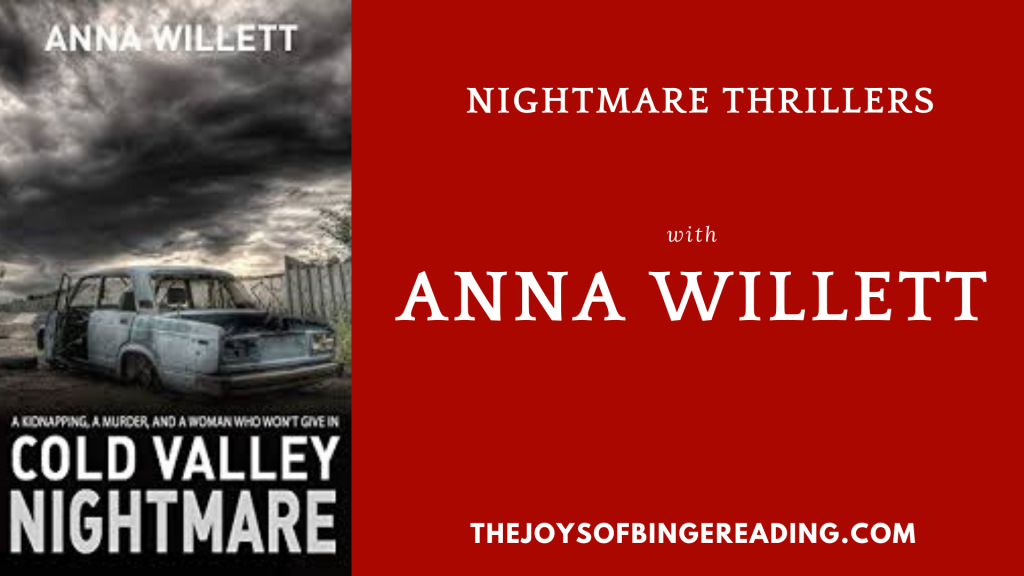
If you enjoyed Polly’s thriller you might also enjoy Anna Willett’s Nightmare Thrillers….
Thanks To Our Technical Support:
The Joys of Binge Reading podcast is put together with wonderful technical help from Dan Cotton at DC Audio Services. Dan is an experienced sound and video engineer who’s ready and available to help you with your next project… Seek him out at dcaudioservices@gmail.com or Phone + 64 – 21979539. He’s fast, takes pride in getting it right, and lovely to work with.
Our voice overs are done by Abe Raffills, and Abe’s another gem. He got 20 years of experience on both sides of the camera/microphone as a cameraman/director and also voice artist and television presenter. Abe’s vocal delivery is both light hearted and warm and he is super easy to work with no matter the job. You’ll find him at abe@pointandshoot.co.nz