Robert McCaw – Hawaiian Detective Koa Kane


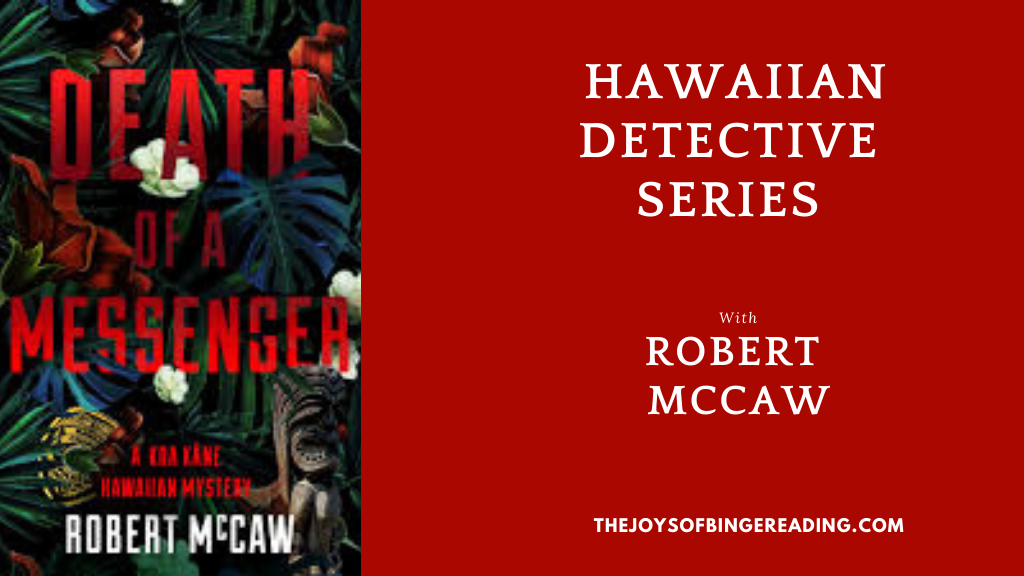
Attorney turned mystery writer Robert McCaw credits an ability to reinvent himself for his successful transition from a defender of justice to a storyteller with a fascination for how our past sins affect the way we behave now.
Hi there, I’m your host Jenny Wheeler, and in today’s Binge Reading episode Robert talks about the enduring love affair he’s had with Hawaii that led to his Koa Kane detective series and how a New York attorney transitioned into a new career as a mystery writer.
Six things you’ll learn from this Joys of Binge Reading episode:
- Why Hawaii’s marvelous volcanoes feature in his books
- How he transitioned from New York lawyer to mystery writer
- His passion for all things Hawaiian
- What book is coming next
- The writers he admires most
- What he’d do differently second time around
Where to find Robert McCaw:
Website: https://robertbmccaw.com/
Facebook: @Writerrobertbmccaw
Twitter: @RobertBMcCaw
What follows is a “near as” transcript of our conversation, not word for word but pretty close to it, with links to important mentions.
But now, here’s Robert.
Jenny Wheeler: Hello there, Robert and welcome to the show. It’s great to have you with us.detective series author
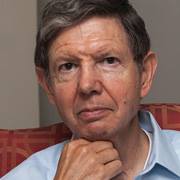
Robert McCaw: It’s so nice to be here and it’s nice of you to make this opportunity available and let me chat with you and your listeners.
Jenny Wheeler: You have had a successful career in law and we’ll go into that a little bit later, but then you turned your hand to mystery writing, and that’s what we’re interested in today – a police series with Chief Detective Koa Kane set in Hawaii.
Was there some moment in your life when you thought, if I don’t get to write some fiction, I’ll feel as if my life hasn’t been complete? If so, was there a catalyst for it?
Introducing author Robert McCaw
Robert McCaw: Well, it didn’t happen quite that way. While I was practicing law, I went to an American Bar Association Conference in Hawaii and Honolulu, and after that I went and spent some time on the Big Island. I fell in love with the place. It is one of the most culturally and geographically diverse places I’ve ever been, climate wise as well.
As I fell in love with it, I began to do more and more research, began to talk to people on the Island, went back over and over again. So it was Hawaii first, and I felt this compulsion to share with others my discovery of Hawaii and its culture and its history and its language. Then the question was how to do that.
As a lawyer, I’ve always pieced together facts and arguments. I’ve loved puzzles and so it was kind of natural to do it as a mystery. But then I had one of the really difficult choices to make. Because I wanted this book to speak, almost as though Hawaii is a character in the book, which is the way I think about it, I wanted my protagonist to be a Hawaiian.
The challenge to write
Of course, I’m not Hawaiian, so that required a lot of work, and I was busy at that time with an active practice of law, so it literally took me twenty years to put the first book together. It wasn’t until after I slowed down in the law practice that I actually managed to get it out and into the hands of readers.
Jenny Wheeler: Before that moment, you’d never really considered writing fiction?
Robert McCaw: Well, I’d considered it, but I was talking to one of my partners one day and I said I was thinking about writing a book. He looked at me and said, if you were really serious, it would come out of you. That was the moment at which it became really serious – that compulsion to tell the Hawaiian story.
Jenny Wheeler: Yes, that challenge from someone else. You have three books published so far, but the most recent one is called Death of a Messenger, (republished from 2015 – editor note.) and it places Koa on the trail of a murder involving ancient rituals, cultural artifacts, and some background in the history of Hawaiian rights activism.
Tell us a little about how you conceived that whole series. You fell in love with Hawaii, how did you get to a murder mystery as distinct from something else, something like maybe James A. Michener might have written?
Robert McCaw: As I said before, it is this idea of telling the Hawaii story. I wanted to do it ultimately in a mystery because in a sense that’s what I had done as a lawyer. You walk into a new case, whether you’re on the plaintiff’s side or the defendant’s side, and you have to figure out the facts. It’s a detective experience, so I thought I’ll be a little bit of myself here in the protagonist and I’ll be a detective.
Mauna Kea’s remarkable history
I then went to the top of Mauna Kea, which is a 14,000-foot extinct – at least they think it’s extinct – volcano. It is the largest volcano on the Island, and I came across this extraordinary contrast at the top of Mauna Kea. On the one hand, at about 11-12,000 feet, there was a stone quarry, and it’s gigantic. It covers about seven miles.
It was used by the ancient Hawaiians. Remember, we’re talking about people who don’t have the wheel and who don’t have a written language and who didn’t have winter clothes, who climbed Mauna Kea and mined this very hard lava. If you’ve been around lava, you know that it crumbles, you can’t make tools out of it. But this lava, because of its particular formation, was hard like granite and so the Hawaiians mined it for tools – for adzes and other tools, knives, and hammers.

Then at the top of the mountain, there are a dozen or so observatories, including the Keck observatories, which are among the most modern, the most innovative facilities in the world, these huge, huge computer-controlled telescopes. I thought, wow, here is an industrial site from the 1400s right next to these technical marvels of the 21st or maybe even the 22nd century. And I thought, this contrast, there’s got to be a great story here.
That’s where you get the story of the adze makers. I once read a piece by clearly an armchair archeologist, who guessed that these adze workers had walked up the mountain every day, worked and walked back down at night. All you have to do is drive to the top of Mauna Kea to know it’s preposterous to think that anybody could walk up in a day. It’s 14,000 feet. It’s some of the most rugged terrain in the world.
The ancient mountain settlement
They lived up there. They lived up there for at least the summer months and worked just as the astronomers live up there and work today. And I got very curious about where they went in the wintertime and there are some theories that they went back to their villages. I created this huge lava cave in a lava tube, which are very common in Hawaii, as their winter workshop. The rest of it is all built around that initial premise.
Jenny Wheeler: I’m glad you’ve mentioned the observatory because the astronomers also feature in the story. As you’ve so nicely put it, you’ve got that ancient culture as against the most modern of human technology and science.
I gather that astronomy is quite a personal fascination of yours as well. Tell us about that. I read somewhere that you said if you hadn’t been a lawyer, you would have liked to be an astronomer.
Robert McCaw: It was the career I didn’t pursue in college. I had a very good friend in college who was an astronomy major and he and I spent lots of time together. In some senses, during that period of time, I guess I was probably jealous of him. I then went on to go into the military and it was the military that got me to go to Law School. I went to Law School and had a fabulous career, but I never gave up my interest in astronomy and I have followed it throughout my career – read lots of astronomy books, subscribed to some astronomy magazines.
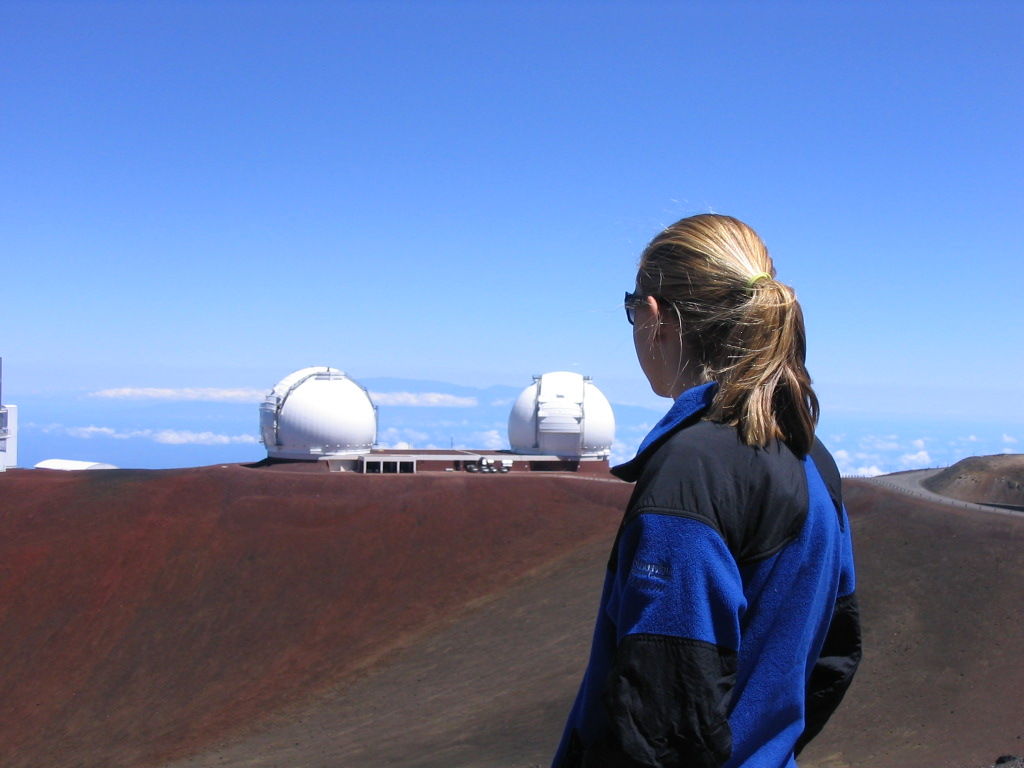
After I got to Hawaii and to meeting people, I was fortunate enough to meet some of the astronomers. Indeed, Hilton Lewis, the man who is now the Director of the Keck telescopes, he and I became friends, and we’re still friends even after I wrote Death of a Messenger. I’ve had the privilege of standing at a prime focus of the Keck I telescope, and I have to tell you, it is an awesome experience, just an awesome experience.
Ed note: In Death of A Messenger Thurston Masters is the fictional director of the Alice Telescope (Robert’s fictional name for telescopes in the book). The fictional Alice Telescopes are modelled on the real Keck Telescopes.)
Hawaiian spirituality explored
Jenny Wheeler: That is wonderful. The series is strong not just in those natural aspects of Hawaiian culture, but it does delve into spirituality and creation stories as well. That could have been a bit of a sensitive area for a non-Hawaiian to get into. How close did you get to that side of things and did you find it hard to research? Were people happy to talk?
Robert McCaw: Two things. One, I did an enormous amount of research. There’s a wonderful library and a museum in Honolulu called the Bishop Museum, put together by the Bishop Trust which is a huge financial institution in Hawaii.
They have a wonderful library with lots of original materials going back to the missionaries who first brought the written language to Hawaii, and with many artifacts that precede that. Then also there is a fabulous library at the University of Hawaii in Manoa and I would go and stay in a bed and breakfast and spend a week in the library.
I got a lot of it that way, but I also met ranchers on the Big Island who told stories about the graves on their property, and about the kapa which is a form of bark cloth that the Hawaiians used.
Tackling historical questions
We had some very close Hawaiian friends who shared stories with me, and there are books of Hawaiian legends – and I’ve read many of them – that go back to the very early missionary days, when the missionaries first heard many of these stories. That’s really where it comes from.
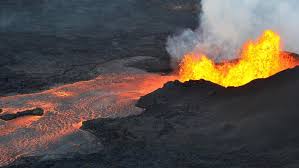
In terms of getting close, I’ve never been much for the supernatural, but the volcanoes on this Island are just awesome and they have this awesome and unpredictable power, which is kind of great for a mystery writer. They’ve shaped the land and they continue to do that.

The geography fascinated the Polynesians, and it actually shaped Hawaiian history. When Kamehameha was struggling with other warlords on the Island, there was Kamehameha on one side and a Hawaiian King on the other side. Ali’i is the way the Hawaiians refer to them. He walked his troops by the Kilauea volcano, it exploded, covered them in ash and killed most of them. That is one of the reasons that Kamehameha was successful in uniting the islands, so this land just reaches out and grabs you.
Jenny Wheeler: When I was doing a bit of research for this chat we’re having, I saw that in Hilo, the biggest city on the Big Island, the volcanoes have interrupted life a couple of times in modern times, that the lava has got right down as far as the Bay.
Robert McCaw: In 1984 Hilo’s existence was threatened by lava flows from Mauna Loa and all kinds of things were done to try to save the city. They dug trenches and did other things. Actually, if you go back to World War II, the military was afraid the volcanic lights from the mountain would lead Japanese submarines and vessels to Hawaii, and they tried to bomb the volcano into submission. Didn’t work very well.
There are all kinds of stories, but yes, Hilo was threatened in 1984 and may well be threatened again, because Mauna Loa is still active, and they monitor it all the time.
Det. Kano Koa – escaping his past
Jenny Wheeler: Your hero of the series, Koa, has a career threatening secret of his own. He’s a man seeking redemption for past misdeeds and the series raises, and is still answering the question at this stage, of – can we ever escape our past? Have you yet decided on how that question is going to be answered?
Robert McCaw: In the first place, my own view is that escape is a little too much to hope for. Maybe mitigation, maybe restitution, maybe you leave your place in this world, whether it’s a big place or a small place, better for those who follow. That I think is achievable. But I’m not sure that escape from our misdeeds is possible.
In another of the books, Fire and Vengeance, that theme is played out, not just with Koa but with multiple other characters whose reaction to their past misdeeds is quite different from each other.
It’s almost a little experiment, so readers can see how this question of “can you escape your misdeeds” works out for a number of different characters. That is also going to be – or is, because it’s written – a major theme of the unpublished book that comes out next year, Treachery Times Two. I think the answer is that even to get mitigation and restitution, it takes a bit of luck.
Jenny Wheeler: Did you have a full story planned when you began the series? I mean, do you at this stage have a feeling for how many books Koa’s going to finally end up in?
Fire and Vengeance
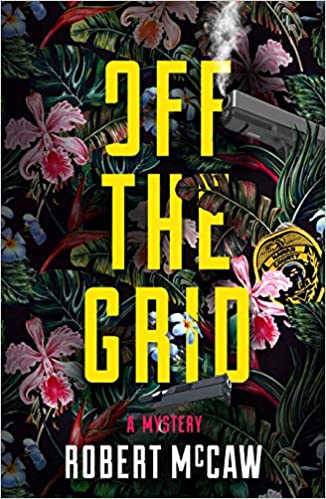
Robert McCaw: I did not. I struggled with the first book as I explained for over 20 years, and at the end of that time I couldn’t find a publisher, and so I self-published that book. It’s only because I self-published it in a very professional way, with good editing and good proofreading, good cover design, good layout, that it enabled me to find the agent I now work with and has led to a really terrific relationship with Ocean View Publishing. I didn’t have the whole series planned at the outset and indeed, each of the books stands on its own.
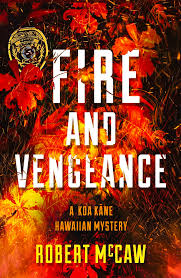
I can’t say that, when I wrote Off The Grid, I had a notion of what I would do with Fire and Vengeance, but from my days in Hawaii and my love and exploration of the place, I do have a number of sites, or a number of circumstances, that are unique to Hawaii in mind as potential themes for a book. One of those was always Hualalai, a mountain which is featured in Fire and Vengeance.
I think the answer to the question is, I don’t know now how many there will be. There will be at least four for sure. My guess is I’m not done with Koa. He’s an interesting character, and the other characters around him – Nalani his love interest, Zeke Brown the County prosecutor, the crazy obstetrician who serves as the County coroner – they are interesting characters and I really enjoy entering their world and sharing a few months with them as I create another story.
Jenny Wheeler: Tell us a bit about your creative process. How much of the actual scene outline would you have when you start writing? Do you flesh it out quite fully, or do you have an idea in mind and start writing?
The ever changing writing process
Robert McCaw: It’s more the latter. I almost always know where I’m going to start, and I almost always know where I’m going to end. I may have way points that I know I’m going to use, but I then write and in that writing process, for me, it’s very iterative. As I write the later chapters, I will often go back and rewrite the earlier chapters in light of the choices I’ve made in the later parts of the story.
There’s a lot of editing involved in my writing process as I refine the story. If you’re a mystery writer, or writing murder mysteries, if you put an event in chapter 20, most of the time you need some clues in earlier chapters that won’t give away the event but won’t cause it to come as a total surprise to readers. That process takes a lot of editing and a lot of going back and forth.
Jenny Wheeler: Sure. Moving away from the specific books to your wider career, you mentioned that you had time in the military and you’ve also had this very successful and long career in law. Tell us how that experience feeds into your books. What mark has it left on you that is now translated into fiction?
Robert McCaw: Both the military and the law have greatly influenced my writing and greatly influenced the books. I’ll pick up on an earlier question and say that’s because I cannot escape my past. I think you need to write what you know. I think you need to write with a real command of the substance.
Military and law personal interests
Both the military and the law have created interests for me that I pursue. They’re like astronomy and archeology which are two other subjects – I hardly ever miss an article about either one of them and dig in. That’s stuff that over time I’ve gotten to know.
You put that together with my belief that you have to master your material and you have to write what you know, and you can see the influence of the military in characters like Lieutenant Zeigler who is the military police commander of the Pohakuloa training area, which is the largest military installation in the Pacific for the U S and it happens to be in Hawaii.
And you can see some of that in Koa himself. Koa has a military background as well. Similarly, you can see the legal side in Zeke Brown, the Hawaii County prosecutor, who is one of my favorite characters and who is a composite of prosecutors that I met and dealt with extensively when I was in private practice.
Once again, I own that material. I’ve seen how they operate. I’ve seen when I think they cut corners, I’ve seen when they do things that are in the interest of justice and I’ve seen how they try to make cases, so you get some of that in Zeke Brown.
Jenny Wheeler: Starting this new career in later life – do you think that’s presented any extra challenges for you? Tell us a bit more about your path to publication. You have alluded to it already, I know.
How past experience helps today
Robert McCaw: First, if you’re a lawyer, you have to learn to avoid legalese and to write in a much more casual, much more fluid style than most lawyers do. I will tell you that there’s this funny reaction. When you’re a lawyer, you are tied to the provable facts. If you deviate too far from the provable facts, you lose credibility. Whether you’re trying a case to the jury or to the judge, if they think you have made it up, you’re not going to be successful.
And so when I first started writing, everything had to be provable, but of course that’s not what fiction is all about, and it took me a while to make that adjustment. It also took me a while to give characters the depth I think they need, and in many ways your character can’t be too deep. Those were challenges. Finding the way to an agent and a published book and a publisher – that was all very challenging.
The other aspect, which I think most people who aspire to write books don’t fully appreciate, is that in today’s world, even if you have a topflight publisher, you’re expected to market the books. The big marketing burden falls on authors.
Jenny Wheeler: That’s right, and it’s probably getting more challenging in that area every day, isn’t it, as more people join in the self-publishing side of things. Is there one thing more than any other that you would see as the reason for your breaking through, as you have?
I consider anybody who gets three books published is a success as an author, because getting past that first book and the discouragement is a big plus in itself. What do you think has been the thing that has seen you through, if there is just one thing?
The secret of Robert’s success
Robert McCaw: If I had to pick one thing, it would be perseverance. I believe that people learn much more from their failures than they do from their successes. On the other hand, you have to be able to pick yourself up off the floor when you get knocked down.

You have to get back in the fight. The fact that you weren’t successful with some particular book or with some particular agent or with some particular publisher, it’s just like being in a fight. You’ve gotten knocked down. You need to get back up and back in the game and keep fighting.
Jenny Wheeler: Turning to Robert as reader, because this is The Joys of Binge Reading and we focus on books that are going to be fun and entertainment and not too navel gazing. What do you like to binge read, and have you got anything you’d like to recommend to other listeners?
Robert McCaw: I am a voracious reader. For series authors I like Daniel Silva, Michael Connelly, Barry Eisner, Joe Ellis, Jane Harper, who comes from your section of the world and who’s fabulous, I think. Craig Johnson, who’s written Western stories, is great. I’m right now reading The Splendid and the Vile by Erik Larson. It’s fabulous. It is a very intimate portrait of Churchill during the Blitz or leading up to and during the Blitz and boy, it’s a tale of leadership that we need today.
What Robert is reading now
Jenny Wheeler: I haven’t come across that.
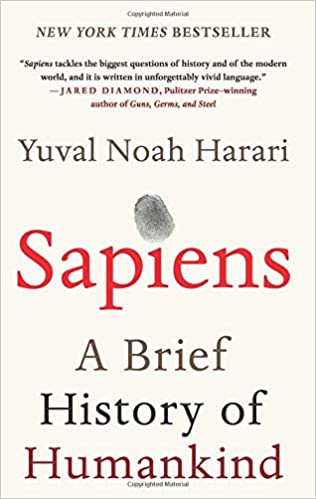
Robert McCaw: He also wrote Devil in the White City, which is a fun mystery about the Chicago World Fair period. Where the Crawdads Sing by Delia Owens is brilliant. I loved it. Sapiens by Yuval Noah Harari is a wonderful, brief history of mankind, and Watchers by Dean Koontz is extraordinarily creative. It’s one of the most creative pieces I’ve ever seen. So those would be recommendations I’d make for your readers.
If you were doing it all over again….
Jenny Wheeler: They all sound great. Circling around, because we are coming to the end of our time together, looking back down the tunnel of time, at this stage in your career, if you were doing it all over again, is there anything you would change?
Robert McCaw: I thought quite a little bit about this topic. I had a wonderful career. I’ve had great mentors, I’ve had a lot of fun. But I also reinvented myself a few times. I practiced in Washington for a very long time and then opened the firm’s office in New York, and it was like reinventing myself.
When I ultimately turned to writing mysteries, I reinvented myself. So, on the one hand I would say to people, pursue your interests, but in my own life I think I’ve been very fortunate and very lucky and there’s very little I would change.
Jenny Wheeler: That’s fantastic. You have also lived in Hawaii. As well as loving Hawaii you did live there for a while, didn’t you?
Robert McCaw: We had a house out there for 20 years and spent a lot of time out there. That’s how I got to know so many Hawaiian people. I talked story with cops, I talked story with friends. I have a friend in Hawaii now and we do a FaceTime call every Wednesday morning to catch up with each other and see what’s going on. It’s one of the ways I keep up with Madam Pele, (the goddess of volcanoes) who is back being active again.
Jenny Wheeler: I guess, sadly, with Covid that you haven’t been able to so easily travel. Have you promoted the books in Hawaii?
Working around the pandemic
Robert McCaw: I’ve done a lot of work through an absolutely wonderful publicist, which is Fauzia Burke at FSB Associates and her associate Michelle Fitzgerald, who I think you know, and they have been fabulous in getting the opportunities for podcasts and written interviews and reviews of the book.
When I was first self-publishing, I tried a whole bunch of these internet author assist programs and I found them to be, in general, completely worthless. But Fauzia and FSB are on the other end of the spectrum. They’re a little bit on the expensive side, but they very much produce. It’s been a great relationship.
Jenny Wheeler: That’s great. Looking ahead into 2021, which we now are in, what’s next for you as a writer this year, and what do your next 12 months look like?
Robert McCaw: As I mentioned a couple of times, there’s a fourth book, Treachery Times Two, which comes out in January 2022. I’m still reading galleys and finalizing that, so Koa Kane fans will have another book to look forward to. It has a unique plot and delves far more deeply into Koa’s history, with a whole other perspective on the question you asked earlier – can you escape your past misdeeds? As you’ve guessed, the connection between what we’ve done in the past and who we are and how it shapes us, is one of the aspects of life that fascinates me. I represented a lot of people when I was in practice, and I always found it fascinating how we have this compulsion to cover up even the slightest misdeeds.
What his clients taught Robert
My father once told me that he went to a cocktail party and he was talking to somebody and he made a stupid remark. He said, I spent the rest of the evening worrying about that stupid remark I made.
It wasn’t until much later that I realized I was the only person in the room that even remembered it. That’s a trivial example, but when people do things that are seriously wrong, it affects who they are and it affects how they live their lives and what happens to them in the end. I find that fascinating.
Jenny Wheeler: All the time we’ve been talking, that’s been in the back of my mind, if there were any experiences you had as a lawyer. I guess a lot of the people you defended, you don’t know how their life turned out, you don’t keep in touch with them, but were there any examples of either redemption or people being totally sunk by a single ill-advised act? Is there anything that left its mark on you in terms of the people you dealt with over those years?
Robert McCaw: We could spend an hour on that question, but there are a couple of examples. There was one man who got in very serious financial trouble and wound up spending some time in jail. I followed him for a long time. In many ways he became a sort of quasi friend, and he once said, and I thought it was one of the most cogent remarks I’ve ever heard, he said my biggest mistake was I surrounded myself with people who couldn’t say no.
Thinking about the consequences
You know, all of us think and maybe even start to act at times in ways that we shouldn’t. Most of us have spouses or friends or advisors, and if we’re smart, we consult with them and you know that question: Are you crazy? Are you really going to do that?
Do you understand what the consequences are? Those are some of the most wonderful, useful questions that people can ask you and you should never be offended when somebody asks you that, because what they’re saying is look in the mirror, take another look, look at it from another perspective. I thought that was some of the best advice I’ve ever heard, which is don’t surround yourself with people who can’t do anything but be sycophants.
Jenny Wheeler: Yes, I’m afraid that I can’t resist commenting that perhaps things would be different on the national stage in your country if a few people had followed that advice.
Robert McCaw: I’m with you on that.
Jenny Wheeler: We are coming to the end of our time together now, Robert. It’s been a fabulous chat. I’m sure that you enjoy hearing from your readers. How do you go about keeping in touch with your readers? Do you communicate with them online? How can they reach you?
Robert McCaw: The best place to reach me to learn more about Koa and the series and anything else I’m doing, and even to read some blogs that I do or communicate with me, is www.robertbmccaw.com. That’s the best way. I’m also on Facebook and Twitter although I’m not particularly fond of social media.
Jenny Wheeler: They can email you through your website, can they?
Robert McCaw: Absolutely. If they do, I will respond.
Jenny Wheeler: That’s wonderful. Thank you so much. I think Koa is such an interesting and complicated character that your readers will definitely be looking forward to Treachery Times Two.
Robert signs off
Robert McCaw: Great. I appreciate the opportunity to chat with you and, through you, to talk to your readers. I’ve never been to New Zealand, but I would very much like to come and maybe after the pandemic, I will.
Jenny Wheeler: If you do then look me up. That would be wonderful. Thanks so much.
Robert McCaw: Thank you.
Jenny Wheeler: Bye now.
Robert McCaw: Bye-bye.
If you enjoy Robert McCaw’s Hawaiian detective mysteries you might also enjoy Jo Spain’s best selling Irish thrillers.
Thanks To Our Technical Support:
The Joys of Binge Reading podcast is put together with wonderful technical help from Dan Cotton at DC Audio Services. Dan is an experienced sound and video engineer who’s ready and available to help you with your next project… Seek him out at dcaudioservices@gmail.com or Phone + 64 – 21979539. He’s fast, takes pride in getting it right, and lovely to work with.
Our voice overs are done by Abe Raffills, and Abe’s another gem. He got 20 years of experience on both sides of the camera/microphone as a cameraman/director and also voice artist and television presenter. Abe’s vocal delivery is both light hearted and warm and he is super easy to work with no matter the job. You’ll find him at abe@pointandshoot.co.nz