Sarah Penner – Serial Poisoner


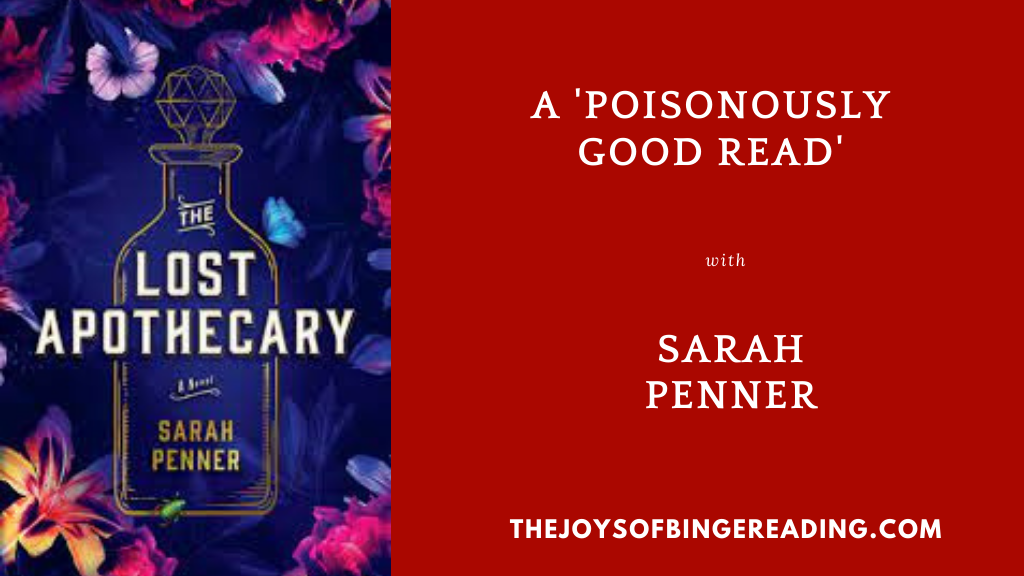
Sarah Penner’s debut novel The Lost Apothecary shot to the top of the New York Times best seller lists in its first week, and overnight became one of the most anticipated books of 2021, with everyone from CNN to Oprah giving it favorable mentions. Her lead character, Nella, is a skilled healer who uses poison for dark purposes.
Hi there, I’m your host Jenny Wheeler and in Binge Reading today Sarah talks about writing a book that stands out from all the others, how Elizabeth Gilbert’s Big Magic got her started, and the challenges of making a female serial killer a sympathetic lead.
Support Binge Reading on Patreon for as little as a cup of coffee a month and receive regular exclusive bonus content on featured authors and the making of the podcast.
Bonuses include regular weekly Getting To Know You Five Quickfire Questions with authors including Sarah, giving a fund candid snapshot of their likes and dislikes, as well as an exclusive monthly Behind the Scenes newsletter giving previews of upcoming books.
You can join and get this bonus content and having the satisfaction of knowing you are helping pay some of the hosting and production costs for the show. The time I give to the show in sourcing guests and researching their books is still free. Become a Patreon supporter today by going to https://www.patreon.com/thejoysofbingereading/
Six things you’ll learn from this Joys of Binge Reading episode:
- Sarah’s “key” to writing a best seller while working fulltime
- Looking for things not done before
- Exploring ambiguity in fiction
- The role Elizabeth Gilbert played in Sarah’s creative life
- The real life Roman poisoner
- Where to find Sarah online
Where to find Sarah Penner:
Instagram: https://www.instagram.com/sarah_penner_author/
Facebook: https://www.facebook.com/SarahPennerAuthor/
Twitter: https://twitter.com/sl_penner
Goodreads: https://www.goodreads.com/book/show/53288434-the-lost- apothecary
Amazon: https://www.amazon.com/author/sarahpenner
YouTube: https://www.youtube.com/channel/UCsKcEnxV6GS0C0XQL-te9xA
What follows is a “near as” transcript of our conversation, not word for word but pretty close to it, with links to important mentions.
But now, here’s Sarah.
Jenny Wheeler: Hello there, Sarah and welcome to the show. It’s great to have you with us.
Sarah Penner: Thank you so much, Jenny, for having me. I’m thrilled to be here talking with you today.
Introducing author Sarah Penner
Jenny Wheeler: The Lost Apothecary has had remarkable success as a debut novel, and it’s surprising in one sense in that your protagonist is not necessarily a person people might automatically warm to, because she’s a female serial killer. Did you feel you were taking a risk by choosing this sort of central character?
Sarah Penner: You make a good point. When I began writing the story, I knew that I wanted Nella the apothecary to be somewhat morally gray.
The book opens with her in her hidden apothecary shop and it’s very dark and has a sinister feeling, and the reader quickly learns on page one that the apothecary is pulling together a poison. She’s planning to poison someone for the purpose of killing them.
I knew from the very early pages of the book that I was going to have to help the reader understand why she was doing this, and also show a softer side to the apothecary.
What I aimed to do over the course of the novel is help the reader understand why the apothecary was so vengeful and the emotional wounds she had from her own betrayals in her life. But even more important than that, how she was setting out to help women who had also been betrayed and felt that they had no other resources available to them.
Can revenge be ‘pure and good?’
So in a way, the motive behind her for killing is actually somewhat pure and good. I think you quickly see that when Eliza, her 12-year-old customer, arrives at the shop, and we learn why Eliza is purchasing poison from the apothecary.
I hope, at that point, that the reader is able to see the perspective of another victim and how they’re using this the shop of poisons as a last resort. It makes it feel less like murder and more like a way out of a bad situation.
Jenny Wheeler: Yes, she’s a serial killer with principle in the sense that she secretly dispenses poisons to liberate women from men who have wronged or harmed or abused them. She draws the line at ever poisoning another woman. I wondered if you had any conflict about the idea of seeming to endorse revenge killings.
Sarah Penner: Part of the intrigue about fiction, for both the author and the reader, is that we’re able to suspend a few of our own principles. Of course, on the surface, whether it’s today or whether it’s 200 years ago, no matter where we live, whether it’s London or The States, we know that killing is wrong and that killing someone will get you arrested and thrown in jail for the rest of your life.
Exploring vengeance in fiction
But when you have a fictional story, you have the opportunity to play with that vengeance and explore a different moral perspective. So I did not really have any internal conflict or principles against this storyline, because I knew it was fictional, but interestingly, in some of my research, which I’m sure we’ll cover at some point, I did read countless cases about real poisoning homicides in the 18th and 19th century in Britain.
That was very enlightening and impacted me a fair bit because that’s not fiction, those were real cases, and I was able to see how these people were poisoning the victims in their lives. It was an interesting experience, but knowing that the book is fiction, I never encountered deep internal conflict that prevented me from moving forward.
Jenny Wheeler: Backing up a little bit – however did you initially conceive of this character as the topic for your very first novel?
Sarah Penner: I’ve always had somewhat of a passing interest in herbs and earth sciences. When I began at university many years ago, I was a pre-med. I wanted to be a doctor, but I got a C in chemistry and quickly realized that wasn’t the right path for me. But I’ve always had a little bit of an interest in medical sciences and earth sciences.
Searching for fresh and original
Also, when I approached this story premise, before I even wrote down the first word on the first page, I was thinking through what areas in commercial historical fiction have not been tapped.
And it dawned on me as I was toying with this idea of an apothecary, that I couldn’t name any books or find any popular books that featured apothecaries – much less apothecaries who sold poisons to other women.
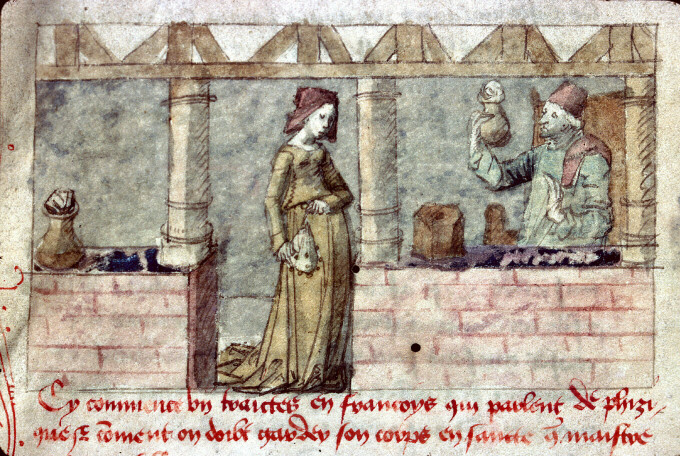
And so the idea very quickly took shape in my mind that I wanted this sinister woman who worked in a back alleyway, I wanted it to be a feminist story, I wanted this apothecary to serve only women, and once I had those basic pillars of the story, it took shape quite easily in my mind.
Sure enough, what I’ve heard from readers in the industry, they all have said the story idea is so original, there’s not anything else like this out on bookshelves. I kind of nod, because that was what I wanted to do. I wanted to write something really fresh and original.
Most Anticipated of 2021 novels
Jenny Wheeler: It certainly paid off because you had a dream debut. The book has been named things like Most Anticipated for 2021 by Oprah’s magazine, it’s been picked up by many prominent publications and the CNN. Tell us a bit about how that launch was. Did that feel overwhelming?
Sarah Penner: It’s been quite a whirlwind. There was a lot of buzz and publicity before the book even came out and of course I was thrilled about that, but I also felt there was some pressure.
I did not want the book to come out and be a flop because I knew my publisher had put so much time and energy and publicity dollars behind the book. So that very first week, when I got the call from my editor that it was an instant New York Times bestseller, I felt a wave of elation but also relief that after all of these months of work and hype and publicity, we had a last conquered our Everest.
This is the mountain we wanted to climb, and we had done it, so I felt this profound relief. Then when the book made the New York Times list the second week and the third week and the fourth week, at this point it was like icing on the cake, and I shake my head in disbelief on Wednesdays when that list comes out because I can’t believe how many people are talking about the book.
Word of mouth endorsement
We all know the number one thing that sells books is word of mouth, and there have been so many pictures and wonderful reviews on Instagram and book clubs that have chosen this as their selection.
That’s all feeding the word of mouth and you can’t buy that, and there’s no formula for a publisher to do that to the best of their ability. It really relies on readers. I have been amazed, and I wake up many mornings pinching myself because I’m so thrilled with the reception.
Jenny Wheeler: You referred to the research that went into it. Tell us a little bit about those real cases that you were listening to and getting in touch with.

Sarah Penner: As a historical fiction author, one of the very first things I do when I’m approaching a new story idea, and then throughout the drafting of the story as well, is I’m constantly referencing a stack of key resources that I have deemed appropriate for that project.
When I was writing and researching The Lost Apothecary, I was looking at several books about real poisoning cases. I read those to see what poisons people were using, what years they occurred, what happened to them, whether they were charged and hung or thrown in jail, or what the repercussions were. I had these books with real life cases in the 1800s and the 1900s.
Digging into poisons research
I also had a fairly robust stack of books and resources on poisons, many of which are plant-based. On my bookshelf now, if I could show it to you, there are some really interesting guides on toxic plants that one might have in their own garden, or that you may find in nature.
Then I also did some research not on plant-based poisons, but on different animal toxins. The beetle in the story – which plays a pivotal role that I won’t share because I don’t want to give away any spoilers – I learned that it is absolutely true that many species of beetles have a very toxic excrement in their bodies. So I learned all of this interesting information.
Then if you take away the poisonous piece, I also researched medical science in the 18th century, which looks so much different than it does today. It was not advanced. It was ancient and home-based remedies, if you will, and so I did a lot of research on what would a day in the life of an apothecary look like.
An apothecary is really a predecessor to a modern-day pharmacist, so I wanted to know what herbs and remedies would line the shelves of their shop. How many patients were they seeing a day? What tools would they use to blend their tinctures and their medicines.
I tried to take a broad look at many different areas of research that helped inform me in the early drafting of the story.
What motivates a poisoner?
Jenny Wheeler: What about the motivation for the women side of it? Were there any cases that you could find where you had any insight into the motivation of women who might have poisoned people in the 18th century?
Sarah Penner: In the author’s note or the historical note at the back of the book, I share data that shows us that in the late 18th century, the majority of poisoning homicides were done by women – so wives, mothers, servants, jilted lovers, et cetera.
The data is definitely there, but interestingly, a lot of the cases I read were poisonings carried out by men. I don’t know if that is because men are more likely to get their names in history books, which kind of proves one of the key points in my story.
Interestingly, after the book was well underway – I think I was in revisions with my editor, so the book was basically written – several people reached out to me with this interesting story about a female poisoner in Italy.
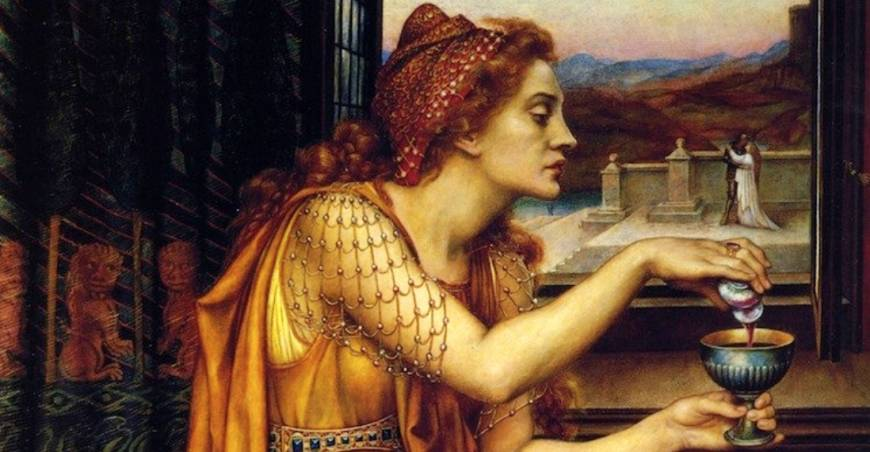
I believe she lived and worked in Rome. This was long before The Lost Apothecary took place, I want to say this was the 16th or 17th century. Her name was Giulia Tofana and she did indeed have a single mixture.
The Roman perfumist and poisoner
She was not an apothecary, I think she was a perfumist or something like that, but she had this single mixture that was very potent, very toxic, and she would sell it to women who wanted to kill their husbands.
That has been interesting, learning about her after having written the book. Her business model was fairly different and again, she was not an apothecary, but to answer your question, the business of killing men and dispensing this poison to women was very much the same.
Jenny Wheeler: You have also got that other aspect in the book of the present day. It is very cleverly done, the time slip aspect, where you have your contemporary heroine gradually discovering more and more facts about the existence of this apothecary.
That partly starts because she goes as a tourist and does a little tourist expedition to the Thames River and finds an antique phial in the mud. I think this is called mud larking and I gather you had a little bit of a personal connection with mud larking as well.
Mudlarking in the River Thames
Sarah Penner: Yes. Mud larking has been around for hundreds of years but has only recently had a bit of a resurgence with hobbyists in London. You can go mud larking anywhere, and essentially it means scrounging around along a riverbed or a body of water for interesting or valuable artifacts.
The River Thames – which of course runs straight through London and has many thousands of years of history buried in the silt and in the mud, just waiting for the tide to turn it over – is a very popular place for mud larkers.
One of the things I wanted to do when I started the story is I did not want Caroline to stumble on a diary or a book or something that has been done in time slip historical fiction. I wanted her to find something unique and different.
And around the same time I was drafting the story, I had received a book from my mother-in-law with different pictures of things this mud larker had found along the River Thames.
Dredging up real historical finds
One of them was an apothecary jar, and so I realized right then and there that that was going to be the first thing Caroline found. She was going to go mud larking and find this apothecary phial, and that was going to set her on her quest.
I actually did do mud larking myself in July 2019, long before lockdowns. I went down to the river three separate times. You have to secure a permit from the Port of London Authority, because there are so many mud larkers now that the police do make sure you have paid your fee and you have your permit.
I found all sorts of cool things, mostly pottery. I found a clay pipe, little, different, interesting things, nothing of great value to anyone else but to me they are very special, and I brought them home with me. You are allowed to do that. Whatever you find you get to keep.
It’s so special now, and I often show these little fragments of pottery on different book clubs or virtual events because it’s very much a show and tell and many of the little pieces I have, you can tell by the markings and the type of paint used that they are 18th century. It’s very cool to think that I just went down there, and the tide turns these things over, and this is what I found.
Forensic analysis undeveloped
I have told everybody that once lockdowns are lifted, if anyone’s traveling over to London and doesn’t want to go to a museum, I highly recommend finding the steps going down to the river and see what you might find.
Jenny Wheeler: You also mention in the notes at the back of the book that forensic analysis in this time was obviously not nearly as good as it is today.
It made great steps forward in the early 19th century, but in the latter part of the 18th century it was still very much in its beginning stages, so it was much harder to pin down whether somebody had been poisoned in those days. That made it slightly easier for people to get away with poisoning one another, didn’t it?
Sarah Penner: Yes, absolutely. That was a very serendipitous discovery I made during my research. I have always been interested in Georgian London, and when we talk about Georgian London in the context of my story, it’s late 18th century, so I already felt like I wanted to set the story in the late 1700s.
Again, you don’t see a lot of that in commercial fiction, and I’m very attracted to stories and eras in places that haven’t been fleshed out much in commercial fiction. I felt that was an untapped era with a lot of interesting things happening already.
Better detection leads to more cases
Then when I discovered what you just referenced – that forensic toxicology did not exist until the mid-1800s, I realized that the 1790s was a perfect time to set this story, because it merged both my own interests in Georgian London with the timeframe that such an apothecary killer could have gotten away with her sinister behavior.
It’s so fascinating if you look at bills of mortality from the late 1700s, which are records or inventory of what’s causing people to die – whether it’s illness or what have you. You see almost no cases of poisoning homicide because they didn’t have the manner to detect it, so they couldn’t deduce that that was how someone died.
But I’m absolutely confident, as I mention in the historical notes, that people were being killed every day by poisons, and so I think a lot of murders probably went undetected. When you get into the mid-1800s, you see all of a sudden these records of poisoning deaths just skyrocket because autopsies and coroners were able to detect that this had been happening.
Carrying the story across centuries
Jenny Wheeler: And of course when we carry it through to the present day, obviously we’re much more aware of the possibility of foul play now, so that our contemporary protagonist has a little bit of difficulty because she seems to be too interested in poisons.
We won’t do any spoilers here, but there is a definite link from the late 18th century through to the 20th/21st century with the way you let it unfold, which is fascinating reading.
Sarah Penner: Yes, exactly. So much of the book and one of the fun things for an author about telling a story in two timelines is you get to do a fair amount of compare and contrast, and one of the things that is very different between the two timelines is what police and detectives are able to detect.
If someone gets sick and it appears to be foul play, the approaches were going to be very different, present day versus 1791. And as you said, we get to see how that impacted Caroline and part of her narrative and when the story really kicks up for her.
The book that was a ‘game changer’
Jenny Wheeler: Yes. I know online from what you’ve written that you began this journey with an Elizabeth Gilbert creativity workshop. Elizabeth, as I’m sure most listeners know, is famous for her Eat, Pray, Love book that became such a well-known film, but she did do a book on creativity called Big Magic, and you say this book was a game changer for you. Tell us about that experience.
Sarah Penner: The key premise of Big Magic is about fear and how creative people, whether writers or pianists or painters or what have you, deal with fear. And when I say fear, I’m also using that interchangeably with rejection. Every artist’s greatest fear is rejection.
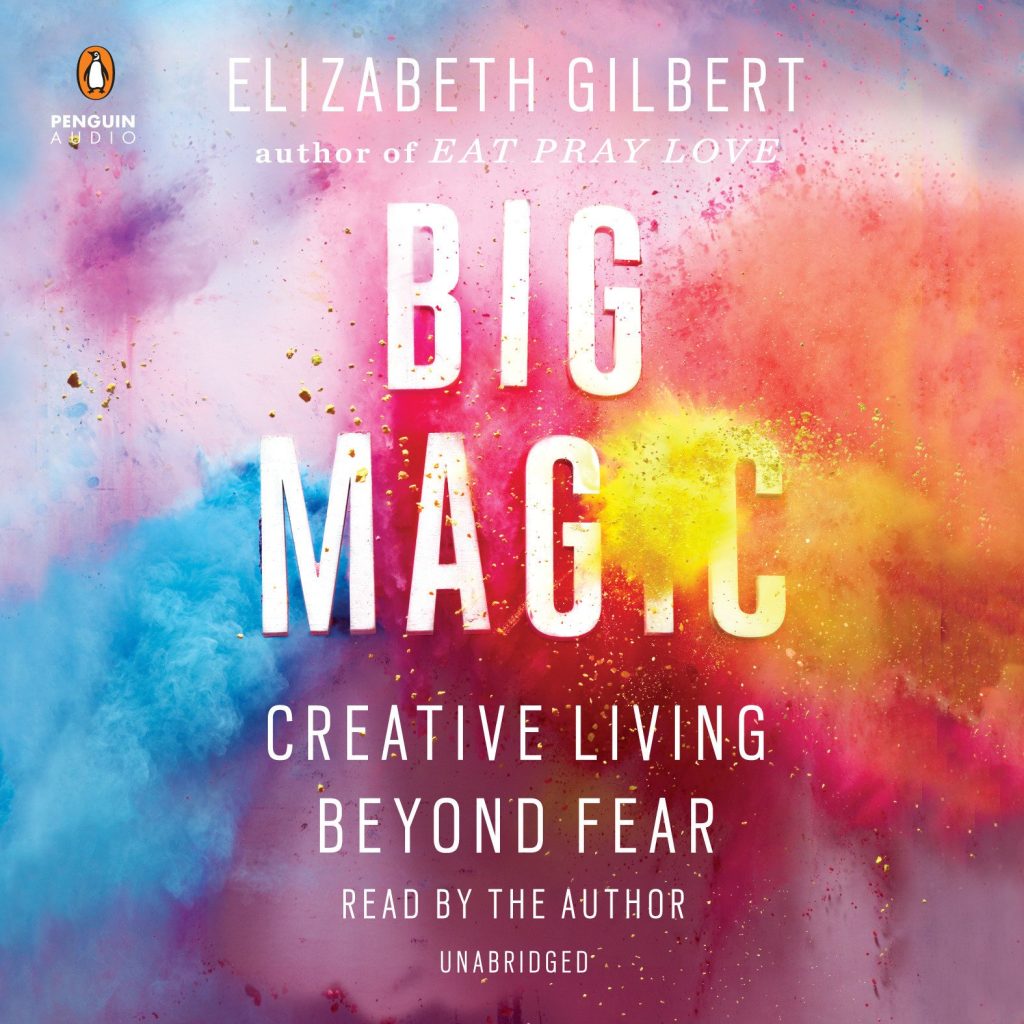
The whole book is about how you have to create while sitting next to fear. She even pretends that you as an author are in a car, traveling down a road, and fear is like this person sitting in the passenger seat. You just have to get comfortable with that person sitting next to you for the entirety of your creative life and career.
It was a really enlightening story for me, but what was even more enlightening was that she happened to be in the city where I was living at the time, which is Wichita, Kansas, smack dab in the middle of the United States. She was on tour and I had the opportunity to go and listen to her talk about Big Magic.
Taking first steps toward dreams
She asked the audience a rhetorical question. Basically, she was asking us to think about our dreams and what sort of things we want to accomplish or pursue that we had not yet taken steps towards because of fear.
And she said something to the effect of, if I returned one year from now, would you want to be sitting in the same chair, still scared, and still having not taken any steps towards that dream. If the answer to that is no, then you need to take that first step sooner rather than later.
It was just the right question at the right time for me and really resonated with me. Within a couple of weeks, I had enrolled in my first writing class, I had started dabbling with a new story idea, and I always think back to that discussion and how important and poignant that was for me at the time.
It’s funny because I’ve tried many times to thank her. She’s almost impossible to get hold of because she’s so famous at this point, but I sent a handwritten letter to my publisher and they were going to try and get it over to her.
Eternal gratitude unexpressed
It’s like living in a steel box. It’s very difficult to get anything through to her, but that’s perfectly fine so long as I can just inside be grateful for what she did, and I always will be, and hopefully someday I’ll get the chance to tell her what that conversation did for me.
Jenny Wheeler: That’s an invitation to someone to start a panel with both of you on it sometime, which would be great.
Sarah Penner: That would be a dream, yes.
Jenny Wheeler: That leads us very nicely into looking a little bit wider away from the specific book to telling us a bit about your life before that moment. What was it that led you in the beginning to sit in that workshop or to have the interest to do that? What had led up to that? What were you doing in those early years?
Sarah Penner: I worked in finance for 13 years. I graduated from university with a degree in finance and immediately went to work in the field. In fact, just this month I resigned from my corporate job to write full time. When I went to that session with Elizabeth Gilbert, I was very much in the middle of my finance tenure.
Words were magic from childhood
The reason I was there was because I’ve always, even since childhood, had an interest in language and writing. When I was younger, that manifested as – I would journal. I would take this little leather journal out to my backyard and I would describe the trees and the birds and the colors.
Actually, I still have that journal, and sometimes I look back in it and I smile at my old childhood self, because the descriptions are pretty terrible but the point was I was playing with words and I was showing an early interest in words.
Then through high school and college, I dabbled in some poetry, which was, again, pretty terrible because it was really just verses in lines of words. It wasn’t formal poetry. I didn’t have these beautiful stanzas and perfect formation, but again, I maintained this interest in expression through language.
Then in my late twenties, which was around the time I went to this Liz Gilbert presentation, I decided I was up for the challenge of trying my hand at long form fiction. I mentioned earlier that I enrolled in an online writing class and that first class was actually non-fiction.
A start in narrative non fiction
I’ve always been a huge reader of nonfiction, and when I first wanted to write a longer project, I was going down that route. I thought I would write some narrative nonfiction.
But I quickly realized that the problem with non-fiction is, it has to be true. You have these very black and white guidelines you have to stay within, not to mention everything has to be meticulously researched and footnoted.
There are so many rules and constraints, in my opinion, so I thought, what if I wrote topics and eras in places that I love, but from a fictional perspective where I don’t have to adhere to all of those rules. That was what led me down the path of writing historical fiction.
Actually, The Lost Apothecary, while it’s my debut and my first published story, is not the first project I worked on. I did write another full-length book before The Lost Apothecary, but it was never agented, it was never published. No one has ever read it, nor will they ever read it. It was very much how I learned to write a book.
Finding time to write while working
I can definitely say that now, looking back, and I’ve been writing seriously for about six years now, I have absolutely fulfilled this lifelong interest that I’ve had.
More than ever, I love expressing myself through words and language and I find myself improving in many areas of it. I think the interest has always been there but for many years, I had to pay my bills and finance was the way I did that. It’s been interesting balancing both of those things.
Jenny Wheeler: How did you do that? Remarkable that you’re working full time in what I imagine was a pretty demanding job. How did you set your timetable to make the time to do it?
Sarah Penner: That’s a great question. I’m a huge proponent and advocate of early morning efforts. I think a lot of people have passions and they don’t know how to fit them into their busy schedules. What I always tell people is you have to wake up earlier.
Somewhere, you’re going to have to find the hours, so you’re either going to have to not see your family and friends as much, you’re going to not be able to cook dinners or go to the gym. You’ve got to do something.
Waking up early the key
For me, that was waking up early. Before I started writing seriously, I would maybe wake up at seven each morning, but I started waking up at five. Much of The Lost Apothecary was written between the hours of five and eight in the morning, so when everyone else is asleep, the house is dark.
I’m actually very creative in the mornings and I’ve always been a morning person, so it worked out really well to write my stories at that time of day.
Jenny Wheeler: Fantastic. This is The Joys of Binge Reading, so we would like to get an idea of what you’re reading now, and if you’ve ever been a binge reader as such yourself.
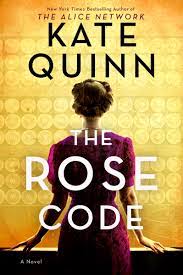
Sarah Penner: I just finished yesterday The Rose Code by Kate Quinn. It’s about three female code breakers in Bletchley Park in World War II. I highly recommend it. It’s fantastically researched historical fiction and she, of course, is very well known in the historical fiction space.
What is next for Sarah the writer
As for a binge reader, I don’t read as many books as I think a lot of readers do. If some readers somehow manage to get through 100 or 200 books a year, I get through about 30 to 40. But I like anybody. I go in phases. I’ll read a book in two days and then maybe the next book I’ll take two weeks on. The Rose Code is what I just finished, and I would highly recommend it.
Jenny Wheeler: Great. What’s next for Sarah, the writer? Have you already got a new project underway that you could talk about?
Sarah Penner: I am working on my next project, and although I can’t share specifics, what I can share is that so many of the elements that readers have loved about The Lost Apothecary – the atmospheric historical setting, the brave rebellious women, the cliffhangers and twists, and then the speculative element, which in The Lost Apothecary was magical realism.
All of those different elements I can assure you will be in my next project, and probably all of my future projects, because those are the areas I really lean to as a writer and the things that really fulfill me as I’m telling new stories.
Where to find Sarah online
Jenny Wheeler: Is The Lost Apothecary likely to be made into a film? Has it already been picked up by anybody?
Sarah Penner: That’s another question that, unfortunately, I am not at liberty to answer, but I will say that I cross my fingers every day. I would love to see it on the screen, so we’ll just have to all wait with bated breath on that one.
Jenny Wheeler: I can understand there are things you’re not able to say.
We love having the chance to put readers in touch with you, and I’m sure you like to hear from readers. How can they find you online, Sarah?
Sarah Penner: I am not hard to find at all. My website is sarahpenner.com. if someone wants to send me an email or reach out or subscribe to my newsletter. I’m also on all social media – Twitter, Instagram, Facebook. Search for Sarah Penner Author and I’ll pop right up.
I have a YouTube channel with a handful of videos if anybody is interested in looking through some rare books that I have in my personal library, or they want to learn more about mud larking. All of those are on my YouTube channel, as well as a few other fun videos. I’m definitely easy to find and I would love to hear from readers.
Links in the shownotes on website
Jenny Wheeler: We will have links to those in the show notes for this episode, so anybody who’s interested in looking into that further, if you go to the website where this is posted there’ll be a full transcript of the chat with links to all of the relevant details.
Sarah, thank you so much for talking with us today. It’s been wonderful to hear about this book and congratulations on such great success with your first published novel.
Sarah Penner: Thank you so much, Jenny, for having me. This has been a really enjoyable talk and I’m thrilled to have the opportunity to reach out to your listeners.
Jenny Wheeler: Okay, bye.
Sarah Penner: Bye-bye.
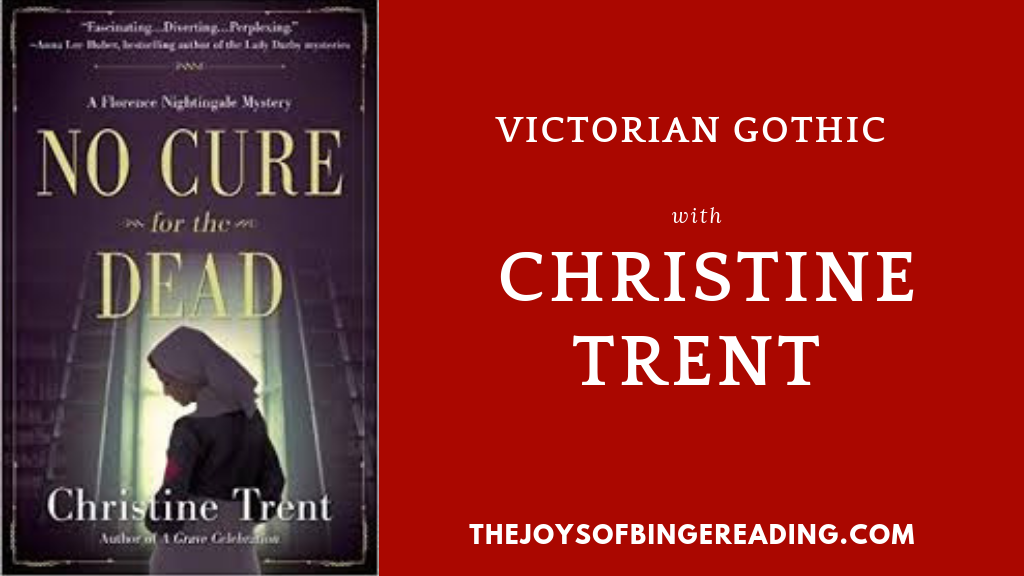
If you like Sarah Penner you might also like Christine Trent’s Victorian Gothic tales with her Lady of the Ashes series featuring a female undertaker Violet Morgan.
Thanks To Our Technical Support:
The Joys of Binge Reading podcast is put together with wonderful technical help from Dan Cotton at DC Audio Services. Dan is an experienced sound and video engineer who’s ready and available to help you with your next project… Seek him out at dcaudioservices@gmail.com or Phone + 64 – 21979539. He’s fast, takes pride in getting it right, and lovely to work with.
Our voice overs are done by Abe Raffills, and Abe’s another gem. He got 20 years of experience on both sides of the camera/microphone as a cameraman/director and also voice artist and television presenter. Abe’s vocal delivery is both light hearted and warm and he is super easy to work with no matter the job. You’ll find him at abe@pointandshoot.co.nz