Sharon Maas – Celebrating Diversity


Sharon Maas celebrates the diversity of publishing today because she’s been one the writers who has challenged the old formula. Her early 20th century Quint family series set in her homeland of Guyana and based on her own family story of a white woman marrying a black man was not seen as “commercial.’
Hi, I’m your host Jenny Wheeler and today Sharon talks about how the decade of rejection she faced before she won through made her a better writer, and tells us about a magical day she spent with Muhammad Ali in Peru.
Six
things you’ll learn from this Joys of Binge Reading episode:
- How Sharon got started in fiction
- Her extraordinary meeting Mudhammad Ali
- Why historical fiction gives her a thrill
- The part meditation plays in her work
- On re-writing a famous Indian myth
- Her advice for young writers: Follow your heart
Where to find Sharon Maas:
Website: https://www.sharonmaas.com/
Facebook: @sharonmaasauthor
Twitter: @sharon_maas
What
follows is a “near as” transcript of our conversation, not word for
word but pretty close to it, with links to important mentions.
Jenny: But now, here’s Sharon. Hello there Sharon and welcome to the show, it’s great to have you with us.
Sharon: Good morning Jenny. Good to be with you.
Jenny: And I think you’re speaking from Germany are you?
Sharon: No, no. I moved to Ireland a year ago. I’m in Ireland now.
Jenny: Oh sorry I am not up to date. Perhaps there maybe a bit out of date information on the web. I’m not sure.
Sharon: Oh yes, Ireland’s been a wonderful place to live.
Jenny: Okay. that’s lovely. How did you get started writing in fiction? Was there a ‘Once Upon a Time’ moment for you when you felt you needed to write fiction or you wouldn’t have achieved your purpose in life, so to speak.
What got her started writing
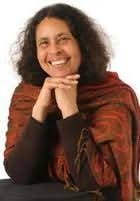
Sharon: [00:00:51] Well I’ve always been a voracious reader and I always had this idea that maybe I could write something one day, but I just thought it just too much. I just can’t do it. You know it’s too hard to figure out a plan and I can’t do it. I didn’t feel up to it.
I was writing when I was about eight or nine. I used to write children’s stories about children with horses and dogs and having adventures. Enid Blyton was my favorite writer as a child. So I had this idea at the back of my mind but I just didn’t feel have the confidence to get into it and to actually start. And so I was late in my late forties when I began thinking ‘Oh maybe I could do it. Maybe I can write something myself.’ I’ve read a book called Becoming a Writer by Dorothea Brand.
And she says the stories you want to tell are in us already. Deep down. They’re made by the subconscious mind and we can access them if we make the effort. And that was like a ‘light bulb’ moment for me, because you know I meditate and I knew that there is something inside me which I can access. So that really kind of lifted me up and got me fired up. So I started when I was about 48.
Plotter or Pantser?
Jenny: And how did you choose what you were going to write. And I gather that you are more of a ‘fly by the seat of your pants’ writer?
Sharon: Oh absolutely.
Jenny: Did you approach it in that way with your first book, or how did you start off?
Sharon: I knew I wanted to write a book set in Guyana, which is the country I grew up in. It used to be British Guyana and I really knew I had to write a story set there because when I was growing up there was nothing published about our own culture.
All of the books I read as a child about England and English people. English children and strawberries and cream and all those very English things. Daisies and tulips and things we don’t have in Guyana. So I wanted to have a really authentic Guyanese setting with Guyanese people who are Indian and African, you know, very very diverse.

The ‘light bulb’ moment
So I knew that was what I wanted to write. I didn’t know exactly what else. So I just sat down and began writing and it just came as I wrote. So it was kind of for me it was like a miracle, that I could actually write a story just out of nothing. You know it was really a light bulb moment then.
Jenny: Yes we shared a very similar experience I guess, both being in British colonies So I really loved Enid Blyton, but I also didn’t feel as if the sorts of stories she wrote could happen in my own country, You knew it was a removed environment.
Sharon: Yes exactly.
Jenny: Now the Quint series that you’ve done – three or four books -set in early 20th century Guyana, traced the life of Winnie Cox who is a rich plantation owner’s daughter and a white woman who marries a poor black postman.
Quint series based on family history
Jenny: That’s quite a big challenge for a beginning writer to tackle in the first place isn’t it, because there’s a certain level of disbelief that that could really happen?
Sharon: Well it wasn’t actually my first. My first book was Of Marriageable Age which was published by HarperCollins in 1999. So I had some experience with writing and when I said thing I don’t know what I’m going to write in advance, but with the Quint series that’s not quite true, because I had seen this photo of my grandmother’s wedding. My grandmother was a white woman and she married a black man. And I thought this is extraordinary for the time. I mean my father was born in 1912 so she must have married in about 1910.
There were these very well-dressed, very cultivated people in this wedding photo. She was wearing a beautiful white dress, and he’s wearing a tuxedo, a black tie and is very elegant looking, very dapper.
Marching to a different drum
So I thought this would make a great story. And I had an aunt who told me some of the details of her background. So I did have an idea of how that story would go, vaguely. I didn’t stick to her real life But I took the details of her life and went from there.
Jenny: It’s lovely that you did have that, an actual real event that you could hang something on. So it’s really very special.
Sharon: Yes exactly. And you know I’ve heard people say ‘oh that could never have happened to a white woman marrying a black man he would have been lynched he’d have been you know she’d have been killed’ or whatever and it wouldn’t happen. It wasn’t legal in those days.
But these are all Americans and I think there are they’re assuming that Guyana who was like America, but it wasn’t. And it was possible because it happened. So you know and that is what I wanted to. I wanted to write a story about that. I thought it was extraordinary and I thought it must have been very difficult for her and very brave as well.
Of Marriageable Age
Because I know that there was racism even in my day in Guyana. So I knew back then in her time it must have been even worse. And she made that step. So I thought it was a great story.
Jenny: Yes it certainly is. And so your first book was Of Marriageable Age. Tell us a little bit about it.
Sharon: Yeah. Well I had been living in India for some time as a young woman and I love India. I had a great experience there. And so I wanted to get to bring out the beauty. You know we have lots of cliches about India in the West. And there is also a different side to India. India has all the extremes. So I wanted to write a story which would bring out the beauty and the depth of Indian culture as well as the atrocities that happened. Of Marriageable Age covers both sides of India: the terrible things that happened, to tap into the main character, as well as some of the depth of Indian life.
Exotic locations, passionate stories
[00:07:37] And it also jumps from India to Guyana. It’s got three storylines in that book which are all woven together. So three different characters and their lives working together. And at the beginning you don’t know what they have in common because they’re quite different. Different eras, different continents, even. So the reader is a bit confused at the beginning. A few reviewers have said they were confused after the jump from India to South America and then to England. But in the end it all comes together. And yes, it was my first book and it was immediately taken up by an agent and a publisher and I had a lot of foreign translations so it was a successful book. I’d say.
Jenny: [00:08:27] I’m impressed that with a book that set in unusual locations that you did find a traditional publisher who snapped it up. It’s a real tribute to your writing that that was the case. Did you find some difficulty with the fact that your locations were bit out of the ordinary.

India is trendy; Guyana not so much
Sharon: [Yes of course. I mean India is fine. India was like a very trendy at the time and it is even today a little bit trendy. Everyone, well almost everyone knows India. India has a great history and great stories and you have Gandhi and all these things. So everyone knows India. India has this kind of exotic feel to it, but Guyana? Nobody’s heard you of Guyana? What most people have heard in connection with Guyana is the Jim Jones mass suicide in 1978. that’s when Guyana made the headlines and that’s all people know about Guyana. These people in England or in America or in Canada or wherever as all they know about is Jim Jones and the Jonestown mass suicide.
So I wanted to just get back there and show what a normal life was in Guyana when I was growing up and yeah that kind of had a connection to the Indian story. So I was able to connect them – weave it into the Indian story which gave people an entry into Guyana.
Learning to handle rejection
Jenny: And I think you’ve said that the publishers were quite happy, but when you started to write books that were focused solely in Guyana they were less enthusiastic.
Sharon: [00:10:10] Oh yes very much so. I mean I got rejection after rejection for ten years when I wrote these books. But I really had to write them. It was like an urge to write books set in Guyana and to tell my grandmother’s story in a different format. But I really had to write them.
Jenny: So what happened in the end? You managed to find a publisher?
Sharon:Yes. Well I wrote on. I kept writing these books and putting them aside and trying to get them published and failing to get them published, and starting again. And then in 2000 and around 2012, 2013, 2014 . . . That’s when the digital age came into being and people who were publishers were publishing digital books.
Digital books breakthrough
Digital first books which are less risky for the publisher. So that’s when I submitted my first book Of Marrigeable Age for re-publication to Bookouture, (owned by Hachette UK) because it was out of print. By that time it was like ten years had passed since it was first published. So they snapped it up and then they went ahead and published all the other Quint Books which was of course fantastic.
Jenny: Yes. Now your most recent book which will spend a bit of time on is The Violin Maker’s Daughter and it is a step away from the other ones that you’ve done. It’s set in Germany and it’s once again a slightly ‘forbidden love’ type of story between an English woman and a German man. During the Second World War. And once again I thought to myself ‘I wonder if that kind of thing really did happen?’ I guess it must have done because we’re all human, but it was something that I’d never really thought about before, I must admit.
Forbidden Love an age-old trope
So this is once again the attraction of a relationship that is very high risk. Did you have any other evidence that these liaisons did take place?
Sharon: Well I think Forbidden Love is an ongoing trope in literature because you need to have conflict in a story and a love story especially needs conflict. So that is one of the main conflicts you find. Whether it’s race or nationality or something like that. Or class of course, a poor woman and a rich man or vice versa. I mean it’s in many books – like Nicholas Sparks books like The Notebook – that’s rich woman poor man, it’s the same trope isn’t it.
Jenny: [00:12:57] I was going to say you did one The Soldier’s Girl, before The Violin Maker’s Daughter which had a similar setting. So you’ve done a lot of research on the topical really haven’t you?
Sharon: [00:13:07] Yes I had already done the research for The Soldiers Girl. It was a totally new genre for me at the time, so I had plunged into that very detailed research for particular time just at the end of the war.
The Violin Maker’s Daughter
So I already knew a bit of the background for The Violin Maker’s Daughter. For that reason it didn’t require too much new research which was good.
Jenny: [00:13:36] And were you influenced at all by the
fact that you had been living in Germany. I’m not quite sure how long for. But
you were familiar with the country weren’t you?
Sharon: [00:13:45] Yes of course. But the book is the actually set in Alsace which is on the border in France. I had lived in Alsace, It is quite near to the German state of Baden, and it is quite near to the town of Freiburg. And I had lived in Freiburg during my studies for four years. It’s a beautiful town and it’s quite near Alsace. So I was very happy to bring this beautiful town into the story. And I set part of the story in Freiburg. I lived for 43 years in Germany and I actually I am German. I have a German passport. So it I was able to get that side of it covered pretty well. .

One of the last areas to be liberated
Jenny: [00:14:40] When you were doing your research, Did you find anything that you hadn’t expected to find?
Sharon: [00:14:44] Oh very much so. Because I knew that Alsace had been significantly impacted by the war. But I didn’t know the details. So what really struck me was that Alsace was actually the last province of France to be liberated and there was this area around Colmar which is the city where this novel is mostly set. That was the very last area in France to be liberated and it was a scene of extreme fighting.
It saw a lot of death, a lot of violence at the very end of the war. In January, February 1945. Colmar was the very last town in France to be liberated. So I mean, you can imagine when Colmar was finally liberated, that was the end of the war for France. Colmar has gone, the Germans have gone. Everyone is singing ‘The Marseilles’ and this were really a joyous time.
A fairy-tale setting close to home
[00:15:53] So that was what I discovered about stars and of course the whole background. So it’s a beautiful. A traditional kind of area with beautiful villages you know a half timbered houses and cobblers cobbled streets and it’s beautiful hilly area with beautiful sunlit hills covered in vines. It’s really a fantastic area. And I loved it when I used to go there quite frequently. So it was just this contrast with this beautiful fairy-tale country and war and you know having it devastated by war and villages razed to the ground. And so that was an interesting setting for me.
Jenny: Mm hmm. You must be heartened by the fact that diversity has become a bit of a hot topic right through writing world these days. I think particularly in romance, there’s this real feeling that we need more diversity. You’ve been just at the right place for that, to really be able to take advantage of that, haven’t you?
Living with cultural diversity
Sharon: Yes. I come from a country which has six different races, three different official religions, and everybody, somehow, has had to learn to get along get along with each other.
So coming to the West, and particularly coming to Germany where at the beginning I encountered a lot of racism and being an ‘outsider’ and people not knowing how to really meet me and how to talk to me and being treated like I’m somehow ‘less.’ So I’m very happy that now even in Germany it’s really ‘In’ to be different. That’s a big change and I’m glad that this also in literature as well in books and it’s coming out more and more in books. If you have main characters who are not English and not white, it’s different you know. And so that’s a big change from when I first began writing.
Jenny:Yes. So now you have been published and you have to leave it down. I don’t know if you’ve ever done indie publishing but we do sit now on the spectrum I guess you’d be a hybrid or would you do some trade publishing and some more indies. How does that work.
Sharon: No, it’s I mostly I’m almost completely with Bookouture now, all my books are published by Bookouture. This is my ninth book coming out now. I’ve only done one. I’ve only published one book which is actually very close to my heart. I don’t know if you’ve heard of the Mahabharata from the Indian epic.
Jenny: Oh yes. Yes I had heard of it I think I did yes into it many many years ago but yet.

Re-working an old saga
Sharon: Yes. And while I love this book I read this when I first went to India as a 23 year old and I just love this story. It’s the original – a long saga in Sanskrit. It’s about 18 volumes long and very convoluted with lots of side stories and lots of different, quite boring expeditions. It’s very long, but it has a central theme, a central story which blew me away and I thought if it could just get this central story into a really good format and bring it out to that it shines like a diamond because it’s really beautiful. A wonderful story.
And on the versions I read of this central story they didn’t satisfy me because they were some of them are written like a bit like a soap opera or I d they didn’t get the real message of this book or the real central story of it.
The satisfying life’s work
So I made up my mind I would write this rewrite it in a different version.
And I started that book when I was in India in the 1970’s. I started it on a typewriter and I just kept on writing and rewriting it over the years and putting it away for a year or two and start bringing it to me writing it improving it and then in the end I thought well I might as well self publish this book. It’s the Mahabharata it’s known people will know the Mahabharata.
So if people are searching on Amazon, they’ll find it somehow and they might read it. So I did that. I never tried to in any way to promote it. I just let it linger on Amazon. So it gets like three or four sales a month and it’s got has had really good reviews and maybe one day it will find a publisher but I’m really happy that it’s out there and people can read it if they want to.
Life before writing
Jenny: That’s lovely. That’s a nice place to turn to talk about your wider career. Because you’ve had a very freewheeling adventuresome life before you settle into your writing. And I read somewhere online that you’d even ended up in a Colombian jail overnight at one stage. Tell us a little bit about those days.
Sharon: Yeah well I got my first job in Guyana was as a journalist and I got a bit bored after a year or two. So I said look I’m going off to Brazil and two my friends said we will come with you. So we just took off. We had some savings and I saw that I had a motorbike which I sold for the money and we just set off with backpacks and nothing much else.
Not much wisdom I have to say. We just plunged off into the vast continent up the Amazon and into Peru ended up hitchhiking through the Andes and and sleeping here and there, anywhere we found a place to lay out our heads practically speaking. Living on a hippie commune for a while.
And yes, I ended up in this Colombian jail which was just a story in itself. I’m not going to tell you right here. It would take too long!
Meeting Muhammad Ali
Jenny: Didn’t you also bump into Muhammed Ali at some stage? You must tell us what happened.
Sharon: Oh that’s right. That was in Lima and I was with these two friends. We were just walking down a road and I saw this huge crowd of people outside a hotel and I didn’t know what was going on. They were all local people – Peruvians. Peruvian men are all quite short and they have all this shiny black hair and towering above them was this big black man. And I recognized him as Muhammad Ali. So I said ‘Hey brother.’ and he said ‘Oh my sister.’ And he said ‘Come here come here’
So he called me to him and he said ‘Do you speak Spanish?’ And I said yes I did. So he said ‘Could you talk to these people and tell them something for me? So I said a few words on his behalf and but he said you’re coming up to my room and let’s have a chat. So he took me up to his suite which was right up under the penthouse. He was amazing and he was so lovely. He had me in tears of laughter the whole morning. There were two other people there who were like me. He picked up off off the street practically.

An extraordinary day
He said this is my interpreter some woman and this is my translator some man. She said I just happened to run into him and it was like the three of us were his friends for that day. It was amazing. It was quite quite extraordinary. And we had lunch with him and and he said, OK, come on. He had an invitation to go to the Gold Museum which is a private museum with all the Inca artifacts in Lima. He said I’ll be going there and you’re cooing with me.
So we had this getaway. Know going through the center of the hotel in a getaway car so that the press wouldn’t follow us. It was quite an adventure. So yeah it was. He was so funny you wouldn’t believe it. You wouldn’t believe how funny he was and he talked and talked. Boasting about himself. But you know, when he’s boasting, you just have to laugh, because you know he’s just being funny. Yeah. He was such a great guy.
The secret of Sharon’s success
Jenny: It sounds really fun. Is there one thing that you’ve done more than any other in your career that’s been the secret of your success?
Sharon: Well I said I go to India regularly. Well, in India I learned to meditate. And I think that is the secret of my being able to tell stories quite easily. I mean I like I believe that there is a sense of creativity in each of us. And meditation helps me to get into this space. It’s in the subconscious mind. It’s quite deep inside and meditation helps me to get into there and let these stories speak for themselves. And that is my personal thing. It’s a secret which is actually everybody’s secret.
The advantages of meditation
And that’s I think. Some people have it automatically. They have it naturally. They don’t need to meditate and they just can tell stories. And I think that’s because they have this special access. And musicians who are composers without knowing how and often don’t. They can just compose beautiful songs or a beautiful music without knowing how they do it or even being taught to do it. I think that is there is a source of creativity within all of us and some of us can access it naturally. I needed to learn to meditate to be able to make the effort to find that and to be able to write stories. And that is my my own little secret.
What Sharon is reading
Jenny: This is called The Joys of Binge Reading and it’s partly predicated on the idea that people these days when they discover a writer they like to keep reading their work. As a reader yourself who have been the people that you’d like to binge read and who are you reading today?
Sharon: Well, as a child it was Enid Blyton and later on as an adult I would read everything written by John Le Carre, all these spy stories which I think is now coming out a little bit in me, with the espionage in my books! I really loved his work. and done various authors over the years. More recently Lucinda Riley. I love her Seven Sisters series I’ve been reading all of those one after the other when they come out.

Favorite authors recommended
I love anything set in India, like Renita d’Silva, I’ve read all her books and also I have favorite historical fiction writers. Lizzie Page is one of them. Debbie Rix is another one of them. They write beautiful books. Yeah that’s those are the ones I’ve mostly read recently.
Jenny: That sounds wonderful. So mainly it’s historical that you read. Would you branch out into other areas mostly historical.
Sharon: Mostly historical I really like to get back into the past and past and relive the past. History fascinates me, but I’ve really found history lessons – just reading the facts – quite boring. So historical fiction allows me to relive history with the character. However, it has to be authentic. It’s like to feel what’s happened. So I can feel what it was like to be a woman living through a war in England and during the Blitz or in France. You know I really want be able to experience it. And literature helped me to do that.
What she’d change – if anything
I’m not I’m not so keen on contemporary fiction because I’m here now. I know what’s going on here. So I don’t really need to read about it.
Jenny: I see. Yes we’re starting to come to the end of our time together. So when you circle around you look back over your writing career at this stage if you were going to do it all again. Is there anything you would change.
Sharon: I think if I had known when I started to write my Guyana series that every single one of them would get rejected for ten years. If I’d known I’d be writing books that would only get rejected for ten years, I think I might think ‘No Way’ I’m going to just write what you want me to write. So I don’t know if I would give that advice to everyone else because having that experience of rejection, it’s really built me as a writer. So I think it was a good thing I did, but if I had known beforehand I wouldn’t have done it.
Advice for young writers
Jenny: Yes, I was going to ask you what advice you’d give to a writer just starting out and that sort of fits rather nicely into that.
Sharon: Yes. I think just stick with what you love. With what’s in your heart. I think in the end that is the best place to go. I mean you can always write commercial stories. You know. You can write what’s a trend? But if you don’t love it. If you don’t really love it and it doesn’t come from your heart it won’t have that spark of energy that will entice a reader to love it as well. I think there’s something that goes over into your writing which is that you can’t define. And that is what the reader feels. And because I love historical fiction I write it as well. And I think that’s what comes through. Yeah. And so I would say go with your heart.
Working with her publisher
Jenny: What did your publishers want you to do at that time? Do you remember what they were saying they would like you to do?
Sharon: I know that my editor really likes me really likes or even loves my work. So she is very keen on everything I’ve put forward, everything I’ve suggested. She’s been very keen. She suggested I try World War II fiction and because I love it myself I said OK I’ll do it. Yeah. But the impulse came from her. I didn’t think of writing it myself because I didn’t know enough detail about the period. So I had to do the research. But I’m I’m really glad I got that impulse from her because I love writing it as well.
New books under way
Jenny: So what that brings us very nicely to that question of what is next for Sharon the writer. What projects you got on, say, over the next twelve months?
Sharon: Well I’ve just got a new two-book contract from Bookouture. Again it’s fiction. It’s a World War II fiction. One is again, a third book set in Alsace which I have just started. A different story, but also in Alsace because I love it and I know this area. And then the second book in that contract will be something also World War II but it may leave Alsace and do something quite different. I haven’t thought about it in detail yet. I’m letting it just simmer inside me and see what comes up.
Jenny: You mentioned that you weren’t going to tell us the Columbia jail story tonight, but you do have a thought of doing a memoir sometime?
A memoir in sight
Sharon: I actually have written a memoir. I did it yes because when I got back to Guyana after that travel I wrote a series of articles about my experiences. And I was very fortunate because I would have forgotten them but my mother saved all these articles and they’re quite good. So I wrote them all into a book a few years ago but I haven’t tried to get it published yet. So I could work on that. That would be a memoir and that tells the story of the Colombian jail.
Jenny: So that’s something that readers could perhaps look forward to. It’s quite an adventure story. We haven’t mentioned the Ecuadorian fisherman who wanted to marry you either..
Sharon: Oh yes that’s another one yes. Yes yes. That’s another fraught adventure.
Where to find Sharon online
Jenny: Sharon, it’s been wonderful talking. Where can your readers find you online?
Sharon: I’ve got a website. It’s www.sharonmaas.com Just Googling my name, they’ll find my different things there. I’m on Facebook at SharonMaasbooks.
I’m on Twitter but I don’t go there very often because I don’t really like Twitter very much. I think it’s a bit of a strange place. On my website, there’s a contact form if they want to write me and have questions they want to ask. They can contact me. I’m very happy to answer everything direct with your readers. Oh yes yes. I love readers.
Other reading suggestions
Jenny: It’s wonderful. thank you so much for your time. It’s been fabulous to talk. The details about the website and your Twitter handle and all that kind of thing will be put in the show notes for this episode so people will be able to very easily find you. It’s been wonderful talking and thank you so so much for being part of the program.
Sharon: Thank you. Thank you for giving me this time to talk to you. It was lovely. Very interesting questions and I’m very happy to have been here.
Jenny: Thanks so much, Sharon.
If you enjoyed Sharon’s historical fiction you might also enjoy Soraya M. Lane’s’ World War II mysteries.

Thanks To Our Technical Support:
The Joys of Binge Reading podcast is put together with wonderful technical
help from Dan Cotton at DC Audio Services. Dan is an experienced sound and
video engineer who’s ready and available to help you with your next project…
Seek him out at dcaudioservices@gmail.com or
Phone + 64 – 21979539. He’s fast, takes pride in getting it right, and lovely
to work with.
Our voice overs are done by Abe Raffills, and Abe’s another gem. He got 20
years of experience on both sides of the camera/microphone as a
cameraman/director and also voice artist and television presenter. Abe’s vocal
delivery is both light hearted and warm and he is super easy to work with no
matter the job. You’ll find him at abe@pointandshoot.co.nz