Behind the Mic: Building Confidence as a Podcast Host – PCI 474


 Apple Podcasts
 TuneIn
 Deezer
 Paypal
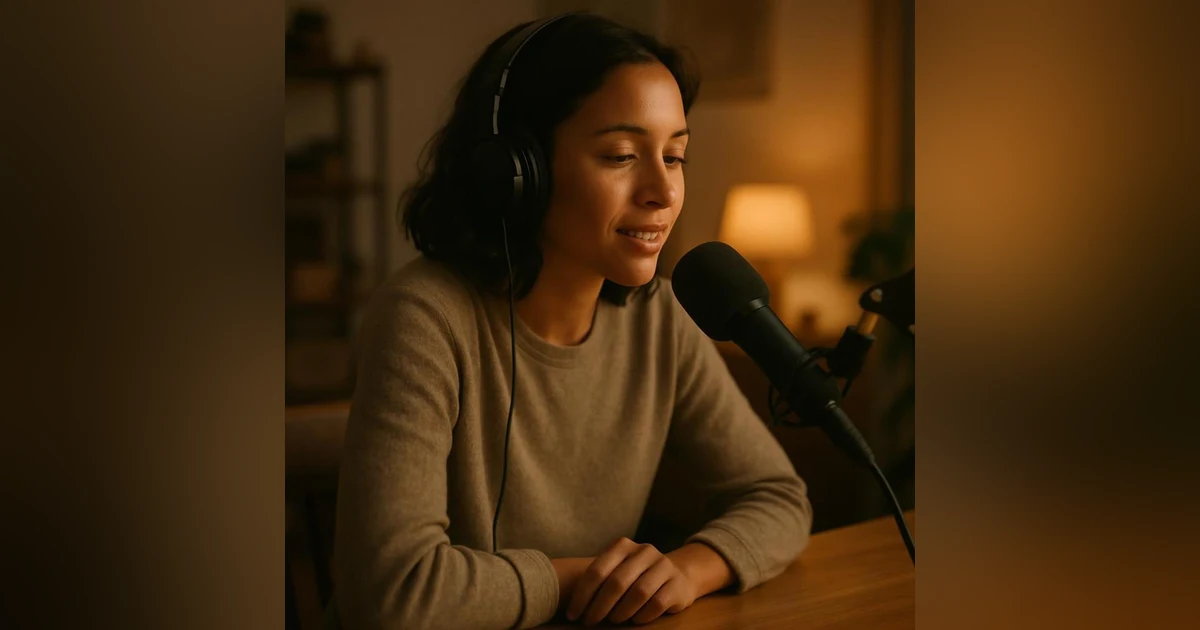
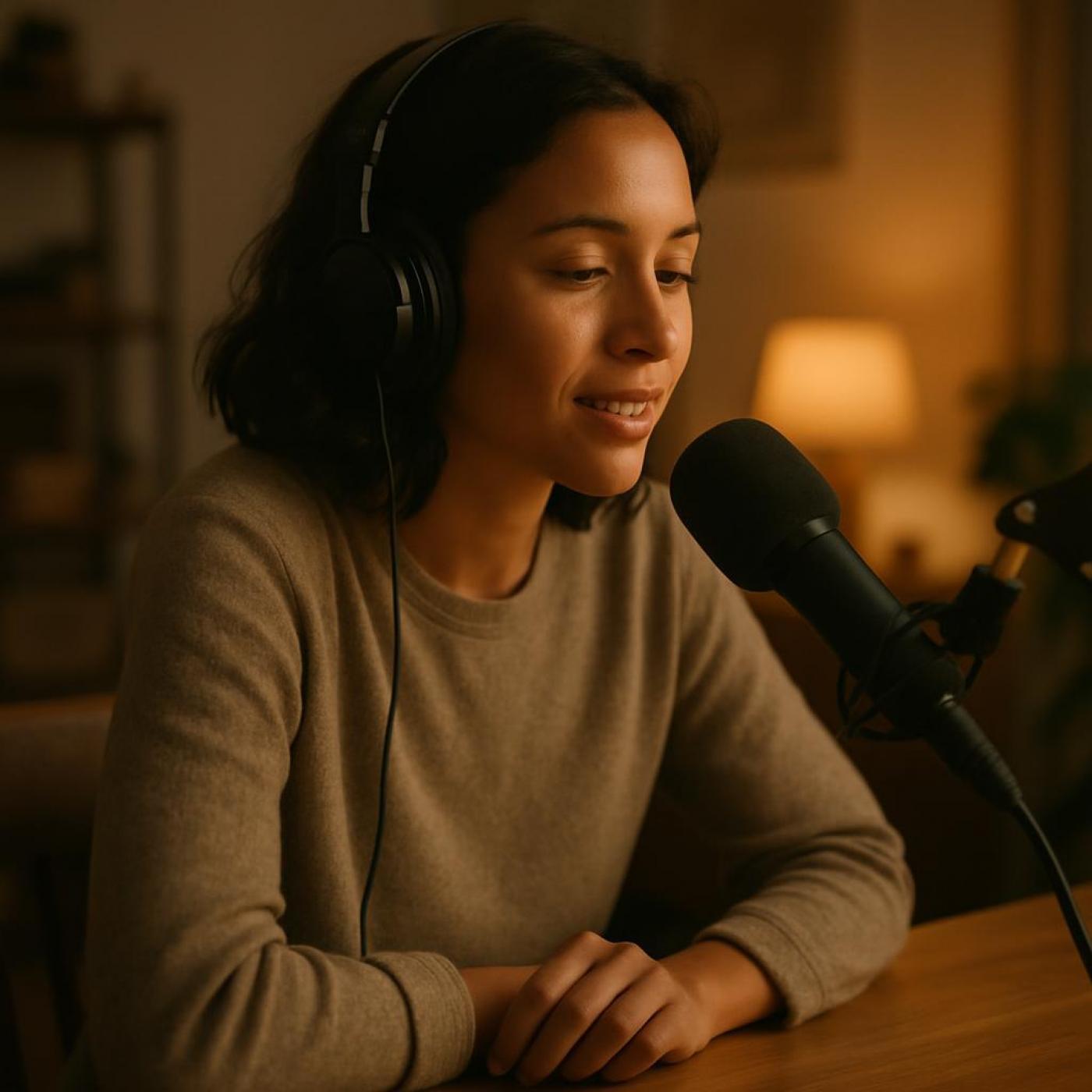
 If you’ve ever hit record and immediately felt your heart race, you’re not alone. Sitting behind a microphone can feel surprisingly vulnerable — even if you’re completely comfortable talking in everyday life. The truth is, confidence in podcasting doesn’t magically appear. It’s built over time, shaped by repetition, structure, and a willingness to grow in public. In this episode, we’re breaking down what actually creates confidence behind the mic — and why feeling a little awkward at first isn’t a red flag… it’s part of the process.
Today’s Hosts: Dave Clements and MacKenzie Bennett
Building Confidence as a Podcast Host
1. Confidence Isn’t a Personality Trait — It’s a Skill
A lot of people assume confident hosts are naturally outgoing or extroverted.
That’s not always true.
Some of the most confident podcasters are actually introverts who simply learned how to get comfortable in their format.
Confidence grows from repetition and familiarity.
What actually builds it:
- Clear episode structure
- Recording often enough that it stops feeling “new”
- Regular publishing cadence
The mic feels intimidating when it’s unfamiliar. It feels normal when it’s routine.
2. Your First Episodes Are Supposed to Feel Awkward
There’s this pressure to sound polished immediately.
But early episodes are where you discover:
- Your pacing
- Your tone
- Your rhythm
- Your transitions
If you wait to feel confident before publishing, you’ll wait forever.
What actually works:
- Accepting that improvement happens publicly
- Measuring progress over perfection
- Letting your audience grow with you
No one starts smooth. They become smooth.
3. Structure Reduces Nerves
Most hosting anxiety comes from uncertainty.
“What do I say next?”
“Am I rambling?”
“Did that make sense?”
A simple outline can eliminate most of that.
What actually works:
- Bullet points instead of paragraphs
- A defined beginning, middle, and end
- Knowing the purpose of the episode before recording
When you know your direction, your delivery improves automatically.
4. Stop Performing — Start Talking
Many hosts tense up because they think they need to “sound like a podcaster.”
But your audience isn’t looking for a performance. They’re looking for connection.
What actually works:
- Imagining one listener instead of a crowd
- Using conversational language
- Letting small imperfections stay in
The more you sound like yourself, the more confident you’ll feel.
5. Confidence Comes From Consistency
You don’t build confidence in a single episode.
You build it by showing up repeatedly.
- The more episodes you record:
- The less you overthink
- The less you second-guess
- The more you trust your instincts
Over time, the microphone stops feeling like a spotlight and starts feeling like a tool.
And that’s when confidence really settles in.
For the best support, please use our Blubrry ticket system so our full team can help. Join the Blubrry Podcasting Facebook Group for general podcasting discussion.
Share your feedback at surveys.blubrry.com/podcastinsider.
Blubrry hosting customers can schedule a one-on-one tech checkup with Mike (mike@blubrry.com)
00:00 - Introduction & Episode Topic
00:59 - Confidence as a Podcasting Skill
04:31 - Practice & Consistency
08:01 - Structure & Outlines
09:31 - Know the Episode's Purpose
11:12 - Performance vs Natural Conversation
12:11 - Practical Hosting Tips (One Listener, Imperfections)
16:49 - Use Voice Notes to Practice
17:56 - Wrap-Up & Next Steps
0:00 Welcome back to Podcast Insider. I'm Dave Clemens from the support and media team here at Blueberry. And I'm Mackenzie Bennett, director of marketing at Blueberry. Today, we're gonna talk about something that probably doesn't get discussed enough in podcasting, your confidence as a host. Yeah. That's fun. So, yeah, we're we're gonna we're gonna pivot a bit and focus on you behind the microphone. We're not gonna talk about downloads. We're not gonna talk about gear. We're not gonna talk about growth strategy. We talk about those things a lot. Yes. Because if you don't feel confident when you hit record, all of that, everything else just feels so much harder than it needs to be. You're listening to Podcast Insider hosted by Mike Dell, Mackenzie Bennett, and Dave Clements.
0:45 We're bringing you weekly insights, advice, and insider tips and tricks to help you start, grow, and thrive through podcasting, all with the support of your team here at Blueberry. Welcome. Let's dive in. Hosting a podcast, isn't really just about having something to say because we all do, but it is it is about making it an art form and saying it clearly, comfortably, and consistently. So you definitely have to have confidence to make that possible, and and we all mess it up sometimes. We're human. Yes. Yes. We all mess that up. That is absolutely true.
1:26 But but I think this is a good thing to remember that the confidence is not a personality trait. It is a skill. It is a skill that you have to, to train and and use very much like a muscle. You use it, you lose it. Yeah. I've I'm running into that doing this show, and I hope nobody can tell. I hope I'm faking it well enough. I think so. I I don't I I don't I don't make as much content as I used to. I still love doing it. I just don't make as much as I used to. And I'm used to hosting my own show, being the person behind the microphone. So, a lot of this is very much an act because I have not polished that skill of of being confident.
2:13 And, you know, I think I think most introverts know how to do this pretty well. We can mask pretty well. Yeah. Because I think a lot of podcasters, not all of them, but a lot of podcasters are actually just introverts that are like, I have this really cool thing I wanna talk about. So I'm gonna try. And it's easy to do when you're home alone in your little space. Yeah. But, yeah, it's definitely a skill. It it does not come naturally. Do not go back and listen to early episodes of any of my shows from, like, twelve years ago. Please don't do that.
2:55 You know, actually, I think, yeah, definitely, podcasters can probably have this, like, reputation of maybe being extremely extroverted and outgoing and stuff like that. But also, at the same time yeah, the podcaster is just, like, super chatty about this one thing that they wanna talk about, not about necessarily everything. Right. So I think that, a podcast is a good way for that to shine through. But it's definitely true for the two of us. You know? I can be very chatty, but at the end of the day, I'm gonna need to go hang out by myself for a while.
3:36 Exactly. Yeah. And a big thing to remember is that this confidence that you might hear, yeah, it's put on a little bit. But that there there is kind of this core confidence that we have where, like, we know what we're talking about. But the more we do it, you know, the more repetition and the more familiar it is, like, the more the two of us get used to talking to each other in this format rather than just meetings or or, you know, throwing Mike in here or whatever the configuration is, the better the show gets. And that's why you've probably heard over the last little bit as we've changed things. I'm growing into my role as a cohost.
4:24 You know? So so it's just that that repetition and familiarity that that really helps. Yeah. Especially since we do this show every week. You know, we have a regular publishing schedule, and so that means we gotta get episodes out on on that schedule that we've set and and people can expect. So I think that definitely helps as well. It's everything to do with podcasting. If you have not already worked in some type of content creation, especially when you're put in front of a microphone, can probably feel intimidating just because it is so unfamiliar.
5:04 But I've been behind the microphone in some capacity on a regular basis since, 2010. So I I don't I literally don't really think about it anymore. Yeah. Yeah. And those those first episodes, while I joke about please don't go and listen to them, like, they're supposed to be awkward. They're supposed to be weird because this is where you're learning. Well, what is your pacing? What is your tone? What is your rhythm? How do you transition? We still, like, Mike and I recorded an episode recently, and Kate, our editor, was like, yeah. You guys are the kings of you knows. Yeah. And I was like, yes.
5:47 That is my middle name. And I've been doing this for, you know, almost a decade and a half. So, yeah. Be be weird and be awkward and figure out who you are because that is what your show becomes. Yeah. Your your podcast can absolutely feel like you're phoning it in sometimes, so that's not the, that's not the quality that you wanna put out. So Right. Your first episodes are supposed to feel awkward. Everything about them is probably gonna be a little bit different. You know? But if you if you wait to feel confident before publishing, you're you're just never gonna do it. Mhmm.
6:28 Like, you have to, accept that movement or the the improvement that happens with your podcast is gonna happen publicly. That that Yeah. That is true for any type of content creation, I think, is that, you know, people are gonna know that it's happening. And and it's not gonna happen if you don't actually publish. Yeah. I think that's one of those things. I I've I've said it before whether on episodes or just in one on one conversations with people where I'm like, we are such at this age, in culture, you know, in society where it's like, I have to automatically just be good at the thing that I wanna do.
7:11 And it's like, you don't develop that skill. Like, I'm I'm working on writing in my personal time. I wanna write a book. I've wanted to write a book since I was, like, 13 years old. Mhmm. I'm well past that now. And I find it so hard to put in that work even though I wanna do it because I just think that I should be good at writing a 500 page novel right off the bat. I've read a bunch of them. Yeah. And it's like, if you read what's in my notebooks right now, it's okay. But it I should not be publishing it. So I think we all have to kinda realize that no one starts smooth. No one's perfect. It is very bumpy, and you start to iron out those wrinkles the more that you do it.
8:00 Yeah. And I think, the next one that we wanted to talk about was that structure will reduce those nerves over time, I think. Mhmm. Similar, you know, similar to like, we have to do this every week because we said we're gonna put an episode out every week. So that's what we do. So there is that type of structure that just you get in the groove of things. And instead of, you know, being anxious about it, you're just doing it. And you're getting over it, and and there is less and less anxiety from the uncertainty of your podcast because, like, you know how it works. You know what to do.
8:41 Yeah. I've you know, when I was starting to do my show ages ago, I've I remember just being like, yeah. I'm gonna talk about this one thing, and I just went for it. And it was not great. And I learned pretty quickly that having an outline, just a super simple outline, you don't have to go in a bunch of detail, but it's like, this is my main topic. Here are points a, b, and c that I wanna talk about. And you go through those, and that kind of that's that's that structure. And you just kinda calm down, and you get into it, and you get to be yourself, and you refine that over time.
9:23 Yeah. And it's it can be as simple or as complex as you want with that outline. But I think my my biggest one is, like, know the purpose of the episode before recording. Mhmm. That's Yeah. That can definitely be where something goes off the rails if you don't have that because especially if you're doing it by yourself. You know, things evolve with other people when you're in a situation like Dave and I where, you know, if if you go down a rabbit hole, I'll go down with you. Sorry. But if I do it to you guys too. But if someone but if there's no one else to go there with you, then it's just you dragging your audience into that rabbit hole. Yeah. And and you don't know how they're gonna take that.
10:13 Yeah. Yeah. Being a solo podcaster is, sometimes incredibly difficult Yeah. For that reason alone. I mean, even even doing, you know, like, I'm going to review this movie. I know that's the purpose of the movie, but the or the episode. And you just, like, okay. Well, now we need to add a little bit more structure so that we don't go off of on some rabbit trail about how camera lenses work. You know, because that doesn't matter, really. I yeah. Like, do I care about camera lenses? Actually, genuinely, yes. But I'm here to learn about this movie and if I should go see it. Right. Right.
10:56 So yeah. The keeping keeping focus, I think, is important as well. But there's also, there's a there's a performance, and there is talking, and there is, you know, there there is a difference between the two. There's a lot of pressure that I think podcasters put on themselves to feel like they need to sound like a podcaster. And there is nothing that you need to follow. You can follow certain styles and journalists and, you know, like NPR kinda has this whole thing. And and new things have evolved in the past five to ten years of, like, what you can expect. But at the end of the day, you're recording.
11:39 You're you're just talking, and that is a podcast. Like, it's it's kinda one of those get out of your own own head thing. Yeah. And I kinda look at this as, you know, like, there's ad read mode, and then there's talking to real people mode. Definitely. You can hear that. And I've I've I've done it on this show before. Because we're, like, we have our our outline and things like that, and there are times where I'm literally just reading from our outline because I know I need to read that thing. And, yeah, like, even even the lines, make them you. Rewrite them so that they sound like you. I do that. I know there's a lot of times when Mackenzie's like, hey. Outline's ready. Look it over. I will rewrite something and just be like, yeah. This sounds a little bit more the way that I would say it or something like that.
12:37 But, again, you you develop the skill, and then you're able to ad lib just a little bit without losing your place too much. So, a couple of things that you could think about doing is imagining one person listening rather than a 100 people listening. I know the early days, I always had to pick, like, a friend that was interested in the topic that I was talking about and be like, I'm gonna tell you about this book that I read because I want you to read it. Mhmm. And, another thing that you can do is, again, use that conversational language because as much as we try to not do the umms and ahs, it's pretty human. Even if Kate cuts it out for us, it they're still human. You can you can feel it in the cadence when somebody's talking.
13:31 And then kind of your your last thing, here in the outline is letting small imperfections stay in. You will probably notice that Kate doesn't cut out all of those umms and ahs because it's human, not AI. Yeah. Exactly. And because we told her, you don't have to because it's gonna sound weird if you take out every single one of them. You know, we're not robots. Yeah. We really aren't. It's, you gotta trust your gut at some point as a podcaster. You really do. And when you're not doing that anymore, that's when you stop overthinking. That's when things just flow out of your out of your mouth as opposed to every two seconds. You know, it makes it easier to record episodes. There's less anxiety about doing that in general if that is something that, you know, freaks you out.
14:30 Your your gut is maybe undervalued. Yeah. Yeah. I I just I tell people because I've had people as guests on shows that I've done, and I'm like, it's just me and you. Like, don't worry about the microphone. Don't worry about who's gonna hear it or what they're gonna say. I can edit something. If you don't like it, I'll edit it out. That's fine. And and you become more confident the more you do it. Like, that's that is kind of the core of this episode is I can tell you how far away you should be from a microphone, but it doesn't actually improve what you're delivering. Yeah.
15:10 Yeah. It's practice makes perfect. And Mhmm. You know, perfect is ever evolving and from person to person. But, we just want you to be happy as a podcaster. Yeah. It shouldn't be a stressful thing. No. There is there is gonna be some stress involved that is every facet of life at one point or another. You know? But that shouldn't be the main thing. The the focusing on, oh my god. I feel like I can't do this or I'm not cut out for this or, you know, it's there's a difference between having low confidence as a new podcaster and still doubting yourself, you know, six years in.
16:03 You gotta let go sometimes. Yeah. And here's a here's a trick for you. If you're recording by yourself or even if you're recording with other people, just stop and do it over again. We've done that. It's so easy. Just like, I messed that up. Let me just redo that. We'll we'll we'll cut it out and replace it. No worries. And that's also a confidence booster because you can be like, okay. I know where I messed up, So now I'm gonna try again. And, like, that just do that. It doesn't have to be perfect on the first take. If it is, great. If not, just do it again. Move forward.
16:44 Don't overthink it. Don't second guess, and trust your gut. Yeah. You know, there's a there's also something that I was doing the other day with some friends, and I was like, oh, this might help some people. I just send my friends voice notes. Like, we there's there's, like, a handful of friends that, like, especially if there's, you know, we're just, like, hey, I need a life update. I'm just gonna send you guys a ninety second voice note as opposed to typing all of this out because, like, also, you know, my friend lives a thousand miles away. I wanna hear their voice every once in a while. That's not necessarily a phone call.
17:26 Yeah. That might be good for for people to do as a podcaster. That's actually really cool. I had never thought about that at all. It's just fun. I'm like, okay. I have a lot of information to tell, and I could, just word vomit this in a fun way as opposed to trying to type this out. So give it a try. Yeah. Yeah. And then and then it's not misconstrued by, what do you mean this thing that you said that I took it way more personally than I should have? Yeah. Exactly. Exactly. So just a fun little thing that you might wanna try. But if you are overall struggling with confidence in your podcast, you are not behind, you're probably just early in the process of your podcast.
18:10 Yeah. So just keep recording. Keep refining. Keep improving. Just keep on keeping on. Yeah. Remember, the goal is not to sound perfect. We did not sound perfect in this episode, but we hope that we did sound clear, helpful, and genuine. For sure. So thanks so much for listening to Podcast Insider. We will see you next week. Thanks for joining us. Let's meet up next week. And in the meantime, for more information, to subscribe, share, or follow, check out the show notes at podcastinsider.com. To check out our latest suite of services and help Blueberry can help you leverage your podcast, visit blueberry.com. That's Blueberry without the e's.