Branding Your Podcast: Standing Out With Purpose and Personality – PCI 472


 Apple Podcasts
 TuneIn
 Deezer
 Paypal
Branding Your Podcast
 Your podcast brand is the story you’re telling before a listener ever hears your voice. It’s built through your artwork, your title, your description, and the tone you use everywhere your show shows up. Today, Blubrry discusses how, when and why you should change up your podcast branding.
Today’s Hosts: MacKenzie Bennett and Aaron Hope
1. Branding Is More Than Just Artwork
Your cover art is important — but it’s only one piece of the puzzle. Your show name, episode titles, descriptions, and even how you introduce yourself all contribute to your overall brand. When those elements work together, your podcast feels intentional and trustworthy.
2. Consistency Builds Recognition
Strong brands feel familiar. Using consistent colors, fonts, language, and tone helps listeners recognize your show instantly — whether they see it in a podcast app, on social media, or on your website. Consistency isn’t about being boring; it’s about being memorable.

3. Your Podcast Should Have a Personality
Every podcast has a personality — even if it’s accidental. The key is making sure that personality matches your content and your audience. Is your show conversational or polished? Playful or serious? Educational or storytelling-driven? Your branding should set the right expectations from the start.
4. Standing Out Doesn’t Mean Following Trends
Trends come and go, but clarity lasts. You don’t need flashy design or gimmicks to stand out. The most effective podcast brands clearly communicate who the show is for, what it’s about, and why someone should care — at a glance.
5. When to Refresh Your Podcast Brand
If your show has evolved, your branding should evolve too. A refresh might make sense if your audience has changed, your topic has narrowed or expanded, or your current artwork no longer reflects the quality of your content.
🧠 Bottom line:
Podcast branding isn’t about perfection — it’s about alignment. When your visuals, messaging, and tone all point in the same direction, it becomes easier for the right listeners to find you, trust you, and stick around.
For the best support, please use our Blubrry ticket system so our full team can help. Join the Blubrry Podcasting Facebook Group for general podcasting discussion.
Share your feedback at surveys.blubrry.com/podcastinsider.
Blubrry hosting customers can schedule a one-on-one tech checkup with Mike (mike@blubrry.com)
00:00 - Welcome & Episode Intro
01:11 - What Podcast Branding Means
03:05 - Cover Art as the First Step
04:04 - Visual Consistency: Colors & Fonts
07:36 - Inspiration & Working with Designers
09:50 - Trends vs. Authenticity
10:48 - When to Refresh Your Brand
14:41 - Using Personality to Differentiate
16:50 - Recap, Resources & Closing
0:00 Welcome back to Podcast Insider. I'm Mackenzie Bennett, director of marketing here at Blueberry. And I'm Erin Hope, graphic designer on the Blueberry team. And today, we're talking about something every podcaster has, whether they thought about it or not, the brand. When people hear about branding, they usually think about just their artwork or their logo or something, but your podcast brand is a lot bigger than just those two things. It's how your show looks, how it sounds, how it feels, and it's the first impression someone gets when they see your podcast in an app, and it plays a huge role in whether they hit play or keep scrolling. So today, we're gonna break down what podcast branding actually means, why it matters, and how to stand out with purpose and personality, and all of that without feeling like you have to copy what everyone else is doing.
0:51 You're listening to Podcast Insider hosted by Mike Dell, Dave Clements, and Mackenzie Bennett from the Blueberry team, bringing you weekly insights, advice, and insider tips and tricks to help you start, grow, and thrive through podcasting with all the support of your team here at Blueberry Podcasting. Welcome. Let's dive in. Your podcast brand is your story that you're telling before a listener even hears your voice. It's built through your artwork, your title, your descriptions, and the tone you use everywhere your show shows up. It's definitely how people perceive you. That is very true. It's definitely more than just your artwork. It's the cover art is important. Don't get me wrong, but it's it's really just that first piece. Yeah. And as we know, every company has some sort of branding, some sort of look and feel, some sort of experience, or I guess what the kids are now saying, some sort of vibe Yes.
1:45 That you that you have that makes you stand out from other people and other company. This encompasses your cover art, your show name, the titles that you make, the descriptions that you write, how you introduce yourself. All of that is the overall brand. I mean, we had a brand redo a couple years ago. We did this podcast itself has changed names numerous times over the years. The people on the show, the topics, all of it. But every time, we just do some changes to the branding for basically the same type of podcast show, but it's it's all of those elements are working together for what we think the podcast needs right now. We want it to feel intentional and still trustworthy from the BluBrary brand. Right. It is a puzzle and the cover art is just one piece of the puzzle. But much much like a puzzle, you're not gonna have it all figured out when you dump it out on the table.
2:40 Like, you and it really is up to the person and that's kind of where the artistry comes in to the brand or the creativity of you put these pieces together in a way that makes you feel like this is me, this is my show versus trying to put the pieces together to make to make your show look like someone else's show. So out of all of the elements in this puzzle, what is the framework? What, like, what would you deem the framework? What you finish what you do first, basically? I I would put it on the the cover art for sure, because that is the thing that's going to show up every single place your show is no matter whether when what podcast app, social media, YouTube.
3:24 The first thing people are probably going to see visually about your show is that cover art. Right. If they have found your show and are listening to you somehow, not just through speakers that someone else chose, they're gonna see your artwork one way or another. Yeah. And that's why we've seen huge advancements in things like chapter images and episode images and just, like, having more imagery. And now with TikTok and YouTube becoming such a asset in the podcasting industry, that's even need for more visuals and now videos as well. Yeah. Do you have any examples you would wanna share?
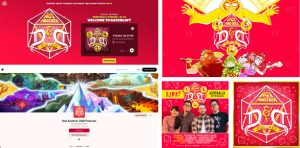
4:04 Yes. I am, of course, going to shout out Not Another D and D podcast, one of my favorites. What's so great about them is that they have an artist on their team, like, on their show, and so all of their stuff was easily able to be branded and, like, colorized. Like, they're known for this red background with, like, more of a gold kind of symbol for their podcast show. And you do go to their website, same colors. You go to their YouTube, same colors. You go to their Facebook, Instagram, anywhere on social media, the exact same colors. Once you have it recognized in your brain and you see it other places, you're going to know immediately within seconds, this is this show, this is what it's about, and this is what I've been looking for. Yeah. The consistency really builds that recognition for you. It's the all of the cues associated to your brand, but specifically visual have have a very memorable way of helping your show. I I mean, I was even talking to someone earlier this week. She's starting out her small business.
5:05 This has nothing to do with podcasting, just branding in general. And she was like, yeah. I don't know what I'm doing marketing wise. I was talking to someone the other day who knows what they're talking about, and she said that I have too many different colors and fonts. She's I had no idea you could even overdo that, but apparently, you can. Yes. Yes. I would say stick to, a solid primary color. It should be your favorite color. It is the color you're going to see everywhere. A secondary color that complements that primary color in a way that they're not clashing, but they are complementary and helping each other stand out even more. And then anything beyond that, you you really need to know what you're doing. But just having two solid colors and, like, maybe two one or two solid fonts, and you already have a pretty good basis for a brand. So it's just about, again, adding that personality to those four things can we know we've seen countless iterations.
6:01 Yeah. For sure. And, I mean, something like a D and D podcast is probably gonna look and feel different than, say, Podcast Insider, a podcast about podcasting. They're they're just gonna have different personalities. Even with that crossover of potential listeners and even hosts, they're still different. They just are. So that branding should really set the expectations, yeah, from the start, I think. Right. It's it is about that consistency because it is this pattern of recognition that your audience will come to be familiar with. So using those consistent colors, using those fonts, using specific language and tones that your listeners, again, immediately recognize within seconds, whether they see it on a podcast app, social media, or even on your website.
6:52 Consistency isn't about being boring. It's about being memorable. And I believe in advertising, you need to see an ad three times in order to remember it. So just imagine people going to three different platforms Mhmm. And seeing your brand there. Like, it should look the same. The color should be the same. The font should be the same. And if they get to all three of those platforms, you're gonna be more memorable to that listener. Yeah. If anything, I would say that number has gone up in years. Just ads have gotten out of control. Mhmm. So, yeah, you need to see and hear things more often now just just based on the amount of content that we see every single day.
7:32 And, you know, that personality is how it's gonna be remembered. But but I I wanna emphasize that in in 2026 when we have Canva and Pinterest and AI in all capacities, I I think there's a lot of value in in using those tools for inspiration. But, Erin, that's to put too much pressure on you, but I think graphic designers don't get enough credit for for what they can really pull together. And and the value that maybe using one of those tools for inspiration and saying, this is kinda something, like, along the lines that I would wanna go with.
8:14 Can you put something together for me? Whether that is like a toolkit, deciding these are my like, having someone else decide these are my colors for me, these are my fonts, this is the type of thing. Like, having someone help you with that Mhmm. Can really help you move forward. Yeah. I would say definitely get an eye that is trained in order to see these things and recognize them because they will bring an insight that the average person may not know because they haven't taken design classes, taken branding classes, branding one zero one, one zero two, things like that. I always say start with a Pinterest board Mhmm. Because it's very easy to just pull things in there, start to get it all together, and then look at it like, oh, do you have a bunch of colors on this Pinterest board? Do you have a bunch of different tones?
8:59 Which ones are you more reactive to? Which ones do you want your audience to be more reactive to? And once again, which ones align with your personality? Stop trying to be everything to everyone. And it's like, who am I? What on this board speaks to me? And once you have a nice solid image reference board, then you can really start to be like, okay. How do I condense all this down into one cover art, a couple colors, and things like that? And it's also, what are you drawn to? That doesn't necessarily mean to follow a trend. But it's definitely something we all fall into. Don't get me wrong. And and trends are fine. Things change over years, and they go up and down. But no one wants to immediately just fall into the void of this is what everything else looks like.
9:41 Yeah. I was right to tell people, don't follow the trends. Have fun, obviously, and that stuff is fun on on social media, but you should be the trends. Like, you should be the one getting your audience excited. The inside jokes, the cat phrases, things like that. Like, one thing, like, it should really have your personality kind of stamped all over it. And when you are part of trends, it especially nowadays because we see them all the time. Mhmm. People who recognize the patterns would be like, oh, you're just doing this because it's trendy. You're just doing this because it's popular versus doing something that feels authentic to your show and your voice. Yeah. Exactly. You, yourself, and your podcast, the content that you're creating should be the trend, and trends come around because people had an original idea at some point or another.
10:27 They live and breathe, and they're always changing, and and so are people. Yeah. And we always say consistent authenticity is always going to carry your show farther than one viral moment. Yeah. Focusing on that viral moment, potentially gonna be your downfall. You keep chasing and chasing and chasing. It means nothing. But what happens when you need to refresh your podcast brand? I mean, we've I've said earlier, we've done that with the show multiple times. So there's kind of a list of things that maybe you should do. I feel like a good time to to evolve the brand is when the brand is evolving, basically. Like you like McKenzie said, if there's a different cast change, maybe get like a new sponsor or something, your show is growing and that brand will grow with it. And it really is about not forcing it and because we're like kind of more going into video media, video show I mean, TV shows, they change their brand pretty much every single season. Yeah. New new headshot, maybe same font, different colors, things like that. But, you know, for podcasting, it's in this weird space. At least for me, I'm like, you need to be I I go by high school rules, whereas, like, that freshman that went to that high school and that senior that comes out of that high school, they have two completely different brands. Yeah. Because it's been four four years of growth, four years of learning, four years of knowledge.
11:51 So once you've kind of reached the point where you look at your artwork and you're like, oh, I'm not really this person anymore. I'm not really this vibe anymore. It's kind of grown, kind of matured. Then it might be time to talk about, okay, how do I make sure the brand is still reflecting my new kind of outlook, my new perspective and things like that. So that's when I think, okay, now it's a good time to maybe switch up the brand. And it doesn't even have to be anything like huge. One of my favorites for 99% Invisible is articles of interest and it was just kind of like this side podcast where they would go into like different articles of clothing, like how did suits become popular, how did perfume become popular, like why is the wedding dress the wedding dress kind of thing. And it was so popular that it be kinda became its own show and then one, it had to make its own brand away from 99% invisible. And then as the show started to grow and they started to expand what kind of items they talk about, they just had a nice soft refresh of, like, just making the cover art a little bit more bolder, a little bit more eye catching versus the original kind of cover art they had made for the show intentionally.
12:59 Yeah. I vaguely remember listening to those episodes of that show and hearing them say, people know what jeans we're gonna be wearing five years from now and and those predictions. And I wonder what podcast artwork is gonna look like in five years. I feel like someone probably knows. I don't. But I feel like things have been kinda, like, color blocky for a while, and I'm getting over it. Very similar to the romcom book covers that are all, like, animated. Yes. They all look exactly the same, and they have for the past, like, six years or so. Don't get me wrong. I feel like we needed to get away from what it was before, but I am so over what it is right now. The color block on the left side, the picture of the host on the right side, a brightly colored name title at the top, something like that.
13:53 Like, I'm kinda I'm kinda over that one. And then the true crime Dateline ish one Yeah. Where it's like Yeah. The woods and then a kinda spooky font over it. Something like that. Like, I have seen I have seen them all at this point. Yes. And I would say that definitely is, like, a good place to start is looking within your genre of your podcast and just seeing, like, what all the other shows are doing. And it's, oh, okay. There there might be some patterns of commonality, which makes sense you guys are going after the same audience. But how do you make sure you stand out? Because in a lot of these podcast apps, like, it's a grid and it's your show with, like, six, seven, eight other shows all at once. And it's, like, how do you how can you make sure your show stands out just a little bit more than all these other shows?
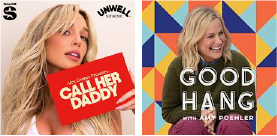
14:41 Yeah. Exactly. It's how do you how do you keep yourself happy, but also stick out in the podcast industry. Yeah. And I think it really goes out to what's the one thing that your show has that these other shows do not have, your personality. So if I use the example of take GoodHang with Amy Poehler Mhmm. And take Call Her Daddy with Alex whose last name is I'm blanking on right now. But, anyway, Amy and Alex, two blonde women. They have a show. They have guests come in. They talk and chat with the guests. Mhmm. Amy's show feels more like a, oh, I just ran into Amy at the coffee shop. We ran lines together. We started chit chatting, catching up.
15:22 Oh, let's go sit down on a bench outside the coffee shop because it's a little bit loud in here. And we really wanna catch up. I'm like, what's been going on? How are you? How are the kids? X y z. Very wholesome, very family friendly, and even her cover art kind of exemplifies that. Oh, she's just, like, in this nice sitting sitting position, smiling at the person she's talking to next to her, nice cozy sweater, nice exciting background of triangles kind of at least at this point, nice background of triangles, like, behind her. So it's just very, very nice, very wholesome, very warming. Then you get someone that call her daddy. We're at a bar. Yeah. We've maybe had one too many cocktails and we're really getting into the nitty you know what grinds my gears? You know what I you know what I wanna go off about? You know what I really wanna talk about? We're really getting into the real versus like the nice fulsome conversation I'm having with Amy. I'm really dishing with Alex. So here's really he wants a couple of drinks, the filter's a little bit skewed. So it's like I'm really letting a little bit more out then.
16:26 And sure it may get a little risque, but, you know, we're at a bar. Like, we're chilling. We're just having a chat, like, with two grown adults around other adults. So That's the listener. Conversation. Yeah. Exactly. Yeah. I think those are two great examples of these Once again. Could be the same people, but they are very different. Yeah. Very different brands, very different personalities. Yeah. Alright. We will have if anyone wants to see these examples, they will be in the show notes. But we want you to know that your podcast brand should be intentional and not accidental. That's the main goal that we have with this episode today.
17:06 Yes. When your your visuals, your messaging, your tone, it all points in the same direction. It all feels like you. It becomes easier for the right listeners to find you, trust you, and then stick around. And that's how that audience, especially that loyal audience, will really start to build. Yeah. For sure. You don't have to spend a whole bunch of money on this. You don't have to do a full rebrand. You can go as far as you want with this, but we hope that all of this helps you come up with a brand that truly reflects your purpose and personality. Yes. And if you always need help bringing that all together, the Blu ray team is always here to support you. We are podcasters or podcast listeners, so we always are seeing our work, seeing brands, new shows, huge shows, small shows. Like, we yeah. We've seen it all. I also love to critique.
18:01 If you ask me my opinion, I'll give it to you. So if you're looking for a very real opinion, I'm happy to give that. I come from the design world, so you ask my opinion. It it will be it's not brutal, but, like, you're we're not sugar coating it here. This is the sugar we left the sugar at the door. Yes. Like, we're here to really get into you want me to tell you how I feel about this? Let me tell you how I feel about this. Alright. Thanks, everyone. This is Podcast Insider. We'll see you next week. Thanks for joining us. Come back next week. And in the meantime, head to podcastinsider.com for more information, to subscribe, share, and read our show notes.
18:42 To check out our latest suite of services and learn how Blueberry can help you leverage your podcast, visit blueberry.com. That's Blueberry without the e's. We couldn't afford the e's.