How Long Should a Podcast Episode Be? And Should You Edit? – PCI 484


 Apple Podcasts
 TuneIn
 Deezer
 Paypal
How long should a podcast episode be? And how much editing is really necessary?
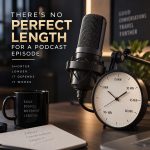 There’s no magic number or one-size-fits-all answer. In this episode of Podcast Insider, Dave Clements, Mike Dell, and MacKenzie Bennett discuss podcast episode length, editing styles, audience expectations, and why podcasters may be better off focusing on their content instead of chasing an supposed “perfect” runtime.
The team shares their own preferences for short and long episodes and explains why the right length often comes down to a simple rule: talk for as long as you have something worthwhile to say. If a topic only needs 15 or 20 minutes, there’s no reason to stretch it to 30. Likewise, a compelling conversation may deserve considerably more time.
They also explore how much editing a podcast actually needs. Some shows benefit from detailed production, while others work well with a more natural, lightly edited approach. The key is deciding what fits your show, your available time, and what your audience expects.
In this episode, you’ll hear about:
- Why there is no perfect podcast episode length
- When a shorter episode may be better than stretching a topic
- Heavy editing vs. light editing
- How production style changes listener expectations
- Asking your audience what they actually prefer
- Why feedback from one listener shouldn’t necessarily dictate your entire strategy
- Popular podcast editing tools including Adobe Audition, Reaper, Audacity, Descript, and Adobe Podcast
- Using audio processing and media mastering to improve consistency
- Why getting a good recording at the source makes editing much easier
- How AI-assisted tools are beginning to change podcast editing and production
The biggest takeaway: don’t let perfection keep you from publishing. Podcasting, recording, and editing all involve a learning curve. Your process can improve with every episode, and what matters most is creating something your audience wants to keep listening to.
The episode also briefly touches on Apple HLS video availability for Blubrry customers and the growing opportunities for podcasters interested in video.
Thanks for Listening
Learn more and find additional podcasting resources at PodcastInsider.com, and visit the Blubrry Podcasting YouTube channel for more podcasting videos.
00:00 - None
0:04 - Welcome to Podcast Insider. My name is Dave - Clements, and with me today are Mike, - Del, and Mackenzie Bennett. I'm I'm learning how - to host a show again, guys. - Yeah. It's a learning curve. Like I was - telling the lady on the phone earlier, there's - a bit of a learning curve to this. - So even if you - you you kinda step away for a bit - and then show back up again. - So - I think you're doing just fine. Yeah. Yeah. - All good. - We'll get it with the rotating thing. So, - today, we're gonna be talking about, a couple - different subjects that kinda go hand in hand, - which is should you edit and what is - the best episode length.
0:46 - This is something that comes up a lot - in communities, - because - I don't I don't understand why, but everybody - feels like there is this prime - length that your episode should be that's the - sweet spot - as well as how much editing you should - do. So that's what we're gonna talk today. - You get our opinions and, - talk about some blueberry services that may or - may not be tied in with this. - Yeah. Well, I got the short answer. Yes - and twenty minutes. - Okay. Hey. Nice. Thanks for listening. We'll catch - you next week. No. I That was great. - No. The the - as far as editing, you know, you don't - have to be heavy handed about it.
1:29 - You know, it all depends on, you know, - what you're going for. - You know, with my personal shows, I do - very little editing. - But - for a show that I edit for, I - don't do the show, but I edit for - them. I edit out a lot of stuff, - and - it just varies on, you know, your style. - So that one's completely - up to - you as the producer - of the show or the the host or, - you know, chief bottle washer, whatever. - You know, you make that decision, you know, - just know that heavy editing - takes lots of time. - I, - I would go with - I do prefer editing.
2:12 - And - what is my - preferred time for an episode? I don't know. - Twenty five, thirty minutes. - If the topic - is like, if the topic is really good, - you know, half hour. - If the topic and the host are good, - it could go longer. - If the host is not good at this, - the shorter, the better. The more editing, the - better. - It's gonna be a short episode because the - host, being me, is not very good at - this. - I'm kidding. I don't know that I have - a a hard and fast rule. - I think from a listening standpoint, - I love long shows - probably more than shorter shows, - because I can live with it a little - bit longer. From a production standpoint, - I also love to edit. When I have - the the time to actually dig in and - edit, I would happily spend eight hours, - editing something.
3:12 - The thing with the editing is, you know, - you can go as heavy or as light - as you want. - And, you know, there's no - real wrong answer. But, you know, if you're - stuttering and stammering - and and, you know, have weird gaps and - say something goofy and wanna get rid of - it and all that, you know, or say - you have a cold and you cough every - so often, you might wanna edit those out, - that kind of thing. As far as the - length of a show, my standard advice is - talk as long as - you have content for. - If you've got - fifteen minutes worth of something to say about - a subject, don't stretch it to thirty minutes. - You know? In my case, you know, I - like longer shows as well, but I don't - listen to them all at once. I listen - you know, I I listen in the car - mostly. And so every time I jump in - the car, it'll take off wherever I left - off, and it might take me a whole - day or two - to listen to something.
4:07 - However long your content - stays interesting and doesn't sound like you're trying - to stretch the topic, - is is probably a good length. - Yeah. That question was easier to answer in - not necessarily the case of what's best for - the show, but what is - best - for your listeners. And, - it's kinda come back, but a lot of - that was just - how people were driving to work every day. - And now Yeah. A ton of people don't - do that, including all three people right here. - Yeah. Right. Right. You know, back back in - the day, the standard answer was either twenty - minutes or forty minutes. And the reason for - that was the average commute - was a twenty minute commute.
4:50 - I think it just goes back to the - content. You know? Don't try to stretch it - just because somebody tells you thirty minutes is - the sweet spot. - You only got twenty minutes of things to - say. Only say twenty minutes worth of things - and then edit the thing and - send it. - Yeah. I mean, the the answer I've always - given - in forums and things like that is and - it's a little bit smug and a little - bit tongue in cheek, but it's as long - as it needs to be. Podcasting is so - diverse, and I talk about all the time. - I've done a bunch of different kind of - shows. - The the length of those episodes are going - to - vary depending on - what that show is about.
5:32 - Some shows, - people expect to be longer. Like, audio dramas, - they're expecting - longer episodes - so they get a little bit more bang - for their buck. They're also expecting those to - be very highly edited, very, you know, detailed, - and have some, - sound effects and engineering and stuff like that - behind it. Whereas, - show like Hours, you know, we try not - to push it past thirty minutes. But if - it doesn't need to be thirty minutes, - we've all kind of agreed. - We're not gonna push it. - But I think I think a practical thing - is rather than - worrying about what everybody else is doing, what - does your audience want from your show?
6:13 - And sometimes, I feel like podcasters don't ask - their audience. They just wanna know what is - the group consensus, - from other podcasters. Well, how long is your - show, Mike? How long is your show, Mackenzie? - Rather than going, - my audience prefers the shorter episodes or the - longer episodes. So - for instance, - like, I listen to, - I've forgotten what it is because I don't - listen to it that often because it's so - long. But the the podcast index show, - I - I cannot listen to a full episode. - It's just too long - for my attention span. - Yeah. - That's a that's that's an acquired taste.
6:53 - But if they ask me, I would be - like, either give me shorter episodes or just - give me more - short episodes. - And they probably use chapters and things like - that, so I could skip through. But I - don't like doing that because you're usually doing - something else when you listen to a podcast. - People have gotten really used to using the - two times speed when watching videos. - Like, that is very, very prevalent on - videos on Instagram and TikTok. - I have a feeling people listening to podcasts - are probably trying to do the same thing. - Yeah. - Yeah. I think I even listen to audiobooks - at one and a half to two times - speed. - And some podcasts, yes, - I listen to it two times. Yeah. Yeah.
7:35 - See, I I I'll take a contrary opinion - to that. I I think that should be - banned. - For podcasts? - For everything. And and and take TikTok - is funny because - TikTok already is short attention span video. - You're you're really that short attention span. You - need to speed it up. I mean, gosh. - Oh my god. Everyone uses it. Yeah. - It's it's on basically - every video platform at this point, I feel - like. Oh, yeah. It's and it's also most - podcast apps, and that's that's cool if you - wanna use it. And it just I I - think it's I think it's mentally damaging - to be honest with you. Probably, like scientifically, - it's probably not great. But Yeah. I think - for me and this comes from a person - who knows that he rambles - and cannot get to a point quickly enough.
8:25 - But that's typically when I'm, like, hitting - the fast forward button. Mhmm. Because I I - still wanna hear what you have to say, - but I wanna know when you get to - the point that I care about, which is - why when I edit, I I try to - get us, like, what is the point of - the episode? Obviously, us talking to each other - and getting opinions is the point of this - show. But there are other shows where I'm - like, nope. There was too much fluff, - and I I cut that out. So the - my thing is, like, I tend to - not watch or, like, not listen to - a ton of indie podcasts. I will watch - one that is, quote, unquote, like, produced. Mhmm. - And you're probably not gonna have to worry - about listening to something on one and a - half to two and a half speed - if it is - properly produced.
9:11 - Because if the host of the show wasn't - speaking fast enough, they're gonna tell them to - do it over. - And the problem with, you know, people taking - their time and rambling is because - they aren't doing this for someone. They're doing - it for themselves. And they're, yeah, they're doing - it for their audience, but they don't have - someone with certain standards - keeping them up to date on, like, making - sure that they're hitting those marks. That's why - producers exist. That's true. I've figured that out - with recent things that I've done that yeah. - If if you mess this thing up, let's - let's take it again just so - it's easier to edit in Yeah. To that - space, - which sounds very I don't wanna say dishonest.
9:53 - No. It's produced, and there's nothing wrong with - the produced show. You know, that's us. That - is one genre of podcasting is highly produced - audio or video, and, you know, that's fine. - There's nothing wrong with that. There's also a - lot of just off the cuff real people - doing - indie stuff that doesn't appeal to everybody - and doesn't require nearly as much production. - You know? There and there's nothing wrong with - either one of them. - It's just all what you want to put - out - and what your audience will enjoy. You know, - like, people know that when they tune into - my personal show, it's gonna be me rambling - about something and not gonna be highly produced.
10:36 - So how do you think you know what - your audience wants? Like, how do you figure - that out? If I do something really stupid, - they tell me. - You know, ask for feedback. - You know? But you have to ask in - the show. You know? Don't - you know? A lot of times, we get - these questions where, you know, how do I - know anything about my audience? I know, you - know, blah blah blah. Do you ask? - You know? Ask them. And and it's an - audio platform. Don't ask them in the blog - post. Ask them on the audio or the - video. Say, hey. I need to know. What - do you think? What do we need to - do? - You know, something like that. It amazes me - sometimes that, you know, people want to get - feedback, but yet they don't ask for it.
11:17 - I think for me personally - with a show, if if I'm the one - making it, I usually have a friend or - family member or someone close enough to me - that I know listens to it, - and I can ask feedback that way. And - there are times that I do you know, - I have done, like, a, hey. Fill out - this survey, which a very small percentage - of the audience will typically do. But that's - that's usually how I've done it in the - past. And sometimes, like, I will even go - back and be like, okay. I need to - listen to this again with a set of - fresh ears. - And, okay, - this could have been edited better. - This could have been longer. This could have - been shorter.
11:59 - And I tried to take an objective approach - in that case, but it's not perfect every - time. You know, it's never gonna be perfect - every time. - But that's just - that's just life, and that's especially - content. - Yeah. Well, like I said, if you're going - for perfect, - your your editing is gonna take a whole - lot longer. - Oh, yeah. And, you know or you're gonna - spend a lot of money on, on a - producer and an editor and, you know, you - know, you pick your battles. You know, what - is important to you? What is important to - your audience as far as editing and and - length and, you know, everything else we're talking - about? Again, there in podcasting, the nice thing - about it is there's no rules.
12:41 - Mhmm. There's some best practices, and that's what - kinda we try to hit here, but there's - no wrong answer to how long an episode - should be. There's no wrong answer to whether - I should edit heavy or not. - You should always cut the ends off, though, - if you have a big blank space in - your file or something. I mean, obviously. Yeah. - Or, you know, the phone rings in the - middle of the episode. That's probably not compelling - content. - But - speaking of which, I just mute muted my - phone. - You know, I personally - think, you know, whatever feels right to you - and, you know, and if you want feedback, - ask for it. Mhmm. And - I think you're covered. But, also, you know, - here's another thing I know that, you know, - it's kinda off topic a little bit, but - another thing I find is to say somebody - emails me about my show and nobody else - does. I tend to think, well, I wonder - if they all think that way. And, you - know, and then if I act upon something, - is it just because that one person?
13:37 - And then did that go against what somebody - else might do with it? So be careful - with that too. You know? If you've got - a a real active listener that's, giving you - a feedback, - you know, don't always take their word for - gospel. You know? Kinda weigh it against anything - else you've you've found out. When you are - a solo creator, - it's harder to get feedback, I think. - So you kinda have to go with - what you're listening to. And, like, if if - you're listening to something that's similar to your - content, - then, - you know, you kind of mirror you start - to mirror that style a little bit, typically. - But you kinda have to trust your gut - until somebody tells you otherwise. It's kind of - why I - like working with a team of people.
14:22 - I know, like, the three of us, like, - we don't do a ton of talking about - Podcast Insider. But I know if something was, - like, egregiously - wrong with an edit or something else, we - would talk about it. That was Oh, yeah. - My favorite thing about the last show I - did. I had a really big team of - people that not only worked on it, but - they listened to every episode. So if there - was something, it was like, oh, hey. You - accidentally - left this one part in. Can you go - in there and fix it? That was easy - to do. Or, wow. That episode was almost - two hour two hours long. Is there any - way we could trim it down? Because nobody's - gonna listen to that whole thing. Because we - typically knew our audience from, like, Discord and - things like that. So I prefer Teams, but - I know that that is not always an - option, especially when, you know, people need to - be paid for their time.
15:16 - So what would you guys like, what is - your favorite audio editing software now? But also, - I feel like AI is changing all editing - and media production nowadays. So, like, what do - we do about that? - Yeah. - Favorite, - I really love Adobe Audition. - But to save my wallet, I've actually started - using Reaper over the last couple of years. - It takes a little bit of getting used - to, but I like to do the manually - manual editing - rather than give it to AI. I I - don't even - know of an audio editing - AI service.
15:56 - So maybe I'll have to play with that - for a future episode, - and and see how - see how that works. But I love I - love the tinkering part of editing. So I - will always use some kind of, like, - you know, DAW rather than a service that - will do it for me. - Yeah. I I mostly edit in Adobe Audition, - but I've also done it in Audacity, - which is - surprisingly similar and free. You know, - audition has some filtering and stuff that you - can do. You know, like, you can if - you didn't have a noise gate on your - on your mic and there's some sort of - low level home, it's really good at taking - that out and, you know, that kind of - thing. But there's there's a lot of good - ones out there. And then the AI assisted - ones like Descript and oh, I can't think - of it off the top of my head.
16:46 - It's another really popular one. I believe that - has some AI assistance as well. I think - Adobe probably does too. I just ignore it. - Mhmm. Yeah. I I have over the last - few episodes, I have been running the audio - through Adobe Podcasts. - And that's been nice because, - you know, level I think maybe that's one - of the hardest parts of editing. You you - may have - the - audio coming in okay. - But, yeah, leveling, normalizing, - there's there's, like, weird little components - that - are sometimes just hard to get right. - And, - yeah, I like to use that, like, on - the raw tracks before I start to edit - and then - listen back to it. And then sometimes, I'll - run it through - Auphonic, which Blueberry has. We have media remastering - by Auphonic, - that you can - run your your podcast episodes through. So it'll - balance everything out and get you to the - right LUFS and all of that. Yeah. That's - my process is I take the WAV file.
17:49 - That's what I usually record in. Mhmm. And - I'll take that WAV file. - I'll put it in - Adobe Audition, - save it as an m p three at - that point, - and then run it through - their version of, phonic leveling type thing. - And then I edit, you know, like, edit - out the ohms and ahs and coughs and - snorts and phone ringings and whatever else, - and then cut the ends. And then - just save it out as the m p - three, and I'm ready to go. You know? - It doesn't take ridiculously long, - and it does everything all in one place. - But, also, you can, you know, edit the - whole thing, get it in it as an - m p three or a wave in our - case, and you upload that to Blueberry with - our media mastering, - and it'll run it through Auphonic and level - it out for you. And, it does a - really good job.
18:41 - I would say the easiest editing is when - the recording went perfectly. - Yes. That is, you know, garbage in there. - Been there. Hey. Start - start with a good audio track. You'll end - with a good audio track. I mean, there's - certain things you can't fix in audio. - The phrase, trash in, trash out? - Yep. Does anybody have any final thoughts before - we shut this down? Is this isn't like - a big - you know, it doesn't have to be deep. - It's pretty simple. - Just do what - you wanna do and do what your audience - will listen to, and you'll figure it out - as you go. It's it doesn't have to - be perfect on day one.
19:21 - No. Yeah. It's it's all a learning curve, - and, so is editing. You know, recording your - episode is a learning curve, getting comfortable doing - that, but so is editing. That is - not, - that is not something that comes easily to - some people. So give yourself some grace. - You'll figure it out. - The thing is, if you chase after perfection, - you're you're never gonna execute - what you're doing. So I tell people all - the time, your first step was episode might - suck, - but your second episode will suck less and - so on. So, you know Yep. Go with - the flow, do what you need to do, - and, I still go stand by my first - answer. Yes. You should edit, and it should - be twenty minutes.
20:06 - Just kidding. - About the twenty minutes. - Alright. - Well, I I think that's that's - it for today. So, - thank you guys for listening. - And, - I was gonna do the whole YouTube. Hey. - Like and subscribe, but that's not how podcasting - works. I'm in video mode. I'm sorry. - Follow or subscribe, whatever your app says. And - always go to podcastinsider.com - for the latest - and greatest. We have lots of blog posts - over there too. - So and, oh, yeah. One other thing, I - guess, we'll minute we'll mention some some, - some things going on - currently. - By the time you listen to this, - Apple HLS - video will be available to all of our - customers. So if you did wanna adventure into - video, we have - the accommodations for that coming - by the time you hear this.
21:01 - And, - yeah. So that's, you know, just a little - side note there. Maybe we'll do - an episode about, - you know, how video is distributed versus how - audio is distributed. That'd be a - good good geeky one to to do at - some point. - Yeah. For sure. - Alright. Catch you catch you next time. - Thanks for listening.