How to Talk About Your Podcast Without Sounding Salesy – PCI 455


 Apple Podcasts
 TuneIn
 Deezer
 Paypal
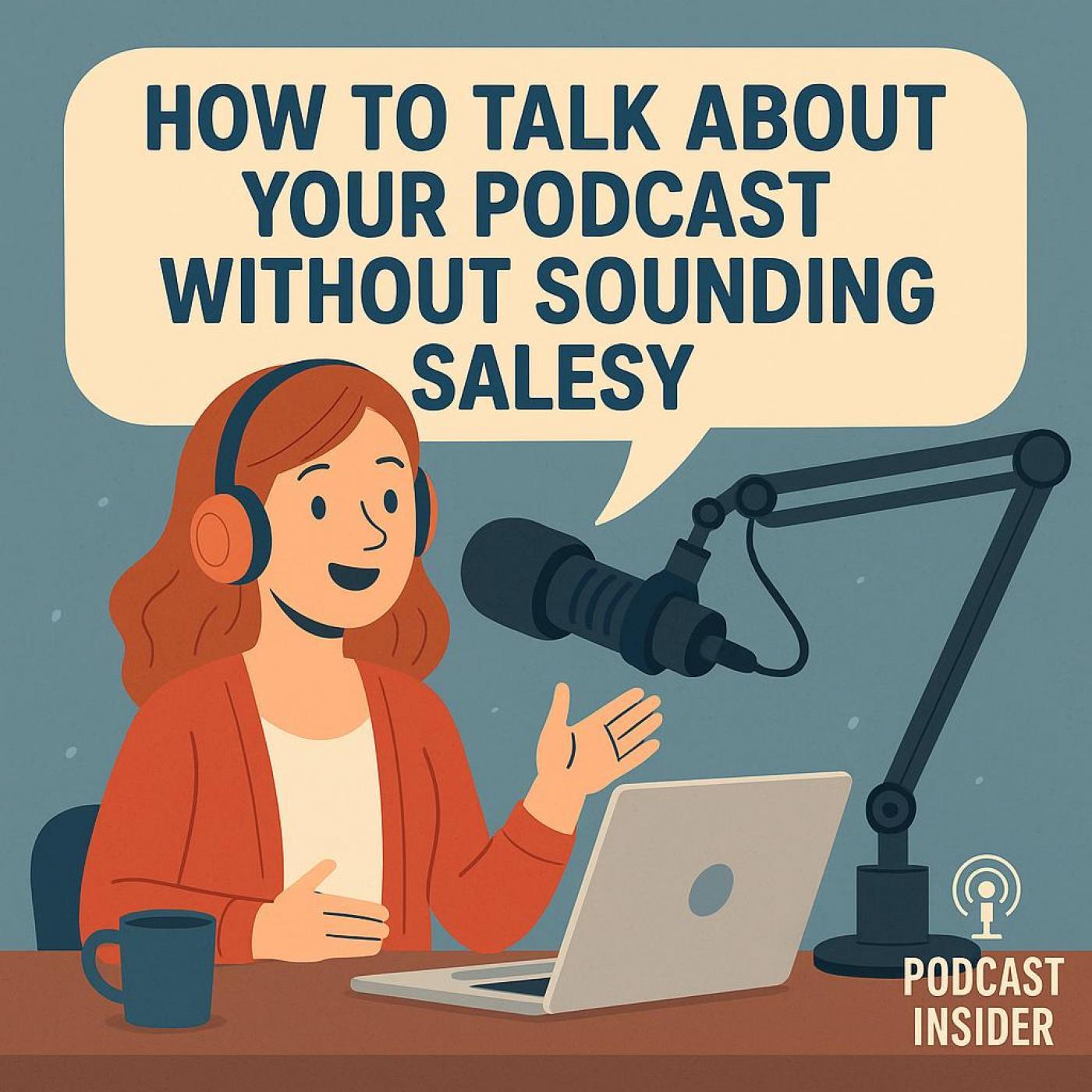
 Promoting your podcast doesn’t have to feel awkward or salesy. In this episode of Podcast Insider, we share practical ways to talk about your show with confidence—whether you’re chatting with friends, posting on social media, or networking at events. You’ll learn how to highlight your purpose, use storytelling instead of pitches, and spark curiosity that leads people to want to listen—without ever sounding pushy.
Today’s Hosts: Todd Cochrane and MacKenzie Bennett
✅ Lead With the Why, Not the Download Link
When talking about your podcast, start with why it exists—not just where to find it. People connect with purpose and personality more than self-promotion.
Instead of saying, “Hey, check out my podcast!” try:
- “I host a podcast about how small-town chefs are changing the food scene—ever heard of that movement?”
- “I’ve been interviewing people who left corporate jobs to start farms—it’s been eye-opening.”
Letting the conversation flow from what you’re passionate about makes people more likely to ask follow-up questions—and then they open the door to you sharing your link.
💡 Blubrry helps: Use your free podcast website or custom episode URLs to easily share your show when people do ask for it.
✅ Share Clips and Stories, Not Just “New Episode!” Posts
Instead of promoting a new episode with just the title or a generic link, pull out a powerful quote, a surprising moment, or a quick teaser.
Some ideas:
- “This guest turned their side hustle into a full-time gig—here’s how they did it.”
- “Our latest episode dives into what it’s really like to start over in your 40s.”
Use visuals like audiograms, quote graphics, or a short reel to give people a taste before asking them to commit to listening.
💡 Blubrry helps: Easily create short video teasers with Pod2Vid, and share them on social with your custom links.
✅ Think Conversations, Not Commercials
Whether you’re at a networking event or casually chatting online, focus on the person, not the pitch.
Ask them what kind of content they listen to.
- Share how your show relates to a topic they care about.
- Or invite them to give feedback on an idea you’re working on.
This approach builds connection and curiosity—without forcing the conversation toward a download.
💡 Blubrry helps: Your listener analytics show what’s resonating most, so you’ll know what topics spark real engagement.
✅ Make Your Show Easy to Talk About
If your podcast name, description, or purpose is confusing or overly vague, it’s hard for people to share it on your behalf.
Refine your elevator pitch so you (and others) can describe your show in one sentence.
Example:
- “It’s a weekly show about creative burnout—and how people push through it.”
- “The podcast shares short stories from first-time entrepreneurs—5-minute episodes, no fluff.”
💡 Blubrry helps: Hosting with us means your show is listed across major directories, making it easy for new listeners to find you—especially when they hear about you from someone else.
Thanks for listening to Podcast Insider, you can subscribe to new episodes out every Monday.
The best place for support with any Blubrry product or service is our ticket system. Tickets give the whole team access vs. direct emails or calls. General podcasting discussions and more can be shared on the Blubrry Podcasting Facebook group.
Fill out our listener survey at surveys.blubrry.com/podcastinsider
Hosting customers can schedule a one-on-one call with Todd or a tech checkup with Mike at todd@blubrry.com and mike@blubrry.com
Stay tuned for more episodes and visit our website for the latest updates and resources.
00:00 - Introduction to Podcast Promotion Challenges
01:16 - The Importance of Purpose and Personality
01:55 - Casual Promotion Techniques
03:12 - Utilizing Clips for Social Sharing
04:57 - Think Conversationally, Not Commercially
07:19 - Making Your Show Easy to Discuss
09:14 - Submit to Podcast Directories
10:00 - Wrap-Up and Key Takeaways
10:32 - Resources and Next Steps
0:00 Everyone. I'm Mackenzie Bennett, marketing specialist here at Blueberry. And I'm Todd Cochran, founder and CEO at Blueberry. Welcome to Podcast Insider. Today, we're diving into a challenge that almost every podcaster faces at some point, how to promote your podcast without sounding pushy or salesy. And, of course, whether you're talking to friends or posting on social media or speaking in an event, you've really got to learn how to talk about your podcast in a way that feels natural, not like a pitch. And so that's exactly what we're gonna cover today. You'll walk away with tips on how to share your show confidently without turning people off or feeling awkward about self promotion. You're listening to podcast insider, a weekly podcast bringing insights, advice, and insider tips and tricks to help you start, grow, and thrive through podcasting with the support of your team here at WeVery Podcasting. Welcome. Let's dive in.
0:53 One thing's for sure. In the early days of podcasting, the only way you were able to really promote your show is give me your phone and let me show you how to subscribe. Heavy on the give me your phone and I will walk you through this. Yeah. You know? And, thank goodness it's it's not that difficult anymore. Yeah. And, but I think really the you think about a show and why do we listen to shows is what is the value we get out of it? So, you know, when you're talking about your podcast, you know, the why it exists, it's probably as important as anything else, not just where to find it. And people are gonna connect with a purpose and personality more than than self promotion says, hey, check out my podcast.
1:41 You may wanna say, I host a podcast about how small town chefs are changing the food scene. Ever heard of that movement? And, of course, there's probably many, many more of those type examples. Even better in my head is I'm passionate about this topic, and I also host a podcast about it. You know, get hook them in with the interest of the actual show and then say, and here's where you can listen to more. Yeah. And I think too, if you're anticipating the place to jump in and promote, it's gonna feel real obvious. Mhmm. So make sure that the conversation just is a is a flow.
2:22 And you know, they say, hey, what do you you know, by the way, what do you do for work? Oh, I work in this and by and I have a podcast too. And that probably will trigger a reaction that will they won't even want to know about your work. They're gonna want to know about your podcast, So, there's great ways to kinda drop it in there casually. And if they see you're excited about, they're definitely gonna ask. Yeah. One thing we always, wanna reassure people or let them know is everything that we're talking about, Blueberry can help with in some way. Just in this scenario, leaving them to your free website or, like, a specific episode URL of whatever, you know, thing that you're talking about would be helpful.
3:08 And, of course, the powerful thing today is about sharing clips, not just episodes. So, and this is something that you should invest time in is instead of promoting a complete episode with just a title or generic link, pull out a a quote or surprising moment or a quick teaser. Those are always super valuable. If you can find a a thirty second or sixty second clip that really hit hard, that will often, from a social standpoint, be enough to get someone to come in and listen to an entire episode. Yeah. Absolutely. There's different ways that you can do it now too, whether it's just like an actual sound clip, if you add quotes to whatever it is that they're seeing this sound, you know, whether it be Instagram, Twitter, whatever.
4:01 Instagram's great for the reels, TikTok, obviously, all that type of stuff. It's very easy to go back and forth between video and audio nowadays, and it's it is by far, I think, one of the most, like, worthy things to do for for people is if is let your content do do the talking, essentially. And, of course, our, podcast AI assistant will help you create short video teasers. It really starts with finding that audio segment and then pushing it into the production system, and you'll be able to create a, a clip that you can share on Instagram or on Facebook or LinkedIn or wherever your tribe is at. You wanna create a full length video, which, you know, that that might be okay if you wanna share that and you're not doing video. Pod2bit is another piece of the kit that we have on the website that lets you do the entire episode. But, again, I think from a, social promotion standpoint, those short clips are gonna be much better and and and be more useful, and you'll get more traction than doing the entire, audio episode into a series of video clips.
5:13 Yeah. Leading us into our next one is think conversationally and not commercially. You know, it's going back to the first one that we had, which was, like, why people should listen to this and not exactly how specifically, it's you wanna be able to tell people, you know, this is why it relates to a topic that you care about. This is something that you can expect to to hear, you know, like, a conversation going back and forth or not necessarily, like, a lecture. People don't necessarily wanna listen to that. There's there's a time and place for that, and some people might be into that with their podcast. But I think a lot of the time what they're looking for is to be more casual.
6:02 Now one thing that I found and it was something I picked up years ago in some online communities where he would be talking about stuff and, you know, I would be kind of like, oh, I wanna tell him I have a show. And I'm sitting there on edge, you know, and you're like, oh, no. I can't be that dude, you know, can't be going in there and say, oh, by the way, I have a podcast. But it was more about if they talked about something that I had talked about, then I could say, Hey, by the way, I did my podcast, I have an episode and about the, you know, the eighteen minute mark that talks about this very topic, it might be of interest to you. It kind of fit it into but there again, then you have to remember what you've talked about across many episodes.
6:45 So that opportunity isn't always as easy to do a placement like that. But one thing you can consider is in our analytics system, we show you what's resonating the most. So you'll know what topic spark in real engagements. You can see when people are listening and when they've dropped off, Obviously, things that maybe you should share or not share or maybe make improvements to your show. So, again, use our tools to help you, build these conversations and have, you know, stuff that's backed up by analytics to help you with your sharing. And, I think this one might actually be a little under the radar or is kind of a problem you run into after the fact. You have to make your show easy to talk about. If you can't do your elevator pitch, you you gotta rethink some things.
7:37 Your your name, the description of the show, and and the purpose. You know? You gotta refine that. So when you do have someone's attention for that thirty seconds, you need to be able to convince them in that very short period of time. Yes. I think, you know, my show that I do, privately Geek News Central, that kind of explains it. Oh, you talk about geeky stuff, news, the central is kind of in there. It'd be better if it was just geek news, but that wasn't the domain that was available. So, yeah, Geek News Central was. Yeah. I talk about news and topics and it's real easy to describe. Now if you're talking about more mundane topics or business, there's always that little piece. Yeah. I talk about finance or interview business leaders or whatever your shtick may be for your show.
8:29 Again, having that ability to talk about that show, easily is is great. And, you can say it's a weekly show or it comes out every two weeks and maybe I talk about I have short stories or in-depth stories, whatever it may be, you can you can kinda share that, share that quickly. I think one of the last kinda words of wisdom in that section is also having your show and every podcast directory so that once people do know the show and, you know, a week later when they're like, oh, maybe I'll check that out, they can just easily find it in whatever podcast app that it is that they use or that they can Google it. So, you know, making sure that you are using, some type of website for your show as well as just submitting to these directories. A lot of them are gonna pick up just because they are crawling Apple.
9:25 But, you know, Apple, Spotify, the big ones, if you hit those, you're probably okay okay across the board. Yeah. I always say I don't care where they listen as long as they listen. That's the most important part. Exactly. If they listen on the website, don't care if they listen wherever. We don't care how they listen long as they listen. And that's really the key. I think that's a wrap on this episode. Thanks for tuning in. And of course, remember, talking about your podcast doesn't mean turning into a salesperson. And, most people don't like salespeople anyway. It just means sharing something you care about in a way that connects with people. We encourage you to lead with curiosity, use storytelling over promotion every time and to let your passion do most of the talking.
10:08 And more importantly, don't forget, Blueberry gives you the tools to promote your show naturally with custom links, a free podcast website, and socially friendly features like Pod2Vid and all the other AI tools we have for social promotion. Be sure to follow or subscribe to Podcast Insider for more tips, tools, and strategies to help grow your show. Thank you. Thank you. Happy podcasting. Thanks for joining us. Come back next week. And in the meantime, head to podcastinsider.com for more information, to subscribe, share, and read our show notes. To check out the latest suite of services and learn how Blueberry can help you leverage your podcast, visit blueberry.com. That's Blueberry without the e's because we can't afford them.