Interviewing Skills: How to Ask Better Questions and Get Better Answers – PCI 459


 Apple Podcasts
 TuneIn
 Deezer
 Paypal
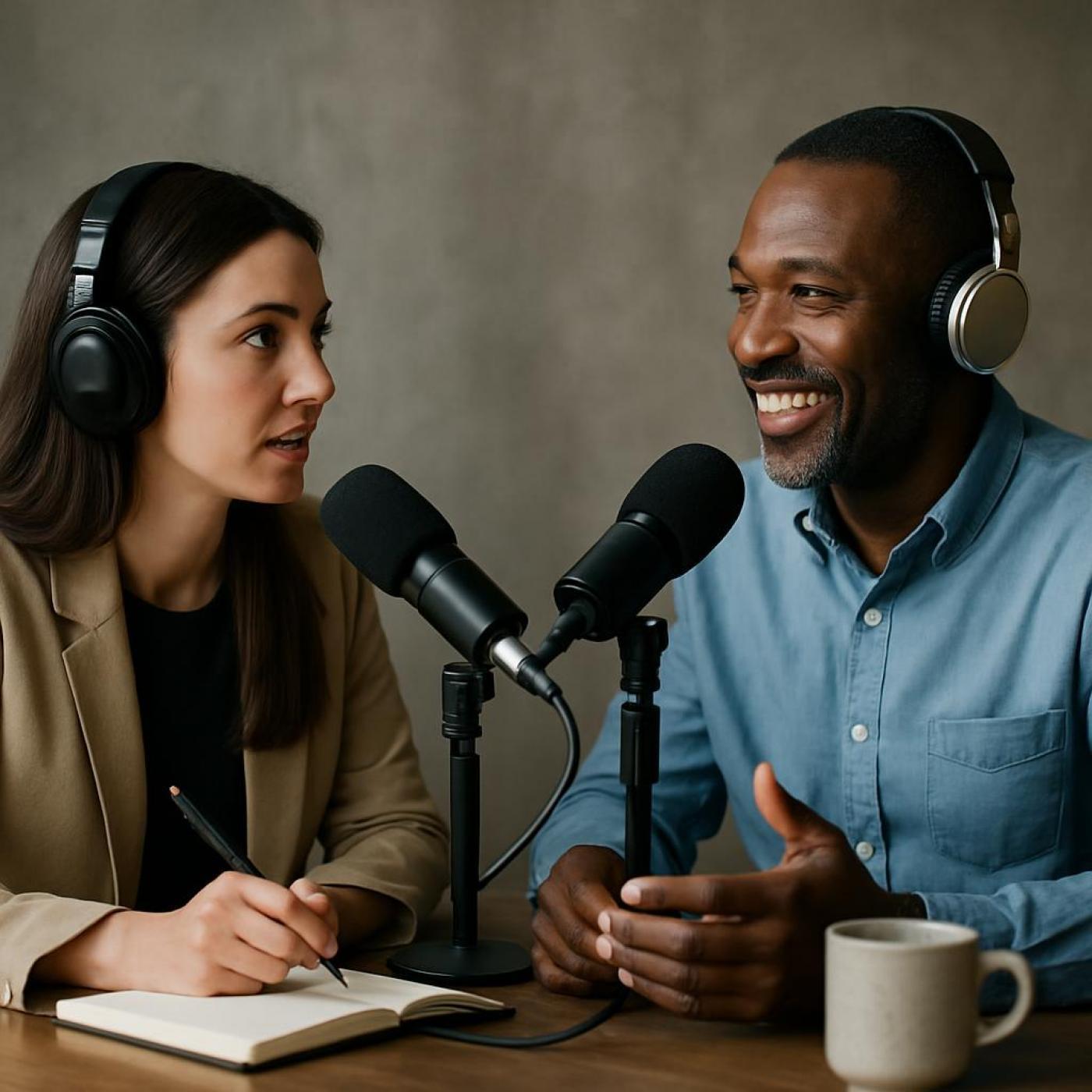
 Interviews are at the heart of many great podcasts — but asking the right questions takes more than reading from a list. In this episode of Podcast Insider, MacKenzie and Dave share tips for crafting thoughtful, engaging conversations that draw out your guest’s best stories and insights. Whether you’re new to interviewing or looking to refine your technique, you’ll learn how to prepare with purpose, stay present in the moment, and guide discussions that truly connect with listeners.
Today’s Hosts: MacKenzie Bennett and Dave Clements
How to Improve Your Interviewing Skills for Your Podcast
Start with Curiosity, Not a Script
A good interview starts with genuine curiosity. Instead of racing through a list of questions, focus on listening and reacting.
Tips to improve your flow:
- Research your guest, but don’t over-prepare.
- Ask one question at a time.
- Follow up naturally — not mechanically.
- Let the guest finish their thought before jumping in.
💡 Blubrry helps: With our hosting tools and episode scheduling, you can plan interviews with confidence and stay focused on the conversation instead of the tech.
Craft Questions That Open Doors
Avoid yes/no questions and lean into prompts that invite storytelling and reflection.
Try starting with:
- “Tell me about…” instead of “Did you…”
- “What was going through your mind when…”
- “How did that experience change your approach?”
These questions lead to real, memorable answers that keep listeners hooked.
💡 Blubrry helps: Use your show notes and episode descriptions to highlight key takeaways — helping new listeners find your best moments fast.
Silence Is Your Secret Weapon
Most new hosts rush to fill silence, but short pauses can be powerful. They give your guest space to think — and often lead to deeper responses.
Try waiting a full beat after your guest finishes speaking. You might be surprised what they add next.
💡 Blubrry helps: Our post-production options like Media Mastering and transcripts make editing smooth and professional while keeping those natural pauses intact.
Stay Present — Not Performative
The best interviewers sound like they’re discovering the story with their audience.
Be conversational, but intentional:
- React honestly.
- Summarize or restate what your guest said before moving on.
- Don’t chase every tangent — guide gently back to the core topic.
Your job is to keep listeners engaged while helping your guest shine.
💡 Blubrry helps: Whether you’re publishing through WordPress or our Blubrry Dashboard, our tools make it easy to present your content with polish and personality.
The best place for support with any Blubrry product or service is our ticket system. Tickets give the whole team access vs. direct emails or calls. General podcasting discussion and more can be shared on the Blubrry Podcasting Facebook group.
Fill out our listener survey at surveys.blubrry.com/podcastinsider
Hosting customers can schedule a one-on-one call for a tech checkup with Mike (mike@blubrry.com).
00:00 - Introduction to Interviewing Skills
01:09 - The Importance of Curiosity in Interviews
02:10 - Crafting Open-Ended Questions
03:00 - Active Listening and Follow-Up Questions
04:34 - Learning from Comedians
05:00 - Embracing Silence in Conversations
06:21 - The Art of Staying Present
07:09 - Summarizing for Clarity
08:10 - Staying on Topic in Conversations
09:06 - Conclusion and Key Takeaways
0:00 Everyone. I'm Dave Clements, customer relations and media specialist. That's a new title. I'm trying to get used to that here at Blueberry. And I'm Mackenzie Bennett, marketing specialist. Today, we're talking about one of the most important and underrated podcasting skills, interviewing. So whether you host experts, creators, or just friends, how you ask questions shapes the quality of your entire episode. Definitely. Great interviews aren't just about who you have on. They're about the conversation that you create. You're listening to Podcast Insider hosted by Mike Dell, Dave Clements, and Mackenzie Bennett from the Blueberry team, bringing you weekly insights, advice, and insider tips and tricks to help you start, grow, and thrive through podcasting with all the support of your team here at Blueberry Podcasting.
0:52 Welcome. Let's dive in. Good place to start is with curiosity. I know a lot of people think that you gotta have all those questions scripted out, but I think it's nice to come in a little raw and just not always anticipate what your next question is. It's been said time and time again about any type of interviews is that listening is the most important most important thing that you can do. Yeah. And you've done way more interviews than I have, I bet. I did quite a bit. I used to do them every week or so for podcast insider when I did that for a couple years. And you really do tend to get, like, a flow at some point. You know, you you learn how to ask one question at a time because if you ask more than one, they lose it in their head.
1:46 You start to follow-up a little more naturally as opposed to just question has been answered. Now question five. Right. It's you'll find a cadence, I guess, as you go on, but you it's be respectful to your guest is definitely a big part of that. Something else that's super important is crafting questions that open doors. So not really yes or no questions, lean into prompts that invite storytelling and reflection for your guest. Yeah. You see that a lot with some of the best interviewers. Like you said, just a minute ago, the best interviewers are the best listeners. And so you have to be actively listening to what is being said because that is going to create prompts for you. So for instance, you're you're listening to someone talking about their childhood. Well, maybe some factoid stands out and then it can be like, oh, hey. Tell me about this thing rather than just following up with your next question or cutting off that train of thought because sometimes you get so many more gems from following up like that. And, you know, a couple of other questions you could ask or prompts you could use just to keep them at the top of mind might be, hey. What was going through your head when you had this experience?
3:13 Or did that experience change your approach to whatever the subject is that you're talking about? Yeah. For sure. Marc Maron just ended his podcast after, like, sixteen years or something like that. Yeah. The BPOF with with Maron. Yeah. With Marc Maron. And I listened to him for years and he was always very chatty. He had a podcast for a reason because he's a talkative guy, But he was chatty in the sense of asking them questions and having an actual conversation and going the give and take of a conversation and going back and forth. And he would go off on some tangent because they said something that correlated to whatever he had to say, and then he would eventually come back to it. He was very good at that. He had a podcast for a long time for a reason.
4:02 Yeah. I mean, being an observational comedian, like, you build those skills. And, like, he's been doing it for decades. Yeah. And he's really good. I just watched his most recent special not too long ago. And not only is he funny, he's just very insightful. And I think those are talents. If you want to get better at the interview, start watching observational comedians because that's what they do. They watch things, and then they craft stories around it. It's a really good suggestion. I I love comedians. I I wish I I could deliver better. Mhmm. I'm always learning from comedians, just the way that they interact with the crowd or things like that. Like, so many good tools found in comedians. So if you have one you like, you can probably learn something.
4:55 That's a good point. It does go into the next suggestion that we have, which is silence can actually be very helpful. It can be your secret weapon sometimes. You don't have to fill every single moment with a word, with a noise. Sometimes the silence is golden. Yeah. And that's hard to do, especially when you are a podcaster. That's the thing you do. It's hard to not go, yep. And we talked not too long ago about your tone and how you present yourself. And I think just stopping and soaking in what's being said rather than thinking about what needs to happen next, because the silence is not just what's coming through the microphone or your headphones, but also what is going on in your head.
5:41 And as someone who is always thinking about the 15,000 things they have to do in a day, it's hard to make your brain quiet, but it's a good skill to work on. With that silence is staying present and not performative. That silence can lead you into the next thing that your guest might say. And instead of focusing on a list of questions or research that you did ahead of time, be in the moment and react honestly to whatever it is that they're saying. It can turn into a story that way as opposed to just ask an answer. Yeah. The and that was I was just thinking while you were talking.
6:25 So, obviously, not staying present. I was, but I wasn't. Like, I did a video not too long ago about this particular topic, and one of the points that I thought was really interesting was this concept of summarizing or restating what your guest said before you move on. And what that does is, one, it makes sure that you are aware of what they're talking about, but also it reminds your audience what they were talking about because we all know as podcast listeners that you're gonna get sidetracked. You're probably doing something else while you listen. So having the host, like, back up and let's recap this as we move into the next question.
7:09 That's pretty smart. It was one of my favorite little tips that I got from doing that video. It's a really great idea. I mean, you see it in all of television too. Less things that are made for streaming, but especially in reality TV shows where they're like, okay. This happened over the this happened right before the commercial. Let's recap it while we go into this while we finish this scene. We cut you off with whatever that cliffhanger, and now we're coming back to it, and we have to remind you of what just happened. So I think there's a lot of good reason to use that tactic. Yeah. And I think, like, the last little bit of this concept of staying present is even though you're having a conversation in an interview, you cannot chase every single tangent that comes out between you and your guest. So always be trying to push it back to this is the topic at hand, and, you know, you're gonna end up with a better product that way. Yeah. That's definitely true even for someone you're not necessarily interviewing, just your cohost.
8:17 You gotta stay together in that sense. Yeah. I'm sure you're doing a lot of work this episode trying to keep me on track because I don't trust myself sometimes. Sometimes I just kinda go off on a little tangent in my head or I think I'm making a point, and then I come back and I make the same point again, not even knowing that I made that point. So Don't we all? Don't we all? I think all of our brains are a little fried with our phones in our hands at all times. Yeah. Alright, everyone. That is all for today. Thanks for tuning in. Yeah. And remember, great interviews come from listening more than talking, so slow down just a little bit.
8:59 Ask those questions that bring out the best in your guests and keep the audience curious for what's next. And also remember that Blueberry gives you everything you need to record, publish, and share your conversations with the world. Be sure to follow or subscribe to Podcast Insider for more podcasting tips, tools, and insights from the Blueberry team. Thanks, everyone. Thanks for joining us. Come back next week. And in the meantime, head to podcastinsider.com for more information, to subscribe, share, and read our show notes. To check out our latest suite of services and learn how Blueberry can help you leverage your podcast, visit blueberry.com.
9:40 That's Blueberry without the e's. We couldn't afford the e's.