Aug. 5, 2019
Aaron Warner
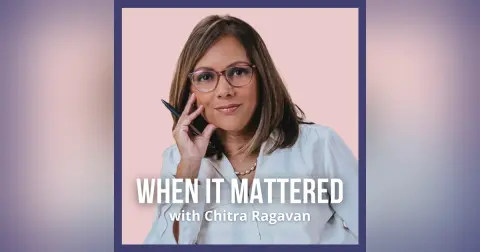


Ep. 5 — A Dangerous Biker Bar Encounter Teaches a Teenage Musician a Lesson for the Boardroom / Aaron Warner, Founder and CEO, ProCircular In this episode, Aaron Warner, Founder and CEO of ProCircular describes how he and his teen metal band inadvertently provoked a bunch of drunk bikers to violence with an ill-chosen song. Warner shares how the band defused the scary stand-off and how the decision they made in the face of danger taught them an invaluable lesson on what it takes to succeed in the corporate world and in life. And he describes what that experience taught him about risk management and how it has helped shape his career in cyber security. Transcript Download the PDF Chitra: Hello and welcome to When it Mattered. I'm your host, Chitra Ragavan. I'm also the founder and CEO of Goodstory Consulting, an advisory firm helping technology startups find their narrative. Chitra: On this weekly podcast, we invite leaders from around the world to share one personal story that changed the course of their life and work and how they lead and deal with adversity. Chitra: Through these stories, we take you behind the scenes to get an inside perspective of some of the most eventful moments of our time. Chitra: On this episode we will be talking to Aaron Warner, the Founder and CEO of ProCircular. The Iowa-based cyber security firm helps companies confidently manage their cybersecurity risks. Aaron started ProCircular after a 22-year background as a CIO and CTO in the biotech world. Chitra: Aaron, welcome to the podcast. Aaron: Thank you, Chitra. Chitra: You have a really fun job. Basically, companies pay you to hack into their systems so that you can show them the holes in their security fabric and then you help patch up those holes. It's a bit of an edgy counterculture type of job. How did you get into it? Aaron: That's a good question, Chitra. I actually come from a very academic family. There are a number of different people in our family that have PhDs and this, that and the other thing. Aaron: My grandfather actually was one of the people who was involved in creating standardized testing at the University of Iowa, so the work that they did led to things like the SAT and the ACT. Aaron: I actually went sort of a different direction. I spent a lot of time as a kid on my Commodore 64. I never really went the academic direction. In fact, the fact that I don't have my doctorate, my grandfather sort of went to his grave disappointed about. Aaron: I was always interested in computing. I'm always interested in music. Ended up in high school playing in a metal band, actually. Found ourselves as the sort of house band for a biker bar before bikers were all lawyers and hedge fund managers. It led to some really interesting situations. I learned a lot from some of those experiences. Chitra: Tell us about, what was your band called, first of all, and what were some of the experiences you had, and what convinced you to create a metal band of all things? Aaron: The naming of the band actually was one of the things that I've carried into business world and that's a really bad name, if you don't think it through, can follow you for the rest of your career. Aaron: So our band was called Noise Ordinance. The group actually went a variety of different directions. My guitar player's now the president at a global biotech firm, drummer is a professor of optometry, other guitar player works for a fairly large food organization on the East Coast, and our bass player went on to the Marines and then ended up working in the defense intelligence world. So they're pretty nontraditional approach, our band. Aaron: So Noise Ordinance, we were this house band at a bar in a very small town in Riverside, Iowa, called the Iron Horse. The first night that we played, I was 16 years old. I don't know what my parents were thinking, letting me go to this bar in the first place, but somehow we talked them into it. Aaron: We got together and thought, "What's our target audience? What's the group that we're really trying to speak to?" Did a little bit of homework and discovered that the bikers all sort of held out a Born To Be Wild. That was a song that we were going to knock out of the park. Aaron: I will, to this day, never forget the last four chords of that song. When we finished, the crowd was silent. The bikers were very clearly angry with us, and some of them were sort of reaching to their bottle upside down so that they could throw these things at us. They were looking at us trying to figure out whether they could physically throw us out of the bar. Aaron: And then I looked over to the guitar player and said, "You know, we're going to die. We're in physical risk right now." Chitra: Why were they angry with you? Aaron: Well, as it turns out, that song, especially with bikers in the '70s, is something of an anthem, and we didn't realize this at the time, but for a bunch of 16-year-old kids to get up and play their song and try and take it on as their own, none of us even own motorcycles, so it was sort of treading on their territory and they made it abundantly clear that we'd crossed the line. Aaron: But I guess the lesson learned, if you have failed in front of a bunch of bikers like that, if you're in physical risk for your life, any boardroom that you walk into, any meeting with a customer or meeting with a lawyer, and none of those things look nearly as scary as they might otherwise, I mean, the chances that you're going to leave a conference room alive, the chances that somebody in a deposition is going to throw a bottle at you are actually very low. Aaron: So, relative to that, everything else looks pretty straightforward, and honestly, that's been one of the lessons that I've kind of carried forward into the work that I do today. Chitra: Well, when you first entered the workforce, did you actually think about that moment when you had to go into a difficult situation? Aaron: Yeah. You sort of refer back to that at every turn and you think it could be bad. You could fail at this. But it's probably not going to be that bad and it's probably not like a life-threatening situation. So it's certainly something that comes up over and over again. Aaron: And actually, the other members of the band bring that up quite a bit. They have presentations to their board, or they have investors that they have to work with, or they have to defend a research paper that they've written. It's never quite as bad as failing at Born To Be Wild in front of a bunch of bikers. Chitra: How did you get out of there alive? What appeased them? Aaron: Yeah, the bar was the Iron Horse Saloon in Riverside, Iowa. It no longer exists. I think, thankfully, the place was condemned. Aaron: We got out of there by focusing on the next song and playing as well as we could, and by the end of the night we had turned that crowd around and they asked us to come back and play, and we actually played the last night that the bar was open. So it worked out pretty well for everyone in the long run. Chitra: I'm assuming you didn't play the same song on that last night, or did you? Aaron: I don't believe that was on the set list, no. It was still not our song. Chitra: So that experience of sticking with something in a difficult situation also probably had a lot of inspiration for you down the line. Aaron: Yeah. It's easy to say, but in practice it's much more difficult. When things get difficult, when things don't go the direction that you thought they might or that you hope they would, that, I think, is what sort of separates the wheat from the chaff. Aaron: Just in my experience, that's where you learn the most. That's the place where those big parts of who you are really are defined. Am I going to put my head down and work through this, or am I going to throw up my hands? And I just have never been one to throw up my hands and walk away. Chitra: Do you think the bikers didn't throw bottles at you because they saw you sticking it out? Aaron: I think they respected what we were doing, because it took about three seconds for us to get into the next song, and they thought, "Well, these kids have sort of stuck with it. Maybe we're going to give them a chance." Aaron: By the end of the night we had a whole bunch of new friends, none of which my parents probably would have approved of. Chitra: So how did you get from there into the cybersecurity world? Aaron: Well, I had always done computer work. It was always something that I'd put my time into. I didn't know any better. I just thought that that's what other people did with their free time. Aaron: And it was actually through the band. I met the bass player in another band. He was actually about to defend his dissertation at University of Iowa in computer science. Aaron: Iowa City is like that. Everybody's involved with the university in some way or another. He said, "I've got to defend my dissertation. I've been putting this off and I have this company, this little biotech company in Coralville, Iowa, just outside of town, and they need some software written, they need a network installed, and I know that you could do it." And I said, "I'll take a look." Aaron: So I went out, met with this little biotech company, a guy by the name of Joe Walder 00:08:59. The company was called Integrated DNA and I did some work for them. They were happy with it and Joe said to me, "Aaron, we'd really like you to join the company." Aaron: At the time I was 20. I said, "No, I have dropped out of school twice now to take on computer-related projects and I can't do that. My family is going to kill me if I don't at least get my master's degree." And Joe said, "Well, we'll pay for that, if you'd like. We'd really like you to join the company....