Sept. 9, 2019
Dr. Robert Pearl
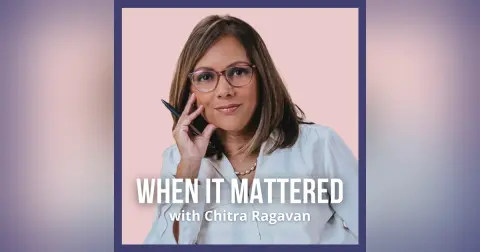



Ep. 10 — A father’s death from a medical mistake propels his son to tackle the most serious problems in our healthcare system / Dr. Robert Pearl, former CEO, Kaiser Permanente Medical Group. Dr. Robert Pearl went to college to learn philosophy. But when his favorite professor was denied tenure, Dr. Pearl veered towards a career in cardiac surgery, naively believing it was devoid of politics. But his naivety was short-lived. Pearl says he quickly became disillusioned by the inequalities he discovered in his specialty and profession. He shifted course again and became a plastic surgeon, finding a renewed passion for medicine after he went to Mexico to help children with cleft lips and cleft palates. Later offered a chance to lead Kaiser Permanente, Dr. Pearl describes how he sacrificed his love of surgery to rescue the nation’s largest medical group from its dire predicament (when he took over as CEO, the group had just two days left of cash reserves, in violation of California regulations, which required three). In the process of turning the company around, Pearl realized with a shock just how broken the U.S. healthcare system really is today and how much effort it will take to set it right. Pearl’s disillusionment came full circle when his father died from long-term complications from an easily preventable medical mistake. And he began to grasp the financial, emotional, and social toll that medical mistakes cause, including 200,000 deaths annually. Pearl shares how he took his father’s death to heart and vowed to spend the remainder of his time as CEO of Kaiser Permanente and beyond solving some of these seemingly intractable problems. In concluding this compelling saga of the education of an American doctor, Pearl mentions some striking examples of companies such as Amazon that are trying to solve the healthcare dilemma. And he describes how he is continuing his mission and passion to transform U.S. healthcare today in his third career as an author, professor, and public speaker. Transcript Download the PDF Chitra Ragavan: Hello, and welcome to When it Mattered. I'm Chitra Ragavan. On this episode, we will be talking to Dr. Robert Pearl. He's the former CEO of the Kaiser Permanente Medical Group, the nation's largest medical group. He also serves as a clinical professor of plastic surgery at Stanford University School of Medicine, and is on the faculty of the Stanford Graduate School of Business. Chitra Ragavan: Dr. Pearl is the author of the bestselling book, Mistreated: Why We Think We're Getting Good Healthcare – and Why We're Usually Wrong. Robert, welcome to the podcast. Robert Pearl : Thank you very much for having me. Chitra Ragavan: How did you enter the field of medicine? Did you always want to be a doctor? Robert Pearl : I went to college to become a university professor. I expected to be a teacher of philosophy, but the professor that I thought was the best didn't get tenure, not because he wasn't excellent at the field, he ultimately became the chairman at Reed, but because of his political views. And I decided I didn't want to go into something that would be based on politics; and in the naivety of a 20-year-old, I thought it would be medicine. Robert Pearl : When people learn about my career, the CEO of actually the nation's largest medical group, and thinking that I was going into it to avoid politics, they often laugh. But that's how I saw it; it was life and death, and why should politics come into the middle? And so I went to Yale Medical School to become a doctor. Chitra Ragavan: And what was your specialty that you wanted to pursue? Robert Pearl : That's also interesting, because not wanting to get caught in political crossfires, I thought that cardiovascular surgery would be the best. At the time, the mortality rate was moderately high, and those surgeons who could get the best results, the lowest mortality, I was certain would be the ones to get the patient referrals. Robert Pearl : And, of course, if the mortality was high you had to look in the mirror and accept that, but I was prepared for that risk. What I wasn't prepared for was the fact that the referrals didn't get sent to the best physicians, and this was when I was now a resident at Stanford University; but instead they were sent to the people who could entertain the most lavishly, who belonged to the right country clubs. And I became very, very disillusioned with all of medicine as I had previously with university professorship. Chitra Ragavan: But you stuck to the path. You didn't quit. Well, what happened to keep you on the journey? Robert Pearl : Well, I was very fortunate. The chairman of Plastic Surgery saw a potential in me, and he offered to send me to Mexico, where I had the chance to work on fixing children with cleft lip and cleft palate. And I fell in love with the specialty. I fell in love with the look on patients' faces, when after hiding their mouths for their entire life, they finally took the bandages off, looked in the mirror and looked out at the world with a new pride. This is why I wanted to pursue medicine, and it ultimately became my clinical career. Chitra Ragavan: And how many surgeries did you do of cleft lip and cleft palates? And were there any particular cases that you remember in particular? Robert Pearl : So I probably did close to 20,000 surgeries across my surgical career, of which at least 1,000 of them were children born with cleft lips and cleft palates. There are quite a number that I remember extremely well. One of them was actually in Mexico, when I went there to do volunteer surgery as part of Interplast. Robert Pearl : And the patient we operated on first was a gentleman in his 60s. He had never taken a Bandana off his face since he was a young child. He had faced life in ways that I couldn't even imagine. And there he was coming in for surgery. We did the operation. It went extremely well. He took off the Bandana. And about a year later I heard that he had gotten married. It was a wonderful, wonderful story in the power that medicine can have to improve patients' lives. Chitra Ragavan: So you loved being a surgeon. And yet at one point, you decided to become the CEO of Kaiser Permanente, the nation's largest medical group, which was essentially a management job. Were you able to continue to do surgery? And why did you decide to become the CEO of Kaiser Permanente? Robert Pearl : So this was in the late 1990s. Kaiser Permanente was in major trouble. We had as a company, as an organization, lost a significant amount of money. We were down to two days of cash. And in the state of California where the corporate headquarters are, we had to have three days of cash, just to meet regulatory requirements. So we had to borrow a day of cash to stay in business. My predecessor left the job under pressure, and the position came open. Robert Pearl : Now in our medical group, the process of selection is a year-long process actually, that involves multiple nominations, followed by a weaning down process down to a group of three, and then finally a selection in the end. And I didn't have any great interest actually becoming the CEO. Robert Pearl : It wasn't the size of the challenge, I was up for that; it was just that I so enjoyed my surgical practice the idea of giving it up, as I would have to do, given that the corporate offices were 50 miles from my home, given the fact that you can't operate one day and then travel across the country to a different Kaiser Permanente to visit there and have a complication up with your patient without creating tremendous media disruption. Those were the things I didn't want to give up. Robert Pearl : And I asked a couple of friends, people I respected highly, whether they would want the job, and none of them thought that they were up for it. None of them really wanted that kind of responsibility, and so I had to make a choice. That was probably the most difficult choice I've had to make in my life, between something that I knew that I loved and something that I thought was an obligation, a responsibility. Robert Pearl : In the end, I felt that if I didn't step forward, that the people who would probably get the job would not be ones that I'd want to follow, or ones that would be able to solve the very difficult problems that existed. And so I made the decision to step forward, to compete for the position, hopefully getting selected by my board and ratified by the physician shareholders. Chitra Ragavan: So you began in your first career as a surgeon, and now you were in your second career as a chief executive of the largest medical group, and you began to understand the problems with the healthcare system at an incredible intellectual level that you probably didn't have as a surgeon. You had this macro lens into what's wrong with our healthcare system. Chitra Ragavan: And in your book, you talk about how you understood that a lot of the conventional wisdom and perceptions that the public has, probably even enforced by the medical institutions and even our government, that we have one of the best healthcare systems in the world, we're wrong. What were your basic findings that surprised you the most? Robert Pearl : So you're pointing out quite a number of very important issues. The first one is the issues about the American healthcare system. It most closely resembles a 19th century cottage industry. It's fragmented with physicians and hospitals scattered across the community. It's paid on a piecemeal basis as you'd call it in 19th century terminology. People are paid on volume, not value. The more you do, the more you get paid, whether it's a good result or a bad result. Robert Pearl : The technology is left over from the last century. As you note, I teach at the Stanford Graduate School of Business,...