Dec. 2, 2019
Kevin Burt
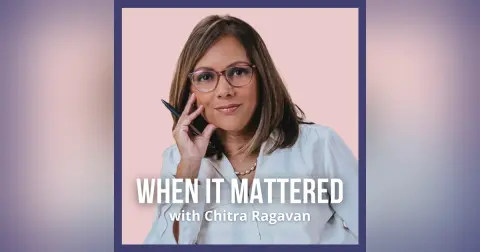


Ep. 22 — An Iowa musician battles a lifetime of blues and gets his groove back on the international blues stage / Kevin Burt, Singer, Songwriter, blues heritage educator. Raised by a single mom on $5,000 a year in food stamps, Kevin Burt spent most of his life in chronic “survival mode” in the school of hard knocks. That meant a chronically anxious and overworked state of mind and body: “You're so worried about the basics of day to day that there's no way to think about tomorrow, there's no way to think about not a day from now, not a week from now, not a year from now,” says Burt. “You can't make future plans if you're not okay. You're just surviving. That hustle turns into the worst kind of a loop to be in.” So caught was Burt in a punishing work cycle of 300 or more shows a year that when his friends urged him to sign up for the prestigious International Blues Challenge in Memphis, Tennessee last year, he said he was too busy. But his friends prevailed. Burt decided to jump into the Challenge, albeit grudgingly. It would prove to be the best decision of his life. Burt swept the contest in three categories, best harmonica, guitar, and solo/duo — the first performer to accomplish that little hat trick in the competition’s thirty-five-year history. His massive success, borne of a lifetime of hard work and resilience, has skyrocketed Burt into a surreal new matrix, both on the international blues soundstage and in his personal headspace. He says it’s a development that he’s “wholly unprepared for.” But he’s getting there quickly, one step at a time. Burt’s life is rapidly changing. But there’s one thing that will remain constant: His commitment to his role as a blues heritage educator and a proud narrator of Iowa’s forgotten important role in the evolution of the American blues scene. Tanscript Download the PDF Chitra Ragavan: Born and raised in Waterloo, Iowa blues artist, Kevin Burt, had a tough childhood that put him in chronic survival mode for most of his life, forcing him to make a bunch of career and personal sacrifices to support his family. Chitra Ragavan: Then last year, Burt made a decision that changed everything. Hello. Everyone, I'm Chitra Ragavan and this is When It Mattered. This episode is brought to you by Goodstory, an advisory firm helping technology startups find their narrative. I'm joined today by Kevin Burt, who after more than two decades on the local and national blues circuits is well on his way to becoming a recording artist of international merit. Kevin, welcome to the podcast. Kevin Burt: Thank you for having me, appreciate it. Chitra Ragavan: You told me recently that your survival mindset began at age five when your parents were separated. What was your life like after that moment? Kevin Burt: It's just one of those things where you know that every day it's about making sure that you make it to the next one. It wasn't so much that it was out of danger. It's just out of not knowing. It's the knowing that your mom's doing the best she can and you've got siblings and you're watching them do the best that they can. Your responsibility was to do the best you could too. It was a collective mindset versus just being a kid. Chitra Ragavan: Your mother had to raise ... How many kids on a very limited income? Kevin Burt: There were four of us. My parents separated, they never divorced. My dad was always there but not, and so he was ... Chitra Ragavan: But not there. Kevin Burt: Yeah, yeah. He was living his best life. I don't fault him for that. It was his choice to make. Mom raised four of us, three boys, one girl. All three of us boys ended up being all American football players and our sister was the best athlete in the family. Chitra Ragavan: This was on food stamps? Kevin Burt: $5,000 a year in food stamps. Fixed income is just that. The one thing that it taught me is that I knew that I didn't want my kids to ever experience it. It wasn't a situation where it was, hey, we're living the dream. It was just reminding folks a nightmare is a dream too. We always had love and never felt like we were in a position where we were destitute by any stretch. It just meant that what you did had to matter. Chitra Ragavan: You had a lot of people helping you get through those early years. Kevin Burt: Yeah. The neighbors were always there. I could always count on them to ... I would do things for them as I got older. My brothers and I would shovel snow, and cut grass, and all of those kinds of things for a lot of the older folks in the neighborhood. They were all friends. We all went to church together. They'd known us. We stayed in the same neighborhood my whole life. All of the folks that were there watched us and helped us to grow up. They were all a part of who ended up being. I used to disappear sometimes and go over to some of my neighbor's house. There were a lot of older ladies in my neighborhood and a lot of grandmas I used to call it. I used to sneak over to their places. They always have cake or cookies. I'd sit in there and listen to stories and have cake. My mom always knew. If she didn't see me outside playing, I'd stumbled, somebody had baked something. Chitra Ragavan: Your mom's difficult experience and how she handled it, what did that teach you about life? Kevin Burt: The one thing is, is that no matter how tough things may have been for her, we always laughed. We always smiled. We always enjoyed the fact that we were together and we knew that we could count on each other. We leaned on that quite a bit. My mom, she was my original superhero. She was the person that if things weren't going well, she would find a way to make it. I say it might not be the best, but she'd make it better. A lot of times, I described her as the most powerful force in the universe. Everything began and ended with mom. It wasn't that she was a domineering kind of a person or any of that kind of stuff, she had a big heart and that heart was always wide open, always. Chitra Ragavan: You've talked about being in survival mode. Can you describe what survival mode is? I mean, what are its characteristics? Kevin Burt: The biggest thing is, is you're always working from a position to get to okay. I've always said that if you're not okay, you can't move forward. It's almost like you're digging yourself out of a hole. Sometimes folks forget that if they dig and they put the dirt under their feet, it helps to fill in the hole as you're going along and eventually you can get out of it. Once you're out of that hole, now you're on even ground with everybody else. Sometimes you find yourself just ... You're so worried about the basics of day to day that there's no way to think about tomorrow, there's no way to think about not a day from now, not a week from now, not a year from now. Kevin Burt: You can't make future plans if you're not okay. You're just surviving. That hustle turns into the worst kind of a loop to be in. Because you hustle and you work all day and you don't see that it made a difference. You go to bed, you wake up, and tomorrow is the same thing. You're just working to try and get to okay. It's taken a long time to get to a point where I can stop thinking that it's not, that I'm not okay, or that things aren't going to be okay. Chitra Ragavan: Yeah. You went to college and wanting to be I guess in football, but then you ended up with a career as a singer. How did you make that transition? When did you first realize that you could not only sing but that you could also support yourself through the blues? Kevin Burt: Well, the powers that we have are ... They're remarkable. They always introduce you or put those things that you're supposed to do around you. Music has always been in my life, but I never thought it was what I was going to do. I always saw myself ... I believed that I was going to be a professional athlete. I thought that I had worked to become that. My true senior year of college playing football, the third play of the first game, my knee got dislocated. You go from being a preseason All American to damaged goods. The folks that were reaching out to you from the NFL and all of those places, those letters stopped coming. You struggle to get yourself back. Kevin Burt: At a smaller school, there's no rehab program. There's no special doctors that are there to help you to get better and to rehab that injury. You do the best you can, what you got. You come back the next year, you do the things that you can do. It opened up a door for me to try out with a professional football team in Canada, the Hamilton Tiger-Cats. At the end of my tryouts, they basically just told me that they liked me but I was too short too American. They sent me home and the game of football told me it was done with me essentially. That's one of the things that people don't think about in terms of sports. Kevin Burt: You can always find a pick-up game of basketball and then you can keep playing that game. There's recreational leagues of hockey even. Tennis, you can find a buddy and go do that. There's no pick-up football. There's no way to just go and do that casually. When the game of football is done with you, it decides it most of the time. That leaves a lot of ... It was my expression, it was my outlet, it was my sanity. It kept me from dealing with my own anger issues because I could bottle it all up and take it onto a football field and use it and play it out to the point where I was exhausted. Kevin Burt: Everything that frustrated me with the world, I could take it out on that football field and use it as fuel. To have that just taken away, to be told by the game itself, you don't get it anymore. It's the worst breakup of a relationship you could probably imagine. Luckily, I'd gotten my degree while I was in school. I was thinking I might as well get into graduate scho