June 22, 2020
William Marler
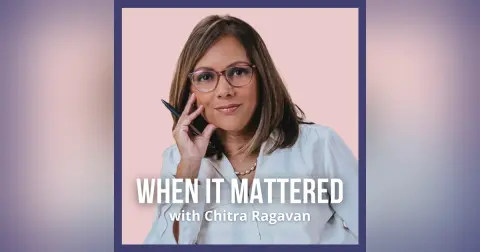


Ep. 49 — A teenage runaway tries his hand at migrant work and becomes one of the most powerful food safety lawyers in the world / William Marler, Owner & Managing Partner, Marler Clark, LLP. When Bill Marler was 16 years old, he ran away from home and became a migrant worker for a while, living in squalid cabins, sleeping outdoors, and hitchhiking rides to farms to pick crops. The low point of Marler’s life came when he lost a gig and completely ran out of money. For a week, he lived on just a five-pound sack of pancake flour. “And it has changed my perspective on pancakes I have to admit,” admits Marler, ruefully. “Anytime pancakes come up as something for breakfast, my children have had to hear my pancake story. I think they now avoid making pancakes because they don't want to hear my story again.” Marler’s brief stint as a farmhand also gave him a lifelong empathy for migrant workers and a deep connectivity to food and food safety issues. More than anything, it also made him realize the importance of a college education and he went on to become a lawyer. By sheer happenstance, one day, Marler got a referral for an E. coli case tied to the Jack In The Box hamburger chain. What started as one case turned into a multi-million dollar class action settlement, putting Marler and his law firm, Marler Clark, LLP., forever on the map on food safety lawsuits and advocacy. Marler has frequently testified before Congress, resulting in stronger food safety laws and regulations and is a globally sought after public speaker on these issues. As growing numbers of migrant workers and meatpackers fall victim to #Covid-19, Marler says there are profound ramifications to not protecting these frontline workers from the coronavirus. Ramifications that not only devastate these communities but the entire economy and American consumers as a whole. “We've already seen the impact of companies not paying attention to the needs of their workers, because we're seeing beef prices go up, we're seeing meat be less available, certain kinds of meats being less available. So you pay for it now by protecting the workers, who also with COVID, go out into your communities and spread the disease throughout the community,” says Marler. “And so it's not just to protect the worker, which I think is the moral thing to do, but it's also to frankly protect yourself. And sometimes profits are the focus and we become so shortsighted about the long term costs to the people, long term costs to the community.” Read the Transcript Download the PDF Chitra Ragavan: When William Marler was 16 years old, he ran away from home and became a migrant worker in Washington State. Living in squalid cabins, sleeping outdoors, and hitchhiking rides to farms to pick crops was difficult and dangerous. The low point of Marler's life came when he lost a gig and ran out of money. His stint as a migrant worker gave Marler lifelong connectivity to migrant workers, to food, and most importantly, to food safety issues. Chitra Ragavan: Hello everyone, I'm Chitra Ragavan. And this is When It Mattered. This episode is brought to you by Goodstory, an advisory firm, helping technology startups find their narrative. I'm joined now by William Marler, managing partner at Marler Clark Attorneys At Law. A national expert in food safety, Marler has become the most prominent foodborne illness lawyer in America, and a major force in food policy in the US and around the world. Marler is a frequent speaker on food safety issues at global events. He has testified before U.S. Congressional committees and his work has led to laws and regulations being passed to make food safer. Bill, welcome to the podcast. William Marler: Thank you, Chitra. Chitra Ragavan: Why did you run away from home? William Marler: Well, it was more like I was out to seek adventures and something different than spending another summer working on the family hobby farm. And I told my parents, I was going to go to Eastern Washington and work in the fields. They were not very excited or supportive of that. And one day when they were away from home, I packed a duffle bag and walked down to the road and finally got a ride. And about 18 hours later, I was in a little town on the Columbia river, almost dead square in the middle of the state. Chitra Ragavan: Was it scary? What did you do next? How did you find work? What crops did you pick? William Marler: Yeah, so I had some vague idea about where to look for work. I eventually found a job thinning suckers out of apple trees and thinning apples. That was my first job. And it was very hard work and a lot of tree climbing and ladder climbing. And over the course of the next three, three and a half months, I worked throughout Eastern Oregon, Eastern Washington and into Canada, following the crops. William Marler: There was peaches, apples, cherries, and various odd other farm jobs, including, a period of time, spraying, God knows what chemicals on plants without a shirt on, without a respirator without anything. So it was a very interesting, very interesting experience and one that I think about more frequently than I probably should. Chitra Ragavan: What was the most difficult point of that experience would you say? William Marler: Well, the work was really hard generally and this was in the early 70s and at that point in time, the migrant farm workers were essentially for the most part, poor whites. It had not really changed to a Hispanic culture of workers. And I always knew that I could hit the highway and go home. My parents would have welcomed me home, but I was a pretty proud kid. And I think probably the low point was I... There was a period of time where I lost some work. There was not anything to do. I still had a place to somewhat live, but I didn't have any money. And my food was, I had a five-pound sack of pancake flour, and that's what I lived on for about a week until I got a new job. And it has changed my perspective on pancakes I have to admit. Chitra Ragavan: Do you even eat them today? William Marler: Anytime pancakes come up as something for breakfast, my children have had to hear my pancake story. I think they now avoid making pancakes because they don't want to hear my story again. Chitra Ragavan: None of the Father's day breakfast in bed pancakes for you. William Marler: No, afraid not, afraid not. But still in all, it was a really interesting experience for a 16-year old. There were most moments in time where it was really super hard work, but it's given me a perspective on farm labor that has stayed with me, and labor generally, has stayed with me for my entire life. Chitra Ragavan: And what was the central takeaway do you think? William Marler: Well, it's interesting, I've thought a lot more about it here during this recent COVID episode that we're all living through and just how important, so many people that we don't really think about as essential workers. We tend to think of police officers, firemen as essential, but I think COVID has given us a sense of how the frontline people are nurses and doctors, ambulance drivers, and then people who work in grocery stores and people who work in factories, farms and out there too are, there are really the frontline workers picking our fruits and vegetables and working in our slaughter plants. William Marler: So, I think it's given me a perspective from a white middle class kid's perspective that has grown into white, upper class, 63-year-old guy's perspective. But nonetheless, I think it's helped shape my view of hard work and the value of labor. Chitra Ragavan: And I guess it also taught you the importance of education and college. William Marler: Certainly did. I feel very blessed to have been able to go to college and make it through and then into graduate school law school. But yeah, it's certainly, very tough work working on a farm and working on farms and living by your body and I definitely wanted to come back and make a living by using what gray matter I had between my ears. Chitra Ragavan: And then in college, you also learned the power of political activism. How did that come about? William Marler: I was somewhat politically active in the 70s. I think even though I never had to register for the draft because the Vietnam War was over by the time I turned 18. I lived in a Naval town, Bremerton, which is, there were not a lot of kids that were going to college there to avoid the draft. William Marler: A lot of kids were going into college. Not to get into the war and being drafted. And so I viewed that that's what was going to happen. And it certainly focused one's attention on politics. But when I did go to college, I wound up being one of a handful of students that decided to run for the Pullman Washington, which is where Washington State University is. The Pullman Washington City Council. And what happened was that the four of us filed for four separate open seats, the seats were already filled with the incumbent and then another town's person had filed in three of those four. William Marler: So the students had to face a primary election where they got bounced out because the town's people voted for one or the other of the town's person. The person I ran against didn't have a primary opponent and so I got a pass through the primary. The students came back a week after the primary, which one would argue that that's probably why they had the primary when they had it, but we were able to register students to vote. And I won by 53 votes out of 5,000 cast and became the youngest person and first student ever elected to the city council, and for a short period of time at age 19, I was one of the youngest, if not the youngest people ever elected to a city wide or any sort of office, because we had just gotten the right to vote. ...