Biographicon
"By separating into one biographicon this peculiar class of lives, a philanthropic emulation would be excited, a debt of social gratitude would be discharged, a trophy to patriotism would be erected, and an instructive knowledge of the present state of nations and the gradual concatenation of interc...
Recent Episodes
11
April 30, 2026
Charles Avison the music maker, with Roz Southey
In this episode Roz Southey talks about Newcastle upon Tyne's Charles Avison the most prolific English concerto composer of the eighteenth century and an outstanding figure in the town's musical history.
10
March 16, 2025
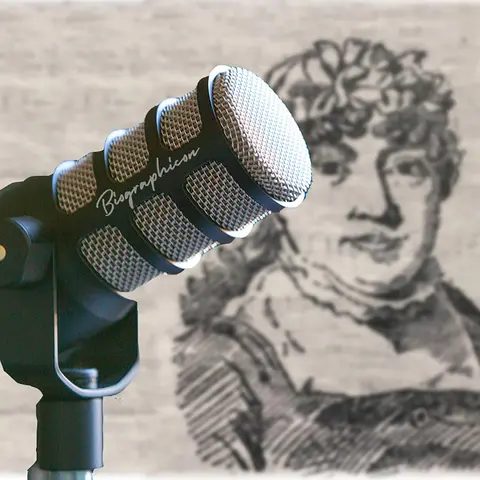
Sarah Hodgson, a radical type, with Helen Williams
In this episode I am joined by Helen Williams, a specialist in eighteenth-century book history to find out about the Newcastle-born printer, newspaper editor and radical Sarah Hodgson. Dr Helen Williams is Associate Professor of English Literature at Northumbria University. In collaboration with the Worshipful Company of Stationers, she holds a British Academy Innovation Fellowship entitled 'Communicating Women's Work in the Historical Archive' (2022-2023), exploring the history of eighteenth-ce
8
Dec. 1, 2024
The Cumberland Bard, with Sue Allan
This episode features Dr Sue Allan, an expert on Cumbria’s folk tradition, talking about one of the most significant dialect poets of Georgian Northern England, Robert Anderson from Carlisle. A calico printer by trade, the 'Cumberland Bard' Robert Anderson has long been considered the standard bearer of Cumberland's contribution to bardic verse. Anderson was a close friend of the local stroller Charlotte Lowes. Other influential figures of the 'Cumbrian Enlightenment' in this episode include the
7
March 21, 2024
Preach It! Rachel Hammersley on James Murray
A major influence on the radical Thomas Spence, James Murray was a preacher who used the pulpit and print to promote new ideas. As well as publishing works on religious subjects, Murray was also a grammarian whose book The Rudiments of the English Tongue was published in Newcastle-upon-Tyne in about 1771. In this episode Rachel Hammersley joins me in Newcastle’s Lit and Phil to discuss Murray’s influence in the region at a critical moment in its political and cultural development. Rachel Hammers
6
Feb. 12, 2024
William Newton and the North’s Rural Renaissance, with Richard Pears
Richard Pears and I discuss William Newton, arguably northern England's first home-grown architect who was responsible for Newcastle’s Assembly Rooms and Charlotte Square the town’s first fashionable garden square. Richard’s work examines the emergence of the professional provincial architect and his remarkable local archive work has allowed him to supplant the standard ‘urban renaissance’ understanding of eighteenth-century studies with his own powerful argument for a northern ‘rural renaissanc
5
Sept. 10, 2023
William Shield: no Geordie Dick Whittington, with Amélie Addison
William Shield was born in the village of Swalwell near Gateshead in County Durham. Through the help of his friend, the poet and actor John Cunningham, he became the leader of the Durham Theatre Company band in the 1760s providing him with the opportunity to develop his compositional abilities. After moving to London, he pursued a successful career performing and writing stage works at the Theatre Royal Covent Garden where he earned the respect of Haydn. Shield was made Master of the King’s Musi