Episodes
36
Dec. 2, 2024
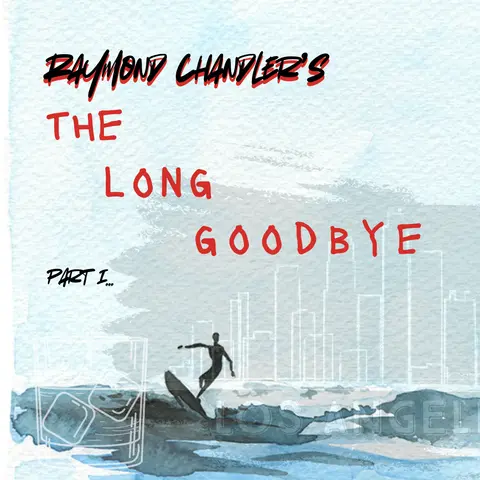
Episode 69: “A Surfeit of Injustice,” or Raymond Chandler’s The Long Goodbye, Part I
The lads kick off this series of Chris' called "Relativistic Noir" with Raymond Chandler's remarkable 1959 The Long Goodbye. Both Chris and Jesse are rendered somewhat slack-jawed at the sheer audacity—and skill—of the prose and of Chandler's ability to build a world so stylized while still remaining plausible. They wonder, though, if maybe there aren't just a few too many similar cops, and couldn't this have used maybe one more editorial pass? The plot is, at points, as ponderous as the sentenc...
35
Nov. 21, 2024
Episode 68: “From Fiends to Friends,” or Gary Shteyngart’s Our Country Friends, Part II
Gary Shteyngart’s overtly Chekhovian novel ends in a distinctly non–Chekhovian manner, with hope. However, the hope is dearly earned, as one of the country friends sadly does not survive the second half of the book. The lads wonder if Act Four is a bit padded, and sort out the layers of satire in which Shteyngart wraps what is at heart, a tender story of love, friendship, and forgiveness.
33
Oct. 31, 2024
Episode 66: “Russia With Love (Nesting Dolls),” or Gary Shteyngart’s Our Country Friends Part I
Gary Schteyngart’s 2021 pandemic novel is overtly Chekhovian, and the lads love it. A group of friends and family gather in the Hudson valley during the 2020 pandemic leading to betrayals, love triangles, secrets, lies, but also some joy and camaraderie. We discuss how Schteyngart’s precise portrayal of his characters’ inner lives, and marvel at moments of satirically brilliant prose.
32
Oct. 21, 2024
Episode 65: “Our Play with Louis,” or Louis Malle’s Vanya on 42nd Street
Bagg and Dukes watch Louis Malle's wild 1994 film that takes, as its subject, a rehearsal of Andre Gregory's..."performance" of Anton Chekhov's Uncle Vanya. If that sounds convoluted, it is. Gregory and an amazing cast (Julianne Moore, Wallace Shawn, Larry Pine and more) rehearsed the play in a dilapidated theater, inviting a few guests each night to watch what they were working on. Malle's film shoots an entire performance/rehearsal, nesting the theatrical performance in his own film. Yikes.
31
Oct. 7, 2024
Episode 64: “A Cloud on a String,” or Anton Chekhov’s Uncle Vanya
Anton Chekhov's 1897 play is in many ways even more minimalistic and sad than The Cherry Orchard. Dukes once again struggles to imagine the three dimensions of the story, while recognizing the almost documentary realism of the drama. Bagg finds the pathos of characters struggling for transcendence in the wrong direction heartbreakingly real.
30
Sept. 23, 2024
Episode 63: “Cherries, Anyone?” or The National Theatre’s Production of Anton Chekhov’s The Cherry Orchard
The National Theatre production glimmers with an excellent cast, including Zoe Wanamaker and Conleth Hill. Dukes finds that the performances and the direction/translation choices help raise the stakes and steepen the conflict. He wonders if there’s a kind of “oral history” or collective theatrical knowledge of Chekhov that aids live productions, and Bagg suggests that Chekhov’s genius lies in creating a scaffold which great directors and actors flesh out (while acknowledging that having an oral ...
29
Sept. 9, 2024
Episode 62: “To Sell or Not to Sell…Is That Really the Question?” or Anton Chekhov’s The Cherry Orchard, Part I
The UMBers sit down with a play that Bagg has read a million times and that Dukes is visiting for the first time. The lads discuss what this work is like for a first-timer and then put on their acting shoes to read some dialogue. Dukes wonders if this script is something that only works when the play is staged, and we get some help from a more contemporary pair of scriptwriters.
27
Aug. 19, 2024
Episode 60: “Zero Sum Narrative,” or Khaled Hosseini’s The Kite Runner.
Bagg and Dukes haven’t read this 2003 bestseller, and confess to a little snobbishness about a book that is ubiquitous at airport books stores. But…it's really good! Despite being impressed by the novel’s depiction of a childhood event that impacts our protagonist’s entire life, the UMBs wonder if the novel’s narrative physics are a bit TOO perfect.
26
Aug. 5, 2024
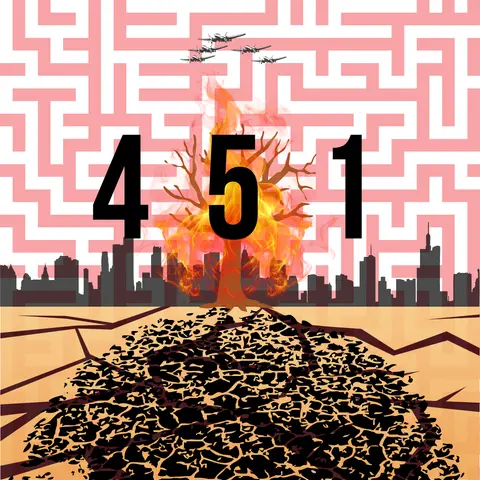
Episode 59: “The Bathetic Fallacy,” or Ray Bradbury’s Fahrenheit 451
The UMBers tackle Ray Bradbury’s 1950s classic novella and are impressed by how much influence this book has had on other writers and the intellectual landscape. The lads rattle off at least five or six other works they’ve read that owe Fahrenheit an allusive debt. Both find the prose and dialogue somewhat clunky, but in a role-reversal it’s Dukes this time that thinks Bradbury may have intended the clunkiness for artistic effect, while Bagg is merely triggered by it. Regardless, both agree that...
25
July 22, 2024
Episode 58: “The Deus is in the Details,” or Margaret Atwood’s The Handmaid’s Tale, Part II
The lads marvel at Margaret Atwood’s delicate prose and “lighter than air” narrative, in which sparse poetic writing conveys an alternative future vividly. But is the ending a bit of a deus ex machina, and if so, is that a problem? Or does that serve to reinforce the ideas at the heart of the book? Dukes and Bagg have a spirited but generally glowing read of Atwood’s 1985 masterwork.
24
July 11, 2024
Episode 57: “Highest Stakes Scrabble,” or Margaret Atwood’s The Handmaid’s Tale, Part I
The Handmaid’s Tale is set in a speculative near future that feels disturbingly familiar. The lads marvel at Atwood’s ability to vividly describe a speculative world without any obvious expository passages. Offred’s observations, musings, and memories effectively build the world, without ever taking the reader away from her point of view.
23
July 4, 2024
Episode 56: “Philosophial Poetry,” or Toni Morrison’s The Bluest Eye
Bagg and Dukes finally get around to reading Toni Morrison's The Bluest Eye, and both are impressed by Morrison's craft, purpose, and ability to keep both functioning at a high level while delivering an eminently readable yarn. They stop to smell the dandelions and begin discussing why and how this book has ended up on banned and challenged lists all over the United States.
22
June 13, 2024
“The Curious Case of the Beard and the Mustache,” or our final Ripley coda
We spend a few final minutes with Steve Zaillian's Ripley, wondering if the resemblance between Inspector Ravini and Peter Seller's Inspector Clouseau is intentional, and considering what the overall effect of the luscious high-contrast black and white footage has for viewers. Dukes posits that this style is a new way of shooting, rather than a throwback, but Bagg thinks that there is a disconnect between the visual and narrative effects.
21
June 6, 2024
Episode 54: “A Brilliant Disguise,” or Steve Zaillian’s Ripley, Part II
Dukes and Bagg wonder if Tom Ripley’s “disguise” (as himself) is meant to be as clumsy as it appears and if the show is wandering too close to the (admittedly wonderful) Pink Panther series. Nonetheless, the omniscient desk clerks, grumpy dog walker, and appearance of a delightful fellow “art dealer” provide the second half of the Netflix series enough delightful moments to make it worth the time.
20
May 23, 2024
Episode 53: “Watch Out for Busts,” or Steve Zaillian’s Ripley
Bagg and Dukes return to the source material that launched Upper Middle Brow, in the production of Ripley, directed by Steve Zaillian and (quixotically) available on Netflix. The mini-series is unspeakably beautiful to look at and, as we analyze in this episode, listen to. We think it may rise to the level of cult classic, but wonder if Netflix is the right space for this deliberate psychological portrait.
19
May 13, 2024
TEASER: Steve Zallian’s (and Netflix’s) Ripley
Dukes and Bagg are taking a break from books to talk about Netflix’s Ripley created by Steve Zailian. Having watched the first episode, it’s obvious the series is beautiful, and stark. It’s NOT a remake of the 1999 Anthony Minghella movie; Zailian is going back to the 1955 Patricia Highsmith novel as his source material. But can his adaption hold our attention for eight episodes?
18
May 2, 2024
Digression: Black Chicago’s Influence on Everything with Arionne NettlesDigression:
Arionne Nettles joins to talk about her new book We Are The Culture: Black Chicago's Influence On Everything, as well as to recommend a couple of novels she thinks Upper Middlebrow listeners would particularly enjoy. Jesse and Ari talk about their sadness over the recent news about layoffs at their former employer, WBEZ in Chicago, and explore the idea of a common thread between African culture, and contemporary African-American culture.
17
April 29, 2024
REPOST: Patricia Highsmith’s The Talented Mr. Ripley, Part II
On our FOURTH EVER episode, Dukes and Bagg explore why they have different emotional responses to Tom Ripley, and how Patricia Highsmith might have raised the stakes more effectively in the second half of the book. Our (Fall of 2022) discussion has been back on our minds in the wake of Netflix’s new Ripley series. Tom Ripley is a persistent character in our day and age, and the new Netflix series has critics musing on why.
16
April 18, 2024
Episode 51: The Talented Mr. Ripley, Part I (REPOST)
Netflix’s new Ripley series has critics musing on why Tom Ripley is such a persistent character in our day and age. Patricia Highsmith created a character that has endured and appeared in many (excellent) film and now TV adaptations. We thought we’d share our THIRD EVER episode, in which we consider the first half of Highsmith’s 1955 novel, which introduced Tom Ripley to the world.
15
April 8, 2024
Episode 50: “Nothing is More Important,” or Viet Thanh Nguyen’s The Sympathizer, Part II
The Sympathizer is brought to a powerful, if occasionally puzzling conclusion, with the narrator returning to his home country for a series of misadventures. The meaning of Ho Chi Minh’s slogan “Nothing is more precious than independence and freedom” is turned around and around in our narrator’s brain, until nothing comes to mean something.
14
March 28, 2024
Digression: Underdogs, Comebacks, and Seafood Substitutes, or Baseball Movies with Jason Herbert
Jason Herbert, from the Historians at the Movies community and podcast, joins us to talk about favorite baseball films. We share an uncomfortable moment when Chris learns who Jason’s favorite team is (hint: pinstripes), but settle into a rollicking, nostalgic, nerdfest. We discover a surprising shared affection for a certain Charlie Sheen film from the late 80s, and both Jesse and Chris hurl their picks from deep into Left Field.
13
March 18, 2024
Episode 48: “So Long, and Thanks for All The Squid,” or Viet Than Nguyen’s The Sympathizer, Part I
Viet Thanh Nguyen’s narrator tells us right off the bat that he’s a sympathizer. He can see any issue from “both sides,” he claims, a dubious virtue in the chaotic Vietnamese history following the fall of Saigon. Nguyen’s narrator faces situation after situation in which that quality of sympathizing with everybody, including his enemies, proves to be both a strength and a weakness. This wild novel surprises at almost every turn, asking us questions about what a real anti-hero might look like in ...
12
March 4, 2024
Digression: Literary Theologies with Beatrice Marovich
Theologian Beatrice Marovich reacts to our discussions of Octavia Butler’s Parable of the Sower, exploring the relationship between theology and fiction. We talk about her book Sister Death: Political Theologies for Living and Dying, and consider personifications of death in literature and pop culture.
11
Feb. 22, 2024
Episode 46: “Yelling ‘Racism’ in a ‘Post-racist’ World,” or Paul Beatty’s The Sellout, Part II
The second half of The Sellout does feature a MacGuffin and resolution of sorts, although the plot is minimal compared to the satire and world building. The UMBs struggle to understand the book, but ultimately conclude The Sellout is a takedown of the post-racial ideal of the 2010s. The brilliance of the prose is stunning, but does the structure of the book feature the same brilliance?