368: Build a Sense of Belonging with Debbie Howard
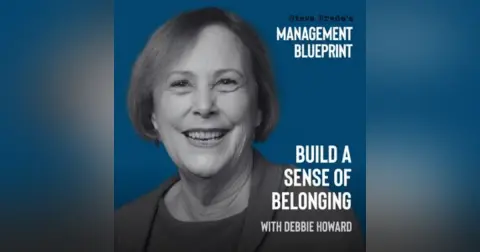


Debbie Howard, CEO of Senior Living SMART, helps senior living operators build a sense of belonging while guiding older adults and their families through complex, emotional decisions. After working at the community, regional, divisional, and national levels, Debbie founded the agency to make senior living easier to understand, more transparent, and more centered on the consumer. Her mission is to help prospects become the heroes of their own stories while giving operators the strategy, technology, analytics, and resources required to grow.
In this conversation, Debbie introduces The 3W Senior Living Growth Framework—Whether (move or not yet), Where (brands, amenities, reputation), and When (degree of urgency). She explains how senior living marketers can map consumer questions, content, and channels to each decision stage while addressing both emotional and informational needs. Debbie also discusses creating an always-on nurturing system with no dead ends between marketing and sales, measuring each channel’s contribution across a 28-to-42-touchpoint journey, and prioritizing long-term revenue over short-term occupancy. She shares how proprietary products such as marketing certification, transparent pricing, virtual tours, and predictive move-in modeling can create better consumer experiences and more scalable agency growth.
—
Build a Sense of Belonging with Debbie Howard
Good day, dear listeners. Steve Preda here with the Management Blueprint, and today my guest is Debbie Howard, the CEO of Senior Living SMART, an agency with a strategic focus on innovative marketing and sales enhancement, propelling the growth of occupancy rates through targeted strategies of senior living homes, I presume. Debbie, welcome to the show.
Thanks, Steve. Thanks for having me.
Well, that’s super exciting to have you because I don’t remember having anyone running senior living homes or a business regarding to that. So my first question will probably resonate with you. What is your personal Why, and how are you manifesting it in Senior Living SMART?
Yeah. So before starting the company, I kind of grew up in senior living, senior housing. And just so listeners know, like, what does that mean? It really means anything in the spectrum of aging, from 55-plus kind of luxury living to retirement, active adult, and then some of the needs-based care, like assisted living and memory care, or a continuum of care, which is typically nonprofit. That would be, you know, CCRCs or, like, continuing care retirement communities or life plan communities.
And so it’s a big business. And we are an aging population, and the business is booming and doing very well. But I grew up in a time when people didn’t understand what senior living was. They only kind of knew their home and the home. And nobody ever wanted to go to the home. And so then came an industry that no one really had a lot of knowledge about, which was beautiful, luxury, private-pay lifestyle plus healthcare, which was not a nursing home and provided more support than home care could. And so it was a new market. It was something that was kind of a blue ocean at the time, so we were selling a concept that nobody really understood.
I started working at the community level, helping families make the best decision for themselves or their loved one.
Share on X
And then I was at the regional level, the divisional vice president level, and the national VP of sales and marketing for one of the top five publicly traded companies in the industry. And it just always bothered me that nobody was really interested in making things easy for the consumer, for the prospect. The brands were focused on themselves and telling their story rather than making the prospect the hero of the story.
And it was more outbound marketing. It was more secret keeping. Like, “We’re not going to really tell you anything. We’re going to force you to call or come in because we know everything about this industry that you don’t understand.” And people were in an emotional state, right? There’s a lot going on. It’s a big deal to move into one of these communities, and nobody kind of walked alongside the prospect and really helped guide them, and we thought we could do better.
So we started Senior Living SMART. SMART’s an acronym for Strategy, Marketing Automation, Analytics, Resources, and Technology. Strategy because a lot of operators have tactics but not strategy. Marketing because at the point 14 years ago when we started the company, digital marketing was just coming out, so they had a lot of traditional marketing, but they were really confused and wary of digital. There was no marketing automation.
Analytics, because they either had no data or they didn’t understand the numbers and information they had. Resources, because they didn’t know where to go for what. What’s the best CRM? Where do I get floor plans? Nobody understood. We’d worked with everybody at the national level, so we knew all of the resources. And then technology, because 14 years ago, they were really behind on technology and still using spreadsheets and sticky notes. And
we thought if we could help them just be smarter, that we could help them be more successful and scale, but we could also create a better experience for consumers.
Share on X
So it sounds like you have, like, a complete franchise model that you can license to people, so they don’t actually have to buy a franchise, and you can provide this information to them and they can grow their practices.
Well, I would say that most of our clients do have a franchise model. So they are mostly third-party management companies. So the REITs and private equity tend to own the real estate, and then they hire third-party management companies, and then the management companies contract for us. So some clients might have five locations. Some have 60. Some have close to 100. And so when you get to that scale, it really becomes very much of a franchise model.
Very interesting. So basically, you provide a fully outsourced marketing and sales enhancement approach, including technology, consulting, and even execution?
Yeah, everything. Some clients have us do everything, and some of the larger companies have us kind of work within a specific skill set where we might be a complement to some other partners. But I would say most of our clients work with us as an agency of record because they get the full package, right? They get the right tech stack. They get the right strategy. They get turnkey but customizable tools and resources that they might not be able to find on their own.
And we also create a lot of proprietary products that we’re bringing to the market because we see gaps and needs in that. And as you know, marketing agencies are very human-driven. It’s a lot of labor, and it’s hard to find margin. So we needed to really add products to our mix as well.
Okay, so that just triggered another question that I’d like to ask you, but I’m going to defer it later. This is about the human versus technology question.
Yeah.
What I’d like to ask you now is about your favorite framework. So this is a podcast of frameworks, business frameworks. And I wonder if there is something, whether it’s the SMART acronym—and you already discussed this—but is there something that you figured out along the way of running this company, building this company, that helps the senior living businesses have a better conception of how they’re going to grow themselves and what are those elements that they need to figure out along the way, or some other framework that you find useful?
Yeah. So I have a couple that I think might be helpful.
One is we look at stages of decision, and we are creating marketing programs to attract consumers, so prospects.
Share on X
And there are two different audiences. There’s the adult child, who is often leading the charge to get more help for a loved one, and then there are seniors and solo agers that are researching on their own.
And so it’s really complex. It’s a very emotional decision. There’s a lot of stakeholders and decision-makers that are trying to get to the same place, but they take different paths to get there, and different things resonate with them. So one of the things we look at are the stages of decision because it could be that the older adult’s in one stage and the adult child is in another stage, and you have to meet both of them kind of where they are simultaneously, which is very complex.
So we break it down in a couple ways. Number one is to look at where they are in terms of the three Ws. So the three Ws for us are the Whether, the Where, and When.
Share on X
People spend about 70% of their time in the Whether stage of senior living decision-making: whether I need independent living or assisted living, whether there’s dementia and I might need dementia care, whether I should live near this child or that child, whether I need to sell my home, whether I can get a veteran’s benefit, whether I can afford it, whether I want to move now or whether I want to move after the holidays.
There’s, like, all of these Whether decisions, and multiple stakeholders are going through these Whether decisions, pros and cons, weighing choices, and they have to kind of get through that. And mostly they want to remain independent during that. They expect to be able to get all of that information with a lot of transparency because they’re not really ready to talk to sales. Then they get into the Where stage. Okay, well, there’s lots of different senior living community options. In most markets, you’ve got multiple brands that kind of all say the same thing. They all have the best care, and they’re all beautiful, and they all have wonderful dining and transportation.
And so trying to find that differentiator is confusing for prospects. And if you don’t differentiate, then it just comes down to location and price, which is just a race to the bottom. And so people spend a fair amount of time touring different communities, calling, looking at testimonials and social media and reviews, and they’re asking their friends, and they’re just trying to figure out where I should go. And then the When is really the urgency. Some people are really moving with an external motivation. Unexpected event lands them in the hospital or rehab, and they can’t go home, and they’re making this decision in crisis.
And then other people are better planners, and they’re just making sure that they’re researching all of their options before they’re in crisis. And so people really enter at different phases, right? The planners have more time to be in the Whether stage. The people who wait for a crisis might have to land right smack dab into the Where stage or the When stage. And it puts a lot more pressure on the consumer to make an informed decision without a lot of time.
So how do you use this framework? How does it facilitate your work?
Yeah. So we take a look at all of the touchpoints along the prospect journey, all the questions that they ask. Of course, AI now makes that a lot easier because we can actually put transcripts into AI and figure out what are the top questions that consumers are asking when they call into the communities. We can do a lot of Claude and deep research around search volume and keywords and what types of information is most valuable, and what is the kind of velocity in terms of research of what people really are looking for in order to make that informed decision.
Then it becomes content development, right? So what channel for what content? So we know social media is much better for visual content and videos and things that are more emotional, things that might give you a glimpse into the day-in-the-life type of an experience, where you can really start building that sense of belonging. They can see themselves or their loved one living there. They’re seeing the type of people who are living there, what their days look like, and so social media is great for that. And then the website’s great for more informational, so blogs and guides and e-books and pillar pages and FAQs really do well on that type of a channel.
And then paid ads has different messaging. And so what you try to do is really map out the entire prospect journey. What’s important to them at each of these stages? Which channels can deliver what type of information? Because we’ve really moved from attribution in marketing to contribution in marketing. It used to be everybody just cared about first touch and last touch. So what was the first thing that they did to find your brand, and what was the last kind of channel that they touched before they converted? And now it’s like the customer journey, and there’s so many things, so many places that they can go to get information, that we really have to look at what is the marketing contribution.
There’s not that one-to-one—they clicked an ad and then moved in—because they might click an ad at the beginning of their search, but a lot of people are not. They’re clicking it later on in the search. Now, that ad still produced value. It still contributed to that conversion, to that revenue, but we can’t just look at first-touch and last-touch attribution. So I would say that’s really how we do it, is we make sure that every question in each of those three stages has a channel that’s answering it, and usually multiple channels that are answering it, some intellectually and some more emotionally because people make decisions emotionally and then support them with research and intellect.
So this is fascinating. It feels like this is a very complex map that you have covered just in a few words. And how long does it take for you to really develop all these channels for someone? Someone comes to you and says, “Yeah, I’d like this full-stack marketing and sales enhancement approach, multi-channel, build up the assets on the different platforms, social, website.” What does it take? How many hours does it take to build this complex model that will then fire on all cylinders?
Yeah. We do a few things right up front, and we learn a lot in the sales process. It takes months for people to make a decision to choose a marketing agency because it can be a disruption, and there’s a lot of moving parts and pieces. And so we try to do as much research as we can kind of upfront. Then we do what’s called a Total Online Presence Audit. So we look at every one of their marketing channels. We audit every one of them, so we understand what’s the baseline that we’re inheriting. Do we need a new website, or can we just refresh the website that they have? Do we need to write a lot of new blog content, or do they have pretty good blogs, but they’re just really not formatted well for AI search, and so we just need to make those kind of reformatting changes?
So each of our departments goes in. They audit social media, the tech stack, every piece, Google Business Profile, local search, SEO, website. So each leader on our team goes in and does a deep dive. Then from that, we come back with recommendations. Those recommendations become the scope of work. So from those audits, we come to the table with the prospective client and say, “This is what’s working. This is what’s not. This is what your competitors are doing. This is where you compare against them, where they’re beating you, where you have the advantage.”
And then we come up with a plan. And the first 30 days are getting to know the brand.
We do a lot with doing an exercise with our brand experience team to get their voice and tone and build a custom GPT that represents them uniquely.
Share on X
We do a business state of play to understand what their business goals are. Because so many people just think that marketing is about generating leads. If you don’t understand what their business goals are, you can generate all the leads that you want and not really accomplish their goals.
Yeah.
So we dive into that as well, and then we put out a roadmap. We put out a plan. There are some things that are quick wins. We try to get those quick wins in, as many as we can, right up front. Some levers create impact quicker, and some of the best levers take a long time. So you have to really set the expectation that here are the things that we can impact in the next 30, 60, or 90 days, and then this is something that’s going to take more than that first quarter. But they’re going to be more sustainable.
And how long does it take for someone to go from zero to 60 miles per hour?
Yeah. I would say about in month four is when we have all the foundations built. We’ve gotten some quick wins. And it really happens when we either build a new website or refresh a website and then combine that new launch with marketing automation. So we’re a HubSpot shop. We build everything on HubSpot because we have to have that hyper-personalized nurturing. It’s a long sales cycle. It can take three months to over a year to get one prospect through a decision journey, and 28 to 42 unique touchpoints that have to be accomplished to guide them to that decision.
So there’s a lot going on. You have to have great content. You have to have personalized email marketing, as close to one-to-one as you can get. So lots of branching logic, lots of segmentation, just a lot of strategy. It’s heavy lifting to build a marketing automation lead nurturing infrastructure, and you’re never done. You’re always building that next workflow. But I would say once the foundational lead conversion journeys launch with that refreshed website that’s technically sound, is AI-first, it’s mobile-responsive—a lot of older websites, we have to go and do a lot of foundational work.
And once we go live with—we have three conversion journeys, two sales-qualified lead conversions, which are schedule a tour or speak to an advisor, and then one marketing-qualified conversion, which is download a community brochure. And that goes into more of that longer lead nurturing cycle. Once we launch all of that together, we’ll start seeing major impact in 30 days. So if we can get the quick wins in those first 90 days, and then everything goes live together in month four, that’s when we really start seeing the velocity.
So when you say MQL driving and SQL driving, so is this if you can get them to an SQL, you’re going to have them as an SQL, i.e., contact someone? And if you can’t, then you give them more content and long-term nurture, or it’s two completely different paths?
Sometimes they go back and forth. It’s not linear. This decision is not linear. People go dark, get scared, get overwhelmed. They might come out of the gate strong and be a sales-qualified lead, and then they schedule a tour and everyone’s moving forward, and it looks like we’ve got some momentum. And then they go home and they think about, “I got to sell the house, and I’ve got to do all these things, and what am I going to do with 60 years’ worth of belongings?”
And I’ve got to get my family on the same page, and I’ve got to get my parent feeling good about this and confident about this.” And so in our marketing infrastructure, we just want to make sure there are no dead ends and there are no blind spots between marketing and sales because that’s where most of the lost opportunity happens, either because marketing just gets them to an SQL, hands them to the sales team, and wipes their hands of them and says, “Not my problem anymore. They’re in the CRM.
The sales team has them. See you later. I got to go get more leads.” And then they go dark, and then sales moves the lead to cold or lost but not disqualified, and it’s over. It’s completely over. So we have all of these re-engagement triggers through the CRM that set these re-engagement campaigns on autopilot. So if they are post-tour more than seven days, 14 days, and they haven’t connected with them, we automatically enroll them into a post-tour or a “What Are You Waiting For?” campaign.
If they are stuck in lost or cold for more than 90 days, we re-enroll them into our “Stay in Touch.” If they’re early stage, if they’re a marketing-qualified lead that doesn’t advance to sales-qualified through that nurturing, when that campaign is over, we’ll automatically enroll them into “Still Thinking?” Are you still thinking about senior living? We’re here for you. We want to be a resource. And all of those things combined keep the brand top of mind and make sure that the prospect just never hits a dead end where people just stop reaching out to them.
Because a lot of times we’ll see salespeople moving them to cold in the CRM, but then we’re getting notifications from the website that they’re back on the website, or they just opened up an email. But the sales team has written them off. So we have to create this safety net of this always-on. Until they move in or unsubscribe, they’re going to get something from our clients.
Yeah. That is fascinating. This is a very nuanced approach, and I’m sure that it’s taken you many years to figure that out. And it’s an ongoing process probably. The figuring out never ends. So let me ask you this. So your customers are often maybe private equity or REITs or maybe individual homes. What drives growth in your business, Debbie?
It’s an interesting question because I think that the perception is that occupancy drives growth. Because you can’t make a profit in this business unless you’re about 85% occupied. So it’s a high bar to have to hit. But I think that it’s the wrong approach. I think what they should be looking at is that growth equals revenue, and sometimes those things work against each other. If you’re just going after occupancy, if that’s the only number you’re looking at, you’re likely going after volume and velocity.
And to get those leads, you have to use these very high-priced aggregators, which is high volume, low conversion, so your sales team ends up spending 80% of their time on leads that only qualify or move in about 3 to 6% of the time. Or you’re spending a lot of money on paid digital ads, which is highly competitive and very expensive. But if you look at things from a revenue perspective, you make completely different decisions because the same sources that give you those quick leads that are going to move in fast—these are people that are going to move in in 30 days—and everyone’s impatient.
Like, we need move-ins today. We need move-ins by the end of the month. And so they get overly dependent on these very expensive sources. They’re also the ones that move out. They have the shortest length of stay, right? They have the least amount of revenue. You’re paying the most for them, and they’re leaving the quickest.
If people change their mindset and are a little bit more patient, and they start focusing on organic and AI and earned leads and great reputation and friend and family referrals, unpaid referrals from all different healthcare sources, then you have a pipeline, and you have highly qualified leads that are going to stay longer and provide more revenue. Because every time that occupancy churns and somebody only stays nine months or 12 months in your community, you have all these remarketing costs. You have to turn the apartment. You need new carpet. You need new paint.
Yeah.
And all of the costs just keep adding up. But it’s an interesting mindset that people seem to be more interested in occupancy, “Just get me more leads,” than they are in revenue.
So ultimately, there’s no easy button. You have to do the right thing. You have to take care of your customers to make sure that they are happy, that they get good reviews, testimonials, and then you have to nurture your leads that you generate with your content and so on. So, Debbie, a deeper-level question. What about your business, your agency? What drives growth for your agency?
Right now, we are kind of focused on new product development because what we do is so people-intensive and labor-intensive. We don’t take shortcuts with AI. We still have human beings writing blogs and building websites and doing content. You’re not going to see AI visuals. We had a client who left recently, got wooed away to another agency, and the first thing we see on social media is this awful AI image, and it just broke our hearts because, like, we would never have done that to them. And so it takes a lot of people to do things right and to do things well.
Revenue’s not a problem. We can always grow top-line revenue because the industry is booming. More and more people are getting into this space because they see the opportunity. So there’s plenty of growth, but what happens with us is we grow revenue, but we grow expense at the same rate, and so it’s hard for us to get that margin. So this year we’re introducing, first of all, a Senior Living Marketing Certification course. There is no certification for senior living marketers. Anybody can come in, take a job in marketing, and they don’t have to have a degree in marketing.
There’s no senior living-specific marketing certification. And so we just launched that today. So hopefully people are out there signing up to become Senior Living SMART Marketing Certified, and they can carry that with them. So that’s revenue that, once we create it—a very smart man said to me last week, “Debbie, you’ve got to create revenue when people are sleeping or when you’re sleeping.” And I was like, “Oh, the course is going to do that.” We created a pricing tool, a price estimator tool, because pricing is not transparent in our industry, and yet consumers want it.
Consumers, if you want to build trust with consumers, you have to be transparent with your pricing. If you hide it, they’ll just move on. So we created the only industry-specific pricing tool where people can pick the apartment they want, how much care they need, how many medications they take, all kinds of things, and get their price, not some weak starting-at price that doesn’t cover anything. And then we created 360 tours. So it’s all under the SMART. So we have SMART Tours, which are 360 virtual tours. We have SMART Pricing. That’s our price estimator tool. We’re working on SMART Match, which is a predictive move-in modeling to take a look at all of the hundreds of leads sitting in the database.
Who matches your resident profile behaviorally and demographically and geographically? Who should the sales team focus on? Who has the best match to your current resident mix? So, like, we do believe that products will give us, first of all, things that make the agency sticky because they can’t get them anywhere else. They’re proprietary. And also that once you invest in them and you build them, the revenue is higher because once they’re set up, there’s no ongoing labor involved.
Yeah. So you’re basically developing products that are unique and that differentiate you, potentially new streams of income that are more proprietary than just marketing. That’s fascinating. So if you had a magic wand and you could fix one thing in your business in the next 12 months, what would that be?
Oh, geez. Got to think about that. I think I would probably fix reporting because you’ve probably heard, just in the few minutes we’ve talked to each other today, it’s highly complex, this whole marketing journey to get consumers through this decision. And right now in the industry, data lives everywhere. Like, there’s all these third-party widgets and tools, and the widget kind of owns your data, and you’re having to go into the survey tool or the chatbot tool or a price estimator tool.
So what we’re working on in the next 12 months is to really build everything on the ecosystem of HubSpot because it has the ability to build out all of these tools, but also help people own their first-party data and then also have everything in one place. Really consolidating data is a problem. So that’s what we’re working on, is if we can build the website, the marketing automation machine, the chatbot, the survey tool, call tracking, AI predictive modeling, the 360 tours, all of those things, if they can all live in one place, then number one, our clients can get away from renting a lot of these widgets.
Because once you build them in HubSpot, you own them. You build them once, and you own them, and you don’t have to pay these rentals. Some of these rental tools are $550 a month, and all you’re doing is renting it, and then they own your data. It would also help with attribution and contribution of marketing channels. If they’re all living in a different place, it’s really hard to know when the C-suite says, “We’re spending millions of dollars on marketing.
What’s working, and what’s our cost to move-in, and what channels are producing?” And if you have to go into 10 different places to answer that question and it’s manual and it’s all spreadsheets, that’s a real problem. So I think for us it’ll be a kind of consolidation on one platform that’s best for our clients and also really is a differentiator for our agency.
Wow. That sounds very exciting, an all-in-one platform where you would own the technology, basically, or maybe it’s on a platform of HubSpot, but it would be your know-how. Love it. So who is the ideal customer for you that you’d like to get?
Yeah. Our ideal customer is a regional or national owner, operator, third-party management. They typically have more than 10 communities. I would say our sweet spot’s kind of 10 to 100. They operate in multiple states. They have different levels of care. For us, it’s really somebody also who has the right technology stack. Sometimes we get these clients and the first question that I always ask them is, “What’s your CRM, and where’s your website hosted?”
And there are right and wrong answers to that. And if your website is a parent-child website, or if you have all different domains for each location, the complexity and the quality of the technology stack that we inherit really contributes to the amount of success that we can offer to a client. So we try to find someone who’s in alignment, and also somebody who has the same mindset to put the prospect at the center of the marketing rather than putting the brand at the center of the marketing, and is willing to have the level of authenticity and transparency that today’s buyer wants. Because right now we have a self-service buyer.
AI and Boomers have collided into this place where people want instant answers. They want full transparency. They want to run their own decision. They don’t want to talk to sales until the very end. And people that are willing to reduce friction with prospects, create clarity sooner, and are going to empower the prospect to self-research, self-qualify, and self-advance, those are the brands that are going to be successful, and those are the brands that we want to partner with.
Yeah. I love it. I mean, it sounds like you’re on that journey yourself, and you want to work with others who share that mindset of authenticity and transparency. So provided some of these people are listening on the show, what would you like them to do? How can they learn more about what Senior Living SMART does, and how can they connect with you personally, potentially?
Yeah. I’m very active on LinkedIn, so you can definitely find me on LinkedIn. It’s under Deborah Howard, my formal name that nobody uses unless they’re angry with me. And then also on the website, there’s tons of information about senior living marketing, all the products and courses about the agency at seniorlivingsmart.com. So those are probably the two best ways.
Wow. Okay. So if you want an authentic and transparent marketing for your regional or national operator of senior living homes, and you have the right mindset, you’re willing to not take shortcuts, Senior Living SMART is your potential partner. Check out the website for the resources. Reach out to Debbie.
And if you enjoyed this conversation, then stay tuned because every week I have a couple of entrepreneurs that are building exciting businesses that you can learn from, learn their framework, and learn their mindset and their Why’s. So thank you, Debbie, for coming and sharing your experiences and wisdom, and thank you for listening.