372: Create Digestible & Resonant Content with Mimi Banks
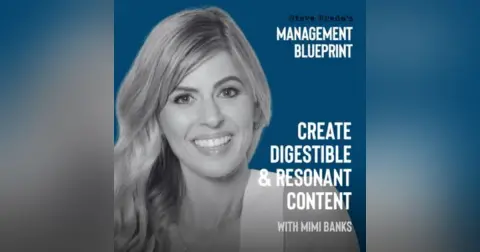


Mimi Banks, Founder and CEO of MB Social, helps beauty brands create digestible & resonant content while building social media communities where every customer feels heard. Drawing on 15 years at L’Oréal USA and her experience leading social media for Lancôme, Mimi built a fully distributed agency around warmth, attention, honesty, and genuine community engagement.
In this conversation, Mimi introduces The User-Generated Content Framework—Make It Look Real, Don’t Over-Produce, Use the Product Sensibly, Ensure Light & Sound Works, and Keep the Product Up Close. She explains how brands can create user-generated content that feels relatable while maintaining professional quality. Mimi also discusses using AI to extend limited creative assets without creating fake influencers, growing through social listening and the question “How can I help?”, and keeping humans involved in community management. She shares why brands must listen before engaging on Reddit and how MB Social and Med Creator 101 help beauty brands and healthcare professionals strengthen their social media presence.
—
Create Digestible & Resonant Content with Mimi Banks
Good day. Steve Preda here, and my guest today on the Management Blueprint, Mimi Banks, the Founder and CEO of MB Social, a leading full-service social media agency specializing in beauty, with a strong focus on skincare. MB Social is based in LA but has a fully distributed workforce, and it partners with top-tier brands and experts. Mimi spent 15 years at L’Oréal USA in New York and Paris, where she led social media for Lancôme. So Mimi, welcome to the show.
Thank you for having me.
I think you’re the first beauty entrepreneur on this show, so—
Oh, really? Wow.
It’s pretty special. 360 episodes in, great to have you here.
Wow. Thank you for having me. I’m excited to represent the beauty industry today.
That’s right. You also have a company name which is similar to my former company name. Yours is MB Social. We were MB Partners.
Oh, I love it.
Yeah. I love it. It kind of resonates with that. So jumping in, what is your personal why, and how are you manifesting it at MB Social?
So just to get straight to the point, my why comes down to one belief. Everyone wants to feel heard. I learned that pioneering community management benchmark at L’Oréal long before community management was even a job title, and I built MB Social entirely on it.
Behind every comment, every DM, every tagged post is a real person who wants to be heard, who deserves a real response.
Share on X
Wow.
And then, so how do I manifest that? I manifest it every day by treating our clients and their audiences in a way I’d want to be treated, with warmth, attention, and honesty. So it’s why our community managers do what they do. They learn the inside jokes. They learn the regulars, and this is actually also how I run MB Social. We listen, and we care.
Love it.
That’s our operating system.
That’s a pretty robust one, I must say. I like to think of a company as it’s a group of people dedicated to a mission. And if you engage and energize and inspire and care for these people, then you can’t go too much wrong.
That’s true.
Yeah. So tell me about how you came with this idea that you wanted to… I mean, you had a great career working for the greatest brands in beauty. What prompted you to strike out on your own, or strike out on your own?
So essentially, at age 30-something, I was given the opportunity to lead social media for the Lancôme brand. Just started it. And I found that, again, at age 30-something, I fell in love with this job. I had been working for a long time, still passionate about working for L’Oréal, but I hadn’t found my why, and then it clicked for me. I fell in love. I saw that I was good at it.
But what happened was, even after two years winning awards, doing all of the things, being the first, getting cited in the greatest publications, or exceeding my goals, there was nowhere to go. I was too early, and this was in 2014. So I did what many entrepreneurs do, and I followed my belief. I got offered a job to work at a startup that was all about user-generated content, which was absolutely amazing.
And there I took the leap for six months. People thought I was crazy, but I went based on my belief and my hunch, and the rest is history. I then started off my path with saying, “How can I help?” And that’s been the motto that we’ve had for the past 12 years at MB Social.
So this startup that you joined was MB Social, or?
No. So the startup I joined was a startup called Preen.Me. It was a community of creators. They created user-generated content for beauty brands. So I was really passionate about user-generated content, again, in 2014, so it was amazing. And a friend of mine who used to work at L’Oréal worked there.
And so I left my job that was in a corporate environment, worked out of an apartment in another country, and went there for six months. Learned about business development, learned about brand partnerships, learned about startup life. So really, I took the leap, and it was a leap of faith.
So tell me about user-generated content. What’s special about user-generated content?
So user-generated content means it’s actually content created by consumers. So you, me, any person that is not a professional at a brand, let’s say. But sometimes you can actually work for a brand. But it’s essentially content that appears that any kind of person would take it. And what I was fascinated about in social media, social media is about getting that digestible content that resonates. And so any brand or business would love to get that kind of content where it looks like an average person created it, not that it’s so heavily branded.
Because as you know, in marketing, the best kind of marketing is through somebody else, not from a brand.
Share on X
And so what I started to see was this is a really interesting new way of creating content where there are people out there who are professionals at creating content for brands that makes it look like a real person. And so that’s really what it was. It was this community of people who were excellent at creating beauty content. And then what we did is said, “Oh, brands should be able to use this.” But again, this was in 2014 when brands weren’t doing that.
Brands didn’t really understand the idea behind hiring what now is creators, and there’s a huge creator economy. It’s billions and billions of dollars. So they were kind of too early for it, and now it’s really an important part of the ecosystem. But again, that’s 12 years later.
So when you say “user-generated content,” it’s not people commenting on posts, but it’s creators who are using the product.
And generating.
Correct.
Creators who use the product, film themselves, capture photo or video of them using the product in a way that makes it look like a consumer would.
Huh. Okay, that’s fascinating. So as you know, this podcast is all about blueprints, and I wonder if there is a framework around this, how you create that user-generated content that feels authentic, that resonates with people, with everyday people who would be consuming that content. Is there a recipe for that? Do you have one?
A recipe for that, for user-generated content, first of all, for using it, you have to make sure it looks actual and real, not overly produced, and using it in a way that would make sense that someone would use it. For example, if we’re talking about a beauty product, showing the product, making sure it’s up close, clear, then using it in a setting that looks real, but making sure that your lighting, your sound, everything is easy to understand. So those are like the three parts that we look at.
And then when you work with brands, you look at a little bit more details. You look at the quality, you look at the gestures, you look at the music, you look at a lot of different criteria once you’re at the brand level. But when you’re creating user-generated content, what you want to look at is, is the product visible? Does it look like in its natural setting? And is it very up close so that I can see it? Those would be the three things.
So I actually noted down six things.
Oh, you did? Well, those are my simplified. Okay, great.
So you said looks real.
Yes.
Which may be the same as natural setting, but looks real. Not overly produced.
Yes.
Which is the same as looks real. Or is it?
I would say no. Two different things because it can look real, but overly produced means there’s too much lighting, too much editing versus authentic.
Okay. Use the product sensibly.
Yes.
That was three. And then a natural setting. Maybe that’s—
That’s kind of the looks real also. So where would you use your skincare, making sure that it’s in the real place where you would actually use it.
And then light and sound works.
Yes. —is what I wrote down. Correct. Yes.
And up close.
Yes.
So that’s actually five. That’s great.
Okay, five. Those are great. Thank you for that. Thank you for the recap.
Thank you. That’s amazing. So what happens in the AI world with this approach? Does AI have a place in this? Is it creating noise that needs to be overcome? Both? Neither? What is the AI impact?
AI can help in a few ways. The first thing it can help you expedite your tasks that you repeat over and over again. So
anything that you find yourself repeating, AI is a great place to help you, whether it's to summarize, whether it's to analyze and recap.
Share on X
Those we find tremendously helpful. We use AI to tell us what’s going on in the ecosystem, whether it’s trends, whether it’s looking at articles, benchmarking, and then quickly translating to how we can apply that. That’s from a very conceptual level.
From an execution and output level, there are a lot of different creative ways that you can create content with AI. Now, knowing that you create content, you can take, again, if we go back to the skincare example, a product that you have and put it in a bathroom. You could put it in your purse. You can put it in your gym bag. You can kind of simulate those backgrounds or environments where the product would belong. In other cases, what people have done is they simulate the person using it. We don’t actually do that. Instagram, TikTok has a filter now, which is great, and a tag which says, “This is AI-generated.” We do not endorse that.
We do not do any content using fake influencers or people. What we’re able to do, though, is to create content based on limited assets. So oftentimes, if we’re working with a brand, they might not have a lot of content, and in order to be successful and to grow on social media, you have to have continuous content production. And so AI helps you extend that life of content and have different iterations based on just even a small product shot.
Can you give an example?
Sure. We’ve done it with fragrances before. So fragrances around Christmastime, you want to show them as gifts, you want to show them under a tree, you want to show them with snow, with ornaments, and we’ve been able to do that. We even did one simulating for Halloween, almost turning a fragrance, putting a witch’s hat on it, a witch’s broom to dress up that fragrance. Not impacting the quality of what the pack shot looked like, but you’re able to enhance around it.
That’s fun. That’s really fun. So Mimi, tell me, what drives growth in your business?
What drives growth in my business, besides social listening that we spoke about, essentially the audience tells us what we need. If you’re paying attention, that’s the actual engine behind our strategy. So what we do is we ask the same question, “How can I help?” Right now we know that Reddit is very popular. We’re listening. We’re paying attention. So my personal mantra of how we’ve started the business, how I’ve been listening, is saying, “How can we help?”
And so, for example, now we see Reddit is very important, and so we’re able to say, “Okay, this is what we see. This is what we’re listening to. How can we help?” It’s a question I lead every relationship with, client, partner, my team, and it builds trust very quickly because it’s not a sales pitch. It comes from a deliberate and meaningful investment.
So can you give me an example of how that works?
Sure. I have a friend that just started at a new brand. She’s looking at all the different options she has. She’s exploring her team. She needs to create a team, and I said, “How can I help?” And she said, “Well, this is my situation with social. I need to hire someone,” and she gave me the criteria. I’m exploring how we’re looking at social, what we’re doing. I walk through where the gaps were on her side. I walk through what we can do, and now as a result, she wants to bring our team on so that we can fill that area of need that she has.
And is it as simple as asking the question, “How can I help?” Or is this more nuanced?
In these areas, I’m direct and say, “Let me know if you need help. Let me know if our team can fit the bandwidth.” Sometimes someone resigns. “Do you need help for six weeks, for eight weeks?” That’s very direct. “Do you need help? How can we help?” Yes, very direct, very transparent. The other area is more diagnostic, so you do a lot of listening, understanding what the client is, how they’re structuring the team, where the pain points are.
So when I hear pain points, then I understand the areas in which we can help or, if not, point her in the right direction of somebody who can fill that gap. So the answer is nuanced. Yes, there are times you can be direct, or other times you have to ask questions to diagnose where the pain points are.
What’s your favorite question to diagnose maybe a pain point that even the listener is not aware of having?
So we just had this recently in an RFP. So a brand comes to us to say, “We need your help on social. Here’s our list of questions.” I love to learn how they found out about us and why they came to us. That’s my first. The second is, what’s not working right now? Because typically they would have an agency or they have somebody in-house.
What is not working? Because that tells you everything. That tells you, is it the agency? Is it them? Is it the budget? Is it the market? Is it something that’s larger than everybody? Is it mismatched expectations, resources? But that’s a very good question to ask.
Yeah. So what is one thing in your business that you’re actively trying to figure out right now, Mimi?
Actively trying to figure out? We’re always trying to grow our team. So grow our team, scale our team, provide as much support as possible. We’re actively integrating AI usage, as I mentioned, to streamline efforts, to be more efficient, to provide those summaries, recaps, and automations.
So I’m actively trying to figure out how to summarize different articles that I read and have them summarized and go right into Slack for my team in a digestible way. That’s what I’m actively trying to figure out, is how to make that a seamless user experience for my team.
So when you say scaling your team, is it about scaling the knowledge of your team?
It’s two different things. So always trying to scale the knowledge, but also we are building and growing out our team. So that’s our team of experts. We have community managers that we are hiring. We have social media managers, and we’re building out our bench of freelance support also.
So a community manager, would that be someone who is stimulating engagement on posts?
Yes, exactly. Exactly. That’s the person liking and commenting on posts, the person that’s answering the direct messages. Really, the person that’s the voice of your brand.
Yeah.
They’re in the comments, they’re responding on your behalf, or they’re proactively joining conversations that are happening where you can add value.
What do you think about using AI for comments?
So we have some clients that use AI tools, and the tools that we have in the beginning, I think, are too AI. You have to have a human that’s constantly monitoring those responses until the AI has completely learned your tone of voice. It has to have parameters, it has to have filters on what to say, not to say, what to watch out for. So I think AI is helpful.
I don’t think it will replace humans because, especially in a social capacity, you still need to have that social element. So the human has to be there. It allows you to do more. So if you’re just behind saying yes, yes, yes, yes, yes, that’s helpful because the response is crafted, but I don’t think it can automatically replace somebody.
So I saw on your LinkedIn that you have a fully remote team.
Yes.
So what’s special about building a fully remote team as opposed to building an in-house team?
It’s interesting. I don’t know. We’ve always been remote, even before the pandemic. I think there’s a certain level of communication that has to happen, of being present online, to show up every day. So I think that that is number one. The second is building engagement, camaraderie, and enthusiasm remotely. So we’re constantly trying to do different things, whether it’s with our camera on, whether we have what we call brunches because we have different time zones, so we make sure to eat either breakfast or lunch together with our camera on and multitask, do other work.
And we try to meet up at least once a year in person through what we call an IRL. So I think it’s a certain profile of people that can be extremely organized, connected, and active while working remotely.
Do you think that women are better at remote work because of the multitasking? Maybe that they’re better at multitasking, and does it translate to better remote work?
I don’t know. Women versus men, that I don’t know. We happen to have an all-female team by virtue, I think, of the subject matter because we work so much in beauty, so I don’t have the same experience. But I think post-COVID, the skill has been developed across genders. Whatever someone’s natural habitat or preference is, it’s a skill that they’ve had to develop the muscle.
The reason I’m asking this is because my wife is telling me that she thinks that some of the best people to hire are women who come back from maternity leave. Maybe like sick, parental leave. They had a professional career, but they took a break.
They come back, and she believes that they have scaled up their efficiency because of having to multitask in a family environment, and they are also extremely focused on doing the job and using time efficiently. And she thinks that, not to mention that often their salaries didn’t scale with the years, and she thinks that they are a special way to hire. So what do you think about that?
So I think everything that you said about a woman, a working mom, is extremely true about multitasking, about managing your time, about reentering the workforce after being away if they’ve been on maternity leave or raising their children. That develops definitely a different skill set. Navigating uncertainty, dealing with ambiguity, all kinds of different skills I’ve personally learned in the past three years dealing with a toddler and working from home.
Would I say my husband’s done the same or could do the same? Maybe. He’s already raised three grown children, so I would think so, but I haven’t yet experienced a man in the same because there are also single fathers that might have to be navigating the same thing. So I don’t know. I definitely think that women do have that experience, so I wouldn’t argue with your wife there.
Okay. All right. So what do you think is going to be the future of your industry? How do you see the beauty industry evolving?
So that’s really a good question. So the future of the industry. I think right now where we’re sitting… So beauty really sets the bar for everything that we do in terms of community. There’s now personalization with AI helping to tailor products, your routines, and also content for each person. I think Reddit is very important. There’s more community-led discovery.
I think when you’re Googling now, people go to AI, they go to chat, they go to Claude, and you’re getting social media content. So creators, reviews, and social content are really shaping people’s trust before they buy. And now there’s a higher demand and an expectation from social specifically. People used to go to the 1-800 number, then they go to Facebook. Now they really just go to social, and you expect a response from the brand that you follow. So there’s more dependency there.
And then from the social ecosystem and landscape, there’s the demand to always have content, so you have to have content from fewer assets. People are using AI to stretch creative, like I talked about, but you have to make sure to keep it authentic and brand-safe. So overall, beauty is moving towards being personalized, community-driven, and responsive in real time.
I love it that you give so concise answers.
Oh, thank you.
It’s very cool. So you mentioned Reddit a couple of times, and I’ve been hearing from clients about that, that if you want to show up on AI, ChatGPT, then Reddit is a really good place to be written about. Is there a strategy that, if you’re a business owner, to actually stimulate Reddit content?
So Reddit, you have to be careful. So Reddit has very specific rules. If you want to be on Reddit, you first start with listening. You do not do anything. It’s really about credibility, and it’s about understanding the nuances. So what’s happened is that when we’ve worked with brands, we start out by diving into the subreddits where they either are mentioned or the topics, getting to understand what the subreddit’s rules of engagement are and how people are engaging, because Reddit is about authenticity, and so they do not necessarily embrace a brand coming in and speaking.
So you have to earn your right into a Reddit conversation. If anything, if you see them talking about something that’s meaningful to you, what you can do then is take that insight and apply that to your business. The other way to join Reddit is as a human, as a person, to be able to be actively engaged, but really ask real questions and join as a person. Otherwise, there’s a very real risk that you get kicked out or banned from the community.
Larger brands, though, you can work directly with Reddit and use them as paid media partners, and you can do advertising, which is approved by the platform, and you follow very specific guardrails and guidelines to be able to do that. And they have campaigns, they have dashboards, and access to a lot of tools where you get qualitative and quantitative insights. So it’s just important to know the rules of the road before diving in.
So when you say ask a question, let’s say you’re an expert in something. If you’re an expert, you’re not supposed to ask questions about your expertise because you may ask a question that you already know the answer to. Would that be an inauthentic question?
I think you just have to frame it or maybe be transparent about why you’re asking the question to introduce yourself into the Reddit chat. I mean, most people have a username, so their personal information is not disclosed. But I think to be a person on Reddit or even a brand, you just have to be very transparent.
So meaning what? My username should be my brand, or how?
Are you using it for brand work? Then yes. If you’re using it for brand work. If you’re using… It could be business lover, blueprint, podcaster. You introduce yourself. You don’t even have to say your name. Because I’m sure there are subreddits all about podcasts, and so people are on there looking at podcasts, having real conversations. And so you go in there and you see what people are saying, and you would join authentically as you. Versus when we work with skincare brands, when they show up and someone is saying, “I’ve heard this brand does this,” or “I heard that this product does this,” is that a valuable time for the brand to go in to say, “Well, actually, this is what you should be using it for,” or “Well, actually, do this plus this.” Versus if you go in and say, “Hi, I’m the brand. Use my product,” people will not appreciate that. So really, being on Reddit as a brand, you have to offer value. But it’s not your perceived value, it’s actual value.
So essentially, you have to listen well and then chime in when you have something valuable to share.
That is correct.
It's always about listening on Reddit first. No matter what you do, listen first.
Share on X
Okay. That’s very interesting. All right. So who is it that you would like to be listening to this podcast, and then how should they respond? So what’s a good way for them to connect with your brand or your brands and connect with you or learn more about you?
If you want to learn more about MB Social, you can go to mimibsocial.com. It’s a very creative name, Mimi Banks. So hopefully that’ll be easy to find. You can find me on LinkedIn, Mimi Banks, M-I-M-I B-A-N-K-S. On Instagram, we’re @mbsocial.agency. And if you want to talk to me, I’m mimi@mimibsocial.com. That part’s a little confusing, but we are very, very connected and responsive.
And who are the ideal customers for you or prospects that you would like to be interested?
So there’s two lanes of people that we… Three lanes, I would say, of people that we work with. We will work with beauty brands on all things social: social media management, content, influencer partnerships. The second area that we work on is community management. So if you are a brand that has a lot of community that can’t keep up with your inbox, your likes, your comments, your DMs, your tags, we offer hourly services, so happy to help you.
That’s on an hourly basis. It’s a more cost-effective way to work with us. And then the third, which may be surprising to you because we didn’t talk about this, is if you’re a healthcare professional. If you’re a healthcare professional, dermatologist, dentist, hygienist, surgeon, we have a platform called Med Creator 101. It’s a platform to educate you on social media.
We have our own podcast called Med Creator 101, we have a Substack, and we have a course where we teach you all about social media because when you go to medical school, you don’t learn about social media. When you come out, you’re expected to know all about it these days. So we have a platform. It’s me and a board-certified dermatologist, Dr. Dustin Portela, who created this resource for you to be able to learn about social media.
And presumably, this channel is feeding into your future demographics of customers somehow?
Yes. We are building a platform more and more to serve HCPs. Yes. So two different segments here.
Okay. Well, I’ll tell my daughter, who’s a first-year medical student.
Oh, yes. You should. Yeah. So the podcast is called Med Creator 101. We interview different med creators, brands, how they work with HCPs. We put that out weekly, and then we have our Substack, which is called Med Creator 101: The Social Playbook, which is more long-form, but it has interviews with top creators and brands.
Coming up, depending on when this comes out, we’re going to interview La Roche-Posay, which is a L’Oréal brand. It’s one of the leading dermatologist-based skincare brands, originally from France. So we have the head of social that we just had on the podcast, so that’s exciting.
Fantastic. Fantastic. So if you are a beauty brand or a healthcare professional and you want to learn about social services, community services, or you want to do social yourself, then check out Mimi Banks on LinkedIn, on MB Social, and social media. And if you enjoyed this conversation, then make sure you stay tuned because I have fantastic entrepreneurs, as you can see, like Mimi, who come on the show and share their frameworks. And Mimi, thank you very much for being so well prepared and bringing your frameworks and ideas and insights for our guests.
Thank you for having me.
Yeah. Thanks for coming. Thanks for listening.
Important Links:
- Mimi’s LinkedIn
- Mimi’s Website
- Mimi’s Email: mimi@mimibsocial.com