369: From “Fill-the-Seat” to Trust-Based Recruiting with Randy Perkins
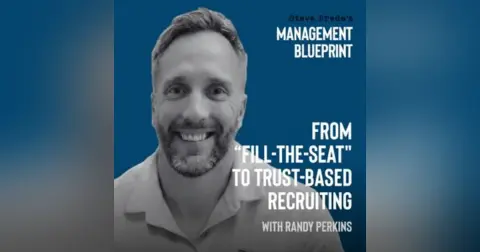


Randy Perkins, CEO and Co-Founder of FreightPro.ai, is helping commercial transportation move From “Fill-the-Seat” to Trust-Based Recruiting by connecting quality drivers with quality carriers. Driven by a desire to support underrepresented people, Randy built FreightPro.ai to give drivers a stronger voice, help carriers create safer workplaces, and raise standards across the transportation industry.
In this conversation, Randy introduces The Aligned Driver Recruiting Framework—Build Driver and Carrier Profiles, Validate with Research & Questions, Match Driver and Environment, Build Trust Through Human Touch, and Refine Continually. He explains why effective recruiting requires understanding a driver’s experience, endorsements, safety record, home-time needs, personality, and ability to handle specific routes and working conditions. Randy also discusses using AI and FMCSA data to evaluate 25 qualification measures, reduce recruiting noise, and identify stronger matches without replacing human judgment. He shares why trust and consistency drive growth, how FreightPro.ai combines blue-collar industry knowledge with technology, and his vision for connecting fragmented transportation data into one secure network.
—
From “Fill-the-Seat” to Trust-Based Recruiting with Randy Perkins
Good day. Steve Preda with The Management Blueprint. And my guest today is Randy Perkins, the CEO and co-founder at FreightPro.ai, building a platform centered on commercial driver recruiting, retention, and workforce alignment for carriers, 3PLs, and transportation companies. Randy, welcome to the show.
Pleasure to be here, Steve. Thanks so much for having me.
Well, absolutely. I’m curious about this business that you’re in. We talked a little bit about the podcast recording that I’m always thinking about what these drivers’ lives are like, and you see that there are all those stickers in the back of trucks that they try to recruit drivers. So it’s going to be a tricky business, and you’re in the middle of it. So we’re going to talk about this. But before we start on this, I’m curious about what is your personal why, and how are you manifesting it in FreightPro.ai?
My personal why. That’s a touchy subject. It’s a good subject, but it’s touchy. I got a soft spot for individuals that need others. I grew up in a less-than-ideal environment, and I wish that I had more individuals that would’ve helped me out.
So growing up my whole life, I knew I wanted to contribute something in regard to giving back to somebody that needed it.
Share on X
I started off coaching with children, doing things of that nature, have my own children. It’s a blessing. And then also got into logistics.
Through getting into logistics, I worked at ITS. We were a great brokerage there. They were one of the best in class. Man, it was phenomenal. My exposure in that realm of logistics, which is broker-to-carrier and broker-to-shipper, shined light on a layer deeper, which was the driver-to-carrier. And it struck me similarly to children, where it was a class that is underrepresented and means so much to the industry, right? Where the futures of drivers are just as important.
And I don’t know of an industry where you can have somebody that has the potential to make upwards of six figures plus and not have to have a resume or have any sort of consistent tenure at any one job, where you don’t have to have professionalism to back it. And that’s driven, I think, partly in context to the stereotypes that have been driven over the years. Drivers for the longest time were classified as unintellectual, right? Didn’t have an education. They got classified as roughnecks, brutes.
The reality is they are roughnecks to a certain extent because they have to be, because that environment is critical. It is extremely dangerous. And yeah, so to a certain extent, but that’s in a positive way, not in a negative. But for a long time, those stereotypes that were landed have stuck, and there’s been a stigma. And drivers have essentially turned into a recurring revolving door of employment, where they’re tossed to the curb during slow times and they’re brought on real quick, and it’s a knee-jerk reaction.
And how do you expect to have any sort of quality on the road and safety if the carriers and drivers don’t take it seriously to work amongst themselves? And that was what kicked open the door for me when I was at ITS, and I was like, “Man, you hear carriers talking about their drivers and drivers talking about their carriers, and I’m going, “Man, how come there’s not just a mutual agreement where everybody worked together collaboratively?” And I knew that I couldn’t accomplish that at ITS, so I broke off and started FreightPro. And the whole mission of FreightPro was to raise the standard of the industry, and we’re starting off by working diligently on engaging drivers via human contact as well as through our technology, and pairing up those quality drivers that we identify with quality carriers that we identify, doing the same thing in the other direction.
We're increasing our overall values. We're increasing our overall compliances and metrics to get in.
Share on X
Every day that goes, we’re strengthening ourselves. And in the next year or so, we plan to be something that is a force outside of just recruiting. There’s plenty of other things that we can go into there, but that’s the reason I broke away, was because I noticed, similar to when I was working with kids, was drivers needed somebody to represent them, and same with carriers. This goes both directions, and both of them are underrepresented. And sorry, I get passionate about it because it’s a—so like I said, it’s an odd industry that’s in its own silo.
And unless there’s an economic hit, the general public doesn’t realize how detrimental it can be having an unsafe driver on the road until your family’s the one that’s in an accident on the road. And they don’t realize how severe it can be and the lack of guardrails that have been in place and the lack of enforcement throughout the years, and we want to fix that. This is just the means to get there. And when you start talking about that, it kind of elevates the conversation much more than just a recruiting platform. We want to really change the industry.
Well, that’s very interesting. So this podcast is a blueprint podcast. It’s all about business frameworks. I wonder what the framework is in your business that you look at. And it could be something to do with how to recruit drivers. It could be how do you improve the relationship between driver and carrier. It’s how to market to them. It’s how to serve them. I don’t know what it is, but is there a framework that helps you understand this dynamic better and helps you serve your drivers better?
I would say there’s not one single framework. The industry is intertwined with so many other realms that you can’t just say it’s one framework. What I will say is that over the years, working at my previous employers, I got insights into fleets, into drivers, into brokerages, into shippers and receivers, into compliance demands, into managing assets. You name it, I was exposed to it. And through that, you develop your own unique framework that we’ve established that allows you to develop an established relationship with drivers that’s based off of something more than just a monetary figure, but because we care. It’s the reason we’re implementing a social media platform here in the next few weeks. There’s going to be another vertical for that because we want drivers to come to a place that they want to go to.
That’s not just when they’re needed, right?
So we're working on developing strong relationships with drivers, and that's through showing them that we care, not just through the jobs, not just through social media, but also legislation.
Share on X
We want to have an advocacy group. We want to have drivers that are there to represent what needs to be done when more funding for parking is needed. How cool would it be to have our platform be able to come out and say, “Drivers, speak on our behalf. Here’s a petition. Fill out an electronic petition. Let’s get this thing going,” and have another backing in logistics that helps push things to the finish line. That’s not just going to stand there passively and let things go by. That’s really, on the driver side, a huge benefit that we’re going to have in the near future, is the network of drivers that we have, the ones that are of quality.
We want to have them back us in more than just, “Let’s go get a job.” But it’s, “We love that company,” right? “They represent us. They give us things that other companies don’t, and more importantly, they hear us.” And then we do the same framework on the carrier side. The ones that are quality, the industry right now is not as scary for them. There’s been actually a lot of upside for the quality carriers in the industry, the ones that take the time and due diligence to recruit correctly and to treat their drivers well and actually pay layover and detention. And those are the same guys that we want in our corner on the other side. We don’t want to have over-compliance either. We don’t want to have any one government ruling things more than they need to or overrule or overstep, but we need to have stronger foundations.
And the carriers right now that are already of quality are already doing that for the most part. They already make sure that their drivers are quality when they’re interviewing them in the process. It’s not fill out an electronic application and three hours later come hop in a cab. It’s let’s do our due diligence of work, and we want those two to partner up through a relationship. So that’s what we’re establishing, and that’s our framework. We’re basing care and quality over any sort of quantity number, and I think that people are desiring that, and our framework is based almost intuitively. It’s based off of what the carriers need.
So what are the elements of caring for the drivers? Are there, like, three or four or five elements that you can identify that will allow someone who is hiring drivers to take good care of them or to maybe vet them to make sure that they are the right quality? What would that look like?
Yes, sir. So we do a thorough background of the drivers. So when we speak to them verbally, drivers first go on and register. Once they’re registered on our platform with the basic profiling, we go on and get a more advanced understanding on what their background and capabilities are, right? So things like endorsements, years of experience, whether or not you have any violations, or whether you’re SAP-friendly or even pet-friendly needs, right? We go through and we get more of a microcosm of what the driver actually is needing. And then that’s what we help pair up with the carriers.
So on the carrier side, it’s the same thing in reverse order. We profile them diligently. What are your routes? What are the types of drivers that you need? What are the types of terrains that you drive within? Not just can the driver hold onto the steering wheel? Not just did he pass a test, but can he handle and manage the situations that you’re going to be putting him through? Has he gone through a security guard check at a government facility if you’re working with a government customer? Those little things that people take for granted, those are things that are imperative. And they’re not being done consistently enough because it’s been considered a transaction game.
And that’s where we’re stepping up on both sides. It’s by getting more information. It’s collecting more info, and then we combine that with a little bit of human touch, right? We’re still a technology platform, but ultimately, we have a small group with us of anywhere from 10 to 12 people, given the day, where we’re always engaging our carriers and our drivers to make sure that those are reiterated, right? So right now, it’s a verbal validation. So we’re calling them up and cross-referencing with open-ended questions and getting to understand them. And more than just, “You’re a number,” right? So number 328A, you’re up next. We want to know what kind of individual do you want to work for, right? And then we help, to the best that we can right now. We want to help out and pair that up, and we’re going to continue to advance that.
But a major one on the carrier side that’s often missed is when is the actual expected home time? When is that actually going to be a thing? You can’t just say local, OTR, regional. You can’t just say that because everybody’s definition of that in the industry is different. So we call up and we ask, “What does that mean? You say local, but does that mean daily? Does that mean every 72 hours? What does regional mean in your eyes?” Because that’s another thing that’s an issue in the industry, is nothing is the same from a vernacular standpoint.
There’s all this ambiguity floating around. Why not remove that? Actually mix recruiting, which is what they tried to do, with the actual industry, which is what’s never been done, right? For the most part. You got a few companies right now that do it to a decent extent. But getting actual experts in there that aren’t just recruiters, but they know how to recruit, and then they can validate that. And mixing the best of those worlds. Right now, you go to a recruiting agency, you’re not getting somebody that’s specialized in logistics. They don’t know what a kingpin lock is. So when you call up somebody saying, “Hey, are you looking for a job?” And they go, “Yeah, I am, but my kingpin lock’s stuck.” And they go, “Oh, that’s crazy. What does that mean?”
How is that going to feel to a driver if a recruiter’s contacting them, telling them that? Where if they can say, “Hey, are you available?” “Yeah, I’m sitting here at a receiver.” “Oh, man. Sounds like you’ve been there for a while. You frustrated?” “Yeah.” “Are you getting detention?” That, just that, just a little nuance in the industry goes so far because it’s been so undervalued this entire time that anybody who puts a little bit of care into it will go so far. And that’s what we’re doing differently, is we’re actually mixing the two. We’re blending an actual recruiting platform with the needs of logistics.
That’s very interesting. So what drives growth in your business, in FreightPro.ai?
The simple answer is trust and consistency. That’s really it for any business, to be honest with you. This just snowballs on itself. When you have lack of trust, these guys talk. It spreads like wildfire. And if you’re not consistent with your values, if you don’t uphold the things that you’re saying, you’re going to go down in a heartbeat. This industry spreads more than any other industry. I’ve never seen anything like it. The networking here is phenomenal. You’ll have, on the West Coast, a driver get treated a certain way, and by the end of the day, drivers on the East Coast have already heard about it and posted it up on the internet. It is flying around right now.
You have to be able to work just as quickly. If you can’t work just as quickly and be just as diligent in your approach and drive the trust through consistency and quality, you don’t have a leg to stand on. You’re going to be out before you have a chance to even enter the door. I mean, realistically, I know that probably sounds like it’s a very basic answer, but there’s no secret to the success. It’s hard work, grit, and being able to put your name and back it out there. If you’re out here saying that you’re going to do it, you got to do it. Or at least do your best to.
How do you create this consistency that other people are not able to?
You focus on it. As companies continue to grow, you lose that. It becomes a watered-down effect. You’ve always heard the saying, “Quantity grows, quality diminishes.” And I don’t want that. I want to stand against that. I’ve worked with companies that have opposed that and that have worked hard to turn the tides on that. I want to continue that. But for the most part, too many businesses right now, fundamentally, they lose track of what initially got them there. They stop focusing on the customer. They stop focusing on the outcome, on the results. They start just focusing on after you’ve had a 20% turnover month, what do you do? What’s happening in the moment?
When are you rolling up your sleeves and calling a customer if there’s disgruntlement and actually trying to validate what’s happening? Those are the things that, quite frankly, most companies are missing right now, and it’s just that little bit of care, and it’s missed throughout a lot of industries, not just this one. Care and decency, quite frankly, are somewhat of a rarity, and that’s hard to find. It’s hard. It’s not easy to find nowadays. It’s unfortunate to say. It is. But those who actually hold true to themselves and do the things the right way, they have a much higher likelihood to succeed.
It really intrigued me when I saw that you’re building essentially a blue-collar business. Maybe it’s not, maybe it’s white-collar because it’s recruiting, but you’ve worked with blue-collar people, and you are introducing AI. Because most people say that’s the last sector that’s going to be disrupted by AI, which is the traditional contracting and blue-collar jobs. So how do you use AI to disrupt, and what gave you the idea that it will really work in your industry?
Because you’re using it to make the user better and not to replace the user. I think that’s a big part of what people miss, is the technology’s supposed to be there to buffer you up. It’s supposed to be there to make you efficient and effective, minimize your clicks in order to see the end result, but it shouldn’t replace the user. Not right now, not in its current state. It’s not intuitive enough. And you mentioned it earlier. You said maybe we are white-collar because we’re recruiting.
But I would 100% say the opposite. I would say we’re blue-collar putting on the mask of a white-collar. That’s what we’re doing right now. Our technology is white-collar, 100%. It’s polished, it’s pristine, and it’s going to get better by the day. But our workers, they’re blue-collar. I mean, we’re out helping out local communities, putting out fires during the day, helping out the cause there when you have the local fires here in our backyard. You have us going to truck stops saying hi to drivers, not for anything else. If you don’t want a job, that’s fine.
We’re talking about the industry. We’re talking about just, “Hey, just know who we are so later on when we represent you, come see us.” I would say we are blue-collar. I would say that we put on a good front and a facade, but there’s grease under the nails. That’s the beauty of what we’re doing right now, is we’re taking the hard-grit feel and we’re putting it into the white-collar piece, so you get the mix that is needed in order to see it. And I think, like the metaphorical headhunting recruiting agencies, I think that there is definitely a concern for AI to come in and disrupt that sector significantly.
I would say that there’s a difference, though, in our sector compared to other sectors where you have your standard recruiting firm. If you’re going out and hiring somebody that needs to be a clerk at a grocery store, you can do that on a generic scale. And I think AI can do that and find very solid candidates very easily and effectively for those types of employee needs.
But I do think that you have these—I would consider it skilled labor. You’re driving an 80,000-pound missile, and you can’t miss the mark on this. I mean, too many people have recently, and it’s caused deaths, fatalities, and an uproar, quite frankly. And you need to have that human touch. The carrier needs to be able to pick up the phone and call them, not even us. We’re still the intermediary. We’re just calling the driver saying, “Are you a quality driver? Let me get some info.
And do you need a job?” And if they say yes, we help them through it. But I think the bigger thing is even the carrier side. They need to have that touch to them to where they’re taking the time. Those who aren’t, they need to develop it and take the time to truly connect with the drivers and understand they’re isolated for 12, 14, 16 hours a day at a time. And you need to find the person that fits behaviorally also and structurally. The candidate can’t just be your standard layman. Just because they passed a test, they’re immediately ready. They need to be the right fit personality-wise, from an integrity standpoint.
How do you do that just through AI? You can have them get you to a point, which is what we help with, right? We’re the point that helps you best decipher the white noise to get to that point of stronger filtered quality. But it still will not remove the fact that the carrier needs to pick up the phone and talk to a driver.
So how do you leverage AI? Do you have an API to ChatGPT and essentially query the data that you collect from the carriers and the drivers? How does that work?
So we have—yeah.
What we do is we field carrier onboarding and driver onboarding, and we're integrated with FMCSA.
Share on X
Through that information, we validate the carriers are accurate, and then our AI comes into play and overlays qualities. So based on what the most recent outcomes are of that driver, based on their introduction video, based on certain behavioral identifiers that they have as far as how they articulate their speech patterns, it helps them, in turn, to the best of the understanding, without putting any sort of a stereotype into play through straight data, helps us articulate what are the best, most likely candidates to cross-reference with the carriers.
And through that, you get a determination of a score of 25 different qualification measures, 20 of which are data sets and five of which are more intuitive in nature that we field upon verbal engagements. And we take that information, combine it with our expert suggestion data, whether or not we actually feel they’re a quality candidate as well. We combine all of that, and our carrier-side user, they post up job opportunities, or career opportunities is what we like to call it. And through their career opportunities and general company profilings, we take all of their unique details that they have, and we overlay all of that information together, and we pair them up. And that’s essentially the long and short of it for the moment. And we have AI that comes through.
They do a once-a-week AI check-in for quality engagement to be ahead of the verbal communication with the actual human. It’s more of a pre-vetting, so we have AI come in to do that. But I don’t want AI to come in and overtake that human touch. So I’m very aware of the user’s sentiment to feel like, “Oh man, here comes AI taking it over.” We want it to be very selective. So the only thing that we have is a quality engagement bot that calls ahead of time saying, “Hey, how do you like the system right now? Are there any inadequacies? Are there any positives you’d like to communicate ahead of time?”
So then we can go through and vet it. It helps us identify proactively where there might be a gap, if there’s a failure, and what we can improve. And then we store that information, and we drill it down the pipeline, and those who come up the most as far as common theme issues are the ones that get prioritized the most.
That’s fascinating. So what is one thing that you’re actively trying to figure out in your business right now?
How to truly put the pieces together. It’s fragmented. The industry is fragmented. Everything is available. I feel like if you could snap your fingers right now and just connect the dots, any one person could do it very easily. But the problem is it’s privatized. It’s data that’s held close to the chest. I don’t blame them for doing it, but everybody has pieces of data. I want to be the person that can help holistically try to make it a whole. So, for example, I know there’s just a launch of CDL validation and licensing that has some sort of advancement where you can put in CDL numbers and find out whether or not they have backgrounds to a certain extent.
That’s a huge value prop that we’ve actually been working to try to construct for a while as well. But taking something like that and overlaying it with an endorsement strategy, and then overlaying that with state-level violations to make sure that it’s not seeping through the cracks on a minor scale. And then also taking that information and backing that up with an actual formalized resume that you can find. So taking all of those pieces and then overlaying it, and then also on the carrier side, taking that information, not to use it against them by any means. It’s to help them out.
But identifying what is your actual turnover ratio, right? What is your out-of-service compliance? Maybe that’s the reason. What are your benefit packages right now, right? That’s where we want to step in and help really bridge that gap because a lot of carriers, quite frankly, they’re great at providing a service, but they’re not great at recruiting. They’re not great at creating a company that a driver wants to necessarily work for, right? So we also want to help bridge that gap. So I think the biggest thing for us is collecting all of these pieces of data and bits of information that are scattered throughout the industry and trying our best to bring it all into one network and make it seamless.
You have a few clicks, and you can find out as much information from a public standpoint as possible while protecting the privacy needs of the drivers and of the carriers, and doing it that way and creating a network.
Share on X
Love it. Love it. So who’s your ideal customer? I mean, are the drivers your customers as well as the carriers, or are you focused on one or the other?
We’re focused on both. Our revenue side from a customer standpoint are carriers and our only paying clients. We want our drivers to have a safe place to go to, and that was mainly spearheaded by the social media aspect, the vertical that we’re getting ready to launch, is we want to have a place to where logistics professionals can go and just talk. And you can remain private if you want. You can go public if you want, and you can also create a network of drivers to where if you’re on the road, you can meet other drivers that are shut down, and you guys are CB buddies and you want to do the dance there. But on the carrier side, it’s a paying product because we’re doing the service for them.
We’re fielding this driver information so that they can thoroughly drive safety, quality, and improve the standards at that carrier level, right? We’re here as a value prop for our drivers, but we’re here as a support mechanism for our carriers. We don’t teach our drivers to drive, but we support them. We back them. We promote them. We want to make sure that they’re in the best possible environment, getting treated fairly. The carriers, we want to help any way that we can, and we don’t know everything. I’m not claiming that we do. But there are certain things that a lot of carriers do wrong. There are very little things, nooks and crannies, that we can help them out that are even outside of our platform.
And that’s where the human element comes in, is when you’re paying for FreightPro, you get the technology and you can hire drivers that are quality and do that self-feeding all day long. But it takes a human to call you up and say, “Hey, I saw your job posting here, or your career posting said this. Flip this verbiage. I know that you had a 401(k) and benefits package. You didn’t have that posted up on your career posting.” It doesn’t matter how much you want AI to prompt you. It doesn’t matter. It’s irrelevant right now. There’s this clash between technology and trust where people are right now.
They want the technology, but they don’t trust the technology. So if you just have AI doing the whole thing, drivers especially, if you have an AI bot calling our drivers and that’s the only means, they’re going to think that you’re a scam artist before anything else. You have to find the hybrid there, and that’s having great technology overlaid with a quality staff. And it doesn’t take a large staff. It just takes a staff that cares enough to actually do the job, pick up the phone on off-hours.
If you’re actually struggling and you call us and tell us you’re struggling, we will look through with our experts and find out where we can help you out, or we’ll determine this isn’t the right fit. You’re right. We’re not going to be able to help you. We’ll be upfront with you about that. If you’re open with us, we will be open with you. We’re not for everybody, but we are for the quality that knows that it takes longer than 72 hours to turn and burn a driver into a seat. It takes some diligence.
And that’s the type of carrier that we want, is the carrier that has that quality to them. It doesn’t really matter their size. It can be a small mom-and-pop. I love those companies because you get to talk to them, right? And really get a feel for who they are as a person. I love those companies. But then you have the larger-scale companies, two to 500 and above that. We haven’t seen very many above 500, but the two-to-500 scale, we’ve seen quite a few, and they’re solid as well. And it’s helped us overcome some key pain points, like sharing profilings.
So as you move up the scale and tier of who you're servicing and how you're servicing them, you find out on a grandiose scale how much you can improve as a technology.
Share on X
So having those larger carriers has helped us poke holes in our technology to make sure that we can service things appropriately when the spigot turns on even more. A year from now, we hope that these little things that we’re working through would essentially be nonexistent.
Yeah. Love it. So if people out there are listening who may be a CEO of a carrier or a C-level executive and they want to improve their driver recruitment and retention, where can they find out more about FreightPro.ai and connect with you personally?
Yeah, you can connect with me personally, randy@freightpro.ai. You can also contact the company in general at support@freightpro.ai. I would actually suggest anybody that’s listening, just go onto our website. Like I said, by the time you’re listening to this, our social medias will probably be out, and there’s a meetup functionality for our drivers where they can meet in the network and actually talk to people on a safe, friendly platform. It’s validated on our side and monitored, so we help out with that.
But if there is any interest in just being with a solid company that just cares about the industry, forget recruiting even, hop onto FreightPro. Just go to www.freightpro.ai, or you can just type in freightpro.ai on your browser. It’ll pop right up. It’ll be the first thing that pops up. You can check us out on social medias too. We’re heavy in the community here locally, based out of Sparks, Nevada, right in Reno. So we’re very heavily in the local community in the Pacific Northwest and the West Coast.
You can go on TikTok, LinkedIn, Facebook, X. Any of those major accounts, we’ll be on there, and you can check out any of our other podcasts that we’re on. I would just say for anybody that’s an advocate for the industry, in the industry, or just wants to think about the industry, you should definitely check us out. It’s going to be a fun adventure and a cool technology and application. You can download it on the Google Play Store or Apple. And like I said, when you download it at that point, when the audience is seeing this, we should have the social media vertical live and see some cool things that are specific to logistics. You have to be a logistics professional in order to gain access.
You have to have a CDL number or an MC number to gain access. So you’re protected, but you’re also shielded. If you want to remain private or protect yourself from seeing anybody else looking at you, you can block them immediately. So we made sure that we were thorough in what our drivers and carriers wanted when it came to all aspects of our platform. So hop on and check us out, guys. It’s a cool time. Again, my name is Randy Perkins, CEO of FreightPro.ai, and I look forward to seeing you guys coming on board.
Awesome. So if you are a commercial driver, check it out. Thank you, Randy, for coming and sharing your story of how you bring AI to perhaps a neglected sector and help the great drivers find great employers, carriers, and vice versa. And if you enjoyed this episode, make sure you follow us on YouTube and stay tuned on Apple Podcasts because every week I bring a couple of entrepreneurs like Randy who share their experience and their frameworks. Thanks, Randy, for coming, and thank you for listening.
Important Links:
- Randy’s LinkedIn
- Randy’s Website
- Randy’s Email: randy@freightpro.ai
- Company’s Email: support@freightpro.ai