378: Generate Franchise & Multi-Unit Leads with Adam Heitzman
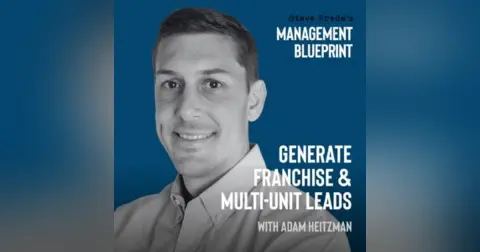


Adam Heitzman, Co-Founder and Managing Partner of HigherVisibility, shows businesses how to generate franchise & multi-unit leads by aligning digital marketing with how buyers search, research, and convert. Driven by competition and the challenge of growth, Adam has helped build a durable agency that continues adapting as search behavior, platforms, and technology evolve.
In this conversation, Adam introduces The Targeted Growth System—Conduct Audience Research, Understand Pain Points, Map the Buying Journey, Find Where They Congregate, Develop Content, and Convert with Copy. He explains how first-party data, recorded customer calls, analytics, heatmaps, surveys, and lookalike audiences reveal what buyers need and where they spend time. Adam also shares why strategy must determine tactics, how AI can improve analysis without replacing human judgment, and why quarterly business reviews should connect marketing activity to business outcomes.
—
Generate Franchise & Multi-Unit Leads with Adam Heitzman
Good day, listeners. Steve Preda here with the Management Blueprint, and my guest today is Adam Heitzman, the co-founder and managing partner of HigherVisibility, a digital marketing agency that helps businesses grow through SEO, paid search, paid social, CRO, and web development. Adam, welcome to the show.
Thanks, Steve. Appreciate you having me.
Well, I’m very curious about you and what you have developed, the frameworks, the purpose, the principles. So let’s start with the question: What is your personal why, and how are you manifesting it in HigherVisibility?
Well, yeah, I think from a personal why perspective, why I’m doing this, right? Ultimately, my goal and my desire… I really enjoy helping people. I love helping businesses solve problems, and one of the things that I’ve kind of gravitated towards is… I come from a background of competition and sports and all of these things, and so I kind of view this as a competition to some extent. And so the why behind it is the challenge, the challenge of growing a business, trying to figure out what makes it tick and how to help it grow and succeed. And so that’s the why behind it. It’s the challenge more than anything.
Yeah, I love it. So how do you grow your business? What drives growth in your business?
Well, for us particularly, I mean, it’s kind of changed a little bit over the years. I think if I take a step back, we started this agency, or I was a co-founder, started the agency back in 2009. So when you think about that versus kind of where we’re at today, then that’s 17 years, right? So things looked different then, right? While there were marketing agencies out there, and we’re specifically digital, the number of digital agencies today versus where they were 17 years ago is night and day.
I mean, there are new ones getting started every single day. There are thousands and thousands of them, whereas when we originally started, maybe a couple hundred. And so how we went about growing the business was completely different then, and I would probably have to do it completely differently today than I did back then. And so I think in some regard, it’s nice to have, in the sense that we were somewhat of an early adopter or early in this space, right? So because of that, we had historically grown pretty rapidly, pretty quickly, because at the time, like I said, there weren’t a lot out there.
But at the same token, businesses were facing the same problems that they’re kind of facing today still, which is consumers are looking for solutions to their problems. Our job is to help businesses show up when someone is searching for those solutions, right? Yep. The same thing could be said today as it would’ve been 17 years ago. Now, the mediums and how they go about doing it might be different, but that same principle is still there today. And so for us back then, because there was a smaller pool to go from, growth was quicker, it was easier, and it’s much different now.
And so when I think about growth, I’m thinking about back then, we were kind of practicing what we preach. We did our own SEO, we did our own paid search. We did all of those different things to drive business. And I come from a lead generation background myself historically, and so that was just natural. And so growing the business and getting enough opportunities or at-bats to kind of generate sales and really start getting momentum, that really wasn’t the difficult part. Now it’s more difficult today than it probably has ever been for us from that standpoint, just because of the sheer amount of agencies out there, knowing that the consumer journey is different today than it was as well.
Yeah. Okay. So that’s definitely true, and obviously SEO is changing rapidly, and now you have to show up on AI engines, like large language model engines, ChatGPT, Gemini, Claude. So how do you guys make this transition?
Yeah. Well, it’s definitely changing how people are discovering information, and I think there’s a tendency in our industry to declare that everything that came before this new technology is dead. SEO is not disappearing. Now, search behavior is changing. Google is still incredibly important, but now you have, like you mentioned, ChatGPT, Claude, Perplexity, all these other ones, right? And they’re influencing how people are searching and researching products and services.
And I think the interesting thing is that many of these fundamentals haven’t changed nearly as much as people think. You still need authority. You still need useful content. You still need a technically sound website. You still need the digital PR side of things. Again, what’s changing is where and how that information is surfaced.
SEO is still the quickest and most impactful way to show up in AI search.
Share on X
And so those fundamentals that we’ve built our business off of haven’t changed. Those are still foundational today. There are nuances, obviously, on how we go about showing up in these other platforms.
A lot of what we’ve done more recently has been through our testing ourselves on our own websites, our own platforms, and also, we’re heavily involved in numerous industry cohorts, right, where we’re doing types of public testing and sharing information to figure out what’s working and what’s not, so that we can then turn around and provide those types of services to our clients.
Yeah. Yeah, I love it. So you’re experimenting on yourself, and then you sell to clients what works.
Absolutely.
Okay. So let’s talk about frameworks because this podcast, Management Blueprint, I’m always looking for frameworks, and you have one that I saw on your website. You mentioned it, the Targeted Growth System. So what’s the Targeted Growth System, and can you explain the major steps in the Targeted Growth System and how it works?
Yeah. So essentially, one of the things that we, several years ago—and it’s similar to kind of what I just talked about earlier, right? When we first started our business, we were one of a couple hundred agencies out there that were doing this type of work. Now there’s tens of thousands. And one of the things that we realized is also along that same line, marketing, if you think about it, marketing today has changed more probably in the last three or four years than it had in the previous 20 or 30.
It’s completely different. And so we also knew that the model and how we went about operating with our clients had to evolve with that. And so we’ve been really focused on moving away from that traditional agency model where someone, let’s just use SEO as an example, buys SEO services, and the agency immediately starts executing a predetermined checklist of deliverables. We knew that that doesn’t work today, not in the way that it maybe used to.
The other thing is, we also knew we had to differentiate ourselves, too. So we really leaned into what we kind of were doing, that we were not only doing for ourselves, but that we recognized how things have changed across the web. Think about it from social, right? When you think about it, you go on LinkedIn or these other platforms, people don’t follow companies, they follow people. Yep. They want to have that relationship. And so when you think about it from that perspective, understanding who your audience actually is is crucial, and it’s more crucial today than it’s ever been. And so at the root of our Targeted Growth System is audience research.
We go through the process of developing and researching who your ICP is. What are their pain points? What are the things that make them tick? What websites do they visit? What is the journey they take to find the solutions that they’re looking for, right? And that is the root of all of this. It’s not a groundbreaking thing, but it’s deep audience research and persona development. So we go through, and we’re really, really focused on that because then that can tell us, if we’re thinking about SEO, that tells us what type of content to create so that we show up across the customer journey. It tells us, all right, from a digital PR perspective, what websites do we need to be present on? What platforms are more important than others if we’re thinking about social, right?
And so all of these different things kind of help us really create a customized approach and a customized strategy to help our clients win. It’s not just some checklist of items, right? And we think about that, too. Most of the time, when you’re thinking about SEO or paid search or things like that, you’re thinking about, “Let’s get traffic, and let’s get people to our website.” Well, that’s only half the battle. The other half of the battle is getting them to actually convert, become a customer.
So once you truly understand the audience and what their pain points and struggles are and what they’re looking for, you can strategically do copywriting to speak to those as well, to really influence them and get them to convert further into that funnel. So that’s the root of the Targeted Growth System, and there’s lots of nuanced tactics that we use to kind of really lean into it to further build that. But when we think about some of the big things, it’s: What is the business actually trying to accomplish? What are the goals? Who is the ideal customer? What does the competitive landscape look like? What’s preventing visitors from converting? Is attribution set up correctly?
And once we know all of that, then we can identify, okay, where’s the biggest growth opportunity? That’s where we can really shape where the marketing investment should go. Maybe SEO is the right answer. Maybe it’s not. Maybe it’s paid media.
But the strategy should determine the tactics rather than the tactics determining the strategy.
Share on X
Yeah. I love it.
Yeah.
Yeah. That’s great. And especially the idea of discovering their buying journey and then tailoring the funnel to match the buying journey.
Exactly.
And where do they appear? And then you develop the content that is custom to the platform that they are appearing on, so you’ve got good coverage and it’s kind of domain-specific. That’s great. So how do you do the audience research? What’s your process for that?
Yeah, I mean, there are numerous ways that we go about doing it. So first and foremost, we try to use any first-party data that we have. So when we’re talking to a client, if they’re able to share any internal research they’ve already done, that’s critical. Number two, a lot of times nowadays, people are recording almost every digital conversation that they have, right?
So they’ve got, whether it’s Fireflies or Voma or whatever system people are using, you have these call recordings. So you’ve got actual feedback from actual customers that you can use. So we try to capture that where we can. Independent from that, we’re looking at Google Analytics. We’re looking at, I don’t know if you’re familiar with Microsoft Clarity. It’s a free system, kind of like Google Analytics, but from Microsoft where you add it to the website, and it’ll do heat mapping.
It’ll do user recordings, like their website recordings of how they’re navigating. So you can kind of see where people are hung up, where they’re not, where they’re hitting errors. We use all of that. There are other third-party tools that we kind of leverage in there as well. SparkToro does a great job of providing user information as well. So there’s a variety of different tools and tactics, and a lot of times, too, what we’ll do is we’ll actually run our own surveys.
Once we understand, hey, this particular business is in this subject, this is kind of the rough, high-level demographics that make up their audience, we’ll run an independent survey with people that match that criteria and ask them specific types of questions. And then use that information to guide some of our decision-making strategy.
Yeah. Facebook has a term for it, to build a like audience or something like that.
Oh, lookalike audience?
Lookalike audience, yeah. Yeah.
Yeah. Yeah, absolutely. So in a roundabout way, it’s similar to that, right? We’re creating a lookalike audience and asking them open-ended questions purposely so that we can kind of hear the feedback in their own words.
Yeah. That’s very clever. So what’s the one thing that you’re actively trying to figure out in your business right now?
Ooh. Well, I think a couple of different things. Right now, more than anything, probably with a lot of businesses, it’s AI. Where can we use it? How can we utilize it to help our business? And that’s kind of been the biggest thing that we’ve been focused on more recently. I think there’s a balance there. I think we want to use AI, but at the same token, we’re not the business that is trying to run everything on AI, right?
We still believe wholeheartedly that there need to be people and humans in this decision-making process, in this journey, and so it's trying to balance where those opportunities are.
Share on X
So a lot of what we’re looking for in our own business is, where are there tactics or even processes that we have that don’t really require a human to do that, right? That can be ripe for automation and for providing kind of a synopsis, an overview of certain things.
And so that’s where we’re using AI more than anything right now, to try to help make things more efficient in terms of data analysis, to then provide that type of feedback to our sales team or our brand success team if they’re the ones communicating with our clients. So a good example of that would be, a lead comes in. This is a pretty simple one. A lead comes in, they’re interested in services.
Before our sales team actually picks up the phone to then reach out to them, we’re using AI on the back end, analyzing the person, analyzing the company, and gathering any information that we can around that individual and that company so that when that salesperson first reaches out, from the onset, we have a foundational understanding of who the company is, what might be their pain points, and a little bit about that individual, so that they’re coming to it much more armed than they otherwise would have been.
Yeah. Yeah, that makes, of course, a lot of sense. So what do you feel is the direction digital agencies are going to evolve in? What’s going to be the criteria for being a successful digital agency in the future?
Adaptation. I mean, you've got to adapt, and I think that's one of the things that I'm probably, honestly, in some ways most proud of, is the durability of what we've built at HigherVisibility.
Share on X
So I’ve been in digital marketing since 2004, and so in that timeframe, I’ve seen a lot of change, right? We’ve gone through countless Google updates, economic cycles, new platforms, mobile, social media, AI, and I don’t know how closely you follow this, but every couple of years, people declare SEO dead.
HigherVisibility’s continued to evolve through all of it, right? And so we’ve been fortunate to receive some great industry recognition along the way, and I’m proud of that. But I’m probably more proud of the way that we’ve built a company of talented people who can continue to adapt as the market changes. And I think AI is a great example of that, where I think continuing to do things how you’ve always done them is not going to work, especially nowadays with businesses leaning more and more into AI and efficiency and automation. I think there’s a balance there, right?
And so figuring out what that balance is for each company and each organization is important in the long run. But adapting to, again, everything was Google. It’s still the vast majority of people use Google, but now people are experiencing and searching for things in different ways. And so we have to adapt our strategy to how consumer demand and consumer journeys are changing. Yeah. And so I would say that’s probably the biggest thing.
Yeah. So how do you reassure your clients that they are in good hands because you’re evolving as fast as the technology requires you to?
Yeah. And that’s a great question. There are a couple of different ways in which we try to do that. Number one, we’re involved in, like I said, a lot of different cohorts where we’re sharing information. We’re regularly doing kind of our own research and studies. And when we do that research and those studies, we then help publish that across the web, sharing our findings. So when a client knows that we’re doing that type of research and understanding, I think there’s a level of comfort knowing that, hey, we’re not just sitting around following the same thing.
It’s also interesting because if I take a step back from my own personal journey of getting here, in a lot of ways, I was in some of their shoes before, right? So I’ve been on the flip side where I was a client. And so understanding that from a business perspective, not just from an agency perspective, I think has given me a unique perspective and insight that I maybe otherwise wouldn’t have. And so at the end of the day, the way we try to think about it is it’s not necessarily about SEO in and of itself if I’m using that as my concept, right?
It’s not necessarily that someone’s looking specifically for SEO, but they’re looking for a way to, at the root of the problem, generate more sales, generate more leads. And our goal is to help them achieve that depending on what platform or service line that kind of aligns with.
So basically, SEO is just a tool, and that serves the purpose of being discovered. But if you focus on the discovery, then maybe SEO is not going to be the most important tool, or maybe it’s a different version of SEO. So is it more about outcome-driven rather than tool-driven?
Yeah, exactly. I mean, nobody actually wants SEO. They want the business outcome that SEO’s supposed to create, right? And so I think that’s where, when I’m thinking about it based on my previous experience, right, when you’re on the client side, you’re thinking about revenue, you’re thinking about budgets, you’re thinking about things like that, right? And so I’ve always tried to keep that perspective because I understand that side of it, having been over there.
Clients don't ultimately care how busy we are. They care about whether what we're doing is helping their business.
Share on X
We can show them a beautiful report showing rankings and traffic and everything that we’ve accomplished, and the client can still be sitting there wondering, “But is it actually working?” Right? And so the strongest relationships happen when we can connect that marketing strategy back to what the business is trying to accomplish.
Yeah. That’s fantastic. So how do your clients expect you to measure the performance, to measure this outcome-oriented performance?
I think that’s an interesting question because it’s something that we’ve always tried to continue to refine and improve upon. Sometimes clients come to us, and funny enough, they don’t know what their goal is. They just know they need this service. And so part of it is us working with them to kind of work backwards, right? And so if we take a step back in that scenario and we’re like, two years from now, let’s just say two years from now, if this were successful, what would that mean for the business?
Ultimately, what are you trying to accomplish in the business? And ultimately, trying to work back so that we can then create actual… We want ourselves to be held accountable, right? So if we can get clear goalposts and roadmaps of, “Hey, this is what I’m trying to achieve. This is where I’m at today,” then we can develop and create a strategy to ultimately help us get there.
And so I think that’s the key behind all of it, is really, truly understanding it. And we’re also aware that things shift and change, and those types of goals can change and shift. And so when we’re working with a client, we typically like to have these quarterly sprints, right? So we think about it from a 90-day window, right? So a client comes on, we understand, we try to figure out what the goals are. We do our initial work, and every 90 days, we have what we call a quarterly business review, where we sit down and we’re like, “Okay, this was our strategy.
This is what worked. This is how we’re pacing towards your goal. This is what did not work. And then for the next quarter, this is what our strategy needs to be to kind of help us get closer to that.” And then asking that question from the client’s perspective: Has anything shifted in the business? Have any initiatives changed? So that we can adjust our strategy accordingly.
Yeah, I love the quarterly business reviews. A lot of companies talk about it, but they’re not disciplined enough to do it every quarter.
Yeah.
And do you find that for a quarterly business review to be productive, you actually have to create value with the business review itself rather than just use it to canvass the client’s ideas?
You do, and I think the other difficult part that tends to happen, at least for us, is people get busy, and it’s an initiative, don’t get me wrong. But I think finding… Typically, for the quarterly business review for us, it’s an hour, hour-and-a-half conversation, right?
So making sure that the client, and not only just the client who’s our point of contact, but maybe the ones that are actually their superiors, right, that are actually making some of the bigger business decisions, are part of that conversation. Because I think that’s critical, actually getting insight into the actual business. How is the business performing? Have things shifted? And what needs to change? Because we’re only as good as the information that we get as well, right?
Yeah. No, absolutely. Absolutely. I always thought that for the QBR process to be successful, you actually have to do some thinking beforehand so that you can actually stimulate the thinking of the client in that call, which would be why they would want to have this call in the first place. And then you can mine their ideas so that you can upsell them. But what’s your view of this?
Yeah. No, that’s a great call. And you’re right. So part of our process is kind of a look back, right? “Hey, this is what worked. This is what did not work.” And be honest about that. “Hey, we thought this was going to work. It didn’t. This is where we’re at today in relation to what your goals and expectations were or are. But based on our research and what we know right now today, this is what we think will help you get to where we want to get to,” right?
Now, once we have that conversation and we share that, obviously we’re going to get dialogue and information from the business that may shift or change that a little bit. But at least you’re coming to the table having done the research and analysis ahead of time, saying, “Hey, if things are where they’re at today, this is what needs to happen over the next quarter to help us achieve those goals.”
Yeah. Yeah, I love that. So who is your ideal customer, and how do you want them to connect with you?
So if you were to ask me that question today and I was starting a new agency today, it would probably be different than what it would have been historically. Because again, there’s a piece of that where we’ve been in this for 17 years, and so over the course of that timeframe, we have worked with a wide variety of different verticals and types of businesses. If I were starting an agency today, I think to be successful, you really, truly have to niche down and focus on a specific type of vertical, and don’t get me wrong, we still kind of try to do that a little bit.
We do have certain types of industries and verticals that we try to specialize in because we have a history of working with them. And some of those tend to be franchise organizations, multi-unit businesses. While we have worked with a wide variety of businesses in e-commerce and enterprise, the majority of the businesses that I feel like we tend to work with today, that we have the most success with today, tend to be more of your small- to medium-sized businesses. Because over the years, we’ve just become really, really strong in local and geographic marketing.
And so that’s why the franchise and multi-unit space has been really a big vertical of ours. Underneath that, obviously, home services, legal. We have a lot of success in the personal finance space as well. That’s kind of where my initial background comes from. And so any business that’s reliant on lead generation, we’ve been really, really strong and successful at.
Wouldn’t you say that almost all businesses rely on lead generation?
To some extent. I mean, obviously e-commerce is a little bit different because it’s sales, it’s online sales, and there’s a little bit of a nuance there in terms of how all that’s done. But yeah, to some extent. I mean, I think we don’t do a lot in SaaS technology, and honestly, I think that would be a difficult one to be in right now simply because of AI. It’s being very disrupted. And so I think we also try to focus on verticals and industries where they are more reliant on our types of services and need our types of services that are less open to being disrupted from that perspective.
Okay. So if you’re listening to this and you are in home services, legal, personal finance, and other lead-generation-intensive businesses, then reach out to Adam. Where can people learn more about HigherVisibility?
HigherVisibility.com. Okay. You can also look at me, follow me on LinkedIn or X, Adam Heitzman. I post regularly on there. I also am on Search Engine Land, Search Engine Journal, places like that. But HigherVisibility.com is usually the best place to go.
All right. So check out HigherVisibility.com. Check Adam out on social media. He’s prominent on LinkedIn, and you just mentioned X. So check out his thought leadership. And if you enjoyed this conversation, stay tuned because every week I bring a couple of exciting entrepreneurs who share their frameworks with you. Adam, thanks for coming, and thank you for listening.
Thanks, Steve. Really appreciate it. Had a great time.