After Alexander: Diogenes, the Cynics, and a City With No Walls

 Apple Podcasts
 Spotify
 Deezer
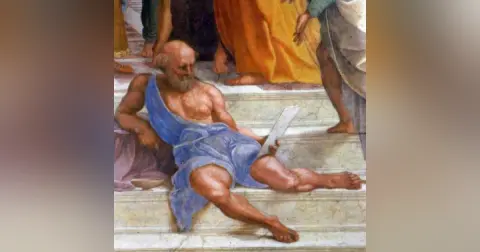
What happens to an ethics built on belonging to a city once that city stops being able to protect anyone? This episode opens the Hellenistic arc of Notions of Progress by tracing how Philip and Alexander's conquests brought organized Greek political independence to an end, and how philosophy responded once the polis could no longer guarantee anyone's flourishing. At the center of that response is Diogenes of Sinope, a philosopher who lived in a discarded wine jar, told Alexander the Great to step out of his sunlight, and built an entire idea of progress on needing nothing from the city at all. Historian F. W. Walbank's account of the shift toward personal, unaccountable Macedonian rule sets the political stage; classicists John Moles, A. A. Long, and R. Bracht Branham then help unpack what Diogenes and the Cynics actually stood for — not mere rejection, but a substantive alternative: kosmopolitēs, citizenship of the cosmos. The episode closes by tracing that idea forward, through Crates of Thebes, to a young Zeno of Citium, the future founder of the Stoics.
Show Notes & Timestamps
- Introduction — 0:34
- The Collapse of the Polis — 1:10
- Alexander's Conquest — 3:05
- Philosophical Responses — 5:31
- Diogenes and the Cynics — 6:21
- Cynic Philosophy and Cosmopolitanism — 10:45
- Aristotle vs. Diogenes — 17:26
- Looking Ahead — 18:16
Key Concepts & Terms
Kosmopolitēs (koz-moh-poh-lee-TAYS)
"Citizen of the cosmos." Diogenes' term for himself — read by classicist John Moles as a substantive alternative to civic belonging, not just a denial of it: citizenship relocated from one city to the whole of humanity.
Autarkeia (ow-tar-KAY-uh)
Self-sufficiency. Classicist A. A. Long traces the Cynic case for autarkeia to deliberate training — the same discipline that lets an athlete or a flutist earn a skill.
Parrhēsia (par-hay-SEE-uh)
Freedom to speak the truth to anyone, regardless of rank. R. Bracht Branham identifies this as the virtue behind both Diogenes' confrontation with Plato and his confrontation with Alexander.
Physis / Nomos (FOO-sis / NOH-mos)
Nature versus convention. Diogenes' governing distinction: natural functions, he argued, are proper and should be done openly, without shame — the way a dog does them, the origin of the term "Cynic" (kynikos, "dog-like").
Fascinating Historical Insights
"Here Is Plato's Man"
When Plato reportedly defined the human being as a "featherless biped," Diogenes is said to have plucked a chicken, carried it into Plato's lecture, and announced, "Here is Plato's man."
"Step Out of My Light"
When Alexander the Great offered Diogenes anything he wanted, Diogenes is reported to have asked only that Alexander step out of his sunlight. Alexander reportedly walked away remarking, "Had I not been Alexander, I would have liked to have been Diogenes."
A Goal Assigned After Death
Ancient critics faulted the Cynics for having no stated telos, or ultimate goal. According to classicists Branham and Goulet-Cazé, it was a later Stoic, Apollodorus, who retroactively assigned the Cynics one — "living in accordance with virtue" — decades after Diogenes had already died.
"Written on the Dog's Tail"
Historian Peter Green reports that Zeno of Citium's Republic was so thoroughly shaped by Cynic thinking that it was joked to have been "written on the dog's tail" — a direct reference to Diogenes, whose nickname was "the Dog."
Resources & Further Reading
Primary Sources
- Diogenes Laertius, Lives of Eminent Philosophers, Loeb Classical Library Vol. II, trans. R. D. Hicks
Works Discussed
- F. W. Walbank, The Hellenistic World
- Peter Green, Alexander to Actium: The Historical Evolution of the Hellenistic Age
- A. A. Long, essays on Diogenes and Cynic self-sufficiency (autarkeia)
- R. Bracht Branham and Marie-Odile Goulet-Cazé (eds.), The Cynics: The Cynic Movement in Antiquity and Its Legacy
- John Moles, on Cynic cosmopolitanism and kosmopolitēs
Further Context
- Stanford Encyclopedia of Philosophy, entry on Cynicism
⚑ Green, Walbank, and Branham & Goulet-Cazé remain ⚑ VERIFY in your reading-list tracking, though the recorded transcript quotes all three directly — resolve formally before FINAL, per the Ferrari Rule.
Related Episodes
- Ep. 14: Aristotle Pt. 1 — the account of flourishing and the polis that this episode's Cynic argument directly answers. https://youtu.be/Q7jAurvRX9M
- Ep. 15: Aristotle Pt. 2 — five contemporary perspectives on Aristotle, immediately preceding this episode's turn to his student's conquest and its aftermath.
⚑ E15's YouTube URL isn't yet recorded in this project's memory — supply it if you'd like it linked here rather than titled only.
Coming Up Next
Notions of Progress turns to "The Machine Breakers," a conversation with Prof. Gavin Mueller of the University of Amsterdam, author of Breaking Things at Work. The interview traces Luddism as a coherent political stance against capital's use of technology to deskill and control workers — and asks whether the Luddites' claim to collective progress holds up against the philosophical questions this arc has been tracing since Aristotle.
Listen & Subscribe
Apple Podcasts: https://podcasts.apple.com/us/podcast/notions-of-progress/id1837506445
Spotify: https://open.spotify.com/show/5WgTlVMBfFzrIQwqkqhiD9
YouTube: https://youtu.be/97G7QI7ZeOg
Website: https://www.notionsofprogress.com
Substack: https://notionsofprogress.substack.com
Instagram: @notionsofprogress
✉️ Email: marshall@notionsofprogress.com
About the Show
Notions of Progress is a podcast tracing how the idea of progress has been understood, contested, and reimagined from antiquity to the age of artificial intelligence. Marshall Madow, an independent researcher and the show's host and scholar-curator, holds an MA in History from Cambridge University, where his thesis examined Georges Sorel's epistemology of myth and the role of ideas in animating collective action, and an MSc from Oxford University's Saïd Business School, specializing in Complexity Science and Leadership. Rather than prescribing a position, the podcast surfaces scholarly debate — examining how thinkers from Hesiod to Hayek, from Plato to contemporary philosophers of technology, have understood what it means for humanity to move forward, at what cost, for whom, and by whose definition.
Email: marshall@notionsofprogress.com Website: notionsofprogress.com
Transcript
For full transcript visit: https://www.notionsofprogress.com