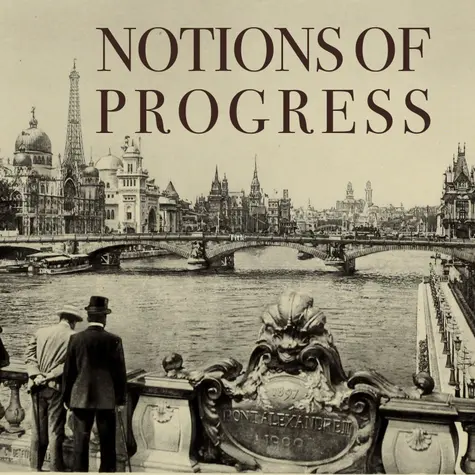
Notions of Progress
The idea of progress — that humanity advances through time toward something better — has been a contested assumption throughout history. The question of whether we as a species, a nation, or as individuals are progressing is being interrogated with a renewed urgency that the present moment demands. ...

Recent Episodes

23
Nov. 3, 2026
From Liberal to Liberalism: Helena Rosenblatt on the History of a Word
In this first part of a three-part conversation, historian Helena Rosenblatt traces the history of the words “liberal” and “liberalism,” the subject of her 2018 book The Lost History of Liberalism. She calls her approach a word history, asking what these terms meant to the people who used them, and begins with the Latin liber, which she says means both free and generous. She follows the word from Cicero through the Enlightenment, then explains why she holds that liberalism does not exist before
Oct. 18, 2026
Is Capitalism Past Its Use-By Date? Michael Roberts on Three Futures About This Episode
In this third and final part of the conversation, Marxist economist Michael Roberts brings the argument of his 2016 book The Long Depression into the present. He begins with the view that the system works as long as decisions are good, which he finds unconvincing: a system that produces for profit, he argues, delivers both vitality and grotesque inequality, and cannot continue as it is. He describes a generation now worse off than its parents and presents the postwar golden age as the exception,
21
Oct. 4, 2026
Two Depressions, One Cause? Michael Roberts on 1873, 1929, and the Rate of Profit
In this second of a three-part conversation, Marxist economist Michael Roberts takes the central claim from Part One — that the 2008 crash opened a long depression — back to the two historical cases on which his 2016 book The Long Depression rests. He begins with the 1870s, answering the Austrian-school argument that no depression took place and a rival monetary explanation tied to the gold standard; his reply draws on the data for Britain, the hegemonic economy of the period. He then sets out t
20
Sept. 20, 2026
A Marxist in the City of London: Michael Roberts on The Long Depression
In this first of a three-part conversation, Marxist economist Michael Roberts joins Notions of Progress to lay out the central argument of his 2016 book The Long Depression: that the 2008 financial crash was not an ordinary recession, but the opening of a longer structural depression driven by capitalism’s own tendency toward falling profitability. Before getting there, Roberts traces his own path — from a Marxist conversion as a student to a three-decade career as an economist inside the City o
19
Sept. 7, 2026
Nothing About This Is Inevitable: Gavin Mueller on Automation, AI, and a Different Future
This episode closes out a three-part conversation with Gavin Mueller (University of Amsterdam), author of Breaking Things at Work. In Part 2, Mueller traced Marx's own ambivalence toward machinery through the split between orthodox and heterodox Marxism, Frederick Taylor's theory of workplace control, the Technocracy Movement, and Norbert Wiener's early warnings to organized labor about automation. In this final part, Mueller brings that history into the present. The conversation moves from Shos
18
Aug. 23, 2026
Theorizing the Machine: Gavin Mueller on Marxism, Taylorism, and Cybernetics Interview pt 2 of 3
In Episode 17, Gavin Mueller (University of Amsterdam) traced the Luddites back to the guild economy of England's Midlands. In this second installment of a three-part conversation, Mueller follows that struggle into the twentieth century: Karl Marx's own ambivalence toward machinery, and the split between Karl Kautsky's “orthodox” Marxism — which treated capitalist technology as a scientifically inevitable path to socialism — and the workers' movements that resisted that framing directly on the