From Liberal to Liberalism: Helena Rosenblatt on the History of a Word

 Apple Podcasts
 Spotify
 Deezer
In this first part of a three-part conversation, historian Helena Rosenblatt traces the history of the words “liberal” and “liberalism,” the subject of her 2018 book The Lost History of Liberalism. She calls her approach a word history, asking what these terms meant to the people who used them, and begins with the Latin liber, which she says means both free and generous. She follows the word from Cicero through the Enlightenment, then explains why she holds that liberalism does not exist before the word for it, a position she acknowledges can be contested. Rosenblatt places that moment around 1813, in the circle of Madame de Staël and Benjamin Constant, who responded to the Terror and to Napoleon, and credits Spanish scholars with finding that the word apparently first appeared in a Spanish newspaper, used by counter-revolutionaries. The conversation then turns to democracy and the vote, the July Monarchy of 1830 and the workers it disappointed, and Alexis de Tocqueville’s concern about what he called democratic despotism.
About Our Guest
Helena Rosenblatt is Distinguished Professor of history, political science, and French at the Graduate Center of the City University of New York. Her most recent book is The Lost History of Liberalism: From Ancient Rome to the Twenty-First Century (Princeton University Press, 2018), the subject of this conversation. She is also the author of Rousseau and Geneva: From the First Discourse to the Social Contract (Cambridge University Press, 1997) and Liberal Values: Benjamin Constant and the Politics of Religion (Cambridge University Press, 2008). Her present project, for which she was awarded a John Simon Guggenheim Fellowship, is an intellectual biography of Madame de Staël.
Show Notes & Timestamps
00:00 Highlights
01:34 Welcome and Guest Introduction
03:03 Her Work and How the Book Began
07:24 Isms and the Word Liberalism
09:13 Free and Generous
10:35 Rights and Obligations
11:56 Prehistory of Liberalism
17:22 Liberalism Before the Word
19:26 Madame de Staël and Benjamin Constant
21:39 Napoleon and the Making of Liberalism
25:31 Democracy and Suffrage
27:53 The July Monarchy of 1830
30:20 Liberals, Workers, and Socialism
33:02 Tocqueville and Democratic Despotism
36:50 Part Two Preview
Key Concepts & Terms
Word History — Rosenblatt’s method. She calls her book a word history, tracing what “liberal” and “liberalism” meant to the people who used them. She says she began with conceptual history, urged by a colleague at the Graduate Center to focus on the concept rather than on the men and their texts. That led her to ask how people defined liberalism, why they argued about it, and what the arguments were about. She describes the book as a methodological intervention in the scholarship and says she looks at context, at what caused changes in the term.
Liber (LEE-ber) — free and generous. Rosenblatt says the Latin liber, the root of the word, means both free and generous. Many people focus on the freedom side, she says, and she wants to remind them of the generosity side. She places both at or near the core of liberalism through the ages, though liberals and their enemies defined it differently depending on context. In Cicero’s Rome, she says, to be liberal meant having the qualities of a citizen: free and freedom-loving, but also generous to the commonwealth rather than selfish.
Liberal Arts Education — education for citizenship. Rosenblatt describes the Renaissance liberal arts as education for citizenship, and says rulers were expected to be liberal in their magnanimity, in the city-states of Italy especially. She stresses that these were ideals, and that people did not always live up to them. She adds that the concept was aristocratic or elitist at first, meant to train young men, the future leaders, to contribute to the community.
Liberals of Movement and Liberals of Order — a split after 1830. Rosenblatt says the liberals who came to power in 1830 divided into two camps. The liberals of movement wanted to broaden the franchise to include poorer people, while the more stationary liberals, the liberals of order (she thinks that is what they called themselves), did not. She describes the resulting system as an oligarchy, geared to what was called the middle class but was really the upper middle class.
Fascinating Historical Insights
When the “-isms” Were Insults — Rosenblatt notes that terms ending in “-ism” are largely nineteenth-century coinages and that many began as insults, naming Calvinism and Lutheranism. She places the coining of “liberalism” around 1813 and credits Spanish scholars with finding that the word apparently first appeared in a Spanish newspaper, used by counter-revolutionaries who disliked the liberals. On her account, to those critics it meant selfishness, anarchy, revolution, and atheism.
A Woman Could Not Be Liberal — Rosenblatt explains that until the Enlightenment “liberal” described the qualities of a free, noble citizen, and that the word could not be applied to a woman. If it was, she says, it meant something very different: because a woman was thought of in terms of her body, it came to mean a sexually loose woman. She adds that through much of the nineteenth century liberals did not think all men should have the vote, and thought so even less of women.
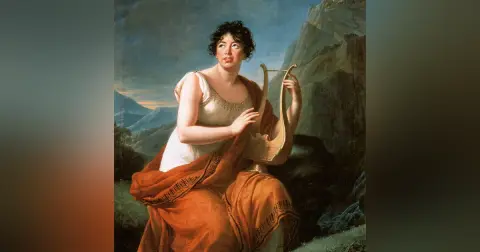
A Salon, the Terror, and Napoleon — Rosenblatt describes Madame de Staël, who kept a salon, something she had learned from her mother, a noted salonnière, discovering Benjamin Constant when they met in 1794 and bringing him to Paris. After the Terror, she says, they hoped to rescue the best of the Revolution, and at first put their faith in Napoleon, whom Staël admired. When they saw he wanted to be a dictator, Rosenblatt says, they assembled constitutional rule, the rule of law, civil equality, and individual rights so that a Terror or a Napoleon would be impossible in the future.
The Workers Who Helped Win 1830 — Rosenblatt says the workers of Paris helped the liberals take power in 1830 and hoped the new government would legislate on working hours, help in downturns, and perhaps minimum wages, along with the right to protest and to strike. In their eyes, she says, the liberals in power turned conservative, and only a tiny minority could vote. The workers were disappointed, anger grew, and socialism began, some of it as a breakoff from liberalism.
Resources & Further Reading
Primary Sources
- Helena Rosenblatt, The Lost History of Liberalism: From Ancient Rome to the Twenty-First Century (Princeton University Press, 2018) — the book at the center of this conversation, which Rosenblatt describes as a word history of “liberal” and “liberalism.”
Works Discussed
- Alexis de Tocqueville, Democracy in America — Rosenblatt says that much of it is really about France, with Tocqueville writing about America while keeping one eye on France.
- Jean-Jacques Rousseau, Second Discourse — Rosenblatt tells the host that a project on progress has to deal with this work, in which she says Rousseau discusses perfectibility.
Rosenblatt names both works by title only, and no edition or year is cited in this episode. She refers to Locke, Mill, Staël, and Constant, and to Tocqueville’s book on the French Revolution, without naming specific works; none of these are listed here.
Coming Up Next
Next, Part Two of the conversation with the historian Helena Rosenblatt on her book The Lost History of Liberalism follows the French liberals into the social question: what the restricted franchise of the July Monarchy meant for workers, how Marx and Engels read the liberal-minded middle class, and how “liberal democracy” came to take shape alongside Napoleon III and Abraham Lincoln. Part Two lands in two weeks.
Listen & Subscribe
Website — notionsofprogress.com
Email: marshall@notionsofprogress.com
About the Show
Notions of Progress is a podcast tracing ideas of progress from antiquity to the age of artificial intelligence. Hosted by Marshall Madow — an independent researcher whose MA in History (Cambridge) examined Georges Sorel’s epistemology of myth, and whose MSc (Oxford, Saïd Business School) focused on Complexity Science and Leadership — the show surfaces the debates rather than settling them, tracing how thinkers from Hesiod to Hayek, Plato to Peter Haff, have understood what it means for humanity to move forward, at what cost, and for whom.
[EMBEDDED YOUTUBE VIDEO] — paste manually in Podpage after publishing.
For full transcript, visit: notionsofprogress.com