Episodes
Oct. 19, 2026
Inside Counsel at Scale
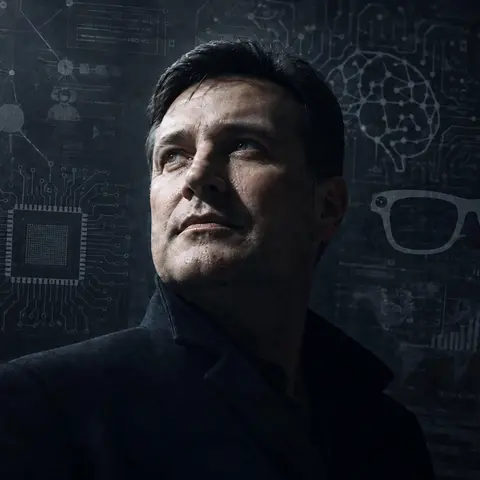
What does it mean to lead the legal function at a company operating at the scale of Meta? C.J. Mahoney, Meta's Chief Legal Officer and formerly General Counsel of Microsoft and Deputy U.S. Trade Representative, joins TalksOnLaw to discuss the wave of litigation alleging that social-media products are addictive and harmful to young users, the role of Section 230 and the First Amendment in Meta's defense, and the FTC's challenge to the Instagram and WhatsApp acquisitions. Mahoney also explains ho...

Oct. 2, 2026
When Religious Freedom Harms Children
The United States protects religious freedom in the first words of the Bill of Rights and protects children in every state's criminal code. When a parent's faith leads to refusing a blood transfusion, praying over a diabetic child instead of seeking care, or declining vaccination, the law must decide which commitment yields. Prof. Marci Hamilton, who argued City of Boerne v. Flores before the Supreme Court and is the author of God vs. the Gavel, joins TalksOnLaw to examine where the right to bel...

July 9, 2026
Artificial Justice – Navigating an AI Evidence Crisis
Deepfakes, AI-generated documents, and machine-assisted analysis are arriving in courtrooms faster than the rules of evidence can adapt. Judge Paul Grimm joins TalksOnLaw to discuss how courts should authenticate and evaluate AI-generated evidence — and what judges and litigators can do now to prepare. How to Earn CLE Credit MCLE certificates are eligible only for TalksOnLaw Premium or Podcast members. To earn credit, listen to the full program, note the verification code announced during the ...
June 25, 2026
Trump Trials – A Survey in Legal Ethics
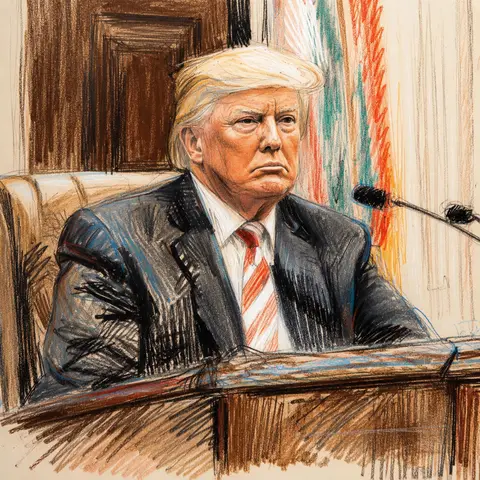
The criminal and civil cases surrounding Donald Trump have raised a remarkable range of professional responsibility questions — for prosecutors, defense counsel, and the lawyers who found themselves in the middle. Legal ethics professors Bruce Green and Rebecca Roiphe survey the ethical issues raised by the Trump trials and what they teach about the rules governing lawyers. How to Earn CLE Credit MCLE certificates are eligible only for TalksOnLaw Premium or Podcast members. To earn credit, lis...

June 10, 2026
A Healthier Legal Future
The legal profession has long been defined as a high-performance environment characterized by competition and long hours. While dedication and hard work remain hallmarks of successful lawyers, there is a growing recognition of the tension between these professional demands and attorney mental health. Dean David Jaffe, Associate Dean for Student Affairs at American University, offers a unique perspective on this challenge, having co-piloted two national surveys on law student well-being. How to ...
Jan. 29, 2026
Law According to Karp
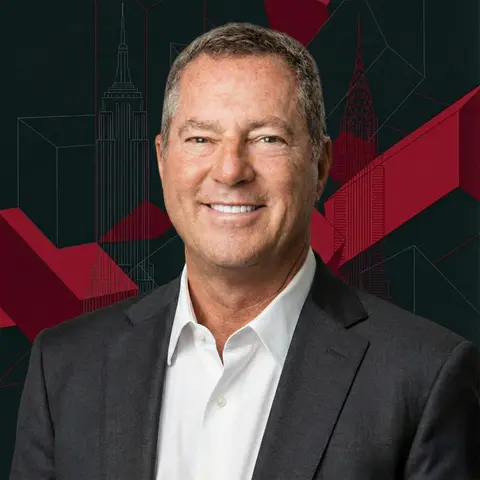
For more than a decade, Brad Karp has led Paul, Weiss during a period of significant growth and change, including its emergence as one of the most profitable firms in BigLaw. In this episode, Karp describes how large law firms are built, governed, and sustained over time. Karp discusses how Paul, Weiss evolved from a litigation-heavy firm into a more diversified platform spanning private equity, public M&A, restructuring, and regulatory defense; how major client relationships influenced firm st...
Jan. 23, 2026
Bending the Knee
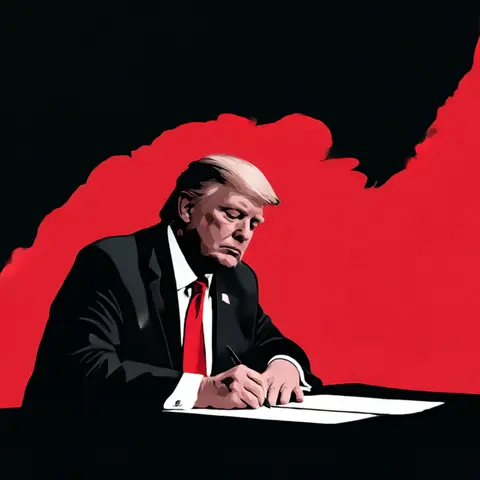
For more than two centuries, the American legal system has operated on a core assumption: lawyers are not punished for the conduct or politics of their clients. In this episode of New Law Order, Jeffrey Toobin examines what happens when that premise is tested by executive power. The interview is co-hosted by Joel Cohen, founder of TalksOnLaw, and John Morley, a Yale Law School professor whose scholarship focuses on the structure and economics of law firms. Together, they explore how executive ac...

Oct. 17, 2025
The AI Threat to Privacy
Artificial intelligence is transforming how data is collected, shared, and analyzed—often in ways that outpace existing privacy law. In this insightful conversation, George Washington Law Professor Daniel Solove, one of the nation’s leading experts on privacy, examines how AI exposes the limits of the American right to privacy. From the third-party doctrine to landmark cases such as Carpenter v. United States, Solove explains how government reliance on privately gathered data allows surveillance...
Aug. 7, 2025
Defending Words
Free speech has long been a constitutional cornerstone in the United States—but in recent years, calls for censorship have surged. Whether in response to hate speech, misinformation, or online harm, efforts to restrict expression are on the rise. In this provocative conversation, former ACLU president and NYU Law Professor Nadine Strossen mounts a powerful defense of the First Amendment. Drawing from her latest book, War on Words: 10 Arguments Against Free Speech—And Why They Fail, Strossen expl...
May 28, 2025
Trump Orders: Law Firms on the Line
When a string of 2025 executive orders barred select law firms from federal buildings, revoked security clearances, and threatened to cancel their clients’ government contracts, Big Law took notice. Yale Law professor John Morley—author of Why Law Firms Collapse—joins Talks On Law host Joel Cohen to explain: how the orders leverage client pressure to destabilize even thriving partnerships; the “bank-run” dynamic of partner exits and collapsing profits-per-partner; bankruptcy claw-back rules a...

May 6, 2025
Scroll Control – Regulating Social Media for Kids
Growing evidence links heavy social‑media use to rising anxiety, bullying, and sextortion among kids, and state lawmakers are racing to respond. In this interview, Harvard Law School’s Leah Plunkett—reporter for the Uniform Law Commission’s child‑influencer act—and University of Virginia family‑law scholar Naomi Cahn examine how new statutes seek to verify age, require parental consent, and redesign feeds to curb addictive features. Plunkett and Cahn compare Florida’s and Utah’s sweeping under‑...

April 13, 2025
Confronting the Disinformation Engine
Digital platforms now enable the near-instantaneous distribution of information, including misinformation and disinformation, to vast audiences. Disinformation refers to false or manipulated information deliberately created to deceive, whereas misinformation is inaccurate or misleading information that is sometimes shared without harmful intent. Professor Barbara McQuade—a former U.S. attorney and current professor of National Security Law at the University of Michigan Law School—explores these ...

March 19, 2025
Out of Bounds – Negotiations Ethics
An interview with Prof. Carrie Menkel-Meadow In this episode, Professor Carrie Menkel-Meadow of UC Irvine Law School delves into the ethical frontiers of legal negotiation, challenging attorneys to reflect on which tactics align with both zealous advocacy and professional integrity. Menkel-Meadow navigates the evolution from a model of unbridled assertiveness toward a modern framework that prizes diligence, honesty, and respect for the Model Rules of Professional Conduct. Throughout the conver...

Jan. 18, 2025
A Lawyer's Addiction with Brian Cuban
The legal profession faces alarmingly high rates of substance abuse and mental health challenges. In this conversation, Brian Cuban, attorney, author, and addiction recovery advocate, explores the systemic and cultural factors contributing to addiction among lawyers and provides actionable strategies for prevention and recovery. Cuban shares his deeply personal journey of battling addiction and rebuilding his life, offering valuable insights into how stigma, stress, and the “work hard, play har...
Jan. 10, 2025
Regulating AI as a Natural Monopoly
As artificial intelligence systems become increasingly expensive and resource dependant to develop, a question arises: Are we witnessing the emergence of AI as a natural monopoly? In this conversation, Berkeley Law Professor Tejas Narechania explores how the market forces driving AI consolidation create both efficiency and significant legal risks. Professor Narechania explains the structural conditions under which a natural monopoly can form—where the high costs of developing foundational AI mo...

Nov. 29, 2024
Autonomous Weapons of War
Autonomous lethal weapons, often sensationalized as “killer robots,” are no longer confined to science fiction—they are a rapidly advancing reality in modern warfare. In this conversation, Georgetown Law Professor Mitt Regan, an expert on the laws of war and international law, delves into the profound ethical and legal implications of AI-enabled weapon systems for both current conflicts and the future of warfare. Central to the conversation are the legal frameworks governing AI-enabled weapons u...

Sept. 30, 2024
AI Models & Copyright Battles
Large language models (LLMs) are trained on vast, nearly unfathomable amounts of data—data that is now reshaping the very fields from which it was sourced, including literature, journalism, music, and photography. As a result, these models have sparked high-stakes litigation and raised novel legal questions about ownership and intellectual property, both in the AI training process and the output they produce. In this conversation, we explore the intersection of AI training and copyright law with...

Sept. 23, 2024
Lawyers + LLMs: AI Ethics
AI is changing how lawyers do their work and raising questions about how lawyers can harness artificial intelligence consistent with their professional responsibilities. Georgetown Law Professor Tanina Rostain answers questions about the transformative impact of AI on the legal profession and how the rules of professional conduct apply to the new ways that attorneys use AI to conduct research, draft documents, and interact with clients. How to Earn CLE Credit MCLE certificates are eligible only...
June 28, 2024
Gun Rights under Rahimi & Cargill
Professor Joseph Blocher (Second Amendment scholar and co-director of the Duke Center for Firearms Law) explains two significant recent Supreme Court cases: United States v. Rahimi and Garland v. Cargill. This discussion provides an in-depth analysis of the legal reasoning behind these decisions and their broader implications for gun regulation and gun rights in the United States. How to Earn CLE Credit MCLE certificates are eligible only for TalksOnLaw Premium or Podcast members. To earn credi...

June 28, 2024
Criminal Lab-Grown Meat
The sale and production of lab-grown meat have been criminalized in Florida and Alabama, with other states considering similar legislation. Food law expert Professor Michael Roberts from UCLA Law School explains what the new laws do as well as how they fit into the federal regulatory framework and the historical context of food law and politics in the United States. How to Earn CLE Credit MCLE certificates are eligible only for TalksOnLaw Premium or Podcast members. To earn credit, listen to th...
June 19, 2024
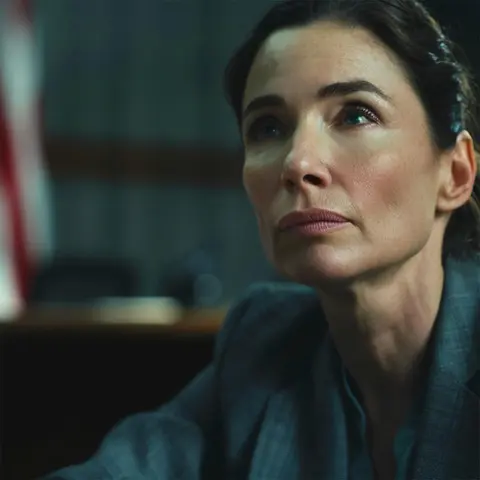
Prosecutorial Discretion – Power & Responsibility
The power of prosecutors extends far beyond the courtroom, shaping the trajectory of countless lives through their decisions. Legal experts Bruce Green and Rebecca Roiphe delve into this immense authority in an insightful interview, exploring the nuances of prosecutorial discretion and its profound impact on the justice system. Their discussion sheds light on the ethical and constitutional standards that guide prosecutorial conduct, emphasizing the balance between power and responsibility. How ...
May 28, 2024
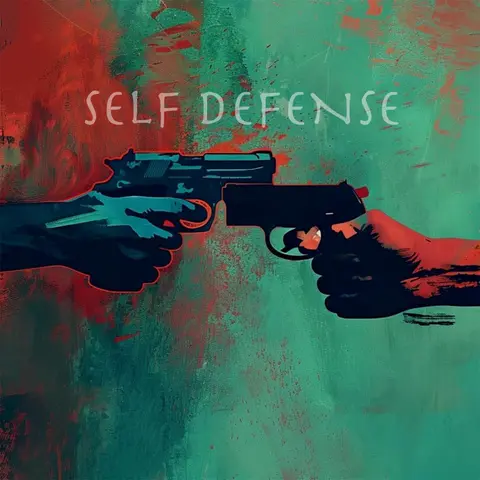
Deadly Force as Self Defense
The law of self-defense permits the use of deadly force under a strict set of conditions: the threat must be both imminent and unlawful, and the response, both necessary and proportionate. But what of the murkier scenarios where multiple parties, ensnared in the throes of perceived danger, believe themselves justified in their fears? Consider the tragic case of George Zimmerman and Trayvon Martin—where does the law stand when fear is misplaced, and how swiftly can one lawfully escalate to lethal...
May 20, 2024
Injustice by Forensics
Forensic science, when applied rigorously, has the power to catch and convict criminals, but when mishandled, can lead to tragic miscarriages of justice. In this eye-opening interview with Professor Brandon Garrett (Duke Law School) and Dr. Peter Stout (Houston Forensic Science Center), explore high-profile exoneration cases like those of Josiah Sutton and George Rodriguez and the systemic issues plaguing crime labs across the country. How to Earn CLE Credit MCLE certificates are eligible only ...
April 28, 2024
Weaponization of Outer Space
As the US accuses Russia of developing nuclear-armed satellites, what does international law say about weapons of mass destruction (WMD) in outer space? Space law expert, Professor Frans von der Dunk discusses the weaponization of outer space and the laws that govern weapons beyond the planet. The deployment of weapons of mass destruction in outer space presents not only a significant threat to global security but also a complex challenge to international law, explains Professor von der Dunk, a ...