Episodes
31
March 23, 2018
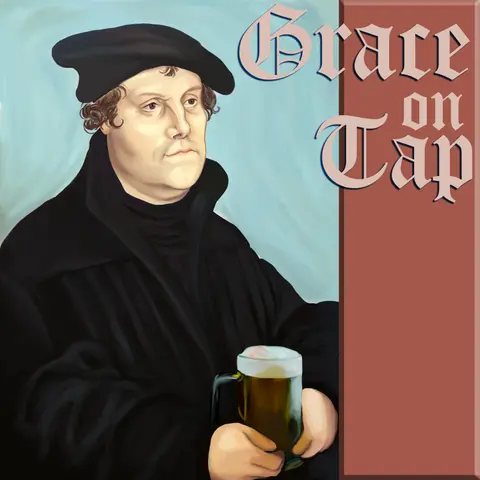
Episode 31 – Knights’ Revolt
In October 1347, twelve trading ships docked in the Sicilian port of Messina. When the ships were boarded, the locals were horrified to find most of the crewmates either dead or dying of a strange illness that covered their bodies with the black boils. Even though the authorities ordered the ships sent back out to sea, it was too late. The Black Plague had arrived in Europe. The plague would not stop ravaging Europe until 1720, almost 400 years after it first arrived. During this time, the plag...
30
March 7, 2018
Episode 30 – The Prague Manifesto of Thomas Müntzer
When Thomas Müntzer arrived in Wittenberg in early 1522, Philip Melanchthon, Andreas Karlstadt and the other reformers had no idea of the radical ideas that had come to fruition within his heart. These ideas, which would ultimately threaten to tear Germany apart, were still hidden from the other scholars in the Wittenberg circle. But they weren’t hidden from everybody. A few months before his return to Wittenberg, Müntzer had outlined his radical theology for the believers in Prague, in a docum...
29
Feb. 21, 2018
Episode 29 – The Edict of Worms and the Seeds of the Gospel
The Emperor released the Edict of Worms on May 26, 1521, officially declaring Luther and his teachings outlawed, only 3 weeks after Luther disappeared while traveling through the Thuringia forest. With the release of the edict, the reformation entered into a new and dangerous period. It was most dangerous for those who proclaimed the gospel in areas like modern day Belgium, where the leadership was most loyal to both the pope and the emperor. In areas like this, the leaders were willing to atta...
28
Feb. 8, 2018
Episode 28 – Return of the Reformer
Although Wittenberg was ground zero for the reform movement in the 16th century, it was still home to many priests, monks and laity who were not comfortable with the changes proposed by the reformers. When Luther was in Wittenberg, these disagreements remained within the confines of discussion and debate. After Luther was in hiding for 6 months, things began to change. Changes in Wittenberg began to be forced upon on the priests and laity, sometimes through edict, but often through threats and ...
27
Jan. 23, 2018
Episode 27 – Marriage and Monks, Communion and Chaos in Wittenberg
The ten-month (1521-1522) stay in the Wartburg castle was one of the most productive periods of Martin Luther’s life, but not all the action was in the castle outside of Eisenach. The team of theologians that Luther left back in Wittenberg were also busy during this period, but with decidedly mixed results. Although the changes being implemented in Wittenberg were generally in line with Luther’s teachings, they were not carried out in a way that was consistent with Luther’s Evangelical theology...
26
Dec. 13, 2017
Episode 26 – In the Wartburg
Even though Martin Luther complained about suffering from laziness and sloth, Luther’s time in the Wartburg was one of the most productive 10 months of his life, resulting in 12 books, several sermons and devotionals. The most impressive of his accomplishments during this time wasn’t started until December 1521, when Luther kicked off a translation of the New Testament. Records indicate that he arrived in Wittenberg in March of 1522 with a completed first draft, a mere 11 weeks after he started....
25
Nov. 27, 2017
Episode 25 – Off to the Wartburg
Martin Luther was cut to the core when he read the words of the young emperor Charles who wrote, “A single friar who goes counter to all Christianity for a thousand years must be wrong.” Luther couldn’t help but wonder, could the emperor be right? Now that he was safely ensconced in the Wartburg castle, Luther was free from the day-to-day challenges that consumed his attention as the accidently spark of the Reformation. He could finally stop and deeply consider the words of the emperor. Was Lut...
24
Nov. 15, 2017
Episode 24 – Diet of Worms Part 3
Martin Luther had decided to accept the invitation to the Diet in the city of Worms, Germany, even though he knew there was a very good chance he was going to his death. The pope, who was one of the most powerful people in the world, was clearly aligned against him. And, to make matters worse, the emperor was starting to agree with the papal position. Even though Luther’s appearance at the Diet was supposed to be a sidebar discussion, everybody knew that the discussion at Worms was going to be ...
23
Oct. 31, 2017
Episode 23 – Martin Luther’s Reformation of Hymnody and Liturgy
When Martin Luther first posted the 95 theses on the church door in Wittenberg, he was driven by a deep concern for his congregation. This continued to be the primary driver of everything he did for his entire career as a reformer. Luther’s concern for his congregation was expressed in many ways. He wrote sermons for his own congregation; he wrote guidelines for sermons for other pastors; he wrote devotionals. Even when he wrote a theological treatise, his mind wasn’t ever very far from the reg...
22
Oct. 18, 2017
Episode 22 – The Diet of Worms Part 2
Martin Luther, the professor of Biblical studies at the University of Wittenberg, had finally received the invitation with the promise of safe conduct from the emperor. Now Luther had decide if he would attend the Diet of Worms. The invitation that Luther received said nothing about the structure of the meeting. Would it be the open debate he had wanted since the beginning? Would the Bible or canon law be used to evaluate the positions of the debaters? Luther had no way of knowing. Ultimately,...
21
Oct. 4, 2017
Episode 21 – The Diet of Worms Part 1
Charles V of Spain was on a very steep learning curve. Even though he was only 20 years old, he had just been voted as the new Emperor of the Holy Roman Empire. Including his governance of Spain, he now had the responsibilities for a vast domain that included modern day Germany, Belgium, Netherlands, Czech Republic, Austria, Switzerland, Northern Italy and South America. Charles had prepared for these responsibilities for his entire life, so he felt in 1521 as ready as he could have been as he ...
20
Sept. 20, 2017
Episode 20 – Decet Romanum Pontificem – The Excommunication of Luther
In the summer of 1520, Pope Leo X released Exsurge Domine, a papal bull outlining the errors and heresies of the impudent German monk, Martin Luther. Luther responded by burning the bull. The pope had had enough. It was time for action, so he instructed his theologians to write a new papal bull that would excommunicate Luther By choosing force over dialogue, the pope overestimated his strength in Germany, a fatal mistake for Christian unity in the west. This episode is about the papal bull relea...
19
Sept. 5, 2017
Freedom of a Christian – Episode 19
Karl von Miltitz wasn’t somebody who would easily give up. As the pope’s ambassador in the Lutheran controversy, he felt had the authority to make a difference in the ongoing theological issues stirring up Germany. Miltitz was a little more humble about his capabilities in 1520, compared to when he first became enmeshed in the Lutheran dispute a year before. Back in the beginning, he thought he could tamp down all the issues by simply encouraging everybody to calm down. Now he realized that the...
18
Aug. 23, 2017
Episode 18 – Babylonian Captivity Part 2
Episode 18 – Babylonian Captivity 2 In December of 1519, Martin Luther first trained his sights on redefining the sacraments in a series of sermons and treatise he wrote to help the common people better understand how faith works in the church. Duke George best reflected the feeling of the supporters of the papal position when he called Luther’s writings scandalous and heretical. But Luther wasn’t finished, in the fall of 1520, he released the Babylonian Captivity of the Church, a thorough att...
17
Aug. 8, 2017
Episode 17 – Babylonian Captivity Part 1
After being thrust into the spotlight with the publication of the 95 Theses in 1517, Martin Luther worked to engage in a conversation with the leadership of the Roman Catholic church, but without much success. By the summer of 1520, both Luther and the pope realized there was little chance of reaching an agreement. The pope responded with the publication of the papal bull, Exsurge Domine, a hastily written document that formally outlined Luther’s perceived errors. Concurrently, and independentl...
16
July 27, 2017
Episode 16 – Open Letter to the Christian Nobility Part 2
The opening section of Martin Luther’s Open Letter to the Christian Nobility was an effective broadside against the Roman Catholic power structure. It outlined a biblical argument that elevated both the nobility and the common man to stand equal to both priest and pope in the eyes of God. But Luther wasn’t done. The Open Letter also outlined Luther’s calls to reform the church from how people should dress to ceremonial changes to help people understand that the pope was just a man like everyone...
15
July 12, 2017
Episode 15 – Open Letter to the Christian Nobility Part One
In 1520 Martin Luther addressed the Christian nobility in Germany to give them encouragement in their role as supporters of the gospel. Martin Luther attacked three walls the pope had erected around Scripture. These walls were designed to intimidate the secular people from speaking up. If these walls could be torn down, then the Word of God would be more clearly shared in Germany. The first wall is the notion that the spiritual power of the pope is above the temporal power of magistrates. This ...
14
June 28, 2017
Episode 14 – A Wild Boar in the Vineyard
This episode focuses on Exsurge Domine, the official papal response to Martin Luther. With the printing presses of Europe hard at work in the fall of 1517, the 95 Theses spread throughout Europe in a couple of weeks. Attention was drawn to the leadership of the church in Rome. In 1518 Cardinal Cajetan visited Luther in Augsburg, and Cajetan attempted to get Luther to recant. In the summer of 1519, John Eck debated Luther in Leipzig. Eck succeeded in getting Luther to admit that the issue was abo...
13
June 14, 2017
Episode 13 – Sermons from 1519
In the fall of 1519, Martin Luther was concerned. His concern was for the souls of those that the Lord had placed near to him. His protector, Frederick the Wise, became very ill. The people were curious and seeking promise, but still finding in the rituals of the church a focus on works instead of faith. Luther offered to them consolation. He wrote a devotional for those approaching death called the 14 Consolations. He also wrote three sermons on the sacraments. Each sermon describing the action...
12
May 28, 2017
Episode 12 – The Leipzig Debate
Turning Point John Eck and Martin Luther met for a debate in Leipzig in 1519. This debate was a major turning point for the Reformation. This debate pushed Luther beyond the question of reforming indulgences towards the question of authority in the church. John Eck was a scholastic theologian teaching at Inglostadt. Martin Luther was a professor from Wittenberg. These two men meet for the rumble in Leipzig. Two men enter, one man leaves (actually both left alive, MMA was not in play at this ti...
11
May 16, 2017
Episode 11 – Election Capitulation
On January 12, 1519, Maximillian, Emperor of the Holy Roman Empire, died at Wels in Upper Austria. The election that took place on June 28 in Frankfurt was a hotly contested election. The two main contenders were Charles, grandson of Maximillian, and Francis I, the King of France. After a series of bribes and promises, the election swings towards Charles. Charles V signed a document that was critical to the Reformation that is typically overlooked by Lutherans. The Election Capitulation was neg...
10
May 2, 2017
Episode 10 – Mr. Miltitz Goes to Germany
Karl von Miltitz was sent from Rome to Germany in the fall of 1518. He was a papal nuncio, which is the title for an ecclesiastical diplomat. His job was to improve the conflict with Luther. He expected to be a part of the negotiating team with Cardinal Cajetan. The timing of their arrivals in Germany meant they worked separate from each other. Maybe he expected this was going to be a good cop / bad cop sort of relationship. Cardinal Cajetan would be the bad cop and Miltitz would be the good cop...
9
April 17, 2017
Episode 9 – Pastoral Teachings and Reordering of Society
Grace on Tap – Reordering of Society During this episode, we follow Martin Luther’s pastoral focus in the 1519 – 1521 period. We are interested in how he translated his theology of the cross into sermons for regular folk, specifically looking at how he applied these ideas into two areas that he considered were of critical importance, marriage and prayer. We look at his sermon on the estate of marriage We also talk about his early expositions on the Lord’s prayer, where Luther has some ideas o...
8
April 3, 2017
Episode 8 – Power struggles between Church, Society, and Family
This episode is our attempt to lay the ground work for why Martin Luther could stand up to both the emperor of the Holy Roman Empire and the pope and not be immediately be struck down. It is 1519, and Luther has written the 95 Theses, participated in the Heidelberg Disputation, and talked to Cardinal Cajetan in Augsburg. Background After things went so poorly in Augsburg, Luther snuck out of town early in the morning, leaving a note for Cardinal Cajetan bidding him farewell. Frederick the Wi...