Episodes
226
Feb. 22, 2024
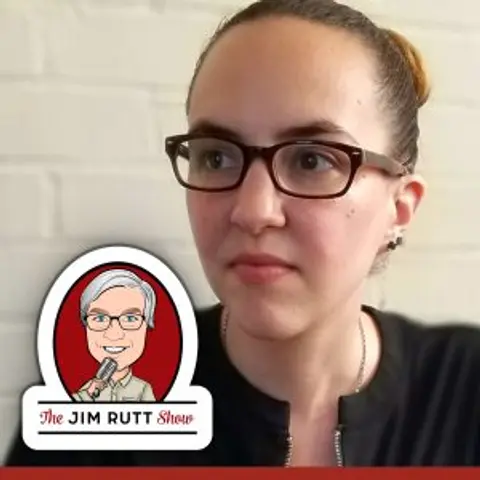
EP 226 Hannah Rosenberg on An Answer to Red Pilldom
Jim talks with Hannah Rosenberg about the ideas in her essay "An Answer to Red Pilldom." They discuss the meaning & origins of red pilldom, how Hannah encountered red pilldom in close friendships, the idea that women are submissive, differences between men & women, pair-bonding instincts, balancing mixed instincts, the idea of hypergamy, adulting, how dating apps may skew human interactions, nostalgia for the 1950s trad wife, the actual lives of 1950s housewives, the idea that motherhood is the ...
225
Feb. 20, 2024
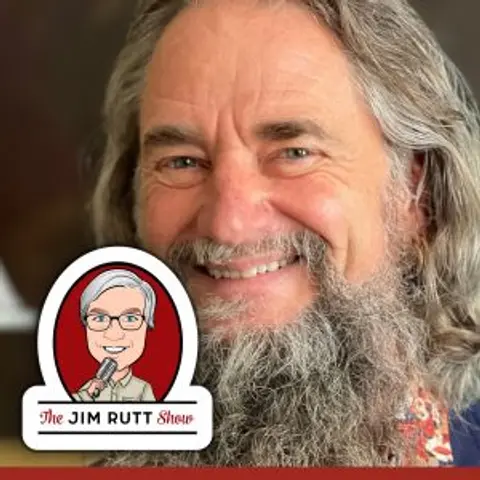
EP 225 Bruce Damer on a New Path for Psychedelics
Jim talks with Bruce Damer about the new Center for MINDS and the ideas in his essay "Downloads from the Modern Dawn of Psychedelics." They discuss alternate ways psychedelics could have been introduced, Aldous Huxley & Humphry Osmond's speculative Outsight project, convergent vs divergent thinking, Bruce's mushroom trip with Terrence McKenna, concrescence into novelty, the stoned ape theory, the unreported influence of psychedelics on breakthroughs, Bruce's coming-out as a psychedelics user, ps...
224
Feb. 13, 2024
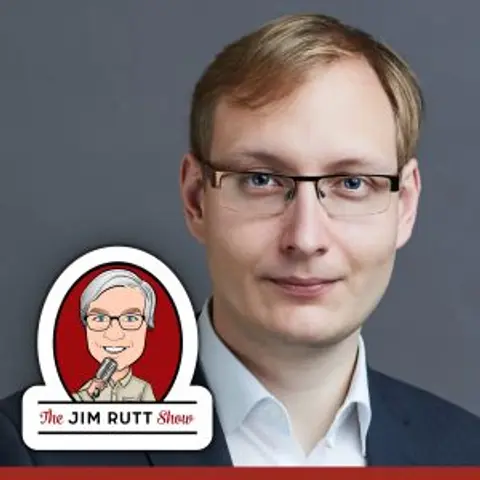
EP 224 Samo Burja on Geothermal Energy
Jim talks with Samo Burja about the ideas in his recent article "Geothermal Energy Turns Planets Into Power Sources." They discuss the heat beneath the earth's surface, contributors to the heat, technological dependency between fracking & geothermal, the math of electricity, earthquake risk, the limits of current geology, the value of better drilling tech, new approaches to drilling, gyrotrons, plasma torches, whether our civilization actually needs more energy, the local optimum of fossil fuels...
223
Feb. 8, 2024
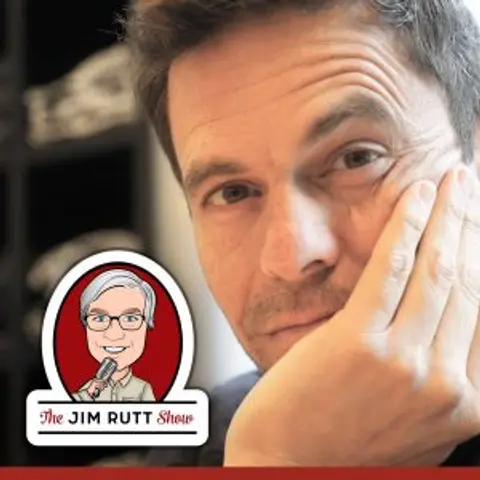
EP 223 Jordan Hall on Cities, Civiums, and Becoming Christian
Jim talks with Jordan Hall about the ideas in his essay "From City to Civium" and about his recent conversion to Christianity. They discuss scaling laws, superlinear scaling in cities & Metcalf's law, technologies of density, virtualization of space, ephemeralizing of communication, a tipping point in the virtualization of relationality, cities as killers, reaching the limits of the institutional forms that got us out of the 20th century, decoupling of body & mind, returning to the mesoscale, te...
222
Feb. 7, 2024
EP 222 Trent McConaghy on AI & Brain-Computer Interface Accelerationism (bci/acc)
Jim talks with Trent McConaghy about the ideas in his recent essay "bci/acc: A Pragmatic Path to Compete with Artificial Superintelligence." They discuss the meaning of BCI (brain-computer interfaces) and acc (accelerationism), categories of AI, how much room there is for above-human intelligence, whether AI is achieving parallelism, the risks of artificial superintelligence (ASI), problems with deceleration, AI intelligences balancing each other, decentralized approaches to AI, problems with th...
221
Feb. 6, 2024
EP 221 George Hotz on Open-Source Driving Assistance
Jim talks with George Hotz about running Comma, an open-source driving assistance company. They discuss breaking the carrier lock on the iPhone at seventeen, Google's Project Zero, zero days, Mobileye & proprietary perception algorithms, cameras vs lidar, 6 levels of self-driving automation, the reliability of human driving, self-driving cars as "demo complete," why corner cases aren't the issue, integrated world models, the challenge of defining lane lines, recognizing the right part of the roa...
220
Jan. 30, 2024
EP 220 Lene Rachel Andersen on Polymodernity
Jim talks with Lene Rachel Andersen about the ideas in her book Polymodernity: Meaning and Hope in a Complex World. They discuss the meaning of polymodernism, working with four cultural codes, polymodernism vs metamodernism, the flaw in combining stage theories with cultural history, the problem with postmodernism's deconstruction of guidance & boundaries, 3 factors leading to modernity, the beginnings of alienation, postmodernism as a critique of modernism, the danger of reifying theories, why ...

219
Jan. 25, 2024
EP 219 Katherine Gehl on Breaking Partisan Gridlock
Jim talks with Katherine Gehl about her and Michael Porter's book, The Politics Industry: How Political Innovation Can Break Partisan Gridlock and Save Our Democracy. They discuss Jim's past familiarity with Michael Porter's work, Porter's five forces, the "what the hell is water" phenomenon, the Schoolhouse Rock problem, political industry theory, political payback for unhelpful activities, why political competitors are doing better as "customers" become more dissatisfied, the current American ...
218
Jan. 24, 2024
EP 218 Max Borders on Christopher Rufo’s New Right Manifesto
Jim talks with Max Borders about the ideas in his two-part essay series responding to Christopher Rufo's recent manifesto "The New Right Activism." They discuss the commentary form of the essays, pillar saints vs boy Pharoahs, the Gray Tribe, Rufo as a rockstar gladiator, the white-paper industrial complex, the Gramscian model of capturing the institutions, the tit-for-tat approach to politics, recapturing the power of the state to indoctrinate the youth, the wartime point of view, the means & e...
218
Jan. 23, 2024
EP 217 Ben Goertzel on a New Framework for AGI
Jim talks with Ben Goertzel about a paper he co-wrote, "OpenCog Hyperon: A Framework for AGI at the Human Level and Beyond." They discuss the way Ben defines AGI, problems with an economically oriented definition, the rate of advancement of a society, the history of OpenCog, mathematical models of intelligence, Jim's early use of OpenCog, a distributed Atomspace, Atomese vs MeTTa languages, knowledge metagraphs, why Ben didn't write a custom programming language for the original OpenCog, type th...
216
Jan. 11, 2024
EP 216 Kevin Dickinson on A Short History of the F-Word
Jim talks with Kevin Dickinson about the ideas in his recent essay "A Short History of the F-Word." They discuss the mystery of the F-word's origins, a damn fucking abbot in the sixteenth century, the hierarchy of curse words, religious profanities, the poet William Dunbar's use of "fukkit," the case of Roger Fuckedbythenavele, folk etymologies, false acronyms, movies with the most fucks, fucks per minute vs absolute number of fucks, a high Ngram watermark in 2017, the Lady Chatterley's Lover ob...
215
Dec. 19, 2023
EP 215 Cody Moser on Inequality and Innovation
Jim talks with Cody Moser about the ideas and findings in his and Paul Smaldino's paper "Innovation-Facilitating Networks Create Inequality." They discuss transient diversity, group performance vs the agent level, taking an agent-based modeling approach, Derex & Boyd's group potion-mixing experiment, no free lunch theorem, random network structures, an inverse correlation between network connectivity & performance, effects of sharing intermediate results, Fisher's fundamental theorem of natural ...
214
Dec. 7, 2023
EP 214 Douglas Rushkoff on Leaving Social Media
Jim talks with Douglas Rushkoff about the ideas in his podcast monologue/Substack post "Why I’m Finally Leaving X and Probably All Social Media." They discuss Douglas's history with social media, the early social internet, Facebook's parasitism of legacy news, the decontextualization of content, The WELL, owning your own words, leaving Facebook in 2013, Jim's social media sabbaticals, the opportunity to create an info agent, the number of daily interruptions, attention-deficit disorder as an ada...
213
Dec. 5, 2023
EP 213 Robin Hanson on Declining Fertility Rates
Jim talks with Robin Hanson about the ideas in his recent Substack writings on human fertility rates. They discuss why the fertility rate is important, fertility decline as a harbinger of societal decline, how income impacts fertility rate, investing in status markers vs fertility, runaway selection effects, copying elites, absolute vs relative levels of wealth, South Korea's low fertility rate, implications of the decline, losing scale economies, pay-as-you-go retirement plans, innovation as li...
212
Nov. 30, 2023
EP 212 Joy Hirsch on How the Brain Responds to Zoom
Jim talks with Joy Hirsch about the findings in her paper "Separable Processes for Live 'In-Person' and Live 'Zoom-like' Faces," which explores how humans respond at the neural level to Zoom calls versus in-person interactions. They discuss the advantages of near-infrared spectroscopy (fNIRS) & how it works, the speed of imaging, brain imaging for social interactions, what fNIRS can do that fMRI can't, previous work on face processing, the design of the experiment, controlling for distance, angl...
211
Nov. 28, 2023
EP 211 Ben Goertzel on Generative AI vs. AGI
Jim talks with recurring guest Ben Goertzel about the ideas in his paper "Generative AI vs. AGI: The Cognitive Strengths and Weaknesses of Modern LLMs." They discuss the exponential acceleration of AI development, why LLMs by themselves won't lead to AGI, OpenAI's integrative system, skyhooking, why LLMs may be useful for achieving AGI, solving LLM hallucinations, why Google hasn't replicated GPT-4, LLM-tuning lore, what differentiates AGI from other forms of AI, conceptualizing general intellig...
210
Nov. 20, 2023
EP 210 Frank Lantz on the Beauty of Games
Jim talks with Frank Lantz about the ideas in his new book, The Beauty of Games. They discuss Frank's analysis of Benjamin Soule's arcade game Serpentes, reflecting on the enjoyment of games, panicking & choking, levels of understanding, Jim and his wife's experience playing Othello, Hanabi, partnership games, games as an aesthetic form, art vs aesthetics, playing for its own sake, thinking & doing, fulfilling the desire to be a coherent agent in the world, the performance of desire, games as sy...
209
Nov. 7, 2023
EP 209 C. Owen Paepke on the Purple Presidency
Jim talks with C. Owen Paepke in part three of a mini-series on the No Labels potential third-party presidential campaign. They discuss Owen's early chemistry career, being without a political party, the situation of voting against instead of for candidates, the distribution of conservatism between parties over time, the Ross Perot 1992 campaign, the nomination of Antonin Scalia, primaries as the root of all partisan evil, the 2022 elections, the percentage of voters who want neither Biden nor T...
208
Nov. 2, 2023
EP 208 Jack Visnjic on Anacyclosis
Jim talks with Jack Visnjic, aka Lantern Jack, about Polybius's theory of anacyclosis and cyclical history. They discuss the origins of the name Lantern Jack, cyclical patterns in history, a one-minute history of the first millennium B.C., public gain vs private gain, Polybius's concept of anacyclosis, great man theory vs processes & institutions, examples of anacyclosis, whether Rome was ever a democracy, critiques of anacyclosis, corruption & collective reaction, imperialistic growth, the Glor...
207
Oct. 31, 2023
EP 207 Paul Watson on Adventures in Eco-Activism
Jim talks with Paul Watson about his recent book Hit Man for the Kindness Club: High Seas Escapades and Heroic Adventures of an Eco-Activist. They discuss an early friendship with a family of beavers, cruelty to animals, the Kindness Club, moral commitments, rescuing cattle from a slaughterhouse, less cow farts & more whale poop, the 3 laws of ecology, the issue of eating animals, the growth of the vegetarian/vegan movement, an occupation at Stanley Park, co-founding Greenpeace, the strategy of ...
206
Oct. 26, 2023
EP 206 Ryan Clancy on No Labels
Jim talks with Ryan Clancy, the chief strategist for No Labels, in the second of a 3-part series exploring different aspects of the No Labels possible third-party presidential campaign. They discuss the origins & history of the campaign, the idea of an independent unity presidential ticket, increasing polarization, realistic energy policy, avoiding a second Trump term, an open process for nomination to the ticket, proper environmental conditions for running, the problem with fixing democracy by ...
205
Oct. 24, 2023
EP 205 Matthew Pirkowski on Time Preference and Cooperation
Jim talks with Matthew Pirkowski about the ideas in a recent tweet thread on time preference and its relationship with cooperation. They discuss the definition of time preference, defining parasitism, asymmetrical relationships, mutualism, commensalism, the increase in short-term thinking, a decrease in qualitative change, realization & potential, an increase in uncertainty, the interruption of attentional loops, a gossip protocol, the complexity catastrophe, the maximum number of daily interrup...
204
Oct. 19, 2023
EP 204 Matt Bennett on the Case Against No Labels
Jim talks with Matt Bennett about his arguments against the third-party political campaign No Labels. They discuss Matt's steelman of the campaign, being politically homeless, nuclear energy & the American left's unrealistic energy policies, the problem with No Labels' theory about moving candidates in their direction, the credibility of winning the election, two theories of preventing another Trump presidency, the 1992 Ross Perot campaign, candidates for the No Labels ticket, growing disgust wi...
203
Oct. 17, 2023
EP 203 Robert Sapolsky on Life Without Free Will
Jim talks with Robert Sapolsky about the ideas in his book Determined: A Science of Life Without Free Will. They discuss what motivates his writing about the topic, turtles all the way down, closing off the escape valves, the general critique of determinism, 4 positions on free will, naturalism vs determinism, intent, free will vs agency, Phineas Gage's famous brain injury, disruption of cognitive abilities, the limitations of metacognition, Benjamin Libet's volition experiments, why consciousne...