Episodes

July 8, 2026
Harm Reduction Is Doing Better Than You Think
Born out of the HIV-AIDS epidemic, harm reduction began as a scrappy, drug-user-led movement with an ethos entirely opposed to the War on Drugs. Almost 50 years on, it's moving—quietly—from the margins to the mainstream.

March 3, 2026
AI and Justice: The Neutrality Myth
The justice system is awash in purported AI solutions—for everything from prisons to courtrooms. But how do we separate AI’s real promise from the hype? And how do we ensure the technology helps, rather than sets back, the cause of fairness and justice? Roy Austin, Jr., is the former Vice President of Civil Rights at the tech giant, Meta. He was also a prominent official in the Department of Justice under President Obama. He now heads up the Howard Law Artificial Intelligence Initiative. “We h...
Jan. 14, 2026
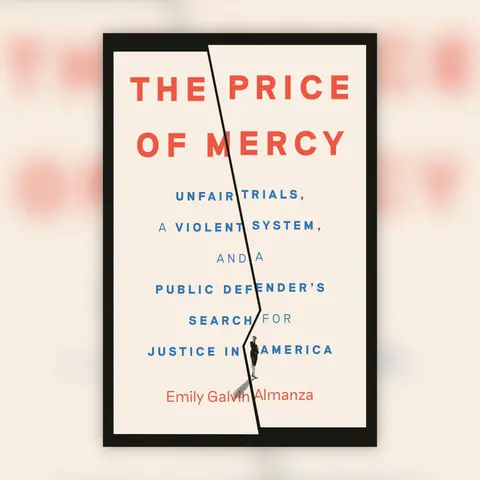
Punishment Isn’t Safety
Emily Galvin Almanza says, for the most part, the criminal justice system has only one setting: punishment. But punishment isn’t safety. It isn’t even accountability. Galvin Almanza makes that case in her new book, The Price of Mercy: Unfair Trials, a Violent System, and a Public Defender’s Search for Justice in America. But the book isn’t only about problems; it’s also about solutions. “We don’t have to fall prey to the worst aspects of our history,” contends Galvin Almanza. “We can build so...

Sept. 29, 2025
Punch: The Real-Life Restorative Justice Story Behind the Broadway Show
This is a story, not so much of forgiveness, but of something richer, more complicated, and even more deeply human.

May 27, 2025
Trauma 360
Vicarious trauma is the trauma you absorb working with traumatized people, especially when you’re both inside of already traumatizing systems. Treatment not jail, diversion from harmful system-contact… Making justice reform work on the ground relies on an abundance of frontline staff: from mental health counsellors to peer mentors. But many of those staff, at our organization and at others like us, are hurting: navigating human suffering—trauma—on all sides. Full show notes
Nov. 12, 2024
Drug Testing and the Ordeal of Probation
What is probation—and the ethos of drug testing that is at its heart—actually testing?

Aug. 14, 2024
Inside Literary Prize: And the Winner Is…
Hear from the winner of this year's Inside Literary Prize, the first major U.S. book award to be judged exclusively by people who are incarcerated.

Aug. 1, 2024
Inside Literary Prize: Shakopee Women’s Prison
A behind-the-scenes portrait of a day of judging for the Inside Literary Prize, the first major U.S. book award judged exclusively by people who are incarcerated.
May 6, 2024
Mental Health and Anti-Blackness
"Even in the clients we serve, anti-Blackness is the reason why they show up in harmful ways in the community."
March 19, 2024
Recriminalization in Oregon
Morgan Godvin was at the frontlines of Oregon's decriminalization fight. She says progress towards a health-based approach to drug use "has fallen prey to fear-based policy."
Dec. 16, 2023
Gideon at 60: Deconstructing Mass Supervision
Vincent Schiraldi used to run probation in New York City; now he’s asking whether probation should even exist. Schiraldi says some of the roots of mass supervision—and its connection to mass incarceration—can be found in a surprising place: the Supreme Court’s 1963 Gideon decision. It recognized, but failed to adequately support, a poor person’s right to a lawyer. Hear the final episode in our “Gideon at 60” series. Full show notes
Nov. 16, 2023
Gideon at 60: Uncivil Justice
A profile of the fight to secure lawyers for people facing eviction and the radical impact that is having in Housing Court. With its 1963 Gideon decision, the Supreme Court guaranteed a lawyer to any poor person facing prison time. For criminal cases, the decision was both sweeping and critically incomplete. On the civil side, the campaign for a right-to-counsel is taking a different approach—it’s slow and piecemeal, but it’s also working. This is the second episode in our series on the legacy ...
April 4, 2023
Gideon at 60: The Unfunded Mandate
As the legal scholar Paul Butler wrote ten years ago, “On every anniversary of Gideon, liberals bemoan the state of indigent defense.” On this 60th anniversary of the landmark Supreme Court decision granting a lawyer to every poor defendant facing prison time, there is much to bemoan. Yet as the harms of the criminal legal system come into sharper relief, there is a larger question: even if Gideon‘s promise was fulfilled, how much would that change who principally suffers under the current syste...
Feb. 14, 2023
When Young People Go to Prison for Life
April Barber Scales was a pregnant 15-year-old when she received two life sentences; Anthony Willis was 16 when he was sent away for life. After more than 25 years behind bars, they each received something desperately rare: clemency. They describe how they fought against a prison system that “sets you up for failure.” We also hear from an organization in Baltimore that works exclusively with young people at high risk of violence. Rather than arrests and incarceration, what do these young people ...
Nov. 4, 2022
Emphasizing the Harms
A recent two-day training for Manhattan prosecutors was a drumbeat on the harms of incarceration; hardly the typical message prosecutors receive. The training was part of a wider effort by D.A. Alvin Bragg to expand the use of alternatives such as treatment and restorative justice. But in a newly cramped climate for criminal justice reform, can that effort become a reality? Full show notes
June 28, 2022
Evicting Evictions
Housing is a human right. What if we designed our systems—beginning with Housing Court—to embody that? Given the current eviction crisis, it’s a far-off concept, but there’s work to make it a reality in pockets across the country. In this special episode, hear a profile of one of those efforts in a Brooklyn neighborhood. Full show notes
May 9, 2022
Reform and Its Discontents
Nominated for a Media for a Just Society award, revisit New Thinking’s conversation with activists Victoria Law and Maya Schenwar. In their book, Prison By Any Other Name, Law and Schenwar contend that much of what is packaged today as “reforms” to the criminal legal system are extending, not countering, that system’s harmful effects. So what is the ultimate goal of reform of a system like the criminal legal system? Full show notes
March 24, 2022
Why Data Doesn’t Stick
Efforts to reform the justice system often tout they’re “evidence-based” or “data-driven.” But at a moment when a national increase in crime, likely triggered by the pandemic, seems to have put the reform movement on its heels, why do arguments based on data rarely seem to win the day? Guests Christina Greer and John Pfaff are both scholars and frequent media commentators working at the intersection of criminal justice data and politics. Full show notes Hear Pfaff on New Thinking as part of our...
Jan. 25, 2022
Can We Close Rikers?
New York City has committed to closing its notorious Rikers Island jail facility by 2027. That could dramatically reorient the city’s approach to incarceration. The plan envisions a citywide jail population of just over 3,000 people. But the population at Rikers has been growing for months, and Rikers itself is engulfed in crisis amidst a historic spike in deaths. What are the prospects for finally getting Rikers closed? Full show notes
Nov. 22, 2021
The Question of Dirty Work
Eyal Press contends there are entire areas of life we’ve delegated to “dirty workers”—functions we’ve declared necessary, but that we strive to keep hidden. In his new book, Dirty Work: Essential Jobs and the Hidden Toll of Inequality in America, Press points to the transformation of jails and prisons into the country’s largest mental health institutions. He calls the people struggling to offer treatment in those settings “dirty workers”—not because their work isn’t noble, but because collective...
Oct. 24, 2021
Taking Reform Out of Its Comfort Zone
Justice reforms often exclude people with charges involving violence, even though these are the same people most likely to be incarcerated and to be in the most need of the programs and treatment reform can bring. But a felony court in Manhattan is offering alternatives to incarceration, regardless of charge. Can a treatment-first approach be brought to scale inside of the same system responsible for mass incarceration in the first place? Full show notes
Sept. 22, 2021
The Crisis on Rikers Island
An audio snapshot from an emergency rally demanding immediate measures to release people from New York City’s Rikers Island jail. Eleven people have died in the custody of the city’s jail system this year as Rikers’ chief medical officer warns of “a collapse in basic jail operations.”
Aug. 9, 2021
Cages Don’t Help Us Heal
Hurt people hurt people. That’s not an excuse for harm, but it fuels much of the criminal legal system. At 19, Marlon Peterson was the unarmed lookout on a robbery where two people were killed. Peterson spent a decade behind bars. He writes about those years, and the childhood in Crown Heights, Brooklyn, that preceded them, in his new memoir, Bird Uncaged: An Abolitionist’s Freedom Song. I made my own choices, Peterson says, “but I also did not choose to experience the type of things I experienc...
July 20, 2021
One of These Days We Might Find Us Some Free: Reginald Dwayne Betts
In 1996, 16-year-old Reginald Dwayne Betts was sentenced to nine years in prison for a carjacking. He spent much of that time reading, and eventually writing. After prison, he went to Yale Law School and published a memoir and three books of poems. But he’s still wrestling with what “after prison” means. This is a conversation about incarceration, Blackness, and the weight of history, both political and personal. Betts’s most recent collection of poems is Felon. Full show notes This episode was...