Episodes
Sept. 23, 2024
Working in quantum tech: where are the opportunities for success?
The quantum industry in booming. An estimated $42bn was invested in the sector in 2023 and is projected to rise to $106 billion by 2040. In this episode of Physics World Stories, two experts from the quantum industry share their experiences, and give advice on how to enter this blossoming sector. Quantum technologies – including computing, communications and sensing – could vastly outperform today’s technology for certain applications, such as efficient and scalable artificial intelligence. Our...

Aug. 13, 2024
CERN at 70: how the Higgs hunt elevated particle physics to Hollywood status
When former physicist James Gillies sat down for dinner in 2009 with actors Tom Hanks and Ayelet Zurer, joined by legendary director Ron Howard, he could scarcely believe the turn of events. Gillies was the head of communications at CERN, and the Hollywood trio were in town for the launch of Angels & Demons – the blockbuster film partly set at CERN with antimatter central to its plot, based on the Dan Brown novel. With CERN turning 70 this year, Gillies joins the Physics World Stories podcast t...

July 24, 2024
Could humans run on water?
With the 2024 Paris Olympics just days away, sports fans are braced to see who will run, jump, row, fight and dance themselves into the history books. One of the most exciting moments will be the 100 m sprint finals, when athletes compete to become the fastest man or woman on Earth. Over the years we have seen jaw-dropping performances from the likes of Usain Bolt and Florence Griffith-Joyner. Scientists have been captivated by top sprinters – trying to understand how physique, technique and nu...

June 19, 2024
Physics and sport: flying balls, perfecting technique, and wellbeing in academia
For sports fans, the next few weeks will bring excitement and drama. The Euro 2024 football (soccer) tournament is under way in Germany and the Copa América is about to kick off in the US. Then at the end of July, the Olympics starts in Paris as athletes from across the world compete to run, jump, sail, cycle and dance themselves into the history books. In this episode of Physics World Stories, you will hear from two US physicists with a profound connection with sport. The first guest is John E...

May 28, 2024
Swift Quakes and new podcast music inspired by the fine-structure constant
Whether you’re a Swiftie, a devout metalhead, or a 1980s synth pop aficionado, there is something for every musical taste in this month’s Physics World Stories. In part one, podcast host Andrew Glester is joined by Jacqueline Caplan-Auerbach, a geophysicist at Western Washington University, US. She has analysed “Swift quakes”, a seismological phenomenon during Taylor Swift’s Eras tour, answering two important questions. Are the quakes triggered by the music or the crowd? And how does their magn...

April 30, 2024
3 Body Problem: a deep dive into the Netflix show
This episode of Physics World Stories explores the science, politics and ethics in the Netflix series 3 Body Problem. Adapted from the celebrated Chinese novel The Three-Body Problem by Liu Cixin, the multi-layered story centres around humanity’s first contact with an alien civilization. As the drama unfolds, with physicists among its lead protagonists, the plot navigates the challenges of communicating with aliens across interstellar space – and the inevitable tensions that arise on Earth. To ...
March 22, 2024
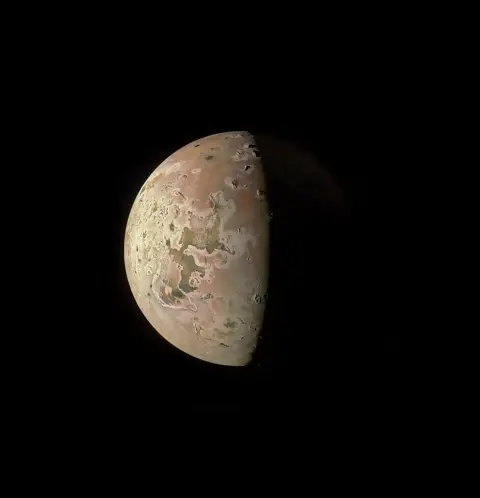
An orchestral trip through the moons of our solar system
This month’s episode of Physics World Stories features an interview with composer Amanda Lee Falkenberg with music from her The Moons Symphony. Her creation takes listeners on an epic journey through the science and stories of the moons of our solar system. The seven-movement symphony dramatizes the geophysical features of Io, Europa, Titan, Enceladus, Miranda and Ganymede, before turning to our own Moon for a two-part finale. In creating the work, Australian-born Falkenberg immersed herself in...
Feb. 26, 2024
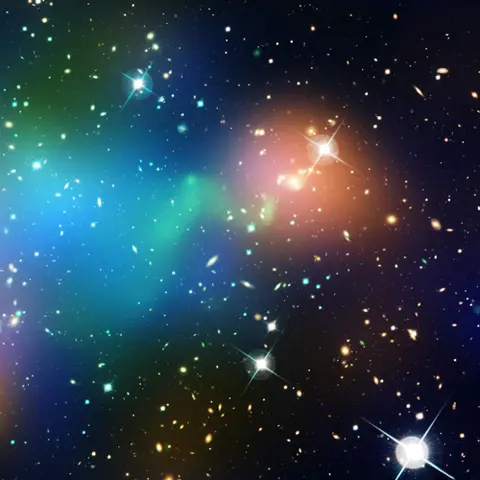
Dark matter vs modified gravity: which team are you on?
Coke or Pepsi? Messi or Ronaldo? Taylor Swift or…well, without wanting to set the Swifties against Physics World, let’s just say there’s often a tribal element to who we support or the choices we make. In the world of cosmology, one heated divide is whether you’re for dark matter or modified Newtonian dynamics (MOND). Both theories attempt to explain the discrepancies between the predicted gravitational effects in the universe and some of the actual observed motions of stars and galaxies. In t...
Jan. 23, 2024
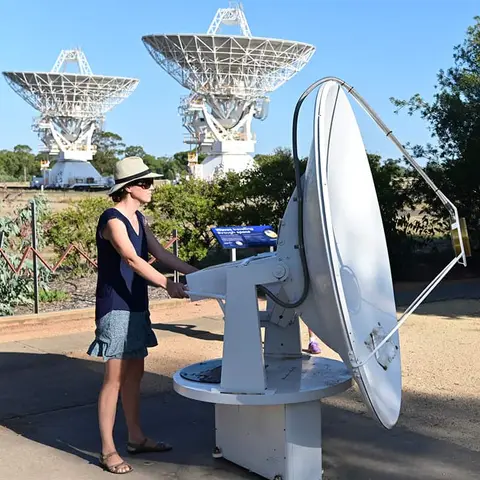
Radio pioneers: the enduring role of ‘amateurs’ in radio astronomy
In the latest Physics World Stories podcast, astrophysicist Emma Chapman is in conversation with host Andrew Glester about the history of radio astronomy. It’s a field that has always maintained a do-it-yourself ethic, with valuable contributions from people outside the established academic community. Chapman, an astrophysicist at the University of Nottingham in the UK is the author of the popular-science book First Light: Switching on Stars at the Dawn of Time. Alongside her research, Chapman ...
Dec. 19, 2023
Radiant chills: the revolutionary science of laser cooling
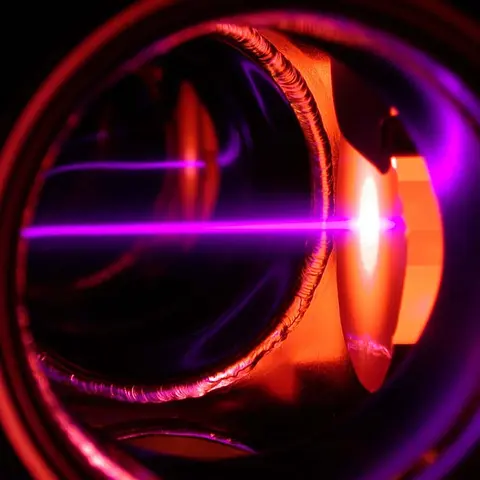
Over the past half century, laser cooling has revolutionized atomic, molecular and optical physics. Laser cooling of atoms and ions has enabled dramatic leaps in the precision of atomic clocks, allowing new tests of fundamental physics and potential improvements in clock-based navigation via the Global Positioning System. Now it is also laying the foundations for quantum computing with atoms and ions. In this episode of Physics World Stories, you can enjoy a vibrant tour through the history of ...
Nov. 21, 2023
The biographer who inspired Christopher Nolan’s blockbuster film Oppenheimer
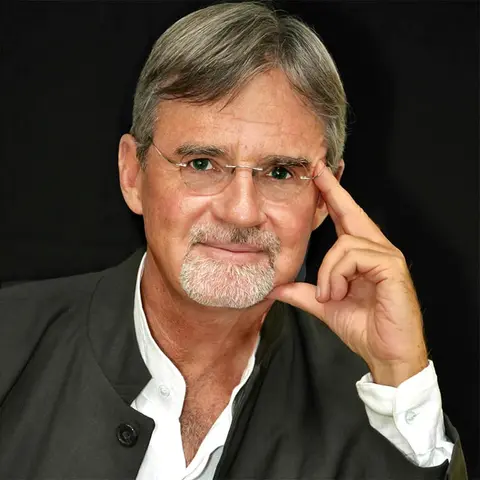
This episode of the Physics World Stories podcast features an interview with Kai Bird, co-author of the book that inspired the recent blockbuster film Oppenheimer, directed by Christopher Nolan. Winner of the 2006 Pulitzer Prize in Biography, American Prometheus: the Triumph and Tragedy of J. Robert Oppenheimer is an exploration of the brilliant and enigmatic physicist who led the project to develop the world’s first atomic weapons. Oppenheimer is a fascinating but complicated character for a b...
Oct. 13, 2023
Physics for fairness: tackling global sustainability challenges through science
This year, 2023, marks the half-way point to the 2030 deadline for achieving the 17 Sustainable Development Goals (SDGs). Recent global developments, including conflicts and the COVID-19 pandemic, make SDGs such as “Zero Hunger” and “Reduced Inequalities” seem more daunting than ever. The scale of the challenge is clear; but professionals working on the frontline of sustainable development are as committed as ever to enabling positive change. That includes physicists and engineers, and July 202...
Sept. 4, 2023
Green and novel: the future of energy generation
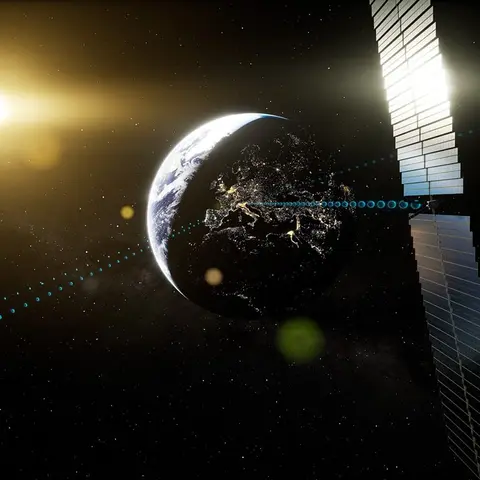
Energy accounts for more than three-quarters of our greenhouse gas emissions globally each year. That’s not surprising, given the role of energy in almost every aspect of modern life. To stand any chance of hitting net zero climate targets, we need to accelerate the transition to greener forms of energy generation. In this episode of the Physics World Stories podcast, Andrew Glester explores two novel forms of renewable-energy generation, both with the potential to scale and not suffer from iss...
Aug. 7, 2023
Our universe is humming with gravitational waves
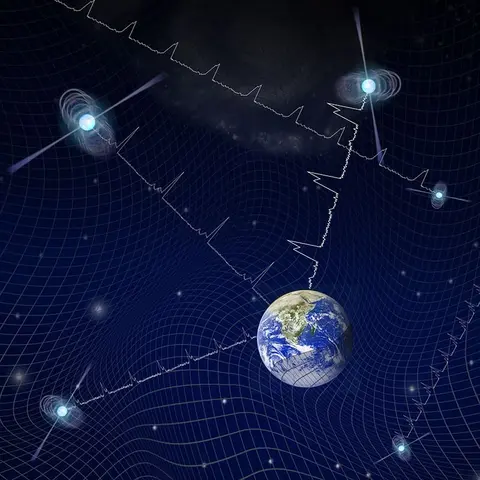
In recent weeks the astrophysics community has been buzzing following the discovery that the universe appears to be filled with a background hum of gravitational waves. Using radio telescopes in the Africa, Asia, Australia, Europe and the US, several teams have noted the same thing: that gravitational waves leave a faint fingerprint in the signals received from pulsars within our galaxy. The discovery is another exciting breakthrough within multimessenger astronomy. In this episode of the Physi...
July 4, 2023
Moore’s law in peril and the future of computing
Gordon Moore, the co-founder of Intel who died earlier this year, is famous for forecasting a continuous rise in the density of transistors that we can pack onto semiconductor chips. His eponymous “Moore’s law” still holds true after almost six decades, but further progress is becoming harder and eye-wateringly expensive to sustain. In this episode of the Physics World Stories podcast we look at the practicalities of keeping Moore’s law alive, why it matters, and why physicists have a critical r...
June 9, 2023
Will AI chatbots replace physicists?
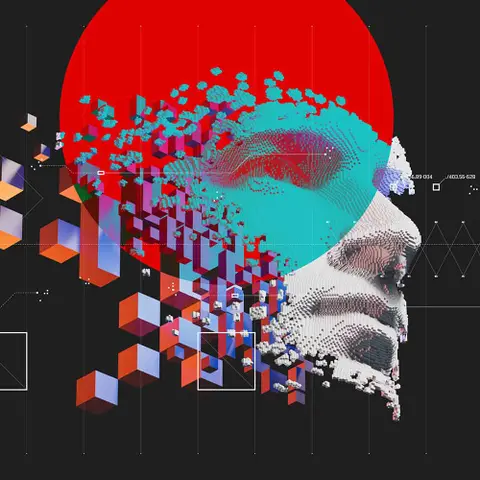
When discussing the capabilities of the latest AI chatbots, a physicist may argue: “Okay, they’re impressive at regurgitating texts that sound increasingly human. But we physicists don’t have much to worry about. It will be ages before the bots learn to grapple with physical concepts and the creativity required to do real physics!” Such a view is almost certainly misguided. In a recent paper uploaded to arXiv, Colin West from the University of Colorado Boulder reported that the latest version o...

May 12, 2023
Cosmic generosity: a selfless investment in the future of physics
If you were awarded $3m prize money for your scientific excellence and hard graft, would you give it all away to strangers? That’s what the Northern Irish astrophysicist Dame Jocelyn Bell Burnell did in 2018 after winning the Special Breakthrough Prize in Fundamental Physics for her 1967 discovery of pulsars and her inspiring scientific leadership. She used the cash – topped up with more personal money from a separate prize – to launch the Bell Burnell Graduate Scholarship Fund, which supports P...
May 3, 2023
How can we make lithium-ion batteries more sustainable?
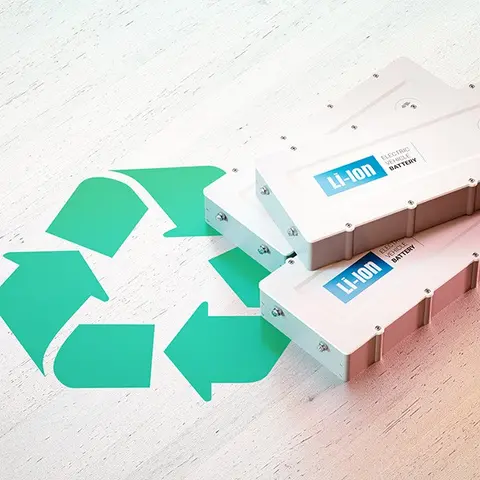
Lithium-ion batteries (LIBs) are set to play a key role in the transition to a decarbonized world. They are one of the principal energy sources for electric vehicles, grid storage and many consumer electronics. As things stand, however, the way that we produce and manage LIBs over their life cycles is far from perfect – bringing environmental, economic and geopolitical concerns. In the latest episode of the Physics World Stories podcast, Andrew Glester looks at how we can make LIBs more sustaina...
March 28, 2023
Quantum melodies: the intersection of music and quantum physics
When pioneering musicians such as Kraftwerk and Brian Eno began experimenting with synthesizers and digital samplers in the 1970s, it was considered avant-garde and confined to niche audiences. It didn’t take long, however, for electronic music to explode in popularity, and today computer-produced music is ubiquitous among many genres and styles. This episode of the Physics World Stories podcast looks at a new trend in its nascent stages – music generated by quantum computers. The first guest i...
Feb. 24, 2023
Finding solace in the stars
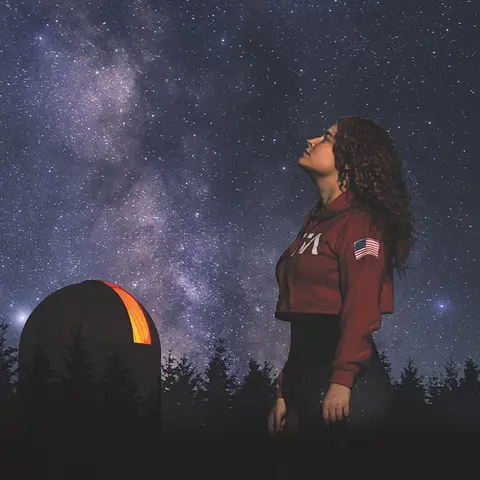
A new film Space, Hope and Charity tells the story of Charity Woodrum, an astrophysicist whose childhood dream of working for NASA was nearly derailed by a personal tragedy. Woodrum is now studying for a doctorate in galaxy quenching at the University of Arizona using data from the James Webb Space Telescope. She joins this episode of the Physics World Stories podcast to speak about finding purpose in academic research, and her gratitude to the colleagues who helped her through the darkest momen...
Jan. 31, 2023
Making spaceflight accessible to people with physical disabilities
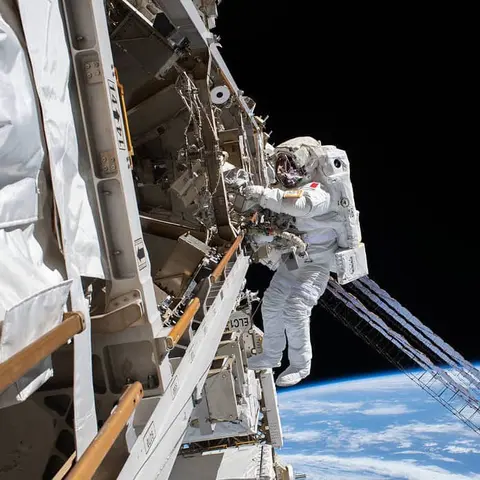
The European Space Agency (ESA) recently made history by selecting John McFall – an amputee, Paralympic sprinter and medical scientist – among its latest cohort of astronauts. McFall’s inclusion is part of an ESA parastronaut feasibility project for making human spaceflight accessible to people with physical disabilities. In the latest episode of the Physics World Stories podcast, people involved in this initiative explain why making space more accessible is not only fair but also the very essen...

Dec. 21, 2022
Robin Ince and the joy of popular-science books
Long-term listeners will know that the December episode of Physics World Stories is a celebration of the year’s best popular-science writing. This year, Andrew Glester is joined by comedian and writer Robin Ince, author of the recent book The Importance of Being Interested: Adventures in Scientific Curiosity and host of the longstanding BBC Radio 4 science show The Infinite Monkey Cage, co-presented with the physicist Brian Cox. Ince talks about his circular journey with science: from enjoying ...
Nov. 28, 2022
Quantum technology gathers pace
This month’s episode of the Physics World Stories podcast looks in depth at the science behind the 2022 Nobel Prize for Physics and the technologies that are emerging as a result. Alain Aspect, John Clauser and Anton Zeilinger shared this year’s award “for their experiments with entangled photons, establishing the violation of Bell’s inequalities and pioneering quantum information science”. The first guest is Maksym Sich, co-founder and chief executive of Aegiq, a quantum-photonics spin-out com...

Oct. 28, 2022
Is the 2022 FIFA World Cup really carbon neutral?
The 2022 FIFA World Cup is about to kick off in Qatar, with millions of football fans across the planet set to be gripped by sporting drama. But in the years leading up to the event, concerns have been raised over the environmental impact of the seven huge new stadia that have been built in and around Doha for the event. In this episode of Physics World Stories, podcast host Andrew Glester talks to Gilles Dufrasne from the not-for-profit organisation Carbon Market Watch. Dufrasne has co-authore...