Who Gets the First Vote? Clinical Judgment, Coverage, and Learned Helplessness
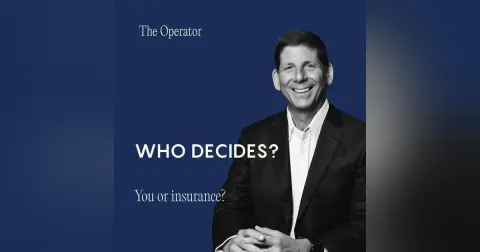



Clinicians are trained to answer one question: What does this patient need?
But once they enter practice, another voice often enters the room: What will insurance cover?
The problem is not that coverage exists. The problem begins when coverage gets the first vote.
In this episode of The Operator, Jimmy McKay and Larry Benz examine how clinicians can gradually learn to reshape their judgment around payer rules without anyone explicitly instructing them to do so.
Larry connects the issue to learned helplessness: when decisions are repeatedly overridden by portals, fee schedules, denials, and coverage limitations, clinicians can eventually stop exercising independent judgment before checking what the system will allow.
But Larry also turns the responsibility back toward healthcare operators. If organizations onboard clinicians with little more than a schedule, production target, and benefits portal, they are helping create the behavior they later complain about.
Key ideas from the episode:
- Why newer clinicians may be technically capable but short on repetitions
- How lower repetition leads to lower clinical confidence
- Why “here’s your schedule, go produce” is not development
- Why human capital should be treated more like CapEx
- How structured mentorship and deliberate practice can close the readiness gap
- Why clinicians gradually learn to let coverage shape treatment
- What learned helplessness looks like inside healthcare
- Why outsourcing treatment conversations can weaken clinical judgment
- The three questions Larry believes should guide treatment decisions
- Why the order of those questions is the intervention
- How stronger clinical confidence can improve case acceptance, referrals, and long-term economics
- The difference between compounding human capital and renting growth
Larry’s framework is simple:
1. What does the patient need?
2. What will coverage support?
3. How do I have that conversation?
Coverage matters.
It just should not answer the first question.
Subscribe to The Operator on Substack for more ideas on healthcare leadership, operations, and building stronger clinical organizations.