Episodes

Sept. 21, 2026
SHASS's special sauce
Established after World War II, the School of Humanities, Arts, and Sciences is an integral part of the MIT experience. Three faculty reflect on the school's ongoing impact. Show notes and transcript: https://news.mit.edu/2026/podcast-shass-special-sauce-0922

2
May 8, 2023
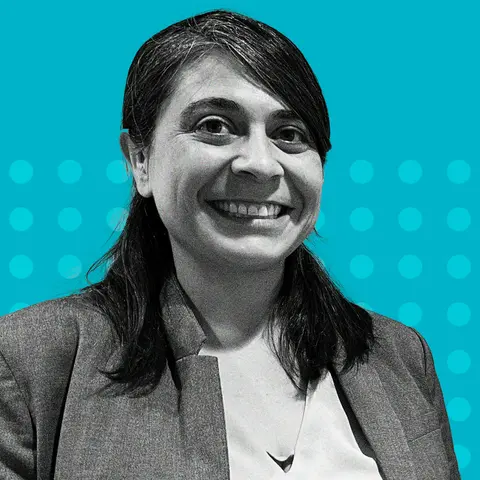
Curiosity Unbounded, Ep 2: Bureaucracies, dictatorships, and the power of Africa's people — Mai Hassan
In this episode, MIT President Sally Kornbluth sits down with associate professor of political science and faculty co-director of MIT-Africa, Mai Hassan. Her work looks at bureaucracy, public administration, and the state in Africa, and more recently, how people mobilize against repressive dictatorships. Show notes and transcript: https://news.mit.edu/podcast/bureaucracies-dictatorships-and-power-africas-people-mai-hassan The Curiosity Unbounded podcast brings you behind the scenes at MIT thr...
1
April 18, 2023
Curiosity Unbounded, Ep 1: How a free-range kid from Maine is helping green-up industrial practices — Desirée Plata
In this episode, MIT President Sally Kornbluth sits down with newly tenured associate professor of civil and environmental engineering, Desirée Plata. Her work focuses on making industrial processes more environmentally friendly, and removing methane (a key factor in global warming) from the air. Show notes and transcript: https://news.mit.edu/podcast/how-free-range-kid-maine-helping-green-industrial-practices-desiree-plata The Curiosity Unbounded podcast brings you behind the scenes at MIT t...

March 27, 2023
Audio Article: Low-cost device can measure air pollution anywhere
MIT researchers have made an open-source version of the “City Scanner” mobile pollution detector that lets people check air quality anywhere, cheaply. Pictured are some examples of the latest version of the device, called Flatburn, as well as a researcher attaching a prototype to a car. Read the article: https://news.mit.edu/2023/low-cost-device-can-measure-air-pollution-anywhere-0316
March 23, 2023
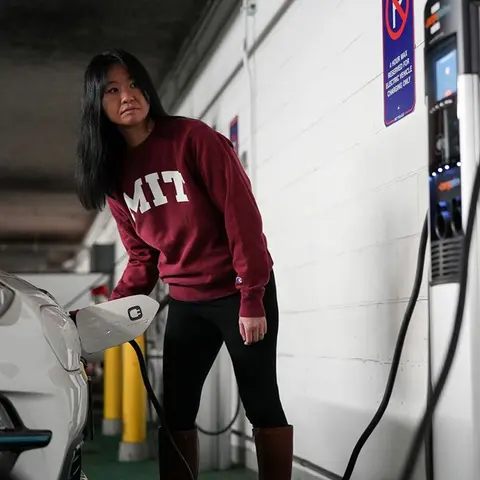
Audio Article: Minimizing electric vehicles’ impact on the grid
In a new study, MIT researchers have developed strategies for beneficial electric vehicle charging to reduce peak electricity demand and store solar energy. Read the article: https://news.mit.edu/2023/minimizing-electric-vehicles-impact-grid-0315

Jan. 30, 2023
Audio Article: How to push, wiggle, or drill an object through granular material
Predicting what it takes to push through sand, gravel, or other soft media can help engineers drive a rover over Martian soil, anchor a ship in rough seas, and walk a robot through sand and mud. But modeling the forces involved in such processes is a huge computational challenge that often takes days to weeks to solve. Now, engineers at MIT and Georgia Tech have found a faster and simpler way to model intrusion through any soft, flowable material. Their new method quickly maps the forces it woul...
Aug. 19, 2022
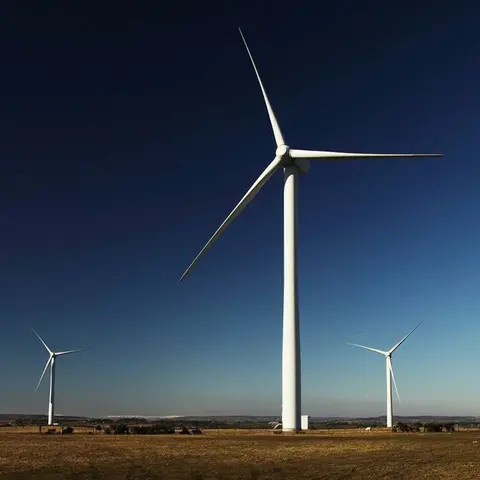
Audio Article: A new method boosts wind farms’ energy output, without new equipment
By modeling the conditions of an entire wind farm rather than individual turbines, engineers can squeeze more power out of existing installations. Read the article: https://news.mit.edu/2022/wind-farm-optimization-energy-flow-0811
July 11, 2022
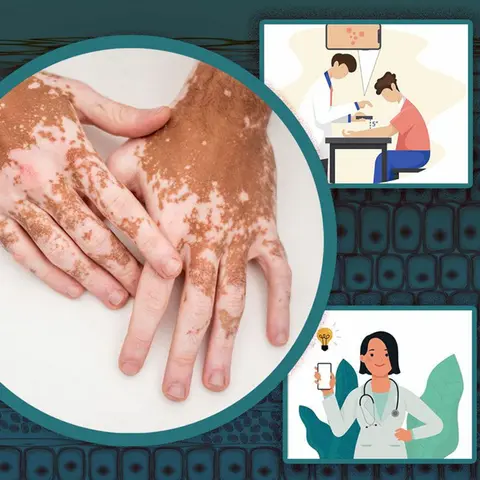
Audio Article: Startup lets doctors classify skin conditions with the snap of a picture
Piction Health, a startup founded by Susan Conover SM '15, lets doctors classify skin conditions with the snap of a picture. Their app uses machine learning to help physicians identify and manage skin diseases. Read the article on MIT News: https://news.mit.edu/2022/piction-health-skin-app-0706

June 22, 2022
Audio Article: Keeping web-browsing data safe from hackers
Studying a powerful type of cyberattack, researchers identified a flaw in how it’s been analyzed before, then developed new techniques that stop it in its tracks. Read the article: https://news.mit.edu/2022/side-channel-attacks-detection-0609

Feb. 8, 2022
Audio Article: The sound of a sunset
What does a sunset sound like? With the Sonification Toolkit, almost anything can be transformed into sound that is aesthetically satisfying and analytically illuminating. The newly released prototype, a work in progress with cutting-edge capabilities, is a robust exploratory foray into possibilities for sonification. Read the article: https://news.mit.edu/2022/sound-sunset-sonification-toolkit-0209

Feb. 8, 2022
What does a sunrise and sunset sound like?
Using a new sonification toolkit, designed but MIT's Digital Humanities Lab, senior Moises Trejo was able to turn a sunrise and a sunset into sound. What the toolkit does is convert the annual times of sunrises and sunsets in a particular location and turns them into a simple soundwork. Depending on the settings it either becomes a two-voice melody (in a strange tuning) or a gradual modification of an evolving sound, or somewhere in between. In this piece the lower tone of the chord is the sunri...

Feb. 4, 2022
Audio Article: Babies can tell who has close relationships based on one clue: saliva
MIT neuroscientists have identified a specific signal that young children and even babies can use to determine whether two people have a strong relationship and a mutual obligation to help each other: whether those two people kiss, share food, or have other interactions that involve sharing saliva. Read the article: https://news.mit.edu/2022/babies-relationships-saliva-0120

Feb. 2, 2022
Audio Article: Deploying machine learning to improve mental health
A machine-learning expert from MIT and a psychology researcher/clinician from Massachusetts General Hospital (MGH) have teamed up to develop tools for mental health care delivery. They hope that their algorithms will eventually equip physicians and patients with useful information about individual disease trajectory and effective treatment. Read the article: https://news.mit.edu/2022/deploying-machine-learning-improve-mental-health-rosalind-picard-0126
Jan. 26, 2022
Audio Article: Reducing food waste to increase access to affordable foods
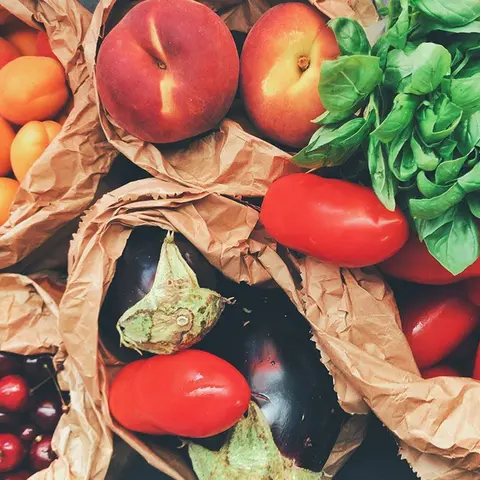
Spoiler Alert, a company founded by two MIT alumni, is helping companies bridge the gap between food waste and food insecurity with a platform connecting major food and beverage brands with discount grocers, retailers, and nonprofits. The platform helps brands discount or donate excess and short-dated inventory days, weeks, and months before it expires. Read the article: https://news.mit.edu/2022/spoiler-alert-food-waste-0105
Jan. 5, 2022
Audio Article: Scientists build new atlas of ocean’s oxygen-starved waters
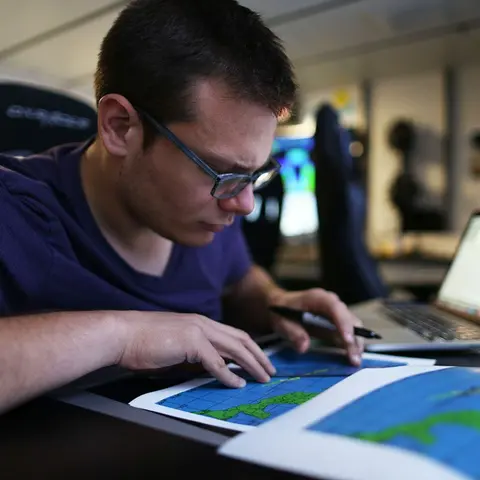
A team of MIT scientists have generated a detailed, three-dimensional "atlas" of the largest oxygen-deficient zones (ODZ) in the tropical Pacific. And though these ODZs make up less than 1 percent of the ocean’s total volume, they are a significant source of nitrous oxide, a potent greenhouse gas. Read the article: https://news.mit.edu/2021/oxygen-deficient-ocean-map-1227
Dec. 21, 2021
Audio Article: Sensor based on quantum physics could detect SARS-CoV-2 virus
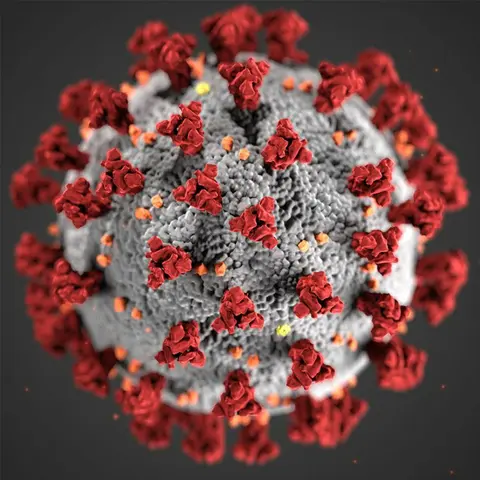
A novel approach to testing for the presence of the virus that causes Covid-19 may lead to tests that are faster, less expensive, and potentially less prone to erroneous results than existing detection methods. Though the work, based on quantum effects, is still theoretical, these detectors could potentially be adapted to detect virtually any virus, the researchers say. Read the article: http://news.mit.edu/2021/quantum-sensor-detect-covid-1220

Dec. 2, 2021
Audio Article: Timber or steel?
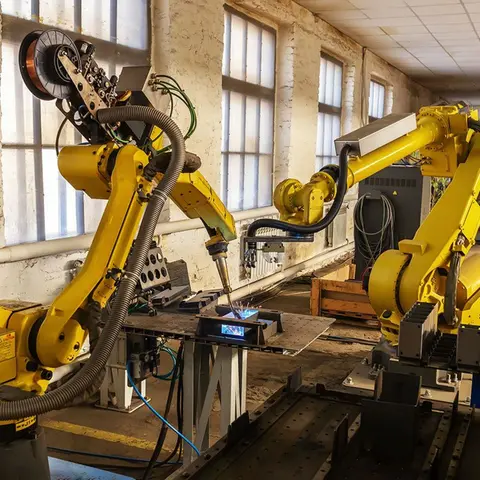
Researchers at MIT have done a detailed analysis and created a set of computational tools to enable architects and engineers to design truss structures in a way that can minimize their embodied carbon while maintaining all needed properties for a given building application. Read the article: https://news.mit.edu/2021/truss-structure-carbon-materials-1129
Nov. 12, 2021
Audio Article: Giving robots social skills
MIT researchers have now incorporated certain social interactions into a framework for robotics, enabling machines to understand what it means to help or hinder one another, and to learn to perform these social behaviors on their own. Read the article: https://news.mit.edu/2021/robots-social-skills-1105

Nov. 5, 2021
Audio Article: Dragging your feet? Lack of sleep affects your walk, new study finds
Good sleep can be hard to come by. But a new study by researchers at MIT and the University of São Paulo in Brazil finds that if you can make up for lost sleep, even for just a few weekend hours, the extra zzz’s could help reduce fatigue-induced clumsiness, at least in how you walk. Read the article: https://news.mit.edu/2021/lack-sleep-walk-1026

Oct. 20, 2021
Audio Article: How marsh grass protects shorelines
As climate change brings greater threats to coastal ecosystems, new research can help planners leverage the wave-damping benefits of marsh plants. Read the article: https://news.mit.edu/2021/how-marsh-grass-protects-shorelines-1018

Oct. 1, 2021
Audio Article: Toward a smarter electronic health record
Researchers at MIT and the Beth Israel Deaconess Medical Center are combining machine learning and human-computer interaction to create a better electronic health record (EHR). They developed MedKnowts, a system that unifies the processes of looking up medical records and documenting patient information into a single, interactive interface. Read the article: http://news.mit.edu/2021/medknowts-electronic-health-record-0923
Sept. 24, 2021
Audio Article: A new method for removing lead from drinking water
Engineers at MIT have developed a new approach to removing lead or other heavy-metal contaminants from water, in a process that they say is far more energy-efficient than any other currently used system, though there are others under development that come close. Ultimately, it might be used to treat lead-contaminated water supplies at the home level, or to treat contaminated water from some chemical or industrial processes. Read the article: http://news.mit.edu/2021/removing-lead-water-electrodi...

Sept. 20, 2021
Audio Article: Comparing seniors who relocate shows where you live affects your longevity
Would you like to live longer? It turns out that where you live, not just how you live, can make a big difference. That’s the finding of an innovative study co-authored by an MIT economist, which examines senior citizens across the U.S. and concludes that some locations enhance longevity more than others, potentially for multiple reasons. Read the article: https://news.mit.edu/2021/seniors-relocate-longevity-0901
Sept. 9, 2021
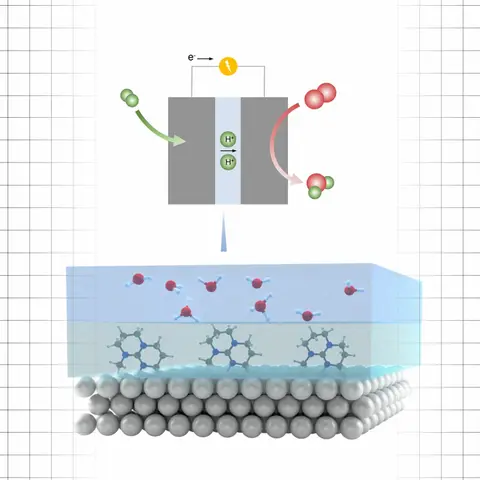
Audio Article: Making catalytic surfaces more active to help decarbonize fuels and chemicals
Electrochemical reactions that are accelerated using catalysts lie at the heart of many processes for making and using fuels, chemicals, and materials — including storing electricity from renewable energy sources in chemical bonds, an important capability for decarbonizing transportation fuels. Now, research at MIT could open the door to ways of making certain catalysts more active, and thus enhancing the efficiency of such processes. Read the article: http://news.mit.edu/2021/elecrochemical-rea...