Episodes
Nov. 21, 2025
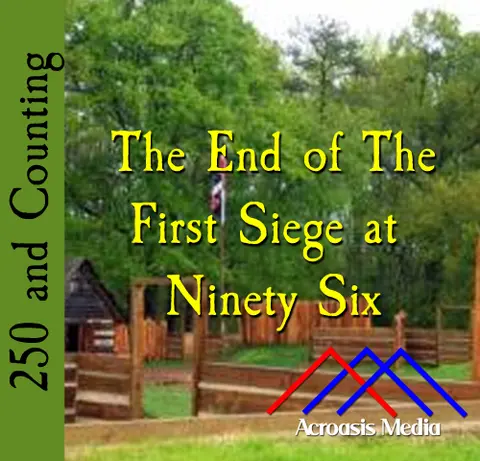
The End of the First Siege at Ninety Six–November 22, 1775
The siege and battle at Ninety Six managed to end abruptly, largely because the leaders on both sides were convinced that something was about to happen the would benefit the other side. What a gentlemanly way to go out! For all that shooting, hardly anyone was seriously hurt. There was one death on each side, and most of the others who were injured had the ability to get treated right away. But for the second important battle of the Revolution in South Carolina, and the first one to get someon...
Nov. 20, 2025
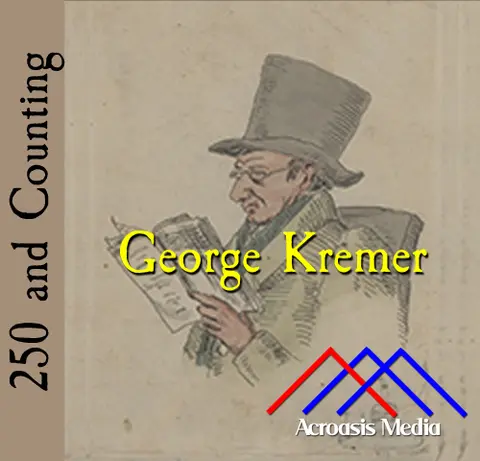
George Kremer–November 21, 1775
While George Kremer is depicted in today’s artwork as a sophisticated “man of the people”, it’s thought that the artwork was meant to be sarcastic, since Kremer’s colleagues didn’t respect him very much, thinking he was a kind of bumpkin back-bencher. And indeed, George Kremer’s political legacy, at both the state and Congressional level, is fairly thin, with the exception of the allegations he made against Henry Clay. At that time, if there was no clear majority winner of the presidential elec...
Nov. 19, 2025
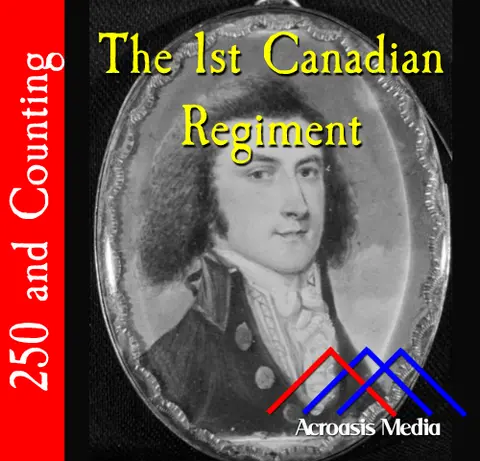
The 1st Canadian Regiment–November 20, 2025
Robert Livingston now enters the picture in the broad tapestry of the American Revolution. Given that the cover art today comes from an image from twenty years after the war; we can assume that he was quite young during the war, plus he held up pretty well in the interim. At any rate, this isn’t the last we’ll hear from Robert Livingston; we’ll be back to visit him next month. The post The 1st Canadian Regiment–November 20, 2025 appeared first on 250 and Counting.
Nov. 18, 2025
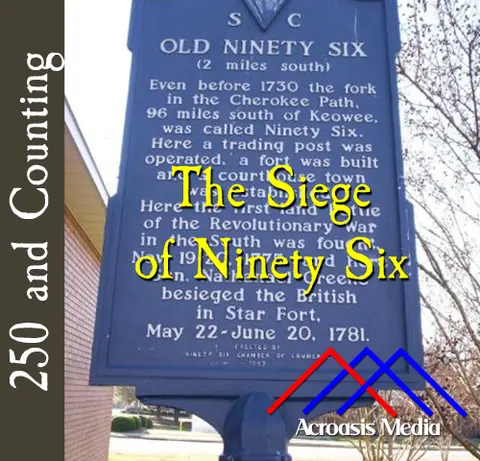
The Siege of Ninety Six–November 19, 1775
The Siege of Ninety-Six is considered to be the first land battle of the Revolution in the South. And believe it or not, we might be talking about this town again in fairly short order. This past Saturday, Governor McMaster officially proclaimed today through Thursday the 250th Anniversary of the battle. And while this battle lasted three days before mutual cessation of hostilities, it was just the beginning of a series of skirmishes between the two factions for for about six years. The post T...
Nov. 17, 2025
SC Troops Get Organized–November 18, 1775
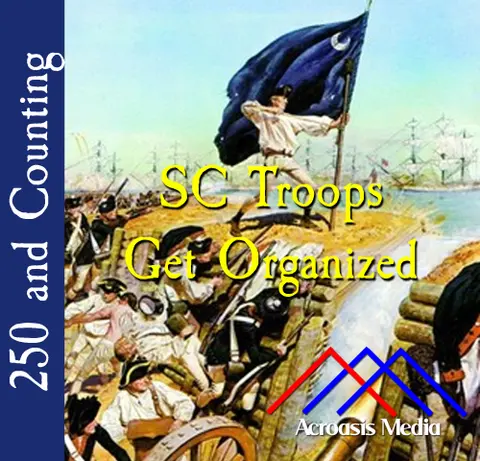
In retrospect, it appears that most of the action in the early days of the Revolution took place in Massachusetts and South Carolina. What was so important about South Carolina? New York wasn’t a big city yet, nor was it strategically important (yet). Baltimore was a small-time port at the time; so was Norfolk. Georgia was deeply divided. North Carolina and New Hampshire didn’t have any strategic advantage. Pennsylvania was inland. Neither Delaware nor New Jersey nor Connecticut were especially...
Nov. 16, 2025
The Prize Court Committee–November 17, 1775
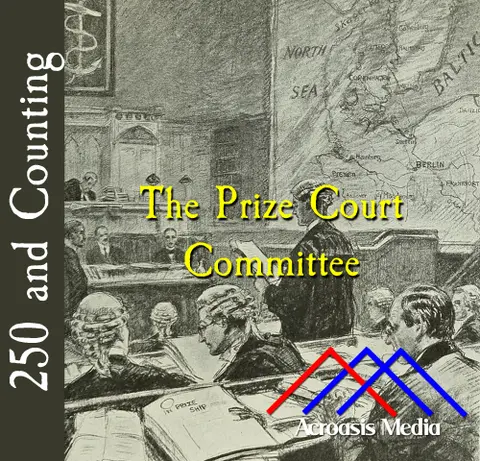
A Prize Court is a formal organization dedicated to the disposition of items captured from an enemy. Because the Colonies were more or less building it all from the ground up, much of what they adopted came directly from the British. As a result the Prize Court and its structure is a British institution that made its way over here. This doesn’t happen anywhere else in the world, though in the early 20th Century an International Prize Court was proposed and established, but it was never ratified...
Nov. 15, 2025
Mister Knox Goes to Ticonderoga–November 16, 1775
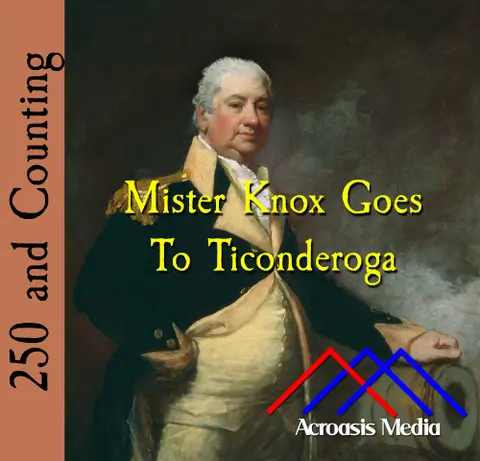
It’s a little bit unfair using this portrait to represent Henry Knox, because it was painted many years after his involvement in the Revolution, which began when Knox was 25 years old. As it turns out, this painting is from 1806, the year Knox died. Henry Knox ran a bookstore in Boston as a young man, and he was on-hand for the carnage of the Boston Massacre in 1770. So by the time the war officially broke out, Knox was fully radicalized and ready for action. Because of his actions at Ticondero...
Nov. 14, 2025
Dr. James Carnahan–November 15, 1775
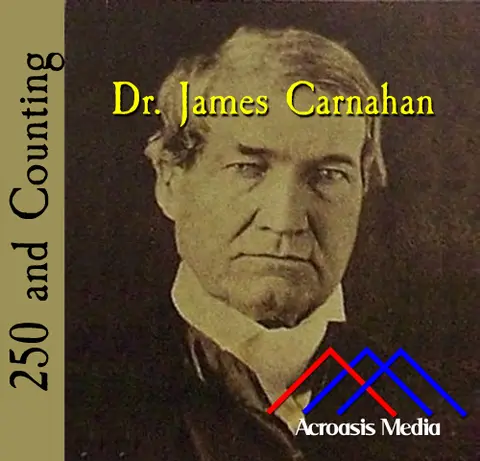
As noted during the episode, James Carnahan was the president of what was later known as Princeton University, the ninth man to hold that title since the school’s founding nearly 90 years earlier. Carnahan held that position for over 30 years, making him the longest tenured president of that school to that date, a record that remains to this day. Carnahan was buried in the University President’s Plot at Princeton Cemetery. Curiously, he specified in his will that none of his lectures, manuscri...
Nov. 13, 2025
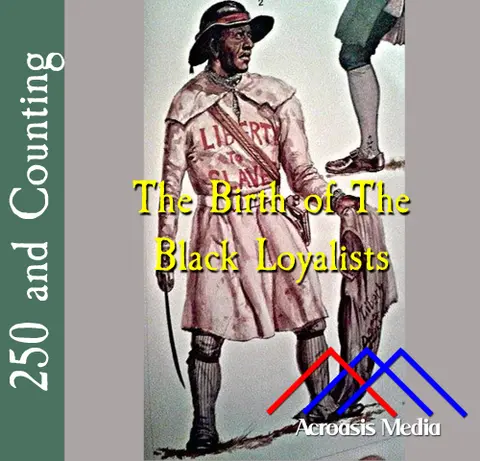
The Birth of the Black Loyalists–November 14, 1775
Lord Dunmore issued his Proclamation just a week earlier, but the response was much stronger than anticipated, probably because—who knew!—people hate being slaves. While the Proclamation only applied to the Virginia colony, because Dunmore had no authority conferred upon him anywhere else, a huge number of slaves and otherwise indentured servants from throughout the thirteen colonies fled to the British side of the lines. (We have to say “throughout” because slavery was a thing in the north at...
Nov. 12, 2025
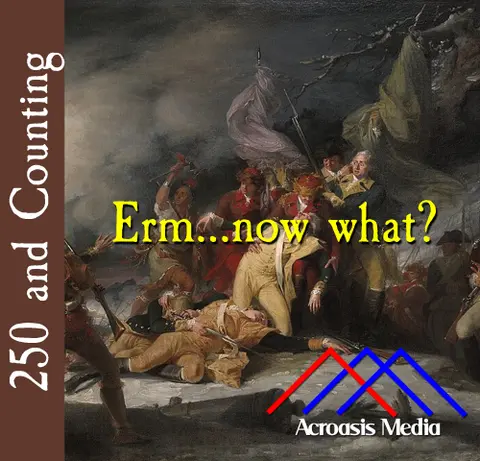
Erm…now what?–November 13, 1775
Montgomery had done his thing at Fort St. Jean. Benedict Arnold had finally made it through the Maine (heh.) Now it was time to move in on Montreal. What the Canadians didn’t count on was the possibility that Americans weren’t moving on Quebec, but Montreal. Americans can walk and chew gum at the same time, though, so they moved on Montreal, taking the city, and moved on Quebec at the same time, with less result. But the city was besieged just a few weeks later. The post Erm…now what?–November...
Nov. 11, 2025
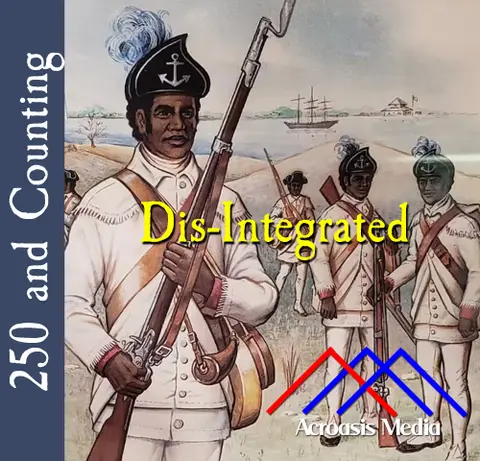
Dis-Integrated–November 12, 1775
It should come as a surprise to nobody that America has a troubled relationship with its past when it comes to race relations. It may come as surprise to you that our Founding Fathers had a complex relationship with their present when it comes to race relations. Yes, many of them owned slaves, but a significant percentage of those men had committed to freeing them at some point. The problem was, that point was rather nebulous. And there was a lot of ambiguity when it came to the question of ho...
Nov. 10, 2025
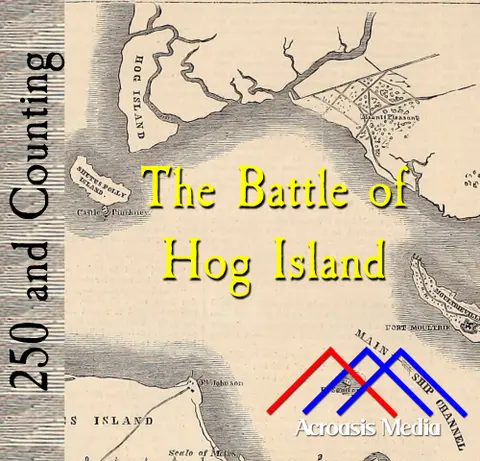
The Battle Of Hog Island–November 11, 1775
The Battle of Hog Island was the first of two major events early in the Revolution that got South Carolina firmly on board with the Independence cause. Hog Island caused the South Carolina Committee of Safety to expand their navy; in this respect they were way ahead of the Continental Congress. But when King George III approved the American Prohibitory Act in December, that really irritated South Carolinians. The Act act declared that any vessels captured by the Royal Navy after January 1, 177...

Nov. 9, 2025
Happy Birthday To The US Marines!–November 10, 1775
The United States Marine Corps celebrates its birthday every year on this day, usually with a ball (the dancing kind) and a cake-cutting ceremony. The cover art today is from their 233rd birthday celebration. Until 1921, the Marines marked the occasion on July 11, which was the date of the re-establishment of the Corps, since they were disbanded after the Revolution. But John Adams (again) came to the rescue and signed an act to re-organize the Corps. However, July 11 didn’t get a lot of attent...
Nov. 8, 2025
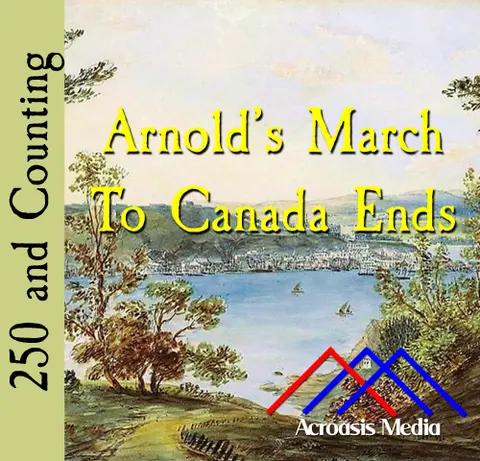
Arnold’s March to Canada Ends–November 9, 1775
We gotta give Benedict Arnold this: he set a goal and he stuck to it. Given the opportunity to take men and help invade Quebec through a kind of pincer move with General Montgomery, Benedict Arnold took 1100 men through the wilds of Maine to the St. Lawrence River, a trip that he thought would take 20 days over 180 miles. But they ran into problems almost immediately involving weather, leaky boats, bad maps, bad terrain, illness and almost half the men turning back. But make it he did, still ...
Nov. 7, 2025
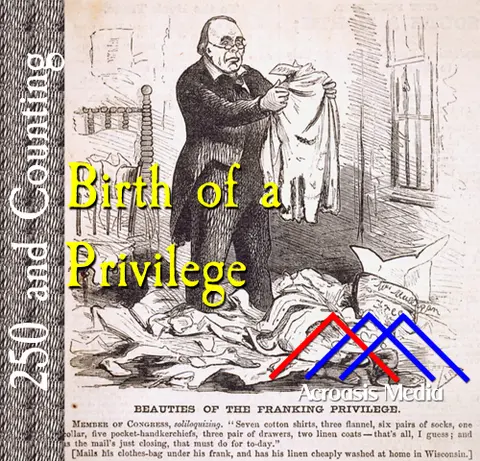
Birth of a Privilege–November 8, 1775
When we talk about Franking, we typically use it in the context of the Franking Privilege, something that members of Congress, ex-presidents, and a few others get to use. In short, if they put their name on the envelope, they can mail stuff without cost to themselves. (The Congressional budget reimburses the US Postal Service.) But Franking isn’t limited to the franking privilege. “Franking” refers to any kind of device, mark, or combination of the two that makes something eligible for mailing....
Nov. 6, 2025
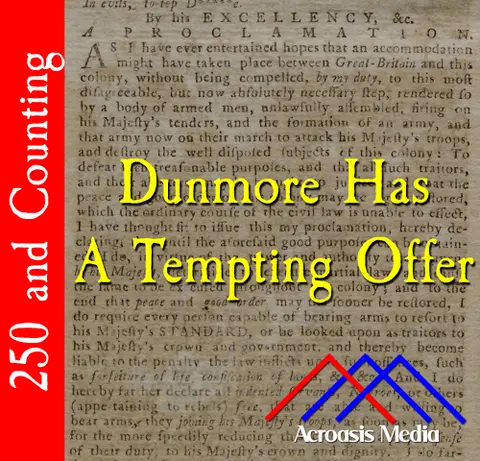
Dunmore Has A Tempting Offer–November 7, 1775
Lord Dunmore was driven from the Governor’s Mansion back in June, but he never went far. That same day he took refuge on a British ship near Williamsburg and continued playing the role of Governor, even though the House of Burgesses was already doing quite nicely, thank you. Slave revolts were a constant concern in the slave states, and Dunmore was almost certainly inspired by an incident just a couple of days earlier during the Battle of Kemps Landing. An enslaved man, serving alongside the Br...
Nov. 5, 2025
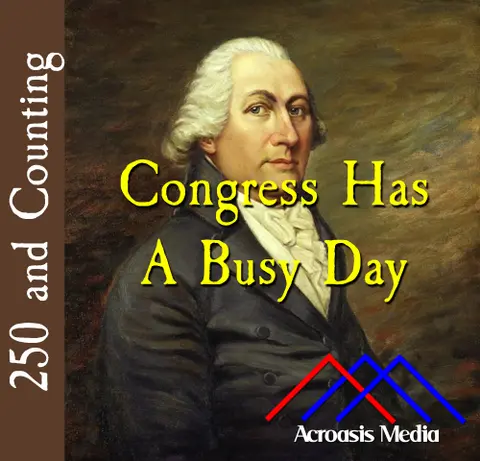
Congress Has A Busy Day–November 6, 1775
There are going to be days when no truly big events happen, but that wasn’t going to stop the Second Continental Congress from getting stuff done. Today we have a bit of an image of that group as a bunch of men who are hard-drinking philosophers, ready—and maybe eager—to burst into fisticuffs, or perhaps the occasional song, depending on where you got your impressions. So for that reason, we do like to remind you that the Continental Congress, for all their weird little squabbles, was a seriou...
Nov. 4, 2025
Washington Chides His Men–November 5, 1775
Guy Fawkes Day is one of those holidays, we think, that many people in America know ABOUT, but don’t necessarily know when it takes place, nor do they have any idea who Guy Fawkes was. Fortunately we’re here to give you some of the scoop. Guy Fawkes was one of eleven conspirators involved in a plot to blow up the House of Lords with King James I inside, killing him and setting up an opportunity to install a Catholic king instead. The plot was discovered, and Fawkes eventually confessed. Fawkes...
Nov. 3, 2025
Reinforcements Arrive Too Late–November 4, 1775
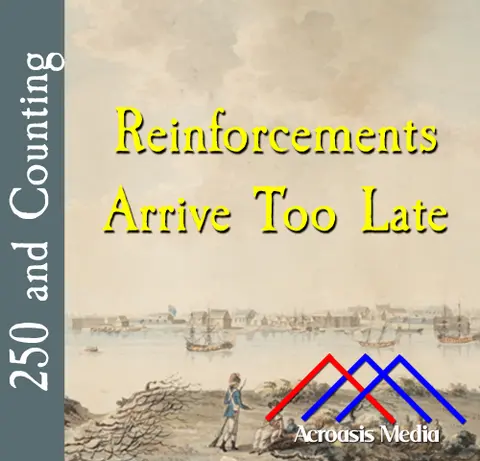
As we told you yesterday, Major Preston was hoping that reinforcements were coming in time to rescue him and his men from Fort St. Jean, so he tried to stall for time with General Montgomery. General Montgomery wasn’t biting, though, and the siege finally ended when Preston’s men surrendered. Today, only a day later, a few hundred men arrive in Quebec from Newfoundland and Prince Edward Island, but it’s too late for the fort. On the other hand, when the Americans try to take out Quebec City, th...
Nov. 2, 2025
The Siege at Ft. St. Jean Ends–November 3, 1775
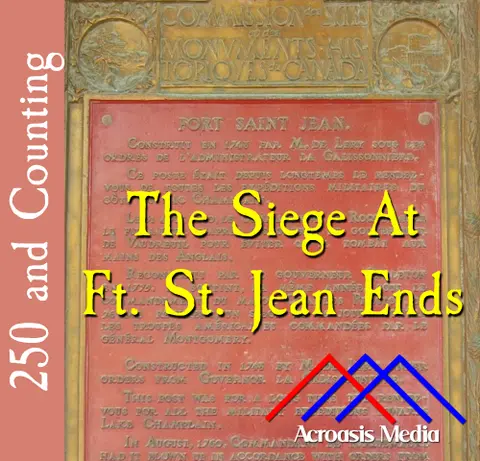
If you’re scrutinizing today’s cover art and you’re having trouble reading the plaque, that’s because what you see is mostly in French. The bottom half, only part of which is visible here, is in English. The English part (which is a translation of the French part) reads: FORT SAINT JEAN Constructed in 1743 by M. de Léry under orders from Governor la Galissonnière. This post was for all the military expeditions towards Lake Champlain. In August, 1760, Commandant de Roquemaure had it blown up in...
Nov. 1, 2025
Jeromus Johnson–November 2, 1775
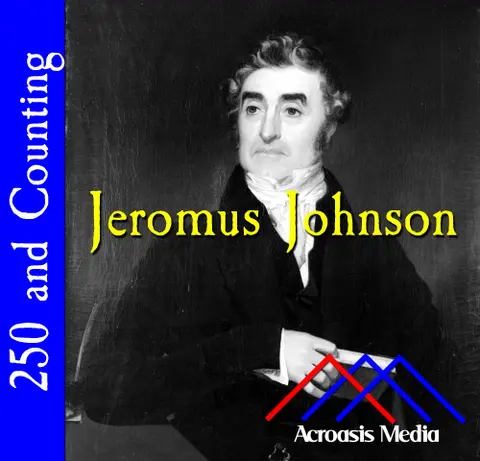
It’s noted that Brooklyn is the place where Jeromus Johnson was born, but to be more specific, Johnson was born in a neighborhood called Wallabout, which still exists but Johnson wouldn’t recognize it today. Wallabout got its name from the adjacent Wallabout Bay, which has been mostly filled in and is now occupied by the Brooklyn Navy Yard. “Wallabout” is a corruption of a French phrase meaning “bend in the harbor”. For all that, you rarely hear the name Wallabout anymore; the village has been ...
Oct. 31, 2025
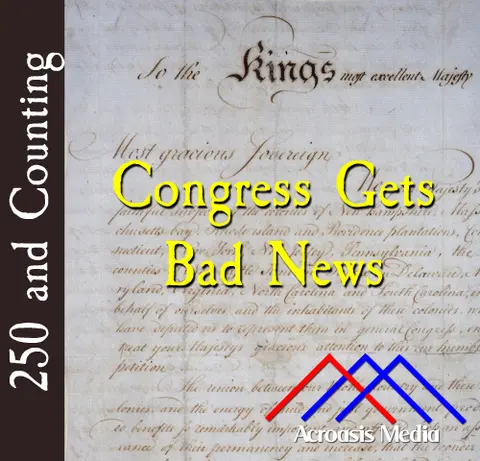
Congress Gets Bad News–November 1, 1775
In July 1775, there were still several delegates to the Second Continental Congress who thought that reconciliation with Britain was a possibility. There were a few others who may not have necessarily been of that opinion, but were willing to take a chance. Some of these men, led by John Dickinson, formed a committee to draft what’s come to be known as the Olive Branch Petition. The intent was to continue pledging loyalty to the King, but to simultaneously ask for some equitability in trade and ...
Oct. 30, 2025
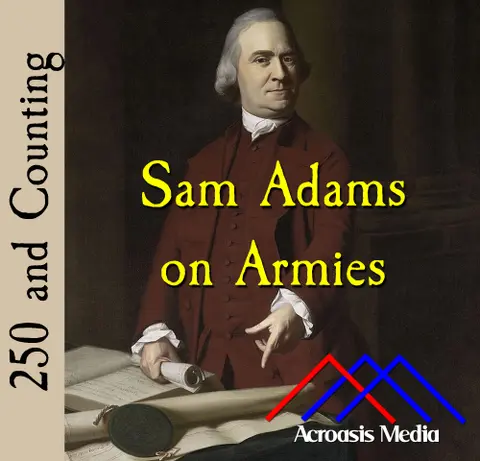
Sam Adams on Armies–October 31, 1775
Sam Adams was a patriot in his own right, oftentimes supporting his second cousin John. The two of them were often able to work together closely. What’s more, they were an efficient team, with Sam Adams being the fiery agitator and organizer, and John Adams acting in the more measured and sophisticated role, playing the political diplomat. But Sam also had his own ideas about how things should be organized. When he heard that the Massachusetts Assembly was considering putting together military ...
Oct. 29, 2025
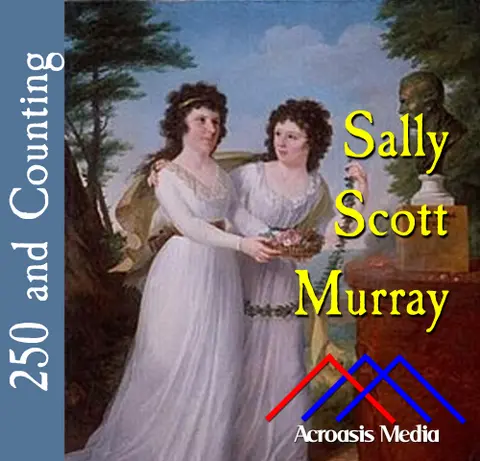
Sally Scott Murray–October 30, 1775
Sally Scott Murray was a political wife for the better part of her adult life, given all the different elected offices that her husband Edward Lloyd the 5th held. There were a few years immediately after their marriage when id didn’t hold elected office, and he predeceased her by about twenty years, but in between, Edward’s resume is all over the Maryland State Archives. And, of course, there’s a Lloyd Street in Baltimore. Just around the corner on Lombard Street is one of the best places ever ...