Episodes
Oct. 25, 2025
A New Facet of War–October 26, 1775
With both Boston and Canada in a state of stalemate, there wasn’t a lot of active fighting going on in the Colonies. Not until, as we said yesterday, General Woodford stumbled into a bunch of British soldiers preparing to attack Hampton, VA. This set off the first major battle of the Revolution in a southern state, and one of our first significant victories. But in the meantime, Congress discovered that a shooting war wasn’t the only tool they had at their disposal: they had economic power as ...
Oct. 24, 2025
An Unexpected Battle–October 25, 1775
William Woodford was both smart and able to see the bigger picture. He’d already begun training his troops in earnest in anticipation of a British attack. Then the word came in that his men were to protect Norfolk or Portsmouth. When they began the march, they had not idea that they were about to stumble into a British attempt to attack amphibiously. Woodford’s men repelled the attack and created the first important British casualties of the war effort. The post An Unexpected Battle–October 25...
Oct. 23, 2025
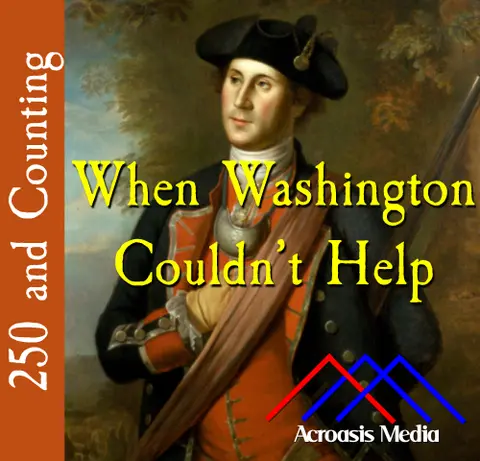
When Washington Couldn’t Help–October 24, 1775
For what it’s worth, the picture I used for George Washington depicts what he looked like during the French and Indian War, which ended roughly twelve years prior to this date. But we wanted to show you that he didn’t always look like the guy on the dollar bill. After the firebombing and destruction of Falmouth, Massachusetts (and which we mention for the first time today, I think, is the same place as Portland, Maine), it was only natural that the locals there felt vulnerable. It’s because it ...

Oct. 22, 2025
RIP Peyton Randolph–October 23, 1775
Peyton Randolph is another one of those Founding Fathers who goes largely unknown to most people, probably because he died relatively young (age 54) and early in the whole Independence movement. But Randolph was a true Patriot and while he wasn’t around to sign the Declaration of Independence, it’s said that his spirit was at the heart of the document. It’s worth noting that, as the Royal Governors were kicked out one by one, the Continental Congress began to assume governmental duties for the...
Oct. 21, 2025
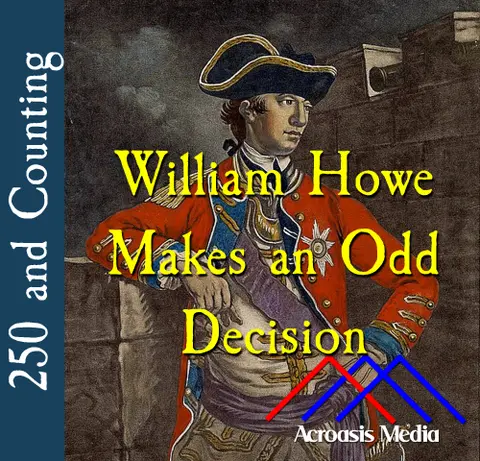
William Howe Makes An Odd Decision–October 22, 1775
After the Pyrrhic victory at Bunker Hill, the fact that General Gage was about to be replaced probably came as a surprise to nobody. That he was replaced by William Howe…well, that also probably wasn’t a surprise. Howe had experienced success in the Seven Years’ War. And while he was known to have shown some sympathy with the Colonies (he’d voted against the Intolerable Acts, for instance), it was thought that he could break the Siege of Boston. So Howe came to America and on October 11 he too...

Oct. 20, 2025
Saltpeter, John–October 21, 1775
The Second Continental Congress was having a busy week, with the worries about the trade embargo going on, and whether ships from other nations could get in/out safely. And John Adams was worried, too–worried that he wouldn’t be able to keep up with the demand for gunpowder for the soldiers. One of the components of gunpowder is saltpeter, and while it isn’t hard to make, it’s certainly easier to let someone else make it and then pay them for their efforts. Fortunately, help arrived in the form...
Oct. 19, 2025
James Warren Likes Privateers–October 20, 1775
In the immediate aftermath of the destruction of Falmouth (then Massachusetts, now Maine), naturally there was a great deal of concern when it came to defending our shores from the British Navy. After all, the Brits had the most powerful navy in the the world, and the Americans…well, they’d barely gotten started putting theirs together. A couple of the colonies had started their own navies, but we had a long way to go. James Warren, in his capacity as a member of the Massachusetts Provincial C...
Oct. 18, 2025
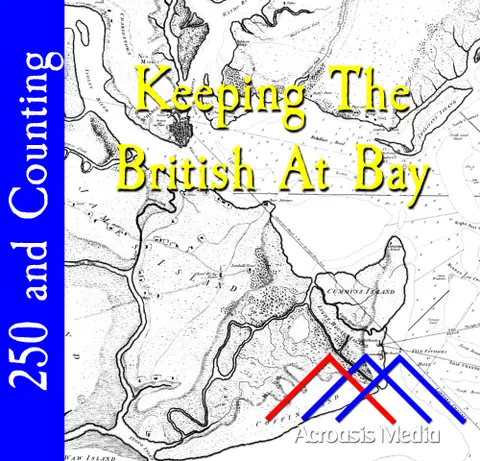
Keeping The British At Bay–October 19, 1775
There were two events marked today. One of them involves the continuation of a ban on exports of weapons to America. This was something that had to be formally declared every few months. Meanwhile down in South Carolina, a brief fight between two ships in the Charleston Harbor got local leaders thinking about the best way to keep the harbor protected. Their solution: set it up that the only way you can get in or out of Charleston harbor is by ensuring that you remain within range of Fort Johnso...

Oct. 17, 2025
Washington Gets Some Relief–October 18, 1775
George Washington was a pretty smart guy. He knew exactly what his army needed, in all aspects. He had a handle on discipline, on supplies, on tactics and any number of other things. Washington surrounded himself with people who were smart, too. This went a long way toward ensuring his success. So when his army started to fall apart because some basic needs weren’t getting met, Washington took action. He knew that sending another letter to Congress wasn’t going to help. So instead he met with t...
Oct. 16, 2025
Manley About The House–October 17, 1775
Okay, first off, it’s only appropriate that I apologize for the stupid title. I really shouldn’t write when I’m low on sleep. Manley’s beginnings were murky (e.g. his year of birth is approximate) but he was a quick study and it’s no wonder that George Washington selected him as one of his first captains in the Revolutionary War. Just a few months later he was promoted to Commodore. Manley spent a couple of years harassing and capturing British ships, until he himself was captured. After nearl...
Oct. 15, 2025
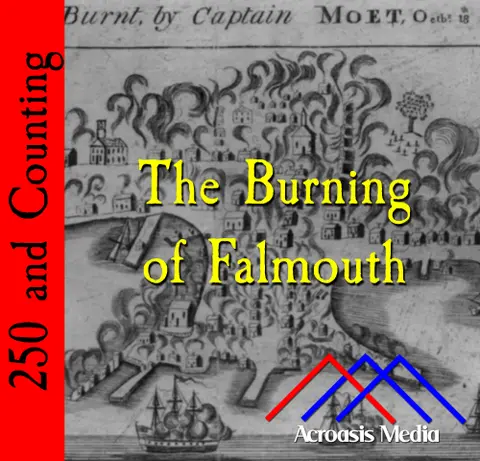
The Burning of Falmouth–October 16, 1775
To be clear, the actual burning of Falmouth took place on October 18, but the events that led directly to it happened on this day. Captain Henry Mowat had been captured by patriots in Falmouth some time earlier. When he returned, he brought five gunships with him. When he demanded that the locals swear allegiance to King George III, he gave the command that laid waste to the town. The post The Burning of Falmouth–October 16, 1775 appeared first on 250 and Counting.

Oct. 14, 2025
Reinforcements Arrive in Quebec–October 15, 1775
Fort St. Jean was a relatively soft target compared to Boston. Plus, it wasn’t as well fortified because the British weren’t holed up there. Sooner or later something would come along to break up the stalemate. On this day, a couple of somethings arrived, from Fort Ticonderoga and Crown Point. The big guns that Montgomery had hoped for finally arrived. And not long behind that, Montgomery was able to take Fort Chambly, which wouldn’t have been a huge deal had its commander not forgotten an impo...

Oct. 13, 2025
John Dabney Terrell Sr.–October 14, 1775
Programming Note: Mike came down with a case of electronic laryngitis, so you’re getting me again for today’s episode. But Mike wrote it, so there’s that. John Dabney Terrell Sr. was…not one of our best and brightest Americans, but the work he did will lead us to a bigger story some time down the road. Much of what he did laid down the foundation for the event that became known for the Trail of Tears. As if that wasn’t bad enough, he was a slave owner who put some of his slave property (ugh, b...
Oct. 12, 2025
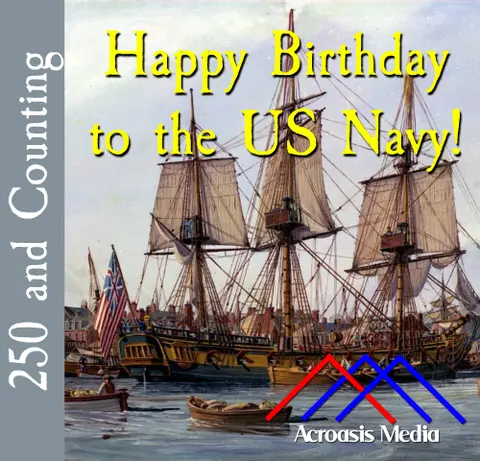
Happy Birthday to the US Navy!–October 13, 1775
It’s Cake and Candles for the US Navy, born this day in 1775. The Continental Congress initially authorized the purchase and retrofitting of two ships. But before long they saw the wisdom of having a navy, and soon many more ships were purchased, and commissioned into service. The Continental Navy, to be honest, didn’t have a huge impact on the war. Many ships were lost to British attacks, weather, or accidents. What it did have a big impact on, however, was the War of 1812. The seamen who fou...

Oct. 11, 2025
Lyman Beecher–October 12, 1775
Although Lyman Beecher could be considered famous just for being the father of several prominent writers and ministers, he also had some achievements in his own right. Beecher first became known for a sermon which was published shortly afterward on the evils of duelling. Because it was in the wake of Alexander Hamilton’s death, it proved quite popular. Beecher next turned his eyes to intemperance, which is what intoxication was called at the time. It was a concern throughout America in the mid...

Oct. 10, 2025
The Great Carrying Place–October 11, 1775
Benedict Arnold and Company are still on the move toward Quebec. Over a three-week period they’ve moved fewer than 90 miles, with only…300 to go. Today they’ve reached The Great Carrying Place, a 13-mile walk alternating between woods and knee-deep mud, all while carrying everything they’ll need to get to Canada. Back in the Colonies proper, General Gage is being replaced by General Howe. Gage was largely responsible for the Siege of Boston, especially since they weren’t able to break that sieg...
Oct. 9, 2025
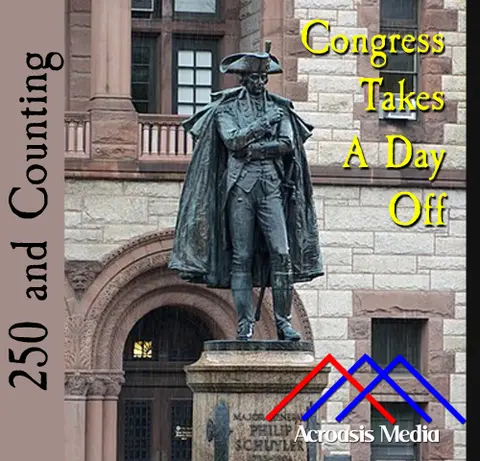
Congress Takes A Day Off–October 10, ,1775
That’s an interesting goof I made with today’s cover art, with the tiny black stripe down the right. It’s a mistake, but it looks like the picture has a shadow, so I’m keepin’ it. The Second Continental Congress was a very serious, thoughtful body of men who did not shirk their duties. They often worked very long hours, six days a week, and might have gone for seven had it not been for, y’know, God stepping in and commanding, “Hey, none of that. That’s My day.” So the fact that Congress chose ...
Oct. 8, 2025
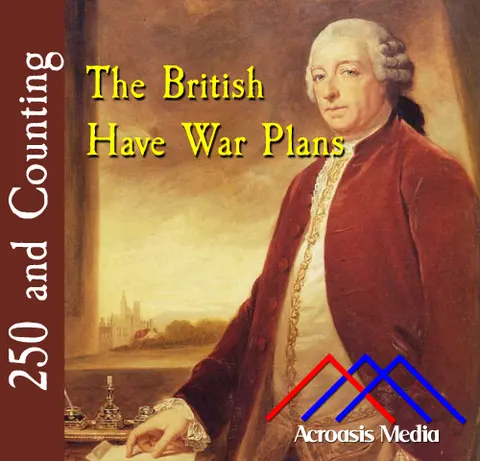
The British Have War Plans (October 9, 1775)
By now the British appear to accepted the fact that the war was going to go on for much longer than they thought. They thought that fighting the colonies would be a cake walk. They discovered that it was quickly becoming a quagmire. Fortunately they recognized it and began to make plans. Lord Dartmouth and General Howe started drawing something up that involved isolating Washington’s army from the rest of the Colonies, but George Germain, who was about to replace Lord Dartmouth, thought more a...
Oct. 7, 2025
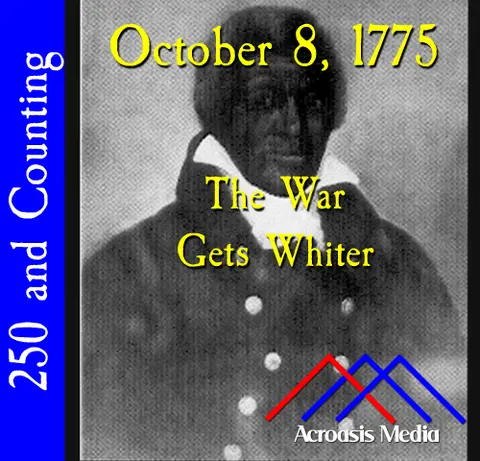
October 8, 1775: The War Gets Whiter
When the war first started, the Continental Army took on all comers, largely because they didn’t have a lot of choice. Frankly, they needed whatever bodies they could get. But it was around this time in 1775 that George Washington and his advisers decided that they could afford to get choosier about their recruits, So they decided not to take on any more Black soldiers. What’s more, soldiers who were already there would not be permitted to re-enlist. Eventually—in a couple of years—they’d reve...
Oct. 6, 2025
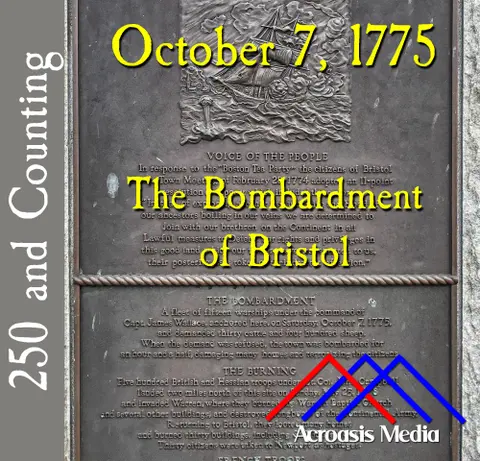
October 7, 1775: The Bombardment of Bristol
While Boston was under siege, the British were having a hard time getting food and other supplies. But they still controlled the water, so British naval vessels went in search. Captain James Wallace was especially good at procuring supplies, largely because he harassed people until they gave in, or he would threaten to shoot up the place. This second tactic was the one he chose for Bristol, Rhode Island, and it’s unclear how much actual damage he did to the town (reports vary wildly). But what...
Oct. 5, 2025
October 6, 1775: A Strongly-Worded Letter
We actually touched on this once before, but George Washington was known for being quite the gentleman, but he did have a temper, especially when things weren’t handled in a gentlemanly way. Cross the lines of civility and he was hoisting the Jolly Roger, my friend. In a previous episode we noted that Washington wrote to General Gage about the treatment that captured American soldiers were receiving. In it was a thinly-veiled hint that he had prisoners too. And he’d be more than happy to treat ...
Oct. 4, 2025
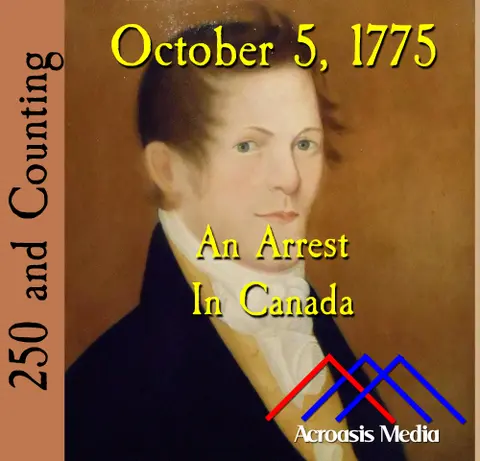
October 5, 1775: An Arrest In Canada
Thomas Walker was born in England and emigrated to Boston in 1752. In 1763 he moved to Montreal and became a merchant. When the war broke out in the Colonies, both Walker and his wife’s sympathies remained with the Americans. So it was that he agreed to assist with the invasion of Montreal. The plan never got to the point where his task came in, but since he was known to be part of it, the word went out for his arrest. Walker didn’t give up quickly but he was caught by the British for his crim...
Oct. 3, 2025
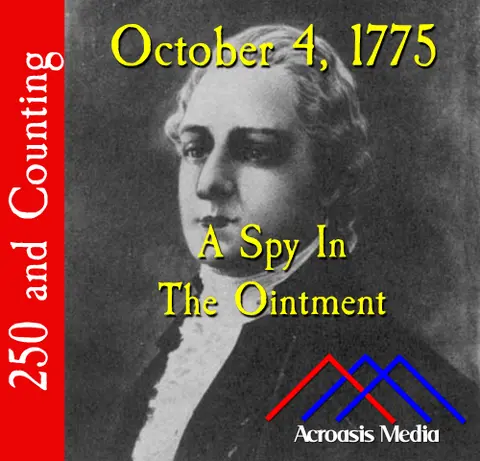
October 4, 1775: A Spy In The Ointment
It’s actually kind of curious that Benedict Arnold gets all the “traitor” press when there were other spies and turncoats doing their thing during the Revolution. Of course there were! There were Loyalists among the Patriots! It was practically a civil war. Dr. Benjamin Church, essentially our first Surgeon General (but that wasn’t a thing yet, so), was a Loyalist in Patriot clothing. Arnold was swayed by his young, pretty, Loyalist wife Peggy Shippen. But we’ll get to that eventually. (There w...
Oct. 2, 2025
October 3, 1775: Rhode Island Suggests a Navy
It’s often tough to remember that when the fighting first broke out, it wasn’t a bid for independence from Britain. It was an attempt to protect and defend rights that the Colonists thought they had as part of their relationship with Britain. Reconciliation was (amazingly) still on the table, even six months after Lexington. So while many colonies had created their own small navies (with Congress’ encouragement), there were several in Congress who felt that creation of a navy was a step too far...