Episodes
Sept. 7, 2025
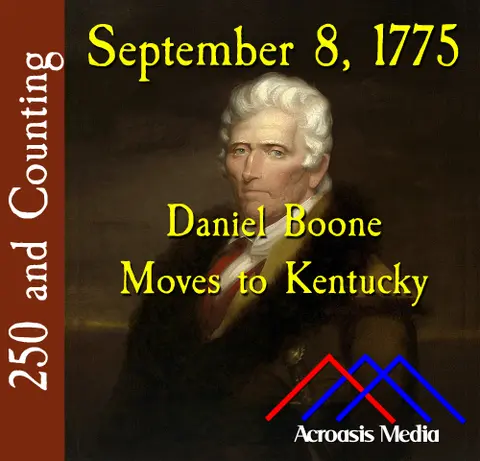
September 8, 1775: Daniel Boone Moves to Kentucky
As late as the 1970s, pioneers like Davy Crockett and Daniel Boone had achieved a kind of mythical status, largely because of fictionalized stories created about them by the folks at Disney. Sometimes it gets tough to determine what’s fiction and what isn’t, since they tend to embellish things that may have actually happened for the sake of a story. (Not a knock on Disney, so don’t sue us; that’s a typical practice when it comes to stuff like this.) So these folks became larger than life for a...

Sept. 6, 2025
September 7, 1775: Submarine Warfare is Revolutionary
The Turtle, or the American Turtle as it’s often called, was invented by a man who thought it should be possible to stealthily attach a bomb to a ship and then detonate it shortly thereafter, by approaching the ship from under the waterline. The Turtle was a brilliant idea in concept, if not in execution. There were just too many things that had to go exactly right for the turtle to successfully execute its design purpose, and when it was first tried in genuine combat on this day in 1775, unfor...
Sept. 5, 2025
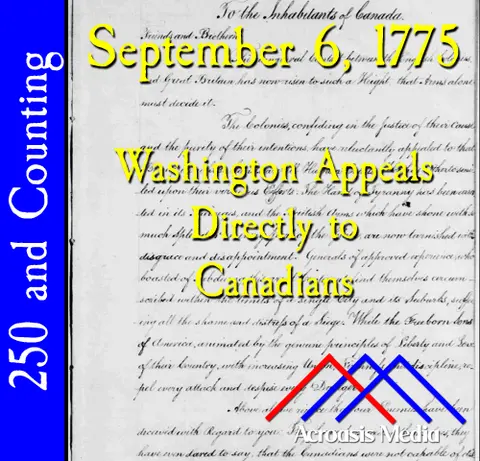
September 6, 1775: Washington Appeals Directly to Canadians
The Second Continental Congress tried appealing to the Canadian leadership in order to get support for the Independence cause, but they apparently weren’t biting. So George Washington tried a different tack: write to the Canadian people themselves. He reasoned that the folks in charge were mostly wealthy landowners who were doing all right financially under British rule. Maybe, he thought, the ordinary Canadian folks weren’t quite so happy with the King. He was not, unfortunately, correct in t...
Sept. 4, 2025
September 5, 1775: Setback in Canada
American forces began to move on Fort St. Jean in Canada. Unfortunately they ran into a couple of unexpected obstacles on the way, so they had to adjust their approach. This led to a six-week siege of the fort. The post September 5, 1775: Setback in Canada appeared first on 250 and Counting.

Sept. 3, 2025
September 4, 1775: The Offensive in Canada Grows
An invasion of Canada seems a little absurd on its face, but when you think about it in the context of the Revolution, it actually starts to make sense. After all, Canada was also a few British colonies in the North American continent, but they were a little more obedient to the whims of Parliament and they had Loyalist leanings. So the Patriots had a choice between bringing them over ideologically toward Independence, or ignoring them. Neither of these were likely to work, so they set about on...
Sept. 2, 2025
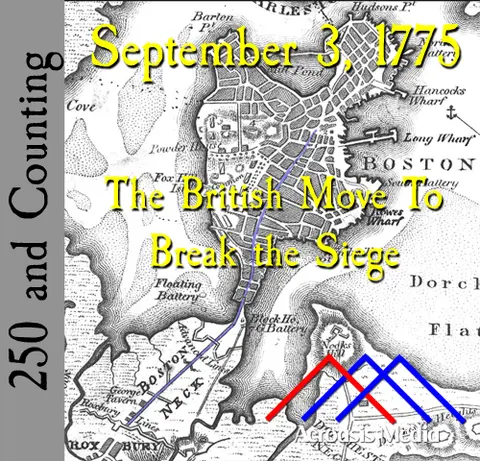
September 3, 1775: The British Move To Break the Siege
Anyone who’s been to Boston in the modern day has a hard time recognizing that the city of Boston was just the segment in the top center of the map. The area called Boston Neck is clearly marked at the bottom left, and wasn’t part of the city. The Continental Army’s line ran about where the blue line ends. (The blue line is modern-day Washington Street.) It was the city having that kind of geography that made the Siege of Boston relatively easy for the Patriots. Unfortunately for them, the Brit...
Sept. 1, 2025
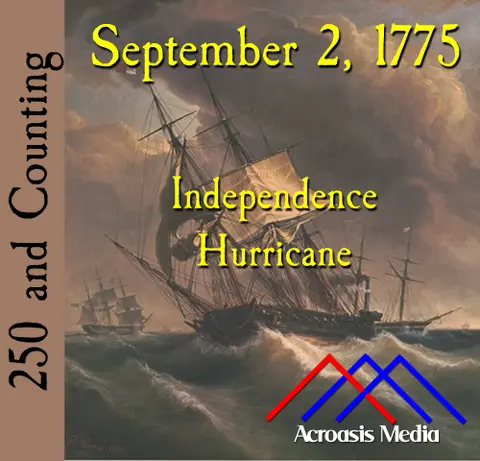
September 2, 1775: Independence Hurricane
Sometimes when we research these shows we learn stuff that doesn’t have a lot to do with history—not directly—but is interesting nonetheless, and does have some historical impact. Hurricanes would be one of those things. On the east coast of the US, we pretty much take them for granted as a weather phenomenon. They’re definitely scary and destructive, and oftentimes the damage comes after the storm, when all that rain that came down starts looking for somewhere to go. Now, I (Claude) knew that...

Sept. 1, 2025
September 1, 1775: Virginia Gazette Headlines
Nothing beats the speed of gossip, and apparently the Virginia Gazette on this day had plenty of it to share. A few of the stories were quite serious, relating to events in both Virginia and Massachusetts. They closed out with a local story that had a more humorous edge to it…though it’s likely that the people involved had a hard time seeing the humor in it all. PS Why is there a picture of a fish in today’s cover art? Well…mullet over a little and see if it comes to you. The post September 1...
Aug. 30, 2025
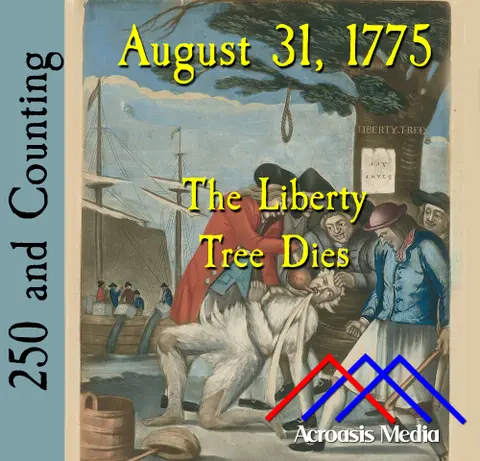
August 31, 1775: The Liberty Tree Dies
The cover art for today’s episode may be one of the most famous art pieces depicting an event of the American Revolution, and it happened under the Liberty Tree, which is clearly marked here. This event, the tarring and feathering of Loyalist John Malcolm, took place about 18 months earlier and shows Malcolm already tarred and feathered, and now he’s having (also marked) tea poured into his mouth. The Stamp Act is nailed to the tree, upside down. Really, there’s a lot to unpack in this picture....
Aug. 29, 2025
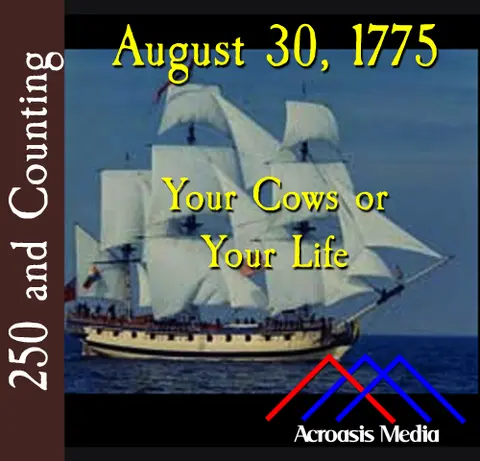
August 30, 1775: Your Cows or Your Life
The HMS Rose was a 20-gun ship of the Royal Navy, built in 1757. When hostilities broke out between the Colonies and the Crown, the Rose was tasked with preventing smuggling off the coast of Connecticut and (especially) Rhode Island. She spent the first few years of the Revolution in Narragansett Bay, in the Long Island Sound, in the Hudson River and down to the Chesapeake Bay in Maryland. The Rose’s last action as a British naval ship was in Savannah, Georgia. She was no longer fit for battle...
Aug. 28, 2025
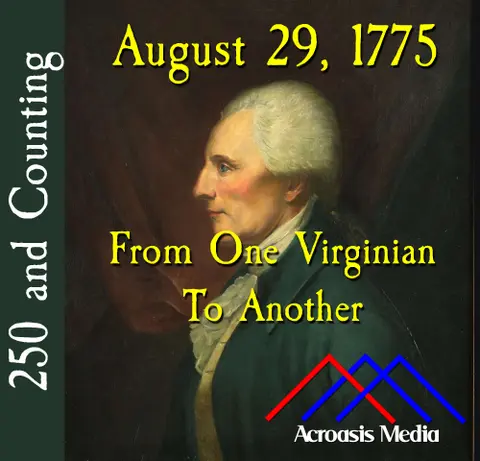
August 29, 1775: From One Virginian To Another
George Washington was a very good general and a disciplined soldier, but the fact that his men weren’t…well, that worried him a lot. He had a huge number of soldiers with him at Cambridge for the Siege of Boston. But since the British were so bottled up in the city, there weren’t many things for them to do other than patrol and keep an eye open for any possible moves the British made. Fortunately (or unfortunately, depending on whom you ask), Washington was typically forthcoming with this info...
Aug. 27, 2025
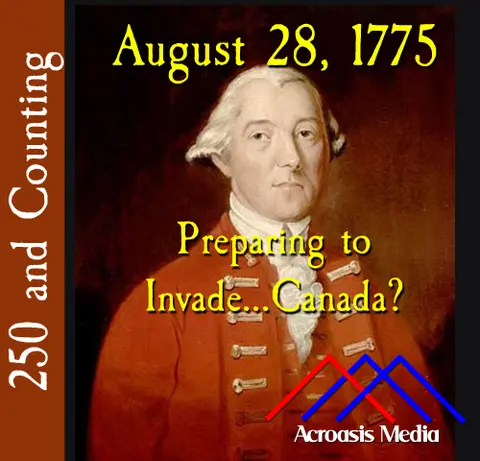
August 28, 1775: Preparing to Invade…Canada?
As farfetched as it sounds today, considering the need to invade and occupy Canadian territory was considered important early in the war effort, largely because the colonies in the Great White North had been treated a little more favorably by Parliament. Therefore they were more likely to lean on the Loyalist side of things. In making the decision to do so, however, there were lots of things to consider that (in retrospect) seem not to have been considered. But as time goes on and we get closer...

Aug. 26, 2025
August 27, 1775: Frederick Graff
Frederick Graff feels like one of those guys who gets so little credit for what he did, you wind up feeling pretty badly for him. But the fact is, if not for him, over three dozen cities in the US wouldn’t have adequate water systems. So good on Frederick! Hoist your favorite beverage in his honor! (Though, in this case, it really should be water.) The post August 27, 1775: Frederick Graff appeared first on 250 and Counting.
Aug. 25, 2025
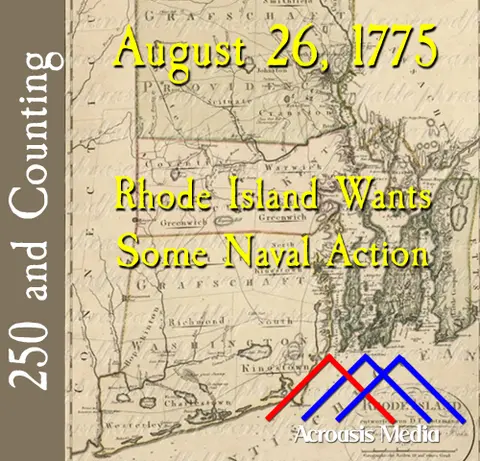
August 26, 1775: Rhode Island Wants Some Naval Action
Rhode Island has been proactive about the war effort ever since the events at Lexington and Concord. And one thing you’re going to learn today is just how much coastline there is to Rhode Island, and why having a navy was important to them. But it’s important to get an outsider’s view of things, and this wasn’t necessarily the Continental Congress’ viewpoint. It took a long while before any real action was taken. The post August 26, 1775: Rhode Island Wants Some Naval Action appeared first on ...
Aug. 24, 2025
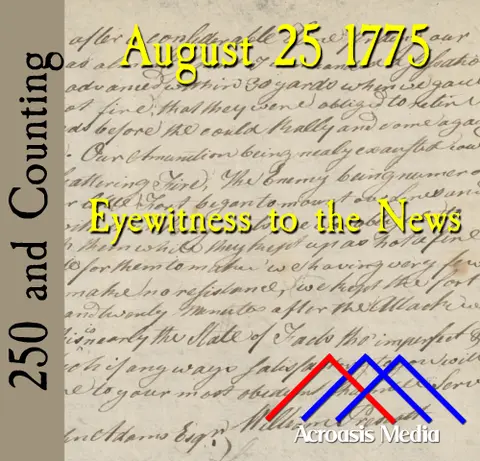
August 25, 1775: Eyewitness To The News
Today we take a look at two letters composed today: The first was an account of the activities around the Battle of Bunker Hill, from the time they were assigned to protect the hill, to the time they were finally defeated by the British—because they were out of ammunition. In the other letter, Thomas Jefferson composes a letter to a fellow Virginia politician in which he writes very specific prose, knowing that sooner or later it will fall into British hands. The intent was that the letter go ...
Aug. 23, 2025
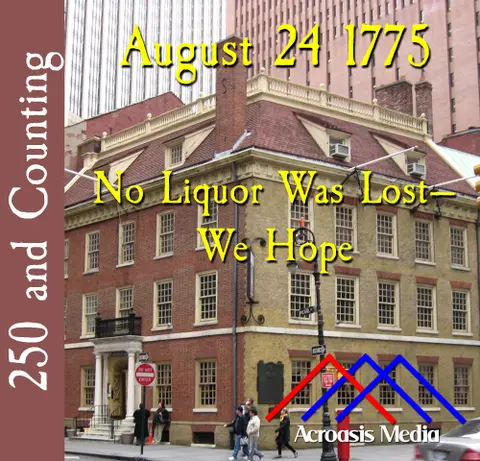
August 24, 1775: No Liquor Was Lost—We Hope
Fraunces Tavern is an historic landmark and the oldest and most historic bar in New York City. That’s what it says on their website, so. At various points in its history, Fraunces Tavern served as a headquarters for George Washington, a venue for peace negotiations with the British, and housing federal offices in the Early Republic. The building is still open to the public (there’s a museum there that’s open on weekends), though reservations are recommended if you want to eat in the restauran...
Aug. 22, 2025
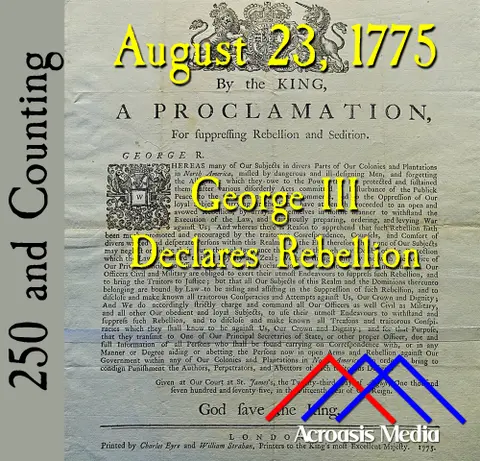
August 23, 1775: George III Declares Rebellion
When the Olive Branch Petition arrived in England, its contents hardly even mattered. There were elements of Parliament who were strongly disposed toward punishing the Colonies, and punishing them hard. The folks who were still pro-American were dwindling in number, because of the way it could affect their political futures. In short, the King had decided what he thought, and how he was going to handle it, and everyone else either bowed to it or faced losing their position. And it didn’t matte...
Aug. 21, 2025
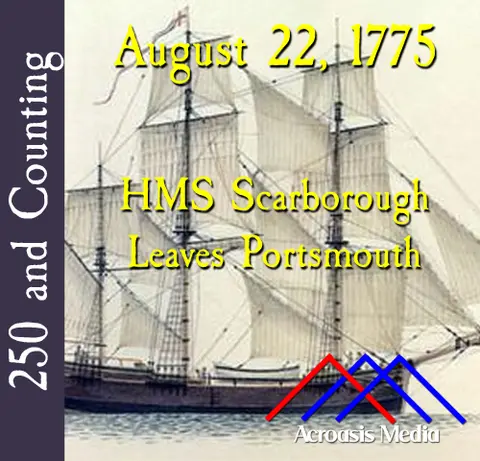
August 22, 1775: HMS Scarborough Leaves Portsmouth
Things were heating up all over, but it was still especially prevalent in the northeast. This time around, problems are cropping up in New Hampshire. The HMS Scarborough was designated to keep the peace by patrolling the mouth of the Piscataqua River, but when relations broke down between the British and the colonists there (and with good reason), when the ship ran out of supplies they had to re-locate. So naturally they headed to…um, Boston. The post August 22, 1775: HMS Scarborough Leaves Po...
Aug. 20, 2025
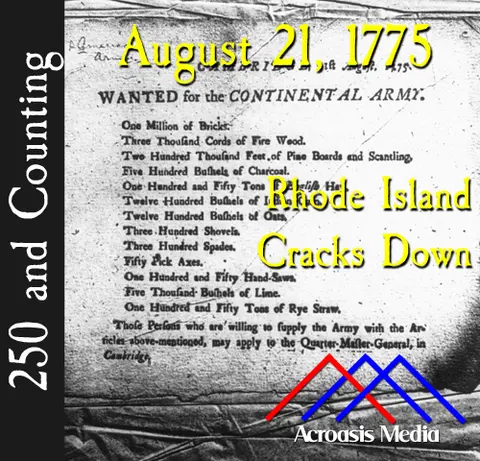
August 21, 1775: Rhode Island Cracks Down
We have two events taking place on this day. First, Rhode Island allows the death penalty for certain activities at sea. Next, word goes out that the Continental Army is in need of supplies…lots of supplies. It’s looking like General Washington isn’t seeing an end to the Siege of Boston anytime soon. The post August 21, 1775: Rhode Island Cracks Down appeared first on 250 and Counting.
Aug. 19, 2025
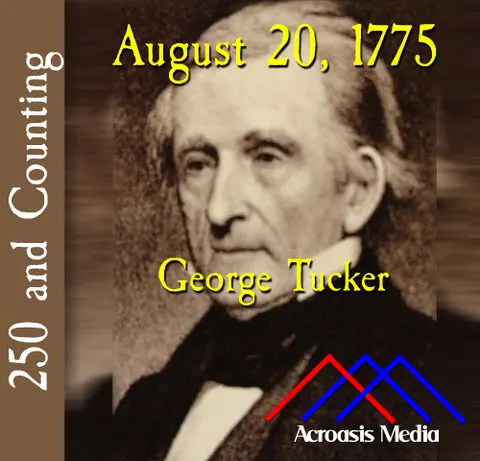
August 20, 1775: George Tucker
Lots of prominent early Americans weren’t Americans to begin with. For instance, the first President of the United States who was actually born in the United States would be Martin Van Buren, our eight president. But while most of these folks were born on the North American continent, the subject of today’s episode was not. He was born in Bermuda. So while George Tucker was still a British citizen by birth, he didn’t come to America until he was twenty years old, making him an honest-to-goodnes...
Aug. 18, 2025
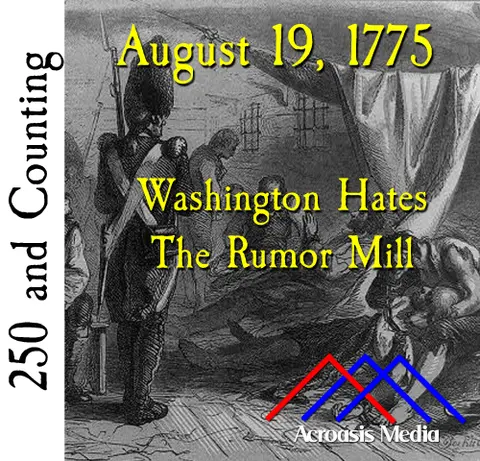
August 19, 1775: Washington Hates the Rumor Mill
In 1681, John Dryden said in his poem “Absalom and Achitophel”: Beware the fury of the patient man. I hear ya, Dryden, because that’s how I operate. And apparently George Washington operated the same way, because he initially took the high road, assuming that rumors about how American prisoners were being treated were just that, and giving General Gage the benefit of the doubt. But when the rumors began that Washington was mistreating his prisoners…oh, that didn’t sit well with the General at...
Aug. 17, 2025
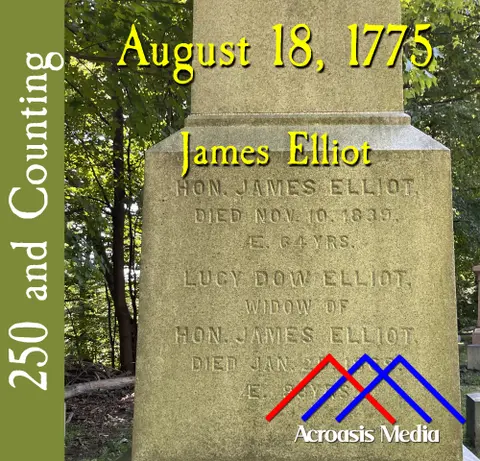
August 18, 1775: James Elliot
James Elliot was born in 1839 (like the stone says over there), in Massachusetts. Later on he became a legislator for the state of Vermont, which was neither a state nor even a colony when he was born; it was still disputed territory between New York and New Hampshire. Although Elliot was too young to participate in the American Revolution, his political fortunes waxed and waned…but mostly waxed. The post August 18, 1775: James Elliot appeared first on 250 and Counting.

Aug. 16, 2025
August 17, 1775: The Six Nations Summit
Philip Schuyler served as a delegate from New York to the Continental Congress until June 1775 when he was appointed a major general to the Continental Army. We’ll hear more about him as we start to delve into the Invasion of Quebec later this year. Schuyler was on his way to Saratoga, NY when he got word that the tribes of the Six Nations—the Mohawks, Oneidas, Tusscaroras, Onondagas, Cayugas, and the Senekas (spelled that way then)—had taken Congress up on its offer of a summit and were on the...
Aug. 15, 2025
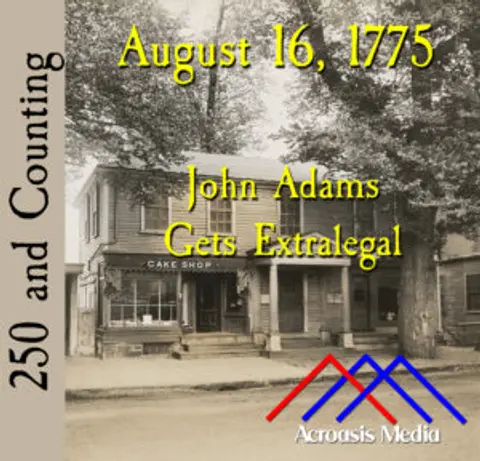
August 16: John Adams Gets Extralegal
Just a couple of days ago we told you about the efforts on the part of the Continental Congress to get around its own rules in order to provide Washington’s army with the materials they needed to maintain the Siege of Boston. This time around, John Adams takes steps to do what he needs to do without running afoul of the Intolerable Acts. It’s like the legal equivalent of the obnoxious game your siblings played with you: “I’m not touching you…I’m not touching you…” The post August 16: John Ada...