Episodes

Nov. 5, 2026
Quo Vadis, General?–November 6, 1776
White Plains, New York, has the feel of a suburban town that urbanized when nobody was looking. A little over 60,000 people live there, but during the day it’s estimated to have about a quarter million people working there. Nevertheless, they haven’t forgotten their place in American history, and there is a space that marks where much of the Battle of White Plains took place in 1776. It’s a very suburban zone dropped between two urban zones, with a series of retail stores stretching for about a...

Nov. 4, 2026
Howe Moves, And A Church Mystery–November 5, 1776
I do enjoy it when coincidental stories come together. We did mention a couple of days ago that this was a period of relative lawlessness in the downstate New York area, and the murder of Reverend Ephraim Avery is a definitive example of this. Avery’s murder was never solved, but apparently it was the stuff of much gossip and speculation. I actually learned about this incident while looking for something else and I stumbled over the story of the dedication and Evensong event which marks the 25...

Nov. 3, 2026
The Last Signatory–November 4, 1776
The curious thing about Matthew Thornton’s being the last person to sign the Declaration of Independence isn’t why it took so long for him to get it done. He wasn’t appointed to the position until after all the debate had taken place, so it was rather gracious of the Continental Congress to let him sign in the first place. But, they were holding that “all-in” attitude, so he may not have had a choice. And because of all the doings and goings-on in the New York area, travel from New England to ...
Nov. 2, 2026
The Maryland Declaration of Rights–November 3, 1776
Before I get into the Maryland Declaration of Rights, can I please just note that the State Flag of Maryland is probably the coolest of all 50 state flags? And remember, I’m not native to this state. In fact, not only is it cool, it’s aggressively cool. I should also mention that if you happen to notice that there appears to be Christmas music playing in the background of today’s episode, you’re not entirely wrong. It’s a recording of Maryland’s state song, which is set to the tune of “O Tannen...

Nov. 1, 2026
Demont Gives Up Fort Washington–November 2, 1776
William Demont was a traitor in much the same way that Benedict Arnold was, but Washington chose to keep this story a little quieter, largely for morale reasons. So how does he make it into an episode of Scooby Doo? It’s worth remembering that as we approached the Bicentennial, America was absolutely immersed in the whole Spirit of ’76 and showed great interest in that era. (Frankly it’s sort of what we were hoping would happen again when we first came up with this show. Anyway.) The American ...

Oct. 31, 2026
A New Mission Is Re-established–November 1, 1776
Every day you learn something new if you pay attention, and today I learned that there is more than one Mission San Juan Capistrano. I went looking for a photo of the mission on Wikipedia, since most images there are in the public domain, and I found one in an article about the mission but the map was all wrong. This mission was in Texas; mine is supposed to be in California! It took me a second to notice the line at the top of the article: “For the mission of the same name in California, clic...
Oct. 30, 2026
Retreating North–October 31, 1776
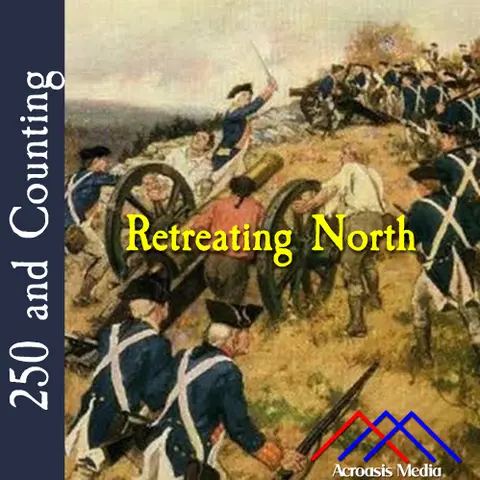
When George Washington retreated his men under cover of darkness from White Plains to North Castle, he expected General Howe to follow. Howe didn’t take the bait. So the two men sat there for a couple of days, each hoping to draw the other one out. The fact was, Howe wasn’t all that interested in pursuing Washington’s army, so he turned his attention elsewhere in the end. Stay tuned; we’ll get there in a couple of days. This was a good news/bad news situation for the Continental Army. Good, b...
Oct. 29, 2026
George M. Bibb–October 30, 1776
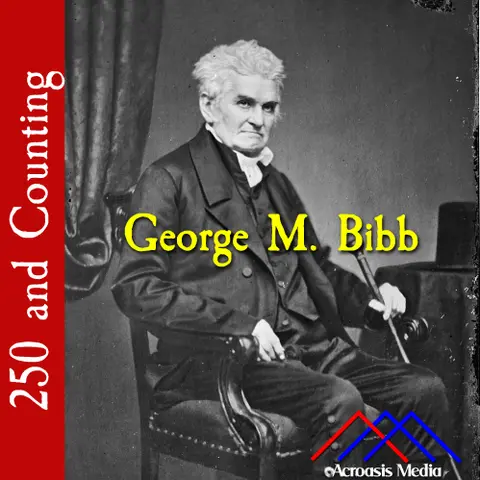
What can I tell you about George Bibb that Mike hasn’t already shared with you? (Also: wait—Mike has a research staff? I don’ t have a research staff and this show was my idea! I think he’s getting his students to do his homework for him.) (For the record, that’s a joke. Mike and I each do our own research on these shows.) George Bibb was a generally wealthy guy, but in 1837 there was a financial crisis that led to several years of economic depression. It was a lot of different things coming ...
Oct. 28, 2026
The Morning After–October 29, 1776
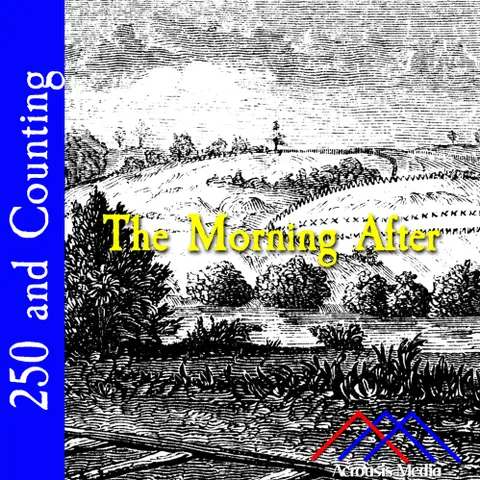
The Battle of White Plains was long, and it was complicated, and once things settled down, both armies needed a little time to regroup and figure out what happened. It was clear that, despite the relative gains for the British, the casualties were comparable (at worst) to those of the Americans. General Howe’s aim in not pursuing matters further was to await the arrival of reinforcements. Could he have have gotten the job done without them? Maybe; the Americans were outnumbered but they were st...
Oct. 27, 2026
Battle of White Plains–October 28, 1776
The Battle of White Plains, like so many others we’ve described, was technically a victory for the British, but the overall cost and/or final result leaves everyone wondering whether the win was worth it. As we’ve noted repeatedly, the objective of all this activity in New York was for the British to take control of the Hudson Valley and the river all the way up to Canada, thus cutting New England off from the rest of the colonies and, in theory, making it impossible for Connecticut, Rhode Isla...

Oct. 26, 2026
New Command for John Paul Jones–October 27, 1776
John Paul Jones (Mike would have me note it’s not the guy from Led Zeppelin) led a relatively short life, but it was certainly eventful. Jones was born in Scotland and became a sailor at age 13, where he served on multiple merchantmen, including a few slave ships. Jones fled to the Virginia colony to avoid arrest after killing a mutinous subordinate and joined the Continental Navy in 1775. Less than a year later he was the captain of the USS Alfred, which is the subject of today’s episode. Aft...
Oct. 25, 2026
Ben Franklin Heads To France–October 26, 1776
While Benjamin Franklin departed for France on this day, actually having Franklin in France wouldn’t happen until early December. Remember, he was traveling by ship and it took a few weeks to cross the Atlantic Ocean. What’s more, as Mike mentions, it would take him over a year to secure the support that we needed. In fact, I cheated a little on the artwork, which depicts Franklin presenting himself before Louis XVI and Marie Antoinette at the Palace of Versailles. This didn’t happen until Marc...
Oct. 24, 2026
Uncle George Wants You–October 25, 1776
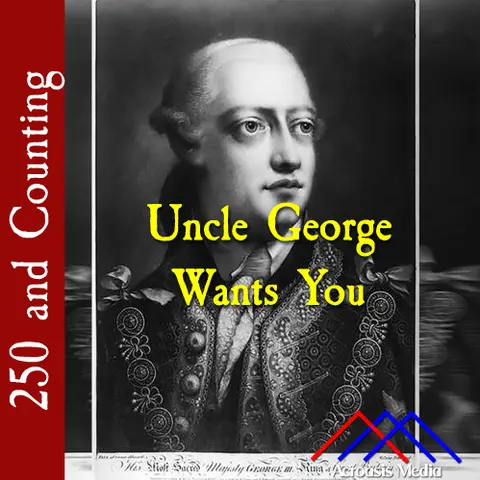
King George III offered up some naval incentives throughout 1776. Seamen who enlisted would get bonuses depending on their level of experience, but the Royal Navy wasn’t above impressing sailors into service, either. However, it’s also worth noting that King George also put some disincentives out there as well. For instance, in November of 1776 he forbade British mariners and seafaring men from working on foreign vessels, or working for a foreign government or prince without a special license. ...
Oct. 23, 2026
How White Plains Got There–October 24, 1776
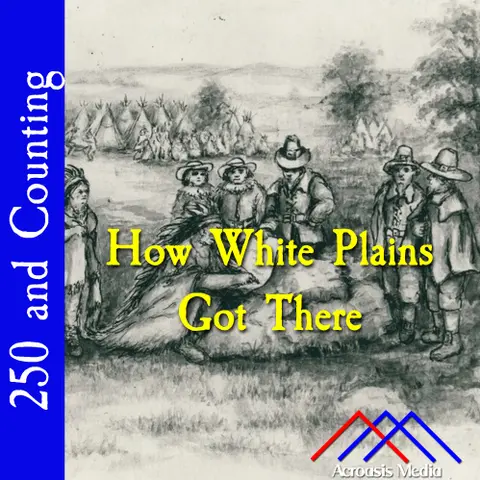
White Plains today is the county seat of Westchester County, the county that directly abuts New York City to the north and connects it to the mainland. But back when the Dutch started settling in the area, starting at the south end of Manhattan, the region was being used for farming by the Weckquaeskeck tribe of the Wappingers, and was called “Quarropas” by those people. (And I knew Mike would chicken out on saying “Weckquaeskeck”.) Incidentally, in the first US Census, in 1790, the population...
Oct. 22, 2026
Jefferson’s New Laws–October 23, 1776
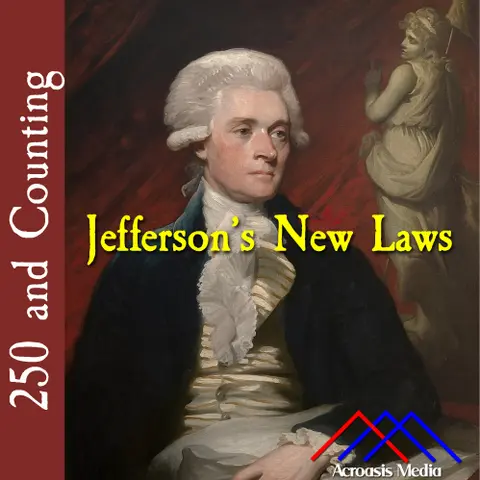
Holding the show to two minutes exactly (because we also have a few radio listeners) sometimes makes it tough to tell the whole story of the rules behind en taille, or entail. Because, you see, en taille doesn’t just refer to land in Virginia; it refers to all property. And that includes slaves. And Jefferson, who was absolutely a slave owner (he inherited a little over 50 slaves when he was 21, and inherited another 135 slaves when his father-in-law died—this made him the second-largest slave ...
Oct. 21, 2026
Battle of Mamaroneck–October 22, 1776
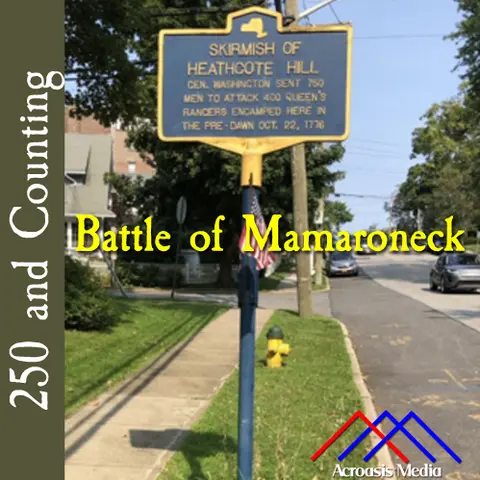
Oddly enough, having an episode about the Battle of Mamaroneck is one of those times when it pays to have grown up in New York. I saw that note in our common research document, then I clocked the date and said to myself, “No way is Mike going to know how to pronounce that.” So I gave him a little coaching. We’ve done this before, with each of us having to coach the other on pronunciation of locations when we have to report on events on the opposite coast (I get a lot of the Spanish West stuff,...

Oct. 20, 2026
George Izard–October 21, 1776
Calling George Izard a “Nepo Baby” might be laying it on a little bit thick, but it’s pretty clear he came from some privileged people. His mother was Alice DeLancey. She was the niece of New York Governor James DeLancey and a descendant of Stephanus Van Cortlandt and Gertrude Schuyler. And if you’re paying attention as you move around New York, you’ll realize that those are some prominent names he’s got in his pedigree. George’s father was Ralph Izard, who was a delegate to the Continental Co...
Oct. 19, 2026
Delaware Gets Down To Business–October 20, 1776
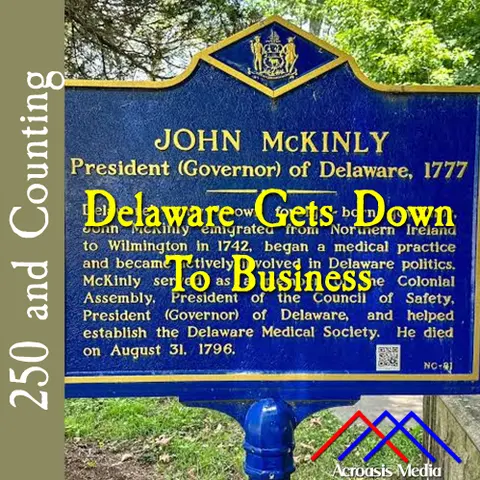
The Delaware Assembly was ahead of most other states in our fledgling nation, in part because they’d declared independence before anyone else. Back in June, as you may remember, Delaware declared its independence simultaneously from Britain and from Pennsylvania, of which it was considered a part. (This is why Pennsylvania is the only one of the thirteen colonies to be entirely landlocked, other than the access via the Delaware River.) So putting a government together would, of course, be the ...

Oct. 18, 2026
A Pause in New Rochelle–October 19, 1776
Before I get into the events of New Rochelle, I have to confess that I’m kind of hating today’s artwork, and it’s not even published yet. Well, if I have to look at it then so do you. They can’t all be gems. The Battle at Pell’s Point had the Continental Army putting up more resistance than any reasonable British general should expect, so General Howe knew that reinforcements and supplies would be needed, so he camped out in New Rochelle for a few days while the bodies gathered for action. Lo...

Oct. 17, 2026
Battle of Pell’s Point–October 18, 1776
The Battle of Pell’s Point, also known as the Battle of Pelham, was an important battle of the Revolution that doesn’t get the attention that so many others get, largely because of the When and Where of the battle, and the fact that it wasn’t a huge win or loss for either side. What it did do, however, was provide some cover and distraction from the fact that Washington was still moving forces out of New York—that is, off of Manhattan Island—and onto the mainland, toward White Plains. As noted...
Oct. 16, 2026
Leaving New York–October 17, 1776
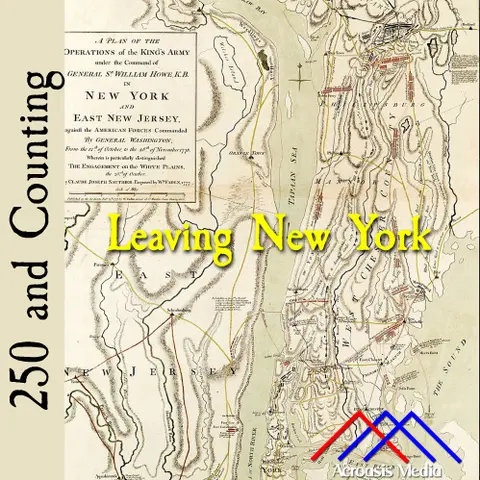
When Washington’s Council of War (with a single exception) determined that sticking around New York City was a bad idea, the next step was deciding which way to go, and how to go about it. To a certain extent, the decision was made for them, because the British had pretty well sewed up the Hudson River, which meant that getting across and into New Jersey stealthily would be problematic. The other option was to move north, into the Bronx and the downstate area west and north of Pelham. There wo...

Oct. 15, 2026
An Honor For General Howe–October 16, 1776
The Most Honourable Order of the Bath is a British order of chivalry that was first created by King George I in 1725. It’s typically bestowed by a monarch based on the advice of His/Her Majesty’s government. When General William Howe received his order, there was a single class called the Knight Companion. However, in 1815 this class was discontinued in favor of three separate classes for civilians and another three (with the same class names) for the Military Division. Now, I said that George...
Oct. 14, 2026
In And Around New York–October 15, 1776
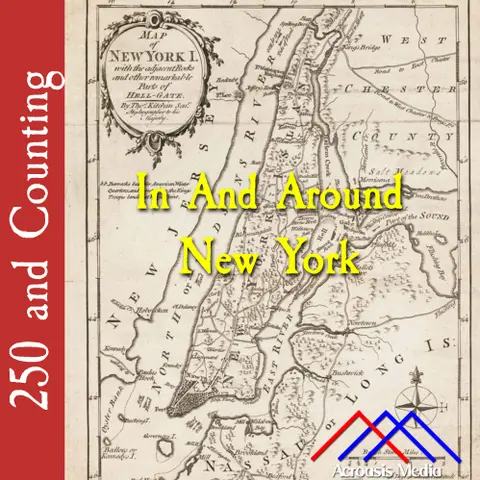
By the time Charles Lee returned to duty, the Continental Army in New York was in a sad state of affairs. Many men had been injured or deserted. Supplies were low. Ammunition was low. Morale was low. And the British were up in the Bronx, gearing up for…something, who knows what. Lee had, of course, missed all the action in Brooklyn and Manhattan, so he brought a new perspective to the table. And it was fortunate that Lee felt free to say what he thought of the situation, namely that it was unte...
Oct. 13, 2026
The Return of Charles Lee–October 14, 1776
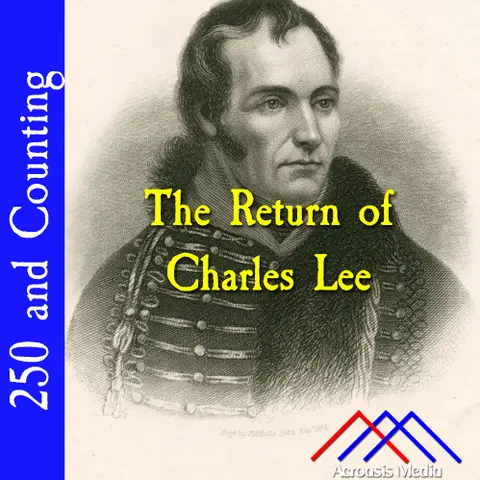
Charles Lee was born in Great Britain and only came to British America in 1773, when he purchased an estate in western Virginia. It wasn’t his first time in America; he’d fought for the British in the French and Indian War and married the daughter of a Mohawk chief. Lee was injured in 1758 during an attack on Fort Ticonderoga. The following year he was part of the capture of Fort Niagara and of Montreal the year after that. Lee returned to Europe and served in Portugal as a lieutenant colonel...