Episodes
Aug. 29, 2026
GW Explains His Exit–August 30, 1776
Even though George Washington was in charge of the whole Continental Army, he still had people to answer to. Most directly that would be the Continental Congress and that will happen very soon, but in the meantime there were also some local officials he had to placate. Which brings us to today’s episode, in which Washington wrote to the New York Convention, which was the name at that time for the body of state’s representatives. He’d kept them up to date on everything that was going on so far, ...

Aug. 28, 2026
The Maryland Heroes–August 29, 1776
The Maryland 400 (who got that name because “The Maryland 270 ” was too awkward?) was directly responsible for keeping the American losses relatively low, considering how badly the battle went for them. In the final accounting, about 300 soldiers were dead, another 650-800 were wounded and 1100 were captured. British and German casualties numbered 64 dead and 314 missing, wounded or captured. Not an auspicious showing for the Continental Army in their first battle since the Declaration of Inde...

Aug. 27, 2026
The Battle Winds Down–August 28, 1776
As we told you yesterday, Washington got the word rather late that the battle wasn’t going down the way he thought it would, largely because the Jamaica Pass, which was rarely used, was the path that most of the British Army took against the Continental Army. At the same time, they left a contingent of troops in place as a distraction while they worked their way around. That meant that when he got across the East River, all he could really do was watch from a distance while his troops took a be...

Aug. 26, 2026
The Battle of Long Island–August 27, 1776
The Battle of Long Island was one of our largest engagements with the British, and it was also the first one after the Declaration of Independence. And it was a rout; the Americans got their heads handed to them. The British took New York and they occupied it for the rest of the war. After so many smaller victories, we finally got the lessons that A) this was going to be a long and bloody war, and B) there really isn’t any such thing as an easy victory. As a result, New York City became a foca...

Aug. 26, 2026
Eve of Battle–August 26, 1776
At this point, both George Washington and General William Howe know that they’re literally on the eve of battle, and they’re making their final preparations. The British, along with the Hessians, were making plans to move along the Jamaica Pass (it’s the road just above the Acroasis logo in today’s art), which, while they didn’t know it, was relatively lightly guarded by the Continental Army. Washington’s tactic was to hold on to the Heights of Guan (the ovals to the right of the episode title...

Aug. 24, 2026
More Hessians Arrive–August 25, 1776
Like the Continental Army didn’t have enough problems with being outnumbered nearly two-to-one, now they’re looking at another five thousand Hessians landing in Brooklyn. The name “Hessians” is what they call a synecdoche; that’s when a part of something is used to refer to the whole. For instance, when we say “boots on the ground,” the “boots” portion of that phrase is synecdoche for “soldiers.” Or, if you refer to business leaders as “suits.” So, Hessians got that name because most of the tro...
Aug. 23, 2026
Meet The New Boss–August 24, 1776
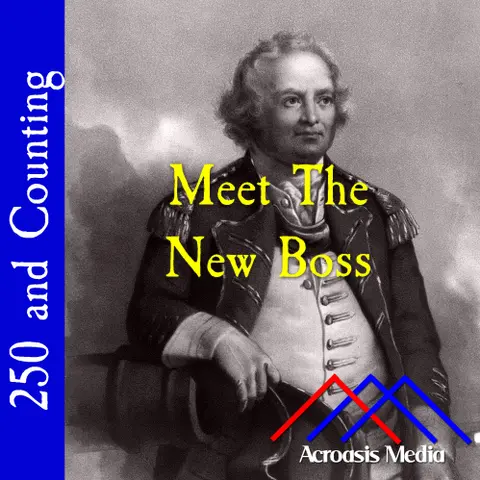
That George Washington chose to add Israel Putnam to his leadership rolls in Brooklyn isn’t specifically mysterious. What is mysterious is that Putnam was added rather than used as a replacement for someone else. As a result of that move, there were essentially two men in charge on Long Island, with Putnam as the theater commander and General John Sullivan, who’d arrived only a couple of days earlier, in charge of ..something else? I’m reminded of a story from when I was a youngster and my fam...
Aug. 22, 2026
Reacting to Brooklyn–August 23, 1776
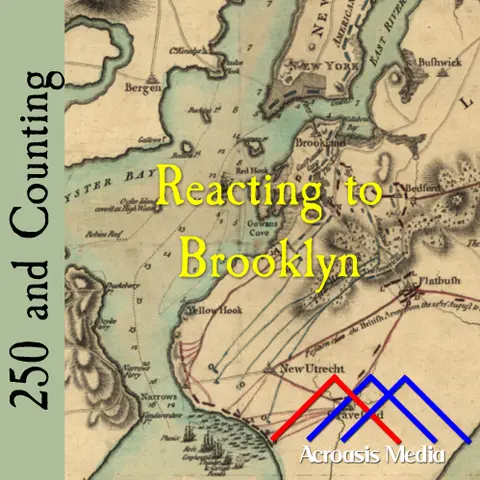
The day after the British landed on Long Island, George Washington was disheartened to learn that army provisioning wasn’t at the level he’d expected, despite his orders only a week earlier. It was bad enough that he’d been caught a little flatfooted by both the magnitude and the direction of the British movement, now he discovers that troops he’d ordered to move had done so without proper provisions. So, he took the time to create new orders regarding army provisioning and ensure that the Gen...

Aug. 21, 2026
Landing In Brooklyn–August 22, 1776
One fine Thursday morning in August of 1776, about 4000 British troops, led by General Henry Clinton and General George Cornwallis, landed at Gravesend Bay in Brooklyn. By the end of the day, their number had swelled to over 16,000. George Washington’s problem was that he only heard about the initial 4000 later that day and decided that his guess regarding any invasion of Brooklyn was little more than a feint. Washington was no fool, but he was definitely wrong about this one. The post Landing...

Aug. 20, 2026
Joseph Healy–August 21, 1776
When looking at historical documents related to Joseph Healy, it appears that most of them relate to Healy in a rather ancillary manner. We know how many times he voted in Congress because someone keeps tallies of everyone in Congress. We know about his family tree because he was traced back via Ancestry.com. Healy is the stone that was thrown in the pond; what we know about him has to be read from the ripples. All of which is a rather long way of saying that I don’t have a lot to say here. T...
Aug. 19, 2026
The Battle Begins–August 20, 1776
It’s been coming for at least two months, and the Battle of Long Island has finally begun. As we’ve noted a few times the past couple of days, George Washington had to make a few educated guesses about what the British were planning to do, but this left his troops thinly spread throughout Brooklyn and Manhattan, which left the Continental Army at a big disadvantage. While numerous skirmishes have broken out up and down the coast between the British and American militia forces from time to time...
Aug. 18, 2026
Not Making It Easy–August 19, 1776
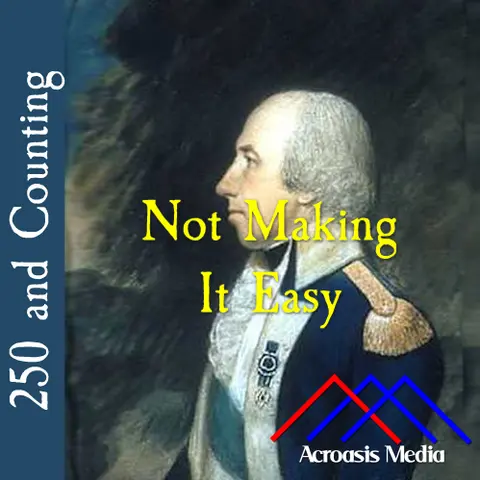
The reason that this portrait—and most of the others—of Rufus Putnam is in profile is that, when he was a child, one of his eyes was disfigured in an accident, giving it a, “outward, oblique cast.” Putnam joined the Revolutionary War effort the very first day, after the battle at Lexington and Concord. During the Siege of Boston, Putnam directed efforts to fortify Dorchester Heights. Part of what had the British so flummoxed about that wasn’t that he did a good job (though he did), it was that ...

Aug. 17, 2026
The Declaration, In Church–August 18, 1776
Samuel Dunbar was born in Boston on October 2, 1704. When he was 4, his father died. At a very early age he attracted the attention of the Reverend Cotton Mather. With Mather’s guidance, Dunbar attended Boston Latin School and Harvard College. In 1727, the people of Canton reached out and sent letters of inquiry asking that the 23 year old accept a ministry over the Church of Christ in Stoughton. Dunbar was a Loyalist, much like nearly everyone else in New England in the mid-1700s, but as time...
Aug. 16, 2026
Get Outta Town!–August 17, 1776
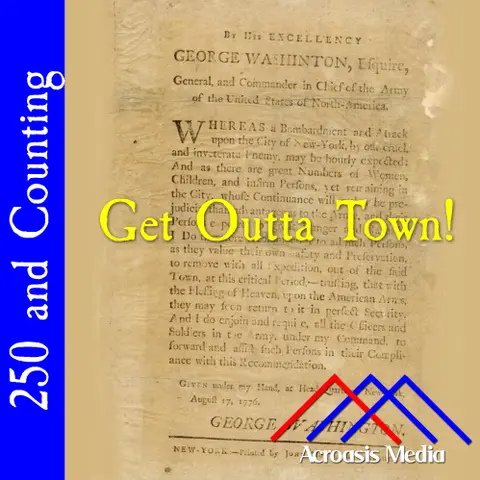
Ever the polite man, George Washington strongly urged (rather than ordered) civilians to evacuate Manhattan before the British began their attack. Washington’s biggest problem was that he knew that the British were coming, but he had no idea how they were going to do it, given that Manhattan is an island, and while Brooklyn is not (its location at the west end of Long Island notwithstanding; work with me a little here), it’s still got a lot of coastline to defend. So even if Washington had a nu...
Aug. 15, 2026
An Official Reprimand–August 16, 1776
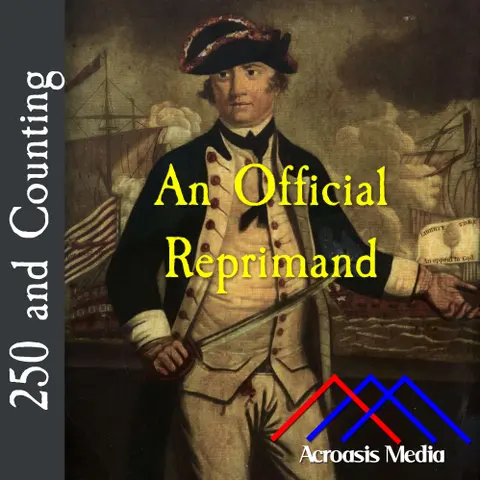
We’ve visited Esek Hopkins in the past, when we told you about the transgressions he committed that led to today’s activity. To be fair, when Hopkins chose to engage in the raid on Nassau, the reaction in Congress was mixed, especially at first. John Hancock was happy that the Continental Navy had seized badly-needed war supplies from the British, but members from the Southern colonies were upset by this failure to follow orders. The whole situation became politically quite complex. Part of the...

Aug. 14, 2026
Greene Isn’t Happy–August 15, 1776
Nathanael Greene was among the first to step up when the shooting started at Lexington and Concord. This is almost certainly because a British official seized a vessel owned by Greene and his brothers. After the Intolerable Acts were enacted in 1774, Greene organized a militia unit called the “Kentish Guards.” Despite his leadership, he was not selected as an officer in that militia because he had a limp he’d acquired in childhood (there are no records extant showing why this was the case.) Ho...

Aug. 13, 2026
Mail From Braintree–August 14, 1776
John and Abigail Adams were one of the great love stories of the 18th Century, and for John to receive a letter from Abigail must have been heavenly, even if it happened nearly every day. To be sure, Abigail didn’t always have good news with regard to whatever might be happening at home, and today’s letter is no exception to that. But Abigail was a woman with strong opinions and she wasn’t afraid to put them to paper and let John know what she thought. It was presumably her hope that John could...

Aug. 12, 2026
Abraham Shepherd–August 13, 1776
Abraham Shepherd hails from Shepherdstown, West Virginia, but when he was born it was Mecklenburg, Virginia. As near as I can put it together, there were originally two large tracts of land belonging to Shepherd families; one was over 200 acres and the other was a 750-acre plot of mostly farmland. In 1776 there were five Shepherd brothers, whose father, Thomas, died in 1776. John Shepherd, one of those five, moved to Wheeling Creek (Ohio, not WV), then Limestone Kentucky, then Red Oak, which w...
Aug. 11, 2026
Do The Fight Ring–August 12, 1776
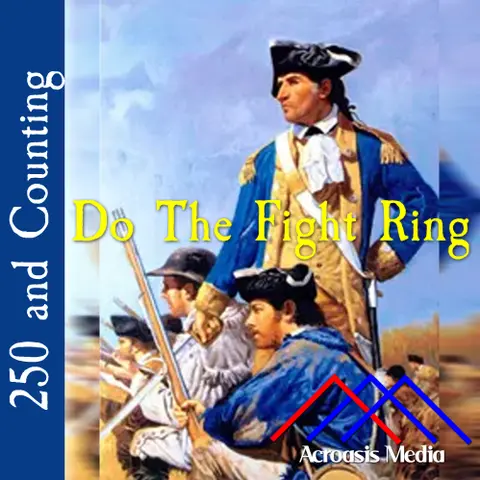
Andrew Pickens was a plantation owner whose property was near Seneca, South Carolina, which is almost as far west as you can go and still be in South Carolina. As the Cherokee-American wars wore down, Pickens was able to sign peace treaties with the tribe, which was known as the Treaty of Hopewell. Meanwhile, in the American Revolution, Pickens had to surrender the fort in the Ninety-Six District. He agreed to sit out the war as part of his parole, but when the British later destroyed most of ...
Aug. 10, 2026
Maintaining Motivation–August 11, 1776
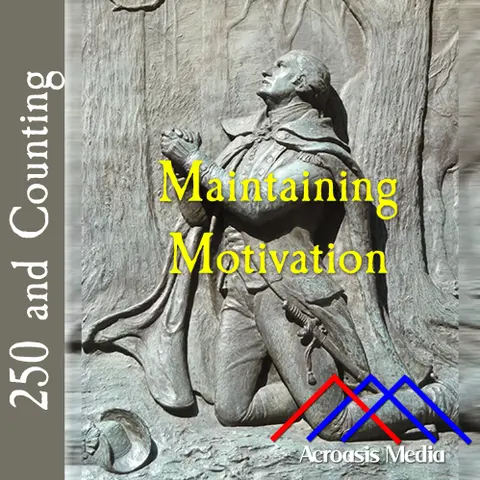
George Washington’s means for maintaining motivation in the Continental Army came from two directions: discipline and stirring rhetoric as a means of providing the troops with something to rally for. And his Orders of the Day for this day seem to be focused simultaneously on both. As noted elsewhere, Washington could be a stickler for protocol, and it shows in his Orders of the Day, which were usually written in the third person. But there was also some room—not a lot, but some—for a little fl...
Aug. 9, 2026
The Big News–August 10, 1776
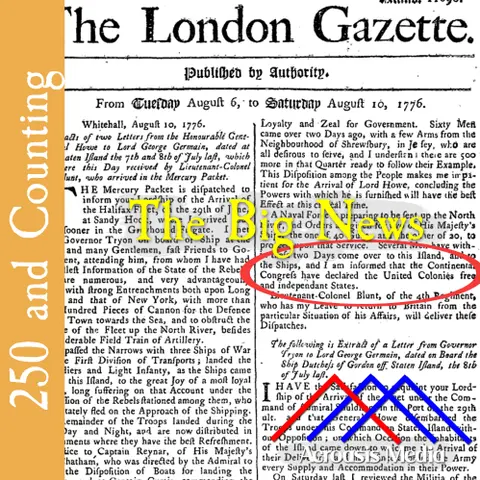
Once again, we have a situation where the technology of the eighteenth century has to be seen to be believed. Only a few days ago, we mentioned an event that took place in France without knowledge that the United States had declared independence, and now we have today’s entry, suggesting that it’s only in the last day or two that England is getting the news. You know, England? The ones we declared our independence from? The post The Big News–August 10, 1776 appeared first on 250 and Counting.
Aug. 8, 2026
Flying Camp Rations–August 9, 1776
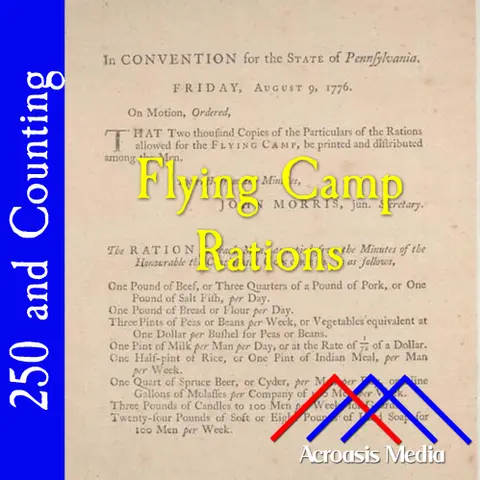
The idea to have a flying camp at all belonged to Geroge Washington. He knew that he was going to be facing huge numbers of British soldiers soon, and he proposed having a mobile unit that could show up wherever they were needed. While the soldiers came from three specific states, they were intended to be our first national force, with no specific state basis. Thus, they were recognized as “First Battalion,” “Second Battalion” and so on rather than “Burrell’s Connecticut Regiment” or “Pennsylva...
Aug. 7, 2026
Captain Jones–August 8, 1776
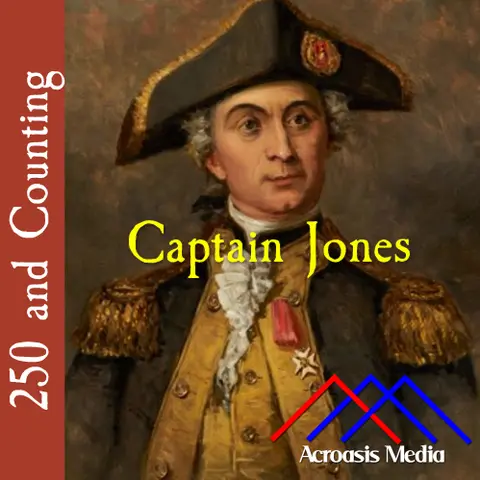
The career of John Paul Jones, or Captain Jones, as he became on this day, is marked by both brilliance and controversy. Jones was born in Scotland and sailed on merchant ships before coming to America and joining the nascent navy here. Through the Revolutionary War, he was involved with several key battles, many times off the English coast rather than on this sise of the pond. This led to his having an international reputation. But in 1787 he was left without a command, so he took on a positi...

Aug. 6, 2026
A Gift For George, None For Chris–August 7, 1776
I promised you a postscript for the Christopher French story, but let me offer up some broader context first. In July 1776, French wrote to George Washington from Connecticut, where he was being held as a prisoner of war. The purpose of the letter was to request parole from his confinement. Washington’s reply reads: Sir: I am to acknowledge the receipt of your favor of the [the date is missing here but from other documents it was probably the 22nd] July, intimating your expectations of releas...