Episodes
Aug. 5, 2026
Confederation Talk And A Trade–August 6, 1776
We didn’t spend a whole lot of time talking about John Morton, who comes up as part of today’s episode, and he does have an important part in the quest for Independence. John Morton’s father died the same year he was born. John had very little formal schooling; most of what he learned, he learned from his stepfather. They had such a good relationship that John named one of his sons after his stepfather. Despite his relative lack of education, John Morton was able to advise his neighbors and ad...
Aug. 4, 2026
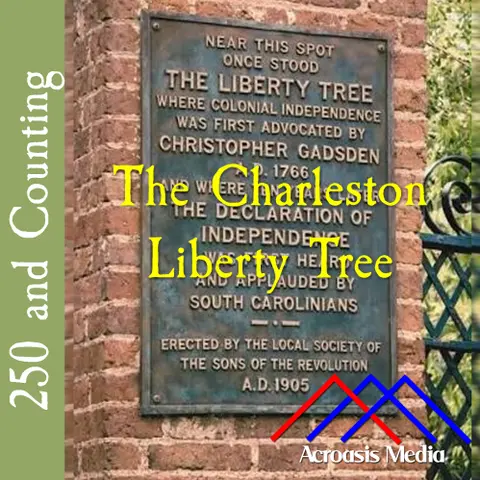
The Charleston Liberty Tree–August 5, 1776
The Charleston Liberty Tree has something in common with its more famous counterpart in Boston: neither tree made it to the end of the Revolutionary War. The Boston Liberty Tree was cut down by Loyalists in 1775, and the Charleston Liberty Tree was burned down by the British in 1780. In researching these trees and their ultimate fates, I couldn’t help but laugh: the trees are meaningless. They’re literally landmarks, not secret meeting houses. Removing the trees does nothing whatsoever to prev...
Aug. 3, 2026
Laying Down The Law–August 4, 1776
When it came to army discipline, George Washington had some definite opinions. The punishments we hear about were rather harsh by modern standards, but Washington had some problems with his recruits that modern armies don’t tend to have. Specifically, (and we’ve mentioned this before), the Continental Army had a relatively short enlistment period, which meant that soldiers were constantly turning over and by the time someone was finally in good shape as a soldier, they were gone and replaced wi...
Aug. 2, 2026
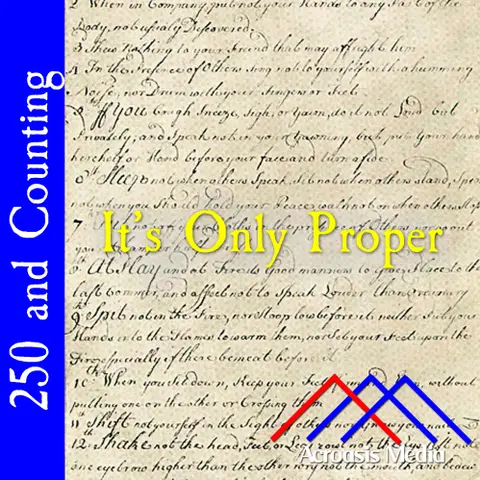
It’s Only Proper–August 3, 1776
George Washington had a deep-set sense of right and wrong, and sometimes his sense of Army decorum could get in his way. Our July 14 episode demonstrated that to a certain extent. Other times it demonstrate the high expectations he placed on himself and others. He wanted his officers to be behavior models, especially because so many of the troops were so undisciplined. This only worked to a certain extent; it took the influence of some outside officers for the lessons to really sink in, but we ...
Aug. 1, 2026
Sign Here, Please–August 2, 1776
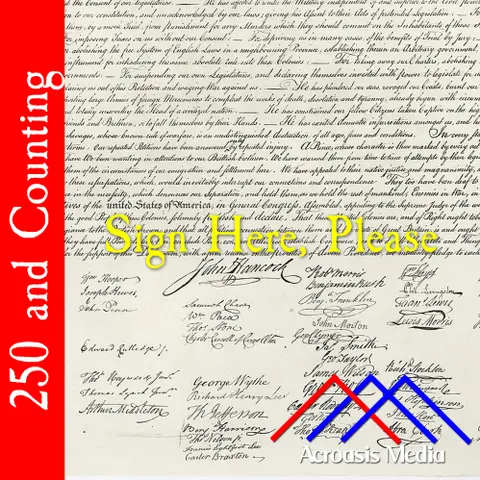
The approval of the Lee Resolution was July 2, the Declaration was approved July 4, the signingof the Declaration was (mostly) on August 2. Which date would you have considered for Independence Day if you were in charge back then? Ah, who are you kidding. You’d have picked the Fourth as well. The approval of the Lee Resolution was a detail of procedure. The signing of the Declaration was just finishing up the paperwork. And we have an actual document with a date on it! Of course everyone chose...
July 31, 2026
Escalation Everywhere–August 1, 1776
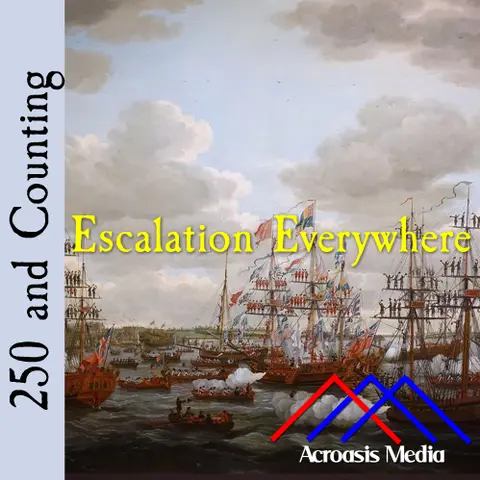
At this point, Americans were fighting a two-front war. More accurately, they were fighting two wars against different enemies: the Cherokee in the southwest areas of the country (so far), and the British…well, practically everywhere else. But today we’ll focus on the British in New York. After yesterday’s disaster in the Ninety-Six District of South Carolina, the Cherokees, plus a bunch of Loyalists, moved east about 30 miles to Seneca, which at that time was called Esseneca Ford.It was there ...

July 30, 2026
Farewell, Francis–July 31, 1776
As I mentioned very early in this podcast, Francis Salvador’s life was especially notable for two things: the day he was elected to public office, and the day he died. And in his case, the dates were notable largely for the fact that Francis Salvador was a Sephardic Jew, making him the first man of his faith to be elected to office in America, and the first of his faith to die in the Revolution. Francis Salvador was born in London, but his family were part of a Portuguese and Spanish Sepharidic...

July 29, 2026
Getting The Finer Details–July 30, 1776
Both Dr. Benjamin Franklin and the Reverend John Witherspoon made good points when they discussed state representation in Congress under the Articles of Confederation they were trying to put together. The interesting thing is that the debate sounds very much like a modern-day discussion with regard to the nations that participate in NATO. Smaller nations are feeling a little “pushed out” by larger nations; the larger nations feel as though they’re dealing with most of the burden. And while thos...
July 28, 2026
British Forces Gather in NY–July 29, 1776
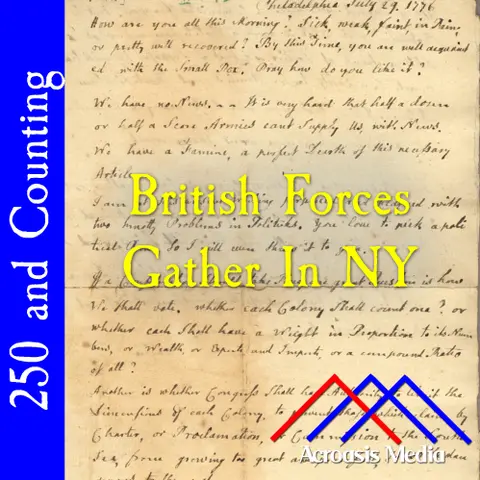
The presence of the British in Staten Island wasn’t a big mystery, but within a month after they first arrived, the number of ships in New York Harbor was well over 100, and still growing. And, as George Washington suspected (along with many others), the British began moving up the rivers surrounding Manhattan, working their way up the Hudson River in the effort to use New York as a wedge between New England and the rest of the colonies. Specifically, if supplies couldn’t get through, then it w...
July 27, 2026
Cleaning Up The Act–July 28, 1776
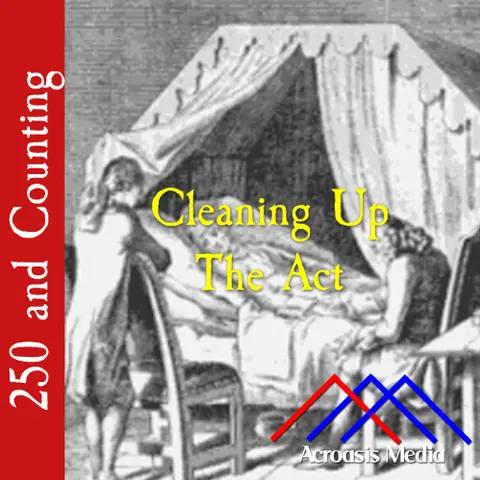
Hygiene in the Continental Army was practically nonexistent. As you can imagine, things got pretty ripe around camp, especially in the summer. And when people don’t take good care of such things, they’re probably going to wind up sick. Getting sick when you’re supposed to be on duty likely means that you’re going to do your “business” fairly close to where you’re working, This, in turn, is going to have the effect of getting other people sick while simultaneously perpetuating your own illness. ...

July 26, 2026
Credit From France–July 27, 1776
Getting arms and credit wasn’t an overly tough task for Silas Deane. But it wasn’t because the French liked us so much; it was because they were still a little salty about the French and Indian War. So they were willing to do almost anything to embarrass the British. As a delegate to France (essentially a secret envoy until the word of Independence got out), Deane got a lot of stuff done, especially since he needed to do it in secrecy. The reason for this was that the French (and the Spanish, f...
July 25, 2026
What To Do With Those Natives?–July 26, 1776
That Native American relations were considered at all as part of the Articles of Confederation is a little bit of a mystery, but it’s possible that the Congress was just looking for some across-the-board consistency when it came to that sort of thing. After all, you couldn’t have the folks in the Southern States battling with the Cherokee while the Northern States, which were more or less peaceful with the Iroquois, doing nothing to assist. It’s just too many variables to consider. Ultimately,...
July 24, 2026
Drafting A Confederation–July 25, 1776
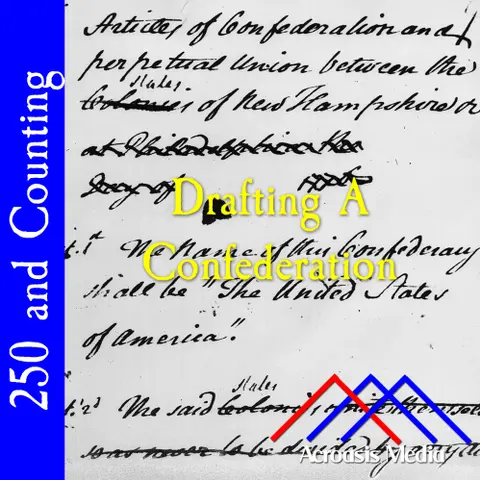
Representatives from each colony were already working on draft Articles of Confederation beginning one day after Thomas Jefferson, et.al. started work on the Declaration of Independence. The first draft Articles were presented to the Congress on July 12, and this day was another day of discussion and debate. The ultimate disposition of the articles discussed today is a little bit amusing, as you learn from the episode itself. The Founding Fathers were looking for a relatively weak central gove...
July 23, 2026
The Schuyler Is Falling–July 24, 1776
Philip Schuyler was part of a prominent New York family, enough that if you have any familiarity with that state’s history, you realize that the Schuyler name keeps popping up, especially during and shortly after the Revolution. (Similarly, the names Schermerhorn and Burr also manage to crop up a lot; Burr is probably the most famous name of the three but there are more Burrs than just Aaron.) Schuyler was born in Albany but moved to New Rochelle when he was eight years old, shortly after his f...
July 22, 2026
Ain’t No Party Like A Long Island Party–July 23, 1776
Huntington, New York, is coincidentally quite close to where I grew up. And frankly, I had no idea that they could celebrate the way they did on this day in history. In addition to being its own little town, Huntington was determined not to let the British take any more of Long Island than they already had. They’d gotten word that the inhabitants of New York City had determined not to oppose the British. This kind of makes sense, since there were lots of Loyalists there still. But a man named J...
July 21, 2026
When Accusation Is A Confession–July 22, 1776
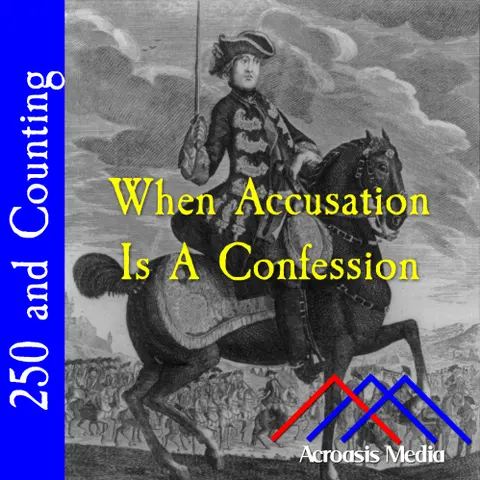
That Charles Lee turned out to be giving information to the British is one of those things that feels obvious in retrospect. As Mike notes during the episode, Lee was passed over for command of the Continental Army, and even though he was still in a position of importance and command, things like that can eat away at some people. Now, by most accounts, and through review of existing documents, Lee generally acquitted himself well in the Southern Department and in New York, although at the time...

July 20, 2026
Testing A Turtle–July 21, 1776
David Bushnell came up with the idea for the Turtle submersible only days after Lexington and Concord. He’d been working on several different experiments he’d conducted at Yale College, and found a way to integrate them into a single device to use against the British. The Turtle was revolutionary (heh) in a couple of ways: first, nobody had successfully created anything like it before, and more importantly, Bushnell (along with Isaac Doolittle) came up with the screw propeller as a means of man...
July 19, 2026
The Battle of Island Flats–July 20, 1776
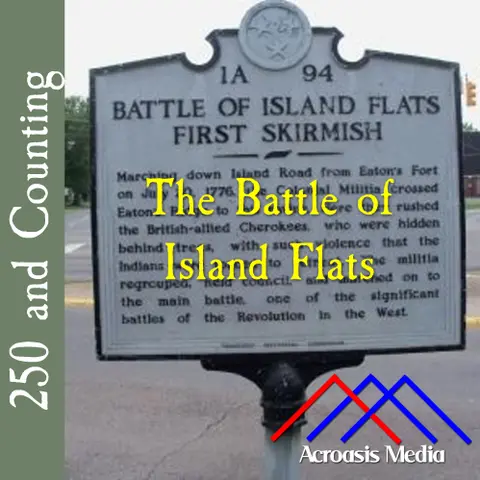
The Battle of Island Flats was yet another step in the Chickamauga War, or the Cherokee-American War (call it what you like). We first talked about this on July 1, when the first attacks began in earnest. And then again just under a week ago at the Battle of Fort Lindley. The thing about these conflicts is that they tended to come in bunches, and then there would be long periods in which nothing happened. So it was never easy to determine whether the battles were over. Island Flats was also the...
July 18, 2026
Engrossing–July 19, 1776
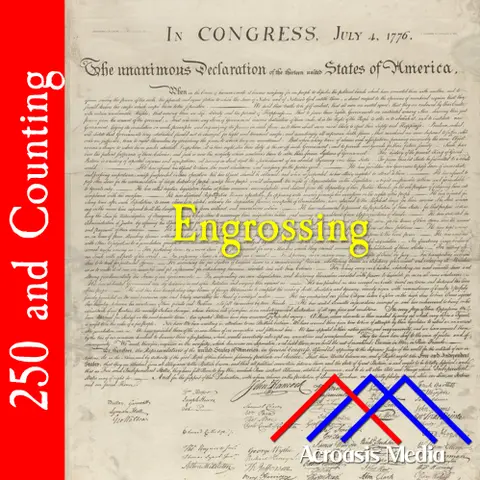
As I explained during the episode, “engrossing” was the practice of having a formal document written out in a larger hand for public presentation. This often had different purposes: some were engrossed to make them more attractive; this was typically called illuminating, and the most typical examples are the ornate Bible pages you see from time to time. Sometimes it was the preparation of the “final” version of a document. This is the modern use of the term, and you can still hear it bandied ab...
July 17, 2026
Adams’ Model Treaty–July 18, 1776
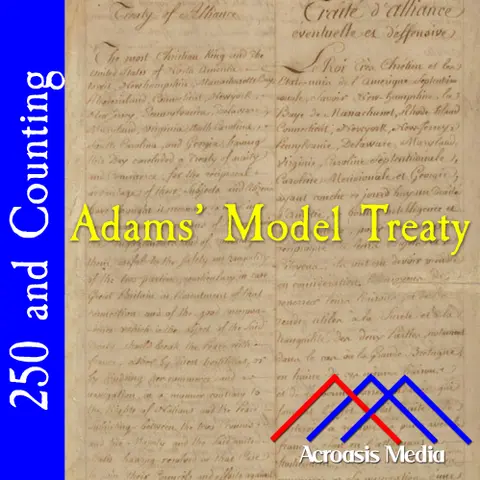
Coming up with a model treaty wasn’t John Adams’ idea, but it turned out to be a very good idea that he was responsible for implementing. Once Adams had it in his head, he began to work on the model treaty along with the committee, and while it was intended to be used for commercial trade, it could be (and eventually was) adapted for soliciting military support in the form of weapons and other ordnance (rather than troops). Today’s artwork, incidentally, is the Treaty of Amity and Commerce fro...
July 16, 2026
No Way, No Howe–July 17, 1776
That George Washington agreed to meet with Colonel James Patterson was a bit of a surprise. He’d turned down the opportunity to meet with his British counterparts on multiple occasions, but when asked if he’d meet with one of those men’s officers, Washington accepted the offer. Once the meeting was set, Washington was more gracious than most people would expect. Colonel James Patterson was rowed to the Battery dock in lower Manhattan from the British barge. At this point it was expected that h...

July 15, 2026
John Alsop Steps Out–July 16, 1776
John Alsop was born in 1724 in New Windsor, Orange County, in the British Province of New York. He was the son of John Alsop, Sr. and Abigail Sackett. His father was a lawyer in New Windsor and later New York City, where he was largely interested in real estate. As a young man he moved to New York City, where he entered the mercantile world with his brother Richard. The brothers became importers and merchants in cloth and dry goods. John became interested in civic and political activities. He w...

July 14, 2026
The Battle of Fort Lindley–July 15, 1776
The raids along the Catawba River in North Carolina we talked about on July 1 were just the beginning of the Cherokee-American Wars; the next major effort was an attack on Fort Lindley, not far from modern-day Greenville, South Carolina. It’s not entirely clear when Fort Lindley was first constructed; there are indications here and there that it was already considered “old” in 1776. In the 1760s there were some Native American disturbances going on in the area, so it’s possible that the fort wa...
July 13, 2026
You Don’t Mess Around With George–July 14, 1776
One of the most common things written about George Washington is that he always behaved like a gentleman, and expected others to behave the same way; following protocol was very, very important to him. When he was sixteen years old, he copied out by hand 110 rules of Civility & Decent Behavior in Company and Conversation, likely as a penmanship exercise. These rules are based on a set of rules composed by French Jesuits in 1595. The first English translations of the French rules appeared in 164...