Episodes
July 13, 2026
You Don’t Mess Around With George–July 14, 1776
One of the most common things written about George Washington is that he always behaved like a gentleman, and expected others to behave the same way; following protocol was very, very important to him. When he was sixteen years old, he copied out by hand 110 rules of Civility & Decent Behavior in Company and Conversation, likely as a penmanship exercise. These rules are based on a set of rules composed by French Jesuits in 1595. The first English translations of the French rules appeared in 164...
July 12, 2026
Rhode Island Gets The Declaration–July 13, 1776
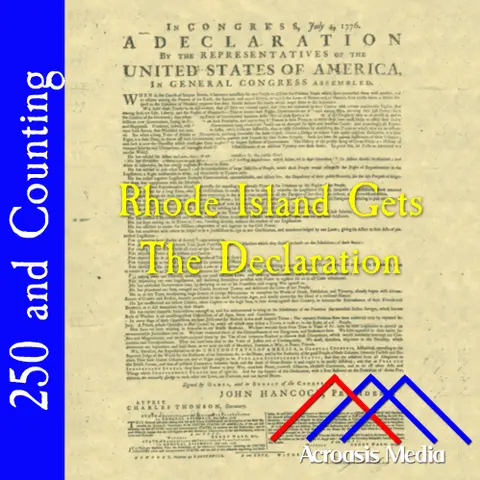
That the Southwick Broadside version of the Declaration of Independence isn’t as famous as the Dunlap Broadside shouldn’t be a surprise, since the Dunlap is the first one, and the one on which all the others are based. The the Southwick has the wrong date on it is an interesting nugget of information. It’s worth noting, however, that while John Dunlap spent the better part of the night of July 4 setting the type, making a copy, making corrections, rinse and repeat, there are still mistakes on h...

July 11, 2026
The Constitution’s First Draft–July 12, 1776
In the play/film 1776, John Dickinson is portrayed as a Loyalist from the Pennsylvania Colony whose goal is to obstruct any efforts at achieving Independence. When his efforts fail, he resigns from the Congress and leaves, though John Adams publicly admires his integrity before Dickinson departs. (Leave us alone; 1776 is a delightful film and we both like it, plus it’s many people’s only lens for viewing the story of that time.) As usual, however, the truth is far more complicated than could b...
July 10, 2026
New York Becomes A State–July 11, 1776
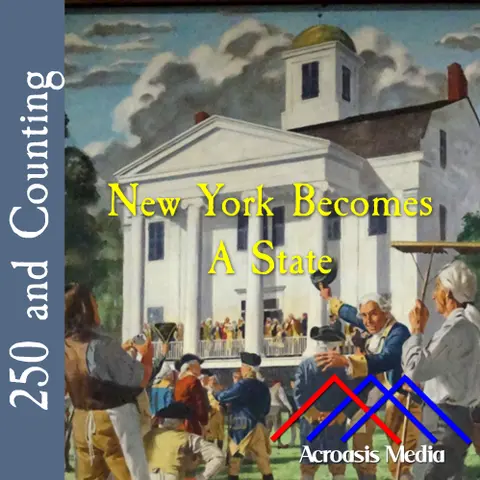
White Plains, New York, calls itself the birthplace of the State of New York, and this day in 1776 is the reason why. The provincial congress, having fled New York City to White Plains, received a copy of the Declaration of Independence and immediately approved it, then resolved to change their name from “The Provincial Congress of the Colony of New York” to “The Convention of Representatives of the STATE of New York.” Thus, when the Declaration was read aloud to an assembled crowd a short tim...
July 9, 2026
Samuel Powell–July 10, 1776
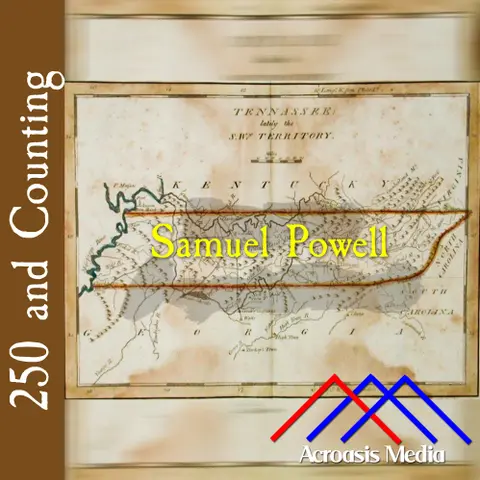
Samuel Powell is another one of those early Representatives in our government about whom little is known from a legislative standpoint. We have odd details noting that he became a lawyer “prior to 1800” because we don’t really know how he got there. And another detail that we have about Samuel Powell is that, after his one and only term, he was not a candidate to be renominated in 1816. But there’s no reason why cited in most sources. Did he lose a primary? Maybe. Did he choose not to run? Pos...
July 8, 2026
Down With The King–July 9, 1776
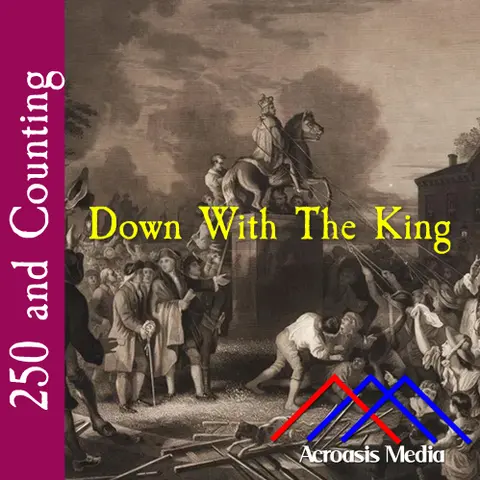
When a statue of King George III was pulled down in New York, it was a good sign for the city, since there were times that it felt that the spirit of Independence was rather squashed by the sight of the British fleet, which was still arriving. A brief digression: several years ago (ugh, longer ago than I care to remember) I took the opportunity to visit the City of the Museum of New York. It’s quite a cool museum that has hundreds of thousands of objects in its collection, with several thousand...
July 7, 2026
Battle of Gwynn’s Island–July 8, 1776
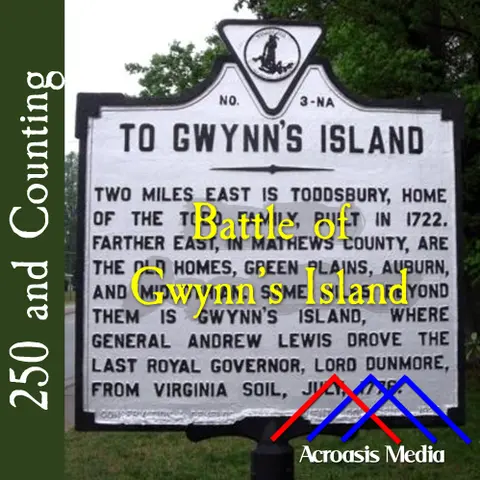
The Battle of Gwynn’s Island doesn’t seem to get much attention these days, which is a shame because it was rather important at the time. First, Lord Dunmore, the former Royal Governor of Virginia, had been there since May, having retreated there after the bombardment of Norfolk in January. The Patriots made their lives very difficult, so after a few weeks the British bailed out of Norfolk and headed to Gwynn’s Island to regroup. They were about 2000 men in all, including British army regulars ...
July 6, 2026
Howe Checks In–July 7, 1776
William Howe had already been in New York for a little over a week when he wrote to George Germain from his Staten Island headquarters. Not everyone had yet arrived from Halifax, of course; it was a long trip and the ships moved at different speeds. Howe took the time to detail what troops and ships had already arrived in New York, and what was still enroute, and that he was awaiting some more reinforcements before acting in full. I presume that he was as detailed as he was because he was disp...

July 5, 2026
Some Big News–July 6, 1776
The Pennsylvania Evening Post is an interesting study in media relations and what a publication sometimes has to do in order to survive. The Post was America’s first daily newspaper, but early on it published three times a week, on Tuesdays, Thursdays and Saturdays. They were generally supportive of the Revolution and published pro-Patriot articles. As Mike explains, it was through a quirk of their publishing schedule that the Post was able to publish the text of the Declaration of Independenc...

July 4, 2026
Bernard Smith–July 5, 1776
In the biography of Bernard Smith in today’s episode, it was noted that he spent a couple of years as the Collector of Customs in 1809 and 1810. Which set up the question for me: what does a Collector of Customs do? My guess wasn’t too far off, tell the truth. The Collector of Customs assesses import duties and tariffs, enforces trade laws and regulates goods moving across international borders. My research didn’t turn up where he worked, but it could have been in New York. On the other hand, t...
July 3, 2026
Bonus Episode: The Declaration
In CONGRESS, July 4, 1776. The unanimous Declaration of the thirteen united States of America, When in the Course of human events, it becomes necessary for one people to dissolve the political bands which have connected them with another, and to assume among the powers of the earth, the separate and equal station to which the Laws of Nature and of Nature’s God entitle them, a decent respect to the opinions of mankind requires that they should declare the causes which impel them to the separati...
July 3, 2026
Independence Day–July 4, 1776
Happy Independence Day! I don’t know if we ever mentioned this, but People of a Certain Age may remember that back in the Bicentennial Days, on our television every night during the 8:00 PM hour there was a one-minute (two, if you count the commercial) which offered up some snippet of history from that day 200 years previous, told to us by a famous person (whose identity changed every day). Here’s a YouTube playlist of the shows, if you’re curious. (One of the videos is a 20-minute collection ...
July 2, 2026
Why New York Abstained–July 3, 1776
In the play/film 1776, with nearly every vote cast throughout the show, a delegate from New York (Lewis Morris) steps up to announce New York’s abstention from the vote, “courteously.” It’s played for comedy, and at one point even the explanation is rendered comedic, when Morris tells the assembled delegates that the members of the legislature in New York “speak very fast and very loud, and nobody listens to anybody else with the result that nothing ever gets done.” He also says that the New Yo...
July 1, 2026
The Question Is Called–July 2, 1776
It’s been twenty-five days since the Lee Resolution was introduced, asking the delegates of the Continental Congress to vote for Independence from Great Britain. Some of the delegates returned to their homes to get the formal instructions in the affirmative, others stayed behind and worked on drafting a Declaration. Finally all the stars have aligned, and the votes come in: twelve in favor, none against, and one abstention. (In tomorrow’s episode we’ll talk about why that abstention happened.) ...
June 30, 2026
The Chickamauga Wars–July 1, 1776
The Chickamauga Wars, also known as the Cherokee-American Wars, was really just an escalation of the hostile relationship between Americans and the Cherokee tribe. The problem really started during the French and Indian War, which ran from 1758-1761. During that war, British forces simply destroyed many Cherokee towns, which were never reoccupied. Some treaties were signed after the war, and then boundaries established, but the colonists resented those boundaries. They showed their resentment b...
June 29, 2026
New Rules For The Army–June 30, 1776
Setting new Continental Army rules was oftentimes rather tough, because at that time the enlistments were relatively short. Soldiers would get trained, of course, but because they were undisciplined they didn’t always stay trained, and then their enlistment would be up and now it’s time to train the next set of guys and hope some of it sticks. The Continental Army rules that were approved today were designed to affect soldiers’ overall behavior, perhaps in the hope that comporting themselves ap...
June 28, 2026
Virginia Adopts A Constitution–June 29, 1776
The Constitution of the Commonwealth of Virginia, more commonly known as the Virginia Constitution, was formally adopted on this day in 1776, after months of work. Most of the credit for its overall structure goes to James Madison and George Mason, both of whom also worked on the US Constitution in later years. And like any good living document, it’s been through several large-scale amendments, in 1830, 1851, 1864, 1870, 1902 and 1971. Nearly all of these were in response to periods of major re...
June 27, 2026
The Battle of Sullivan’s Island–June 28, 1776
The Battle of Sullivan’s Island was part of Great Britain’s first attempt to take the city of Charleston, South Carolina. Unfortunately for the British, too many things went wrong for them, and there were logistical problems that they somehow hadn’t accounted for as well. Sullivan’s Island was (is, really) not an impressive piece of land. It’s a barrier island that’s a couple of miles long but only a couple of hundred feet wide. But because of its location at the mouth of Charleston Bay, it wa...

June 26, 2026
Notes From Around The Colonies–June 27, 1776
Today’s episode covers a couple of events that took place today, and a couple that will take place tomorrow, largely because there isn’t a ton to say about any of them but they are noteworthy. Also, I wanted to clear the deck a little bit so that Mike can concentrate on events in South Carolina. We start with a letter that Joseph Hawley wrote to George Washington about potential troop movements, though to our heads it’s a little bit of odd advice. We visit the Committee of Five, which has a ho...
June 25, 2026
Hickey Leaves A Bad Mark–June 26, 1776
That New York had a strong contingent of Loyalists was never a secret in 1776, but chances are that George Washington never thought one of his bodyguards, Thomas Hickey, was one of them. Hickey was a private in the Continental Army, which meant that he was part of a group that not only protected George Washington, but the Army’s local cache of money. At one point he was arrested for passing counterfeit money and it was while he was in jail that word got back to Washington that Hickey was planni...
June 24, 2026
A Busy Day In Congress–June 25, 1776
The big story today is about the Pennsylvania Delegation finally getting new orders, but I admit that I buried the lede on this one, largely because the Board of War and Ordnance had a lot going on, and the Pennsylvania story was a relatively simple one to tell. But as you can tell in today’s episode, the note we gave you the other day about the sheer volume of material they had to deal with is evident in the minutes of the Continental Congress for today; what’s more, a bunch of it was items th...
June 23, 2026
Prison For Governor Franklin–June 24, 1776
As Mike notes, we haven’t talked about the Royal Governor of New Jersey, William Franklin, in quite some time. But matters were quickly coming to a head, and it was decided that he needed to be imprisoned. The biggest reason for this is that he not only remained loyal to the Crown, he actively reported to the British anything he heard about American movements and plans. William Franklin was finally placed under house arrest in January for these shenanigans, but as things heated up and New Jerse...
June 22, 2026
Howe Readies For NY–June 23, 1776
That Admiral Richard Howe maintained some sympathies for the Colonists in the earlier years of his career might be overselling it a little bit. Howe did have some sympathies, but when he and his brother, General William Howe, met with the Committee of Safety headed by Benjamin Franklin, the idea was to quash the idea of revolution and effect a return to status quo. When that failed, Admiral Howe was the first to hoist the Jolly Roger. Okay, he didn’t do that exactly, but he was fully prepared ...

June 21, 2026
New Jersey Votes Yes–June 22, 1776
How the Jersey Five got its name isn’t especially mysterious, but what’s interesting is that one of the Five, Abraham Clark (pictured in the cover art), was not a new delegate to the Continental Congress. In fact, he was the only one retained because he was also the only delegate who was in favor of Independence. So when the new Provincial Congress took over in New Jersey, they retained Clark and appointed new delegates around him. And thus was the Jersey Five born. Clark is the namesake of th...